Cynicism to Appreciation

A couple of things came together this week. I had the pleasure of enjoying 35 degrees in Brussels. The joy of the odious metro, the brutalist main station and the wandering herds of tourists. Overhead one couple saying do you know that they have a statue of a little boy having a wee. I flinched because I genuinely thought everyone in the world knew of the Manneken Pis[1]. How can anyone not know?

It was a Canadian who prompted me to undo a prejudice of mine. Loving the air conditioning in the hotel, I looked to my iPad for late evening entertainment. There was the man – Clarkson. Irritating prankster and motorhead. Not known for meaningful commentary. I’d resisted watching his series Clarkson’s Farm[2] on the basis that I’d want to throw bricks at the screen.

This week I watched the first series. Made pre-COVID. Fine, it’s not a serious documentary about the trials and tribulations of British farming in the 21st century. True to form it’s pure entertainment. Edited highlights of comic moments and true to form tomfoolery.

My mind is changed. I started as a cynic. Here’s a moneymaking scheme for a wealthy landowner who made riches in the television world. To here’s a have a go spirit let loose on what people often assume is easy but, in fact, is mighty hard to do. The series is an engaging journey of discovery all but made for the small screen.

How can you not make a profit out of a highly desirable spread of a thousand acres in some of the most beautiful countryside in Britain? Experience counts and when you have none, it counts even more. Watching the lights come on in Clarkson’s head is well worth a watch.

Farming with drone shots and a camera crew following is obviously not the real world. Nicely edited highlights tell the story on the page. Put aside any cynicism. The show has a way of story telling that brings out the awkward, funny and frustrating reality of farming. Folly, errors and mishaps are all part of what happens in that colourful industry.

There was a world pre-COVID. Going back even further, there was a world before the fireworks of the year 2000. It was summed up by the brothers Gallagher. Yes, I am talking about the getting back together of Oasis. A band that was a bit more than an everyday rock band.

Having survived watching last week’s televising of the one millionth Glastonbury festival (exaggeration), the memories of the “real” contrast with the artificial, bland and merely controversial for the sake of it. Those years in the mid-1990s were good ones, if only I’m using the trick of selective memory. Remember when people who supported leaving Europe were strange and social media was only a rare tacky e-mail.

Maybe I’m getting more Clarkson-like as time flies.


[1] https://www.introducingbrussels.com/manneken-pis

[2] https://www.imdb.com/title/tt10558964/

A Day at the Bath and West Agricultural Show

It’s a part of my childhood. It’s fascinating to see how it has changed over the decades. There’s hardly a year go by when I don’t go to at least one agricultural show in the UK.

Last year, I visited the Lincoln show and the Newbury show for the first time. Most of the summer rural shows in the UK have a long history that is kept going by an Agricultural Society. The bigger ones have dedicated show sites and some permanent buildings. The smaller ones can be a large field that’s set aside for a couple of days a year. Each show reflects the nature of the farming, the crops, the animals, in its region.

This Friday, my day out was a trip to the Bath and West show[1] in Somerset. The show site is large. Spread over a south facing gently sloping hillside. To the south of the town of Shepton Mallet, at the base of Prestleigh Hill.

That’s my family connection. My mother grew-up on a small farm in Prestleigh. It’s not named on the map anymore as a couple of the buildings are now dwellings. Yew Tree Farm was situated on a dangerous bend on the main A371 road where traffic must veer right as it comes down the hill. The alternative being to hit a wall and end up in the farmyard. If I remember correctly, my grandad got free tickets to the Bath and West as they used one of his fields for a car park. As children we would hop over the fence to go straight to the show.

This year, the ground was as hard as rock underfoot. Spring has been unusually dry. There’s more dust than mud. That’s good for the show. There have been years when the wind and rain have swept the exposed show site and blown down tents and made mini rivers. Making welly boots mandatory.

What has changed? Although this annual event is predominantly a showcase for West Country food and farming it’s gone beyond that formula to become an atypical half-term family day trip. It’s no longer a place where local farmers strike deals with machinery salesman or learn about the latest breeds or cropping methods. That post-war image of mucky tractors and trailers turning up in droves is for vintage postcards.

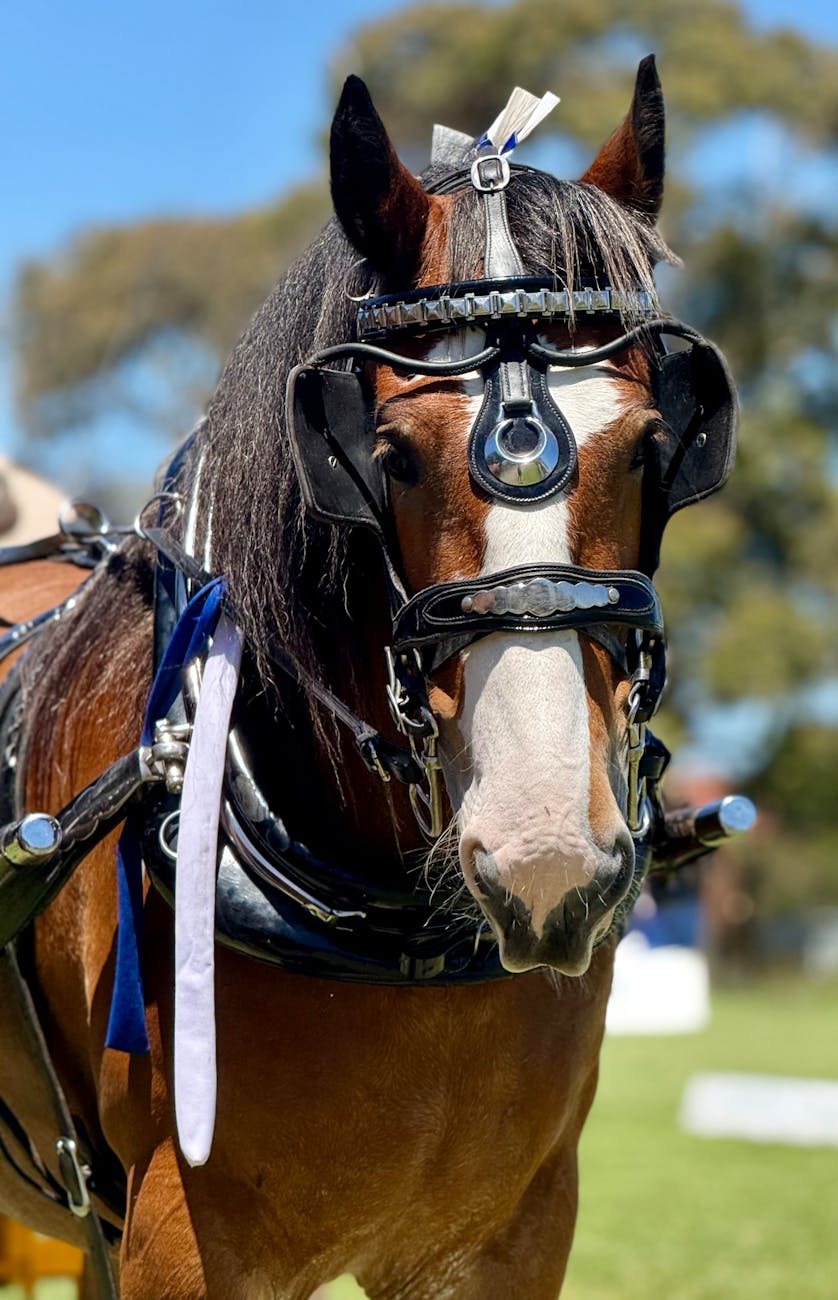
What’s nice is that there’s something for everyone with an interest in the English countryside. Beekeepers, cider markers (and drinkers), cheese makers, traction engine enthusiasts, rare breeds, heavy horses along with tea and cake in the WI tent.

Sheep started big this year. Cattle and pigs less so. Again, the word is enthusiasts. Breeds rare and commercial ones all cleaned up for display and judging. Handlers, young and old, parading their animals for picky judges to prod and score. Then colourful rosettes displayed with pride.

It’s not a cheap day out for townsfolk and county people anymore. Car parking might be free but the price of entry and just about anything on-site can quickly rack up. Everywhere, even in a field, we have become a cashless society. A tap here, a tap there, no longer do we dig into our pockets for loose change.

For the good weather and crowds, I expect this year’s 3-day event will be evaluated as a great success. Keeping the tradition going.


[1] https://www.bathandwest.com/royal-bath-and-west-show

Exploring Sunday

To the rationalist everyday is the same. Earth turns on its axis. We all experience day and night. Day and night change as the season change. It’s all mechanical and predicable. Even the builders of Stonehenge knew that there was a rhythm to the year.

Last night, to mark that transition between the cold winter months and spring, the clocks went forward one hour. So, I’m already out of sync with my normal routine. Happy with it. Those extra hours of light in the evening are a great joy. Time to get the garden in shape.

This seventh and last day of the week, has a marker too. Christian communities see this day as a day to take stock, to rest. We don’t entirely observe that tradition anymore, but it is a different day. A day when life takes a slower pace.

If I go back to my youth, Sundays were distinct. The day was always a time set aside for visiting relatives. Now and then, a church or chapel service in the evening. West Country village life was one of compromises. We went backwards and forwards between the Church of England and a small Methodist chapel in an adjoining village.

Sunny spring and summer Sunday evenings could be unlike every other day. Until my parents gave up the dairy, and reliance on a cheque from the Milk Marketing Board[1], everything we did had to fit around milking time. Cows have internal clocks. They know when the time has come for milking.

Lighter spring evenings opened the opportunity to go visiting or, as we often did, going for a drive. All six of us would get packed into the family’s Wolseley 16/60. Dad would head off over the hills and vales of Somerset and Dorset to get some relief from the constant demands of the farm. Later on, the 16/60 was replaced by a newer bright white Wolseley 18/85[2]. A quite dreadful car to ride in. It was a time when the British car industry was desperately trying to modernise. The Japanese had started to produce cars that were starting to offer better value and reliability.

Cruising around the country lanes was not only an opportunity to get out and about, but this was also a way of looking over the hedges and surveying the landscape. Finding out what the neighbours were up to. Checking out some new farming venture that was being talked about at market. Criticising poor husbandry or the dereliction of what was once a “good” farm.

This childhood experience has left me with a curiosity. Could be inherited. That need to know what’s around the next corner or just over the brow of a hill. It’s imbedded. Naturally, that curiosity was stimulated by the unending variety of the topography. On my trips to America, it has always struck me that driving for miles and miles can be easy, but it takes a long way for the sights and sounds to change. Somerset and Dorset, and I mustn’t forget Wiltshire, have a world around every corner. Sundays were explorer days. Adventure days too.


[1] https://discovery.nationalarchives.gov.uk/details/r/C179

[2] https://www.wolseleyregister.co.uk/wolseley-history/blmc/1885-six/

Labour’s IHT Policy: A Threat to Family Farms?

Labour is driving down a road it’s driven before. It’s a shame when the two biggest political parties in Britain are so captured by their past that they can no more look forward than a duck can master arithmetic.

Post Second World War the country was broke. Rising taxes were inevitable to pay down debt. The British State was far more directly involved in everyday economic decisions than it is now.

Inheritance Tax (IHT) got its status as a loathed tax partially because of the necessary actions of the post-1945 Government. At that time, “estate duty” was increased to 80%. This generated increase tax revenue but led to the breakup of large country estates up and down Britain. Ironically, the breakup of country estates created an opportunity for some tenant farmers. As the estates were sold off in lots so tenants could become owners, if they could raise the finance.

So, you might say farmers paying IHT at 20% isn’t so bad by comparison. The amount of generated increase tax revenue isn’t much. With one hand the Government is subsidising farmers and with the other hand it’s taking a cut of their lifetime acquired assets.

Another side of the coin is the cost-of-living crisis. Certainly, winter heating costs have been a matter of great concern for a lot of people. Food too is an absolutely essential expense. Hence, the growth of food banks in every part of the country. This shouldn’t be accepted as the norm.

All of this is happening at a time when the nation’s supermarkets are making healthy profits. Keeping cheap food on the shelves with, in some cases, the philosophy of sell it cheap and pile it high. Industrialised and highly processed food coming in at the lowest prices to the customer. At the other end of the supply chain, forcing down farm gate prices.

You would think that getting national food production, the job done by farmers, right would be an imperative for Government. You would think that a regular dialogue with farmers might be quite important. Wouldn’t you?

The problem with Labour’s 20% IHT and the threshold of 1 million is that it’s not going to have much impact of those who own large country estates to avoid other taxes, like CGT. It’s not going to have much impact on large corporate agricultural enterprises. It may not even have much overall impact on land prices. Afterall, they don’t make it anymore.

But it’s going to clobber small and medium sized enterprises, very often family farms. It will clobber far more than the Treasury’s last-minute calculations say[1]. The reason is clear. The profitability of family farming has been dire over recent years. Add a new tax bill and selling-up will be the most attractive option for many potential next generation farmers.

Then the question must be asked what’s it all about? What are the values underpinning this policy? There I go back to the start. Does Labour perceive these working people as “rich”. Their logic may go, why shouldn’t the rich pay more after the Conservative Government that they supported has made such a mess of the country? One way of seeing where we are.

Trouble is that they have aimed at the wrong target.


[1] https://www.channel4.com/news/how-many-farmers-will-have-to-pay-inheritance-tax

UK Farmers’ Unrest: Budget Shock and Political Implications

Yesterday, central London was full of British farmers. Far more than was anticipated. It’s a countryside revolt. Or at least the seed corn of unrest. It needs to be addressed quickly.

The UK Government Budget sprung an unexpected shock on farmers. Newly elected, everyone expected them to try to correct the spending mess left by their predecessors. However, few expected them to make-up last minute figures to do something they said they wouldn’t do.

Lots of family farmers could be singing the classic Beatles song “Yesterday”. Troubles seemed so far away before the general election. Now, they seem here to stay.

Like androids, and the Tories before them, Labour Members of Parliament (MPs) are trotting out lines prepared for them by their masters. The political excuse trotted out robotically is that the theoretical threshold for taxation is £3 million and not £1 million as everyone is saying. Therefore, they say, fewer farm businesses will be impacted by their new death tax.

When something goes wrong in Government one of the best strategies is to address the facts immediately, apologies for any error, take the temporary hit and move on quickly. Stonewalling and wibbling is an extremely poor approach.

For a start, many farmers will not be able to take-up the tax reliefs Labour MPs are talking about. Farming is a hazardous profession. Sadly, unexpected deaths are not unusual. If such an event occurs this could then result in compounded tragedy, that is the death of a family business too.

Farmers are pointing out that significantly wealthy people will still use land purchase to avoid tax. They will have complex and detailed tax planning services at their fingertips.

Agricultural land values have increased dramatically in recent decades. Yes, there is an issue to be addressed with respect to land value. Housing development land is an astronomical price. It’s one of the drivers that is making house prices unaffordable for many people.

Labour needs to recognise that it’s not food producers who are driving these negative phenomena. It’s not small and medium sized family farms who are the problem makers.

Not only is this new inheritance tax very poor politics by Labour, but it’s also not going to crack the problem that they might wisely wish to crack. I’d say, think again. At least consult.

Navigating Heights

If I were to explain, the reasoning would go like this. It’s good to have a vivid imagination. As an engineer, it’s essential to be able to create a mental picture of what’s happening. But there’s a downside. Looking at a situation and seeing more than is there, opens the door to imagining all sorts of scenarios that are unlikely.

I’m talking about that experience of peering over a cliff edge to see what’s there. Curiosity being a strong urge. Then pulling back in fright of falling. Often when the ground is solid and safe. Often when nothing more than a spark in the imagination creates an unreasonable fear of falling. The fleeting image I have in mind is looking down at Beachy Head Lighthouse[1].

I have a curious relationship with hights. No, I’m not terrified of heights. It’s just that now and then that fear of falling does kick in. This feeling could be embedded or learnt from an early age. My mother tells a story of me as a toddler being halfway up a ladder. Sacring her. Me being oblivious to any danger and coming to no harm. Growing up on a family farm there was innumerable hazards around every corner.

One of the riskier things was to climb up the haybarn roof. This was an open steel framed structure spanning several bays. Corrugated sheets made up its roof. In the UK, we call these buildings a Dutch barn. This mostly refers to the curved shape of the roof. From the top of the barn, it was possible to see the whole farmyard.

Last week, I hiked around the Caldera de Taburiente on La Palma. I learnt that the term caldera has Spanish origins. So, I was in the right place to assess any fear of hights that might linger in my psyche. The Caldera de Taburiente is more than 2000 m deep.

Even the roughly hewn paths, some restored from local landslides, didn’t phase me. It’s as if, because I was one of thousands who have passed the same way, the dangers where contained. In fact, there were not. Some of the well-worn slippery stones underfoot had to be approached with a great deal of caution. Loose rocks and sheer drops had to be navigated with care.

The Caldera de Taburiente National Park is a magical place. It has a Jurassic Park feel about the place. Given that it’s not much more than a few million years old the place is far to youthful for dinosaurs. It has its own special natural beauty.

My aging but persisting vivid imagination had plenty to occupy itself as we climbed and descended in and out of the park. The whole hike was about 16 km. This was the second time I’d taken this circular route. What surprised me was the hard parts of the climb and decent following a riverbed on the way out. That part I’d conveniently forgotten.

No, I’m not terrified of heights when there’s solid ground underfoot. They do however have the capacity to scare or at least summon up a lot of extra care. I hope that inbuild sense of self-preservation never fails me.


[1] https://www.beachyheadlighthouse.co.uk/

Rain and Life

Rain is inevitable. Rain is perpetual. Rain is ingrained in the fabric of life. Britain is a series of islands that’s buffeted by the winds that sweep across the Atlantic. Not always but mostly. 

We complain about it. We lament it when there’s not enough. We are shaped by it.  If ever there was a better sign of what’s called “small talk” it’s to talk about the weather. Having a conversational default like this one is deeply embedded in our culture.

The line to draw is one between the “normal” amount of rain and the periods when the torrents seem almost biblical. Record breaking is a talking point. Can’t ignore it.

According to the Met Office[1], Berkshire, where I am, received 3 times its average September rainfall. Southern England had its wettest September since 1918, and its 3rd wettest on record in a series from 1836.

Natural variations are to be expected. Afterall, what would there be to talk about if the only thing to say is that the weather is the same as yesterday, or last week. That is the fate of people in some parts of the world. No such predictability for our northern hemisphere islands. Up at above 50 degrees of latitude we see a moderate variation in almost everything.

The key word there being “moderate”. Months that are as wet as this past September, do impact the regular cycles of the seasons. Generally, it’s been warm too. I can’t help thinking it’s been a good year to be a tree. Roots have had a lot to soak up whenever the need arises.

Is what’s happening an indication of climate change? I’m not going to be the one to put my hand up on that one. I suspect that a greater degree of variation in the weather is a broader factor.

For the farming calendar this year has already been a strange one. Almanacks that tell you when to reap and sow might need revisiting. Whether cows will need to develop webbed feet or horded of ducks take over, I’ll leave that to the imagination.

For me, since January, living near a river has become a source of curiosity. Luckily our house is many meters above the worst-case scenario for a sustained flood. The river runs fast. It’s a chalk stream. What’s interesting is that its level is highly dependent upon the degree of soaking that the surrounding land has received. Just now, the green fields around are like sponges that are nearing their capacity. I’m sure, that’s unusual for early Autumn.


[1] https://www.metoffice.gov.uk/about-us/news-and-media/media-centre/weather-and-climate-news/2024/record-breaking-rainfall-for-some-this-september

Why the UK Should Rejoin

Fine, I’m happy to admit that my march, with thousands of others, through the streets of London on Saturday was not everyone’s cup of tea. There are a lot of people who support the idea of a return to European Union (EU) membership but are reluctant to raise the issue just now.

Often cited is the wave of right-wing politicians who are gaining ground in Europe’s larger countries. It’s as if they are going through their own Brexit like political moment but without anyone of any consequence advocating throwing away their EU membership.

Maybe the UK is ahead in this respect. We’ve been through the confusion and turbulence of the political right-wing eccentrics moment in the sun. They were never mainstream. However, they did hold the reins of power for some disastrous years. Thank God they are now behind us.

I have marched year-after-year because it’s the right thing to do. Tens of thousands from all over the UK have done the same as me. Millions if the numbers added-up from 2016 onward. Our future can be based on cooperation and mutual interests. Ideologically driven conflict and disruption have brought nothing but a lose – lose outcome.

So, what are the arguments for the rejoin movement? It’s all very well to shout at the thing we don’t like. Now, is the time to make the sound solid arguments for the thing we favour.

Let’s take trade for a start. The last UK Government wallowed in gushes of self-praise every time they signed an agreement with any country that was not European. Conservative Members of Parliament wanted to tower over the world like imperial overseers. It was an illusion.

Most of the so called “new” deals that were signed were simply a rollover that meant no change. In fact, more was given away than was gained. All in a desperate attempt to show progress. British farming was effectively shafted by Ministers.

One of the most touted possible “streets paved with gold[1]” was the prospect of a super new trade deal with the United States (US). Under President Trump, the prospect of an advantageous UK-US trade deal was an illusion.

Ironically, a claimed success was the joining of a regional trade block. I know it’s crazy that leaving a gigantic trade block on the UK’s doorstep was followed by joining one covering the Pacific. Yes, the other side of the world. Not only that but the projected gains are minuscule.

EU membership offers, as it did before, access to enormous trade benefits by comparison with what has been achieved since 2016. The numbers speak for themselves.

If the new Labour Government continues with a form of the fibs told during the “Get Brexit Done” phase, then trouble lies ahead. Next door, the UK has the world’s largest trading block. The value to the British economy of Single Market membership exceeds a mishmash of remote and small deals. There’s a positive way forward and it’s staring us in the face.

POST: It’s worth noting that the 1960 European Free Trade Association (EFTA ) was created, to promote free trade and economic integration included: Austria, Denmark, Norway, Portugal, Sweden, Switzerland and the United Kingdom.


[1] https://dictionary.cambridge.org/dictionary/english/streets-are-paved-with-gold

On Your Farm: 60 Years of Farming Innovation and Change

Like me, the BBC’s “On Your Farm” will soon be over 60 years old. I’m already there and, as a 4-year-old at the time wouldn’t have known there was anything new on the radio. That chunky Bush radio with the large batteries.

That’s a launch one year after the coldest winter for 200 years, in 1963. I don’t remember that winter but was told numerous stories about it. Winter 1963 must have been tough for the West Country farming community. Probably a lot of fun for me a very young boy. Snow for weeks and weeks.

The BBC’s regular farming radio broadcast takes a wide-ranging view of what’s happening in the industry. Needless to say, the elapse of 60-years has seen changes that would have been incompressible in 1964. The sheer scale of enterprises, the power of modern machinery and huge reduction in the labour force may not have been predicable.

That early sixties period was one of great hope for the advancements that technology could bring. We now see that some of the leaps forward that were made were progressive but had long-term negative consequences. Ripping out hedges to make bigger fields and becoming ever more dependent on artificial fertilizers did increase productivity. That came with big costs.

If I’m correct in recalling what my father’s generation said, at the time there was great pride in the modernisation that was taking place. A vibrant competitiveness between farmers to have the most modern machinery and buildings available. National policies encouraged expansion.

There’re pictures of me and my brothers sitting on a new Ford 4000 tractor. Clearly, that modern tractor was the state-of-the-art for a family farm of the time. It’s now a classic at agricultural shows.

1964 was also the year of the debut of Top of the Pops. So, the BBC was busy catching up with the changes that were happening in society. We talk of populism now but pop culture kicked-off at the time I’m recalling.

The idea behind the BBC’s “On Your Farm” was an innovative one. Go out and chat to people about the challenges of their farming world on their working farms. Outside broadcasts were a relief from cultured studio accents and monotone accounts of the great and good. Outside broadcast vehicles and equipment of that era were bulky and sensitive. Making them work in a random field or farmyard must have been a technician’s nightmare. The reward for producers was getting a sense of real life transmitted into the nation’s kitchens and living rooms.

Putting aside the changes in agriculture, the changes in broadcasting are vast. Fortunately, radio hasn’t disappeared. It’s evolved. Now, with an inexpensive handheld mobile and a good microphone anyone can practically go anywhere at any time. Not only that, but given a reasonable internet connection the broadcast can be instant and of superb quality.

So, are we all better informed about agriculture, farming and the British countryside. I’ll let that one rest. One thing is certain. There are more opinions expressed, more often about more subjects than ever before.

I will not say one word about badgers.

The River’s Arms

It’s now called the River’s Arms Close. A scattering of relatively new houses. That’s all that remains of a rough working public house that I knew well in my youth. Not indoors. In the bars. I never visited more than the paved courtyard outside the pub. Afterall, I am talking about me at the age of 12 or 13ish. Until now, looking it up, I’d remembered the pub as being called The Railway.

This pub was just across the road from the entrance to what was then Sturminster Newton cattle market[1]. A huge agricultural market. It was on Station Road. Even then, the railway station and its steam trains had long gone. They must have gone in 1965/66. Then a political axe fell on rural railway lines. On a Monday, the town was a busy place. That was market day.

Scruffiness was a badge of honour. Galvanised steel sheeted buildings and tatty block-built sheds were the order of the day. The feast for the eye was not the buildings, more the people. The noise was overwhelming. Smells were on the rich side too.

This comes to mind because I moved a large and heavy plastic planter containing a healthy blackcurrant bush. Green leaves and wood. My crop of blackcurrants had been eaten by birds earlier in the year. This week’s plan was to find a suitable spot in the garden to transplant the bush ready for next year.

Here’s the connection. It’s to do with fruits. Local produce. In the 1960s, to earn money of our own, my brothers and I would go blackberry picking. There were times when Somerset hedgerows were teaming with mases of blackberries. They still are in a lot of places. We’d fill to the brim used plastic containers. Recycling ice-cream containers. Trying not to squish the delicate fruit.

On market day the courtyard outside the pub would become an auction ground. People would bring local produce and miscellaneous junk in the hope of getting a fair price. Everything would be spread out over the floor outside. Fruit, veg, eggs and strange ironwork and old tools. Around lunchtime a sale would take place. Informal and unpredictable. A huddle of farmers, townsfolk and on watchers. Nevertheless, all the small items were carefully booked in and booked out. For our containers of blackberries, or later in the year field mushrooms, we’d get just less than a pound, if we were lucky. That was in “new money.”

It’s July, so we are not into that season yet. It’s creeping up on us. Fruit trees are starting to look as if they are going to produce a good crop. Blackberries are slowly forming. A time of fruitfulness is coming. That season of harvest is just over the horizon.

Exposure to markets, and their volatility, is as much a life lesson as the benefits of organic produce. In that small Dorset country town, the ebb and flow of market day were as integral to life as the water that flowed in the river. Today, much of that rhythm is history. A new rhythm is running. We go from coffee shop to posh bakery to the purveyors of expensive imports.

Our dependency on national supermarkets and large-scale logistics is mainstream. The heavy lorries that carry food are not full of local produce going to a local market. They come from remote fulfilment centres on main trunk roads. They dwarf the road traffic of the past.

It’s silly to think that we can step back. Times were rougher and cruder but there’s merit in giving thought to the better bits. Today, there’s little incentive for a boy with a recycled container full of fresh blackberries.


[1] https://www.somersetlive.co.uk/news/local-news/sturminster-newtons-bell-toll-today-148980