Hydrogen in Aviation

The potential for LH2 (liquid hydrogen) is enormous. That’s matched by the logistical and technical difficulties in exploiting this gas’s great potential. It offers energy for a means of propulsion that is nowhere near as environmentally damaging as existing means.

Society already integrates hazardous liquids and gases into everyday life. Each one has been through several iterations. It has been a rollercoaster. Each one has been at the root of disasters, at one time or another.

  • We use gas for cooking and heating in domestic settings. Periodically explosions demolish buildings. Leaks cannot be ignored. Harm can be done.
  • We use light and heavy oils widely in transport systems. Periodically intense fires burn vehicles. Care in handling is essential. Harm can be done.

Without having to say it, both above harm the environment. The search for non-CO2 emitting ways of flying is urgent. Here, I’m writing about harm to people. Physical harm. The business of aviation safety.

Often the physical harm is not associated with the design of the systems used but to the maintenance of those systems. Naturally, there was a learning curve. If we look at early versions of those systems, fatal accidents and incidents were far more regular. So, here’s the challenge for aviation. How do we skip the dangers of the early learning phase? How do we embed rigorous maintenance practices from day one? Big questions.

On the first one of these, lots of fine minds are engaged in putting together standards and practices that will address good design. If this works, and it will be tested extensively, the chance opens for introduction to service with a great deal of confidence that the main risks will be managed.

On the second of these, there’s not much happening. You might say there’s an element of chicken and egg. The shape and form of future LH2 systems needs much more work before we can think deeply about how they will be maintained.

I think that’s wrong. It’s old-fashioned thinking. As the industry has often practiced, making the systems first and then devising ways of maintaining them while in-service. That’s yesterday’s reasoning.

Making aviation system maintenance the Cinderella in the LH2 world is to invite failure. This is a situation where advancing the consideration of how the in-service realm could work, day by day, is necessary. It’s advantageous.

Here’s my reasons.

  1. There are generic approaches that can be tested without knowing the detailed design. That can take existing learning from other industries, like chemical and space industries, and consider their application in aviation.
  2. Emerging technologies, like machine learning, coupled with large scale modelling can provide ways of simulating the operational environment before it exists. Thereby rapidly testing maintenance practices in a safe way.
  3. It’s imperative to start early given the mountain that needs to be climbed. This is particularly true when it comes to education and training of engineers, flight crew, airport and logistics staff and even administrators.

Everyone wants to accelerate environmentally sustainable solutions. When they do get to be in-service, they will be there for decades. Thus, an investment, now, in study of maintenance systems will pay dividends in the longer term. Remember, early fatal accidents and incidents can kill otherwise sound projects or at least put them back on the drawing board for a long time.

NOTE 1: I didn’t mention Liquefied Petroleum Gas (LPG). It’s in the mix. Another CO2 contributor. LPG containers have pressure relief valves. LH2 containers will likely have pressure relief valves too. That said, venting LPG is a lot more environmentally damaging than LH2. From a safety perspective they can both create explosive conditions in confined spaces. Maintenance staff may not need to carry a canary in a cage, but they will certainly need to carry gas detectors when working on LH2 powered aircraft. Our noses will not do the job.

NOTE 2: Events on the subject: https://www.iata.org/en/events/all/iata-aviation-energy-forum/

https://events.farnboroughinternational.org/aerospace/sustainable-skies-world-summit-2024

2024 ICAO Symposium on Non-CO₂ Aviation Emissions

Highways

The last time I visited the city of Baltimore was in 2012. It was the location of the annual seminar of the International Society of Air Safety Investigators (ISASI)[1]. That was when I was representing the European Aviation Safety Agency (EASA) at such international events.

The relationship between aviation accident investigators and regulators are generally cordial. There’s a great deal of work that requires cooperation and good communication. That’s not to say that the relationships between these two vital parts of national and international aviation safety systems is easy. It’s not. My reflection on that fact is that a degree of constructive tension is inevitable and not always a bad thing.

One way of seeing that relationship is that the primary role of an investigator is to make findings to prevent the repeat of a given accident. For a regulator the primary role is to ensure the complete aviation system runs safely on a day-to-day basis. Both organisations have the public interest at their heart. However, their operational context and perspective are different.

Firstly, my condolence to the families and friends of those who perished because of the Francis Scott Key Bridge accident[2]. The collapse victims and survivors had no way of knowing what was to happen on the night of the accident. I use the word “accident”. This was not an act of God, as some commentators would have it. The safety risks involved in the operation of the port in Baltimore could be anticipated.

In the US there’s an independent federal agency that is tasked with such major investigations. Interestingly, it’s the same one as that investigates aviation accidents and incidents. The National Transportation Safety Board (NTSB) is a multi-modal organisation. That is something we don’t have in the UK. Also, we don’t have a divide between federal and state organisations. Since in the UK we have separate independent national Air, Marine and Rail investigation agencies that cover the country (England, Scotland, Wales, and Northern Ireland).

I will not comment on the accident sequence or causes. It’s the job of an independent investigation to arrive at the technical facts. Recommendations will flow from that investigation.

Where a comment may be in order is that there are many locations across the globe where a vital piece of infrastructure, like a bridge being struck by a large container ship is a possibility. I’d generalise that further. When infrastructure that was designed a built 50 years ago meets modern day operational stress there’s going to be vulnerabilities. Yes, the aviation system is not immune from this fact too. It wasn’t so long ago when I read of PDP-11 computer hardware used for air traffic control (now, historic artifacts[3]). I’m sure there are still Boeing 747s, and alike that need floppy disks to update their hardware.

So, the wider subject is operational legacy systems working with modern systems. This is the interface that requires particular care. The safety risk appetite and exposure in the 1970s/80s was quite different from that which we expect upheld today.

Unfortunately, society is often reluctant to revisit this subject. Additionally, there’s the incentive to go for quick fixes and sweating assets. The example I have in mind the so-called “smart motorways” in the UK[4]. I don’t know how many fatalities can be linked to “smart motorways” but I’m sure, sadly, it’s too many.

POST: In time-off I enjoyed a trip out to Fort McHenry and a walk around the places where The Wire was filmed. The Fort McHenry story is interesting given its role in times of war. The British burnt the White House but the navy didn’t get past Fort McHenry in 1812.


[1] https://www.isasi.org/

[2] https://www.bbc.co.uk/news/av/world-us-canada-68661318

[3] https://www.tnmoc.org/air-traffic-control

[4] https://www.gov.uk/government/speeches/plans-for-new-smart-motorways-cancelled

Space

Eutelsat OneWeb is a growing global connected community. That’s what the publicity says. Once upon a time I wrote about OneWeb. I wrote about it in the context of Brexit.

One of the touted benefits of Brexit was autonomy, in other words, British innovation leading the way to benefit Britain above all others. It’s that aggressive assertion of sovereignty that was at the core of Brexit. Remember, it wasn’t so long ago that this was part of Brexiters fantasies? 

In the Brexit turbulence the UK Government walked away from the EU’s Galileo programme. The UK no longer participates in the European Galileo or EGNOS programmes[1].

Then in 2020 the UK changed its original post-Brexit position and scraped building a national alternative to the Galileo satellite system[2]. At that time, Business Secretary Alok Sharma offered around $500 million of UK public money to acquire part of an organisation in trouble, called OneWeb.

OneWeb is a commercial Low Earth Orbit (LEO) satellite constellation now with an element of Government ownership. It’s network of satellites doesn’t have a global positioning capability, like Galileo.

To get its satellite network up and running, an expensive business, OneWeb merged with French company Eutelstat. Today, if we look at the 2020 investment made with public money the financial situation doesn’t look good. That doesn’t mean to say that things will not turn around in future years[3].

The Times newspaper has taken a nationalist view of the circumstance[4]. It’s a point that the intellectual property is not in the hands of the UK Government, but the investment could still turn out to be a useful long-term commercial bet. It’s gambling with public money.

As an aside, I’ve been looking at buying a new dishwasher for the kitchen. It’s made me aware of a capability that I had no idea had been developed. Namely, the connection of dishwashers via the web. I think this is what is called the Internet of Things (IoT). So, imagine that, British dishwashers connected by space as a Brexit potential benefit.

However, if there’s a change in the UK Government’s political direction after the next General Election there’s a strong possibility that the UK will return to the EU’s Galileo programme with some manner of partnership. When we get to 2026, we may look back on the decade behind as a vacuum, much like the vacuum of space. A time when an uncertain direction cost a great deal.


[1] https://www.gov.uk/guidance/uk-involvement-in-the-eu-space-programme

[2] https://www.politico.eu/article/uk-scraps-plan-to-build-global-satellite-navigation-system-to-replace-galileo/

[3] https://www.politicshome.com/thehouse/article/oneweb-uks-gamble-satellite-startup-pay-off

[4] https://www.thetimes.co.uk/article/656bd77c-c106-47c3-840b-674e9efc4f0e

Chat

Yesterday afternoon, at the till in a major supermarket and the man in front of me was getting stressed. I was standing in line waiting without a care in the world. In front of the man, in front of me, the till assistant, or checkout operator, dependent on how you see it, and a customer were locked in day-to-day conversation. Just being sociable. From what I could hear that customer may have once worked in that supermarket at some time.

The man in front of me was getting grumpy. He turned back and muttered his disdain for the shop’s staff because they were holding him up. Their everyday conversation was an afront to him. They were wasting his valuable time. Not overly aggressive but he had an agitation that often comes from a degree of unwelcome stress. He was in a hurry or at least heavily felt the pressure of time.

When I got to the till the assistant asked: What did he say? I quickly paraphrased what was said. Conscious that I had no desire to inflame the situation that had now passed by. Reactions can be unpredictable. We live in an era of polarisation.

The gentleman working at the till was into small talk. He clearly loved to chat to customers. Then for me he put that in context. He said that when it gets to about ten, in the evening, people are more than happy to talk as they pack their shopping. With some people it’s the only conversation they have in a day. He was proud that staff were encouraged to be warm and friendly.

Now, there’s a contrast. The life of Mr busy, busy, busy verses the life of the forgotten. That division is at the heart of one of society’s biggest troubles. A tribe that is over-employed, anxious, and living on the edge and a tribe that is lost, lonely and forgotten.

One prone to exasperation and being impatient. The other desperate for social contact and empathy. How on earth did we construct a society that tries to work on that level? Not only that but supermarket managers are desperately trying to automate everything[1]. Already there’s three types of automation in that you can do your own till check in a couple of different ways.

The milk of human kindness shouldn’t be sneered at. Wow. You see how quickly I reverted to Shakespeare without even knowing it. That simple phrase has its origins in the play Macbeth. The play that I was forced to read at school. The play that did nothing much to lift my appallingly bad grades at English. To Lady Macbeth, the “milk of human kindness” was objectionable. To her real men had no need of it. We all know where that led. Don’t go there.

So, next time you are standing in a short que, stomping your feet, imagining the clock spinning around, give it a rest. If you find yourself thinking this is too much, I can’t deal with it anymore, do a double take. Relax. Breath slowly. Dig deep and discover some small talk. It might be more meaningful than you first think.

On another subject. I agree with Graham Nash[2]. A day in the life[3] is a truly great song. It’s life as a musical tapestry. The song wanders around the mind using hardly any words but painting a picture all the way up to the sky. I’ll not heaping yet more praise on The Beatles, they’ve enough for several centuries. That said, May 1967 was a magical moment. Even if I did only know it with toy cars and in short trousers. It’s not the daily news but I’ll bet there’s probably now more holes in Britain’s roads than ever.


[1] https://www.bbc.com/worklife/article/20170619-how-long-will-it-take-for-your-job-to-be-automated

[2] https://en.wikipedia.org/wiki/Graham_Nash

[3] https://genius.com/The-beatles-a-day-in-the-life-lyrics

The Will

We’ve entered the first days of a New Year. Traditionally, it’s a time for reflection and speculation.

Looking back at the path behind.  Looking forward at the unmade path ahead. Four and twenty years into the new millennium perhaps it’s not so enjoyable to look back. To be reminded of the travails of the last decade, in particular, isn’t that helpful. We can go back to feel good moments, like 2012 and the London Olympics[1]. Sadly, there hasn’t been enough of these moments of unity and common purpose. Unscrupulous politicians have become fixated on dividing people.

This year, the opportunities to change all that are staring us in the face. It’s an Olympic year[2]. Choices abound. Elections mark an opportunity to carve a new path ahead. Doomsayers are totalling up the conflicts in the world. Listing the threats. Calling our attention to our weaknesses. This is one side of the coin. I’d rather highlight the other side of the coin.

As much as humanity is well capable of breaking things it’s getting ever better at fixing things. We may be slow in recognising climate change, but it’s spurring innovation on a massive level.

Despite the aging demographic in this country, the world is more youthful. That worldwide youth is gaining better education, in numbers unimaginable in past millennia.

The Human vs. Machine narrative is a false one. The choice is ours as to what to do with technology. We need to take that responsibility. The means to do so are available to us if we choose to us them.

Health outcomes, at a global level are improving. Our understanding of the afflictions of humanity is advancing to meet the challenge. Our responsiveness to new threats is improving.

So, don’t look down at your feet. Look up, look forward and prepare for a better future.

There’s also a stubborn noise in our political debate. Every request is for more money. The thesis is that the problem, whatever it is, will be solved by more money. Sometimes that’s the way to go. Investing in science and research has been shown to work. It clearly helps to have a well-trained and well-motivated workforce. However, this sum isn’t digital. In other words: More Money = solution. Less Money = failure. In a lot of cases, it’s not money that is the missing component.

Much of what I’ve observed fits a different equation. Namely, sustained political will equals progress. Lack of political will equals stagnation. And political will deployed like a blunderbuss equals disappointment and waste. I’m talking of a version of “A House Divided Cannot Stand.” The issue is how to differentiate and not how to divide. They are different.

The British high-speed rail debate is a sad example. Sustained political will can deliver. Poor management, shilly-shallying and constantly shuffling the pack, which is what has happened, lays the tracks to failure and waste in the long term.

2024 can be a year when we take back control of our destiny. Commitment to building a better country. A generous and inclusive society that brings people together. We have the will.


[1] https://www.londonolympics2012.com/

[2] https://www.paris2024.org/en/

Two upfront

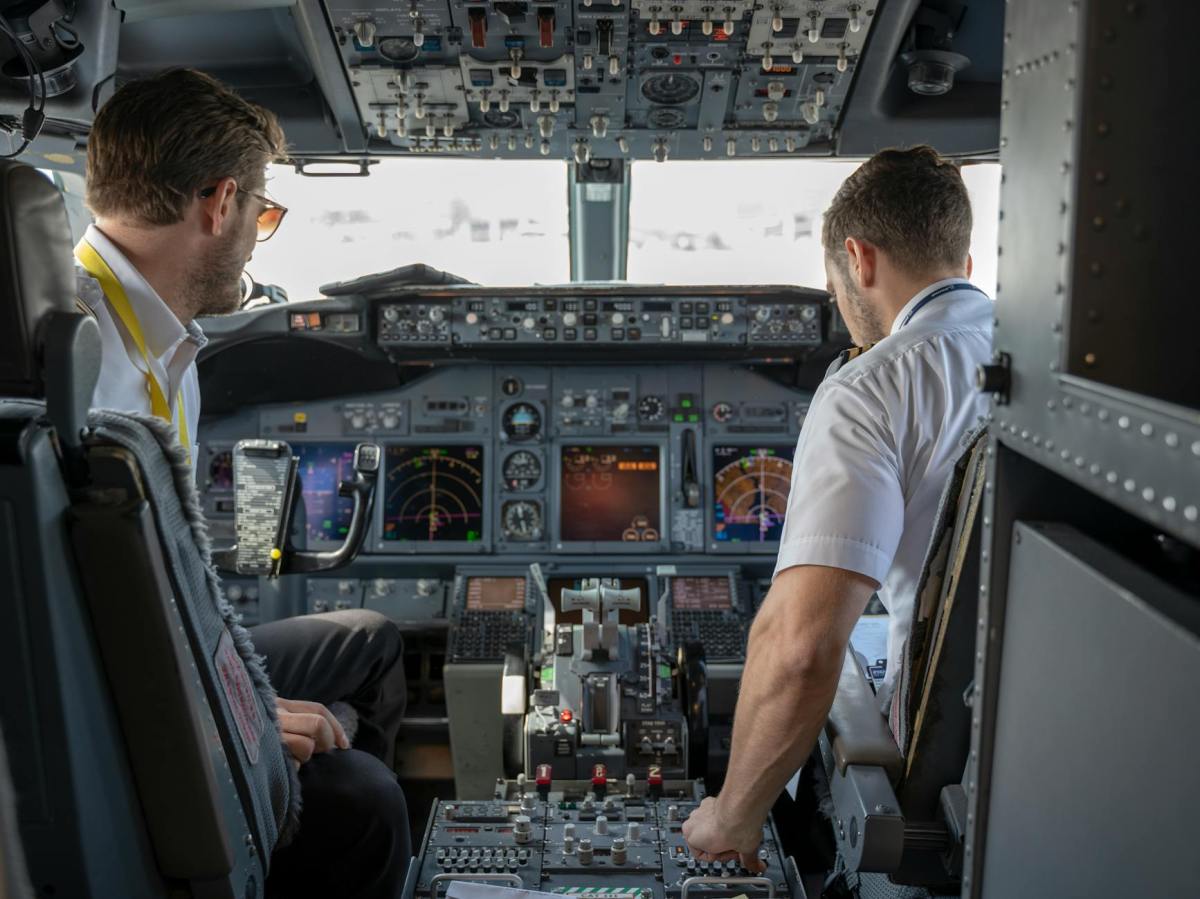
One of the fundamentals that remains a part of civil aviation is having two pilots in the cockpit. It’s an indication of the safety related activities of the crew of a civil aircraft. Today, we have a mixture of human control and management. Pilots still fly hands-on when the need arises. The expectation is that throughout their working lives pilots have the competence to do so, at any stage in a flight.

Progressively, since the establishment of aviation’s international order in the 1940s the required crewing of aircraft has changed. Back in September, I visited the de Havilland Aircraft Museum in Hertfordshire. There I walked through the fuselage of a de Havilland DH106 Comet[1]. This was the first turbojet-powered airliner to go into service and it changed the experience of flying forever and a day.

That passenger aircraft, like aircraft of the time, had four crew stations in the cockpit. Two pilots, a navigator and flight engineer. It was the era when electronics consisted of valves in large radio sets and such long since forgotten devices as magnetic amplifiers. The story from the 1940s of IBM saying, “I think there is a world market for maybe five computers” is often repeated.

For modern airliners the navigator and flight engineer have gone. Their functions have not gone. It’s that having a crew member dedicated to the tasks they performed is no longer required. As the world of vacuum-tube electronics gave way to transistors and then to integrated circuits so computing got more powerful, cheaper, and abundant.

With a few significant failures along the way, commercial flying got safer and safer. The wave of change in a human lifetime has affected every mode of transport. More people travel to more places, more safely than ever could have been imagined 80-years ago. Does that mean the path ahead will take a similar shape? Excitable futurologists may paint a colourful picture based on this history.

Let’s get away from the attractive notion of straight lines on graph paper. That idea that progress is assumed to be linear. Tomorrow will be progressively “better” by an incremental advance. That’s not happening now. What we have is differential advances. Some big and some small. 

The aviation safety curve is almost flat. The air traffic curve, with a big hole made by COVID, is climbing again. The technology curve is rapidly accelerating. The environmental impact curve is troubling. The air passenger experience curve may even be at a turning point.

Touchscreen tablets already help flight preparation and management[2]. Flight plan changes can be uploaded and changed with a button press[3]. The squeezing of massive computing power into small spaces is being taken for granted. What does this leave a crew to do?

Back to the start. Two pilots in the cockpit, with executive responsibilities, remains the model that maintains public confidence in civil aviation. The golden rules still apply. Fly, navigate and communicate in that order. Crews, however much technology surrounds them, still need to act when things do not go as expected. Does this mean two cockpit crew forever? I don’t know.


[1] https://www.dehavillandmuseum.co.uk/aircraft/de-havilland-dh106-comet-1a/

[2] https://aircraft.airbus.com/en/newsroom/news/2021-02-electronic-flight-bag-the-new-standard

[3] https://simpleflying.com/datalink-communications-aviation-guide/

Flight Ahead

Although, I’m an advocate of having people in control of machines it isn’t people that are opening new opportunities in transport. Technology is racing ahead and making the past illustrations of popular science magazines become a reality. I can do without the hype in the headlines of flying cars. Building expectations of one in every garage remains a 1950s dream or nightmare, dependent upon your point of view. Aside from that hot air viable new electric vehicles are in the works.

Heavier-than-air machine that do more than buzz around our heads are going to proliferate. The inevitability of this is open to question but if I was to assign a probability to it, the number would be close to one. If we stretch our minds back to an unobserved small corner of the planet in late 1903, a couple of diligent brothers flew a machine that hopped a short distance into the air under its own power. Many newspapers of the time didn’t bother to print this breakthrough story because wise and eminent scientists had told them that it was impossible for people to fly.

It’s clear, getting into the prediction business should be done with humility.

We have a dilemma. It’s so rare of us to turn away from advancing technology when we know it can be made. It’s even more irresistible when the economics scream out buy me. So, a ticket to ride in the realm of Urban Air Mobility (UAM) will need to be no more than a typical taxi ride. Given that a taxi ride from my home to Gatwick Airport is about £20 then that’s the mark to hit. True that short journey may not be commonplace by air at that price until around 2033, a decade away, but it will be irresistible when it comes.

This chapter in air transport, that is being written is as significant as that in late 1903. I know that’s a mega statement, but the signs do point that way.

Eventually, UAM will become a network of piloted and autonomous electric air vehicles operating between cities and major destinations like airports.

Now, a couple of solvable challenges stand in the way. One is the endurance and portability of the energy storage devices. The other is complexity and mastering the science and art of functional safety. There’s plenty of confident hyperbole to suggest that these two are short-term barriers to progress. I say they are not.

Weight is one of aviation’s biggest enemies particularly on small vehicles. Batteries are expensive, heavy and require tailored control. Autonomy or the semi autonomy, needed to make the economics click is challenging systems engineering orthodoxy. Both tasks require the meticulous diligence of the Wright brothers to get past. No fanfare or flashy investor can push them aside.

Making the absolute most of energy storage technology is essential. Finding the optimal configuration of batteries, transmission and control electrics means iteration and the tolerance of a good handful of failures. The engineering of what’s becoming a system of systems, with the complexity of vehicles and the complexity of traffic management, interacting at great speed demands extensive analysis and testing.

These tasks can be accomplished. Rushing them would be foolish. That’s difficult to resist when everyone wants to be first.

D minus PM

In the second decade of the 21st century we should be surprised that a British Prime Minister should behave as if he lived in the 19th century. Common problems, future collaboration and an alliance of decades are too important to jeopardise. Relations between Britain and Greece are of great importance. Today’s spat is foolish.

There’s a joke going around the social media. It asks the question: Why are the pyramids in Egypt? The answer being: Because they were too heavy for the British to carry-off. In other words, if they were smaller, they would be in the British Museum. That light-hearted quip highlights an inherited problem. Although, the same line could have been written about many imperial European countries. It was the fashion. Here British country houses were not properly dressed unless they had a sprinkling of ancient Greek artefacts. Those artefacts were often taken by the powerful. That’s our history.

The Parthenon is not any old relic. Its image is as heavily identified with modern Greece as it was with ancient Greece. As a symbol of western civilisation, it’s unmatched. Its sculptures are high points of classical Greek art.

Once upon a time, the argument was made that the Parthenon Sculptures were better protected by British Museum than they would be elsewhere. During the turbulent periods before the birth of modern Greece that argument was probably a fair one. Greek indepenence, helped by a famous British poet, became the start of the modern European State.

Lord Byron’s early death, at 36, was grieved both in Britain and Greece. His remains were returned to Britain where he was laid to rest. It was respectful to return to the great man to the land of his origins.

In 2023, Britain and Greece are friendly nations. We benefit immensely from the excellent relationship between the peoples of both countries. Thus, I can fully understand the Greek Prime Minister “annoyance” at being snubbed while in the country. The British Prime Minister being to busy to see his counterpart.

Athena is an ancient Greek goddess connected with wisdom. The Parthenon is a temple on the Athenian Acropolis. Well, there doesn’t seem to be much wisdom in Number 10 Downing Street. If there was, then such disagreements as there are over the future of the Parthenon Sculptures, would never have created the situation, we have this morning. It’s sad.

Politicians have a duty to address problems and not to run away from them for minor reasons. It’s only through dialogue that a solution will be found to the conflicting claims made about the Parthenon Sculptures. The day they return to the city where they belong will be one of great joy.

Another -isation

Coming across a new word kicks off some mixed feelings. What should I think? Should I be a pedant? Should I start using it right away or write to the newspapers in disgust?

This morning, I put a new word to Sue at breakfast. Her reaction was “that’s obscene”. It’s true that only one of us might be eligible or think about joining the Apostrophe Protection Society[1]. I was ambivalent towards technical colleagues making-up a new word. In this case, there’s no ambiguity in meaning. No need to explain. Chunking two ideas together is creativity – isn’t it?

I can’t go as far as to sniff at a newfound English word. Modern language must evolve. It must branch off onto fresh exotic paths. I’ve always thought the idea that there should be legislation to protect a “true” version of a langauage is as useful as hammering the nails into its coffin.

Composite words can be a delight. For one Christmas, I got a wonderful book of some of the longest German words that know no English equivalent. Naming objects or expressing combinations of circumstances in one gigantic word can be a lot of fun and surprisingly practical.

Who doesn’t like: Streichholzschächtelchen. Yes, it’s a matchbox.

Today, we talk of streaming as if that word had been around since prehistoric times but there are limits as to how we use it. For example, I’d sound strange if I said I was all streamed-up or streamed-out. My meaning being the memory on my mobile device was full of endless streamed material.

The word software[2] started its life as the name suggests. Something, like wool that was soft to ware. Say; I like this well-made winter coat. It’s good quality software. A crate in a coat makers factory might have a label with that humble word attached.

Today, no one would normally make that association. Almost since the date of my birth. And I could say the era of my birth was the beginning of the Space Age. The 1960s. Since the date of my birth, and the major part computers take in our everyday lives the term software has grown and grown. If a child of 5-years-old doesn’t know the word, there education must be wanting.

Living a sheltered existence, it’s only this morning that the word softwarisation came to my notice. Even the spellchecker and text prediction want to turn it into something else. The word does follow that simple composting convention that seems so popular, particularly amongst technical society. Assuming everyone knows what software is then it adds an ending that suggest a transformation from something into software. I’m not talking about turning a lump of cheese into software, so context is all important.

Software’s forefather, or mother was hardware. That’s the physical electronics that you can touch and hold. Loads of semiconductors and tiny circuits in our devices that are constantly taken for granted. Softwarisation is a way of saying that more and more digital device functionality is dependent on software and not physical hardware. More and more device hardware is becoming general purpose and it’s the software does the thinking. I’ll go with that. It’s happening.

PS: I didn’t use Microsoft Bing (software) to help create the above but after I’d written it I did have a look to see what it said about the subject. Help, there’s no going back.


[1] https://www.apostrophe.org.uk/

[2] https://www.etymonline.com/word/software

Half empty tool box

When new technologies come along there’s often a catch-up phase. Then we are either frightening ourselves crazy with a moral panic or switch to a – so what? – mode. The last week’s fury of articles on Artificial Intelligence (AI) probed all sorts of possibilities. What’s the enduring legacy of all that talk? Apart from stimulating our imaginations and coming up with some fascinating speculation, what’s going to happen next?

I’m struck by how conventional the response has been, at least from a governmental and regulatory point of view. A little bit more coordination here, a little bit more research there and maybe a new institution to keep an eye on whatever’s going on. Softly, softly as she goes. And I don’t mean the long-gone black and white British TV series of that name[1]. Although the pedestrian nature of the response would fit the series well.

Researchers and innovators are always several steps ahead of legislators and regulators. In addition, there’s the perception that the merest mention of regulation will slow progress and blunt competitiveness. Time and money spent satisfying regulators is considered a drain. However much some politicians think, the scales don’t always have public interest on one side and economic growth on the other.

Regarding AI more than most other rapidly advancing technical topics, we don’t know what we don’t know. That means more coordination turns into to more talk and more possibly groupthink about what’s happening. Believe you me, I’ve been there in the past with technical subjects. There’s a fearful reluctance to step outside contemporary comfort zones. This is often embedded in the terms of reference of working groups and the remit of regulators.

The result of the above is a persistent gap between what’s regulated in the public interest and what’s going on in the real world. A process of catch-up become permanently embedded.

One view of regulation is that there’s three equally important parts, at least in a temporal sense.

Reactive – investigate and fix problems, after the event. Pro-active – Using intelligence to act now. Prognostic – looking ahead in anticipation. Past, present, and future.

I may get predicable in what I say next. The first on the list is necessary, inevitable, and often a core activity. The second is becoming more commonplace. It’s facilitated by seeking data, preforming analysis and being enabled to act. The third is difficult. Having done the first two, it’s to use the best available expertise and knowledge to make forecasts, identify future risks and put in place measures ahead of time.

So, rather than getting a sense that all the available methods and techniques are going to be thrown at the challenge of AI, I see a vacuum emerging. Weak cooperation forums and the fragmentation inherent when each established regulator goes their own way, is almost a hands-off approach. There’s a tendency to follow events rather than shaping what happens next. Innovation friendly regulation can support emerging digital technologies, but it needs to take their risk seriously.


[1] https://www.imdb.com/title/tt0129717/