Energy Policy

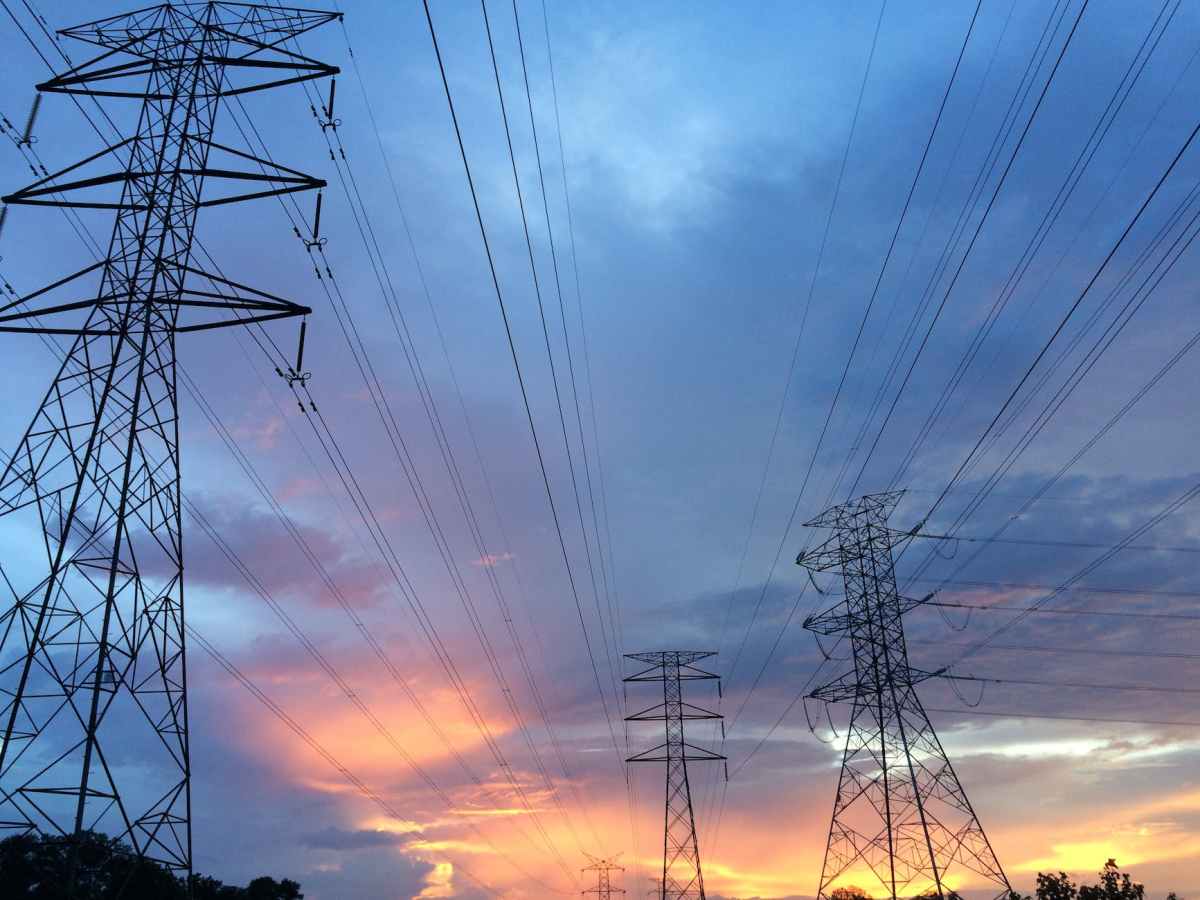
Saint Augustine’s early life was not what we associate with a saint. As a young man he prayed “Lord, make me chaste (pure) – but not yet!” Just now that’s the way, I fear, we are thinking of the environment. Global, national, or local. It’s total human but it needs to be fully recognised for its downside. Yes, we would like to do more to restore our environment and fight climate change but we’d rather it happened tomorrow. Tomorrow, tomorrow.

The instinctive urge to put-off decisions for what appears to be an easier life now rattles down through history. The lesson we might learn is that this approach is generally a bad way of going about thing if long-term success is the aim. Civilizations have ended because they failed to change.

This blinkered approach could be called political expediency. It’s at the core of what has become political populism[1]. The drive to persuade an electorate by retreating from commitments and heralding jam today. This fits our social media saturated public debate to the tee. I want it, and I want it now. The future will look after itself.

It’s a sad philosophy. I say that because the premises is that we may as well live well today because we have no control over what happens next. In populist terms, that’s put down to an imaginary conspiring elite that will inevitably win regardless of what you do. Truly nonsense.

That might have been true in the stone age but its far from true in the 21st Century. In reality, and on average, individual citizens have more choice than they have ever had. I say “on average” because there’s a billion people in the world who still live on the breadline.

Anyway, my point is that putting-off environmental measure is foolish. I’m reacting to a Conservative Energy Minister, has said that the UK government will “max out” remaining reserves of North Sea oil and gas[2]. I’s almost as if the Minister thinks this has no impact. That’s other than short-term political gain amongst climate sceptics and right-wing newspaper owners.

If the target for Net Zero is – yes but not yet – there’s virtually no hope of achieving the goal. Events being what they are there will never be a perfect time to stop using fossil fuels. I’m in agreement that the rundown of fossil fuel use should be graduated. However, putting off real change doesn’t make change easier. In fact, it makes change harder.

In the run-up to a UK General Election the possibilities for policies of self-harm are all too evident. A Conservative Government desperate to cling on to power will wriggle and produce contorted justifications for delay. It’s a basic instinct.

I’m not saying that we should all become zealous exponent of hairshirt policies. What is desperate is that we don’t become side-tracked from practical measures that can be practically taken. Taken now.

Work as though everything depended on you, and the choices you make. That needs to be true of Government Ministers as much as every one of us[3].


[1] https://www.thoughtco.com/populism-definition-and-examples-4121051

[2] https://www.ft.com/content/407b834e-a503-4de9-acab-fcf88d76dbb3

[3] Pray as though everything depended on God. Work as though everything depended on you. Saint Augustine

Short-sighted

None of that comes cheap.

OK. Why are mini-nuclear power stations such an irrational idea? The industry is selling these untried, untested power station as completely unlike that which has gone before. A Conservative Minister has been echoing their marketing brochures.

Let me say, with power generation there are some basic realities that remain the same.

Fuel must be transported to power stations and waste must be removed from them on a regular basis. For coal, that was the reason for the sitting of large power stations in the past. For gas, there was more flexibility in location, but the costs of transportation still needed to be minimised. For such innovations as waste-to-energy plants, proximity to the source of waste presented a major problem. Neighbourhoods rarely invited these plants to be built close by.

Spreading the distribution of nuclear fuel and waste around the country doesn’t sound like a good idea to me. Cost of transportation are high. Safety is paramount. Security is always a grave concern.

Now, I understand the need for limited numbers large-scale nuclear power stations. They provide a reliable base load when the renewable sources of power are not available. The wind doesn’t blow.

Although, there are a variety of different international companies in the nuclear business the notion of a “free market” in the conventional sense is not a real prospect. The investments needed to be competent and meet regulatory requirements in the nuclear business are huge. Projects are there for the long-term. A whole working career of a nuclear engineer may be locked to one technology.

Experience has shown us that a goal of zero accidents rarely delivers a reality of zero accidents. These are complex engineered systems. It doesn’t matter if they are big or small the complexities remain. Yes, safety can be managed in a safety critical industry but there had better be preparedness for worst possible outcomes[1]. With these nuclear plants decommissioning and recovery from significant incidents of contamination must be accounted for in any design, implementation, and operation. None of that comes cheap.

Overall, in Britain there are much better paths to travel than the mini-nuclear one.

It absolutely astonishes me that, given the enormous tidal range of the Severn Estuary[2] we have never captured the energy of those waters. Equality in a nation, with a coast as large as ours, we have only ever dabbled in wave power[3]. Let’s have some genuine innovation. Let’s think like the Victorians and build for the long-term.

Why are we so incredibly short-sighted in Britain?


[1] https://www.bbc.co.uk/news/world-13047267

[2] https://en.wikipedia.org/wiki/Severn_Barrage

[3] https://en.wikipedia.org/wiki/Salter%27s_duck

Design

Forewarned is, fore armed.

Getting it right by design matters. If a designer gets it right, then everyone who follows gets what they expect. Why am I writing these words? Well, a dumb message has come up on my computer. What I call dumb is a message that tells me something has happened but gives me no clue as to what to do next. It’s about as useful as a chocolate fire guard as they say.

Messages like: “Operation failed with unexpected error” in the top right of the screen are not helpful. Pop-ups like this are an indication that this is not a good design. It’s a kind of catch all statement that means we haven’t got a clue.

The usual response to such a message is to start over again in the hope that this is a one-off occurrence. So, that’s what I did. Guess what the same situation occurred. Not having a better strategy available, I did the same again. Same result. Thank you, Microsoft Teams.

While I’m on about that company another small but annoying bugbear comes to mind. Microsoft Mail works well enough. However, a forced error happens every so often. I find that I’ve deleted a message that I’d intended to flag to remind me to do something. A hunt for the message usually finds it mixed up with the pile to be deleted. When the delete button and the flag button are next to each other this error is almost inevitable. Why did the designers do this foolish thing?

I’ll not beat up on Microsoft too much, given that just about every software company has one of two of these annoyances to ruin your day. Good job my personal safety doesn’t depend on this stuff, I say. So much for commercial off the shelf software in 2023.

A video scrolled up on my iPad. It was that man who likes to take machines apart: James May. A couple of million people have viewed his video titled: “James May’s Tesla Model S has failed![1]

It’s a good reminder that designers need to think about situations that go badly as much as they need to think about them going well. Vehicles do sit around in garages. Not everyone is used every day. It’s not the fault of the owner if they do not run the vehicle for a while.

Electrification is great when everything works. However, a simple manual reversion should be available when the electrics are not there to do their thing. Afterall, we don’t yet have a reliable battery that lasts forever. The door won’t open because the battery’s flat is as useful as the message highlighted at the start of these words.

Oversights during the engineering design process happens when the pressure is to get a product to the marketplace as quickly as possible. Maybe this is one of them to look out for in future. I will not be smug. This sort of obvious when you know it flaw is as likely to happen in aviation as it is in other industries. Forewarned is, fore armed.

There are also the wonders of feedback. Having made a design error, it’s mechanics who often uncover it, figure it out and then find a fix. This is a shout out for easy and open reporting.


[1] https://youtu.be/NsKwMryKqRE

Titan’s fate

Firstly, condolences to the families and friends of those who perished in the deep ocean last week. This fatal tragedy took place in the full glare of the public spotlight. It’s time to give those affected time to grieve for their loss.

I will address the subject of vehicle safety in a technical manner. It’s immensely sad when what is known must be re-learnt in such a tragic way. By their nature, passenger vehicles that enter hostile environments will present high risks. There is always a likelihood of an event of significant severity as to cause injury. The imperative should be to reduce that probability as much as possible.  

The Transportation Safety Board of Canada (TSB)[1] has launched an investigation into the events that led to the loss of the submersible called: Titan. That organisation will do a detailed investigation into the reasons behind the accident that led to the deaths of five people on-board. 

There’s much conjecture about the factors involved in this catastrophe. News media and social media are awash with speculations. The facts are that contact was lost with the Titan’s support vessel and a catastrophic event took place[2].

What has come to light in the aftermath of this event is the public statements made by the driving force behind the Titan project. This has been contrasted with the those from the submersible community who spoke out on their concerns about the project.

My reflection on this information is to say that – safety starts at the top. If the entrepreneurs who promote these adventures are not literate, humble, and vigilant then outcomes are going to be negative. Those in leadership positions need to listen to those with expertise in their field of endeavour. Accepted, that it’s not the case that everyone will agree all the time about operational and technical risks but an open dialogue is vital.

I know that innovation often takes the path of trying, failing, trying again, failing, and trying again to eventually succeed. However, no vehicle should enter public service without sufficient proving.  Independent oversight adds value too. The cultural framework within which this happens shapes success or failure. That’s why there’s good reason for design certification. That’s to apply time and energy to extensive testing, applying recognised standards and listening to reputable expertise. At its best it’s an opportunity to draw on widespread experiences from the past – good and bad.

Systems that prove to be safe most often come about from those who take on knowledge, experience, and learning. Yes, this work is not free. It can cost much to go from theory to practice. When the impact of failure, when the outcome is tragic for families, loved ones and colleagues these expenses are not so large.

We must take every opportunity to learn from such fatal accidents to make them extremely rare. 

#Safey Management #SystemSafety #HumanFactors #SafetyCulture


[1] https://www.tsb.gc.ca/eng/medias-media/deploiement-deployment/marine/2023/m23a0169-20230623.html

[2] https://www.tsb.gc.ca/eng/enquetes-investigations/marine/2023/m23a0169/m23a0169.html

Weight

Projects aiming to electrify aviation are numerous. This is one strand to the vigorous effort to reduce the environmental impact of civil aviation. Clearly, feasible aircraft that do not use combustion are an attractive possibility. This step shows signs of being practical for the smaller sizes of aircraft.

Along the research road there are several hurdles that need to be overcome. One centres around the source of airborne power that is used. State-of-the-art battery technology is heavy. The combinations of materials used, and the modest power densities available result in the need for bulky batteries.

For any vehicle based on electric propulsion a chief challenge is not only to carry a useful load but to carry its own power source. These issues are evident in the introduction of electric road vehicles. They are by no means insurmountable, but they are quite different from conventional combustion engineered vehicles.

The density of conventional liquid fuels means that we get a big bang for your buck[1]. Not only that but as a flight progresses so the weight of fuel to be carried by an aircraft reduces. That’s two major pluses for kerosene. The major negative remains the environmental impact of its use.

Both electricity and conventional liquid fuels have a huge plus. The ground infrastructure needed to move them from A to B is well understood and not onerously expensive. It’s no good considering an aircraft design entirely in isolation. Any useful vehicle needs to be able to be re-powered easily, not too frequently and without breaking the bank[2].

Back to the subject of weight. It really is a number one concern. I recall a certain large helicopter design were the effort put into weight reduction was considerable. Design engineers were rushing around trying to shave-off even a tiny fraction of weight from every bit of kit. At one stage it was mooted that designers should remove all the handles from the avionics boxes in the e-bay of the aircraft. That was dismissed after further thought about how that idea would impact aircraft maintenance. However, suppliers were urged think again about equipment handling.

This extensive exercise happened because less aircraft weight equated to more aircraft payload. That simple equation was a massive commercial driver. It could be the difference between being competitive in the marketplace or being overtaken by others.

Aviation will always face this problem. Aircraft design is sensitive to weight. Not only does this mean maximum power at minimum weight, but this mean that what power that is available must be used in the most efficient manner possible.

So, is there a huge international investment in power electronics for aviation? Yes, it does come down to semiconductors. Now, there’s a lot of piggybacking[3] from the automotive industries. In my view that’s NOT good enough. [Sorry, about the idiom overload].


[1] https://dictionary.cambridge.org/dictionary/english/bang-for-the-buck

[2] https://dictionary.cambridge.org/dictionary/english/break-the-bank

[3] https://dictionary.cambridge.org/dictionary/english/piggybacking

Safety is poltical

It’s a surprisingly controversial statement. It’s particularly difficult for those working in traditionally technical specialisations to come to openly acknowledge “politics” in their work. By raising the subject, it’s almost as if one had stepped in something unpleasant.

I recall the period when a new aviation agency was being established. That’s in the dawn of this new century. EASA, the European Aviation Safety Agency came into operation in 2003, but the debate about its shape and form occupied many of the preceding years. Politicians, administrators, technocrats, and industry were vocal about the direction to take.

The impact of liberalising European civil aviation, that stated in the 1970s, was primarily a political drive. It envisaged both a commercial and social benefits. Separating the operation of aviation from the vagaries of political personalities seemed to offer a future that would be led by the customers needs.  

The general acceptance that State control of businesses, like airlines and manufacturers, had a stifling effect, limiting innovation and opportunity was questioned but not so much by those with the power to make changes. Momentum pushing liberalisation was given a boost by the apparent successes of businesses, like Southwest airlines[1] in the US. Freddie Laker had a big influence in the UK[2].

In these decades of transformation aviation safety has always been heralded as a priority. Whoever is speaking, that’s the line that is taken. Safety is number one. What industry has experienced is a decades long transition from the ways and mean of trying to control safety to an approach more based on managing potential outcomes. This is characterised in a shift from mostly prescriptive rules and regulations to other more adaptive approaches.

Back to the proposition that safety is political. There are several ways to address this as an exercise of analysis. There’s a mammoth amount of historical evidence to draw upon. However, my thoughts are more to do with anecdote and lived experience.

Number one is that our institutions are shaped by political decision-making. This is to varying degrees, from year to year, but international bodies, national ministries, administration, authorities, agencies, committees, learned bodies, all depend upon political support. If they do not muster and sustain this support, they will wither and die.

Number two, change is a constant, failures happen but safety achievement depends on a consistency, dependability, and stability. Maintaining public confidence. There lies a dissonance that must be reconciled. Governments and politicians instinctively insulate themselves in such cases and so the notion of “independent” regulation is promoted.

Number three, arguments for liberalisation or intervention do not stop. The perpetual seesaw of cutting “red tape” and tightening rules and regulation may settle for a while even if these are always in movement. This can be driven by events. The proximity of fatal accidents is always a significant political driver. Domestic fatalities, where consequences are borne locally, will have much more impact than similar events 1000 miles away.

Does any of this matter? Afterall it’s a context that exists, de-facto. It’s no good saying: stop the world I want to get off.

Yes, it does matter. Accepting that safety is political helps dispel some of the myths that persist.

A prerequisite to safety success is provision of adequate resources. Constantly cutting a budget has consequences. A blind drive for efficiency that doesn’t effectively measure performance invites failure. Much as lack of planning invites failure. Reality bites.

It’s reasonable to question of investigatory or regulatory “independence” from time-to-time. The reasons for safety decision-making can be purely objective and technical. Questioning that “purity” need not be impugning politicians, administrators, or managers in their motivations. Shedding light on contextual factors can help learning and avoidance of future failures.

Accepting the perpetual political seesaw of debate can help a great deal in meeting safety goals. What this means is the importance of timing. Making a proposal to tighten a rule concerning a known deficiency can meet a stone wall. Making the same proposal after an accident, involving that deficiency, can go much better. Evidence that is compelling can change minds. This is reality.


[1] https://www.southwest.com/about-southwest/#aboutUs

[2] https://simpleflying.com/laker-airways-brief-history/

UAP

….none of us are familiar with the variety in shape and size of flying machines currently being designed and developed for general use

There was a time when anyone raising the issue of the potential for an asteroid to send humans back to the stone age was mocked and derided. Anyone bringing apparent sci-fi plots into Parliament was jeered. Now, the subject is studied with intensity and considerable resources. The probabilities of Near-Earth Object[1] (NEO) impact is calculated, and small asteroid and comet orbits are monitored in detail.

Really bad films, like the one starring Bruce Willis have a lot to answer for. That space between fiction and reality gets filled with more than a few eccentrics and conspiracy theories. Trouble is that gives you, and me licence to smirk anytime cosmic occurrences come into discussion.

I must admit I like the term Unidentified Anomalous Phenomena (UAP) better than UFO. They are airborne phenomena, they are unidentified until we know better, and they are anomalous. Although, most reports are attributed to things that are known, even if they are rare events. Some are pooly reported and only scant evidence is avialable.

Discovering all there is to know about such airborne phenomena is a matter of both safety and security. However remote it might seem, part of this is the safety of aircraft in flight. I know of no examples of extra-terrestrial objects colliding with aircraft but it’s not impossible. I’m reminded of that classic picture of a bullet hitting a bullet in-flight and fusing together. It’s from the Battle of Gallipoli.

We might be entering a new era of transparency in the scientific study of UAP. This is a wholly good thing and highly necessary given the coming expansion in the number of air vehicles in flight. If Advanced Air Mobility (AAM) is going to do anything, it’s going to led to an increase in aviators and public reports. For one, none of us are familiar with the variety in shape and size of flying machines currently being designed and developed for general use. It’s likly that red and green lights moving through the sky at night is going to prompt public reports of the “unknown”.

Perspective plays a part too. A small drone close can look like a large airship at distance. As environmental conditions change so the perception of airborne objects can change dramatically. So, what we might observe and confidently attribute to be a drone or helicopter or aircraft in-flight is not always definitive. Applying disciplined scientific analysis to the data that is available has benefits.

Given that our airspace is likely to become ever more crowded, NASA’s study[2] of UAP has much merit. Recognising that resources are needed for this work is a lesson most nations need to learn. We can sit on our hands or giggle at the more ridiculous interpretations of observations, but this kind of reporting and analysis will be advantageous to aviation safety and security. It’s part of giving the public confidence that nothing unknown, unmanaged or uncontrolled is going on abover their heads too.

POST: UFOs: Five revelations from Nasa’s public meeting – BBC News


[1] https://neo.ssa.esa.int/home

[2] https://www.youtube.com/watch?v=bQo08JRY0iM

Information

The issue is how far do you go and who makes the decision as to what’s relevant?

Investigation is about learning. In every crisis, accident, or major event some things will be done well, and things will be done badly. In essence a good investigation needs to extract, from all the available information, the lessons to be learned. Putting on record what happened and why will help those who face future events.

If there’s a role in apportioning blame or liability it needs to be made explicit. The problem is obvious. Inclination to avoid blame or liability may motivate contributors to an investigation to be less than frank or cooperative with the process. Independence and respect for privacy can help alleviate fears that information could be misused.

An inquiry, or investigation needs a complete narrative of what happened and when. It’s a fundamental part of establishing the grounds on which the process can proceed to a conclusion. If that narrative is inaccurate or missing information or manipulated the results of the end process may be deemed questionable.

The bizarre situation of the moment is that of a government, who sets-up an inquiry is fighting that same inquiry. Defending the government’s decision to hold back certain information, the argument is put forward that some information is “unambiguously irrelevant”.

Most of us would agree that Boris Johnson’s shoe size might be deemed irrelevant. The issue is how far do you go and who makes the decision as to what’s relevant? Should a party under investigation, namely the government, be the entity to make the decisions on relevance?

For the sake of objectivity, I’d say that it’s for the leader of an inquiry or investigation to determine what’s relevant. To argue against that position is to suggest some potential indiscretion or failure of the process may result in unnecessary embarrassment of those making submissions. That demonstration of suspicion and lack of faith in the inquiry or investigation process may go some way to undermine its purpose.

The Cabinet Office would do well to consider if it’s serious about learning lessons from the COVID pandemic. What is certain is that there will be another global pandemic. Now, that may not be for a decade or several decades, but it’s inevitable. Better the country be prepared. Better there be prevention of avoidable errors. 

POST: Boris Johnson at risk of losing Covid inquiry legal funding, Whitehall warns | Financial Times (ft.com)

Happy Birthday EASA

Happy Birthday EASA. 20 years is a good age

For me, it was a peculiar day in July. It was a baking hot Brussels. The sun beat down and the city’s trams were full of sweaty travellers. The interview room was a classic board room style. Modern office, heavy polished wooden table, and heavy black leather chairs. On a hot bright sunny summer day that was not a pleasing formula for a formal interview.

I was surprised at the result. I got the job. A moment in July 2004 became a pivotal moment in my aviation career. Not quite 20-years ago. The European Aviation Safety Agency (EASA)[1] was already up and running in a shared office in a Brussels suburb. It was the bare bones of an organisation in the process of a rapid build-up. Discussion about the locations of the Agency’s eventual headquarters were concluding.

That kicked-off my 11-years in Cologne. I arrived in the city when the tower building was being constructed and as the staff had just moved from Brussels to take up the new headquarters. It was December 2004. Offices, on the 6th floor of the main building were buzzing. The Agency was small in numbers and running fast to fulfil its new responsibilities.

European aviation safety regulation was going through a major change. Up until September 2003, Europe’s National Aviation Authorities (NAAs) acted as a partnership within the Joint Aviation Authorities (JAA)[2]. A body of rules and regulations and ways of working had been harmonised. However, because of the “club” like nature of the JAA there remained unresolved disagreements, incontinences, and a confusing representation at international level.

The legislation that called for the formation of EASA was set to unify aircraft certification and rulemaking activities and drive a consistency in the application of standards across Europe. It was the start of a long road to build world-class civil aviation safety regulator. It worked.

I experienced the first decade in Cologne. The storming and norming. The extensions of remit and turbulent days when we were finding our way. Several tragic fatal accidents and a least one Europe wide crisis. Now, the Agency is about to start its third decade.

EASA is undisputed as the European organisation that talks to the international aviation community. It works in lockstep with the European Commission. It is an achievement to be celebrated.

Yes, I find it sad that the UK is no longer a member of the Agency. But that doesn’t stop National Aviation Authorities (NAAs) working together in a constructive and positive manner[3]. There’s much to be gained from avoiding the fragmentation and conflicts of the past.

Happy Birthday EASA. 20 years is a good age.


[1] What’s #EASA’s story? See what we have achieved in 20 years  https://www.easa.europa.eu/…/looking-back-move-forward…

[2] https://jaato.com/start/

[3] https://www.easa.europa.eu/en/domains/international-cooperation/easa-by-country

Don Bateman

At the start of the jet-age, changes in aircraft design and the improvement of maintenance procedures made a significant improvement in aviation safety. One set of accidents remain stubbornly difficult to reduce. This is the tragic case where a perfectly airworthy aircraft is flown into the ground or sea. Clearly the crew, in such cases had no intention to crash but never-the-less the crash happens. Loss of situation awareness, fixation on other problems or lack of adherence to standard operating procedures can all contribute to these aircraft accidents. So often these are fatal accidents.

One strategy for reducing accidents, where there is a significant human factor, is the implementation of suitable alerting and warning systems in the cockpit. It could be said that such aircraft systems support the vigilance of the crew and thus help reduce human error.

For decades the number one fatal accident category was Controlled Flight Into Terrain (CFIT). It always came top of global accident analysis reports. Pick up a book on the world’s major civil aircraft crashes since the 1960s and there will be a list of CFIT accidents. By the way, this term CFIT is an internationally agreed category for classifying accidents[1]. 20-years ago, I was part of a team that managed these classifications.

When I started work on aircraft certification, in the early 1990s, the Ground Proximity Warning System (GPWS) already existed. A huge amount of work had been done since the 1970s defining and refining a set of protection envelopes that underpinned cockpit warnings aimed at avoiding CFIT.

UK CAA Specification 14 on GPWS dates from 1976[2]. This safety equipment had been mandated in many countries for certain types of public transport aircraft operation. It was by no means fitted to all aircraft and all types of aircraft operation. This was highlighted when an Air Inter AIRBUS A320 crashed near Strasbourg, in France in January 1992[3].

No alerting or warning system is perfect. GPWS had been successful in reducing the number of CFIT accidents but there were still occurrences where the equipment proved ineffective or was ignored.

I first met Don Bateman[4] on one of his whistles-stop tours presenting detailed analysis of CFIT accidents and the latest versions of the GPWS. At that time, he was working for the company Sundstrand[5], based in Redmond in Washington State, US. It was a time when Enhanced GPWS (EGPWS)[6] was being promoted. This version of the equipment had an added capability to address approaches to runways where the classic GPWS was known to give false results. False alerts and warnings are the enemy of any aircraft system since they reduce a crew’s confidence in its workings.

My role was the UK approval of the systems and equipment. Over a decade the industry moved from a basic GPWS to EGPWS to what we have now, Terrain Avoidance and Warning Systems (TAWS).

When I think of Don Bateman’s contribution[7], there are few people who have advanced global aviation safety as much as he did. His dedication to driving forward GPWS ensured the technology became almost universal. Consequently, there must be a large number of lives saved because of the CFIT accidents that did not happen.

He left no doubt as to his passion for aviation safety, was outstandingly professional and a pleasure to work with on every occasion. This work was an example of a positive and constructive partnership between aviation authorities and industry. We need more of that approach.

POST 1: Don Bateman Saved More Lives Than Anyone in Aviation History | Aviation Pros

POST 2: Don Bateman, ‘Father’ Of Terrain Awareness Warning Systems, Dies At 91 | Aviation Week Network


[1] https://www.intlaviationstandards.org/Documents/CICTTStandardBriefing.pdf

[2] https://publicapps.caa.co.uk/docs/33/CASPEC14.PDF

[3] https://reports.aviation-safety.net/1992/19920120-0_A320_F-GGED.pdf

[4] https://www.invent.org/inductees/c-donald-bateman

[5] https://archive.seattletimes.com/archive/?date=19930125&slug=1681820

[6] https://aerospace.honeywell.com/us/en/pages/enhanced-ground-proximity-warning-system

[7] https://aviationweek.com/air-transport/safety-ops-regulation/don-bateman-father-terrain-awareness-warning-systems-dies-91