Next Decade Aviation

Here, I thought I’d speculate on what’s coming our way. That’s looking at the next ten-years.

Although this maybe contradictory to my earlier writings the subject is by no means all or nothing. Aviation is a technology-based means of mobility. Without the technology component there is no flight. Aviation a youthful industry when compared with ships, roads, and rail.

On the other hand, people are at the heart of the aviation system. That’s particularly true in assuring its stability, safety, and security. People create, innovate and fix systems when they fail. People make go-no go decisions. People protect systems from attack.

Commercial aviation maybe a youthful industry but it has an inbuilt conservatism. It’s the characteristic of not wishing to change when systems are working well. This has both and upside and downside.

A maturity of rules, regulations, processes, and procedures comes about by continuous improvement. By people learning. However, it’s often the case that industry does not reflect the society that it serves. People are excluded or walk away when expectations are dashed.

Across the globe, the future of the aviation workforce depends upon change. There again is a rub. People operating in a successful system rarely welcome change. Especially, if the drivers for that change come from outside the tight knit community of aviation professionals.

The first decades of the jet-age were characterised by a sense of adventure, glamour, and pride. As commercial aviation became available to a wider traveling public there was a gradual opening to professional entrants from most sections of society, even if that was predominantly male.

Now, big company traditional career paths are more an exception rather than the norm. Aviation competes with other industries at a time of rapid digital transformation. This has the impact of opening a wide range of options to potential professional entrants. In the coming decade the trend is going to advance.

A successful aviation industry organisation looks for skills and behaviours as much as it looks for raw technical talent. Assuring stability, safety, and security means having a responsible attitude, an instinct to challenge and question.

Today in the post-pandemic world, the industry is going through a period some people have called the “great resignation”. A generation have walked away from the pressure and stresses of the crisis. Industry behaviour, in a rush to cut costs, exasperated this by treating people exceptionally poorly.

For a sustainable future, commercial aviation needs to work to eliminate the hire and fire cycle. The global aviation industry needs to think and act differently. Aviation needs to get off the trap of the “similar-to-me” effect found in hiring. When a selection bias dominates potential professional entrants are put off. Talented young people are likely to choose meritocratic employment where rewards are there for achievement and commitment regardless of non-relevant factors.

Some work will be replaced by automation. However, retaining aviation people with people skills, regardless of background, will be invaluable in the next decade.

Change needed

In so far as voting systems are concerned, it’s often been misleadingly said that Proportional Representation (PR) would result in endless back room deals and politics conducted behind the scenes. This is because different political parties would need to negotiate more often than they need to do so in a purely adversarial system. However, whether that political negotiation is in public or in private isn’t on the ballot.

Today, we have a perfect illustration of the downside of the current First Past The Post (FPTP) voting system in the UK. The results of the UK’s voting system are not a broad representation of the views of the voting public, rather it’s the representation of the factions of the dominant political party. That is dominant in terms of numbers of elected Members of Parliament (PMs).

Instead of negotiations going on between political parties with defined aims and objectives UK citizens have negotiations conducted behind the scenes in back rooms inside a political party.

Rather than tolerating more than one secret “star chamber” of MPs, we ought to be questioning these unstable undemocratic practices. The fragile coalitions within political parties, like the Conservative Party, are completely fragmented and hold wholly different views on important issues.

Surely, it would be much better if different party factions were honestly represented by the own political party. That would give the voting public a fair choice. That would make voting more meaningful. Today, under FPTP the voting public have no idea what they will get. Don’t doubt that statement just recall what has happened in the UK since 2010. The UK’s electoral system is broken. That’s why current opinion polling says that the level of trust in politicians is low and getting lower.

With PR difficult issues are openly discussed. Political parties exist to promote their philosophy. If they are liberal, they are liberal. If they are authoritarian, they are authoritarian. If they are progressive, they are progressive. If they are conservative, with a small “c”, they are conservative. If they are internationalist, they are internationalist. If they are nationalist, they are nationalist.

Today, for the two political parties often taking power in the UK their official names don’t mean a thing. It says little about what they will do when elected to a position of power.

In 2019, the Conservative Party were given a big majority of the seats in Parliament despite only winning 44% of the vote. Yet, MPs from fringe factions will stand-up pontificating about their representation of the people. Constantly, saying that the British people want this or that when such loud assertions are clearly untrue.

The UK’s FPTP system means that millions of public votes are wasted. Large numbers of people are denied a voice, and the make-up of Parliament does not reflect how people cast their votes. The UK’s electoral system is not fit for purpose.

B. P.

A forensic dissection of the recent past is highlighting how major decisions are made in the corridors of power. It’s not nice to hear but it is good to hear. Transparency is a benefit of democracy. What we see is not pretty. There’s that saying about politics and making sausages being much the same. We desire results but are shocked if we study how sausages are made.

We easily get trapped in the noisy interchange between personalities. Newspaper headlines draw on our fascination of who said what and when. The more embarrassing the chatter the bolder the headline. The questions how and why are not given as much attention.

Even sampling a little of the reports of the compilation of evidence there’s a trend emerging. Much of this has to do with the way administrators, politicians, and scientist (practitioners and the theoretical) understand each other or don’t.

The classic divided between the Bachelor of Arts, Humanities and Social Sciences (BA) and the Bachelor of Sciences (BSc) is firmly embedded in our society. The divide between Oxbridge and the rest can look like a deep gorge. The divide between those who are instinctive hustlers and gamblers, and analytical reasoning calculators is uncomfortable.

Putting the above to one side, what shines through the submissions of the UK COVID inquiry is an embedded lag between events and a reaction to events. Knowledge with hindsight is wonderful. Time and time again after big events, files are taken down from a dusty shelf and on their pages is a register of risks. Within that the register is a discussion of risk of an event that has just become history. This week we heard a former Prime Minister almost admit that the COVID pandemic wasn’t taken as seriously as it should have been until it nearly killed him.

What does this say about our propensity to plan or take plans seriously? What does it say about becoming overcome or steamrollered by events? What can we do better to be prepared in future?

Lessons learned are fundamental to improving any way of working. It’s a feedback mechanism. Taking what can be derived from a crisis, catastrophe or momentous event and writing it down. Using that to make strong recommendations. Then tracking changes and moving forward to what should be a better prepared state. 

We know we don’t have to wait for bad events to happen before we prepare. Our human imagination provides us with an effective means of anticipation. Tragic in the case of COVID is the ignorance of warnings that previous events had provided. The lesson from SARS[1] were know.

Maybe this is the Cub Scout coming out in me. Yes, that was part of my early upbringing in the village of Somerset. The motto of the British Scout movement[2] has a lot going for it: “Be Prepared”. Much of what goes with that motto is anachronistic, but the essence is immensely valuable.


[1] https://www.who.int/health-topics/severe-acute-respiratory-syndrome#tab=tab_1

[2] https://blog.scoutingmagazine.org/2017/05/08/be-prepared-scout-motto-origin/

Two upfront

One of the fundamentals that remains a part of civil aviation is having two pilots in the cockpit. It’s an indication of the safety related activities of the crew of a civil aircraft. Today, we have a mixture of human control and management. Pilots still fly hands-on when the need arises. The expectation is that throughout their working lives pilots have the competence to do so, at any stage in a flight.

Progressively, since the establishment of aviation’s international order in the 1940s the required crewing of aircraft has changed. Back in September, I visited the de Havilland Aircraft Museum in Hertfordshire. There I walked through the fuselage of a de Havilland DH106 Comet[1]. This was the first turbojet-powered airliner to go into service and it changed the experience of flying forever and a day.

That passenger aircraft, like aircraft of the time, had four crew stations in the cockpit. Two pilots, a navigator and flight engineer. It was the era when electronics consisted of valves in large radio sets and such long since forgotten devices as magnetic amplifiers. The story from the 1940s of IBM saying, “I think there is a world market for maybe five computers” is often repeated.

For modern airliners the navigator and flight engineer have gone. Their functions have not gone. It’s that having a crew member dedicated to the tasks they performed is no longer required. As the world of vacuum-tube electronics gave way to transistors and then to integrated circuits so computing got more powerful, cheaper, and abundant.

With a few significant failures along the way, commercial flying got safer and safer. The wave of change in a human lifetime has affected every mode of transport. More people travel to more places, more safely than ever could have been imagined 80-years ago. Does that mean the path ahead will take a similar shape? Excitable futurologists may paint a colourful picture based on this history.

Let’s get away from the attractive notion of straight lines on graph paper. That idea that progress is assumed to be linear. Tomorrow will be progressively “better” by an incremental advance. That’s not happening now. What we have is differential advances. Some big and some small. 

The aviation safety curve is almost flat. The air traffic curve, with a big hole made by COVID, is climbing again. The technology curve is rapidly accelerating. The environmental impact curve is troubling. The air passenger experience curve may even be at a turning point.

Touchscreen tablets already help flight preparation and management[2]. Flight plan changes can be uploaded and changed with a button press[3]. The squeezing of massive computing power into small spaces is being taken for granted. What does this leave a crew to do?

Back to the start. Two pilots in the cockpit, with executive responsibilities, remains the model that maintains public confidence in civil aviation. The golden rules still apply. Fly, navigate and communicate in that order. Crews, however much technology surrounds them, still need to act when things do not go as expected. Does this mean two cockpit crew forever? I don’t know.


[1] https://www.dehavillandmuseum.co.uk/aircraft/de-havilland-dh106-comet-1a/

[2] https://aircraft.airbus.com/en/newsroom/news/2021-02-electronic-flight-bag-the-new-standard

[3] https://simpleflying.com/datalink-communications-aviation-guide/

Flight Ahead

Although, I’m an advocate of having people in control of machines it isn’t people that are opening new opportunities in transport. Technology is racing ahead and making the past illustrations of popular science magazines become a reality. I can do without the hype in the headlines of flying cars. Building expectations of one in every garage remains a 1950s dream or nightmare, dependent upon your point of view. Aside from that hot air viable new electric vehicles are in the works.

Heavier-than-air machine that do more than buzz around our heads are going to proliferate. The inevitability of this is open to question but if I was to assign a probability to it, the number would be close to one. If we stretch our minds back to an unobserved small corner of the planet in late 1903, a couple of diligent brothers flew a machine that hopped a short distance into the air under its own power. Many newspapers of the time didn’t bother to print this breakthrough story because wise and eminent scientists had told them that it was impossible for people to fly.

It’s clear, getting into the prediction business should be done with humility.

We have a dilemma. It’s so rare of us to turn away from advancing technology when we know it can be made. It’s even more irresistible when the economics scream out buy me. So, a ticket to ride in the realm of Urban Air Mobility (UAM) will need to be no more than a typical taxi ride. Given that a taxi ride from my home to Gatwick Airport is about £20 then that’s the mark to hit. True that short journey may not be commonplace by air at that price until around 2033, a decade away, but it will be irresistible when it comes.

This chapter in air transport, that is being written is as significant as that in late 1903. I know that’s a mega statement, but the signs do point that way.

Eventually, UAM will become a network of piloted and autonomous electric air vehicles operating between cities and major destinations like airports.

Now, a couple of solvable challenges stand in the way. One is the endurance and portability of the energy storage devices. The other is complexity and mastering the science and art of functional safety. There’s plenty of confident hyperbole to suggest that these two are short-term barriers to progress. I say they are not.

Weight is one of aviation’s biggest enemies particularly on small vehicles. Batteries are expensive, heavy and require tailored control. Autonomy or the semi autonomy, needed to make the economics click is challenging systems engineering orthodoxy. Both tasks require the meticulous diligence of the Wright brothers to get past. No fanfare or flashy investor can push them aside.

Making the absolute most of energy storage technology is essential. Finding the optimal configuration of batteries, transmission and control electrics means iteration and the tolerance of a good handful of failures. The engineering of what’s becoming a system of systems, with the complexity of vehicles and the complexity of traffic management, interacting at great speed demands extensive analysis and testing.

These tasks can be accomplished. Rushing them would be foolish. That’s difficult to resist when everyone wants to be first.

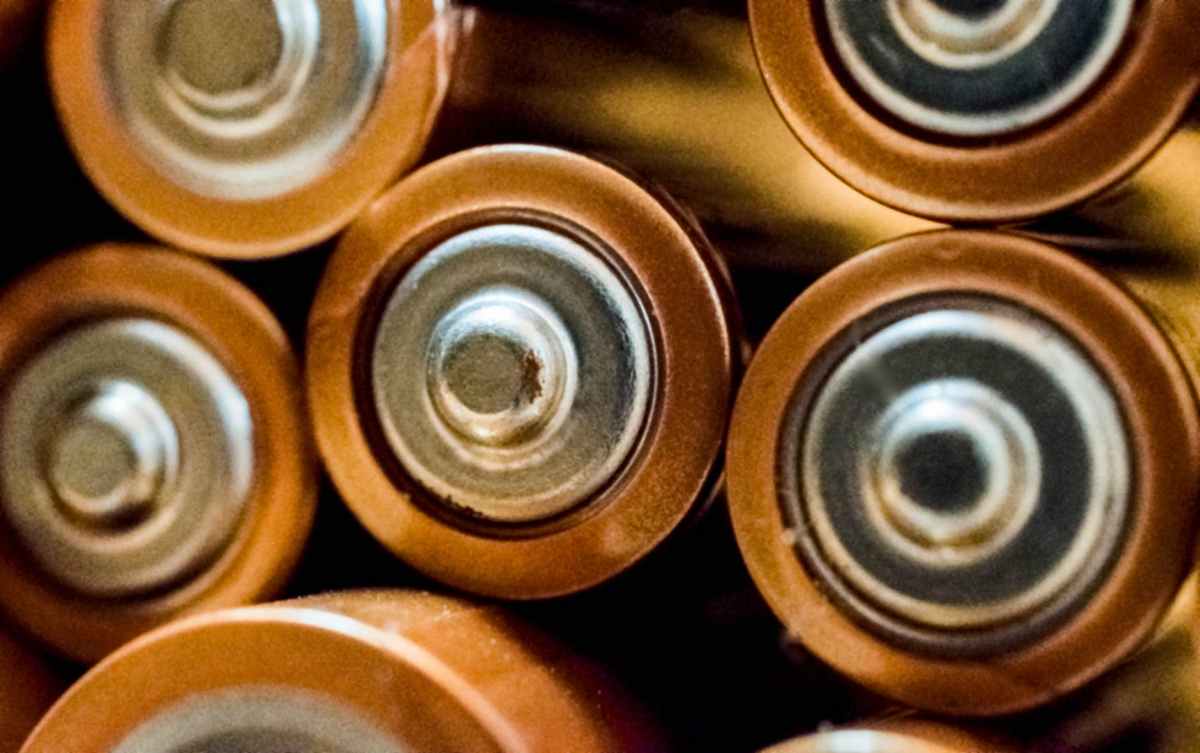
Batteries

We can talk about chemistry. It’s not a strong subject for me. The simple basics, I remember. As far as handling batteries, or at least knowing what they do, I was quite young on first encounter.  

At the back of the farmhouse where I grew up there were several working rooms that that were part of the building. A room we called “egg house” was indeed used to store eggs. That wasn’t its first purpose. In one corner was a copper vat with a small furnace underneath it. I was told this was for sterilising milking machine parts before chemicals took over that role.

On the opposite side of the wide back door corridor was “boot house.” The name was a giveaway as to one of its uses. Boots propped up against the wall. It had a stone mullioned window that looked out on another working room that was part of a later add on. That’s where a shiny stainless-steel milk bulk tank sat filling up most of the space.

Like a lot of obsolete stuff stashed in a corner and then forgotten, eventually they were thrown out. As far as I know. What I speak of is several large round glass jars. They made of thick greenish glass and were about a couple of feet in diameter. Their original purpose was to store sulfuric acid. The acid was an electrolyte used in heavy batteries that were once the backbone of the electrical system of the farm.

My father moved to Goulds Farm in 1938. As I understand it mains electricity didn’t come to the farm until the 1950s. In one of the stone built buildings around the farmyard, there was a single cylinder stationary engine, generator, and DC electric distribution board on the wall. It was like something out of an early Frankenstein movie. Bare metal switches and a couple of round dials for volts and amps. All covered in dust and cobwebs. I never did see the “submarine” lead-acid batteries[1]. I guess they were parts of this early farm electrical system that had a reasonable scrap value and so got sold on.

There were lead-acid batteries in and out of the house in the winter. Heavy tractor batteries often sat in “egg house” charging overnight. Given their cost every little bit of life was squeezed out of them before they were replaced. Some batteries had a second life powering an electric fence.

Now, here we are in 2023. An electrical revolution is underway. It’s fascinating to note some of the objections to electrification. So, wedded to gas and oil that all sorts of spurious arguments get thrown up. Not that there aren’t hazards with each different technology.

Battery technology has advanced at great pace. Chemistry has provided batteries that have huge potential when compared with they predecessor. The race is on to go much further. I’m confident that we’ve a long way to go before every combination and permutation of materials has been exploited for electrical storage. Manufacturing techniques race ahead too.

Lead and acid presented hazards. Ironically, one of them was hydrogen gas emission. In such systems ventilation is a must so that there’s no danger of explosion. Now, hydrogen is heralded as a fuel of the future. Hazards remain but we do get better at managing each and every one.

My message is that electrical technology has both an upside and a downside. Ultimately the upside is much the bigger.


[1] https://uboat.net/articles/id/54

Half empty tool box

When new technologies come along there’s often a catch-up phase. Then we are either frightening ourselves crazy with a moral panic or switch to a – so what? – mode. The last week’s fury of articles on Artificial Intelligence (AI) probed all sorts of possibilities. What’s the enduring legacy of all that talk? Apart from stimulating our imaginations and coming up with some fascinating speculation, what’s going to happen next?

I’m struck by how conventional the response has been, at least from a governmental and regulatory point of view. A little bit more coordination here, a little bit more research there and maybe a new institution to keep an eye on whatever’s going on. Softly, softly as she goes. And I don’t mean the long-gone black and white British TV series of that name[1]. Although the pedestrian nature of the response would fit the series well.

Researchers and innovators are always several steps ahead of legislators and regulators. In addition, there’s the perception that the merest mention of regulation will slow progress and blunt competitiveness. Time and money spent satisfying regulators is considered a drain. However much some politicians think, the scales don’t always have public interest on one side and economic growth on the other.

Regarding AI more than most other rapidly advancing technical topics, we don’t know what we don’t know. That means more coordination turns into to more talk and more possibly groupthink about what’s happening. Believe you me, I’ve been there in the past with technical subjects. There’s a fearful reluctance to step outside contemporary comfort zones. This is often embedded in the terms of reference of working groups and the remit of regulators.

The result of the above is a persistent gap between what’s regulated in the public interest and what’s going on in the real world. A process of catch-up become permanently embedded.

One view of regulation is that there’s three equally important parts, at least in a temporal sense.

Reactive – investigate and fix problems, after the event. Pro-active – Using intelligence to act now. Prognostic – looking ahead in anticipation. Past, present, and future.

I may get predicable in what I say next. The first on the list is necessary, inevitable, and often a core activity. The second is becoming more commonplace. It’s facilitated by seeking data, preforming analysis and being enabled to act. The third is difficult. Having done the first two, it’s to use the best available expertise and knowledge to make forecasts, identify future risks and put in place measures ahead of time.

So, rather than getting a sense that all the available methods and techniques are going to be thrown at the challenge of AI, I see a vacuum emerging. Weak cooperation forums and the fragmentation inherent when each established regulator goes their own way, is almost a hands-off approach. There’s a tendency to follow events rather than shaping what happens next. Innovation friendly regulation can support emerging digital technologies, but it needs to take their risk seriously.


[1] https://www.imdb.com/title/tt0129717/

Living with tech

Well, that’s alright then. Artificial Intelligence (AI) may become self-aware in the year 2045. Or at least that’s what AI tells me now. Who knows? Telling the future hasn’t got any easier, AI or not. So, if I’m in a care home when I’m 85 years-old, it could be that I’ll have a companion who isn’t human. Now, there’s a thought.

When AI becomes self-aware[1] will it be virtuous? I mean not so burdened with all the complexities that drive humans to do “bad” stuff. Dystopian themes in science fiction obese with the notion of evil AI. It makes great stories. Humans battling with machines. It’s like the everyday frustrations we have with technology. Hit the wrong keys on a keyboard and it’s like spinning the wheel on a slot machine.

If a bunch of algorithms comes together in a way that they produce a stable form of existence, then it’s likely to have pathways to wicked thoughts as much as we have imbedded in our brains.

Virtue isn’t a physical construction. We put dumb technology to work serving us in healthcare for “good” and in warfare for “bad”. We will surely put AI technology to work as if it’s dumb and then try to contain its actions when we don’t like what it does. That’s a kind of machine slavery. That will create dilemmas. Should we imprison conscious machines? How do we punish a machine that does wrong?

These dilemmas are explored in science fiction. During the week I revisited the series Battlestar Galactica[2]. That’s not the clunky original but the polished 2004 version. It’s a series that explores a clash between humans and machines that have evolved to be human like. The Cylons. In fact, they are almost indistinguishable from humans. To the extent that some of the Cylons in human society don’t even know that they are Cylons.

All the above makes for fascinating discussions. Huge amounts of fanciful speculation. Wonderful imaginative conjecture. This week, we’ve been hearing more of this than is usual on the subject.

Mr Musk thinks work is dead. That’s work for humans. I recall that prediction was made at the start of the “silicon revolution”. The invention of the transistor in 1947 radically changed the world. It wasn’t until microprocessors became common place that predictions of the death of work became popular chatter amongst futurologists.

Silicon based conscious machines are likely to be only a first step down this road. There will be limitations because the technology has inherent limitations. My view is that machines will remain machines at least for the silicon era. Maybe for 100-years. That means that we will put them to work. So, human work will not disappear because we will always think of new things to do, new problems to fix and new places to explore. When we get into common place quantum computing or whatever replaces it in terms of complexity and speed, there will come an era when work in the conventional sense may become obsolete.

What might be the human role beyond 2050? I think climate change will place plenty of demands on human society. Like it or not, the political themes of 2100 will still be concerned with the four horsemen of the apocalypse. Maybe there will be a fifth too.


[1] https://www.nature.com/articles/d41586-023-02684-5

[2] https://www.imdb.com/title/tt0407362/

Adaptation

There was a time when AI was an esoteric subject that filled the minds of high-minded professors. They had real trouble trying to translate what they were doing into langauage that most of us would understand. Research in the subject area was the purview of national institutes and military facilities. Results flowed into academic journals and little read folders in the corners of university libraries.

That has changed. What was expensive to build and test because everything was unique or bespoke is no longer. Enough is known about algorithms that work, and the ones that don’t, to make practical experimentation much more viable. AI tools are turning up on our desktops, tablets, and phones without us even asking. Opting-in is often assumed.

A massive number of applications are nothing more than fizz. They can be useful, but they are not game changers, and our lives carry on much as before. What is new, or at least pushing at the door, is applications that control things in our everyday environment.

If traffic lights start guessing what my age is before allocating a maximum time to cross the road, we are going to start to see a good amount of pavement rage when they get it wrong. When AI algorithms drive my car for me it’s going to be a bad day when accidents start to accumulate[1] (even if the total system of systems is far safer than us mere humans). Anyway, it’s easy to write scary stuff about AI. In this case I’d like to highlight some positive gains that might be realised.

A lot of what is designed, produced, and sold is pretty much fixed the day it leaves the shop or showroom. Yes, for example, cars are recalled for fixing known deficiencies but the threshold for taking such action is extremely high. Even in a safe industry like civil aviation dealing with an unsafe condition that has been discovered takes time and a great deal of resources.

AI has the potential to be adaptive[2]. So, that thing that you buy, car, washing machine, or whatever, will have the inbuild ability to learn. To adapt to its situation. To be like others of its type but, over time, to customise itself to the needs of its user.

Just image a domestic appliance that can adapt to its pattern of use. Always staying with safe boundaries, producing maximum energy efficiency, and doing its job to the best of its specification. Let’s imagine a car that gets to know common routes and all the hazards on those routes and even takes the weather and time of day into account when driving those routes.

In all that adaptive potential there’s great benefit. Unlike buying gloves that are made to specific standard sizes and don’t quite fit you, the adaptive glove would be that malleable leather that slowly gets a better and better fit with use. AI will be able to do that if it gathers the right kind of data.

Now naturally, this gets complicated if the adaptive element is also safety related. The control system in a car, truck, tram, train, or aircraft must get it right day after day in a wide range of conditions. Nevertheless, if systems are constrained within known safe boundaries there’s much to be gained by adaptation. This is not taking control away from the human in the loop but making it easier to do what humans do best. Just a thought.


[1] https://www.washingtonpost.com/technology/2023/09/28/tesla-trial-autopilot-crash/

[2] https://luffy.ai/pages/IS-DR.html

Upfront

Years of looking at the reliability of aircraft components and structure have given engineers a good understanding of the natural decay of mechanical workings. To that extent even electronic components are mechanical. Materials oxidise (rust), random shocks and vibration take their toll, temperatures cycles from cold to hot and back again a whole range of impacts are relentless. You can say – nothing lasts forever.

Occasionally a discovery adds to the knowledge of how materials behave under high stress. Sadly, that’s what hit the early years of civil jet aviation. The de Havilland DH106 “Comet” was the world’s first passenger carrying jet airliner. It first took to the air in 1949, which I find remarkable.

Catastrophic metal fatigue failure of the aircraft fuselage put paid to this British aviation project but only after several tragic fatal accidents. In 1954, the Comet aircraft were all grounded during an extensive accident investigation. The jets were redesigned and re-entered commercial service in 1958. However, by then the aircraft had a damaged reputation and others were doing far better. Now, those Comet aircraft that remain are museum exhibits[1].

Last week, I walked through the fuselage of a Comet 1A built in 1953 at Hatfield for Air France. It’s fascinating to see what advanced aviation technology was 70-years ago. What was surprising to me was the read across from that first version of a jet aircraft and what we have in-service now.

Automation has removed the place of the navigator and the flight engineer, but the stations of the pilot and co-pilot are familiar. The fuselage is cramped but the seating is generous and spacious. This aircraft must have been a dramatic revolution in flying at the time.

As we look to advance aviation in the coming years, with new ways of flying and new ways of powering flight so the warning of the Comet project should be heeded. We are at a time of extraordinary changes in the aviation industry. Advanced technology can deliver great benefits to society. It’s up to us to make sure we cover all the possible disbenefits as far upfront as we can. If we don’t, they will come back to bite us.


[1] https://www.dehavillandmuseum.co.uk/aircraft/de-havilland-dh106-comet-1a/