Horizon

There’s been a couple of false dawns. Now, the morning’s News is that the UK will rejoin the European Horizon programme. The EU’s Horizon Europe Framework Programme (HORIZON) provides grant funding for research priority topics for the years 2021-2027.

The recognition that there’s a common interest in research across Europe is welcome. There are important areas of investigation that go well beyond the resources available to any one country. Benefiting from collaboration is a win-win.

Access to Horizon Europe will be a great opportunity for UK aerospace[1]. It has been in the past and surly will be in the future. Of the billions available there’s a good chunk for funding opportunities for aerospace research and technology. This funding is particularly focused on greening aviation.

Such subjects as the competitiveness and digital transformation in aviation are addressed too. Advancing the regions capabilities in a digital approach to aerospace design, development and manufacturing will be invaluable to UK industry. Artificial Intelligence (AI) used for Machine Learning (ML) and complex modelling are the tools that will be deployed throughout the global industrial environment.

Europe can pioneer the first hydrogen-powered commercial aircraft. The major role the UK can play in advancing this aim is self-evident. Ambition, capabilities, and expertise reside here. The magnification of this to tackle what are enormous challenges can only be a good move.

Projects like ENABLEH2[2] provide a pathway to the introduction of liquid H2 for civil aviation. These projects are not easy, but they do provide a long-term environmental and sustainability advantages. Access to these projects can minimise duplication and the dangers of spending valuable resources on pursuing blind alleys.

Research is not just a matter of hard technology. Without the new skills that are required to meet the targets for a green transition it will fail. Investments in upskilling and reskilling opportunities are equally important to enabling change.

The principles of propulsion of hydrogen and electric systems need to be taught at every level. It’s not academics in lab coats that will keep civil aviation flying on a day-by-day basis. Training programmes for a new generation of manufacturing and maintenance engineers will need to be put in place. Research will underpin that work. 


[1] https://www.ati.org.uk/news/access-to-horizon-europe/

[2] https://www.enableh2.eu/

Learn by testing

Back in the mid-1980s, aircraft system integration was part of my stock-in-trade. Project managing the integration of a safety critical system into a large new helicopter. It was a challenging but rewarding job. Rewarding in that there was a successful new aircraft at the end of the day.

For big and expensive development projects there are a great number of risks. The technical ones focus on functionality, performance, and safety. The commercial ones focus on getting the job done on-time and at a reasonable price. Project managers are in the middle of that sandwich.

Naturally, the expectations of corporate managers in the companies that take on these big challenges is that systems and equipment integration can be done to the book. Quickly and without unexpected outcomes. The practical reality is that people must be well prepared and extremely lucky not to encounter setbacks and resets. It’s not just test failures and anomalies that must be investigated and addressed. Systems integrators are working on shifting sand. The more that is known about overall aircraft flight test performance and customers preferences so technical specifications change.

With cockpit display systems, in the early days, that was often feedback from customer pilots who called for changes to the colour, size or shape of the symbology that was displayed on their screens. What can seem a simple post-flight debriefing remark could then turn into a huge change programme.

That was particularly true of safety critical software-based systems. Equipment suppliers may have advanced their design to a state where much of the expensive design validation and verification was complete. Then a system integrator comes up with a whole set of change that need to be done without additional costs and delivered super-fast. Once a flight test programme gets going it can’t be stopped without serious implications. It’s a highly dynamic situation[1].

I’m writing this blog in reaction to the news coming from Vertical Aerospace. Their VX4 prototype aircraft was involved in an flight test incident that did a lot of damage[2]. There’s no doubt this incident can provide data to feedback into the design, performance, and safety of future versions of their aircraft[3]. Integrating complex hardware and software is hard but the rewards are great.

“Excellence is never an accident. It is always the result of high intention, sincere effort, and intelligent execution.” – Aristotle


[1] https://youtu.be/Gb_eta4mZkc

[2] https://evtolinsights.com/2023/08/vertical-aerospace-identifies-propeller-as-root-cause-of-august-9-vx4-incident/

[3] https://investor.vertical-aerospace.com/news/news-details/2023/Vertical-Aerospaces-VX4-Programme-Moves-to-the-Next-Phase/default.aspx

NATS

A “technical issue” has caused UK National Air Traffic Services, NATS to impose air traffic flow restrictions[1]. They did not close UK airspace. This was not a repeat of the volcanic ash events of early 2010. Going from a fully automated system to a fully manual system had the dramatic impact that might be expected. The consequences, on one of the busiest weekends in the holiday calendar were extremely significant. Huge numbers of people have had their travel disrupted. Restricting the air traffic system ensured that aviation safety was maintained. The costs came to the UK’s air traffic handling capacity and that meant delays and cancelled flights.

Although the failures that caused the air traffic restriction were quickly resolved the time to recover from this incident meant it had a long tail. Lots of spoilt holidays and messed up travel plans.

It is normal for an Air Traffic Service (ATS) provider to undertake a common cause failure analysis. This is to identify multiple failures that may result from one event. So, the early public explanations coming from NATS of the causes of this major incident are surprising. Across the globe, contingency planning is a requirement for ATS. The requirement for the development, promulgation and application of contingency plans is called up in international standards, namely ICAO Annex 11.

So, the story that a single piece of flight data brought down the traffic handling capacity of a safety related system, to such a low level, is difficult to accept. It’s evident that there is redundancy in the systems of NATS, but it seems to be woefully inadequate when faced with reality. ATS comprise of people, procedures, and systems. Each has a role to play. Safety of operations comes first in priority and then air traffic handling capacity. What we know about even highly trained people and data entry is that human error is an everyday issue. System design and implementation needs to be robust enough to accommodate this fact. So, again attributing such a highly disruptive event to one set of incorrect data inputs does not chime with good practice or basic aviation safety management. It is concerning that one action can bring down a major network in this way.

EUROCONTROL would have had been sent a “rogue” flight plan in the same way as UK NATS. Brussels does not seem to have had the problems of the UK.

It is early days in respect of any detailed technical investigation. Drawing conclusions, whatever is said in public by senior officials may not be the best thing to do.

Calls for compensation have a good basis for proceeding. The holiday flight chaos across Europe comes down to one single failure, if initial reports are correct. That can not be acceptable. The incident left thousands stranded abroad with high costs to pay to get home.

Before privatisation, there was a time when the UK Civil Aviation Authority (CAA), ran the nation’s air traffic services[2]. It had a poor reputation at the time. I remember a popular newspaper cartoon saying – and now for some clowns from the CAA. They were entertaining delayed passengers.

UK NATS has done much good work to manage a safe expansion in air traffic and address many changes in technology, it would be a shame if this sad incident marks a decline in overall network performance.

NOTE 1: And this topical cartoon from the Daily Mail in April 2002: https://www.pinterest.es/pin/497577458805993023/

NOTE 2: A report on the incident is to be sent to the regulator, UK CAA on Monday, 6th September. Transport secretary to see Nats’ ATC meltdown report next week | Travel Weekly

NOTE 3: The likelihood of one in 15 million sounds like a low number but it’s not “incredibly rare” by any definition. Certainty when there are around 6000 flights a day in the UK. A duplicate error occurring is a basic error that could be anticipated.


[1] https://www.bbc.co.uk/news/live/uk-66644343

[2] https://commonslibrary.parliament.uk/research-briefings/sn01309/

Even more H2

There’s a couple of Hydrogen related topics that are worth a moment. One is super conductors and the other is fire.

Heavy complex equipment like the magnets for particle accelerators use superconductors[1]. When there’s space and a need for powerful magnetics, materials with special physical properties, at extreme cold temperatures find a good use.

Talk of room-temperature superconductors is far from what it seems. Such a wonderful innovation is a million miles from any practical applications, if it exists at all. There’s no theory of high-temperature superconductivity, but there’s quite a few physicists who would like to find one[2].

Aviation researchers search for high temperature superconductors for electrical propulsion with extraordinary performance is on. The likelihood of success is low, and the timeframes are very long.

When an aircraft is flying at high altitude, the cabin altitude is maintained for the safety and comfort of passengers and crew. Air compressors, valves, sensors, and controllers make sure that cabin pressure remains at equivalent to an altitude of about 8,000 feet, and lower in some cases. So, any kind of simply flammable gasses or materials inside an aircraft cabin are a definite no no. It’s a big hazard.

In flight, the positive pressure should keep leaking gas out of the cabin. That is as long as the sources of fresh air for the cabin are keep well away from potential leaks.

That’s where Hydrogen gas can present trouble. Leaks can be common in dynamic Hydrogen systems. Storage tanks must be very strong to resist pressures and insulated to keep cold, at around –250°C. Escaping H2 gas is tiny. If that’s vented overboard then the risk of explosion or fire is significantly lowered. Knowing the exact flows of liquid or gas is a must.

However, if the gas finds its way into a pressurise cabin that basic option is limited. Not only that but detecting low concentrations of the gas in the first place is mighty difficult. Its odourless but at least Hydrogen isn’t poisonous.

The big safety issue is that the gas has a very wide flammability range (4 – 70% H2 in air mixture)[3]. Yes, H2 needs a spark to ignite. A typical aircraft cabin environment will easily provide that event. Dry air and static electricity will do it even if other sources will not.

To compound difficulties, if H2 does ignite, and not explode, then its flame may not be visible to the human eye. The flame is almost colourless. Certainly, not what most people think of as a gas flame. Gas and flame detectors could be installed in aircraft cabins and baggage compartments. Audible and visual alarms could be generated but what would be the associated crew actions?

All the above requires detailed consideration in aircraft safety assessments. The move away from prescriptive regulatory requirements means each specific aircraft configuration must be addressed. There are no generic lessons to learn from past aviation accidents and incidents.

Although, I think these puzzles can be solved it’s a huge leap from here to there.

POST: Yes, Hydrogen is not for every application. Small scale aviation is better served by electrification Five Hydrogen Myths – Busted. – RMI


[1] https://home.cern/science/engineering/superconductivity

[2] https://www.science.org/doi/epdf/10.1126/science.adk2105

[3] https://h2tools.org/bestpractices/hydrogen-flames

Electric Flight

Hype has its place. Being positive while buffeted by the inevitable ups and downs of life is purposeful and necessary. What’s not true, and might be the impression, is that electric aviation is easy. When forging ahead to build a future, that is not yet realised, there’s a need to maintain confidence. However, being blinded by the light doesn’t help when it comes to tackling difficult problems. Proof-of-concept is just that.

The big positives of electric aviation are the environmental benefits. Electric aviation is spawning many new types of aircraft and the possibilities of new types of operation. So, there’s no doubt that this is an exciting time to be an aviation enthusiast. What a great time to be in aerospace design and manufacturing. Here we are at the start of a new era[1].

My point is that high power electrics, and their control are not “simple” or intrinsically safe in ways other types of aircraft are not. I know that’s a double negative. Better I say that high power electrics, operated in a harsh airborne environment have their own complexities, especially in control and failure management. Fostering an illusion that the time between having an idea and getting it into service can be done in the blink of an eye is dangerous.

The design, development and production of advanced aircraft power distribution, control and avionics systems is not for the faint hearted. Handling large amounts of electrical power doesn’t have the outward evidence of large spinning mechanical systems but never underestimate the real power involved. Power is power.

The eVTOL aircraft in development deploy innovative design strategies. There’s a lot that’s new. Especially all together in one flying vehicle. Everyone wants fully electric and hybrid-electric aircraft with usable range and payload capacity. So, the race is one. Companies are productising the designs for electric motors of powers of greater than 10kW/kg[2] with high efficiency and impressive reliable. These systems will demand suitable care and attention when they get out into the operating world.

A 500kW motor will go up with one hell of a bang and fire when it fails. The avionics may shut it down, but everything will have to work smoothy as designed every day, not just in-flight but on the ground too. Suppressing an electrical fire isn’t the same as a conventional fuel fire either. To fix these machines the care needed will be great. 1000 Volt connections capable of supplying high power can kill.

Not wishing to be focussed on the problems but here I go. Another major problem is the number of qualified engineers, with knowledge and experience who can work in this area. The companies who know how to do this demanding work are desperately searching for new people to join their ranks.

Educators are starting to consider these demands as they plan for the future. Sadly, there’s not so many of them across the globe who are so foward looking.

The global aviation industry needs to step-up and train people like crazy. The demand for Subject Matter Experts (SMEs) is self-evident. That’s true in design, production, and maintenance. Post COVID budgets maybe stretched but without the big-time investments in people as well as machinery success will be nothing but an illusion.

POST1 : Or 150 kW motors when you have many of them going at once. Rolls-Royce Electrical Testing eVTOL Lift Motor | Aviation Week Network

POST 2: Getting ready Preparing Your Airport for Electric Aircraft and Hydrogen Technologies | The National Academies Press


[1] https://smg-consulting.com/advanced-air-mobility

[2] https://www.electricmotorengineering.com/h3x-new-investments-for-the-sustainable-aviation/

H2 is difficult

I mentioned Hydrogen as an option for aviation. The use of Hydrogen to either power jet engines or to power fuel cells to provide electricity is a real technical option. Although the person I was talking to was engaged in environmental work, they shrugged their shoulders when I mentioned Hydrogen. They were certainly not impressed by these possibilities despite our agreement on the urgent need for de-carbonisation.

I can understand why there’s a level of cynicisms. On my part, it’s like the X-Files[1]. Fox Mulder was the believer and Dana Scully the sceptic. Broadly, I want to believe.

Today’s, liquid fuels can be explosive in certain conditions. However, it takes a considerable effort to create the conditions whereby a devastating explosion can occur. The Boeing 747-100 that was Trans World Airlines Flight 800 (TWA 800)[2] exploded, broke up in the air and fell into the Atlantic Ocean in 1996. This was an example of a worst-case scenario. 230 people were lost in that fatal accident. Now, the ignition of a flammable fuel/air mixture in aircraft tanks is better prevented by design and operational procedures.

If Hydrogen is to be viable in civil aviation such hazardous conditions will be harder to prevent. A flammable hydrogen/air mixture can be ignited much more easily than conventional liquid fuels. Such dangerous situations can be prevented but the measure to do so will require robust design and stringent operational procedures.

Several development programmes are underway, making practical Hydrogen powered aircraft viable. A range of aircraft configurations are possible. From hybrid generator and electric motor set-ups to combustion-based propulsion. This work is moving from academic research into commercial possibilities.

There little read across between the behaviour of conventional hydrocarbon liquid fuels and liquid Hydrogen. This would be evident in any serious incident or accident scenario. Let us imagine the case of British Airways Flight 38, in 2006, a Boeing 777-236 that came down at the end of a runway at London Heathrow[3]. A significant amount of fuel leaked from the aircraft after it came to rest, but there was no fire. There were no fatalities.

The breakup of liquid Hydrogen tanks or plumbing in such a scenario would almost certainly result in a significant fire. The mitigating impact of that fire is the lightness of the gas. Instead of liquid fuel pooling on the ground, Hydrogen would burn upward. However, any explosion could be devastating.

So, for large aircraft design the provisions to protect liquid Hydrogen tanks and plumbing must be extensive and extremely robust. This would have to be maintained, as such throughout the whole operational life of the aircraft. These requirements would be onerous.

Keeping crew and passengers well away from Hydrogen infrastructure will be a must.

POST 1: Crashworthiness doesn’t get much of a look-in. Without it there’s going to be a problem over the horizon. https://www.ati.org.uk/flyzero-reports/

POST 2: At least for eVTOL aircraft some work is being done. https://ieeexplore.ieee.org/document/10011735


[1] https://www.imdb.com/title/tt0106179/

[2] https://www.history.com/news/twa-flight-800-crash-investigation

[3] https://assets.publishing.service.gov.uk/media/5422ec32e5274a13170000ed/S1-2008_G-YMMM.pdf

2053, not so far off

Language is marvellous. We have all sorts of ways of expressing ups and downs, goods and bads, dreams and realities. This week this slogan caught my eye: “Our third decade of climate action”. I didn’t know whether to be impressed or to think that’s a long time given how little we have achieved. I suppose both responses are off the mark. Neither should I be impressed or dismissive of what has been done in the last 30-years.

Now, “sustainability” is a word[1] that gets banded around like confetti. That certainly wasn’t the case in 1990. That’s not to say there wasn’t a green movement. Public awareness of the need to change was triggered in the 1970s. It’s only that what was a minority interest is now a mass interest.

If the multiple crises of the 1970s had motivated sustained change, then there’s no doubt we would be in a hugely better place than we are now. A great number of projects would have matured and alleviated the globes environmental burdens. New markets would have developed.

The observation I have is that rather than adopting the tough route of positive change, instead we took the easier path of going for the low-cost option. Oil and gas were as alluring as chocolate and sunny summer beaches. Does this tell us anything useful about human nature? Loads of memes scattered around social media would like us to think so. They are hardly profound. Mostly bland.

Language is marvellous. There’s a catalogue of famous speeches that mark moments in history when change happened. Or at least, times when many people pivoted from one position to another. Powerful words can transform.

Our problem in 2023 is that we are saturated with noise. Endless reassurances that big organisations pump out tell us how well we are doing. Brave politicians implore us to move in a different direction. Campaign groups thrust “in-your-face” activist at us. Sadly, the collective effort is culminating in many people switching off. There’s the real danger that the next 30-years will experience a sluggish movement and even a dumb reversion to past practices[2]. It’s a prospect that hovering in plain sight.

Language is marvellous. What we need, at this moment in history, is not more words but some truly meaningful words that motivate real change. Future generations, and it’s unlikely that I’ll be here after the next three decades, but not impossible, must not be left with an enormous mess brought on by our reluctance to change. Oil and gas are not the future. We must not put off the day we wean ourselves off these two.


[1] https://www.un.org/en/academic-impact/sustainability

[2] https://www.gov.uk/government/news/hundreds-of-new-north-sea-oil-and-gas-licences-to-boost-british-energy-independence-and-grow-the-economy-31-july-2023

Short-sighted

None of that comes cheap.

OK. Why are mini-nuclear power stations such an irrational idea? The industry is selling these untried, untested power station as completely unlike that which has gone before. A Conservative Minister has been echoing their marketing brochures.

Let me say, with power generation there are some basic realities that remain the same.

Fuel must be transported to power stations and waste must be removed from them on a regular basis. For coal, that was the reason for the sitting of large power stations in the past. For gas, there was more flexibility in location, but the costs of transportation still needed to be minimised. For such innovations as waste-to-energy plants, proximity to the source of waste presented a major problem. Neighbourhoods rarely invited these plants to be built close by.

Spreading the distribution of nuclear fuel and waste around the country doesn’t sound like a good idea to me. Cost of transportation are high. Safety is paramount. Security is always a grave concern.

Now, I understand the need for limited numbers large-scale nuclear power stations. They provide a reliable base load when the renewable sources of power are not available. The wind doesn’t blow.

Although, there are a variety of different international companies in the nuclear business the notion of a “free market” in the conventional sense is not a real prospect. The investments needed to be competent and meet regulatory requirements in the nuclear business are huge. Projects are there for the long-term. A whole working career of a nuclear engineer may be locked to one technology.

Experience has shown us that a goal of zero accidents rarely delivers a reality of zero accidents. These are complex engineered systems. It doesn’t matter if they are big or small the complexities remain. Yes, safety can be managed in a safety critical industry but there had better be preparedness for worst possible outcomes[1]. With these nuclear plants decommissioning and recovery from significant incidents of contamination must be accounted for in any design, implementation, and operation. None of that comes cheap.

Overall, in Britain there are much better paths to travel than the mini-nuclear one.

It absolutely astonishes me that, given the enormous tidal range of the Severn Estuary[2] we have never captured the energy of those waters. Equality in a nation, with a coast as large as ours, we have only ever dabbled in wave power[3]. Let’s have some genuine innovation. Let’s think like the Victorians and build for the long-term.

Why are we so incredibly short-sighted in Britain?


[1] https://www.bbc.co.uk/news/world-13047267

[2] https://en.wikipedia.org/wiki/Severn_Barrage

[3] https://en.wikipedia.org/wiki/Salter%27s_duck

Bad Smell

Where is the accountability?

My desk, that’s the one in the early 1990s, faced towards the London Gatwick airport approach. It was a good reminder of the business we were in at the time. Seeing aircraft land and take-off about 500 m from the sheet glass windows of our office block was the daily background. Being in a rugged hermetically sealed building aircraft noise wasn’t a great concern.

Little more than 300m from the building and looking in the same direction was, and still is, the Gatwick sewage works. Its structures were low rise, so it was often hidden behind the greenery. Every so often, a strong wind would blow from the northeast. When it did a distinct odor filled the air. Yes, you guessed it. The sweet smell of the sewerage works would permeate the air conditioning.

This odor was at its most notable in the metrological conditions called an inversion[1]. In fact, given the seasonal frequency of these weather conditions it could be said that Gatwick wasn’t the most sensible place to build a major airport. These occasional pongs were a bit of a joke. Along with the occasional smells of unburnt aviation fuel it was just life at the airport. Lingering odors didn’t stay for long. A day at most and the wind would change direction back to where it normally came from – the south west.

Airports and sewage works are not a good combination for the health of rivers and streams. Long ago, when Gatwick airport was built the tributaries of the River Mole[2] were diverted. The part of that river, the Gatwick stream going north to south, at the end of the runway, is an unattractive V-shaped gully. Not nice for nature at all. There was a track that ran parallel with the river. In the summer, I’d walk that track at a lunchtime as it was a way of getting to the airport’s south terminal.

In the news, Thames Water are being fined for dumping raw sewage in the River Mole[3]. The consequences of the UK’s water regulator[4] taking a relatively hands-off approach to managing water companies, since privatisation in the late 1980s, has come home to roost.

I must admit, I’m not the least bit surprised. So far, the dance of those who shrug their shoulders astonishing. Ministers, regulators, company chiefs are all pointing fingers at each other.

The sequence of events is mind blowing when looked at over several decades[5]. Chief executives attracting massive salaries. Companies being loaded up with debt. Generous payouts to shareholders. Investments in infrastructure not keeping pace.

Ofwat, the regulator talks with incredible complacency. Such weak regulators are no more than a piggy in the middle as the powerful forces of unethical commercial behaviour and disinterested government oversight combine. As millions of families struggle with the cost of living this kind of failure is intolerable. Where is the accountability?


[1] https://www.metoffice.gov.uk/weather/learn-about/weather/types-of-weather/temperature/temperature-inversion

[2] https://www.southeastriverstrust.org/river-mole/

[3] https://www.independent.co.uk/news/uk/crime/thames-water-sewage-spill-gatwick-airport-b2368707.html

[4] https://www.ofwat.gov.uk/

[5] https://www.bbc.com/news/business-66103356.amp

Getting smaller

We are on an unstoppable rollercoaster.

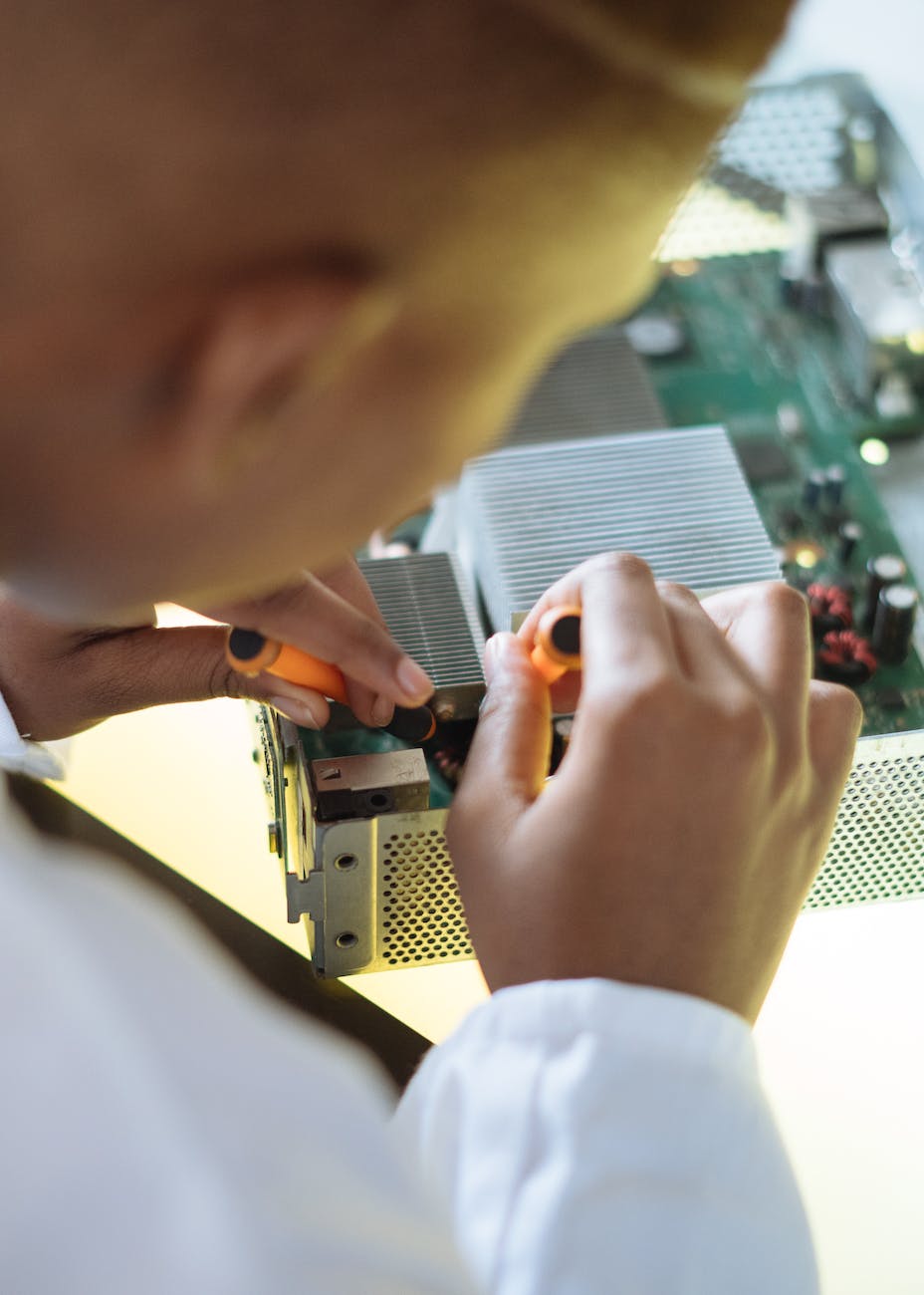
We don’t use the word miniaturisation much. I wonder why? Everyday we take for granted incredibly powerful handheld computing machines. They are only possible because of miniaturisation.

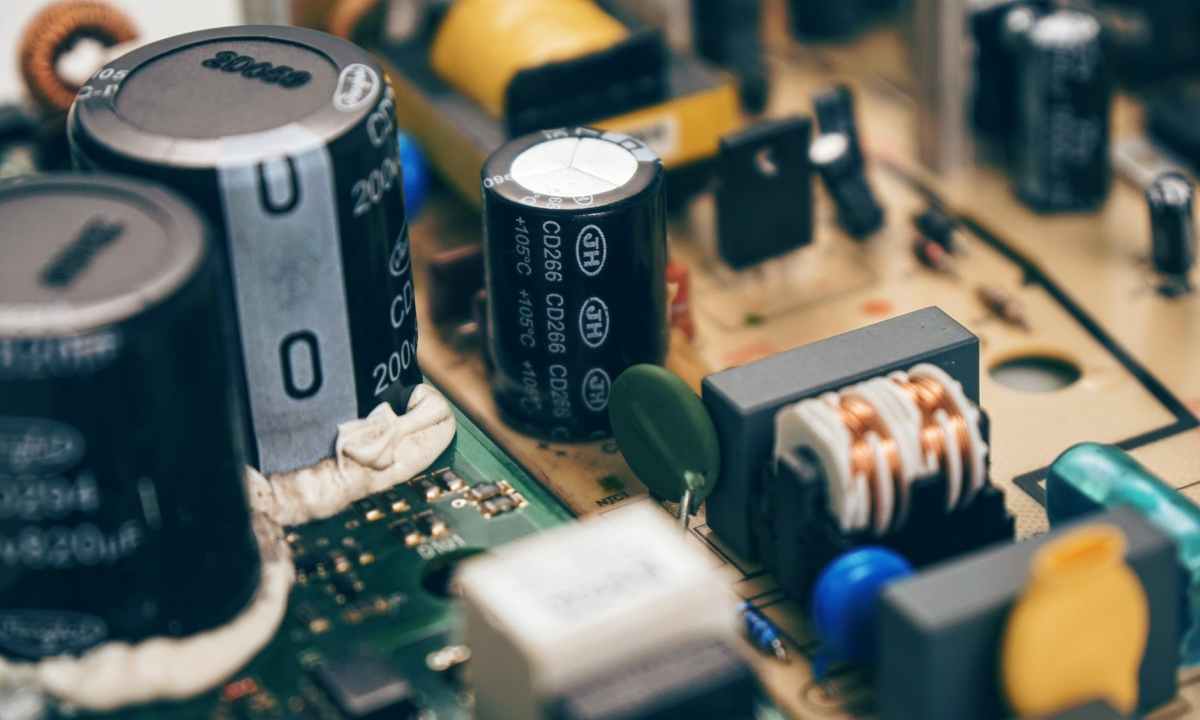
If digital signal processing was your thing in the 1970s, it would have involved several heavy cabinets of electronics. Lots of chunky circuit boards and a reliable way of removing all the heat they generated. As an example, there’s a nice dusty relict of a Cray computer[1] in the Science Museum in London. Later, I’ll read this again on a popular handheld device that has innumerable functions. Just as powerful.

This week, in 2007 the first iPhone was launched[2]. With a reasonably sized touch screen and a camera, it was launched with lots of hype. Rapidly this device started to change not only the marketplace for phones and cameras but the way we live, work and play.

I wasn’t a first adopter. At the time, I think I was faithful to Nokia. But somewhere in a cupboard, I still have an iPhone 3G, the successor to the first iPhone. 16-years on, it feels like there was never a time when we didn’t have the iPhone, or one of its competitors.

Miniaturisation has squeezed capable and flexible digital computing into small spaces. It’s made it possible to concentrate multiple functions into one device. The sheer convenience of that has crushed the non-professional camera marketplace. Streaming music has superseded traditional media, like tape and disks, almost to the point of their extinction.

The societal implications of this technological transformation are much talked and written about but maybe read by few. It’s fascinating to speculate if we have come to the end of Moore’s law[3]. That’s the empirical relationship that seems to hold for semiconductors. So far, Moore’s prediction has held-up well for the semiconductor industry. As the density of semiconductors doubles about every two years, so nothing ever stands still.

We might shrug our shoulders and carry on as if nothing has changed. Or just not care to look at this phenomenon, thinking its irrelevant to the important political machinations of the day. However, the impact of the steps that have led to more and more dependency on personal devices is something we should be concerned about. There’s little, or no possibility of reversion back to more manual ways of doing business. We have been captured by the convenience of affordable internet connected handhelds.

Decarbonisation is the big policy of the day. Miniaturisation is a two-edged sword in this respect. More people, holding more devices, in the billions, which are regularly superseded by the next upgrade all has a downside. Not only that but networks and massive file server farms backing-up the internet as they hungerly consume ever more energy. Thousands of new satellites mean instant connection on any part of the globe.

We are on an unstoppable rollercoaster. We think we have a choice but we don’t.


[1] https://www.computerhistory.org/revolution/supercomputers/10/7

[2] The first iPhone Release Date: 29 June 2007.  

[3] https://en.wikipedia.org/wiki/Moore%27s_law