Electric Flight

Hype has its place. Being positive while buffeted by the inevitable ups and downs of life is purposeful and necessary. What’s not true, and might be the impression, is that electric aviation is easy. When forging ahead to build a future, that is not yet realised, there’s a need to maintain confidence. However, being blinded by the light doesn’t help when it comes to tackling difficult problems. Proof-of-concept is just that.

The big positives of electric aviation are the environmental benefits. Electric aviation is spawning many new types of aircraft and the possibilities of new types of operation. So, there’s no doubt that this is an exciting time to be an aviation enthusiast. What a great time to be in aerospace design and manufacturing. Here we are at the start of a new era[1].

My point is that high power electrics, and their control are not “simple” or intrinsically safe in ways other types of aircraft are not. I know that’s a double negative. Better I say that high power electrics, operated in a harsh airborne environment have their own complexities, especially in control and failure management. Fostering an illusion that the time between having an idea and getting it into service can be done in the blink of an eye is dangerous.

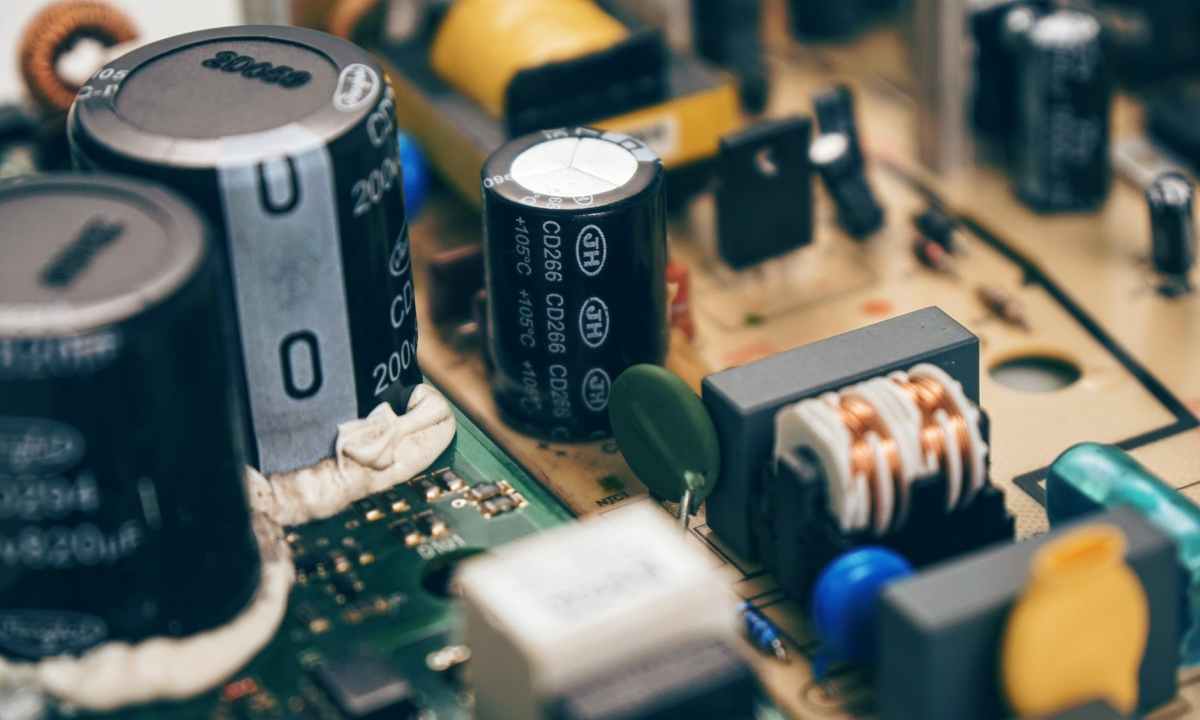
The design, development and production of advanced aircraft power distribution, control and avionics systems is not for the faint hearted. Handling large amounts of electrical power doesn’t have the outward evidence of large spinning mechanical systems but never underestimate the real power involved. Power is power.

The eVTOL aircraft in development deploy innovative design strategies. There’s a lot that’s new. Especially all together in one flying vehicle. Everyone wants fully electric and hybrid-electric aircraft with usable range and payload capacity. So, the race is one. Companies are productising the designs for electric motors of powers of greater than 10kW/kg[2] with high efficiency and impressive reliable. These systems will demand suitable care and attention when they get out into the operating world.

A 500kW motor will go up with one hell of a bang and fire when it fails. The avionics may shut it down, but everything will have to work smoothy as designed every day, not just in-flight but on the ground too. Suppressing an electrical fire isn’t the same as a conventional fuel fire either. To fix these machines the care needed will be great. 1000 Volt connections capable of supplying high power can kill.

Not wishing to be focussed on the problems but here I go. Another major problem is the number of qualified engineers, with knowledge and experience who can work in this area. The companies who know how to do this demanding work are desperately searching for new people to join their ranks.

Educators are starting to consider these demands as they plan for the future. Sadly, there’s not so many of them across the globe who are so foward looking.

The global aviation industry needs to step-up and train people like crazy. The demand for Subject Matter Experts (SMEs) is self-evident. That’s true in design, production, and maintenance. Post COVID budgets maybe stretched but without the big-time investments in people as well as machinery success will be nothing but an illusion.

POST1 : Or 150 kW motors when you have many of them going at once. Rolls-Royce Electrical Testing eVTOL Lift Motor | Aviation Week Network

POST 2: Getting ready Preparing Your Airport for Electric Aircraft and Hydrogen Technologies | The National Academies Press


[1] https://smg-consulting.com/advanced-air-mobility

[2] https://www.electricmotorengineering.com/h3x-new-investments-for-the-sustainable-aviation/

Over the Horizon

Reading Anne Corbett’s article on the Horizon Europe research programme[1], I’m struck by the one step forward and then one step backward walk that the UK is taking. The politics of the moment leaves a UK Prime Minister (PM) dancing on a knife edge. Afraid to fall to the right or to the left of his own party. Having been part of an extremely destructive period in British politics, Rishi Sunak is attempting to re-brand the Conservatives with a colour of nationalism that’s designed to be anything to everybody and as variable as the wind.

From the start of the year, Rishi Sunak has made five promises[2] on economy, health, and immigration. The one on the economy is steeped in blandness. This is presumably to claim success regardless of the situation in the run-up to the next UK General Election. If a PM, of any political party, didn’t want to grow the economy, create better paid jobs and opportunity across the country there would be something distinctly wrong. A wish is fine but what about actions?

I have to say that it’s good to see a UK PM that’s 20-years younger than I am. Particularly when the US is playing out a game of geriatric musical chairs. Russia being plagued with the politics of generations past. China’s building global influence. And to top it all the Earth feeling the impact of climate change like never before.

This why I have such difficulty in understanding Sunak’s attitude to working with our nearest neighbours and closest allies. We have more common interests now than we did in the 1970s when the UK first joined our local trading block. I’m sure the zealots can’t see this fact but undoing the last 40-years is not a good way to forge a future. We can do so much better.

Culham is known for its Centre for Fusion Energy[3]. Its work is collaborative. It needs to be, given the huge costs of working in the field of fusion energy. That’s the way the Sun generates its energy. Here’s an example of the UK being a focal point for European fusion research. Post Brexit, like the problems other research institutions have faced, some researchers returned to continental Europe.

The idiocy of de-Europeanisation serves no one. It’s a residual of discredited political thinking. A Government doesn’t need to advocate re-joining the European Union (EU) but they do need a whole new positive approach to working together with European countries and institutions. Research is at the core of our common interests.


[1] https://blogs.lse.ac.uk/europpblog/2023/07/28/will-the-uk-find-its-way-back-to-horizon/

[2] https://www.bbc.co.uk/news/uk-politics-64166469

[3] https://ccfe.ukaea.uk/

Energy Policy

Saint Augustine’s early life was not what we associate with a saint. As a young man he prayed “Lord, make me chaste (pure) – but not yet!” Just now that’s the way, I fear, we are thinking of the environment. Global, national, or local. It’s total human but it needs to be fully recognised for its downside. Yes, we would like to do more to restore our environment and fight climate change but we’d rather it happened tomorrow. Tomorrow, tomorrow.

The instinctive urge to put-off decisions for what appears to be an easier life now rattles down through history. The lesson we might learn is that this approach is generally a bad way of going about thing if long-term success is the aim. Civilizations have ended because they failed to change.

This blinkered approach could be called political expediency. It’s at the core of what has become political populism[1]. The drive to persuade an electorate by retreating from commitments and heralding jam today. This fits our social media saturated public debate to the tee. I want it, and I want it now. The future will look after itself.

It’s a sad philosophy. I say that because the premises is that we may as well live well today because we have no control over what happens next. In populist terms, that’s put down to an imaginary conspiring elite that will inevitably win regardless of what you do. Truly nonsense.

That might have been true in the stone age but its far from true in the 21st Century. In reality, and on average, individual citizens have more choice than they have ever had. I say “on average” because there’s a billion people in the world who still live on the breadline.

Anyway, my point is that putting-off environmental measure is foolish. I’m reacting to a Conservative Energy Minister, has said that the UK government will “max out” remaining reserves of North Sea oil and gas[2]. I’s almost as if the Minister thinks this has no impact. That’s other than short-term political gain amongst climate sceptics and right-wing newspaper owners.

If the target for Net Zero is – yes but not yet – there’s virtually no hope of achieving the goal. Events being what they are there will never be a perfect time to stop using fossil fuels. I’m in agreement that the rundown of fossil fuel use should be graduated. However, putting off real change doesn’t make change easier. In fact, it makes change harder.

In the run-up to a UK General Election the possibilities for policies of self-harm are all too evident. A Conservative Government desperate to cling on to power will wriggle and produce contorted justifications for delay. It’s a basic instinct.

I’m not saying that we should all become zealous exponent of hairshirt policies. What is desperate is that we don’t become side-tracked from practical measures that can be practically taken. Taken now.

Work as though everything depended on you, and the choices you make. That needs to be true of Government Ministers as much as every one of us[3].


[1] https://www.thoughtco.com/populism-definition-and-examples-4121051

[2] https://www.ft.com/content/407b834e-a503-4de9-acab-fcf88d76dbb3

[3] Pray as though everything depended on God. Work as though everything depended on you. Saint Augustine

Short-sighted

None of that comes cheap.

OK. Why are mini-nuclear power stations such an irrational idea? The industry is selling these untried, untested power station as completely unlike that which has gone before. A Conservative Minister has been echoing their marketing brochures.

Let me say, with power generation there are some basic realities that remain the same.

Fuel must be transported to power stations and waste must be removed from them on a regular basis. For coal, that was the reason for the sitting of large power stations in the past. For gas, there was more flexibility in location, but the costs of transportation still needed to be minimised. For such innovations as waste-to-energy plants, proximity to the source of waste presented a major problem. Neighbourhoods rarely invited these plants to be built close by.

Spreading the distribution of nuclear fuel and waste around the country doesn’t sound like a good idea to me. Cost of transportation are high. Safety is paramount. Security is always a grave concern.

Now, I understand the need for limited numbers large-scale nuclear power stations. They provide a reliable base load when the renewable sources of power are not available. The wind doesn’t blow.

Although, there are a variety of different international companies in the nuclear business the notion of a “free market” in the conventional sense is not a real prospect. The investments needed to be competent and meet regulatory requirements in the nuclear business are huge. Projects are there for the long-term. A whole working career of a nuclear engineer may be locked to one technology.

Experience has shown us that a goal of zero accidents rarely delivers a reality of zero accidents. These are complex engineered systems. It doesn’t matter if they are big or small the complexities remain. Yes, safety can be managed in a safety critical industry but there had better be preparedness for worst possible outcomes[1]. With these nuclear plants decommissioning and recovery from significant incidents of contamination must be accounted for in any design, implementation, and operation. None of that comes cheap.

Overall, in Britain there are much better paths to travel than the mini-nuclear one.

It absolutely astonishes me that, given the enormous tidal range of the Severn Estuary[2] we have never captured the energy of those waters. Equality in a nation, with a coast as large as ours, we have only ever dabbled in wave power[3]. Let’s have some genuine innovation. Let’s think like the Victorians and build for the long-term.

Why are we so incredibly short-sighted in Britain?


[1] https://www.bbc.co.uk/news/world-13047267

[2] https://en.wikipedia.org/wiki/Severn_Barrage

[3] https://en.wikipedia.org/wiki/Salter%27s_duck

Dog Days

It’s only when I looked this up that I realised how apt it was. Summer is upon us. Today, it’s not so hot, in-fact it’s been raining. Welcome rain. My garden looks fresher for it. These are the days of summer heat in southern England. They are known as “dog days”. It’s the period between early July and early September. These summer days can be delightful, but they can be uncomfortable, a source of fatigue and a time of unexpected thunderstorms. What I learned was that the term “dog days” comes from the appearance in the sky of the dog star, known as Sirius[1]

We are getting into the dog days of summer in terms of parliamentary time too. The House of Commons recess dates for this session of the UK Parliament are that it rises on 20 July 2023 and returns on 4 Sept 2023. That would be a useful time for the current Conservative Government consider calling a General Election. I can hear their death rattle so I suspect they will not.

Last evening, I caught a debate on the Parliamentary TV channel. The main business was the second reading of the Economic Activity of Public Bodies (Overseas Matters) Bill. It’s a truly hopeless and appallingly badly drafted legislative proposal[2]. That’s when the thought of “dog days” came into my mind. The term has more than one meaning. My thought here was that we have truly entered a period of stagnation in common sense The current Conservative Government is tabling dreadfully ill thought-out and unsafe proposals that suppresses free-speech and will become a charter for lawyers to paw over for years.

The timing of this Parliamentary debate, given what is happening in Israeli-occupied West Bank, is terrible. A wise government minister would have pulled it.

It never has been ethical policy for a government minister, to supress democratic discussion. This bill would gag local government and other public bodies[3]. It’s poorly drafted text that will have a detrimental impact at domestic and international level.

The summer can bring drought. What we have here is a drought of political imagination, a cavalcade of populist babble that concentrates power and an unethical embarrassment. I remember the days when throughout the country people and democratically elected public bodies opposed apartheid. This bill, had it been in place at that time, would have outlawed such opposition.

A well drafted law that addresses the issues associated with the Boycott, Divestment and Sanctions (BDS) movement might have been welcomed. A political consensus should have been sought. What has been tabled by this fading Government is sweeping yet vague powers that go way beyond addressing the one issue of BDS and Israel. It’s a direct attack on free speech and democratic government. This tired and worn-out Conservative Government needs to stand down before it does more damage.

#unethical


[1] https://www.history.com/news/why-are-they-called-the-dog-days-of-summer

[2] https://www.bbc.co.uk/news/uk-politics-66086671

[3] https://www.local.gov.uk/parliament/briefings-and-responses/economic-activity-public-bodies-overseas-matters-second-reading

Three Decades

There are a couple of events that have reverberated over the last three decades.

1993 started with Bill Clinton taking his place as the 42nd President of the United States. So, you might say change was in the wind in that year.

History doesn’t repeat but there are changes that give the impression of a pattern. In 30-years, our daily lives have transformed dramatically. Technology has accelerated to a point where there isn’t much that it doesn’t touch.

Subscribing to the notion that there are cycles that rise and fall over the decades there are similarities between now and then. There are plenty of opposites too.

Early in 1993, the Bank of England lowered interest rates to 6%. This was the lowest rate available since 1978. Now, we have bank interest rates heading in the other direction and heading for 6%. The biggest political issue in that year was unemployment. Today, the situation has flipped. There are recruiters who can’t find the people the British economy needs.  

What’s analogous is that the Conservative Government of the day was in deep trouble. There seemed to be a future Labour Government in the waiting room. The Conservative Prime Minister (PM) of the time, John Major was unpopular, and the polls showed the public mood was gloomy.

Strangely, there was slight indications that the economic situation was gradually improving. The end of the 1990s recession was becoming real. The conservatives must have felt heartened by the US Presidential election campaign theme declaring it’s “The economy, stupid[1].”

On the ground the daggers were out for John Major. Parliamentary byelections in Newbury and Christchurch were resoundingly won by the Liberal Democrats. The Conservative government did not benefit in popularity from the economy coming out of recession. Then inflation was coming down. It hit 1.3% in May 1993. Consider that with what is happening with the inflation rate that is hanging around now.

There are a couple of events that have reverberated over the last three decades.

One was the formation of the UK Independence Party (UKIP). Support for leaving the European Union (EU) was taking a shape and form that would lead to political change. It didn’t seem like it at the time. There was an element of the movement that was purely protest coming from cantankerous and disgruntled Conservatives.

The other was John Major’s disastrous “Back to Basics” campaign. If ever a British political campaign was misjudged that, was it. The campaign exposed an unpopular and split political party to ridicule and gave cartoonists and satirists a huge boost.

The current Conservative PM, Rishi Sunak hasn’t quite made that error – yet. However, his simple shopping list approach is creating a hostage to fortune. The direction of travel has similarities to 1993. Will Rishi Sunak survive the coming General Election?

The jury is out on that one. I’d like to say – no. The economy may soon slide into recession but it maybe underlying unpopularity that is the greater deciding factor.


[1] A phrase that was coined by James Carville in 1992.

Weight

Projects aiming to electrify aviation are numerous. This is one strand to the vigorous effort to reduce the environmental impact of civil aviation. Clearly, feasible aircraft that do not use combustion are an attractive possibility. This step shows signs of being practical for the smaller sizes of aircraft.

Along the research road there are several hurdles that need to be overcome. One centres around the source of airborne power that is used. State-of-the-art battery technology is heavy. The combinations of materials used, and the modest power densities available result in the need for bulky batteries.

For any vehicle based on electric propulsion a chief challenge is not only to carry a useful load but to carry its own power source. These issues are evident in the introduction of electric road vehicles. They are by no means insurmountable, but they are quite different from conventional combustion engineered vehicles.

The density of conventional liquid fuels means that we get a big bang for your buck[1]. Not only that but as a flight progresses so the weight of fuel to be carried by an aircraft reduces. That’s two major pluses for kerosene. The major negative remains the environmental impact of its use.

Both electricity and conventional liquid fuels have a huge plus. The ground infrastructure needed to move them from A to B is well understood and not onerously expensive. It’s no good considering an aircraft design entirely in isolation. Any useful vehicle needs to be able to be re-powered easily, not too frequently and without breaking the bank[2].

Back to the subject of weight. It really is a number one concern. I recall a certain large helicopter design were the effort put into weight reduction was considerable. Design engineers were rushing around trying to shave-off even a tiny fraction of weight from every bit of kit. At one stage it was mooted that designers should remove all the handles from the avionics boxes in the e-bay of the aircraft. That was dismissed after further thought about how that idea would impact aircraft maintenance. However, suppliers were urged think again about equipment handling.

This extensive exercise happened because less aircraft weight equated to more aircraft payload. That simple equation was a massive commercial driver. It could be the difference between being competitive in the marketplace or being overtaken by others.

Aviation will always face this problem. Aircraft design is sensitive to weight. Not only does this mean maximum power at minimum weight, but this mean that what power that is available must be used in the most efficient manner possible.

So, is there a huge international investment in power electronics for aviation? Yes, it does come down to semiconductors. Now, there’s a lot of piggybacking[3] from the automotive industries. In my view that’s NOT good enough. [Sorry, about the idiom overload].


[1] https://dictionary.cambridge.org/dictionary/english/bang-for-the-buck

[2] https://dictionary.cambridge.org/dictionary/english/break-the-bank

[3] https://dictionary.cambridge.org/dictionary/english/piggybacking

Yawn

Even seasoned presenter Fiona Bruce looked as if she was embarrassed. She certainly struggled to hold together a programme that was as dull and predicable as it was lacking in either appeal or entertainment. I persisted in watching the evening’s debate on the small screen, in the hope that some light would be shed on where we are now, and how we got here. Seven long years on from the Brexit vote, the people who wanted it to happen were ask – how’s it going?

I wondered if it was a schedulers sense of humour that one media channel was showing the classic movie: The Magnificent Seven (1960). 

Question Time[1] was once a flag ship political programme for the BBC. Last night, it got to a new low. The venue for the debate was in Clacton-on-Sea[2], a small English town on the east Essex coastline.

The Question Time audience was selected from people who voted to Leave in the referendum on the UK’s membership of the European Union (EU) back in 2016. Making it usual, this parliamentary constituency voted nearly 70 per cent in favour of Brexit.

To sum up, it was the sort of conversation you might have with a disappointed grump on a scruffy park bench, on a rainy day: “The world’s going to hell in a handbasket. It’s those b***** politicians, you know.” That meaning an aggressive stance towards anyone who disagreed with their opinion.

One or two in the audience were brave enough to reflect and reconsider their past position. There’s a discomfort in publicly coming out as a doubter. Hats off to those brave few.

Amongst the panellists, one fitted the above description, one continued their religious devotion to Brexit, two sat on the fence and one attempted to look ahead at what may happen next to the UK. I can well imagine why no government spokesperson was willing to step-up and address this event.

It’s a peculiar situation for part of the country to be in. Those who desperately wanted a “Hard Brexit[3] got a Hard Brexit and are immensely dissatisfied with a Hard Brexit. They want an even harder Brexit. Chances are that would make everything worse. Chances are that they would then demand an even harder Brexit. Chances are that spiral of insanity would continue.

The stance of the Labour Party shadow cabinet minister on the panel was unfortunate. However, the tightrope they are walking, in the run-up to a General Election is a shaky one. I’ll bet that both Labour and Conservatives parties will be desperate not to talk about Brexit over the coming year.

The world of British politics and the media will likely skirt around the elephant in the room as much as they can. Nearly everyone knows Brexit has been a disaster but few wish to face it head-on.


[1] https://www.bbc.co.uk/programmes/m001n3px

[2] https://www.gazette-news.co.uk/news/18207250.clacton-residents-mark-brexit-day-wild-celebrations/

[3] https://ukandeu.ac.uk/the-facts/what-is-hard-brexit/

Build-A-Car

How many people do you know who have taken a sharp axe to a Morris 1000[1] van? It’s a surprisingly effective tool. It was a hot day. The task took a fair degree of persistence. Nothing for an energetic 16-year-old.

What I was doing was to cut out the front sub-frame complete with the suspension complete. The van differed from the construction of the car by having a separate chassis. The Morris Minor had a straightforward torsion bar front suspension. Corrosion can be a real problem with these cars, but this old grey van was structurally sound.

The reason? For popular cars of its era, it had a ruggedness and simplicity that made it easy to work with and, I suppose, we got hold of an MOT failure with ease and probably little money. Besides a working BMC “A” series engine always had a value.

After the careful attention of my axe the remaining parts were to become the rear part of a car that we were building at school. That Morris 1000 front end would be welded to a Triumph Herald[2] front end. We didn’t do that. Our friend, mentor and teacher did the welding of the two chassis components. It was another year before I picked up that useful skill.

Why a Triumph Herald? That small car had a tight turning circle. I think it was about 28 feet. Funny, what gets remembered. That, and its availability in 1976 were the reasons it was valuable to my school friends and me. Putting all that together formed the basic frame of a car. Four wheels, brakes, steering and suspension. It was an ungainly looking crude construction, but it did the job. It was a good start. 

What came next was an engine. This really was a version of that story from Johnny Cash’s[3] “One Piece At A Time.” No, the engine didn’t come from a Morris or a Triumph. It came from a Reliant[4].

That question of why comes up again? Well, the Reliant engine we had got out hands on was made of aluminium. It was considerably lighter than the engines of a Morris or a Triumph. The baby Reliant engine we had was bathed in oil. It took a good kicking to get it to spark into life. I recall trying to fix brackets for engine mountings. It was an exercise done by eye. Getting the engine to run smoothly and without too much vibration was fun.

What was entity novel for a small car was our transmission system. I don’t know how this came about but we wrote to Volvo asking for them to sponsor our school’s project. They did. They provided our school with a hydrostatic drive system. That’s the pumps/motors and the assorted hydraulic plumbing. The removal of a mechanical transmission with fixed gears was the benefit we were promoting. Hydrostatic transmissions were used in boats and construction machinery but not in a small car.

All of this was stored in a tin shed at our school. Without the stubbornness of our teacher this project may have fallen into the wilderness, but we kept the faith. As I left school the project was handed on to the next generation. It was mobile. It worked, after a fashion.

The basic car became an entry in the BP Build-a-Car competition in October 1976[5]. This was a national competition where schools around the country designed and built a “practical” 2-seater car. The prize was a new school minibus. So, the competition attracted some capable, smart, and well-resourced schools.

I’d started an apprenticeship by then so didn’t get to go on the trip to the Royal Electrical and Mechanical Engineers (REME). This was the site for the contest to show off what the cars could do.

It was reported back to me that some of my designs for an electronic dashboard using LEDs attracted the interest of the judges. At the time Lagonda were ready to take on the world with a bold new design and a car with electronic instrumentation[6].

Later in my career, aircraft cockpit instrumentation design and integration were a big feature.

NOTE: I suddenly have more respect for Rick Astley. Just watch She Makes Me (Official Music Video)


[1] https://www.mmoc.org.uk/

[2] https://www.autoexpress.co.uk/classic-cars/104977/triumph-herald-buying-guide-and-review-1959-1971

[3] https://youtu.be/Pv8yTqjYCGM

[4] https://www.reliant.website/history.shtml

[5] https://youtu.be/evDWFB58Vo0

[6] https://www.auto-data.net/en/aston-martin-lagonda-ii-5.3-310hp-3052#image3

Time for Change

….people have been living, loving, and telling tales for thousands of years on this great European island.

The past is another country. So, it’s said. We now hear those who claimed Boris Johnson was the only man who could unite the Conservative Party eating their words. Eating them with a shovel. It wasn’t as if their support for the former Prime Minister was measured and rational, earlier it reached blind obedience as the troubles of the last decade accumulated. Lies, monstrous errors and blatant foolishness were defended by many who claim to be – working for you. 

I know loyalty is important. Any team, or institution needs a degree of unity to go forward with confidence that it can deliver. It’s the miss-appropriation of that loyalty and its twisting into unquestioning conformity that corrupts democratic processes. Politician minions will tramp along under any flag that will give them gongs.

It’s fascinating how flamboyant and raucous personalities can steamroller over convention and Pied Piper[1] like lead us into misfortunes. Hang about – we have a recuring problem here. This week, I was reminded of Itay’s challenges of a couple of decades ago. I remember Italian colleagues quietly apologising for Silvio Berlusconi[2].

A common feature of these personalities is an immense sense of self-importance. Whatever the story, it’s always about them. This is playing out with Boris Johnson’s departure from parliament. It’s playing out with Trump’s ambitions in the US. There are others but the mere act of using their names is distasteful.

Vulgar, scandal-ridden, and manipulative characters make good drama. On the pages of plays or the big or small screen we like to see rampage and for them get their just deserts. Classic stories of the rise and fall of demi-gods, showmen and tyrants are a literary staple. They are fictional warnings that can, and do, get copied into real life. We should, more often, heed those warnings.

There such a thing as a free lunch. Having your cake and eating it too, is a myth.

It’s coming up to Brexit’s 7th birthday and the annual pagan midsummer celebrations at Stonehenge[3]. Of the two, one reminds us of how foolish we can be. The other, reminds us of the enduring nature of our beautiful landscape and heritage. It comforts me every time I go up and down the A303. The reason being that whatever folly we encounter in our era, people have been living, loving, and telling tales for thousands of years on this great European island.

The people of Stonehenge were not isolationists. Artifacts found show that they traded widely. They communicated over large distances as part of a widespread prehistoric society. Brexit will be consigned to the dustbin of history in coming years. What counts about this wonderful land will endure for generations.


[1] https://www.bbc.com/travel/article/20200902-the-grim-truth-behind-the-pied-piper

[2] https://www.bbc.co.uk/news/world-europe-65877241

[3] https://www.english-heritage.org.uk/visit/places/stonehenge/things-to-do/solstice/