Air Safety List 2

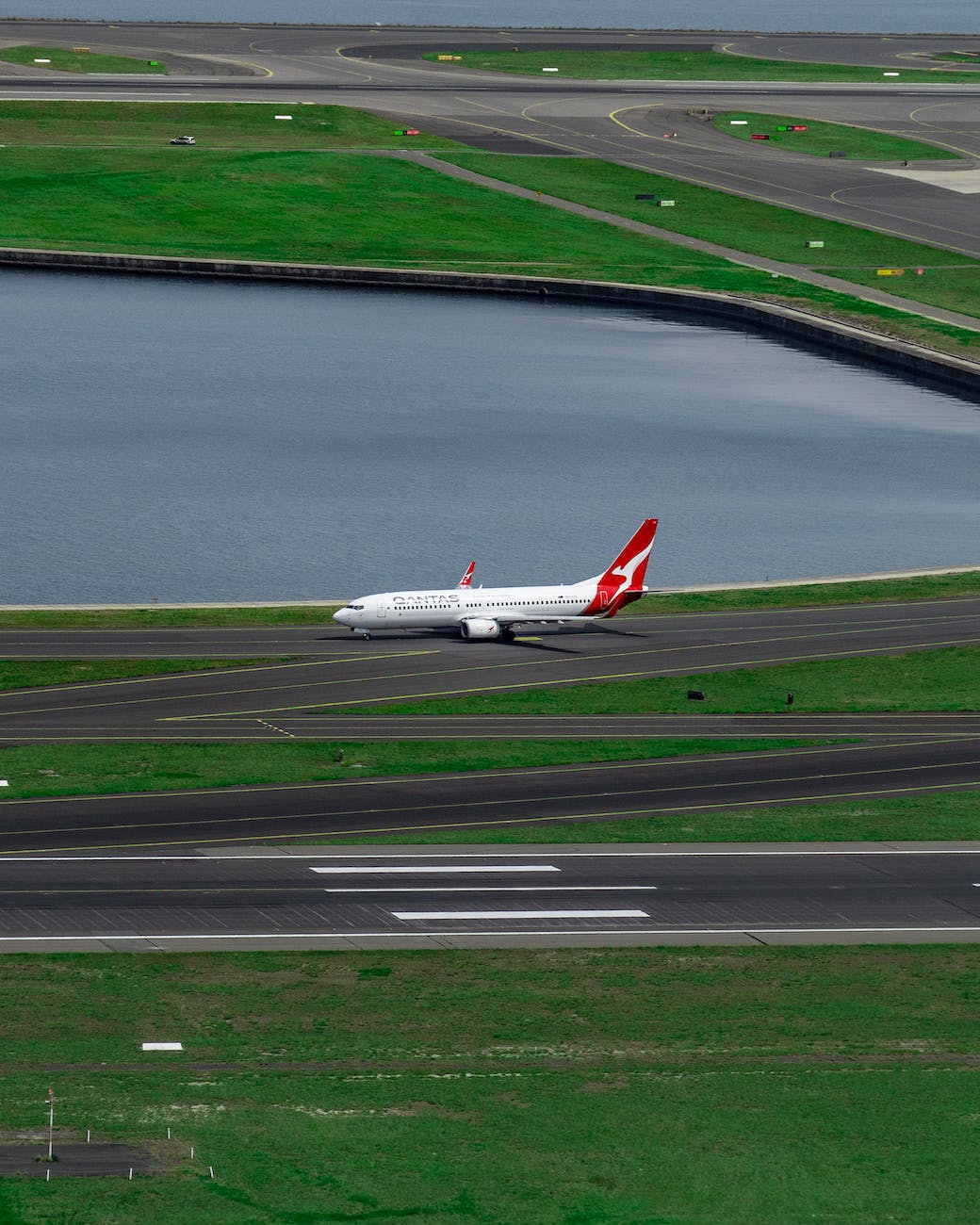
It may seem obvious that there should be an Air Safety List that bans airlines that do not sufficiently met international standards. It’s a right that exists within the Chicago Convention[1]. The first words of the convention concern sovereignty. Every State has complete and exclusive sovereignty over their airspace. From the first days of flight the potential use of aircraft to wage war was recognised. Thus, it could be said that the first article of the Chicago Convention existed even before it was written down and agreed.

However, it’s similarly recognised that the future development of international civil aviation has always depended upon agreements between States. Without over-flight and permission to land in another country there is no international civil aviation.

I do remember some agonising over having an explicit list of banned countries and airlines. In a liberal democracy choice is greatly valued. Here the choice concerns passengers being permitted to board aircraft from another country where there is knowledge of safety deficiencies related to the operation of the aircraft of that country. Should the law make that choice for the air traveller, or should the air traveller be free to make an informed choice?

There lies the crux of the matter. How do ordinary citizens, without aviation safety expertise make judgements concerning complex technical information? Understanding the implications of failing to meet the International Civil Aviation Organization’s Standards and Recommended Practices (SARPs)[2] is not so easy even for aviation experts.

Additionally, there is the issue of third-party risks. It would not be wise to permit foreign aircraft, whose safety is not sufficiently assured, to fly over a nation’s towns and cities.

Regulatory legislation was framed not only to put airlines on the Air Safety List but to take them off the list too. In fact, sometimes this is harder law to frame. In this case the decisions must be made in a fair, transparent, and technically rigorous manner otherwise the politics of such choices could overwhelm the whole process.

There’s been much success in this endeavour. It’s clear that this is a valuable aviation safety measure. It may have driven some contracting States to improve the performance of their airlines.


[1] https://www.icao.int/publications/Pages/doc7300.aspx

[2] https://www.icao.int/safety/CMAForum/Pages/default.aspx

Air Safety List

A long time ago in a far away place. Well, that’s how it seems, and it was more than 17 years ago.

A flight ban was placed on Turkish airline Onur Air back in 2005. At that time, I was in my first full year in Cologne, Germany building up the European Aviation Safety Agency (EASA). We were well on the road managing the handover of responsibilities from activities of the Joint Aviation Authorities (JAA) to EASA. However, the European legislation that empowered EASA was in a first and most basic version. This was planned to be so because taking on aircraft certification work was a big enough task to start the new Agency.

The JAA had coordinated an aircraft ramp inspection programme and maintained a centralised database for its members. This was where a member state would inspect an aircraft arriving from a third country to ensure that international rules were fully met. The SAFA programme was launched by the European Civil Aviation Conference (ECAC) in 1996. SAFA standing for Safety Assessment of Foreign Aircraft.

Onur Air failed such inspections, and the Dutch government imposed a flight ban[1]. Similar bans were imposed by Germany, Switzerland, and France. However, if my reflections are correct the airline moved operations to Beligum where there was no ban. As you might imagine this caused concern amongst EU Member States. Where everyone had agreed to cooperate on aviation safety matters there seemed to be a degree of incoherence.

Long before the first EASA Basic Regulation, which by the way, didn’t address this subject, there was Regulation 3922/91[2]. I remember a hastily convened committee composed of representatives of the Member States and chaired by the European Commission (EC). The “3922[3]” committee hadn’t sat for years but then it sprung into action in response to the lack of a consistent approach to airline safety bans across Europe. I was there representing EASA.

So, the EU Air Safety List was born and the associated legislation[4] to support it. Even though the UK has left the EU, and left EASA this safety list remains the basis of the UK’s own Air Safety List[5]. Adding and removing air carriers and States that fail to meet internationally agreed safety standards is work that no one State should do alone.

[For safety’s sake, this should not be one of the parts of adopted EU legislation the UK Parliament wants to sweep away with its planned new Brexit law].

POST: Current list The EU Air Safety List (europa.eu)


[1] https://www.expatica.com/nl/general/dutch-lift-ban-on-onur-air-38258/

[2] Council Regulation (EEC) No 3922/91 of 16 December 1991 on the harmonization of technical requirements and administrative procedures in the field of civil aviation.

[3] https://eur-lex.europa.eu/LexUriServ/LexUriServ.do?uri=OJ%3AL%3A1991%3A373%3A0004%3A0008%3AEN%3APDF

[4] https://eur-lex.europa.eu/legal-content/EN/TXT/PDF/?uri=CELEX:32005R2111&rid=6

[5] https://www.caa.co.uk/commercial-industry/airlines/licensing/requirements-and-guidance/third-country-operator-certificates/

Bird Strikes

Birds and aircraft share the same airspace. This is not a beneficial relationship for either.

I watched two rather aloof Branta canadensis in our local park the other day. They seemed oblivious to all the other birds on the priory pond. I’d certainly describe these two birds as being well fed. Given their stature and size, they looked formidable. These resident North American visitors are not to be messed with and are only eclipsed by the Swans on Reigate’s pond.

This species of bird has adapted well to living in urban and suburban areas and are frequently found on lakes, ponds, and rivers. I used to see large flocks of them gather on the river Thames. That was only a couple of miles from London Heathrow.

Even though they are numerous in the UK these birds are protected by law (Wildlife and Countryside Act 1981[1]). Today, the population numbers may be as high as 62,000 breeding pairs[2]. Although these birds have the capability to fly great distances they tend to hang around where there’s a reliable source of food. Bird populations are changing their behaviours as a result of climate change.

Geese fly in the typical V-formation which is called a “wedge” or skein. From time to time, I see them fly over my house at a few hundred feet as they move between local lakes and ponds. They are easy to spot and often noisy as they elegantly traverse the sky.

Birds and aircraft share the same airspace. This is not a beneficial relationship for either. Strikes occur around the world every day. In the history of aviation, there have been hundreds of aircraft accidents and more than 47 fatal aircraft accidents caused by bird strikes[3].

It must be said that most bird strikes cause little damage to aircraft but that is highly dependent upon the size of the unfortunate bird and their habits. The story can be very different when an impact is with a Canada goose. Their large size and tendency to fly in flocks can have a devastating impact. On 15 January 2009, a US Airways Airbus A320 aircraft[4] ended up in Hudson River as the result of an encounter with such birds.

The risk of collision between birds and aircraft have always been part of aircraft operations. As a result, measures are taken to certify aircraft to be robust in the event of such collisions. Additionally, there’s a great deal of effort made at major airports to keep birds away from active runways.

Most of the bird threat to aviation safety exists when travelling at speed at relatively low altitudes. Bird strikes happen most often during take-off or landing. This makes me think that bird strikes are going to be a regular feature of the operations of Urban Air Mobility (UAM) / Advanced Air Mobility (AAM). The use of use highly automated aircraft may offer the opportunity to provide sophisticated bird avoidance features. However, so far, I’ve detected no talk of such features.

POST 1: A useful safety booklet Large Flocking Birds (skybrary.aero)

POST 2: A recent Boeing 737-800 serious incident LinkedIn

POST 3: An example of what can happen from 2019 Ural Airlines Flight 178 – Wikipedia

POST 4: Another useful safety booklet Bird strike, a European risk with local specificities, Edition 1 – Germany | SKYbrary Aviation Safety


[1] https://www.legislation.gov.uk/ukpga/1981/69

[2] https://www.wildlifetrusts.org/wildlife-explorer/birds/waterfowl/canada-goose

[3] https://www.skybrary.aero/sites/default/files/bookshelf/615.pdf

[4] https://en.wikipedia.org/wiki/US_Airways_Flight_1549

What next?

When I returned from German, in early 2016, I had no idea there would be a national referendum. Let alone that the referendum on European Union (EU) membership would be lost by a tiny margin and then send the UK into political and economic turmoil for years and years. It was a strange period.

As of me writing these words, the UK has had its fifth Prime Minister (PM) since the Brexit referendum. We’ve had a pandemic, the invasion of the Ukraine and the now an energy and economic crisis, not to mention an on-going climate crisis.

I don’t say it was, but if Brexit was a politically inevitability there couldn’t have been a stupider time to do it in the history of the country. There we were, having all but recovered, remarkably quickly from the banking crisis of 2008 and then we voluntarily threw asunder the UK’s most important trading relationship. There even seemed a time of relative national contentment as London hosted the most spectacular Olympic games in 2012. That was washed away like a flood of foolishness.

As idioms go: “here’s nowt so queer as folk[1]” about sums it up. That could be a political maxim for our times. It may be a particularly English trait. I absent my Scottish, Welsh, and Irish friends from this classification. It goes like this, I’d say, when all’s well it’s a time to do something daft. That feeling should be resisted as much as possible.

The result of 2016’s fantasy is that the relationship between the UK and EU is torn by tension, disputes, and disappointments. Instead of everyone benefiting from the excellent innovations of the Single Market and freedom of movement in Europe, the UK continues to pedal backwards.

There’s coming a moment when change might be possible. I am a great believer in disproportionate relationships. It’s like the statistical curiosity of buses arriving in threes. There are periods of time when things seem to be stuck on a tramline and nothing interesting changes. Then a moment of transition occurs and suddenly new possibility crop-up.

Why do I say this? Well, polls, such as they are, are showing a significant public willingness to reconsider what happened in June 2016[2]. Not only that but because of the “Truss debacle” the advocates of Brexit are on the back-foot. They did trash the economy with little care or concern.

With a UK General Election (GE) looming there’s a strong likelihood that anyone shouting for more Brexit will suffer the same fate as Trump’s red wave (or lack of it) in the United States (US). This will upset hard core Brexiters, but in all fairness, they have had plenty of time to show the benefits of their beloved project. They have shown none. In fact, we continue to go backwards under the yoke of blind Brexit dogma.

The UK and the EU can greatly improve their current relationship if they both choose. We have common problems, common challenges, and common threats. It would be of great benefit to all Europeans if we worked more closely together.

POST: The evidence points to one conclusion Why is the UK struggling more than other countries? – BBC News


[1] This phrase is typically used to emphasise someone’s particularly behaviour. (“Nowt” is a Northern English variation on “naught.”)

[2] https://bylinetimes.com/2022/11/02/brexit-polls-uk-public-want-to-rejoin-eu/

Accent

What’s in an accent? It certainly is a point of discussion. However much we pride ourselves in championing diversity there’s prejudices that have been centuries in the making.

I believe, we all want to see inclusive and welcoming environment in every profession and occupation. I’m opposed to all forms of unfair discrimination especially those of class-based prejudices. In this country, a persons accent can so easily be associated with a region or city. Then all the baggage of history associated with that place can form snap judgements about that person.

It was a while ago but a case in point sticks in my mind. A space project that didn’t go as planned resulted in a probe crash landing on planet Mars. The Beagle 2 project[1] was ambitious however ill fated. The bubbling enthusiasm of the project leader Professor Colin Pillinger from the Open University was infectious. At the same time, it was impossible to miss his West Country accent. It didn’t impede his inspirational promotion of space exploration, but I do remember remarks made about his accent. They were not always complementary.

Now, you might say that was more than a decade ago. We’ve moved on. I don’t think so. The glorious West Country accent, and I include the city of Bristol in that mix, is still associated with a rural Arcadian dream of country life. This much cherished mythology continues to be promoted in English lifestyle magazines and every part of the broadcast media.

It’s a fantasy where educated, philanthropic and sophisticated citizens move from London to enlighten impoverished country folk. Their hope being to soak in the innocence of country ways but, at the same time, offer erudite advice to the backward locals.

If I have an accent it has all but gone. That said, it does broaden when I return to the West Country. There’s a whole series of words which don’t seen quite right said anywhere but in the rolling hills of Somerset and Dorset. Ways of saying things that I grew up with that are meaningless out of context.

Although the association of a rural accent often goes with an unfair characterisation that someone is not too bright, on the plus side it’s linked with friendliness, kindness and warmth. That sounds a bit like a description of a Hobbit. There’s an accidental proof that these prejudices are deeply ingrained in English literature.

I remember early in my career that too much retained from childhood was a barrier to getting a message cross. Slowly but effectively my accent became generic. There’s no doubt this had an upside when it came to technical presentations in front of a mixed audience. Even more important in front of an international audience. It shouldn’t matter but it does.

In a conversation about helicopter safety, a French colleague once lent over to say to me that he knew our Texan partner was speaking English, but he had no idea what he was saying. Is that a case for a standardisation of English – maybe?


[1] https://www.gov.uk/government/news/uk-led-beagle-2-lander-found-on-mars

Luggage

It’s a space we have control over. Not a house or a room but, most often, a volume of space no greater than what we take up in our human frame. It’s not organic. It’s far from that because its role is security, storage and logistical. That’s the humble suitcase, and a great array of bags and backpacks that help us get from A to B with enough possessions to make life comfortable.

The choice of a suitcase or bag is not a trivial matter. Lessons from experience range from bursting zips to leaking contents that turn favourite clothes into damp rags. The challenge of replacing a cabin bag or case takes research and careful weighing of multiple options.

If traveling by air, there are numerous constraints on size and weight. A completely free choice as far as colour is concerned but that’s about the only characteristic that’s an open book. That said, it’s astonishing how many black cases look like other black cases in the array of black cases.

More than a decade ago airlines started charging extra for hold luggage on top of their basic fares. Since then, flying with hand luggage only has become popular. This trend can be troubling. Watching passengers squeeze unreasonably sized bags into overhead bins is not an entertainment. The expectation that an aircraft overhead bin can take a massive bag is not a reasonable one.

My latest purchase has been made from recycled plastic bottles. Naturally, that conveys a fell good factor. It’s a great way to give new life to the huge numbers of discarded single use plastic bottles that somehow we’ve become dependent upon. In my childhood, I don’t remember any plastic bottles. Plenty of glass but no plastics.

For short journeys, the faff of checking-in a suitcase, waiting to collect at a baggage belt and paying additional fees is a burden that is sometimes not worth carrying. There’s always the delightful experience of never seeing the case and its contents again as it wanders off into the maze of lost objects airports accumulate. Etched into my memory, even after more years than I care to think about, is arriving at a small airport after a tortuous journey of connections and having nothing but the clothes I stood up in. On a Sunday, in 35C degrees of bright summer sun that’s not an experience I want to ever repeat. Especially with a tough meeting planned for early the next day. A free airline toothbrush was no compensation.

So, I now have a new Cabin Max Metz 20 litre RPET backpack. This is an experiment on my part. Can I live out of this tiny space for 4-days? To do so is going to require some innovative thinking. In theory, it ticks all the boxes that I was considering essential. This backpack is lightweight but offers the maximum amount of packing space given an airline’s cabin bag restriction.

The plastic material the bag is made of doesn’t feel nice, but it’s flexible and hopefully durable. The zippers look substantial and should have a long life. Now, the task is mine. How to choose exactly the necessities of life to enjoy the journey ahead. To pack as smartly as smart can be.

Air Taxi 3

Urban mobility by air, had a flurry of success in the 1970s. However, it did not end well.

Canadian Joni Mitchell is one of the most celebrated singer-songwriters and my favourite. She has tapped into the social and environmental issues that have concerned a lot of us for decades. Of her large catalogue, I can’t tell you how much I love this song[1]. The shear beauty of the lyric.

Anyway, it’s another track on the album called “Hejira” that I want to refer. When I looked it up, I found out, I was wrong. The song I want to refer to is on the 1975 album “The Hissing of Summer Lawns”. The song “Harry’s House[2]” contains the line “a helicopter lands on the Pan Am roof like a dragon fly on a tomb.” Without going into what it’s all about, the lyrical image is that flying from a city skyscraper roof was seen as glamorous and the pinnacle of success.

In 1970, prominent aviation authorities were talking about the regulatory criteria needed for the city-centre VTOL[3] aircraft of the future. Then on the afternoon of 16 May 1977, New York Airways Flight 971, a Sikorsky S-61 helicopter, crashed[4] on Pan Am’s building rooftop heliport[5]. That ghastly fatal accident reset thinking about city centre operations air transport operations.

So, what’s different 50-year on? Proposals for city centre eVTOL operations are much in the News. City planners are imagining how they integrate an airborne dimension into public transport operations. Cars, busses, trains and eVTOL aircraft may all be connected in new multimodal terminals. That’s the city transport planners’ vision for less than a decade ahead.

For one, the vehicles are radically different. Yes, the physics of flight will not change but getting airborne is quite different between a conventional large helicopter and the plethora of different eVTOL developments that are underway across the world.

Another point, and that’s why I’m writing this piece, is the shear amount of safety data that can be made available to aircraft operators. Whereas in the 1970s, a 5-parameter flight recorder was thought to be neat, now the number of digital parameters that could be collected weighs in over thousands. In the 1970s, large helicopters didn’t even have the basic recording of minimal flight data as a consideration. The complexity in the future of eVTOL will be, not how or where to get data but what to do with all the data that is streamed off the new aircraft.

Interestingly, this changes the shape of the Heinrich and Bird “safety pyramid” model[6]. Even knowing about such a safety model is a bit nerdy. That said, it’s cited by specialist in countless aviation safety presentations.

Top level events, that’s the peak of the pyramid, remain the same, but the base of the pyramid becomes much larger. The amount of safety data that could be available on operational occurrences grows dramatically. Or at least it should.

POST: Growing consideration is being given to the eVTOL ecosystem. This will mean a growing need to share data Advanced Air Mobility Portal (nasa.gov)


[1] https://youtu.be/nyj5Be5ovas

[2] A nice cover https://youtu.be/bjvYgpm–tY

[3] VTOL = Vertical Take Off and Landing.

[4] https://www.nytimes.com/1977/05/17/archives/5-killed-as-copter-on-pan-am-building-throws-rotor-blade-one-victim.html

[5] https://www.thisdayinaviation.com/16-may-1977/

[6] https://skybrary.aero/articles/heinrich-pyramid

Air Taxi 2

As a quick effort at simple research, I looked at several local government websites searching for Air Taxi or Urban Air Mobility (UAM) or Advanced Air Mobility (AAM). The result was lots of blanks with one or two exceptions[1][2]

There’s numerous articles about e-scooters and how they might be integrated into cityscapes.

Addressing local governments, much of what has been published to date concerns the use of drones. Yes, the use of drones is happening here and now, so this is not such a surprise. However, to me, this was a reminder that the frenetic world of aviation often discussed the future in rooms full of like-minded people. Embracing a wider audience is overdue.

In the case of UAM/AAM, innovations in civil aviation are move beyond airports, upper airspace, and specialist technical interest. If the electrification of flight is to take hold it will touch the lives of many more people than conventional commercial aviation.

These new aviation developments will generate new business models and offer new services. This is challenging stuff. It’s clear to me that, without the agreement of local authorities such enterprises will be dead before they start.

National governments may take a regulatory approach that imposes on local governments. That would be ill advised and ultimately unsustainable. A cooperative partnership would open a smooth transition from transport novelty to accepted everyday part of mobility.

Local authorities will need to adapt their formal local plans to include planning considerations of zoning, land-use, multi-modal matters, environmental impact, construction, utilities/support infrastructure, public privacy and much more.

Local government is a partner in risk management too. Just as highway authorities wrestle with improving road safety so, no doubt, UAM/AAM accidents and incidents will be on their agenda.

Fostering public-private partnerships is talked about but few examples have moved beyond theory and into practice.

POST 1: These issues have been highlighted at ICAO this year Urban Air Mobility and the Role of Air Transport – ICAO 2022 Innovation Fair – ICAO TV

POST 2: The organisation is looking at possible future operations https://varon.aero/

POST 3: People taking a holistic view http://www.supernal.aero


[1] https://www.civataglobal.org/

[2] https://www.urbanairmobilitynews.com/global-map/

Air Taxi

My daily routine once comprised of walking across a bridge over the Rhine to an office in Ottoplatz in Köln-Deutz[1]. That’s in Cologne, Germany on the eastern side of the river.

In the square outside the railway station is a small monument to a man called Otto. A small monument marking a massive transformation that took place in the way transport has been powered for well over than a century. This monument honours Nicolaus August Otto who created the world’s first viable four-stroke engine in 1876.

Today, the internal combustion engine hasn’t been banished. At least, not yet and Otto could never have known the contribution his invention would make to our current climate crisis. But now, rapid change is underway in all aspect of transport. It’s just as radical as the impact of Otto’s engine.

As the electrification of road transport gathers apace so does the electrification of flying. That transformation opens new opportunities. Ideas that have been much explored in SiFi movies now become practically achievable[2]. This is not the 23rd Century. This is the 21st Century. Fascinating as it is that in The Fifth Element the flying taxi that is a key part of the story, has a driver. So, will all flying cars of the future have drivers?

I think we know the answer to that already. No, they will not. Well, initially most of the electric vehicles that are under design and development propose that a pilot (driver) will be present. Some have been adventurous enough to suggest skipping that part of the transition into operational service. Certainly, the computing capability exists to make fully autonomous vehicles.

The bigger question is: will the travelling public accept to fly on a pilotless vehicle? Two concerns come up in recent studies[3][4]. Neither should be a surprise. One concerns passengers and the other concerns the communities that will see flying taxies every day of the week.

Public and passenger safety is the number one concern. I know that’s easy to say and seems so obvious, but studies have show that people tend to take safety for granted. As if this will happen de-facto because people assume the authorities will not let air taxies fly if they are unsafe.

The other major factor is noise. This historically has prevented commercial public transport helicopter businesses taking-off. Strong objections come from neighbourhoods effected by aircraft constantly flying overhead. Occasional noise maybe acceptable but everyday operations, unless below strict thresholds, can provoke strong objections.

So, would you step into an air taxi with no pilot? People I have asked this question often react quickly with a firm – No. Then, after a conversation the answer softens to a – Maybe.


[1] https://www.ksta.de/koeln/innenstadt/ottoplatz-in-koeln-deutz-eroeffnet–das-muss-nicht-gruen-sein–2253900?cb=1665388649599&

[2] https://www.imdb.com/title/tt0119116/

[3] https://www.easa.europa.eu/en/newsroom-and-events/press-releases/easa-publishes-results-first-eu-study-citizens-acceptance-urban

[4] https://verticalmag.com/news/nasa-public-awareness-acceptance-of-aam-is-a-big-challenge/

Eurovision

The right choice. Liverpool will make the best of best hosts for the 67th Eurovision Song Contest[1]. Last night, Liverpool was chosen as the location of the 2023 Eurovision Song Contest.

Don’t get me wrong. Glasgow would have done an excellent job too. It was a difficult choice to make between the two front runners. On balance, Liverpool can offer the excitement Europe needs after what will be a gloomy winter.

In 2008, Liverpool woke everyone up with its year as European Capital of Culture[2].

Being a long-standing political activist, I’ve participated in party conferences up and down the country. It’s a fantastic way of getting to know the heart of a city. Yes, I know it’s a superficial exposure in terms of seeing conference venues, hotels, and shopping centres but even so, the sense of a place comes across.

Party conferences are held in locations across the UK, at conference and convention centres that offer big enough venues, in fact the whole package, hotels, public transport and a good atmosphere. I’ve conferenced: Blackpool, Birmingham, Bournemouth, Brighton, Cardiff, Eastbourne, Gateshead, Glasgow, Harrogate, Liverpool, Southport, Torquay and York in springtime and autumn.

One of the most enjoyable conferences in my back catalogue is Liverpool. It’s a city that surprises. It has cultural and historic depth. It’s that mix of the city’s strong sense of identity and the pivotal role it has played in our collective history.

I had a, not all too uncommon, southerners’ ignorance of Liverpool. That was quickly dispelled by being there and enjoying its welcoming invitation, even when it’s raining.

What could be better? Liverpool has been twinned with Odessa in Ukraine since 1957. Fittingly, the 2023 Eurovision Song Contest is to be a Ukrainian celebration in the UK.

Also, Liverpool has been twinned with the German city of Cologne for more than 50-years. That’s a European city that feels like a second home to me.

Congratulations Liverpool. It’s a massive #Eurovision to look forward too.


[1] https://eurovision.tv/story/liverpool-will-host-eurovision-2023

[2] https://www.cultureliverpool.co.uk/