Tragic VoePass ATR72 Crash

2024 was going so well. Looking at the indicator of worldwide fatalities in commercial aviation for the first six-months of this year, and it is exceptionally low. The time between major fatal accidents across the globe is another indicator that my team once looked at on a regular basis. Aviation is an extremely safe mode of transport but when accidents happen, they can be devastating.

Yesterday, the situation changed in Brazil. A VoePass ATR72-500 aircraft[1], registration PS-VPB, flight number PTB2283 crashed in the Brazilian state of São Paulo. The twin-engine aircraft crashed in a residential location.

Yet unknown events resulted in a loss of control in-flight. On-line videos of the aircraft flying show a dive and then a spiralling decent to the ground. The aircraft was destroyed on impact, and it is reported that all lives were lost.

The publicly available flight data shows a sudden decent from a stable altitude[2]. The aircraft was about and hour and twenty minutes into its flight.

Looking at the video information it might appear that local weather may not have been a factor in the accident. However, there was known to be severe icing conditions at the altitude that the aircraft was flying.

It’s speculation on my part but unrecognised severe icing is one of the conditions that can bring about a catastrophic outcome for such an aircraft. It is sad to have to say that there is a record of a major accident to an ATR-72 that has some of the characteristics of this new accident.

In fact, it is one fatal accident that is etched on my mind given that it happened in late 1994, when I was still fresh in my job with the UK Civil Aviation Authority as an airworthiness surveyor. It’s known as much by its location as by the name of the aircraft, namely Roselawn[3]. The accident was extremely controversial at the time.

Crews are told that they may be operating in severe icing conditions but there is no specific regulatory requirement for on-board advisory or warning system on this generation of turboprop aircraft. An ice detection system can serve as a final warning to alert a crew that ice protection is needed.

Work to update the technical document; In-Flight Ice Detection System (FIDS) Minimum Operational Specification EUROCAE ED-103 is completed. Issued in April 2022, ED-103B – MOPS for In-Flight Icing Detection Systems is available[4].

In the case of the current accident, it is a matter for Brazil’s highly capable independent accident investigators to determine what happened. Anything I have written here is purely speculative.

POST 1: Reports of statements made by Agência Nacional de Aviação Civil (Anac) say that the aircraft was in good condition.

POST 2: Accident flight recorders have been recovered from the accident site. Flight recorders retrieved from crashed Voepass ATR 72-500 | Flight Global


[1] https://asn.flightsafety.org/wikibase/409335

[2] https://www.flightaware.com/live/flight/PSVPB/history/20240809/1450Z/SBCA/SBGR/tracklog

[3] https://www.faa.gov/lessons_learned/transport_airplane/accidents/N401AM

[4] https://eshop.eurocae.net/eurocae-documents-and-reports/ed-103b/

Evolution of living

Building millions of new homes is crucial. In the UK, we’ve had years and years of pussy footing around the issue. Governments have consistently underachieved. Promises made and promises broken. Everyone knows that turning plans into reality is difficult. Sadly, it’s always easier to delay and delay. Building needs a strategic push. That much I agree with the new Labour government. Expecting some kind of magical thinking or organic solution to bubble up is a road to failure and disappointment.

A long time ago, I sat on a planning committee that wrestled with the pros and cons of allocating land for development. It was often a numbers game. A few hundred here, a few thousand there and lots of talk of “brownfield” sites that were often purely imaginary.

All the time knowing that major developers had already bought up land that they intended to sit on until policy swung their way. This could be low grade agricultural land, even flood plain land that they could get for a competitive price. None of the pressures that existed at that time[1] have gone away. If anything, those social, economic, and political pressures have intensified.

Despite what I’ve said, I can understand the caution that is being expressed by people who have strong interest in the subject. If we look at the post-war building boom in the UK, it’s obvious that horrendous mistakes were made. Idealism and a sense of mission drove development schemes that looked great on paper but turned out to be hellish as places to live and work.

Architects and town planners of the past may have identified transport as a vital feature for new estates. What they delivered was so worshipful of the private motor car that it transcended all common sense. Digging up tram lines and closing rail lines may have had a logical foundation from the 1950s to the 1970s but now such decisions seem completely mad.

One of the biggest factors that has changed, not only since the post-war building boom but in recent times is the change in employment patterns. We are an industrialised country. Often, we don’t like to acknowledge it. Remember the 2012 Olympics. It’s topical, given how the Paris Olympic opening ceremony portrayed France. Back in 2012, the UK reminded the world that the industrial revolution started here. England’s “green and pleasant land” was transformed by coal and steel. A land where every town and city had a major employer and a major craft.

That era has almost gone. Yes, there are places where major employers dominate the landscape. Now, there are less and less concentrations of employment tied to a specific location. There’s a greater diversity of economic dependency in our interconnected world.

That’s a massive challenge. How to build homes, that form communities, which will have a source of economic stability that lasts more than 50-years. Communications infrastructure becomes vital. Even that is assuming that high-speed digital communications will continue to dominate out lives beyond 2070. Will we be freer to live where we want, with a better lifestyle, happier communities, in a future of elevated levels of automation, intelligent systems and few if any boundaries?


[1] Surrey Country Council 1993-1997.

Sainsbury’s Sanctuary

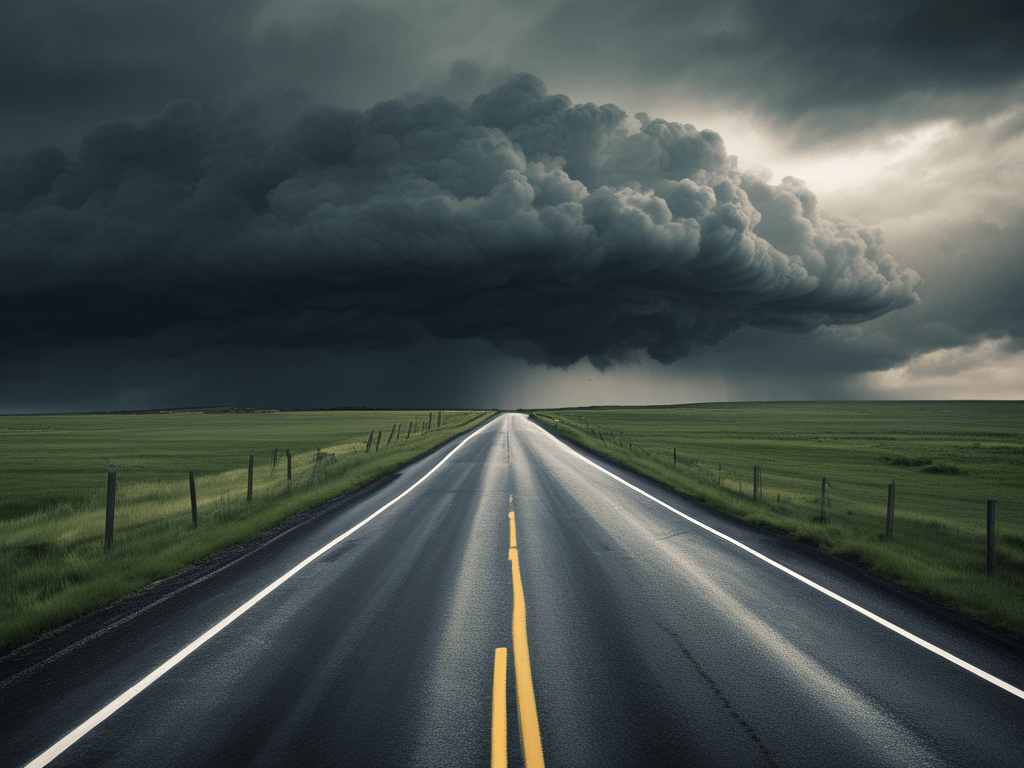
As I left Reigate the temperature was up at 30C. It was oppressively hot. Sticky and brewing an immense storm. Not that I minded so much, since I seem to thrive in the heat. Dark shades on. Lightest tee-shirt I could find. Primative old iPhone 4S blasting out an upbeat medially.

Sitting in my black car, on black leather seats, with an air conditioning system that cessed to work about a year ago, was a special kind of heat treatment. Windows open. It was like being blown by a powerful hairdryer from two sides. Fortunately for me London’s M25 was moving. Going west. Maybe wiser people than me had made a choice to delay their journey, or not go anywhere at all. In between the eight wheeled trucks, the shafts of sunlight rained down like a Martian death ray.

Grassy embankments that had been lush green earlier in the year were now charred brown. Motorway roadworks that had been bogged down in slimy mud now dust bowls. Colourful heavy earth moving machinery working on its limits. Roadworkers looking as if they would rather be anywhere but where they were. Lucky ones sheltering in the shade.

My journey had not been without basic planning. I knew that the heaviest of storms was slowing making its way west to east across southern England. I got almost a quarter through my trip before the immense thunder clouds loomed off in the distance. The sunlight was slowly changing. Going from perfect clear blue skies, with a little haze, to a brooding caldron of shafts of bright light and rolling off-white clouds, towering up to the stratosphere.

Onto the M3 motorway going west. Through the roadworks. The perpetual roadworks, Where the nation’s highway planners are trying to correct mistakes that they made erecting “smart” motorways. Closing the running hard shoulder to erect new emergency stopping bays.

Still the temperature was shifting up and down around 30C. Would I get to my motorway exist before the downpour that now seemed inevitable? I slowed to let a heavy truck into the nearside lane. We were both keen to get off the gradually slowing motorway.

Almost as if I’d timed the weather and pressed a button for rain, it started on the slip road. Trickles at first. Dark grey skies and indications of what was to come. My car’s dashboard thermometer started to plummet. By the time the traffic lights turned green, and we passed over the M3, visibility was disappearing. In a mishmash of road traffic on that junction there was potential for every kind of accident.

Time to slow down. It doesn’t matter that the duel carriageway signs going north said 40 mph. It would have been foolish to speed beyond that limit. At that moment the monster storm was just getting going. The timing between lightning strikes and thunder was shortening. Still, I had a good 5-miles to go to a sanctuary.

Again, almost as if I’d timed the weather, I exited right to turn into a Sainsbury’s superstore as the dark monster above our heads did its worst. Great pools of water where splattered on the ground with rain falling like millions of tennis balls. It was time to sit out the storm and take a coffee. Already the temperature had dropped ten degrees.

My cosy coffee shop sanctuary was the number one best place to watch shoppers getting soaked as they trudged across the windswept car park. I certainly wasn’t going to be in that kind of hurry. I sat it out. Glad I did.

Ignorance and Knowledge

He’s entertaining. My thought is that maybe he’s trying to be contrary for the sake of being contrary. I have some sympathy with that approach. Why should we all agree? Consensus can be a dreadfully boring state of affairs.

Rory Stewart is heralding the advantages of ignorance. Even saying that sounds mildly provocative. It’s like saying; I want to be a sensible commentator but I’m going to throw a seemingly nonsensical proposition at you.

Who is Mr Stewart? He once was an English politician. He might claim to still be one. He certainly has speaking and writing abilities that make him interesting in that role. Brexit and all the shenanigans in the Conservative Party pushed him to the margins. Outside of that narrow band of madness he’s quite mainstream.

The square jawed expression and Trump-like hands of the publicity shot must have been the photographer’s first concept[1]. The title of the radio series is a good one. From one series of long histories, I’m sure he can make many long histories. History can be as long as anyone would like to make it. For most of it, humans have been profoundly ignorant about the world and its ways.

I get the notion that the starting point for discovery of new knowledge is ignorance. It’s going too far to say that ignorance can sometimes be valuable, and knowledge harmful. Call me old-fashioned but one of our greatest human achievements is education. It’s a social call to arms. Let’s raise the life opportunities for most people by passing on knowledge.

Every succeeding generation passes on knowledge. We stand on the shoulders of giants[2]. The process that forms the words on the screen in front of me only exists because of generations of development and learning. Onward we go. Well, there was that period of the so-called “dark ages” when humanity seemed to go backwards. And with modern youth there’s the fear of the coming zombie apocalypse whereby we return to a miserable ignorance.

What this says to me is that we take for granted a daily situation that is terribly fragile. Remove the underpinning of accumulated knowledge and back we go.

I say; there’s more than one kind of ignorance. I can think of 4-types without much stress.

There’s that which we all have by nature of not being able to answer the big questions. Why are we here? What’s it all for? How did everything come into being?

There’s that which is unknowing ignorance. Where we believe we know but subsequently its discovered that what we know was wrong. On going discovery.

There’s that encapsulated in the saying about choosing not to see. It’s deliberate ignorance. When we pretend or cannot face the implications of reality.

There’s that which is part of deception. Again, it’s deliberate ignorance or to encourage ignorance. This time it’s an intentional strategy to mislead, misrepresent or do malice.

I’ll listen and learn.


[1] https://www.bbc.co.uk/programmes/m00199xy

[2] https://discover.hsp.org/Record/dc-9792/Description#tabnav

Ragwort

My country knowledge is a mixed bag. Certain facts have embedded themselves in my brain from the days of my youth. That much I take for granted but there’s a lot of holes in my rural knowledge. Sue, my wife often ribs me for not knowing the name of some common bird or roadside flower. It’s the moment when I grab the phone and search for a quick answer.

I’d not been the least bit concerned about the tall, thick staked bright yellow flowers that spung up around here. Growing in clumps on scruffy ground they are certainly colourful. Small daisy like flowers in their thousands. That’s not an exaggeration as the cover of flowers is like a blanket.

For some obscure reason I didn’t know these invasive plants by name. Once I’d heard the proper name for them some recognition clicked in place. Maybe they were not prolific in the West Country of the 1970s. Strangely my mind drifted to “The Return of the Giant Hogweed[1]”. Probably one of the more ridiculous Genesis musical creations.

A fact that I didn’t know about these tall wildflowers is that they are named in a 1959 Act of Parliament[2]. One reason is that they can do damage to horses and farm animals. So, colourful they maybe, what’s a less attractive feature is they are poisonous under certain conditions.

Common Ragwort is the plant in question. It seems that Ragwort is almost impossible to eradicate. The best that can be done is to control it. Each yellow-flowered plant can produce up to 150,000 seeds. These seeds can stay dormant in the soil for up to 20 years. Ragwort is a biennial, it takes 2 years for the plant to flower. On the up-side they are the home of a wide variety of insects.

Today, the weather predictions are for an almost perfect English summer day. Blue skies and plenty of sun. A day to be making the most of the garden.

Once these plants have flowered it’s time to take drastic action. I may find myself pulling up these monsters by the roots. Fortunately, I only have a few to contend with on the edges of my garden. They are not for my compost bin. For the big green bin, the local council empties on a Monday morning.

Ragwort by Anne Stevenson

They won’t let railways alone, those yellow flowers.
They’re that remorseless joy of dereliction
darkest banks exhale like vivid breath
as bricks divide to let them root between.
How every falling place concocts their smile,
taking what’s left and making a song of it.

Poem Attribution © Anne Stevenson, Ragwort

Source Attribution https://poemsontheunderground.org/ragwort


[1] https://youtu.be/BSkgwCpuZwk

[2] https://www.gov.uk/guidance/stop-ragwort-and-other-harmful-weeds-from-spreading

Speaking

Politics without passion is like a food without taste. The ancient Greeks sensed this a long time ago. Aristotle and his followers had a way of describing how a speaker should win over an audience. Let’s face it that’s one big part of a politicians aims.

It’s no good at all standing there and saying: we’ve got some fantastic politics, and our values are your values. If no one is listening, you can be the best thing since sliced bread and nothing much happens. I’ve seen a lot of good people who shout in the dark.

The capability to persuade an audience by whatever legal means puts politician A above politician B. It’s not just innate ability although, for those who have it, that is a great asset.

So, here’s the educational bit. It’s certainly something I keep in mind however bad at it I may be. To appeal to an audience, and thus persuade, three different spots need to be hit: logos, ethos, and pathos[1].

As a professional engineer, I know the first one of these categories well. It’s good solid sound logic. It’s the use of reason to construct an agreement. It’s the favourite of technocrats. It’s the 2 and 2 equals 4. Because of the power of logic, it tends to be elevated to the number one tool in the speaker’s toolbox. PowerPoint slide after PowerPoint slide.

The problem is that this approach doesn’t work when the audience is a general one. Brexit is a perfect example. So many of the arguments against Brexit were framed in terms of economic costs and benefits. Logical, rational, sensible and supported by evidence. As it turned out addressing the head and not the heart was not sufficient.

Next on the list of three, Ethos is all about credibility. It comes from the simple question; why should I listen to this person? Is the speaker truthful? It even comes down to simple appearance – do the look the part? Like it or not, I’m not going to be inclined to listen to a politician on a podium sporting a Micky Mouse tee-shirt, wearing clown shoes and mumbling bad poetry. There’s a normal expectation that a credible individual will be polished and professional.

And so, to the last on the list. Pathos is multifaceted. I may talk of music or poetry. Those who can speak with language that evokes strong feelings. Being able to shift the emotions of an audience by evoking beliefs and values can be extremely powerful.

This one is dangerous too. It can tap into prejudices and stir-up destructive as well as constructive passions. If we have a lesson from this electoral cycle, it’s that the overuse of emotional rhetoric in a civilised society needs to be restrained. It’s for each speaker to carefully consider how the message they are sending will be received.

Politics without empathy and passion is dull and unworkable. But exciting public passion beyond a certain point has a cost. The cry for social justice or the anger at a perceived stupidity must be recognised. Overplaying emotion for political gain. Demonising an opponent with vivid words of hate. This is path to destruction. A path to be avoided. A time to stop. 


[1] https://www.lsu.edu/hss/english/files/university_writing_files/item35402.pdf

Uneasy

Commentating is a big industry. Every moment of every day something floats to the top of the News. To make sense of it, or to make no sense at all, talking heads sit on comfy sofas and talk. We soak it up from traditional media but increasingly from social media.

I’ve often wondered how much influence is exerted by those who commentate. They often set the context within which events are interpreted. They often act like a pack, magnifying what’s first said. They are at their best when they make something complex and messy reasonably understandable.

Could it be that Heisenberg’s uncertainty principle applies[1]? It’s impossible to measure anything without affecting it. Transformed those words that might read: It’s impossible to comment on anything without affecting it. I guess that depends on the nature of the commentary. Here, I’m hardly likely to affect anything at all but you never know.

What this all about? Well, last night I was sitting on my comfy sofa watching the BBC’s Newsnight. As it happens, the leader of the free world was being televised making a gaff that led to a sharp intake of breath. It’s human error. Nobody is gaff free. What was shocking is the choreography of the moment.

Standing next to the President of the US was Ukrainian President Volodymyr Zelensky, whose name is not all that easy to pronounce, who everyone had just committed to supporting. It makes me cringe to repeat what happened[2]. I won’t.

The commentators went into overdrive. That’s to be expected. Within minutes the follow-on illustrated the avalanche of social media piggy backing that’s on-going about Joe Biden. Let’s duck the subject of age. Regardless of that factor, errors that reverberate around the media echo chamber generate a political toxicity that sicks. It’s not fair. It’s just reality.

Age may bring wisdom, or I hope it does. What’s different now from the era during which Joe Biden accumulated his experience is the relentlessness, speed and volume of communications. Not only that but messages are distorted and twisted with great ease.

To thrive in top roles, new generation skills are essential. Being savvy to the nature of social media isn’t optional. When serious events are magnified by massive proportions and presented to a global audience there’s nowhere to hide.

With perception being pivotal in politics this is an uneasy new world we are entering. I wouldn’t be foolish enough to predict what might happen next. I’m reminded of that advice offered to tourist seeking directions ‘‘Well, if I were trying to get there, I wouldn’t start from here.’’


[1] https://www.scientificamerican.com/article/what-is-the-scientific-pr/

[2] https://www.bbc.co.uk/news/articles/cgl75kdm420o

Yesterday’s man

Let’s say extreme things. Don’t think of the consequences. That’s on the playlist of this generation of right-wing activists. They are so afraid of being ignored that they push the limits on every opportunity. Say something outrageous and nine times out of ten the media will run the story. Stand devoutly against anything that can be considered normal, progressive, or socially responsible and whoopee it’s headline news.

I don’t feel inclined to name the chiefs of this art because that merely plays into their agenda. There’s a well-known but failed Brexit campaigner, there’s a well-known but failed former Prime Minister, and there’s a well-known but failed chair of a major pollical party. The common factor here becomes all too obvious. These folk are an epidemy of what my secondary school teachers used to call – empty barrels.

So, addressing the recent hokum, the current mayor of London is no angel. Have we ever had one that was? Pictures of one of his predecessors swinging from an overhead cable wrapped in a Union Jack flag have become a legendary funny story. Plans for the floral bridge across the river, he wanted to spend millions of public monies on ended in the dustbin[1]. Rightly so.

Today, the man in that office seems to reveal in meeting his opponents head-on. However, on Brexit and the environment he has been a voice of reason. Should he take a harder line on anti-war protests in the city? That’s easier to talk about than it is to do. His opponents know that fact.

Whipping up anger and division isn’t a zero-cost sum. The defence that will be used is that loud mouthed pundits are just saying what others think. That’s a shallow defence. It’s no defence at all to say, let’s all leap off a cliff together following the most foolish amongst us.

If everyone said every thought that ever came into their head’s civilisation would fall part quite quickly. We have the luxury of large brains to filter our most of our alien and downright stupid thoughts. That filter is clearly not working in the case of some Members of Parliament.

What’s over the horizon is a good opportunity for the Reform Party (ex-Brexit Party) to sweep-up. There are clearly a lot of conservatives who badge themselves Conservatives who are not conservatives at all. Better they find a place what suites them rather than harbouring any false idea that they might become mainstream in the 21st Century.

Going back to the worst of the 1970s is not an appealing idea. A modern empowered version of sitcom character Alf Garnett[2] is a scary thought.


[1] https://www.theguardian.com/commentisfree/2019/feb/17/absurd-vanity-project-for-our-age-boris-johnson-garden-bridge

[2] https://www.bbc.com/historyofthebbc/anniversaries/june/till-death-us-do-part/

Cold

Colds. What’s the point in them? There is no vaccine for the common cold. Why not? Fine. I’m not expecting an answer. The best way of escaping the common cold[1] is to stay away from sick people. Trouble is, you and I will not know who the sick people are unless they make a fuss about it.

Then there’s the tendency to look upon the person suffering the cold and thinking, they are more susceptible than me, so I’ll be all right. That works until that nonsense turns out to be pure fiction. A day or two goes by. Everything seems fine. Then wham, bang, wallop. The virus gets its teeth stuck into every part of the body. Eyes and ears stream, limbs ache and drowsiness takes hold.

How can I say anything new about this common affliction? It’s a universal human experience. Well, I assume it’s universal. Could there be people who never suffer the common cold? That live such healthy lives in splendid isolation and contentment. Probably few.

The common cold is a dam nuisance. It stopped me going to the local pantomime last night. There was no way that I was going to sit in an auditorium and share my ill got gain or suffer the indignity of sniffling all the way through a performance.

Containment was the only strategy. Sleep as much as possible. Let my immune system do its best to destroy the invader. Sink into the discomfort and know that it never lasts for more than a couple of days. The pharmaceutical companies must love this time of year. Supermarket shelves stuffed with remedies. Not so much remedies as sources of momentary relief.

When will we get the cold winter weather that’s normal at this time of year? If there’s truth in the old wife’s tale that the cold kills off the bugs, I’d welcome a week below freezing. It’s a lyrical little pun but this one is difficult to get out of my head:

It’s not the cough that’ll carry you off.

It’s the coffin they’ll carry you off in.

Naturally, I hope present coughs and sneezes are a passing inconvenience. “Coughs and sneezes spread diseases” so the slogan goes. For people with a long-term illness or weakened immune system these inconveniences can be risky.

Debilitating it maybe one of the irritations of the common cold, at least for me, is the wasted time. So, many jobs to do but no way of doing them without making the situation worse. I look forward to the reward of feeling better.

Christmas festivities behind us the New Year beckons. This year to step into the first day of January may be a muted one. Certainly, I have no desire for any alcoholic beverages.

Sue said to me: you must not go to bed before midnight. I said: I which part of the world?


[1] https://www.nhs.uk/conditions/common-cold/

Solstice

At last. The days will start to get longer. Dark mornings and dark evenings of wintertime, little by little start to recede. This is the Northern Hemisphere, and the Sun is low in the sky. Our winter solstice[1] takes place at a point when the Sun’s sweep across the sky is at its minimum. The celebratory time we have during this festive season tries to lift our spirits during these dark days.

It’s strange that we can attribute this to a tilt. The Earth’s tilt of 23.4 degrees on its axis generates the swings from summer to winter. On its stroll around the Sun, that marks a year, the Earth transforms. I wonder how different we would be if that tilt disappeared. Certainly, the cycle of life up at our latitude would be markedly different.

What would my Hellebore[2] do? Winter rose. I have a large white one that, even in damp ground has survived from last year. Shaded, it looks healthy as it’s putting out new growth. Its green leaves are more like light card than paper. Robust and deep green. It’s a cheery sight in amongst the gloom.

Mechanics, explained by astronomers, tell of the logic of the seasons. But it’s our emotional response that is most evident in the way we live. Naturally, that wasn’t always so. If we step back to the time of Stonehenge, then the knowledge of the cycle of summer and winter was a life and death matter. Now, with industrialise agriculture and life in centrally heated homes the seasons are most linked to our mood. Our habits and temperament.

The solstice is described as astronomical and cultural. 23.4-degrees shapes our society, born of generations of inheritance. The effect of time has piled high on the shape and form of what we take for granted. Look at a Christmas card scene. A red robin stands proud on top of a red-letter box covered in snow with holly and ivy in the background.

No snow this year. Not in Southern England. In fact, the solstice got to double figures. The temperature is mild. That little red robin isn’t going to be struggling to find food this year. Plenty of wind and rain. Rivers high to the point of flood.

Now, our Sun is lowest in the sky. Our spirts must not be. A New Year is just around the corner. Wishing everyone a wonderful time during this festive season.


[1] https://www.rmg.co.uk/stories/topics/when-winter-solstice-shortest-day

[2] https://www.rhs.org.uk/plants/hellebore