Half empty tool box

When new technologies come along there’s often a catch-up phase. Then we are either frightening ourselves crazy with a moral panic or switch to a – so what? – mode. The last week’s fury of articles on Artificial Intelligence (AI) probed all sorts of possibilities. What’s the enduring legacy of all that talk? Apart from stimulating our imaginations and coming up with some fascinating speculation, what’s going to happen next?

I’m struck by how conventional the response has been, at least from a governmental and regulatory point of view. A little bit more coordination here, a little bit more research there and maybe a new institution to keep an eye on whatever’s going on. Softly, softly as she goes. And I don’t mean the long-gone black and white British TV series of that name[1]. Although the pedestrian nature of the response would fit the series well.

Researchers and innovators are always several steps ahead of legislators and regulators. In addition, there’s the perception that the merest mention of regulation will slow progress and blunt competitiveness. Time and money spent satisfying regulators is considered a drain. However much some politicians think, the scales don’t always have public interest on one side and economic growth on the other.

Regarding AI more than most other rapidly advancing technical topics, we don’t know what we don’t know. That means more coordination turns into to more talk and more possibly groupthink about what’s happening. Believe you me, I’ve been there in the past with technical subjects. There’s a fearful reluctance to step outside contemporary comfort zones. This is often embedded in the terms of reference of working groups and the remit of regulators.

The result of the above is a persistent gap between what’s regulated in the public interest and what’s going on in the real world. A process of catch-up become permanently embedded.

One view of regulation is that there’s three equally important parts, at least in a temporal sense.

Reactive – investigate and fix problems, after the event. Pro-active – Using intelligence to act now. Prognostic – looking ahead in anticipation. Past, present, and future.

I may get predicable in what I say next. The first on the list is necessary, inevitable, and often a core activity. The second is becoming more commonplace. It’s facilitated by seeking data, preforming analysis and being enabled to act. The third is difficult. Having done the first two, it’s to use the best available expertise and knowledge to make forecasts, identify future risks and put in place measures ahead of time.

So, rather than getting a sense that all the available methods and techniques are going to be thrown at the challenge of AI, I see a vacuum emerging. Weak cooperation forums and the fragmentation inherent when each established regulator goes their own way, is almost a hands-off approach. There’s a tendency to follow events rather than shaping what happens next. Innovation friendly regulation can support emerging digital technologies, but it needs to take their risk seriously.


[1] https://www.imdb.com/title/tt0129717/

Watch it

Today, the same hubris that plagued the Brexit referendum in 2016 is in the air. That’s when people become dangerous overconfident that they know what’s going to happen next. All the signs in the stars, almanac’s predictions and emotional forces point one way but hard cold reality respects none of these pointers.

It goes like this. Every day there’s a story about how dreadful the Conservative Government has been in recent years. Like tales of manic cartoon characters, the retelling of events is almost unbelievable. At the same time, the opinion polls and the commonly held media assumption is that, come the next General Election, next year the Labour Party will romp home with a workable parliamentary majority.

A great number of people may think that politicians have let them down and public figures that brim with arrogant self-confidence and bluster should not be trusted. However, that may not translate into a simple selection of an alternative. The primitive assumption that voters act in a binary way, dislike candidate A means like candidate B, belongs in a prior century.

This decade is different. The speed with which events happen and then are glossed over or suddenly uncovered is astonishing. It’s frantic. Watching a replay of last year’s “Have I Got News For You[1]” and it’s like visiting a distant land. Even some of the jokes no longer land. Names of people in the daily news rise and fade like waves hitting a rocky shore.

If we, me, and you were entirely rational then I’m sure there would be a strong wish for a period of consistent dull normality. A decade when competent people worked hard to make the world a better place. When the news was more about cats getting caught up trees and puppies chasing balls. When the economy gradually got rebuilt and a feeling of prosperity and security started to spread far and wide across the country. Ultimately, at the end of a term of office the whole country should be happier, healthier, and wealthier.

We are not rational. So, as a life-long liberal I warn my Labour Party colleagues of the dangers of excessive pride and over-confidence. Yes, lots of traditional indicators may suggest that change is coming. I’ve written about the great need for change, but we can soon be shocked or shaken by cold reality. Afterall that’s what happened at the 2016 referendum.

Reasons to vote can come from multiple directions. Personalities can sway the climate of opinion. We may hope for a coming decade of progress and sanity. It’s by no means guaranteed. Hubris is frequently the cause of upsets and surprises. That’s where we are at the end of 2023.


[1] https://www.bbc.co.uk/programmes/b006mkw3

Living with tech

Well, that’s alright then. Artificial Intelligence (AI) may become self-aware in the year 2045. Or at least that’s what AI tells me now. Who knows? Telling the future hasn’t got any easier, AI or not. So, if I’m in a care home when I’m 85 years-old, it could be that I’ll have a companion who isn’t human. Now, there’s a thought.

When AI becomes self-aware[1] will it be virtuous? I mean not so burdened with all the complexities that drive humans to do “bad” stuff. Dystopian themes in science fiction obese with the notion of evil AI. It makes great stories. Humans battling with machines. It’s like the everyday frustrations we have with technology. Hit the wrong keys on a keyboard and it’s like spinning the wheel on a slot machine.

If a bunch of algorithms comes together in a way that they produce a stable form of existence, then it’s likely to have pathways to wicked thoughts as much as we have imbedded in our brains.

Virtue isn’t a physical construction. We put dumb technology to work serving us in healthcare for “good” and in warfare for “bad”. We will surely put AI technology to work as if it’s dumb and then try to contain its actions when we don’t like what it does. That’s a kind of machine slavery. That will create dilemmas. Should we imprison conscious machines? How do we punish a machine that does wrong?

These dilemmas are explored in science fiction. During the week I revisited the series Battlestar Galactica[2]. That’s not the clunky original but the polished 2004 version. It’s a series that explores a clash between humans and machines that have evolved to be human like. The Cylons. In fact, they are almost indistinguishable from humans. To the extent that some of the Cylons in human society don’t even know that they are Cylons.

All the above makes for fascinating discussions. Huge amounts of fanciful speculation. Wonderful imaginative conjecture. This week, we’ve been hearing more of this than is usual on the subject.

Mr Musk thinks work is dead. That’s work for humans. I recall that prediction was made at the start of the “silicon revolution”. The invention of the transistor in 1947 radically changed the world. It wasn’t until microprocessors became common place that predictions of the death of work became popular chatter amongst futurologists.

Silicon based conscious machines are likely to be only a first step down this road. There will be limitations because the technology has inherent limitations. My view is that machines will remain machines at least for the silicon era. Maybe for 100-years. That means that we will put them to work. So, human work will not disappear because we will always think of new things to do, new problems to fix and new places to explore. When we get into common place quantum computing or whatever replaces it in terms of complexity and speed, there will come an era when work in the conventional sense may become obsolete.

What might be the human role beyond 2050? I think climate change will place plenty of demands on human society. Like it or not, the political themes of 2100 will still be concerned with the four horsemen of the apocalypse. Maybe there will be a fifth too.


[1] https://www.nature.com/articles/d41586-023-02684-5

[2] https://www.imdb.com/title/tt0407362/

Ticket to ride

The latest political rouse is not a new one. There must be a cabinet full of these tactics stashed away in Conservative party headquarters. In a desperate attempt to prepare prospective candidates for a forthcoming General Election we are going to see a lot of slight of hand. None of it will be magic. It takes blind ambition and the ability to deny yesterday’s plans in a heartbeat.

Most of the News about rail travel around here has been about industrial action. That said, at least one other issue has got people rallied in opposition over recent weeks.

Back in July a public consultation[1] was launched to consider how rail tickets are sold and how to improve customer service. The public were invited to comment on proposals which were made by rail operators across the country.

Now, that’s the interesting bit: proposals which were made by rail operators. So, they say. The reality is that rail operators would not have been able to make major proposals for change in customer services unless there was some kind of tacit agreement with the Department of Transport DfT[2]. This is reasonable because a great deal of public money is made available to the railways. Guidance on the issue is a matter for the Secretary of State for Transport.

One proposal was made that must have been known would spark protests. Not everyone uses local rail ticket offices, but their removal was never going to be a simple matter. Reigate has one. It’s not always open but when it is open the ticket office is immensely useful. Ministers when questioned about the unpopular move to close ticket offices windows defended this proposal.

Now, let’s jump to the outcome of the consultation and the decision made as a result. Through the 3-months after the closure of the public consultation period the issue was allowed to fester. As the post-party conference season weather limits doorstep campaigning so political social media activity is ramping up to take us through the winter.

The results of the consultation pointed to an obvious decision. This is particularly true because the issue of rail ticket office hours was not a new one, having done the rounds ten years ago.

So, what do we have? Conservative prospective parliamentary candidates claiming victory. Single handed they defeated an unpopular measure and listened to peoples’ complaints.

Honestly, am I being cynical? We must look back at where the recent public consultation came from and the fact that changes to railway ticket office opening hours were addressed in 2012, with the same result. Proposals dropped.

The way the roles of station staff have been used to stir-up controversy is a political ploy. Then to step-in to slap down wicked rail operators across the country is a rouse in my opinion. Will this issue of major changes to ticket offices come back again. Sure, it will but only after the next General Election.


[1] https://www.southernrailway.com/publicconsultation

[2]Not a new issue https://www.gov.uk/government/publications/changes-to-railway-ticket-office-opening-hours/changes-to-railway-ticket-office-opening-hours

Looking back

Yesterday, was a day for reflection. Sue and I attended the celebration of the life a former colleague and a friend who passed away recently.

Mostly, I was reflecting on the events of the 1990s. To me, that’s not so long ago. To the calendar that’s 30-years ago. Not an original thought but it was a moment when I was reminded that time passes remarkably quickly. Those years have raced by. In that time the country’s fortunes has gone backwards as much as forwards.

Baroness Thomas of Walliswood, to me Susan Thomas, was a Surrey County Councillor at the time that I also held that position in Reigate. I had one term of office from May 1993 to May 1997. Those years were special, and I don’t mean just to me. For one, the County Council was No Overall Control (NOC)[1] for the first, and only time in its history. During that 4-year period there was two Conservative budgets and two Liberal Democrat budgets. Susan was Chair of the full Council during the Liberal Democrat led period.

Susan was a parliamentary candidate in Mole Valley in the 1983 and 1987 General Elections. That’s when one of Thatcher’s Ministers Kenneth Baker held the seat for the Conservatives. A decade before I had my first outing as a parliamentary candidate in Surrey.

In the years up to 1997, the Liberal Democrats underwent a period of growth under the leadership of Paddy Ashdown. It was a time when change was happening. There was a strong wish to sweep away the stale remains of Thatcher’s legacy.

Lots of memories flooded back of sitting in meeting rooms in Kingston-on-Thames playing my part as a junior councillor. Although, that was before the executive system created a gulf between local government councillors. There may have been a mixture of long-standing and new members but each had an equal voice when it came to voting.

I sat in meetings were Susan put her experience to good use. As a large political group of 29 members it wasn’t a given that we would all go in the same direction. As has often been said, getting agreement could be like herding cats.

Susan was a strong supporter of our role in Europe. On that subject we agreed without question.

After the ceremony at the crematorium in Chichester there was a gathering at a pavilion in a park in the city. It was an opportunity to chat about those decades’ past reflections. One or two local campaign leaflets from the were displayed on a table with photos from the 1980s and 90s. This was before the internet dominated every aspect of campaigning. Simple printed paper with a message was the main way people with something to say said it. Party style and branding has moved on but the method remains.

A conversation with a lad who wasn’t born at the time that I’m recalling brought me back to 2023. Over sandwiches and nibbles we both discovered an affection for the city of Bristol. The city where Sue and I first met. It was good to hear that down the generations our political concerns of the moment were not so different. We agreed that change was in the wind and about time too.

There’s hope that the next generation that ventures into political activism will be driven by the same liberal instincts that united Susan and me. Just as in the years running up to 1997, the sense that change is on the way is growing. The failures of a long list of Conservative Prime Ministers, Brexit and the current air of sleeze can not be glossed over and forgotten. Change is on the way. Let’s hope that proves to be true.


[1] https://en.wikipedia.org/wiki/Surrey_County_Council

Overhead

Massive intertwining skyscrapers. Towering masts. Flying cars. Pulp magazines in the 50s and 60s had it all. Beautifully illustrated in bold colours. Sharp lines and chiselled faces. Heroic poses and streamlined transports.

Visions of the future. Idealistic imaginations of a utopian society. Don’t we just love them. That is until someone builds them in our neighbourhood. Until the bulldozers turn-up unannounced on a Sunday morning to root out the trees. The birds flee the vicinity (except the pigeons).

You can blame the draftsmen of the past if you like. In our heads there’s a disconnect between the images on a set of drawings and what that might become in concrete and steel. Grand designs are but few. A great deal of the building and planning of the last 60-years can justly be called dreadful.

We have an outcry over brutalist architecture or a lament about a Victorian park that has been paved over. Has anyone ever walked through a public car park that inspired?

If you dream it, you can make it. Nice phrase but often stifled because current technology and thinking are way behind the curve. It could be said that this is one of the drivers that pushes technology forward. The realising of dreams but who’s?

Where does the flying car fit in all this fiction and near realism? New forms of air mobility are just about to start operating.

It’s a habit of our times to jump to an instant polarised opinion. Those open toed sandalled greenies will object. Those red necked, but reforming petrol heads will welcome. That sort of stuff makes nice headlines. It’s only a basis for the crudest dialogue. Anticipate conflict and then fuel it with prejudice. Please, let’s avoid that pointless waste of time.

My thoughts are that the potential of the greater use of airborne transport is a nuanced.

Electrification is a pathway to more environmentally sustainable ways of moving around. If this helps to reduce miles of fuming traffic jams that must be good. At its best, flying can get people from point to point without having follow roads set-down at the time of the horse and cart. Accepted that concrete may be poured to create a take-off and landing zone but compare that with road building and there is no comparison.

On the more concerning side, contrast that with cluttering the skies up with fast moving machines.

In HHGTTG there’s a tale about a shoe event horizon. When gloom causes people to look down and so then buy new shoes to cheer themselves up. So, the whole economy switches to shoe production and then collapses as a result. The association with salvation coming from looking-up is there in the wit of Douglas Adams. We look up to cheer up.

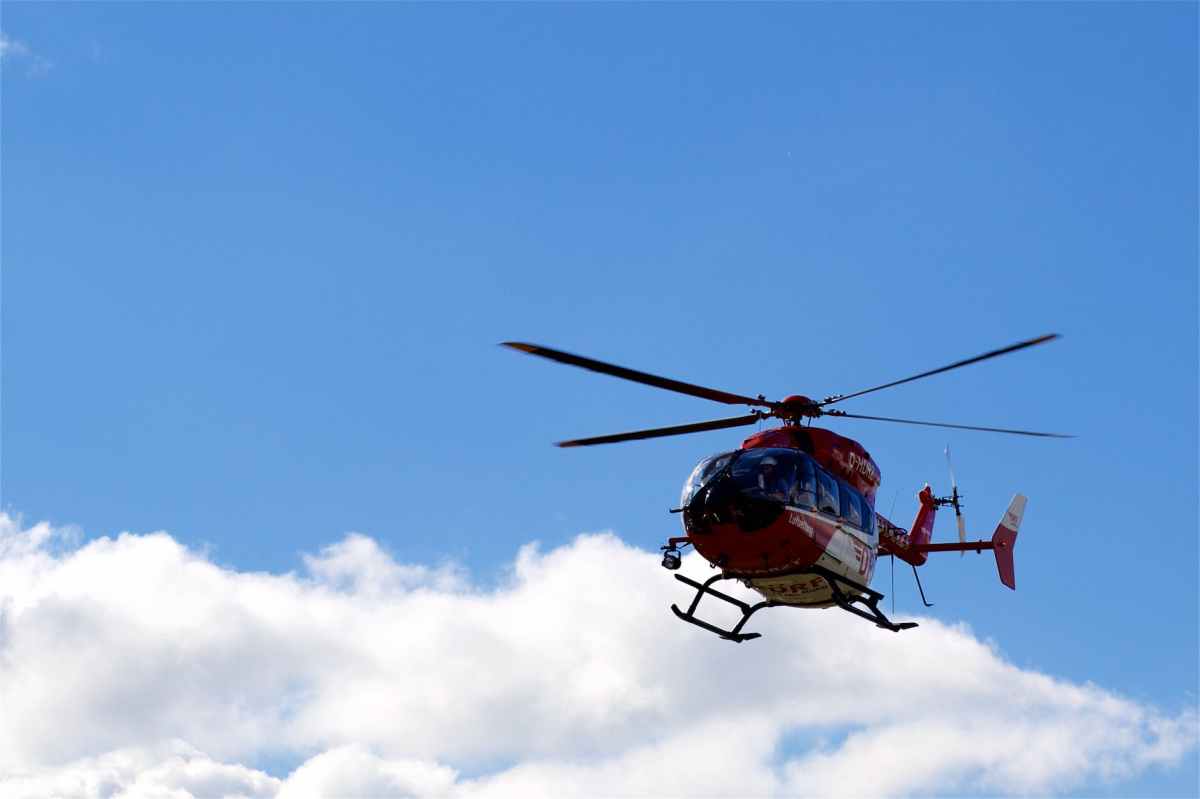
If looking up, as I do at home, to see high altitude vapour trails crisscrossing the sky, my thought is – I wonder where they are going? On the days when a light aircraft crosses the town, to or from our local airfield that doesn’t bother me. Even a noisy police helicopter keeping an eye on the traffic. That’s fine because they are solely there for our safety and security.

What will be the public reaction when we look up to see half a dozen new urban mobility vehicles buzzing past overhead? Perhaps we’ll accept new flying machines if it’s for a public service, an ambulance, fire services, police, or even newsgathering. Brightly coloured in emergency orange.

A public flying taxi service might raise a few eyebrows. A flashy private flying car, now that might be another matter altogether. There you are on a hot summer evening, in the garden, having a pleasant barbeque with friends and whiz a flying car swoops over the treetops. The passengers have their mobile phone out filming their trip. This is when fist will be raised skyward. It’s a time when you hope the next-door farmer hasn’t got a shotgun.

Today, a few pilots do get prosecuted for misbehaving when low flying private helicopters. Not often, it’s true. This happens with less than 1500 helicopters registered in the UK. What would happen with, say, 10,000 private flying cars? I wonder.

Scary 2

My list is still open for horror in aviation. I’ve opened the door to action movies with elements of horror. I’m excluding war movies and fighter pilot romps. A dramatic scene must have a moment of suspense when everything hangs on a thread. It could be a hide behind the sofa moment or felling that all is lost, and the faint light of hope is dimming. I was tempted to include zombie movies only to quickly come to my senses and say – no. I’ve avoided Snakes on a Plane. One, because I haven’t seen it. Two, because it’s write-ups suggest that it’s too ridiculous for words. Although, it’s not impossible. It’s even happened on general aviation flights.

Here’s five more movies, ancient and modern in my private list.

There’s an adaptation of the book No Highway. With actors James Stewart and Marlene Dietrich in the movie you would have thought it would have been a big smash. No Highway in the Sky is pedestrian, but the tension comes from us knowing that metal fatigue is real. Why don’t they believe it? We know the history of the first commercial jet, the Comet aircraft.

The original Flight of the Phoenix is a great suspense movie[1]. It’s not so much horror as intensely griping. Frightening in the sense that it tells us something about the good and bad of human behaviour. The constant battle between despair and what can seem like hopeless optimism in the face of terrible odds. Through gargantuan effort, crash survivors stranded in a desert survive.

There’s something especially frightening about aircraft crashes and danger in the cold white wastes of the poles. Again, passengers and crew struggle to stay alive in freezing weather in the desperate hope of rescue. Stranded, death visits the unfortunate survivors. Ordeal in the Artic[2] is a chilling movie of 1993 based on real events in 1991.

Final Destination has simple plot[3]. A student has a premonition, he and his friends get thrown-off a flight to Europe and then when they are back in the terminal there’s a fatal crash. They cheat death. But that’s not the end. That set-up is the ultimate scary imagining. It’s the what if? It’s the question survivors of aircraft accidents must ask – why me?

The 1955 British movie The Night My Number Came Up[4] plays on a similar theme but this time a nightmare before a planned journey. A bad dream of an aircraft crash. Will it happen just as the dream predicts. You must watch to find out.

Generally, in films there’s so much pure aeronautical nonsense on display. Commercial aircraft do not fall out of the sky when struck by lightning, flight crews do not lose control at the first sign of trouble, fuel doesn’t explode for no reason and the worst of weather doesn’t signal game over.

That said, there’s an inherent claustrophobic feeling inside an aircraft fuselage. It’s like a locked room drama. Passengers are isolated from the outside world. They are dependent on pilots, engineers and air traffic controllers all doing their jobs right. There’s the potential for this set-up to be the stage for an excellent dramatic horror movie. Tales of bravery, camaraderie, and sacrifice can all spring from the most dreadful of events. Unfortunately, so many movie makers make a mess of these situations.  


[1] https://www.imdb.com/title/tt0059183/?ref_=ttls_li_tt

[2] https://en.wikipedia.org/wiki/Ordeal_in_the_Arctic

[3] https://www.imdb.com/title/tt0195714/

[4] https://www.imdb.com/title/tt0047278/?ref_=ttls_li_tt

Scandals

Political scandals are as much part of British life as bread and butter pudding. Yet, we, you, me and the cat and the dog always seem shocked when the next one arrives. As if standing at a isolated bus stop never expecting a bus to turn-up and to our great surprise it does.

It might be failing to disclose or declare large sums of money changing hands. It might a succession of sex scandals. It might be misleading statements, or down-right lies. It might be cover-ups and blatant hypocrisy. It might be abuse or bulling. It might be leaking secrets or dirty tricks to undermine colleagues. It might be …………and the list goes on.

There seems to be no limit to the inventiveness of Members of Parliament (MPs). Is there a defence? It’s true that leading a public life does expose a person to more scrutiny than you or me. There are occasions when unprincipled adversaries can take advantage of this exposed situation.

Reputational damage spreads like wildfire even if the source of the damage is untrue. A bad news story gets media headline that are never retracted. However, you would think that, knowing all the above, that a person in the public spotlight would not entertain thoughtlessness or foolishness, in so much as they can avoid it.

Ever since the Watergate scandal in the US, nearly every occurrence now has the appendage “gate” shoved on the front of it. We’ve become a bit German in making-up new composite words. A pub quiz master could ask; can you identify this gate or that gate? Now, there’s a set of specialist question for a Mastermind contestant.

I can imagine a Monopoly board especially made for Conservative MPs. Although, Labour, Scottish Nationalists and Liberal Democrat MPs star in the lists too but less often. They even play the Get out of Jail Free card, now and then. Some MPs have almost got away with major misdemeanours but at the last moment party support collapses or the winds of fate turn sharply against them.

That leads me to wonder how many get away by the seat of their paints. Or they live with the knowledge that their party Whips office has a file marked – open only is X misbehaves.

It’s time to clean-up politics. Trouble is that I’ve heard that slogan before. It plays well for a while and then harsh reality breaks through, and the house of cards starts to fall. I remember the Back-to-Basics campaign announced in 1993 by British Prime Minister John Major at the Conservative Party conference. I’ll be he wishes he’d not gone down that road so ardently.

Like it or not, this is in our hands. The electorate. Time and time again we have General Elections where we, me included, vote in people who are not best suited to protecting the public interests, representing us or advancing our crumbling constitution.

The ballot is a powerful thing. Sadly, all too often it’s the political commotion in the few weeks before a ballot that determines the outcome. If only it was possible to take a more considered long-term perspective and stick with it. Granted, not a new phenomenon. The Greeks and Romans knew about the fragility of the public mood. Our inclination to make a choice for this day rather than the months and years ahead, or even decades ahead.

Maybe, 2024 will be different. My glass is half full outlook.

Scary

Let’s stick with fiction. In the run-up to Halloween there’s several stories where aviation and horror overlap. Not real-life dramas but concoctions of the imagination. Even with the coolest, most experienced passengers there’s moments of apprehension when encountering strong turbulence or unexpected diversions. We know that the risks are well managed but there’s the unforgiving nature of flying. Too many things going wrong at the same time and fate takes a hand.

There are far more action movies with aviation scenes than there are horror movies. So, forgive me if I step over the boundary between the two for a couple of this collections.

Who can forget the expression of a young William Shatner as he looks out of a window to see a large gremlin on the wing of his aircraft[1]. Panic sets in but no one sees what he sees. He becomes a hysterical. Grabs a gun. Opens a window and starts shooting at the gremlin. Everyone thinks he’s gone mad. Carried off in a straitjacket. Then in the last shot there is a view of the aircraft’s damaged engine cowling. Shatner had saved the day, only no one will ever believe him.

Again, in the category of iconic is Cray Grant being chased by a low flying aircraft in a cornfield. Running from machine gun fire he hides. Then in a spectacular explosion the aircraft crashes into a petrol tanker. Hitchcock pulls out all the stops. The film “North by Northwest[2]” will always be recalled for the crop duster scene. Grant’s character, Roger Thornhill gets away with his life.

There’s the in-flight abduction scene in the X-Files[3]. Aliens attempt to abduct character called Max Fenig from a commercial flight. He’s then found dead following a fatal crash. Agent Mulder theorises that the aircraft was forced down by aliens. The NTSB accident investigator is not buying it. Then there’s the mystery of the nine lost minutes between the aircraft crash and the time on the victims’ wristwatches. Yes, it gets a bit ridiculous. All in the vein of a good X-Files story.

Scary realism in science fiction qualifies. In this case 21st century technology as imagined in 1997. First to come to mind is the cab driver Bruce Willis driving his flying taxi. The Fifth Element[4] is a polished English-language French science fiction action movie. The flying taxicabs are terrifying. Weaving chaotically through the cityscape. Not something we will see with the current plans for urban air mobility – I hope.

The telling of the drama is a frightening fiction, but the events were real. This survival film is based on a crash in the Andes mountains on October 13, 1972[5]. A Uruguayan rugby team is faced with a terrible situation. Starving passengers debate how to stay alive. Pushed to the limit they eat the flesh of their dead relatives and friends. 29 died but 16 survived. More than one movie has been made of this awful tragedy. It speaks of the human instinct to survive as much as the catastrophe.

That’s five scary movies scenes with a commercial aviation theme. I’m sure there are more – what’s your favourite? 


[1] 1963 episode of “The Twilight Zone” called “Nightmare at 20,000 Feet.”

[2] https://www.imdb.com/title/tt0053125/plotsummary/

[3] https://en.wikipedia.org/wiki/Tempus_Fugit_%28The_X-Files%29

[4] https://en.wikipedia.org/wiki/The_Fifth_Element

[5] https://www.imdb.com/title/tt0106246/

What do you think?

A bill poster looked down at me. In big bold letters the word “Good” was the main message. It was the fact that a local college had been graded as good. They clearly wanted everyone to know that an inspection had gone well. Afterall, the rent of street posters is not cheap.

So, for all the efforts of all the staff, and the whole educational institution their work was summed up in one simple word. Four colourful letters displayed to passers-by. To be categorised as “Good” is read as having crossed a line. It’s a positive statement and a long way from – fail. Equally, it’s a mile off – excellent. The trouble is that “Good” is such a bland word. We have such a wide spectrum of use for that word that it’s difficult to know what it means.

One wonderful comedy sketch is that of Statler and Waldorf in the Muppets[1]. The two argumentative elderly men master the art of heckling. They start by saying: “that was wonderful” and then “it really wasn’t that good”, then keep on going until they get to “that was terrible” before they sign off.

It’s a nice reminder of a range of opinions being like shifting sand. In the range of one to ten the word “Good” is smack bang in the middle. Probably the most inoffensive classification.

If you are like me, you will have experienced a stream of e-mails asking for an opinion. Surveys are the number one marketing tool. To lure us they often have prize draws or the prospect of a giveaway.

“As a valued customer we welcome your feedback”. “We wondered if you could spare 5 – 6 minutes?” In theory, the fact that a business is interested in feedback is a positive. I like to know that a restaurant or airline is taking customer feedback. The hope is that feedback assists businesses in improving and developing their services.

However, an invitation to “share your thoughts” is reduced to box ticking. It’s almost as if we are still in the world of computers run on punched cards. These electronic surveys are constructed for the processor rather than that of the user.

They are quite checky too. Tick a particular box on a survey and another one comes up to ask – why do you feel that way? It’s almost as if you are required to justify a freely given opinion and threatened with being ignored if you don’t.

For all the above customer surveys have been a part of the landscape for since the early days of the internet. Categorisations put a stamp on what we think. It’s crude. Sometimes it’s merely a set of five stars with a request to choose one. Cantankerous opinions are mixed with indifferent answers. The aggregation of a pile of data can make the results as bland as tasteless soup. This can then be pasted into company reports. Thus becoming more of a security blanket rather than real feedback.

Let’s end on a positive note. This is a subject where Artificial Intelligence (AI) can contribute. Instead of box ticking why not have a dialogue with customers. Ask them what they really think. Imagine an animated AI version of Statler and Waldorf. Now, that would be fun.


[1] https://youtu.be/NpYEJx7PkWE