Public Broadcasting Value

It seems to be the season to have a downer on the BBC. As the gloomy light of winter gathers all around. The trees are shedding their leaves and that hunkering down mentality is invading my thoughts. Lawns no longer need mowing. Soden with moss and leaf fall.

I understand the dislike that partisan commercial broadcasters have for publicly funded broadcasters. The question of a “level playing field” and “bias” is always likely to come up.

Making a living from commercial advertising is highly competitive. Demands never stop. Seeking income from a marketplace that rises and falls with fashion and fad. That’s hard. Admittedly, there’s the compensating factor of wealthy benefactors or owners, prepared to make a loss, pumping funds into like minded companies. Shifting sands of political influence.

So, looking across the aisle at a major broadcaster that gets funds from the public, as a matter of law, must seem rather disconcerting. Certainly, it’s the sort of issue the wealthy benefactors or owners of media are going to kick at. Some to the extent of wanting to destroy chartered institutions with an ethos unlike their own.

What is a “level playing field” in the British media landscape? Can there ever be such a thing? That’s not an easy question to address. Shifting sands of public likes and dislikes shape the playing field (sorry about the metaphor overload). What might have been considered as independent, objective and neutral in the 1990s is way different from that now, 30-years on.

The British media landscape is not static, nor should it be so. In the period of three decades digital communication has advances at lightning speed. The sheer diversity of channels of communication has multiplied (even if they do repeat the same messages).

One sign of a healthy debate is the self-flagellation that the BBC often undergoes. As an institution, doesn’t it like to agonise about itself. With good reason considering some of the grave errors it’s made in the past. Supporting presenters whose behaviours have been found to be appallingly bad, and even criminal.

Let’s not tar everyone with the same brush. To be able to make mistakes and then correct them, with a good degree of learning in-between, is a strength. Some partisan commercial broadcasters seem unable to do this with any conviction. They just move on.

A publicly accountable broadcaster has no choice but to stand in the dock and take a reprimand, when appropriate. That’s no reason to shut it down. It’s a reason to make sure lessons are learned and not forgotten.

Doing a simple intuitive cost-benefit analysis. Taking the BBC as an example. What it offers, when it works well, far outweighs the costs. Listing three points, these have significant value: unifying impact of having a trusted national broadcaster, quality, broad base and originality of its output and editorial independence (not selling products or ideology).

Overseas critics may get upset, now and then, but that’s for them to get over. There’s no way such critics should shape the future of the broadcast media in Britain. That would be untenable.

John Gray’s Critique

If a dose of despondency is your Sunday morning tipple, I recommend BBC Radio 4’s “A Point of View[1]”. I often catch it as an alternative to listening to the driving rain bashing against the window as I wake-up on a Sunday morning.

What I dislike the most about John Gray’s analysis is that it dismisses all the hard-working people who daily strive to make the world a better place. I know, you are asking who John Gray is and what does he know? Well, he’s a British philosopher and author of a pile of serious books. He dabbles in political thinking and doom mongering.

On Sundays in the past, I relied heavily on Will Self creating an air of depressed inevitability that all the bad things about humans will eventually overcome us. A dower British journalist and political commentator who always seems to see the dark cloud instead of the silver lining.

Despite the grim tales of these speakers, they often have, lost in their rhetoric, a smidgen of wisdom. This morning John Gray argues that we need a new response to the growth of the right-wing charlatans who are rapidly climbing the greasy pole of national political life.

Naturally, a lot of us thought that’s what the UK General Election last July was all about. A reoccupation of the centre ground of British politics by the Labour Party. A renewed liberal democratic political consensus would emerge and save us all. Strangely, it doesn’t seem to be working out that way. Although, it might be a bit harsh to judge after only a few months.

Last night, I watched the second episode of the BBC’s period drama Wolf Hall[2]. My God, it’s good entertainment. A little heavy in places. Sharp and brilliantly executed. That last word being the key one. Tudor history is a reminder of how vicious political manoeuvring can be. Having a master, a King, who is determined to make the world turn around him and no one else.

So, should I agree with the likes of John Gray? That a darkness slithers around in human hearts. That we’d better be prepared, shake-off the status-quo and look for new ways to head-off the marketing men’s populist politics. Voiced by bombastic demigods and radical twerps.

He’s right in the sense that today’s politics is behind the curve. British political parties were forged in a different age. Largely, baring the virtues they espouse, they are outdated. Sure, fairness, liberty, and equality have not fallen out of fashion. But maybe the language surrounding them belongs in the 19th and 20th centuries.

One thing is for sure, Willo the Wisps, like Kemi Badenoch offer nothing new. Reform is just a cover for the populist worst of human nature. Yes, we do need someone to break new ground in British politics.

Oh, for a more cheerful Sunday morning.


[1] https://www.bbc.co.uk/sounds/play/m00254hz

[2] https://www.bbc.co.uk/iplayer/episodes/m002473m/wolf-hall

Eurovision – the result

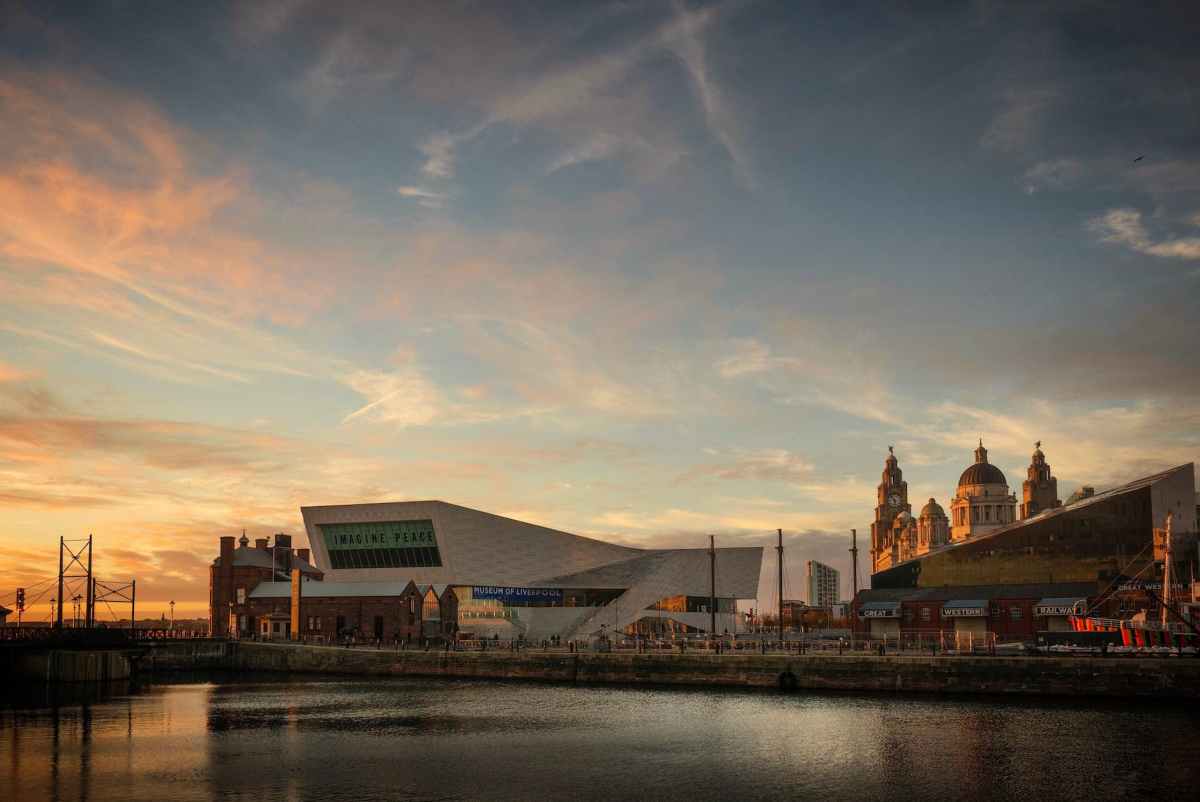
Time for a bit of post-match analysis. We can have all sorts of theories about what entertainment is but last night it was very much on the box[1]. It was Liverpool. It was in solidarity with Ukraine. It was Europe and beyond. When Reith put it that the BBC’s role is to: inform, educate, entertain, he must have had Eurovision in mind. Connecting broadcasters together, in unity across Europe is a wonderful achievement. Every year we are reminded of the things that draw us together.

For all the devices we carry around and snap five second glimpses of the world, they cannot compete with a large scale, live, in the moment experiences, shared with millions of other people. Especially when that massive event springs positivity from every direction.

Not only that, but the talent on displays in Liverpool this year was astonishing. Fine that one or two acts tipped the balance of the crazy scales to the limits. The bulk of the acts were briming over with enthusiasm, excitement, and electricity.

To the technical staff who made the staging work – what an incredible job. The ability to create impact and spectacle is a great gift. And no doubt, extremely hard work.

Eurovision has taken place with a war raging in Europe. Lives are being lost. Communities are being devastated. This is a good reason to remind ourselves that the world can be a better place and that better place is worth fighting for.

As per previous years, the voting system is a mysterious concoction of strange machinations. As complex and opaque as a social media algorithm. As the votes roll-in so expectation builds. It’s cruel too. Sudden leaps from single figure votes to hundreds of votes can be seconds away.

It was sad to see the UK entry fall by the wayside. To me it was a good song, but it peaked at average.

I was converted to Sweden. It’s not easy to put into words. The story telling wasn’t overblown. However, the act drew my attention like a powerful magnet to a chunk of steel. As the staging ascended so the song climbed. Its pacing didn’t race. It burrowed deeper into my mind.

Sweden’s Loreen had a magical attraction that captivated both judges and the public. Commiserations to Finland. Loreen is a worthy winner of the Eurovision Song Contest 2023. 

For me the star of the show was a song. A song that is so inspiring in difficult times. Singing this song is open to everyone and the moment you sing the song, the words become true. You’ll Never Walk Alone[2] with hope in your heart. Thank you, Gerry & The Pacemakers.  Thank you, Liverpool. 


[1] Or on the tube as we once said, when it was a tube. It’s TV. 

[2] https://youtu.be/OV5_LQArLa0

Drop Of A Tweet

I’ve got a couple of vinyl copies of “At The Drop Of A Hat”. They turn up in charity shops from time to time. Those responsible maybe from the 1950s but the genius of Flanders & Swann never wanes.

For those of us who grew up in the 1960s there are songs that embedded in our childhood. “Junior Choice” was a BBC programme broadcast on Radio 1 and 2. From that regular show there’s a whole string of comic sings that I cannot erase from my memories.

There one song that we are told started life in Scarsdale Villas[1], South Kensington, South West London. Now, a part of London where the house prices mount in the millions.

Introducing each of their songs there was often a monologue saying something about the song. So, we know, uniquely one famous song is inspired by a badly parked car but is about an animal.

It goes like this. Michael Flanders was a wheelchair user. Kensington Borough Council helpfully dug out a part of the pavement and curb outside his flat so that he could get around. He recounts his annoyance that a thoughtless driver would often steal his parking space. 

In his monologue he jokingly praises the independent minded councillors of Kensington adding – there’re all Conservatives. That little bit of humour is so British. It maybe goes to the heart of the BBC’s current problems. They could be saying to us all: “of course we are independent, we are all conservatives.” Equating conservative attitudes to being “independent” is the norm in my part of Surrey.

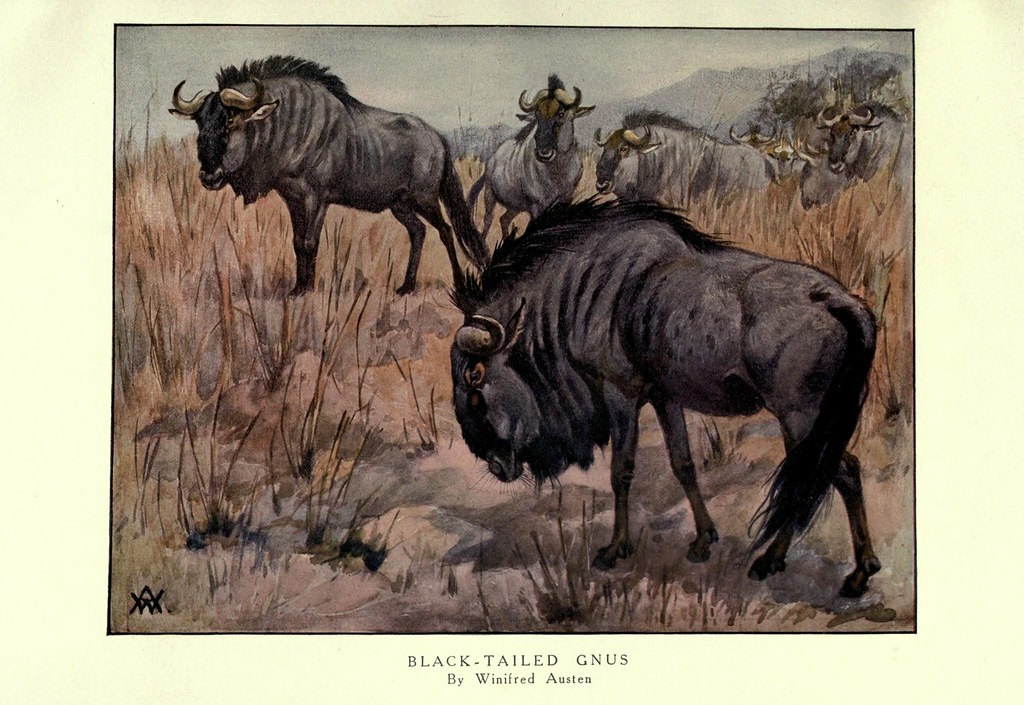
Back to the song. The antisocial parked car’s number plate began with the letters GNU. The rest is comic history. The two wrote: “The Gnu.[2]

To make the song work. They pronounced the animal’s name “G-noo”. What could be better than a word that rhymed with “zoo”. A place where we might find a Gnu[3].

The English language was changed forever.

Perhaps the lesson for the BBC is to look at its comic history. Learn lessons. To rise above the serious and intense debate of the moment, concede and reflect in amusement, and at leisure.

Sport is entertainment but so is politics when it gets absurd and ridiculous.


[1] https://en.wikipedia.org/wiki/Scarsdale_Villas

[2] https://youtu.be/j53z6RfFb7U

[3] a large African antelope with a long head, a beard and mane, and a sloping back. Also called a wildebeest.

Shameful

Let’s look at the current fetor objectively. Is it reasonable to say that the Government is using language that is reminiscent of political parties in Germany in the 1930s?

Politicians speaking stridently about making new laws plays well with media commentators and meets the need of being seen to be doing something, even if that something is highly flawed.

To marshal support for a much-criticised proposal, the language being used by Conservative politicians is harsh. Speaking in the House of Commons, a Minister said “there are 100 million people” who would qualify for asylum in the UK. This is reminiscent of the right-wing rhetoric used in 2016 by the referendum Leave campaign to say that 10s of million of Turkish people would come to the UK is we stayed in the European Union (EU).

Shamefully, scare stories about migration are the bread and butter of right-wing politicians much as they were in early 1930s in Germany. It’s clear, that the much-discussed Tweet by a well know football commentator[1], this last week has touched a political nerve. The truth often does touch a nerve.

There’s more than double trouble with Conservative politicians forcing the UK’s “independent” national broadcaster to sanction a well know football commentator for a private remark.

Godwin’s law[2] is known to politicians but maybe not more widely known. Basically, starting an argument by mentioning a comparison to Nazis is not a good a way to win a case. It’s that making an extreme comparison can undermine the credibility of a fair case against something bad.

Now, a national broadcaster with an obligation to aim for political impartiality, with respect to news and current affairs, is inconsistency jumping on the head of one of its popular faces. 

It’s sad that scrutiny of a proposal for a bad law is being overshadowed by an entirely unnecessary media spat. An unnecessary spat that is undermining free speech in the UK[3]. I do not think that Conservative politicians engineered this situation, but they unjustly are benefiting from it. The controversy is corralling right-wing support for a government bill that is full of holes.

I don’t know how we got to this ridiculous state but it’s part of a trend that has been evident since 2016. The reason an evil political party succeeded in Germany in the early 1930s is that they masked their true intent, and countless people discounted their prospects of electoral success. There’s an important lesson in history that we should never ignore.

The language politicians use does matter. It matters a lot.


[1] https://www.standard.co.uk/topic/gary-lineker

[2] https://en.wikipedia.org/wiki/Godwin%27s_law

[3] https://news.sky.com/topic/gary-lineker-7610

Sun & Wind

My morning routine includes switching on the radio. That already marks me down as being of a certain age. News and current affairs isn’t always a cheerful way to start the day but, at least, as a result I feel a bit better informed about the world and its ways.

Listening to Vince Cable[1], at the end of the BBC’s Today programme this morning[2] I agree. [At run time 2:37]. Sir John Vincent Cable, yes that makes me even more inclined to listen to him, has a wealth of knowledge and experience and puts his case well.

Yes, we have had four major shocks to the British economy. The banking crisis, Brexit, COVID pandemic, and war in Europe. Amongst these Brexit was self-inflicted and has cost the UK a great deal. To lump on top of all that we have had incompetence in Government the like of which hasn’t been seen for decades.

The blatant idiocy of suggesting that the answer is fracking to produce more gas and more exploratory drilling is needed are the ultimate in short-term planning. The UK is not the US. Believe it or not, there is a global climate crisis and burning more fossil fuels makes it worse. Short-term planning is one of the reasons that the UK economy is underperforming. Proposing more of that approach is to further embed reckless incompetence.

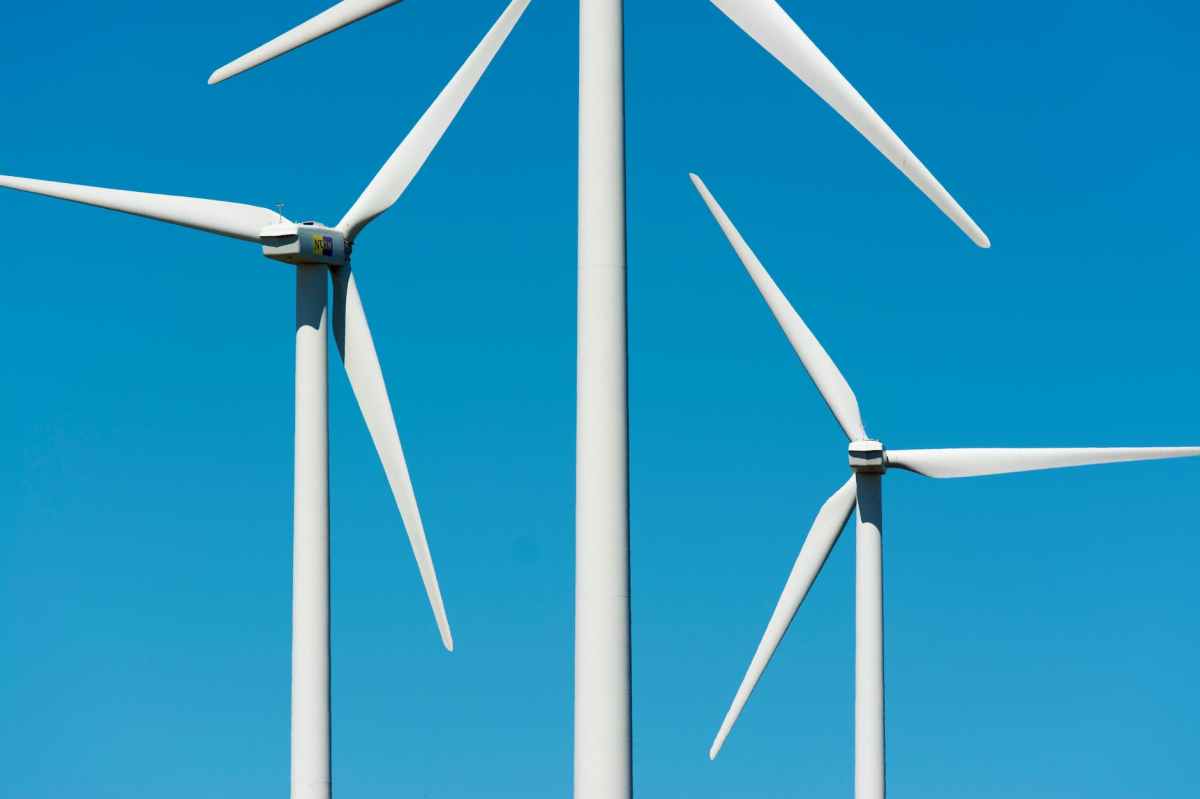
Vince is right. We should make it easier to build onshore wind turbines in the UK. I’m not saying completely deregulate the planning systems. That would be entirely foolish. However, in local development plans we have ridiculous absurdities that name wind turbines and solar farms as a particular danger to the character of the landscape. So, any proposal that is brave enough to come forward gets slapped down immediately. Local politicians run for the hills.

Like all such regulatory issues, there needs to be a balance struck. There are numerous places in the UK were wind turbines and solar farms have a great deal more positive impact than negative. Proposals for renewable energy developments should be given a leg up. The UK is blessed with renewable energy assets in wind, seas, rain, and enough sun to make a difference.

I am first in-line to defend the beauty of our countryside but not everywhere is equal in that respect. Not only that but compared to nuclear power stations of any size, wind turbines and solar farms can be removed after a life of service with little sign of their former presence.


[1] https://en.wikipedia.org/wiki/Vince_Cable

[2] https://www.bbc.co.uk/sounds/play/m001bbsv

Brexit & Aviation 77

The original Brexit transition date has gone by.  Am I comfortable writing this on 1st April?  Well it’s past lunchtime so it would now be bad form to make a joke about the whole debacle.

It’s another day of UK Parliamentary “indicative” votes or should I say evening?  We might imagine a compromise be sought and happiness reigns.  However, every time I hear a UK politician talk about compromise, they usually mean others coming around to their point of view.  The outcome of the “indicative” votes held by the House of Commons (HoC) on 27th March were received with disappointment but at least they were an attempt to move forward.   Regarding the future course of the Brexit the, UK Parliament is deeply divided on the big decisions, but voting patterns are starting to emerge.

Clearly, the international money markets think that a “soft” Brexit is the flavour of the day.  UK’s currency hasn’t ducked and dived too much for a while.  On the table is the proposal to remain in a Customs Union (CU) with the EU Member States.  This doesn’t explicitly touch on civil aviation although it does concern the movement of goods and services.  Implicit in this arrangement is close cooperation and collaborative working.  So, it’s conceivable that might extend to such possibilities as participation in European Agencies.

Whilst compromise and consensus are desirable and nice to talk about, the tone of the continuing public debate isn’t getting any calmer.  The BBC News Reality Check[1] team just published a reasonably worded assessment called “Brexit: Will flights be disrupted?”.  Reading some of the comments to this item posted on Social Media indicates that we have a long way to go.  The more polite ones are along these lines: I can’t believe people really think this is an issue, we few our planes before the EU and media starts scaremongering just before the Easter holidays.  The knee-jerk reactions of vocal Brexit supporters are to deem anything that paints their project in a negative light as: bias and scaremongering, regardless of its veracity.

There’s a tendency to ignore the fact that the single market in aviation has transformed flying for British air travellers.  There’s greater choice and competition and new routes across Europe and beyond.   It’s impossible to go back to the 1970s.  And who would want to go back to a State controlled industry without much concern for passengers?  Ignoring the reality that the EU has delivered is twisted and downright foolish.  After nearly 3-years no one knows what Brexit is or will become.  It’s a truly shocking situation.

[1] https://www.bbc.co.uk/news/uk-47225806