Regulatory Insights

I can’t remember if my teacher was talking about maths or physics. His scholarly advice has stuck with me. When things get complex, they can seem overwhelming. Problems seem insolvable. So, it’s good to take a deep breath, step back and see if it’s possible to reduce the problem to its most basic elements. Do what could be called helicopter behaviour. Try to look at the problem top-down, in its simplest form. Break it into parts to see if each part is more easily comprehended.

Today’s international aviation regulatory structure, for design and production, follows the arrow of time. From birth to death. Every commercial aircraft that there ever was started as a set of ideas, progressed to a prototype and, if successful, entered service to have a life in the air.

This elementary aircraft life cycle is embedded in standards as well as aviation rules. Documents like, ARP4754(), Aerospace Recommended Practice (ARP) Guidelines for Development of Civil Aircraft and Systems are constructed in this manner. There are as many graphs and curves that represent the aircraft life cycle as there are views on the subject, but they all have common themes.

That said, the end-of-life scenarios for aircraft of all kinds is often haphazard. Those like the Douglas DC-3 go on almost without end. Fascinatingly, this week, I read of an Airbus A321neo being scrapped after only 6-years of operations. Parts being more valuable than the aircraft.

Generally, flight-time lives in operational service are getting shorter. The pace of technology is such that advances offer commercial and environmental advantages that cannot be resisted. Operating conditions change, business models change and innovation speeds forward.

My earlier proposition was that our traditional aviation regulatory structure is out of date. Well, the detail is ever evolving – it’s true. Some of the fundamentals remain. The arrow of time, however fast the wheels spin, mixing my metaphors, remains an immobile reality.

In airworthiness terms an aircraft life cycle is divided into two halves. Initial airworthiness and continuing airworthiness. This provides for a gate keeper. A design does not advance into operational service, along the aircraft life cycle, until specified standards have been demonstrated as met. An authority has deemed that acceptable standards are met.

I’m arguing, this part of the aviation regulatory structure is far from out of date. However much there’s talk of so called “self-regulation” by industry it has not come into being for commercial aviation. I think there’s good reason for retaining the role that a capable independent authority plays in the system. A gate keeper is there to ensure that the public interest is served. That means safety, security and environmental considerations are given appropriate priority.

To fulfil these basic objectives there’s a need for oversight. That is the transparency needed to ensure confidence is maintained not just for a day but for the whole aircraft life cycle. And so, the case for both design and production approvals remain solid. The devil being in the detail.
Aviation Regulations Outdated?

Machines, like aircraft started life in craft workshops. Fabric and wood put together by skilful artisans. Experimentation being a key part of early aviation. It’s easy to see that development by touring a museum that I’d recommend a visit. At Patchway in Bristol there’s a corner of what was once a huge factory. In fact, somewhere where I worked in the early 1980s. Aerospace Bristol[1] is a story of heritage. A testament to the thousands who have worked there over decades.

Fabric and wood played part in the early days. The factory at Filton in Bristol started life making trams. An integral part of turn of the century city life. Carriage work brought together skilled workers in wood, metal and fabrics. It was soon recognised that these were just the skills needed for the new and emerging aircraft industry. The Bristol Aeroplane Company (BAC) was born.

It’s war that industrialised aviation. Demonstration of the value of air power led to ever more technical developments. Lots of the lessons of Henry Ford were applied to aircraft production. Factories grew in importance, employing a large workforce.

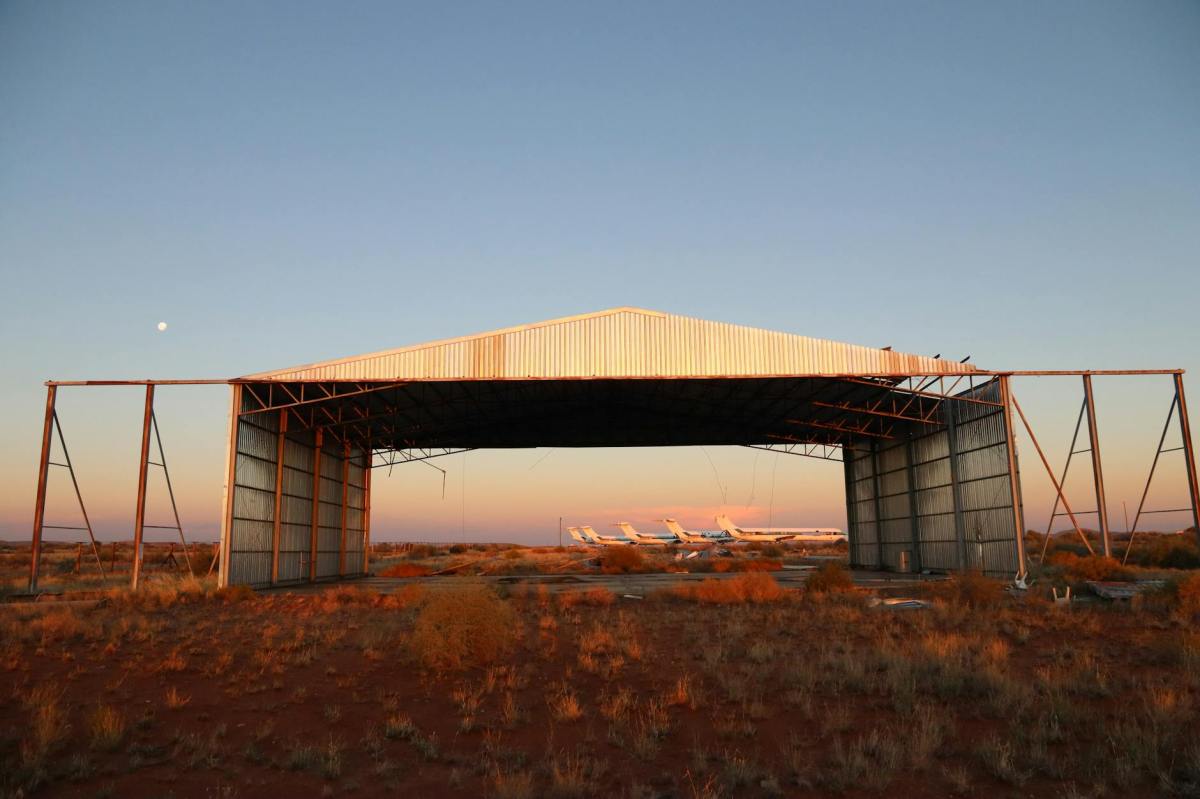
My time at the Filton site was in a building next to a hanger where the Bristol Bulldog[2] was originally produced. This was a single engine fighter, designed in the 1920s, in-service with the Royal Air Force (RAF).

Right from the start orderly processes and regulatory oversight formed part of aircraft design and production. The management of production quality started as a highly prescriptive process. As aviation grew into a global industry, the risks associated with poor design or faulty production became all too apparent.

In the civil industry, regulatory systems developed to address the control of design and production as two different worlds. Airworthiness, or fitness to fly, depended on having a good design that was produced in a consistent and reliable manner. So, now we have a regulatory framework with two pivotal concepts: DOA (Design Organisation Approval) and POA (Production Organisation Approval). It took about a century to get here. Now, these concepts are codified within EASA Part 21, FAA regulations, and other national aviation authorities’ frameworks.

Here’s my more controversial point. Is this internationally accepted regulatory model, that has evolved, conditioned by circumstances, the right one for the future? Are the airworthiness concepts of DOA and POA out of date?

This is a question that nobody wants to hear. Evolution has proved to be a successful strategy. At least, to date. What I’m wondering is, now the world of traditional factories and large administrative workforces is passing, how will regulation adjust to meet future needs?

Maybe I’ll explore that subject next.


[1] https://aerospacebristol.org/

[2] https://en.wikipedia.org/wiki/Bristol_Bulldog

Understanding Aircraft Accident Recorders

There’s quite a bit of chatter on social media about accident flight recorders.

One of the skills required by an aircraft accident investigator, and not often mentioned, is the ability to grapple with rules, regulations, and technical requirements. This is given that civil aviation is one of the most highly regulated industries in the world.

The story of the development of the accident flight recorder is a long one. No way can a few words here do justice to all the efforts that has been made over decades to ensure that this vital tool for accident and incident investigation does what it’s intended to do.

In fact, that’s the first technical requirement to mention for accident recorders. Namely, FAR and CS Subpart F, 25.1301: Each item of installed equipment must be of a kind and design appropriate to its intended function. That basic intended function being to preserve a record of aircraft operational data post-accident.

Aircraft accident recorders are unusual. They are mentioned in the airworthiness requirements, however they play no part in the day-to-day airworthiness of an aircraft. The reality is more nuanced than that, but an aircraft can fly safely without working flight recorders.

FAR and CS 25.1457 refers to Cockpit Voice Recorders (CVR)[1] and 25.1459 refers to Flight Data Recorders[2]. Both CVR and FDR receive electrical power from the aircraft electrical bus that provides the maximum reliability for operation of the recorder without jeopardising service to essential or emergency electrical loads. Both CVR and FDR should remain powered for as long as possible without jeopardising aircraft emergency operations.

Before drawing too many conclusions, it’s important to look at the above certification requirements in relation to their amendment state at the time of type certification of an aircraft.

If the aircraft of interest is the Boeing 737-800 then the FAA Type Certification date is 13 March 1998 and the EASA / JAA Type Certification date is 9 April 1998. Without wading through all the detailed condition, the certification basis for the above aircraft type was FAR Part 25 Amendment 25-77 and JAR 25 Change 13 [Note: EASA did not exist at the time].

FAR and CS 25.1457 and 25.1459 were in an earlier state than that which is written above. That said, the objective of powering the recorders in a reliable way was still applicable. There was no requirement for the CVR or FDR to be powered by a battery. What hasn’t changed is the requirement for a means to stop a recorder and prevent erasure, within 10 minutes after a crash impact. That’s assuming that aircraft electrical power was still provided.

So, when it’s reported that the South Korea Boeing 737 accident recorders[3] are missing the final 4 minutes of recoding, the cause is likely to be the loss of the aircraft electrical buses or termination by automatic means or the removal of power via circuit breakers. We will need to wait to hear what is found as the on-going accident investigation progresses.


[1] https://www.ecfr.gov/current/title-14/section-25.1457

[2] https://www.ecfr.gov/current/title-14/section-25.1459

[3] https://www.bbc.co.uk/news/articles/cjr8dwd1rdno

MH370 and MH17: A Decade On

The unthinkable happened in 2014. One major international airline suffered two catastrophic accidents. These tragic events ran contrary to all the trends in historic aircraft accident data.

In March, flight MH370 disappeared. In July, flight MH17 was shot down. In both cases there were no survivors from these international flights. This remains an unprecedented situation. It is a sobering consideration that such dreadful events were possible in a mature international framework of civil aircraft operations and regulation.

A decade on the pain of those who lost friends, family and colleagues in these tragedies is not diminished. Aviation should not lessen its attention to discovering more about what happened and putting measure in place to prevent reoccurrence of these events.

These two aviation catastrophes are different in respect of causal factors. One remains a mystery but, from what is known, has the hallmarks of an operational accident. The other is undoubtably an aggressive malicious act. Failings in the two elements of aviation safety and security, often viewed separately, are both capable of catastrophic outcomes.

Malaysia Airlines was a State-owned airline in the traditional model. There’s no reason to suppose that the airline harboured deficiencies that led directly to the two fatal accidents. In hindsight, the question is often asked: could both accidents have been avoided?

The extensive underwater search for MH370, in the southern Indian Ocean, resulted in no findings. However, floating debris from the fateful Boeing 777-200ER was discovered. Unlike what happened with Air France Flight 447 were the installed accident flight recorders were recovered from the deep ocean, there has been no such good fortune in respect of MH370.

Accident flight recorders are one of the primary tools for accident investigators. Installed recorders are built and tested to withstand extreme conditions. The reasonable assumption being that they will be found with any aircraft wreckage. The accident of MH370, is one where a deployable recorder may have been beneficial. That is one that ejects from an aircraft when it is subject to the high impact of the sea surface and then floats, possibly away from an accident site. There is a good case to be made for installing both deployable and installed recorders[1]. Particularly a case for long-range international overwater aircraft operations.

The facts surrounding the criminal act of shooting down of flight MH17 are well established. Sadly, in a troubled world it is impossible to say that such malicious acts will never occur again. What is to be done? Avoidance is by far the optimal approach. Commercial flying over warzones, where heavy weapons are known to be used, is extremely foolish. Now, it is good that much more flight planning attention is paid to understanding where conflict zones exist[2].

NOTE 1: On 07 March 2014 at 1642 UTC1 [0042 MYT, 08 March 2014], a Malaysia Airlines (MAS) Flight MH370, a Beijing-bound international scheduled passenger flight, departed from KL International Airport [KLIA] with a total of 239 persons on board (227 passengers and 12 crew). The aircraft was a Boeing 777-200ER, registered as 9M-MRO.

NOTE 2: On 17 July 2014, at 13:20 (15:20 CET) a Boeing 777-200 with the Malaysia Airlines nationality and registration mark 9M-MRD disappeared to the west of the TAMAK air navigation waypoint in Ukraine. All 298 persons on-bard lost their lives.


[1] https://flightsafety.org/files/DFRS_0.pdf

[2] https://www.easa.europa.eu/en/domains/air-operations/czibs

Turbulence

Turbulence is the result of atmospheric or environmental effects. Afterall, aircraft are craft that fly in the air. This is a hazard that is inherent in flying. Clear air turbulence (CAT) is common. However, extreme examples experienced in commercial aviation are rare. For one, aircraft operators and their crews do their best to avoid known potential atmospheric or environmental upsets, namely bad weather.

En-route turbulence accounts for a substantial number of cabin crew members injuries, and can occur at any time and at any altitude[1]. As far as I know, the UK Civil Aviation Authority (CAA) does not hold detailed data on turbulence injuries occurring on foreign registered aircraft. Numbers of injuries to passengers and flight crew on UK registered aircraft resulting from turbulence are recorded. However, it is not always known whether those injured in turbulence encounters were wearing seat belts.

Nevertheless, I can confidently say that the more passengers that are wearing seat belts during turbulence encounters the less the number of injuries. Deaths in these circumstances are rare. As might be expected fatalities are more likely to results from a combination of multiple causes and factors.

This subject is not immune from airline economics and competition. International flight routes can often be highly competitive. Fought over. So, the route taken, and associated fuel costs, can have an impact on the likelihood of a hazardous weather encounter. In fact, choosing to take routes for the benefit of picking-up specific winds is a common practice.

A high percentage of cases of turbulence events come about by flying too close to active storms[2]. Here there is often visual cues, reports, forecasts and feedback from turbulence encountered by other flights. This all helps crews avoid the worst weather encounters.

With very few exceptions, flight turbulence does not result in fatalities, permanent injure, or structurally damage commercial aircraft. However, turbulence is recognised as both an aviation safety and an economic issue, and it has been steadily increasing. Speculation and some research cites climate change as a reason for this increase. Also, there is the international growth in air traffic and development of new long-range routes.

One thing to say is that until recently, with INTERNET connections now in both in the cockpit and cabin, it could be the case that a passenger could access better real-time weather information than a flight crew. Now, SATCOM connections providing up-to-date weather information are more common on modern civil aircraft types.

There is still more that can be done to reduce crew and passenger injuries during turbulence encounters. There will inevitably happen despite any policy to avoid hazardous weather. The greatest threat to life exists to cabin crew. The cabin is their place of work.

There is potential to develop and employ better airborne detection systems to assist crews. That maybe by enhancing existing weather radar systems. It maybe by new means of turbulence detection using LIDAR, and possibly AI/ML. There is research and innovation that could be done to develop algorithms to better predict turbulence hazards.

Avoidance remains the best strategy.


[1] NASDAC Turbulence Study, August 2004

[2] US CAST briefing in 2004.

Harmonisation

There’s an example in of itself. I’ve used the British English spelling. Perhaps I should have standardised on the American spelling, namely Harmonization. Or does it matter at all given that the definition of the word remains the same, whatever. Oh, I can’t resist the temptation to say; you say Tomato, I say Tomato.

“You say tomato, I say tomato.

You eat potato and I eat potato,

Tomato, tomato, potato, potato,

Let’s call the whole thing off.”

Naturally, in the voice of Fred Astaire[1]. Nice though this is, my subject is not pronunciation.

Aviation is a highly regulated business. It’s been that since its potential for transporting huge numbers of people around the globe was recognised. Safety must be number one. Although, it’s not if you read the first few words of the all-important Chicago convention.

Article 1: Every state has complete and exclusive sovereignty over airspace above its territory.

In the minds of those who signed the convention it was sovereignty that took first place. That didn’t mean abusing the word “sovereignty” as has to often been done. Afterall, the whole basis of the Convention on International Civil Aviation was international cooperation. It still is.

Let’s put that to one side for a moment. One of the challenges of international aviation has been the different rules and regulations in place in each country. There’s a level of harmony in the standards of the International Civil Aviation Organization (ICAO). But ICAO is not a regulator and it’s for each country to interpret agreed standards within their domestic law.

Europe, or at least the European Union (EU) is different in this respect. Since there’s European law and an active European regulator then there’s common rules and regulation set for a regional grouping of countries. So far, Europe is the only region to go this far.

When it comes to aircraft airworthiness this has been a topic of a lot of discussion in the last four decades. In the 1990s, that discussion centred around the idea that a single worldwide code was a desirable achievement. That the time the two major entities engaged in the business of aviation rulemaking, and the maintenance of rules were the FAA (US) and the JAA (Europe).

A single worldwide code could greatly facilitate the movement of aviation produces around the globe. That done to ensure that common safety standards were maintained on every occasion. It proved hard to get to this utopian condition. That said, a great deal was achieved in the harmonisation of existing civil aviation codes. Today, we benefit from that work. I’d say we even take it for granted.

In around 2000, after much study, countries concluded that it was fine to seek some form of equivalence between respective rules rather than having to write done one single set of rules. Mutual recognition has flourished in the form of agreements between countries that has smoothed the path for the aviation industries.

That last major study of the pros and cons of harmonisation is now nearly a generation old. A lot has moved on. For one, in Europe the JAA transition to the EASA.

At the same time the manufacturing countries worked closely together to agree on measures to ensure that there was no great divergence in rules and regulations. Now subjects, like Safety Management Systems (SMS) became codified. However, sovereign countries continued to develop and maintain their own aviation rules and regulations.

International working groups often achieve remarkable commonality and convergence on detailed technical topics. Often because the few people who were deeply embedded in a technical subjects all knew each other and shared information relatively freely.

Discussion as to the viability of a single worldwide code has not completely faded into the past. In fact, there’s some good reason to breath life back into this historic debate. Here’s what’s added to the dynamics of the situation:

  1. Ongoing moves from prescriptive rules to more performance-based rules,
  2. Entirely new products in development, like eVTOL aircraft,
  3. Interdependency, interconnection, and integration all increased since 2000,
  4. Security and safety are becoming inseparable,
  5. Digitisation is changing the ways that we ensure that an aircraft is airworthy.

If you have knowledge of, and thoughts on this subject, I’d be happy to hear from you.


[1] https://youtu.be/LOILZ_D3aRg

Happy Birthday EASA

Happy Birthday EASA. 20 years is a good age

For me, it was a peculiar day in July. It was a baking hot Brussels. The sun beat down and the city’s trams were full of sweaty travellers. The interview room was a classic board room style. Modern office, heavy polished wooden table, and heavy black leather chairs. On a hot bright sunny summer day that was not a pleasing formula for a formal interview.

I was surprised at the result. I got the job. A moment in July 2004 became a pivotal moment in my aviation career. Not quite 20-years ago. The European Aviation Safety Agency (EASA)[1] was already up and running in a shared office in a Brussels suburb. It was the bare bones of an organisation in the process of a rapid build-up. Discussion about the locations of the Agency’s eventual headquarters were concluding.

That kicked-off my 11-years in Cologne. I arrived in the city when the tower building was being constructed and as the staff had just moved from Brussels to take up the new headquarters. It was December 2004. Offices, on the 6th floor of the main building were buzzing. The Agency was small in numbers and running fast to fulfil its new responsibilities.

European aviation safety regulation was going through a major change. Up until September 2003, Europe’s National Aviation Authorities (NAAs) acted as a partnership within the Joint Aviation Authorities (JAA)[2]. A body of rules and regulations and ways of working had been harmonised. However, because of the “club” like nature of the JAA there remained unresolved disagreements, incontinences, and a confusing representation at international level.

The legislation that called for the formation of EASA was set to unify aircraft certification and rulemaking activities and drive a consistency in the application of standards across Europe. It was the start of a long road to build world-class civil aviation safety regulator. It worked.

I experienced the first decade in Cologne. The storming and norming. The extensions of remit and turbulent days when we were finding our way. Several tragic fatal accidents and a least one Europe wide crisis. Now, the Agency is about to start its third decade.

EASA is undisputed as the European organisation that talks to the international aviation community. It works in lockstep with the European Commission. It is an achievement to be celebrated.

Yes, I find it sad that the UK is no longer a member of the Agency. But that doesn’t stop National Aviation Authorities (NAAs) working together in a constructive and positive manner[3]. There’s much to be gained from avoiding the fragmentation and conflicts of the past.

Happy Birthday EASA. 20 years is a good age.


[1] What’s #EASA’s story? See what we have achieved in 20 years  https://www.easa.europa.eu/…/looking-back-move-forward…

[2] https://jaato.com/start/

[3] https://www.easa.europa.eu/en/domains/international-cooperation/easa-by-country

Don Bateman

At the start of the jet-age, changes in aircraft design and the improvement of maintenance procedures made a significant improvement in aviation safety. One set of accidents remain stubbornly difficult to reduce. This is the tragic case where a perfectly airworthy aircraft is flown into the ground or sea. Clearly the crew, in such cases had no intention to crash but never-the-less the crash happens. Loss of situation awareness, fixation on other problems or lack of adherence to standard operating procedures can all contribute to these aircraft accidents. So often these are fatal accidents.

One strategy for reducing accidents, where there is a significant human factor, is the implementation of suitable alerting and warning systems in the cockpit. It could be said that such aircraft systems support the vigilance of the crew and thus help reduce human error.

For decades the number one fatal accident category was Controlled Flight Into Terrain (CFIT). It always came top of global accident analysis reports. Pick up a book on the world’s major civil aircraft crashes since the 1960s and there will be a list of CFIT accidents. By the way, this term CFIT is an internationally agreed category for classifying accidents[1]. 20-years ago, I was part of a team that managed these classifications.

When I started work on aircraft certification, in the early 1990s, the Ground Proximity Warning System (GPWS) already existed. A huge amount of work had been done since the 1970s defining and refining a set of protection envelopes that underpinned cockpit warnings aimed at avoiding CFIT.

UK CAA Specification 14 on GPWS dates from 1976[2]. This safety equipment had been mandated in many countries for certain types of public transport aircraft operation. It was by no means fitted to all aircraft and all types of aircraft operation. This was highlighted when an Air Inter AIRBUS A320 crashed near Strasbourg, in France in January 1992[3].

No alerting or warning system is perfect. GPWS had been successful in reducing the number of CFIT accidents but there were still occurrences where the equipment proved ineffective or was ignored.

I first met Don Bateman[4] on one of his whistles-stop tours presenting detailed analysis of CFIT accidents and the latest versions of the GPWS. At that time, he was working for the company Sundstrand[5], based in Redmond in Washington State, US. It was a time when Enhanced GPWS (EGPWS)[6] was being promoted. This version of the equipment had an added capability to address approaches to runways where the classic GPWS was known to give false results. False alerts and warnings are the enemy of any aircraft system since they reduce a crew’s confidence in its workings.

My role was the UK approval of the systems and equipment. Over a decade the industry moved from a basic GPWS to EGPWS to what we have now, Terrain Avoidance and Warning Systems (TAWS).

When I think of Don Bateman’s contribution[7], there are few people who have advanced global aviation safety as much as he did. His dedication to driving forward GPWS ensured the technology became almost universal. Consequently, there must be a large number of lives saved because of the CFIT accidents that did not happen.

He left no doubt as to his passion for aviation safety, was outstandingly professional and a pleasure to work with on every occasion. This work was an example of a positive and constructive partnership between aviation authorities and industry. We need more of that approach.

POST 1: Don Bateman Saved More Lives Than Anyone in Aviation History | Aviation Pros

POST 2: Don Bateman, ‘Father’ Of Terrain Awareness Warning Systems, Dies At 91 | Aviation Week Network


[1] https://www.intlaviationstandards.org/Documents/CICTTStandardBriefing.pdf

[2] https://publicapps.caa.co.uk/docs/33/CASPEC14.PDF

[3] https://reports.aviation-safety.net/1992/19920120-0_A320_F-GGED.pdf

[4] https://www.invent.org/inductees/c-donald-bateman

[5] https://archive.seattletimes.com/archive/?date=19930125&slug=1681820

[6] https://aerospace.honeywell.com/us/en/pages/enhanced-ground-proximity-warning-system

[7] https://aviationweek.com/air-transport/safety-ops-regulation/don-bateman-father-terrain-awareness-warning-systems-dies-91

First Encounter

My first encounter with what could be classed as early Artificial Intelligence (AI) was a Dutch research project. It was around 2007. Let’s first note, a mathematical model isn’t pure AI, but it’s an example of a system that is trained on data.

It almost goes without saying that learning from accidents and incidents is a core part of the process to improve aviation safety. A key industry and regulatory goal is to understand what happened when things go wrong and to prevent a repetition of events.

Civil aviation is an extremely safe mode of transport. That said, because of the size of the global industry there are enough accidents and incidents worldwide to provide useful data on the historic safety record. Despite significant pre-COVID pandemic growth of civil aviation, the number of accidents is so low that further reduction in numbers is providing hard to win.

What if a system was developed that could look at all the historic aviation safety data and make a prediction as to what accidents might happen next?

The first challenge is the word “all” in that compiling such a comprehensive record of global aviation safety is a demanding task. It’s true that comprehensive databases do exist but even within these extremely valuable records there are errors, omissions, and summary information. 

There’s also the kick back that is often associated with record keeping. A system that demands detailed record keeping, of even the most minor incident can be burdensome. Yes, such record keeping has admirable objectives, but the “red tape” wrapped around its objectives can have negative effects.

Looking at past events has only one aim. That’s to now do things to prevent aviation accidents in the future. Once a significant comprehensive database exists then analysis can provide simple indicators that can provide clues as to what might happen next. Even basic mathematics can give us a trend line drawn through a set of key data points[1]. It’s effective but crude.

What if a prediction could take on-board all the global aviation safety data available, with the knowledge of how civil aviation works and mix it in such a way as to provide reliable predictions? This is prognostics. It’s a bit like the Delphi oracle[2]. The aviation “oracle” could be consulted about the state of affairs in respect of aviation safety. Dream? – maybe not.

The acronym CAT normally refers to large commercial air transport (CAT) aeroplanes. What this article is about is a Causal model for Air Transport Safety (CATS)[3]. This research project could be called an early use of “Big Data” in aviation safety work. However, as I understand it, the original aim was to make prognostics a reality.

Using Bayesian network-based causal models it was theorised that a map of aviation safety could be produced. Then it could be possible to predict the direction of travel for the future.

This type of quantification has a lot of merit. It has weaknesses, in that the Human Factor (HF) often defies prediction. However, as AI advances maybe causal modelling ought to be revised. New off-the-shelf tools could be used to look again at the craft of prediction.


[1] https://ec.europa.eu/eurostat/statistics-explained/index.php?title=Air_safety_statistics_in_the_EU

[2] https://www.history.com/topics/ancient-greece/delphi

[3] https://open.overheid.nl/documenten/ronl-archief-d5cd2dc7-c53f-4105-83c8-c1785dcb98c0/pdf

Comms

The long history of data communications between air and ground has had numerous stops and starts. It’s not new to use digital communications while flying around the globe. That said, it has not been cheap, and traditional systems have evolved only slowly. If we think Controller Pilot Data Link Communications (CPDLC)[1] is quite whizzy. It’s not. It belongs to a Windows 95 generation. Clunky messages and limited applications.

The sluggishness of adoption of digital communications in commercial aviation has been for several reasons. For one, standardised, certified, and maintainable systems and equipment have been expensive. It’s not just the purchase and installation but the connection charges that mount-up.

Unsurprisingly, aircraft operators have moved cautiously unless they can identify an income stream to be developed from airborne communication. That’s one reason why the passengers accessing the internet from their seats can have better connections than the two-crew in the cockpit.

Larger nations’ military flyers don’t have a problem spending money on airborne networking. For them it’s an integral part of being able to operate effectively. In the civil world, each part of the aviation system must make an economic contribution or be essential to safety to make the cut.

The regulatory material applicable to Airborne Communications, Navigation and Surveillance (CS-ACNS)[2] can be found in publications coming from the aviation authorities. This material has the purpose of ensuring a high level of safety and aircraft interoperability. Much of this generally applicable material has evolved slowly over the last 30-years.

Now, it’s good to ask – is this collection of legacy aviation system going to be changed by the new technologies that are rapidly coming on-stream this year? Or are the current mandatory equipage requirements likely to stay the same but be greatly enhanced by cheaper, faster, and lower latency digital connections?

This year, Starlink[3] is offering high-speed, in-flight internet connections with global connectivity. This company is not the only one developing Low Earth Orbit (LEO)[4] satellite communications. There are technical questions to be asked in respect of safety, performance, and interoperability but it’s a good bet that these new services will very capable and what’s more, not so expensive[5].

It’s time for airborne communications to step into the internet age.

NOTE: The author was a part of the EUROCAE/RTCA Special Committee 169 that created Minimum Operational Performance Standards for ATC Two-Way Data Link Communications back in the 1990s.

POST 1: Elon Musk’s Starlink Internet Service Coming to US Airlines; Free WiFi (businessinsider.com)

POST 2: With the mandate of VDLM2 we evolve at the pace of a snail. Internet Protocol (IP) Data Link may not be suitable for all uses but there’s a lot more that can be done.


[1] https://skybrary.aero/articles/controller-pilot-data-link-communications-cpdlc

[2] https://www.easa.europa.eu/en/document-library/easy-access-rules/easy-access-rules-airborne-communications-navigation-and

[3] https://www.starlink.com/

[4] https://www.esa.int/ESA_Multimedia/Images/2020/03/Low_Earth_orbit

[5] https://arstechnica.com/information-technology/2022/10/starlink-unveils-airplane-service-musk-says-its-like-using-internet-at-home/