Regulatory Insights

I can’t remember if my teacher was talking about maths or physics. His scholarly advice has stuck with me. When things get complex, they can seem overwhelming. Problems seem insolvable. So, it’s good to take a deep breath, step back and see if it’s possible to reduce the problem to its most basic elements. Do what could be called helicopter behaviour. Try to look at the problem top-down, in its simplest form. Break it into parts to see if each part is more easily comprehended.

Today’s international aviation regulatory structure, for design and production, follows the arrow of time. From birth to death. Every commercial aircraft that there ever was started as a set of ideas, progressed to a prototype and, if successful, entered service to have a life in the air.

This elementary aircraft life cycle is embedded in standards as well as aviation rules. Documents like, ARP4754(), Aerospace Recommended Practice (ARP) Guidelines for Development of Civil Aircraft and Systems are constructed in this manner. There are as many graphs and curves that represent the aircraft life cycle as there are views on the subject, but they all have common themes.

That said, the end-of-life scenarios for aircraft of all kinds is often haphazard. Those like the Douglas DC-3 go on almost without end. Fascinatingly, this week, I read of an Airbus A321neo being scrapped after only 6-years of operations. Parts being more valuable than the aircraft.

Generally, flight-time lives in operational service are getting shorter. The pace of technology is such that advances offer commercial and environmental advantages that cannot be resisted. Operating conditions change, business models change and innovation speeds forward.

My earlier proposition was that our traditional aviation regulatory structure is out of date. Well, the detail is ever evolving – it’s true. Some of the fundamentals remain. The arrow of time, however fast the wheels spin, mixing my metaphors, remains an immobile reality.

In airworthiness terms an aircraft life cycle is divided into two halves. Initial airworthiness and continuing airworthiness. This provides for a gate keeper. A design does not advance into operational service, along the aircraft life cycle, until specified standards have been demonstrated as met. An authority has deemed that acceptable standards are met.

I’m arguing, this part of the aviation regulatory structure is far from out of date. However much there’s talk of so called “self-regulation” by industry it has not come into being for commercial aviation. I think there’s good reason for retaining the role that a capable independent authority plays in the system. A gate keeper is there to ensure that the public interest is served. That means safety, security and environmental considerations are given appropriate priority.

To fulfil these basic objectives there’s a need for oversight. That is the transparency needed to ensure confidence is maintained not just for a day but for the whole aircraft life cycle. And so, the case for both design and production approvals remain solid. The devil being in the detail.
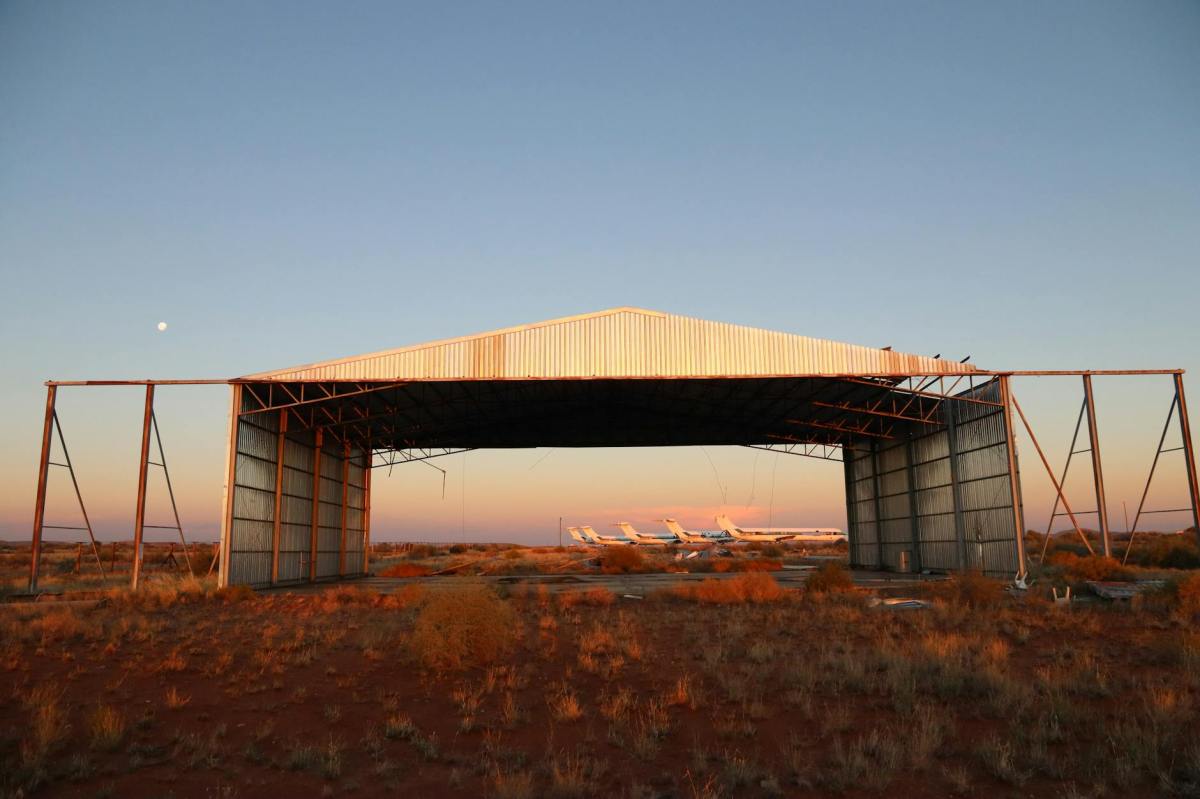
Aviation Regulations Outdated?

Machines, like aircraft started life in craft workshops. Fabric and wood put together by skilful artisans. Experimentation being a key part of early aviation. It’s easy to see that development by touring a museum that I’d recommend a visit. At Patchway in Bristol there’s a corner of what was once a huge factory. In fact, somewhere where I worked in the early 1980s. Aerospace Bristol[1] is a story of heritage. A testament to the thousands who have worked there over decades.

Fabric and wood played part in the early days. The factory at Filton in Bristol started life making trams. An integral part of turn of the century city life. Carriage work brought together skilled workers in wood, metal and fabrics. It was soon recognised that these were just the skills needed for the new and emerging aircraft industry. The Bristol Aeroplane Company (BAC) was born.

It’s war that industrialised aviation. Demonstration of the value of air power led to ever more technical developments. Lots of the lessons of Henry Ford were applied to aircraft production. Factories grew in importance, employing a large workforce.

My time at the Filton site was in a building next to a hanger where the Bristol Bulldog[2] was originally produced. This was a single engine fighter, designed in the 1920s, in-service with the Royal Air Force (RAF).

Right from the start orderly processes and regulatory oversight formed part of aircraft design and production. The management of production quality started as a highly prescriptive process. As aviation grew into a global industry, the risks associated with poor design or faulty production became all too apparent.

In the civil industry, regulatory systems developed to address the control of design and production as two different worlds. Airworthiness, or fitness to fly, depended on having a good design that was produced in a consistent and reliable manner. So, now we have a regulatory framework with two pivotal concepts: DOA (Design Organisation Approval) and POA (Production Organisation Approval). It took about a century to get here. Now, these concepts are codified within EASA Part 21, FAA regulations, and other national aviation authorities’ frameworks.

Here’s my more controversial point. Is this internationally accepted regulatory model, that has evolved, conditioned by circumstances, the right one for the future? Are the airworthiness concepts of DOA and POA out of date?

This is a question that nobody wants to hear. Evolution has proved to be a successful strategy. At least, to date. What I’m wondering is, now the world of traditional factories and large administrative workforces is passing, how will regulation adjust to meet future needs?

Maybe I’ll explore that subject next.


[1] https://aerospacebristol.org/

[2] https://en.wikipedia.org/wiki/Bristol_Bulldog

Understanding Aircraft Accident Recorders

There’s quite a bit of chatter on social media about accident flight recorders.

One of the skills required by an aircraft accident investigator, and not often mentioned, is the ability to grapple with rules, regulations, and technical requirements. This is given that civil aviation is one of the most highly regulated industries in the world.

The story of the development of the accident flight recorder is a long one. No way can a few words here do justice to all the efforts that has been made over decades to ensure that this vital tool for accident and incident investigation does what it’s intended to do.

In fact, that’s the first technical requirement to mention for accident recorders. Namely, FAR and CS Subpart F, 25.1301: Each item of installed equipment must be of a kind and design appropriate to its intended function. That basic intended function being to preserve a record of aircraft operational data post-accident.

Aircraft accident recorders are unusual. They are mentioned in the airworthiness requirements, however they play no part in the day-to-day airworthiness of an aircraft. The reality is more nuanced than that, but an aircraft can fly safely without working flight recorders.

FAR and CS 25.1457 refers to Cockpit Voice Recorders (CVR)[1] and 25.1459 refers to Flight Data Recorders[2]. Both CVR and FDR receive electrical power from the aircraft electrical bus that provides the maximum reliability for operation of the recorder without jeopardising service to essential or emergency electrical loads. Both CVR and FDR should remain powered for as long as possible without jeopardising aircraft emergency operations.

Before drawing too many conclusions, it’s important to look at the above certification requirements in relation to their amendment state at the time of type certification of an aircraft.

If the aircraft of interest is the Boeing 737-800 then the FAA Type Certification date is 13 March 1998 and the EASA / JAA Type Certification date is 9 April 1998. Without wading through all the detailed condition, the certification basis for the above aircraft type was FAR Part 25 Amendment 25-77 and JAR 25 Change 13 [Note: EASA did not exist at the time].

FAR and CS 25.1457 and 25.1459 were in an earlier state than that which is written above. That said, the objective of powering the recorders in a reliable way was still applicable. There was no requirement for the CVR or FDR to be powered by a battery. What hasn’t changed is the requirement for a means to stop a recorder and prevent erasure, within 10 minutes after a crash impact. That’s assuming that aircraft electrical power was still provided.

So, when it’s reported that the South Korea Boeing 737 accident recorders[3] are missing the final 4 minutes of recoding, the cause is likely to be the loss of the aircraft electrical buses or termination by automatic means or the removal of power via circuit breakers. We will need to wait to hear what is found as the on-going accident investigation progresses.


[1] https://www.ecfr.gov/current/title-14/section-25.1457

[2] https://www.ecfr.gov/current/title-14/section-25.1459

[3] https://www.bbc.co.uk/news/articles/cjr8dwd1rdno

Harmonisation

There’s an example in of itself. I’ve used the British English spelling. Perhaps I should have standardised on the American spelling, namely Harmonization. Or does it matter at all given that the definition of the word remains the same, whatever. Oh, I can’t resist the temptation to say; you say Tomato, I say Tomato.

“You say tomato, I say tomato.

You eat potato and I eat potato,

Tomato, tomato, potato, potato,

Let’s call the whole thing off.”

Naturally, in the voice of Fred Astaire[1]. Nice though this is, my subject is not pronunciation.

Aviation is a highly regulated business. It’s been that since its potential for transporting huge numbers of people around the globe was recognised. Safety must be number one. Although, it’s not if you read the first few words of the all-important Chicago convention.

Article 1: Every state has complete and exclusive sovereignty over airspace above its territory.

In the minds of those who signed the convention it was sovereignty that took first place. That didn’t mean abusing the word “sovereignty” as has to often been done. Afterall, the whole basis of the Convention on International Civil Aviation was international cooperation. It still is.

Let’s put that to one side for a moment. One of the challenges of international aviation has been the different rules and regulations in place in each country. There’s a level of harmony in the standards of the International Civil Aviation Organization (ICAO). But ICAO is not a regulator and it’s for each country to interpret agreed standards within their domestic law.

Europe, or at least the European Union (EU) is different in this respect. Since there’s European law and an active European regulator then there’s common rules and regulation set for a regional grouping of countries. So far, Europe is the only region to go this far.

When it comes to aircraft airworthiness this has been a topic of a lot of discussion in the last four decades. In the 1990s, that discussion centred around the idea that a single worldwide code was a desirable achievement. That the time the two major entities engaged in the business of aviation rulemaking, and the maintenance of rules were the FAA (US) and the JAA (Europe).

A single worldwide code could greatly facilitate the movement of aviation produces around the globe. That done to ensure that common safety standards were maintained on every occasion. It proved hard to get to this utopian condition. That said, a great deal was achieved in the harmonisation of existing civil aviation codes. Today, we benefit from that work. I’d say we even take it for granted.

In around 2000, after much study, countries concluded that it was fine to seek some form of equivalence between respective rules rather than having to write done one single set of rules. Mutual recognition has flourished in the form of agreements between countries that has smoothed the path for the aviation industries.

That last major study of the pros and cons of harmonisation is now nearly a generation old. A lot has moved on. For one, in Europe the JAA transition to the EASA.

At the same time the manufacturing countries worked closely together to agree on measures to ensure that there was no great divergence in rules and regulations. Now subjects, like Safety Management Systems (SMS) became codified. However, sovereign countries continued to develop and maintain their own aviation rules and regulations.

International working groups often achieve remarkable commonality and convergence on detailed technical topics. Often because the few people who were deeply embedded in a technical subjects all knew each other and shared information relatively freely.

Discussion as to the viability of a single worldwide code has not completely faded into the past. In fact, there’s some good reason to breath life back into this historic debate. Here’s what’s added to the dynamics of the situation:

  1. Ongoing moves from prescriptive rules to more performance-based rules,
  2. Entirely new products in development, like eVTOL aircraft,
  3. Interdependency, interconnection, and integration all increased since 2000,
  4. Security and safety are becoming inseparable,
  5. Digitisation is changing the ways that we ensure that an aircraft is airworthy.

If you have knowledge of, and thoughts on this subject, I’d be happy to hear from you.


[1] https://youtu.be/LOILZ_D3aRg

Air Taxi 3

Urban mobility by air, had a flurry of success in the 1970s. However, it did not end well.

Canadian Joni Mitchell is one of the most celebrated singer-songwriters and my favourite. She has tapped into the social and environmental issues that have concerned a lot of us for decades. Of her large catalogue, I can’t tell you how much I love this song[1]. The shear beauty of the lyric.

Anyway, it’s another track on the album called “Hejira” that I want to refer. When I looked it up, I found out, I was wrong. The song I want to refer to is on the 1975 album “The Hissing of Summer Lawns”. The song “Harry’s House[2]” contains the line “a helicopter lands on the Pan Am roof like a dragon fly on a tomb.” Without going into what it’s all about, the lyrical image is that flying from a city skyscraper roof was seen as glamorous and the pinnacle of success.

In 1970, prominent aviation authorities were talking about the regulatory criteria needed for the city-centre VTOL[3] aircraft of the future. Then on the afternoon of 16 May 1977, New York Airways Flight 971, a Sikorsky S-61 helicopter, crashed[4] on Pan Am’s building rooftop heliport[5]. That ghastly fatal accident reset thinking about city centre operations air transport operations.

So, what’s different 50-year on? Proposals for city centre eVTOL operations are much in the News. City planners are imagining how they integrate an airborne dimension into public transport operations. Cars, busses, trains and eVTOL aircraft may all be connected in new multimodal terminals. That’s the city transport planners’ vision for less than a decade ahead.

For one, the vehicles are radically different. Yes, the physics of flight will not change but getting airborne is quite different between a conventional large helicopter and the plethora of different eVTOL developments that are underway across the world.

Another point, and that’s why I’m writing this piece, is the shear amount of safety data that can be made available to aircraft operators. Whereas in the 1970s, a 5-parameter flight recorder was thought to be neat, now the number of digital parameters that could be collected weighs in over thousands. In the 1970s, large helicopters didn’t even have the basic recording of minimal flight data as a consideration. The complexity in the future of eVTOL will be, not how or where to get data but what to do with all the data that is streamed off the new aircraft.

Interestingly, this changes the shape of the Heinrich and Bird “safety pyramid” model[6]. Even knowing about such a safety model is a bit nerdy. That said, it’s cited by specialist in countless aviation safety presentations.

Top level events, that’s the peak of the pyramid, remain the same, but the base of the pyramid becomes much larger. The amount of safety data that could be available on operational occurrences grows dramatically. Or at least it should.

POST: Growing consideration is being given to the eVTOL ecosystem. This will mean a growing need to share data Advanced Air Mobility Portal (nasa.gov)


[1] https://youtu.be/nyj5Be5ovas

[2] A nice cover https://youtu.be/bjvYgpm–tY

[3] VTOL = Vertical Take Off and Landing.

[4] https://www.nytimes.com/1977/05/17/archives/5-killed-as-copter-on-pan-am-building-throws-rotor-blade-one-victim.html

[5] https://www.thisdayinaviation.com/16-may-1977/

[6] https://skybrary.aero/articles/heinrich-pyramid