Half empty tool box

When new technologies come along there’s often a catch-up phase. Then we are either frightening ourselves crazy with a moral panic or switch to a – so what? – mode. The last week’s fury of articles on Artificial Intelligence (AI) probed all sorts of possibilities. What’s the enduring legacy of all that talk? Apart from stimulating our imaginations and coming up with some fascinating speculation, what’s going to happen next?

I’m struck by how conventional the response has been, at least from a governmental and regulatory point of view. A little bit more coordination here, a little bit more research there and maybe a new institution to keep an eye on whatever’s going on. Softly, softly as she goes. And I don’t mean the long-gone black and white British TV series of that name[1]. Although the pedestrian nature of the response would fit the series well.

Researchers and innovators are always several steps ahead of legislators and regulators. In addition, there’s the perception that the merest mention of regulation will slow progress and blunt competitiveness. Time and money spent satisfying regulators is considered a drain. However much some politicians think, the scales don’t always have public interest on one side and economic growth on the other.

Regarding AI more than most other rapidly advancing technical topics, we don’t know what we don’t know. That means more coordination turns into to more talk and more possibly groupthink about what’s happening. Believe you me, I’ve been there in the past with technical subjects. There’s a fearful reluctance to step outside contemporary comfort zones. This is often embedded in the terms of reference of working groups and the remit of regulators.

The result of the above is a persistent gap between what’s regulated in the public interest and what’s going on in the real world. A process of catch-up become permanently embedded.

One view of regulation is that there’s three equally important parts, at least in a temporal sense.

Reactive – investigate and fix problems, after the event. Pro-active – Using intelligence to act now. Prognostic – looking ahead in anticipation. Past, present, and future.

I may get predicable in what I say next. The first on the list is necessary, inevitable, and often a core activity. The second is becoming more commonplace. It’s facilitated by seeking data, preforming analysis and being enabled to act. The third is difficult. Having done the first two, it’s to use the best available expertise and knowledge to make forecasts, identify future risks and put in place measures ahead of time.

So, rather than getting a sense that all the available methods and techniques are going to be thrown at the challenge of AI, I see a vacuum emerging. Weak cooperation forums and the fragmentation inherent when each established regulator goes their own way, is almost a hands-off approach. There’s a tendency to follow events rather than shaping what happens next. Innovation friendly regulation can support emerging digital technologies, but it needs to take their risk seriously.


[1] https://www.imdb.com/title/tt0129717/

Learn by testing

Back in the mid-1980s, aircraft system integration was part of my stock-in-trade. Project managing the integration of a safety critical system into a large new helicopter. It was a challenging but rewarding job. Rewarding in that there was a successful new aircraft at the end of the day.

For big and expensive development projects there are a great number of risks. The technical ones focus on functionality, performance, and safety. The commercial ones focus on getting the job done on-time and at a reasonable price. Project managers are in the middle of that sandwich.

Naturally, the expectations of corporate managers in the companies that take on these big challenges is that systems and equipment integration can be done to the book. Quickly and without unexpected outcomes. The practical reality is that people must be well prepared and extremely lucky not to encounter setbacks and resets. It’s not just test failures and anomalies that must be investigated and addressed. Systems integrators are working on shifting sand. The more that is known about overall aircraft flight test performance and customers preferences so technical specifications change.

With cockpit display systems, in the early days, that was often feedback from customer pilots who called for changes to the colour, size or shape of the symbology that was displayed on their screens. What can seem a simple post-flight debriefing remark could then turn into a huge change programme.

That was particularly true of safety critical software-based systems. Equipment suppliers may have advanced their design to a state where much of the expensive design validation and verification was complete. Then a system integrator comes up with a whole set of change that need to be done without additional costs and delivered super-fast. Once a flight test programme gets going it can’t be stopped without serious implications. It’s a highly dynamic situation[1].

I’m writing this blog in reaction to the news coming from Vertical Aerospace. Their VX4 prototype aircraft was involved in an flight test incident that did a lot of damage[2]. There’s no doubt this incident can provide data to feedback into the design, performance, and safety of future versions of their aircraft[3]. Integrating complex hardware and software is hard but the rewards are great.

“Excellence is never an accident. It is always the result of high intention, sincere effort, and intelligent execution.” – Aristotle


[1] https://youtu.be/Gb_eta4mZkc

[2] https://evtolinsights.com/2023/08/vertical-aerospace-identifies-propeller-as-root-cause-of-august-9-vx4-incident/

[3] https://investor.vertical-aerospace.com/news/news-details/2023/Vertical-Aerospaces-VX4-Programme-Moves-to-the-Next-Phase/default.aspx

New Walk

It’s a step to the left and then a step to the right. It’s not quite the “Time Warp” that featured in the 1970s rock musical: The Rocky Horror Show.

It’s a little mini dance that people do every day in the streets of Britain. I found myself doing it over the weekend. It’s that moment when you realise that you have lost a sense of what’s around you. A tiny drift away from where you intended to go. Then a step to correct, and look-up and set-off again towards your destination. A wiggle on the pavement.

Maybe this walk didn’t exist before 2006. Well, that is all but in the most exceptional situations. Hand-held devices are not entirely new. What’s much more frequent now is the compulsion to look at the small screen.

The colours, the constant demand for attention, the tickling of our curiosity, the mobile phone has it all. In fact, its dam silly to continue to call our devices “phones.” The primary purpose of these handy devices has long since passed from being able to make telephone calls from any location.

We call them a “mobile”, but the Germans call them a “handy”. An American will call them a cell phone. Given the way we use these ubiquitous hand-held devices, I think the Germans have got it right. The whole essence of the thing is its utility.

Now, if we are fixated with heads down there’s a lot that can go wrong. This has been the source of numerous aviation accidents. Looking up and checking visual references remains a fundamental part of flying. The basics of “see and avoid” are drummed into every new flyer.

On the pavement us poor humans are evolving in a world of every more connected technology. In our heads we have a perception of the world around us as we walk the urban streets. That’s made up of sights, sounds, and even smells. Our brains gather information and then do some spatial and temporal filtering before making sense of where we are and what we need to do to get where we want to go. The eyes, and image processing in the brain are on the top of the list of our normal priorities.

Heads-down attention is drawn to the small screen and away from our surroundings. Staring at the small screen draws us into the content of an e-mail, or a text message, or a cuddly cat picture running around social media. Luckily our other senses are keeping track of the world around us.

The textbook case is where we start to drift in our three-dimensional environment. Not much. It’s a step to the left and not a step to the right. Suddenly there’s a need to correct. Our ever-active brains pick up on the misstep. That’s where our tiny dance comes in and nobody but us may notice.

I’m talking about something that’s almost trivial. Hardly noticeable. However, there are far too many cases where fatalities have resulted from missteps[1]. There’s some evidence that bumping into people and objects is most likely. Slips and falls follow those incidents.

I’ll bet not much is known about the vast number of micro-events like my tiny mobile phone dance. Now, there’s a topic of study for a student of visual perception. 


[1] https://www.ncbi.nlm.nih.gov/pmc/articles/PMC6034962/

Getting smaller

We are on an unstoppable rollercoaster.

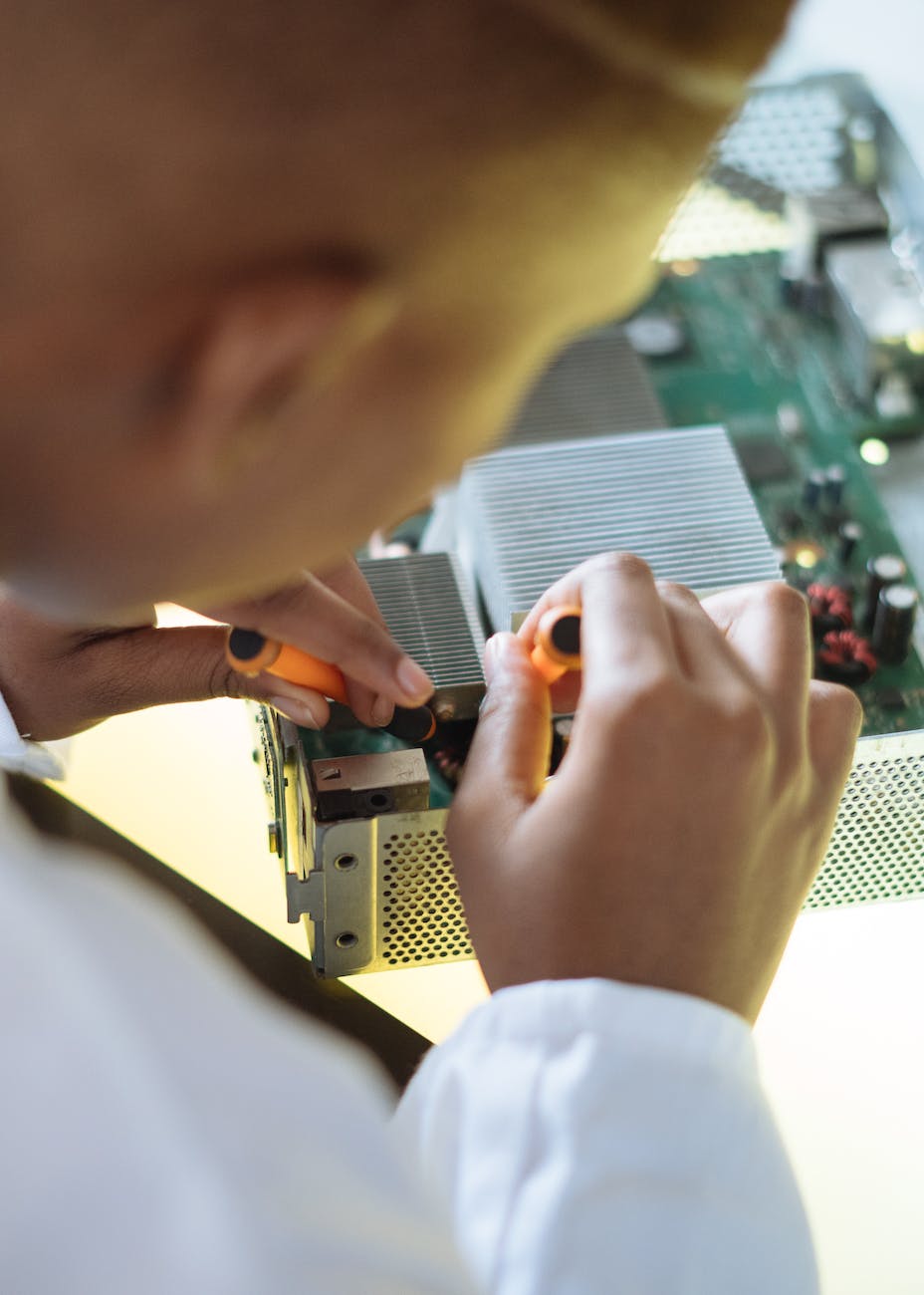
We don’t use the word miniaturisation much. I wonder why? Everyday we take for granted incredibly powerful handheld computing machines. They are only possible because of miniaturisation.

If digital signal processing was your thing in the 1970s, it would have involved several heavy cabinets of electronics. Lots of chunky circuit boards and a reliable way of removing all the heat they generated. As an example, there’s a nice dusty relict of a Cray computer[1] in the Science Museum in London. Later, I’ll read this again on a popular handheld device that has innumerable functions. Just as powerful.

This week, in 2007 the first iPhone was launched[2]. With a reasonably sized touch screen and a camera, it was launched with lots of hype. Rapidly this device started to change not only the marketplace for phones and cameras but the way we live, work and play.

I wasn’t a first adopter. At the time, I think I was faithful to Nokia. But somewhere in a cupboard, I still have an iPhone 3G, the successor to the first iPhone. 16-years on, it feels like there was never a time when we didn’t have the iPhone, or one of its competitors.

Miniaturisation has squeezed capable and flexible digital computing into small spaces. It’s made it possible to concentrate multiple functions into one device. The sheer convenience of that has crushed the non-professional camera marketplace. Streaming music has superseded traditional media, like tape and disks, almost to the point of their extinction.

The societal implications of this technological transformation are much talked and written about but maybe read by few. It’s fascinating to speculate if we have come to the end of Moore’s law[3]. That’s the empirical relationship that seems to hold for semiconductors. So far, Moore’s prediction has held-up well for the semiconductor industry. As the density of semiconductors doubles about every two years, so nothing ever stands still.

We might shrug our shoulders and carry on as if nothing has changed. Or just not care to look at this phenomenon, thinking its irrelevant to the important political machinations of the day. However, the impact of the steps that have led to more and more dependency on personal devices is something we should be concerned about. There’s little, or no possibility of reversion back to more manual ways of doing business. We have been captured by the convenience of affordable internet connected handhelds.

Decarbonisation is the big policy of the day. Miniaturisation is a two-edged sword in this respect. More people, holding more devices, in the billions, which are regularly superseded by the next upgrade all has a downside. Not only that but networks and massive file server farms backing-up the internet as they hungerly consume ever more energy. Thousands of new satellites mean instant connection on any part of the globe.

We are on an unstoppable rollercoaster. We think we have a choice but we don’t.


[1] https://www.computerhistory.org/revolution/supercomputers/10/7

[2] The first iPhone Release Date: 29 June 2007.  

[3] https://en.wikipedia.org/wiki/Moore%27s_law

Chips

Semiconductor superpower. Where have I heard that before? Let’s go back to the moment when the silicon revolution was a topic of popular conversations. Today, as much as people are speaking of AI. It has been difficult to accept that Moore’s Law is real. Early on, the notion that the number of transistors on a microchip would double every two years seemed far fetched.

I remember the 1980s, and the privatisation drive that effectively gave away the country’s technology crown jewels. UK semiconductor manufacturers of the 1980s such as GEC, Plessey, Ferranti and Inmos waned or sold-up[1]. Policy makers of that time saw globalisation as risk free. Now, that looks like selling off the family silver.

At the time, silicon chips were predicted to kill off a substantial percentage of white colour jobs. Only a few people saw the potential for massive new industries to spring-up and employ large numbers of new workers. It’s true that the jobs created were, on the whole, quite different from the ones they displaced. Admin work in a giant insurance office is miles from that of a being an on-line games developer, tester, or marketer.

My point is that Government intervention in technology hasn’t got a good record. That’s not an argument for a hands-off approach. That too has proven to have negative outcomes. I’m often tempted to go back to the story of videotape and VHS against Betamax[2] The better technology is not always the one that wins in the global marketplace. Boring reality and dull pragmatic considerations can tip the balance.

The record shows Government Ministers get swayed by the whizzy, super advanced, “superpower” labels that get stuck on the latest promotion. Let’s face it, a photo opportunity next to an exciting futuristic image gets the media’s heart beating. Marketing hype is not new. It has a role in druming-up investments in risky ventures.

Unquestionable is the intense level of competition in the global semiconductor marketplace. If the UK is to be taken seriously when billions of dollars are placed on the table by others there really must be a matching offer. One billion over a decade will end up getting spread as thin as oil on water. A strong collaboration with other, who have common interests would help. Let’s not forget that doing the “dull stuff” can be highly profitable too.

The open market, in deals of the past, has seen a concentration of power. This is not good for a medium sized country on the edge of a continent. Inward investment is to be welcomed. At the same time strategic domestic protections should have a place. Investments in domestic technology capabilities secures a future.


[1] https://www.ft.com/content/470bf7d8-cd32-472d-b75f-6019eb4b100a

[2] https://en.wikipedia.org/wiki/Videotape_format_war

AI awakens

Artificial Intelligence (AI)[1] is with us. Give it a question and it will answer you. Do it many times, with access to many information sources and it will improve its answer to you. That seems like a computer that can act like a human. In everyday reality, AI mimics a small number of the tasks that “intelligent” humans can do and do with little effort.

AI has a future. It could be immensely useful to humanity. As with other revolutions, it could take the drudgery out of administrative tasks, simple research, and well characterised human activities. One reaction to this is to joke that – I like the drudgery. Certainly, there’s work that could be classified as better done by machine but there’s pleasure to be had in doing that work.

AI will transform many industries but will it ever wake-up[2].  Will it ever become conscious.

A machine acting human is not the same as it becoming conscious. AI mimicking humans can give the appearance of being self-aware but it’s not. Digging deep inside the mechanism it remains a computational machine that knows nothing of its own existence.

We don’t know what it is that can give rise to consciousness. It’s a mystery how it happens within our own brains. It’s not a simple matter. It’s not magic either but it is a product of millions of years of evolution.

Humans learn from our senses. A vast quantity of experiences over millennia have shaped us. Not by our own choosing but by chance and circumstances. Fortunately, a degree of planetary stability has aided this growth from simple life to the complex creatures we are now.

One proposition is that complexity and conscious are linked. That is that conscious in a machine may arise from billions and billions of connections and experiences. It’s an emergent behaviour that arises at some unknown threshold. As such this proposition leaves us with a major dilemma. What if we inadvertently create conscious AI? What do we do at that moment?

Will it be an accidental event? There are far more questions than answers. No wonder there’s a call for more research[3].


[1] https://www.bbc.co.uk/newsround/49274918

[2] https://www2.deloitte.com/us/en/pages/consulting/articles/the-future-of-ai.html

[3] https://www.bbc.co.uk/news/technology-65401783.amp

Light touch folly

Light touch regulation. Now, there’s a senseless folly. It’s a green light to bad actors wherever they operate. It’s like building a medieval castle’s walls half as thick as planned to save money in the belief that enemies are too stupid to work it out. Saying that the public good far less important than the speed of developments is unwise to say the least.

The INTERNET arrived in the UK in the late 1980s. Now, it seems strange to recount. Clunky Personal Commuters (PCs) and basic e-mail were the hight of sophistication as we moved from an office of typewriters and Tipp-Ex to the simple word processor[1]. Generations will marvel at the primitive nature of our former working lives. Getting scissors and cutting out paper text and pasting it into a better place in a draft document. Tippexing out errors and scribbling notes in the spaces between sentences. Yet, that’s what we did when first certifying many of the commercial airliners in regular use across the globe (Boeing 777. Airbus A320). Desktop computers took centre stage early in the 1990s, but administrations were amid a transition. Clickable icons hit screens in 1990. Gradually and progressively new ways of working evolved.

Microsoft Windows 95 and the INTERNET were heralded as the dawn of a new age. Not much thought was given to PCs being used for criminal or malicious purposes. No more thought than the use of a typewriter to commit crime. That doesn’t mean such considerations were ignored it just means that they were deemed a lower-level importance.

In 2023, everyday there’s a new warning about scammers. Even fake warnings about scammers coming from scammers with the aim of scamming. Identifying whose real and whose a fake is becoming ever more difficult. Being asked to update subscriptions that were never opened in the first places is a good indicator that there’s some dirty work afoot. Notices that accounts are about to be blocked referring to accounts that don’t exist is another.

In 30-years the INTERNET has taken on the good and bad of the greater world. It hasn’t become a safer place. In fact, it’s become a bit like the Wild West[2].

Our digital space continues to evolve but has nowhere near reached its potential. It’s like those great western plains where waggons headed out looking for rich new lands. In any towns on the way the shop fronts are gleaming and inviting but if you look around the back there’s a desperate attempt to keep bad actors at bay.

Only a fraction of the suspicious, emails, texts, and messages get reported. People unconsciously pile up a digital legacy and rarely clean out the trash that accumulates. A rich messiness of personal information can lie hidden to the eyes but just bellow the digital surface.

When politicians and technocrats talk of “light touch regulation” it’s as if none of this matters. In the race to be first in technology, public protection is given a light touch. This can’t be a good way to go.


[1] Still available – Tipp-Ex Rapid, Correction Fluid Bottle, High Quality Correction Fluid, Excellent Coverage, 20ml, Pack of 3, white.

[2] https://en.wikipedia.org/wiki/American_frontier

The past

What’s disheartening about the current political debate in the UK is that it’s so backward looking. Now, I appreciate the real impact of demographics. Yes, we have an aging population and the trend for population ageing is continuing[1]. So, the audience of voters that existing politicians are trying to seduce is predominantly over 50 years old. This shapes the message that they send out.

If I go on about how much the world has changed since my school days, I’ll bore your paints off. I have endured such stories from local Councillors, relatives, and work colleagues for many a year. Nevertheless, perspective can be lost if I don’t make a few points on this subject.

I was surprised to read that the world’s first e-mail is over 50 years old. So, that medium that has taken over our lives and practically displaced post office delivered mail and that ancient artifact, the letter, is a decade younger than me. Of course, the use of e-mails took a while to get going and so it’s the time since Windows 95 when the greatest change has taken place. The first website is just over 30 years old. Now, it’s impossible to imagine a world where everyday information is not displayed on a screen of one size or another.

The transition has been from a predominantly analogue world to an almost exclusively digital one.

What I find amusing is occasionally having to explain analogue technology. Although some long-standing devices have endured. Mechanical wristwatches continue to be valued and vinyl records are making a resurgence.

Before I get side-tracked the core of my argument is that we have been through a monumental transition in my working life. It’s happened at pace. It’s happened well ahead of political thinking. OK, savvy political operators have populated social media. Although, many campaigning efforts are derisory and ineffective. We are in an era when about 242 million iPhones are sold annually. Not doing social media is not an option.

If it’s worth engaging in political debate it should be about what happens next. What’s behind us can teach us but it’s not a pattern for the future: “The past is a foreign country: they do things differently there.[2]” Endlessly raking over the past can be a huge distraction. Thatcher, Blair, and Ashdown were of their time. The global issues they faced were of their time.

Instagram is 12 years old; Snapchat is a year younger, and we have only had TikTok for 5 years. These social media platforms are the places where younger people get their daily news. On that basis they form opinions and may act on those opinion.

The further monumental transitions that are coming our way ought to occupy, at least, a part of contemporary political thinking. That doesn’t seem to be happening. If the UK wants to play a leading role on world stage our traditional myopic attitudes need a good shake up. If we intervene on global issues promoting 19th century views the results will be disastrous. Be warned.


[1] https://www.ons.gov.uk/peoplepopulationandcommunity/populationandmigration/populationestimates/bulletins/populationandhouseholdestimatesenglandandwales/census2021#age-and-sex-of-the-population

[2] Leslie P. Hartley (1895-1972) British novelist and short story writer