Tariff Turbulence

Tariffs are back in the daily News again. In fact, they never went away it’s just that more attention getting events have been happening. Tariffs were something specialist trade negotiators talked about before this year started. Now, the word is commonplace.

The simple assumption is always made that everyone knows what the word means. Apparently, the origins of the word are Arabic[1]. Linked to information. Now, it’s a fee that someone must pay. The important bit being “must”. In this context it’s about the import and export of goods. The relations between countries.

A presumption made by politicians, who like these bureaucratic instruments, is that they can help protect a nation’s domestic industry from competition from other countries. Thus, tipping the balance away from investments made abroad to those made at home. This chimes with nationalistic instincts.

If only it were as simple. Globalisation is a reality. Kicking against it has its attractive points, if it weren’t for the overall benefits that it has delivered in recent decades. Much of the technology we take for granted is available at low prices because of where and how it’s manufactured.

One advice given out by banks is to avoid knee-jerk reactions. In other words, the ups and downs and on and offs of changing tariff regimes may seem to demand an immediate response. However, it could be wiser to ride out the turbulence of these early months of 2025. To sit back and let the dust settle.

Politically driven efforts to disrupt global trade are likely to impact both importer and exporter. It doesn’t take more than a few minutes walking around a large warehouse store to see goods originating from all over the world. That is quality goods that are offered for sale at astonishingly low prices. It astounds me that I can easily buy a perfectly good basic kitchen microwave for £50.

I hate to say it, but I don’t think there’s anyway whatsoever that a domestic manufacturer could compete with that electrical product’s price and quality even if there was a 100% tariff placed on its import. The story vacuum cleaners is one of designs emanating from Britain but being made in Asia. Globalisation is a reality.

I will make at least one concession. That’s the environmental one. Shipping vast qualities of raw materials and goods around the globe has a real cost. An environmental cost. So, it would be wise, at least, to investigate if domestic production is a viable prospect before automatically assuming an import is better. This is a matter for both industry and public policy.

Not only this point but for some critical products, say steel and semiconductors, there should be a domestic capability even if it’s only aimed at meeting a fraction of the potential demand. Strategic needs are not trivial.

Are tariffs a good way to shift the global balance sheet? To me the answer depends on adopting either a short-term or long-term perspective. Certainly, in the later tariffs are a foolish measure. My recollections come from the history of subsidised industries in the 1970s and the poor products that resulted. It a sorry saga of designed decline. One quick look at the story of the British Leyland Motor Company (BLMC) is a good lesson.

I know for a liberal I sound Thatcherite but competition brings better outcomes than protectionism. That generally depends on a level playing field. Yes, tariffs are a form domestic protectionism and that’s much like a permanent subsidy. Trouble is that permanence is never permanent.

Trump maybe a part-time socialist. If not by word then by action. For the time being the tariff humbug will continue to command attention. In the longer term – I think not. Relearning what has been learnt in the past.


[1] https://blog.collinsdictionary.com/language-lovers/the-fascinating-journey-of-the-word-tariff/

The Curious Case of Lists

How on earth does a humble soul like me make any comment at a time like this? Adding to the realms of things already said seems a bit pointless. We now have echo chambers sounding in echo chambers. Instead, I’ll take a sideways look. Mention one or two of the items that struck me during the week.

Penguins are getting a lot of Press. Ever since Trump decided to slap a tariff on an island inhabited by penguins there’s been a lot of speculations as to his ultimate motives. If I take Feathers McGraw as an example, I can well understand the need to make a pre-emptive strike against such a potentially villainous bird.

Of other notable penguins, I can only surmise that Trump has never heard of Pingu[1]. Now, there’s a subversive penguin if ever I saw one. He originated in Switzerland, which is strange to say the least.

I almost forgot another memorable fictional penguin of the past. A threatening comic character that combines menace with a gentlemanly swager[1]. One of Batman’s greatest foes. A well dressed master criminal unlike other criminals one might mention.


[1] https://youtu.be/yxqz9JqXdJU

I forgot it this year. Next year, I will pay attention to Penguin Awareness Day. 20 January might be winter to us but its summer to them. Birds that have the decency to dress up in black and white dinner jackets deserve some respect. I for one, will express my concern that the exports of our feathered friends may be taxed. Could it be that Trump is confused. Afterall the real penguins love the ice in the southern hemisphere. In fact, nowhere near Greenland.

“I’ve Got a Little List”. There’s a phrase that comes to mind. Lists, one in particular, does seem to have hit the News this week. I ask, why is there no modern-day equivalent of Gilbert and Sullivan? Accepted, companies do play with their songs and make words to fit the situation of the day[2]. There’s a great deal of scope for new lyrics.

The fabric of social media would rupture if there were no lists. I’m often entertained by an animation that shows a compilation of data as it ripples through the years. Something with colourful bar graphs that go up and down as the rank and order changes. A musical accompaniment that has no relation to what’s being presented. Lists are captivating. They spur a natural curiosity to look for the item of most personal interest. So, over time the economy of X or Y country goes up and then down and then up again. For sure, nothing stays the same for long. That maybe the moral of the week.


[1] https://youtu.be/7Uoug3d3AJE

[2] https://youtu.be/1NLV24qTnlg

Tariffs Fail

Do you need to be a monster brain in economics to get the hang of tariffs? If you deep-dive into all the complexities surrounding every possibility, maybe you do. Nevertheless, the basics are the basics. Much like erecting a wall. Putting up a barrier makes it harder to do business. Harder to communicate. Harder to understand common concerns.

It’s a perfectly human thing to do. We erect barriers all over the place. That garden hedge, wooden fence or brick-built wall are a statement that says, this bit is mine and that bit is yours. Rarely is this absolute. Both sides of these unnatural barriers have mutual interests. Not admitting that reality is a problem. In fact, disputes between neighbours are one of the most common forms of dispute.

A barrier isn’t an invitation for you to disregard the concerns of your neighbours, and vice versa. That all night party, with the music turned up to eleven, maybe fine once a year but don’t do it every week. Well, don’t do it unless you are quarrelsome.

Economic barriers, like tariffs, are going to happen. When perception is all, the idea that one party can protect itself from those who would wish to do harm or take advantage, is very powerful. I say “perception” because a threat doesn’t need to be real. Politics is much about perception.

Trouble is that erecting barriers has a painfully poor history of failure. If we go back to walls, there’s not one that has stood the test of time. Maginot Line[1] is a case in point. The lesson there is that a barrier concentrates the opponents mind on how to overcome it. The elaborate nature of a barrier is no defence to the inventive mind. Barriers are time limited.

Tariffs, and non-tariff barriers are much the same. They may work to advantage for a while only to crumble when their weaknesses have been discovered. Although, I would say that non-tariff barriers are more powerful than straightforward economic barriers. The point being that the former is far more difficult to understand, counter and control.

2025 is a year of volatility, at least so far. Talk of tariffs is on, then it’s off, then it’s on again. It’s the real cat on the hot tin roof. A hop, a jump, and a skip. Everyone is left wondering what comes next. Even if there’s to be any return to a form of reasonable stability anytime soon. That’s the point.

Disruption offers opportunities. At least, for those quick inventive minds with resources to hand. If you don’t fit into that category, then chances are there’s a big downside and a lot of hurt.

To give the monopoly of the home market in the produce of domestic industry…………………must, in almost all cases, be either a useless or hurtful regulation. Adam Smith. The Wealth of Nations (1776).


[1] https://www.britannica.com/topic/Maginot-Line

Illusion of Sovereignty

Desperate for something to say because their arguments have been shot down in flames, those who continue to support Brexit raise the subject of sovereignty. It’s as big a red herring as you are likely to find. That said, the notion of complete autonomy does have a resonance with one part of the political class.

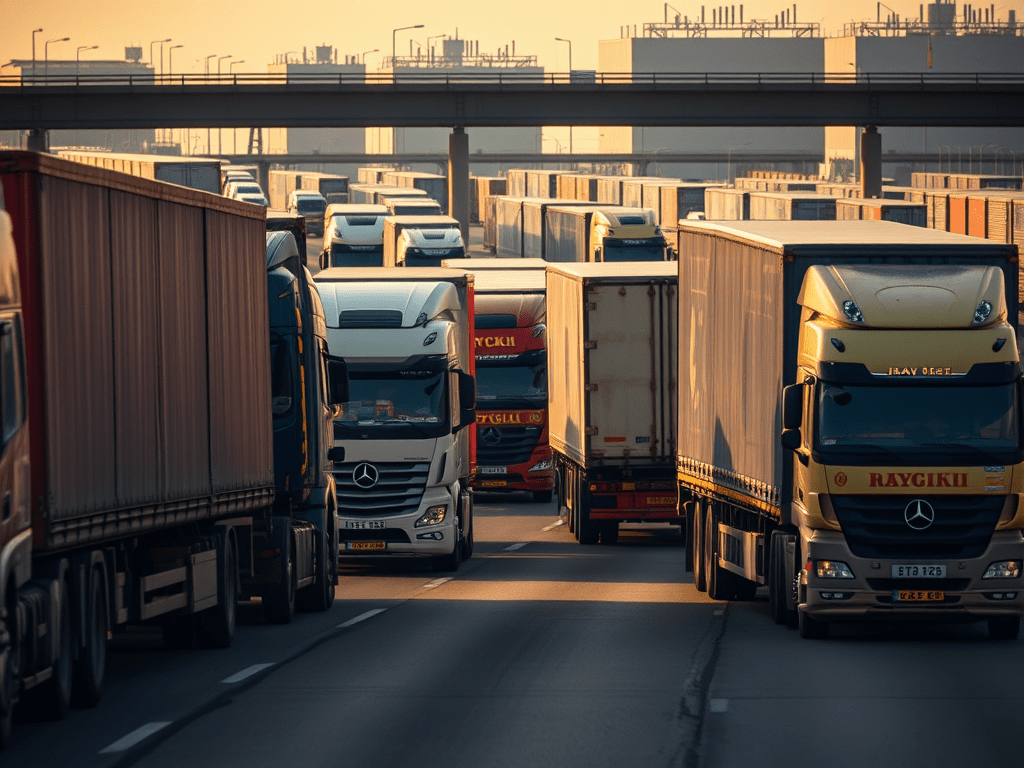
One example of reality being different from political rhetoric is one I regularly see. I’m driving more than I have done in a while. Mostly, on the M4, M3 and M25 motorways. In this country some freight goes by rail, but the overwhelming amount of freight goes by road.

A sign of our times has been the construction of massive warehouses close to motorway junctions. Strategic non-motorway routes too. I do mean massive steel sheds. Counting the number of football fields covered by these structures doesn’t help. I’ll bet some of them can been seen from space.

Back to the British roads. 6-wheelers, 8-wheelers, 12-wheelers, big heavy trucks often showing the wear and tear from journeying great distances depend on the motorway system. A constant flow of heavy goods moves day and night.

Looking at the trucks, some have UK registration plates, some have UK registration plates thrown over their original plates. Most drive under the registration plates of a country of origin or wherever their commercial operations are based. Each plate tells a story. LT is Lithuania. PL is Poland. H is Hungary. NL is Netherlands. D is Germany.

So, every day we have tens of thousands of trucks maintained and operated to standards set by the European Union (EU) on our roads. They are left-hand-drive. Their speedometers are in kilometres per hour.

It occurs to me – what does “sovereignty” mean when everyday looks like a day driving?

For sure, no British inspector checks the condition of each one of these trucks on a regular basis. For sure, truck driver’s hours are only occasionally checked. For sure, maintenance records are locked away in a filing cabinet.

In the world of absolute sovereignty none of this should be allowed. In fact, much of the above-described transport operations are continuing as they did before Brexit but with extra paperwork attached. Extra costs.

It’s an observation. It’s easily made when stuck between a couple of heavy goods vehicles on the motorway. Pragmatism may have led to a blind eye being turned to reality. We shouldn’t delude ourselves that Brexit has delivered anything useful in this respect.

Why the UK Should Rejoin

Fine, I’m happy to admit that my march, with thousands of others, through the streets of London on Saturday was not everyone’s cup of tea. There are a lot of people who support the idea of a return to European Union (EU) membership but are reluctant to raise the issue just now.

Often cited is the wave of right-wing politicians who are gaining ground in Europe’s larger countries. It’s as if they are going through their own Brexit like political moment but without anyone of any consequence advocating throwing away their EU membership.

Maybe the UK is ahead in this respect. We’ve been through the confusion and turbulence of the political right-wing eccentrics moment in the sun. They were never mainstream. However, they did hold the reins of power for some disastrous years. Thank God they are now behind us.

I have marched year-after-year because it’s the right thing to do. Tens of thousands from all over the UK have done the same as me. Millions if the numbers added-up from 2016 onward. Our future can be based on cooperation and mutual interests. Ideologically driven conflict and disruption have brought nothing but a lose – lose outcome.

So, what are the arguments for the rejoin movement? It’s all very well to shout at the thing we don’t like. Now, is the time to make the sound solid arguments for the thing we favour.

Let’s take trade for a start. The last UK Government wallowed in gushes of self-praise every time they signed an agreement with any country that was not European. Conservative Members of Parliament wanted to tower over the world like imperial overseers. It was an illusion.

Most of the so called “new” deals that were signed were simply a rollover that meant no change. In fact, more was given away than was gained. All in a desperate attempt to show progress. British farming was effectively shafted by Ministers.

One of the most touted possible “streets paved with gold[1]” was the prospect of a super new trade deal with the United States (US). Under President Trump, the prospect of an advantageous UK-US trade deal was an illusion.

Ironically, a claimed success was the joining of a regional trade block. I know it’s crazy that leaving a gigantic trade block on the UK’s doorstep was followed by joining one covering the Pacific. Yes, the other side of the world. Not only that but the projected gains are minuscule.

EU membership offers, as it did before, access to enormous trade benefits by comparison with what has been achieved since 2016. The numbers speak for themselves.

If the new Labour Government continues with a form of the fibs told during the “Get Brexit Done” phase, then trouble lies ahead. Next door, the UK has the world’s largest trading block. The value to the British economy of Single Market membership exceeds a mishmash of remote and small deals. There’s a positive way forward and it’s staring us in the face.

POST: It’s worth noting that the 1960 European Free Trade Association (EFTA ) was created, to promote free trade and economic integration included: Austria, Denmark, Norway, Portugal, Sweden, Switzerland and the United Kingdom.


[1] https://dictionary.cambridge.org/dictionary/english/streets-are-paved-with-gold

Look ahead

Much as I support the UK Government’s position on hormone injected beef, the exit from negotiations on trade have wide implications. Maintaining the regulations that ban the use of hormones in beef is a good move for farmers and consumers.

However, for cheese exports the collapse of talks is tragic. Zero to 200% is one hell of a tariff jump. The UK will be in a worse position with respect to trade than it was pre-referendum. That’s with a strong ally, namely Canada[1]. Brexit has made us worse-off.

Yet, the Brexit supporters that remain, still herald Brexit as a wonder. Logic plays no part in their thinking. It’s easy to respond in an angry way to this self-inflicted blindness. It does no good. The stubborn streak in those who have dug a big hole is a thick one. And the hole is getting ever bigger.

Clearly, there’s no urgency on the part of Canada[2]. On the UK side the urgency is much greater. The need to stimulate growth to bring about a recovery in the British economy is much needed. Sadly, the legacy of a decision made in 2016 has made created a weak negotiating position.

For a long time, the UK has been given a soft landing due to transitional arrangements. Now, these arrangements are drying up. Far from the propaganda of the Brexiters, trade deals are not easy.

The problem is a reference back to the past is like crying over spilt milk[3]. How to go forward when the relationship between different States has been significantly changed is no simple matter. The situation is not irrecoverable but the avenues that can be explored are limited.

So, I caution of a never-ending lament. Brexit will need to be rectified. The means to do it are tortuous and may take a long time. The means to undo the mistakes of the past may face opposition from many quarters. One of the predictions for the European elections, this year, are that there will be a swing to the political right. Several right-wing political parties across Europe are on the ascendancy.

Instinctively these right leaning political parties are likely to less internationalist and more focused on immediate domestic concerns. So, third parties, like the UK, may not be high on Europe’s future agenda. On the UK side the major political parties have gone quite on Europe. There’s plenty of campaigning on international issues, like climate change and military conflict but little on enhanced working together.

There are many national news stories where solutions are best arrived at by greater communication, cooperation, and coordination. This year, so far, the signs are that these three “c” are going to take a back seat. Ironic, isn’t it. Facing greater international challenges than for decades, States choose to look inward. This myopia will continue until leaders speak positively of the future. Vision is needed.


[1] https://www.reuters.com/markets/canada-britain-pausing-free-trade-agreement-talks-2024-01-25/

[2] https://www.cbc.ca/news/politics/canada-uk-trade-cheese-1.7094817

[3] https://www.collinsdictionary.com/dictionary/english/cry-over-spilt-milk

Global

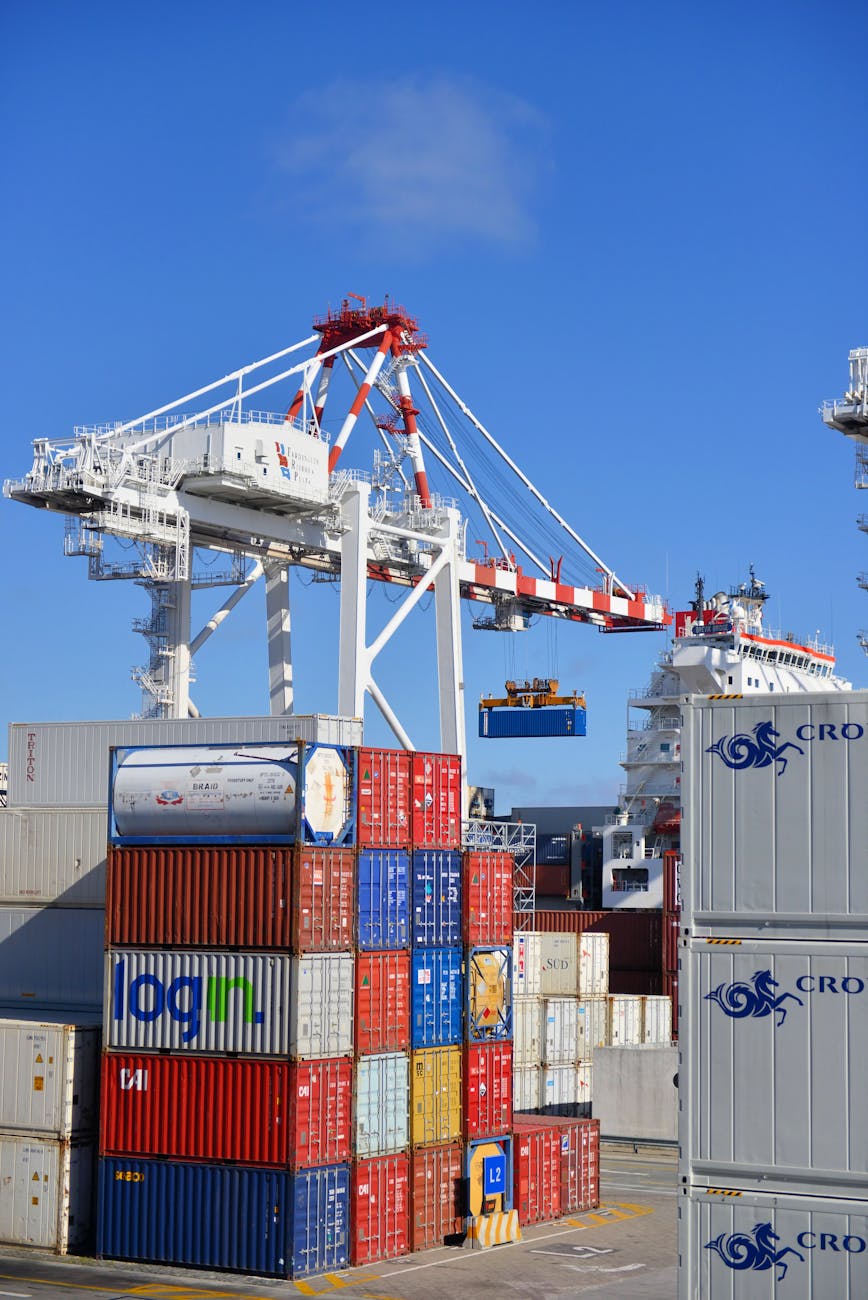
Our everyday life is built on an assumption of freedom of navigation. It’s not always easy to relate to this reality but there it is. Goods move around the globe. I illustrated this uncomfortable fact the other day by saying let’s just sit down and look around. Observe the room.

Sitting in my living room. How many items came to us by ship? Over the ocean. All the electronic goods for sure. The furniture? Some yes and some no. The carpet, maybe not. The curtains, the material for sure. Books? Some yes and some no. Radiators? Surely, made in the UK. However, even the items that were manufactured in the UK needed materials that were imported. Strip away all the imported goods and materials and there’s not much left. The cupboard would be bare.

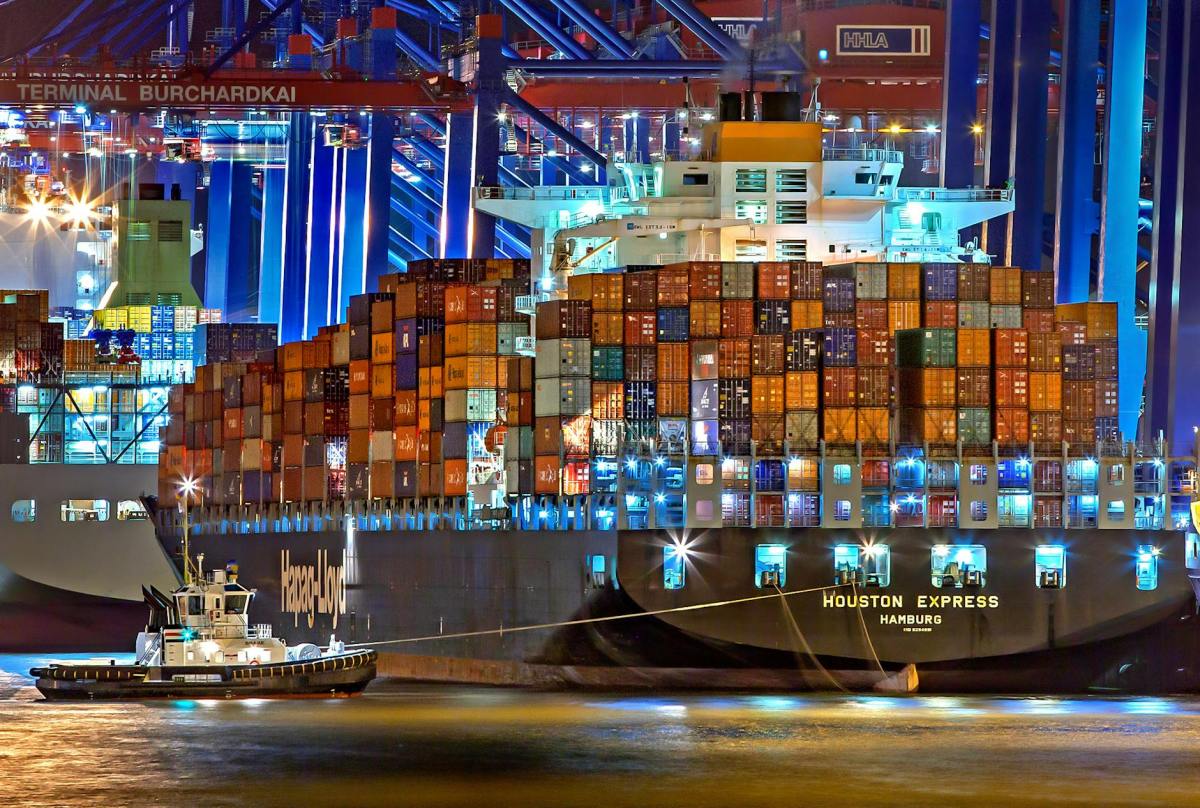
Now, look at what I’m wearing. My clothes all got here by container ship. I’m not wearing up market attire only everyday wear. Down to my underwear it’s imported. If I did an inventory of my wardrobe there’s not much that was made here.

Take the cup of tea in my hand. Well, the cup might be domestically manufactured but the tea doesn’t grow here. True the milk in my tea is well and truly English. No sugar. I never take sugar.

My point is clear. The days when everything in an Englishman’s home was manufactured in the England have long gone. That day was a long time ago. Almost a pre-industrial period. Our imperial past was such that imported goods have always been a huge part of everyday life.

Today’s automatic assumption of the freedom of navigation stems from post-war settlements. Agreements and institutions flourished in the post-war period. They created and reinforced conventions that assured freedoms of navigation by air and sea. Something we all too easily take for granted. Almost totally ignore.

Since Reagan and Thatcher, it would be hard to find an international management school that didn’t emphasis the benefits liberalised markets and global supply chains.

Post-war the world went from a period when freedom of navigation that was secured by air forces and gunboats to a period when it was secured by agreement and mutual interest. Obviously, the subject is not entire so simple since conflict has always been occurring somewhere on the globe.

National sovereignty remains at the core of the agreements that exist. There is no such thing as world government and international law can be brittle to say the least. Amongst those who benefit from it, there’s a strong interest in upholding and protecting freedom of navigation. Those acts that disrupt or challenge freedom of navigation will always meet a response.

So, this week’s developments to protect international shipping routes through the Red Sea should come as no surprise. It’s a different matter as to whether they are right or wrong. Or whether the military action that has been taken will work.

Our western tendency to expect a rational response to a rational action maybe flawed. However, the aggressor in this case has interests that may not make any sense to us.

Flying, Democracy and Safety 8.

IMG_2082

Halfway through 2020. What a different kind of year than the one we’d expected. With 20-20 hindsight I’m sure we’d have approached it differently too. In that phrase, 20-20 is a reference to good vison but it could equally have been a joke on the year 2020. Now it’s July and Germany’s EU Council Presidency starts. Their theme is: “Together for Europe’s recovery” #EU2020DE[1].

It’s strange that during the years of Brexit debates those who supported it said that leaving the European Union (EU) would mean a break from competition rules to give Britain the opportunity to boost its own industries. What has happened recently has been the complete opposite. In the face of COVID-19, European Governments have been providing support to their aviation sector, but the UK has not provided similar support.

Now, UK Prime Minister Johnson repeats that the UK is ready to walk away without a deal with the EU if no agreement can be reached in what remains of the time available. At the same time, he’s “optimistic” that there’s a “good agreement” to be reached[2].

If the UK exits the mutually beneficial Withdrawal Agreement without a sound long-term deal, the effects will be felt by everyone[3]. With global tensions between many Countries and China continuing to mount, this is foolish.

Here we go again. The UK’s Conservative Government is getting more Brexity as the people of Britain are getting less Brexity. A recent European Social Survey has found support for Brexit has fallen to 35% of voters while a majority would prefer the UK to be in the EU[4].

The aviation sector hasn’t had a good week. Airbus plans to cut 15,000 jobs amid COVID-19 fallout. However, British politicians would rather talk about fishing than aviation. Yet, fishing contributes £1.4 billion to UK economy while aviation contributes £22 billion.

UK Foreign Office travel advice and the national quarantine continue to make it difficult for anyone to plan to travel. Portugal, a Country that the UK has always had excellent relationships with, has been left out in the cold.

The world’s biggest trading block is on the UK’s doorstep.  The bare-bones of a trade deal could happen but making it more difficult to trade with the EU seems unwise to say the least. Again, it has been conformed that the British membership of the European Union Aviation Safety Agency (EASA) will come to an end on 31 December. Historians will look mystified at this period. Governments don’t normally work assiduously to diminish their place in the world.

[1] The programme for is now online on http://eu2020.de.

[2] LBC on Friday, 03 July 2020.

[3] https://www.ft.com/content/e4da78ae-a428-4466-9721-d3841cc0e005

[4] https://ldeg.org/en/article/2020/1366373/survey-finds-35-want-brexit-while-57-back-rejoin

Flying, Democracy and Safety 5.

jet cloud landing aircraft
Photo by Pixabay on Pexels.com

4-years ago on Magna Carta Day in the small Surrey town of Egham, I was campaigning to stay in the European Union (EU).  On 11 June 2016, when referring to the UK referendum, I said: “I’d like to estimate that the overall experience indicated a better than 50/50 outcome is on the cards.” Meaning that remaining in the EU was a likely outcome of the UK referendum but only by a small margin of votes. As we know it went the other way by a small margin of votes.

In the whole of history, 4-years isn’t much, a blink of an eye, but in that time the UK’s political, social and economic landscape has changed by quite a lot.  I’d argue that it has changed for the worse and that huge opportunities have been thrown away because of dogma, groupthink and a blindness to the reality.  If we’ve learnt anything in those years, it’s that when a UK politician says something is certain it’s likely to be far from certain.

Despite all the rocky road and ups and downs of 4-years, no one was adequately prepared for a transformation that nature threw at us. The COVID-19 pandemic will go down in history as one of the biggest challenges the world has faced in modern times.

UK economic growth fell by over 20% in April, the largest fall since monthly records began. Aviation has been hit hard. It’s said that at least 70,000 jobs are on the line in the UK aviation industry[1]. There are pleas for the UK Government to act to protect jobs and support the long-term viability of the sector. Many other Countries have stepped in to support their industries.

Although a slight recovery of air traffic is underway[2], we are heading into the most painful time. As the UK Government’s Coronavirus Job Retention Scheme[3], or furlough scheme closes to new entrants, so industry layoffs are likely to increase. Businesses are reorganising to stay alive during an extended period of low demand for air travel. It’s going to be grim for at least the next year.

I’m optimistic for the long-term future of air travel. I always find it surprising that only about 5% of the world’s population have ever stepped foot on an aircraft, even now. I think, wanderlust is set in our core. Just as the low-cost operators made it possible for today’s young people to explore more than previous generations, so I don’t think they will wish to give that up. Aviation shrunk the globe and it will continue to do so.

But what of UK politics? The transition agreed as part of the UK’s withdrawal from the EU, ends on 31 December this year. The agenda for the second meeting of the EU-UK Joint Committee on the implementation of the Withdrawal Agreement (WA) has been published[4]. This key meeting takes place on Friday 12 June.

The UK is saying that it will not ask for an extension to the current transition period. This flies in the face of what business and industry wants. This seems to be illogical given the combination of the circumstances of COVID-19 and an abrupt termination of the WA.

I believe most of the arguments against extending the transition period are either tribal Party political or bogus or both. The reality is that more time is needed. The reality is that ratification of any new deal will need time. The reality is that brinkmanship doesn’t deliver good results. The OECD[5] is saying of the UK: “The failure to conclude a trade deal with the European Union by the end of 2020 or put in place alternative arrangements would have a strongly negative effect on trade and jobs.”

That is not a state of affairs to be welcomed.

[1] https://www.theguardian.com/business/2020/jun/10/airline-job-losses-could-be-on-scale-of-1980s-mining-industry-report-warns

[2] https://twitter.com/eurocontrolDG/status/1271135184562380800?s=20

[3] https://www.gov.uk/guidance/claim-for-wage-costs-through-the-coronavirus-job-retention-scheme

[4] https://ec.europa.eu/info/sites/info/files/brexit_files/info_site/provisional-agenda-for-the-second-meeting-of-the-joint-committee-12-06-2020.pdf

[5] https://www.oecd.org/unitedkingdom/

Flying, Democracy and Safety 4.

IMG_1879It’s possible that a gradual recovery in air traffic is slowly starting to take shape across the globe[1]. Individual Countries, businesses and industries are in dire situation and long-term plans are being dramatically changed. However, if the whole air transport sector is considered, there’s reason to think that a recovery from the shock of COVID-19 is in its infancy[2].

This week, the International Civil Aviation Organization (ICAO) Council adopted a report and recommendations designed to restart international air transport and aligning its recovery[3]. It’s good to see international efforts to work together are baring some fruit.

This week, when reading comments on social media its almost as if a section of the population has disconnected from the facts. The facts are that Brexit has been delivered. It happened on 31 January 2020.  Ever since that date people, governments and businesses have been consumed with the difficulties of responding to COVID-19.  Nevertheless, as of the end of this year the UK is a “Third Country” in respect of the European Union (EU).

To everyone’s benefit, a period of transition was established to enable a new relationship to be defined between the UK and EU. Now, the original period defined for the transition is inadequate given the unforeseen change in circumstance that has occurred. In a purely objective, rational, and reasonable world there’s not much to argue against the need to extend the transition period to do a good job of negotiation between former partners. Sadly, what’s rational and reasonable and the political climate of the times are directly opposed to each other.

UK Government Ministers pretend that there’s ample time available to reach a new UK-EU agreement. However, listening to Conservative MPs in the House of Commons its clear they are still fighting the battles of 1993[4]. Atypical Eurosceptic speeches are followed by a degree of paranoia that’s difficult to comprehend given that the UK has left the EU. The UK Government says it will not extend the transition period beyond the end of 2020 and this is enshrined in UK law.

So, what happens in such situations? This week, there’s been further disappointments as both UK and EU negotiators indicate little progress has been achieved.

It’s clear the EU won’t compromise on the principle that a Country will not enjoy the benefits of belonging to the EU once it’s no longer a member.

It’s clear the UK continues to cite independence and sovereignty as if these are inviolate. As if the UK had never been an EU Member State for 40-years.

What happens in such situations? If divorces are anything to go by then a protracted period of bitterness and recrimination with little or no compromise on either side. Years of unproductive waste that only water under the bridge can cure.

Yet, all we hear is Panglossian optimism about everything coming together in October.

A No Deal outcome may seem counterintuitive to me, but it’s not for those who have desired such an outcome for the UK-EU talks from the start. There’s a certain political thinking that disruption per-se is good. That if the UK is to leap forward to the “industries of future” it’s exactly what is needed, whatever the overall costs.  This is a brutal philosophy, but some people genuinely believe that the UK can deregulate and become super-competitive overnight.

I suspect, to the benefit of the UK, leverage might have been possible if COVID-19 had not occurred. Now, the problem is that the UK has performed badly in response to the virus. At the same time, the EU’s focus has moved to its economic recovery during the next budgetary period. One looks to its shoes the other to the skies.

Negotiating a new partnership between the UK and EU was never going to be easy. Where we are at this moment, Panglossian optimism seems entirely misplaced.

[1] https://twitter.com/AireonLLC/status/1265271791074906118?s=20

[2] https://twitter.com/OAG_Aviation/status/1268123362041217026?s=20

[3] https://www.icao.int/Newsroom/Pages/ICAO-Council-adopts-new-COVID.aspx

[4] https://publications.parliament.uk/pa/cm5801/cmagenda/ob200604.htm#_idTextAnchor005