HS2 – again

Travelled on the Elizabeth Line yesterday. It was an expensive project to build. Tunnelling under London and erecting new stations was a costly business. It was called “Crossrail”. Approval was given in 2007 and construction started in 2009[1]. In 2022, one-sixth of the UK’s total rail journeys took place on the Elizabeth Line. The billions spent were a major investment in the future. Over £18 billion in fact. It was a national demonstration that huge civil engineering projects can be undertaken and mastered[2].

As a passenger the Elizabeth Line is a pleasure to use. It’s clean, speedy, and simple to use. Comparing it to the older London Tube lines is like comparing a Tesla with a Ford Anglia[3]. Sadly, a great deal of our national rail infrastructure is trapped in the Ford Anglia era.

So, what of HS2[4]? The wibbling and wobbling that has plagued the project is sucking the energy out of the resolve needed to see through an even bigger undertaking than Crossrail. Some people argue that the billions needed for HS2 could be better spent on other projects. However, the portfolio of transport projects that are suggested as alternatives never seem to materialise.

Talk of cancellations feed the political turbulence over infrastructure investments. The impression this presents goes way beyond the shores of this country. There’s no Global Britain on show here. It’s more signals of dither and lack of determination that are publicly on display. Instability and the short-term outlook is the motif of the current generation of politicians.

If there are superior and smarter alternatives to HS2 they should have come up during the planning phase of the project. What we know about vast engineering projects is that chopping and changing them midstream adds massively to costs. It also diminishes the usefulness of the outcome.

Britain needs a backbone. A rail backbone and a political backbone. The spending on HS2 is large but that spending is in country. It’s jobs and investment onshore for the benefit of the whole country, not just the Southeast of England.

The last few years have seen that banner “levelling up” heralded by Conservative politicians. This slogan will be as nothing if HS2 is wound down or constricted. The signal will be loudly heard that all that talk of levelling up the regions of Britain was shadow boxing.

In the long-term improved connectivity across the country will be a great asset. The Victorians knew a thing or two about engineering great projects. Their legacy should give us resolve.

POST: Still it is good to see the rest of the world getting on with High Speed Rail High-speed Archives – International Railway Journal (railjournal.com)


[1] https://www.timeout.com/london/news/the-new-elizabeth-line-your-crossrail-questions-answered-052322

[2] https://www.theguardian.com/uk-news/2022/mar/13/elizabeth-line-crossrail-opening-london

[3] https://www.autoexpress.co.uk/ford/104979/ford-anglia-105e-and-123e-buying-guide-and-review-1959-1968

[4] https://www.hs2.org.uk/

NATS

A “technical issue” has caused UK National Air Traffic Services, NATS to impose air traffic flow restrictions[1]. They did not close UK airspace. This was not a repeat of the volcanic ash events of early 2010. Going from a fully automated system to a fully manual system had the dramatic impact that might be expected. The consequences, on one of the busiest weekends in the holiday calendar were extremely significant. Huge numbers of people have had their travel disrupted. Restricting the air traffic system ensured that aviation safety was maintained. The costs came to the UK’s air traffic handling capacity and that meant delays and cancelled flights.

Although the failures that caused the air traffic restriction were quickly resolved the time to recover from this incident meant it had a long tail. Lots of spoilt holidays and messed up travel plans.

It is normal for an Air Traffic Service (ATS) provider to undertake a common cause failure analysis. This is to identify multiple failures that may result from one event. So, the early public explanations coming from NATS of the causes of this major incident are surprising. Across the globe, contingency planning is a requirement for ATS. The requirement for the development, promulgation and application of contingency plans is called up in international standards, namely ICAO Annex 11.

So, the story that a single piece of flight data brought down the traffic handling capacity of a safety related system, to such a low level, is difficult to accept. It’s evident that there is redundancy in the systems of NATS, but it seems to be woefully inadequate when faced with reality. ATS comprise of people, procedures, and systems. Each has a role to play. Safety of operations comes first in priority and then air traffic handling capacity. What we know about even highly trained people and data entry is that human error is an everyday issue. System design and implementation needs to be robust enough to accommodate this fact. So, again attributing such a highly disruptive event to one set of incorrect data inputs does not chime with good practice or basic aviation safety management. It is concerning that one action can bring down a major network in this way.

EUROCONTROL would have had been sent a “rogue” flight plan in the same way as UK NATS. Brussels does not seem to have had the problems of the UK.

It is early days in respect of any detailed technical investigation. Drawing conclusions, whatever is said in public by senior officials may not be the best thing to do.

Calls for compensation have a good basis for proceeding. The holiday flight chaos across Europe comes down to one single failure, if initial reports are correct. That can not be acceptable. The incident left thousands stranded abroad with high costs to pay to get home.

Before privatisation, there was a time when the UK Civil Aviation Authority (CAA), ran the nation’s air traffic services[2]. It had a poor reputation at the time. I remember a popular newspaper cartoon saying – and now for some clowns from the CAA. They were entertaining delayed passengers.

UK NATS has done much good work to manage a safe expansion in air traffic and address many changes in technology, it would be a shame if this sad incident marks a decline in overall network performance.

NOTE 1: And this topical cartoon from the Daily Mail in April 2002: https://www.pinterest.es/pin/497577458805993023/

NOTE 2: A report on the incident is to be sent to the regulator, UK CAA on Monday, 6th September. Transport secretary to see Nats’ ATC meltdown report next week | Travel Weekly

NOTE 3: The likelihood of one in 15 million sounds like a low number but it’s not “incredibly rare” by any definition. Certainty when there are around 6000 flights a day in the UK. A duplicate error occurring is a basic error that could be anticipated.


[1] https://www.bbc.co.uk/news/live/uk-66644343

[2] https://commonslibrary.parliament.uk/research-briefings/sn01309/

First Flight

I didn’t have a gap year. That’s a year a student takes off their studies. It was a fashionable rite of passage. These days a gap year is often associated with an opportunity to gain extra skills and experiences to add to a CV. Going back to the early 1980s, after all we still had local authority educational grants, a gap year was associated with travel and adventure.

What I did have was employment. As a sponsored student, I had an income whilst working and a bursary. So, although my student grant was highly variable. My parents were self-employed. I was reasonably independent and well off for the average undergraduate student. That was a benefit of being in demand in the engineering world. Not only that but in the recession struck West Midlands our student cost of living was within our means. With a care in spending and cash-and-carry[1] shopping it was possible to put money aside.

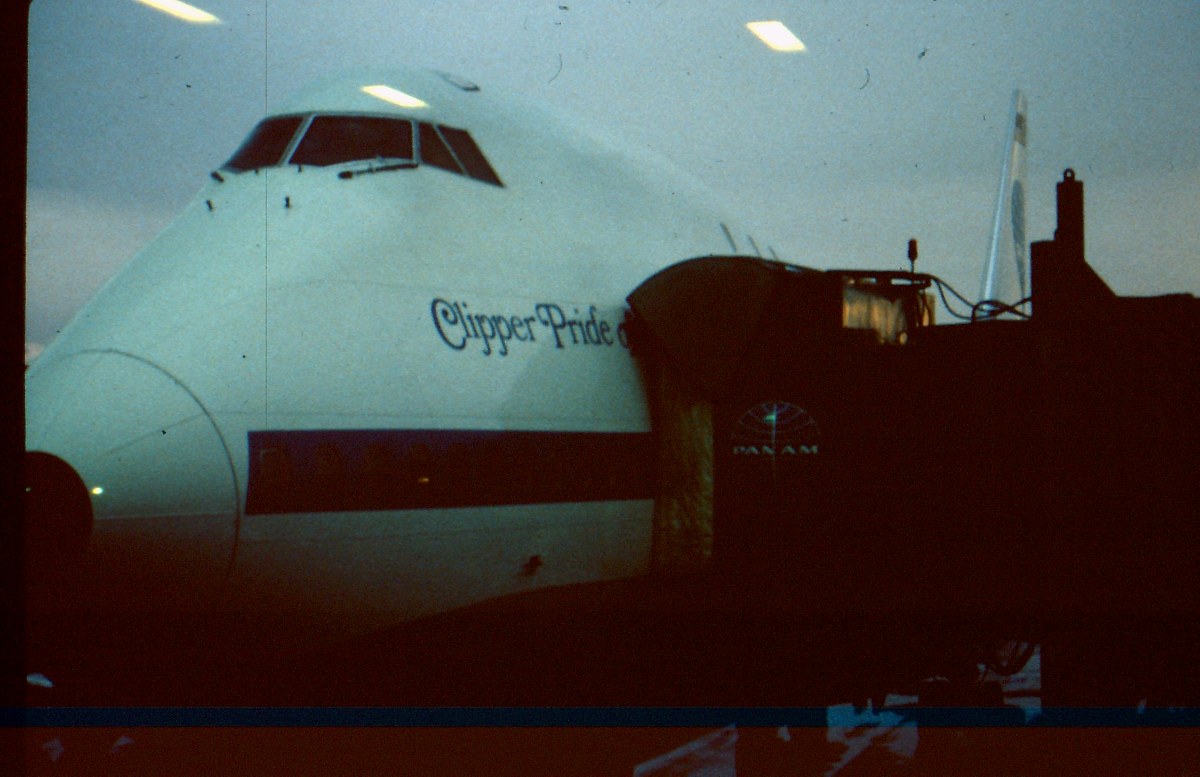
It was August 1981, when I took my first passenger flight from London Heathrow (LHR). It wasn’t a modest hop over to France or a Greek sunny beach but a Pan Am transatlantic international adventure to Seattle (SEA). Long-haul, a long way in a classic Boeing 747. Flight PA 123 out and PA 122 back.

This trip came to mind yesterday lunchtime as I was sitting in a stark modern Starbucks coffee shop. Yes, there was a time when such places were exciting, special, new and off-beat.

In a way this journey did enhance my education studies. One part of the trip was a visit to a steel factory in Los Angeles (Plessey Precision Metals). Now, that was educational. The boss who showed me around was forthcoming about where their labour came from and the working conditions.

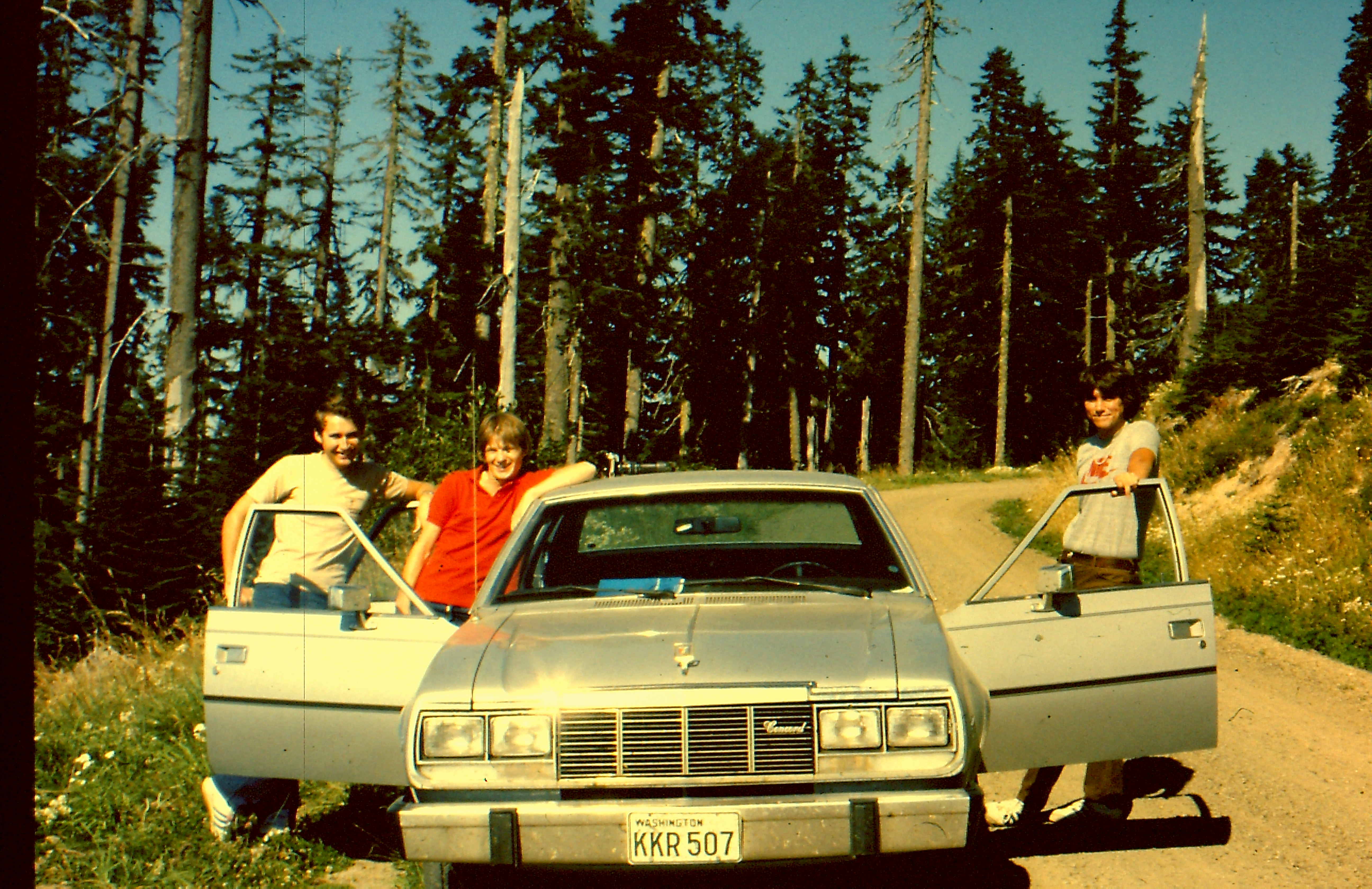
Four of us Coventry students went on this great American adventure. Basically, the plan was to arrive and depart from Seattle but to drive up and down the West Coast. It was a fly /drive package. By sharing the driving and staying in the cheapest motels we travelled a long way for our money. In massive contrast to the present day, the pound – dollar was at about 2.4.

42 years ago, the world was a different place. Although, breakfast at Dennys probably hasn’t changed. It was the year President Ronald Reagan sacked thousands of striking air-traffic controllers when they ignored his order to return to work. What a year to be flying.

Driving an AMC Concord[2] well over 6000 miles our trip was non-stop. A day here, a day there and, if my memory serves me right, a night sleeping in the car. That was in the mist over San Francisco.

Mount St. Helens had erupted in March 1980. We drove the rental car as close as we could to the areas of devastation to have a look for ourselves. It was dramatic. Trees felled like matchsticks. Grey dirt and dust covering the land. Signs of the eruption stretched far and wide.

If you can marshal the time and the money, have some good friends and are 21 years old, I can’t think of a better recommendation.


[1] That’s when my taste for peanut butter developed.

[2] https://en.wikipedia.org/wiki/AMC_Concord

Luggage

It’s a space we have control over. Not a house or a room but, most often, a volume of space no greater than what we take up in our human frame. It’s not organic. It’s far from that because its role is security, storage and logistical. That’s the humble suitcase, and a great array of bags and backpacks that help us get from A to B with enough possessions to make life comfortable.

The choice of a suitcase or bag is not a trivial matter. Lessons from experience range from bursting zips to leaking contents that turn favourite clothes into damp rags. The challenge of replacing a cabin bag or case takes research and careful weighing of multiple options.

If traveling by air, there are numerous constraints on size and weight. A completely free choice as far as colour is concerned but that’s about the only characteristic that’s an open book. That said, it’s astonishing how many black cases look like other black cases in the array of black cases.

More than a decade ago airlines started charging extra for hold luggage on top of their basic fares. Since then, flying with hand luggage only has become popular. This trend can be troubling. Watching passengers squeeze unreasonably sized bags into overhead bins is not an entertainment. The expectation that an aircraft overhead bin can take a massive bag is not a reasonable one.

My latest purchase has been made from recycled plastic bottles. Naturally, that conveys a fell good factor. It’s a great way to give new life to the huge numbers of discarded single use plastic bottles that somehow we’ve become dependent upon. In my childhood, I don’t remember any plastic bottles. Plenty of glass but no plastics.

For short journeys, the faff of checking-in a suitcase, waiting to collect at a baggage belt and paying additional fees is a burden that is sometimes not worth carrying. There’s always the delightful experience of never seeing the case and its contents again as it wanders off into the maze of lost objects airports accumulate. Etched into my memory, even after more years than I care to think about, is arriving at a small airport after a tortuous journey of connections and having nothing but the clothes I stood up in. On a Sunday, in 35C degrees of bright summer sun that’s not an experience I want to ever repeat. Especially with a tough meeting planned for early the next day. A free airline toothbrush was no compensation.

So, I now have a new Cabin Max Metz 20 litre RPET backpack. This is an experiment on my part. Can I live out of this tiny space for 4-days? To do so is going to require some innovative thinking. In theory, it ticks all the boxes that I was considering essential. This backpack is lightweight but offers the maximum amount of packing space given an airline’s cabin bag restriction.

The plastic material the bag is made of doesn’t feel nice, but it’s flexible and hopefully durable. The zippers look substantial and should have a long life. Now, the task is mine. How to choose exactly the necessities of life to enjoy the journey ahead. To pack as smartly as smart can be.