What Town?

It’s a confusing film. I enjoyed it in a strange way. This is one of many times fiction has wrestled with the idea of parallel universes. “Everything Everywhere All at Once” gets crazy[1] and has some absurdly funny moments. Embracing all possibilities, however unlikely is a lot of fun. Childlike fun.

Life’s branches – it’s easy enough to grasp if there are a not many to think about. Lifelong “what ifs” are familiar territory. What if, I’d taken a different path? What if, I’d met this person instead of that person? What if that accident had been more, or less severe? It’s so human to play with imagination and different scenarios. What’s difficult to grasp is the notion that there might be an infinite number of different branches in and infinite numbers of universes.

When large numbers of possibilities arise, it can be the source of anxiety. Me being on the stoic side, I shrug my shoulders and carry on. Don’t get me wrong, thinking about lost opportunities or idiotic mistakes stirs-up more than a few feelings. Living in synchronisation with reality means choosing to focus on changing the things that can be changed and choosing not to bash one’s head against a wall. The key words being to choose. 

This is the time of year when future students are looking at future possibilities. Walking past the gates of the local college, a group of school leavers could be seen eyeing up the building. That one first major step at 16 years. Up and down the county, universities are hosting potential students. Trying to answer all their questions. That step, at 18-years is one of the biggest those lucky enough to make, get to make. This town, or city, or that out-of-town campus.

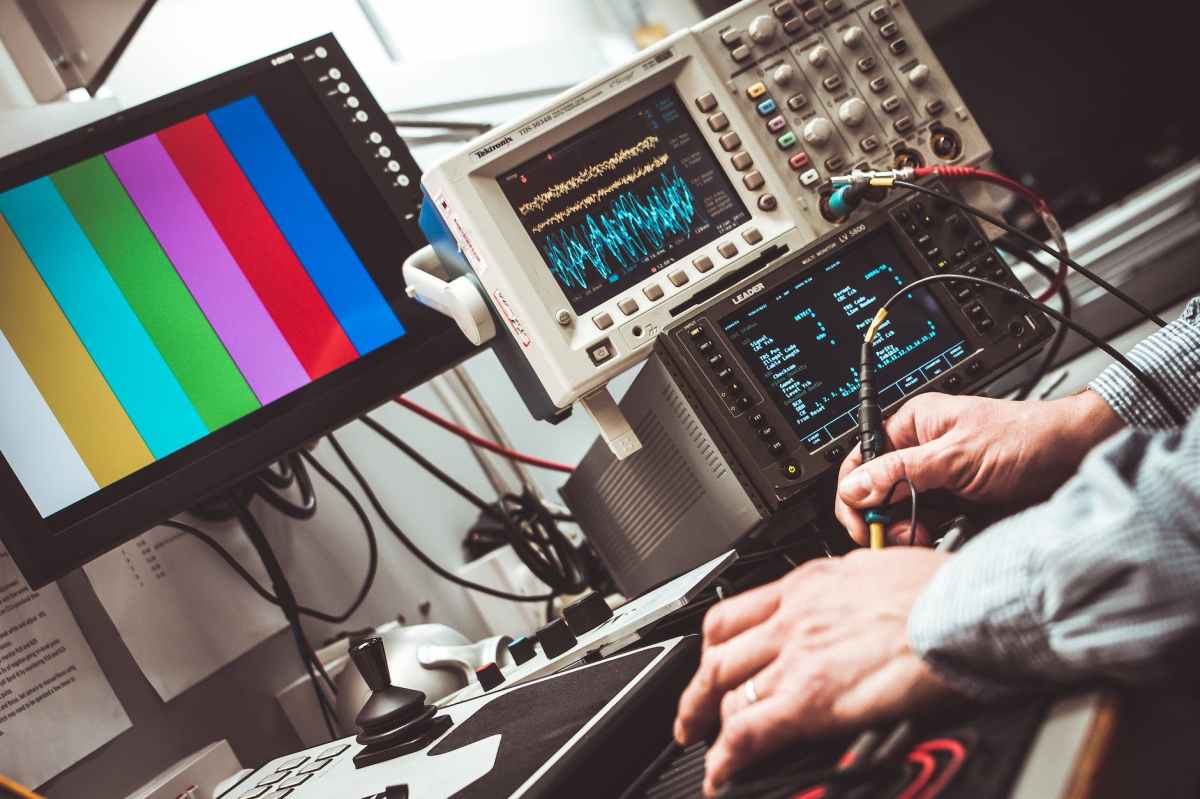
I wonder what I’d be doing now if I’d gone to Bath university or Brunell in Uxbridge? How did I make those choices? Well, there was the factor of sponsorship so there was no way that the chance to study art, politics or philosophy would come up. My search was for a sandwich course to be able to mix study and work. My chosen trade was electrical and electronic design. That fascination with how stuff works continues to this day.

At 18 years, I had little grasp of the fact that university, or polytechnic as it was, was far more than technical study and the usual bundle of exams. The 4-years I had going backwards and forwards between the west country and Coventry was a mammoth transformation.

Although, I had no particular leaning towards aviation there was moments when aircraft and aeronautics came into the mix. On my journeys north to the midlands, I’d often stop at a lay-by at the end of the runway of RAF Kemble and watch the Red Arrow practice[2].

Coventry in the early 1980s was the home of GEC. That being the case there was a telecommunications bias in some of what we were taught. That suited me fine. Let’s face it, in that period we lived in an analogue world with a strong technological push to adopt the early generations of digital systems. Although electro-mechanical telephone exchange production had finished[3] much of the installed equipment in the country was still a mass of relays.

Coventry between 1978 and 1982 was the place to be. It was rough and ready. It was suffering the onslaught of Thatcher’s march to destroy the past and transplant the new. The pace of change left oceans of people behind. Culturally the pressure of that grim social revolution liberated a generation of music and rebellion that we look back on as magic.

As if by magic, and I didn’t plan this, BBC Radio 4 is playing “Ghost Town” by The Specials[4]. Yes, that was a defining soundtrack to influential moments in my life. 


[1] https://www.imdb.com/title/tt6710474/

[2] https://the-buccaneer-aviation-group.com/history-of-cotswold-airport/

[3] http://www.telephoneworks.co.uk/history/gec_telecomms.htm

[4] https://www.bbc.co.uk/programmes/m001n1h5

Safety is poltical

It’s a surprisingly controversial statement. It’s particularly difficult for those working in traditionally technical specialisations to come to openly acknowledge “politics” in their work. By raising the subject, it’s almost as if one had stepped in something unpleasant.

I recall the period when a new aviation agency was being established. That’s in the dawn of this new century. EASA, the European Aviation Safety Agency came into operation in 2003, but the debate about its shape and form occupied many of the preceding years. Politicians, administrators, technocrats, and industry were vocal about the direction to take.

The impact of liberalising European civil aviation, that stated in the 1970s, was primarily a political drive. It envisaged both a commercial and social benefits. Separating the operation of aviation from the vagaries of political personalities seemed to offer a future that would be led by the customers needs.  

The general acceptance that State control of businesses, like airlines and manufacturers, had a stifling effect, limiting innovation and opportunity was questioned but not so much by those with the power to make changes. Momentum pushing liberalisation was given a boost by the apparent successes of businesses, like Southwest airlines[1] in the US. Freddie Laker had a big influence in the UK[2].

In these decades of transformation aviation safety has always been heralded as a priority. Whoever is speaking, that’s the line that is taken. Safety is number one. What industry has experienced is a decades long transition from the ways and mean of trying to control safety to an approach more based on managing potential outcomes. This is characterised in a shift from mostly prescriptive rules and regulations to other more adaptive approaches.

Back to the proposition that safety is political. There are several ways to address this as an exercise of analysis. There’s a mammoth amount of historical evidence to draw upon. However, my thoughts are more to do with anecdote and lived experience.

Number one is that our institutions are shaped by political decision-making. This is to varying degrees, from year to year, but international bodies, national ministries, administration, authorities, agencies, committees, learned bodies, all depend upon political support. If they do not muster and sustain this support, they will wither and die.

Number two, change is a constant, failures happen but safety achievement depends on a consistency, dependability, and stability. Maintaining public confidence. There lies a dissonance that must be reconciled. Governments and politicians instinctively insulate themselves in such cases and so the notion of “independent” regulation is promoted.

Number three, arguments for liberalisation or intervention do not stop. The perpetual seesaw of cutting “red tape” and tightening rules and regulation may settle for a while even if these are always in movement. This can be driven by events. The proximity of fatal accidents is always a significant political driver. Domestic fatalities, where consequences are borne locally, will have much more impact than similar events 1000 miles away.

Does any of this matter? Afterall it’s a context that exists, de-facto. It’s no good saying: stop the world I want to get off.

Yes, it does matter. Accepting that safety is political helps dispel some of the myths that persist.

A prerequisite to safety success is provision of adequate resources. Constantly cutting a budget has consequences. A blind drive for efficiency that doesn’t effectively measure performance invites failure. Much as lack of planning invites failure. Reality bites.

It’s reasonable to question of investigatory or regulatory “independence” from time-to-time. The reasons for safety decision-making can be purely objective and technical. Questioning that “purity” need not be impugning politicians, administrators, or managers in their motivations. Shedding light on contextual factors can help learning and avoidance of future failures.

Accepting the perpetual political seesaw of debate can help a great deal in meeting safety goals. What this means is the importance of timing. Making a proposal to tighten a rule concerning a known deficiency can meet a stone wall. Making the same proposal after an accident, involving that deficiency, can go much better. Evidence that is compelling can change minds. This is reality.


[1] https://www.southwest.com/about-southwest/#aboutUs

[2] https://simpleflying.com/laker-airways-brief-history/

Link Box

It’s the petite agricultural tractor commonly known as the Little Grey Fergie

The Mendip Hills in Somerset are known for quarrying. A variety of rock types end up in construction and road building. For farmers, not far under the soil that rock is both good and bad. When it comes to grazing land and the annual ritual of haymaking, hard rock is a menace to machinery.

I’m going back in time. I did this, this week. One or two memories flashed through my head as I walked around the vintage tractors at the South of England Show[1] in Ardingly, West Sussex. I’m glad I went on Friday. A large agricultural showground in the heat of this summer weekend must have been quite testing. It was dry, hot, and breezy on Friday. Every other stall was selling hats. It was a day for suncream and plenty of drinking water.

There was a good selection of livestock at the show but no poultry, for obvious reasons this year. Bird flu. The animal numbers were not large, as they might have been in former times, but the quality was clear to see. Sitting under the shade of a large oak tree watching the pigs being judged was more entertaining than it sounds. Pigs have a mind of their own, and go the way they want.

In the 1960s, farm machinery was miniature in comparison with the massive high-tech machines on display to serious buyers. It was basic. Much like the cars and vans of the time. An average village mechanic could fix just about anything. Everything was manual. Everything was raw metal. Everything wasn’t made for comfort, or safety for that matter.

Seeing the simple cast iron seat of a Fordson Major[2], the contrast with an environmentally controlled tractor cabs of today couldn’t be starker. That said, there’s something to love about these heritage farm machines. Often lovingly restored, cherished by their owners and worth more than you would imagine. It’s the petite agricultural tractor commonly known as the Little Grey Fergie that I’m remembering. My granddad had one. A Ferguson TE20 to be precise[3]. And it was grey, or was it red?

On the A371, south of Shepton Mallet, Somerset is a small hamlet called Prestleigh. It was a regular haunt of my early childhood. Yew Tree Farm consisted of an ancient farmhouse on the west side of the main road and buildings and a yard on the eastern side of the road. The farm gate was in a treacherous place. On a corner, on a steep hill. In my time, my grandparents sold the farmhouse and built a bungalow to the south of the farmyard.

As far as I recollect, it was a small business that ticked over keeping my granddad busy. He was an avid gardener too. Nothing is flat in that part of the Mendip countryside. The rolling slope of the land formed a shallow valley. You couldn’t avoid the local landmark. The Somerset & Dorset railway traversed the valley by an impressive viaduct. Granddad’s fields went up to the railway and to the other side of the viaduct.

Yes, some of my early childhood conjures up images of The Railway Children. The steam trains trundled along that line until 1965. After that it was a place for us to explore and have mini adventures. It’s more the stories of steam trains than the trains themselves. It’s difficult to believe that the trains acted as a time piece for the countryside. Daily trains signalled milking time or teatime.

Back to stones. Sharp limestones. They littered the field above the Prestleigh railway viaduct. When it came to mowing that field, the abundant stones would blunt the blades of a cutter bar mower[4]. They could do a lot of damage.

There was a job for the Little Grey Fergie, my granddad, my brother, and me. He had two energetic young boys in his service. He’d drive the tractor at a snail’s pace across the field. We’d jump in and out of the link box on the back. Strong summer sun turned the grass brown.

Arm outstretched granddad pointed out the bigger stones and, like a couple of retrievers we’d run off, pick them up and then stash them in the tractor link box. It was the task of Sisyphus[5]. There was no beginning and no end to the task. The sun backed ground brought stones to the surface every season. At the end of the day we measured our work by the weight of the link box.

That’s what the vintage tractors at the South of England show reminded me of, amongst other childhood farming memories of an era gone forever.


[1] https://www.seas.org.uk/south-of-england-show/

[2] https://heritagemachines.com/tractors/the-fordson-major-story/

[3] https://www.coventrytelegraph.net/news/coventry-news/massey-ferguson-coventry-manufacturing-giant-15739539

[4] https://www.pinterest.at/pin/121034308718777099/

[5] Sisyphus is punished in the underworld by the god Zeus, who forces him to roll a boulder up a hill for eternity.

Stomping off

Boris Johnson is going from the green benches but, like it or not, he will still be with us as a voice for Brexit

Middlesex is a place that isn’t a place. When I lived in the English town of Staines, the postal address would often have Middlesex as the county. In fact, Staines is in the county of Surrey. History, and former administrative boundaries still echo into the present. It’s not confusing for postmen and women but for anyone unfamiliar with that part of the world, it’s strange.

Uxbridge is in Middlesex, or it was in past times. In electoral terms, the UK Parliament constituency of Uxbridge and South Ruislip [1] is a marginal seat. It’s that far west boundary of London.

Uxbridge is a university town. Uxbridge has a London tube station.

During the 2016 UK referendum on European Union (EU) membership, I stood with local students at a table in the street outside Uxbridge’s tube station. We had lots of interesting encounters with residents talking about what would, or would not happen if the Leave campaign won the referendum. If I remember rightly, the disposition of people we met was about 50:50.

A conversation with one local businesses man turned out to be quite revealing. He put it like this – my head tells me to vote to stay in the EU, but my heart tells me to vote to leave the EU. On the day, for a majority it seems that the heart won out over the head. The consequences of that vote we all now know.

Uxbridge and South Ruislip is in the News. Projections focusing on the next General Election are confident that the Parliament constituency will flip from Conservative to Labour. The polls show a highly likly swing.

That would mean that Boris Johnson’s time as Member of Parliament (MP) would come to an end with electoral defeat next year. So, the current News that Boris Johnson has resigned as a Conservative MP is not such a surprise to me. Usually, an MP in such a position does what’s called the “chicken run”[2]. That is, they get selected as a candidate in a more winnable seat so that they can retain a career in Parliament. Boris Johnson has moved seat before.

Boris Johnson is all about drama. Boris Johnson is all about exceptions. Stomping off and ranting about the unfairness of his enemies is designed to get weekend newspaper columnists filling pages about him. He’s never going to go quietly. Even outside the House of Commons there’s always going to be a well-paid pulpit for this torrid man. The loud noises he makes appeals to a section of the country, much as Trump does the same in the US.

Middlesex has gone but it’s still with us. Boris Johnson is going from the green benches but, like it or not, he will still be with us as a voice for Brexit. The reality is that the Conservative Party is split. Broken apart by in-fighting. It’s in chaos. In a way, there is a parallel with the mid-1990s. Disputes over our place in the world, and Europe continue to fracture our politics.  

POST: It has been noted that there’s no former UK Prime Minister in modern times who has so strongly attacked Parliament’s institutions and former colleagues as Boris Johnson. How British voters will respond to his victim narrative will play out next week.


[1] https://members.parliament.uk/constituency/3817/overview

[2] https://www.spectator.co.uk/article/are-mps-doing-the-chicken-run/

People

You can apply this to health, transport, and a multitude of successful industries.

When the subject of staff shortages, and generally that’s qualified staff shortages, comes up, and a government minister is put in the spotlight the answer that comes back is no more than evasion. It’s a shrug of the shoulders and an irritated retort along the lines that Brexit has happened. They may go for the sympathy vote in emphasising how hard the last six years have been in Parliament. What follows is a vague illusion to the opportunities that are now available to the UK because of Brexit. 

What’s sad, is they will then quote a small step that has benefited the UK but then neglect to say that such a step should have happened regardless of Brexit. The lack of intellectual rigour is growing. Conservatives are so deeply embedded in the Brexit mirage that they readily clutch at straws. This constant blindness hinders access to the real opportunities. The real opportunity is to move on.

If the UK is to be best positioned to exploit the new technologies that are advancing rapidly, we need to rediscover partnerships. We are well positioned, given the history of the post-war period, to be a significant player in the technology-based industries. UK academia has a lot to offer too.

It’s a global marketplace. That means there’s the need for people to move. Not always permanently, but to move to best use their specialise knowledge and skills. In that pattern of movement, we should not have unnecessary restrictions for British people to work in Europe, or the reverse.

There are lots of people and organisations that want to do trade with the UK. What they don’t want is the stone wall of British politicians who echo thin Brexit rhetoric at every opportunity. There’s also a mindless compulsion to be different for the sake of being different. British pragmatism has been submerged under a shadow of the last six years.

There’s some light over the horizon. Certainly, amongst most of the public there’s a dismissal of sloppy Brexit benefit agreements. There’s a groan. Our collective experience shows that sloppy political thinking falls into ruin when faced with reality. A General Election will be welcome. It needs to be a generational election. That should mean a sea change in the population of Members of Parliament. Let’s see a new generation stand and get elected.

Information

The issue is how far do you go and who makes the decision as to what’s relevant?

Investigation is about learning. In every crisis, accident, or major event some things will be done well, and things will be done badly. In essence a good investigation needs to extract, from all the available information, the lessons to be learned. Putting on record what happened and why will help those who face future events.

If there’s a role in apportioning blame or liability it needs to be made explicit. The problem is obvious. Inclination to avoid blame or liability may motivate contributors to an investigation to be less than frank or cooperative with the process. Independence and respect for privacy can help alleviate fears that information could be misused.

An inquiry, or investigation needs a complete narrative of what happened and when. It’s a fundamental part of establishing the grounds on which the process can proceed to a conclusion. If that narrative is inaccurate or missing information or manipulated the results of the end process may be deemed questionable.

The bizarre situation of the moment is that of a government, who sets-up an inquiry is fighting that same inquiry. Defending the government’s decision to hold back certain information, the argument is put forward that some information is “unambiguously irrelevant”.

Most of us would agree that Boris Johnson’s shoe size might be deemed irrelevant. The issue is how far do you go and who makes the decision as to what’s relevant? Should a party under investigation, namely the government, be the entity to make the decisions on relevance?

For the sake of objectivity, I’d say that it’s for the leader of an inquiry or investigation to determine what’s relevant. To argue against that position is to suggest some potential indiscretion or failure of the process may result in unnecessary embarrassment of those making submissions. That demonstration of suspicion and lack of faith in the inquiry or investigation process may go some way to undermine its purpose.

The Cabinet Office would do well to consider if it’s serious about learning lessons from the COVID pandemic. What is certain is that there will be another global pandemic. Now, that may not be for a decade or several decades, but it’s inevitable. Better the country be prepared. Better there be prevention of avoidable errors. 

POST: Boris Johnson at risk of losing Covid inquiry legal funding, Whitehall warns | Financial Times (ft.com)

Happy Birthday EASA

Happy Birthday EASA. 20 years is a good age

For me, it was a peculiar day in July. It was a baking hot Brussels. The sun beat down and the city’s trams were full of sweaty travellers. The interview room was a classic board room style. Modern office, heavy polished wooden table, and heavy black leather chairs. On a hot bright sunny summer day that was not a pleasing formula for a formal interview.

I was surprised at the result. I got the job. A moment in July 2004 became a pivotal moment in my aviation career. Not quite 20-years ago. The European Aviation Safety Agency (EASA)[1] was already up and running in a shared office in a Brussels suburb. It was the bare bones of an organisation in the process of a rapid build-up. Discussion about the locations of the Agency’s eventual headquarters were concluding.

That kicked-off my 11-years in Cologne. I arrived in the city when the tower building was being constructed and as the staff had just moved from Brussels to take up the new headquarters. It was December 2004. Offices, on the 6th floor of the main building were buzzing. The Agency was small in numbers and running fast to fulfil its new responsibilities.

European aviation safety regulation was going through a major change. Up until September 2003, Europe’s National Aviation Authorities (NAAs) acted as a partnership within the Joint Aviation Authorities (JAA)[2]. A body of rules and regulations and ways of working had been harmonised. However, because of the “club” like nature of the JAA there remained unresolved disagreements, incontinences, and a confusing representation at international level.

The legislation that called for the formation of EASA was set to unify aircraft certification and rulemaking activities and drive a consistency in the application of standards across Europe. It was the start of a long road to build world-class civil aviation safety regulator. It worked.

I experienced the first decade in Cologne. The storming and norming. The extensions of remit and turbulent days when we were finding our way. Several tragic fatal accidents and a least one Europe wide crisis. Now, the Agency is about to start its third decade.

EASA is undisputed as the European organisation that talks to the international aviation community. It works in lockstep with the European Commission. It is an achievement to be celebrated.

Yes, I find it sad that the UK is no longer a member of the Agency. But that doesn’t stop National Aviation Authorities (NAAs) working together in a constructive and positive manner[3]. There’s much to be gained from avoiding the fragmentation and conflicts of the past.

Happy Birthday EASA. 20 years is a good age.


[1] What’s #EASA’s story? See what we have achieved in 20 years  https://www.easa.europa.eu/…/looking-back-move-forward…

[2] https://jaato.com/start/

[3] https://www.easa.europa.eu/en/domains/international-cooperation/easa-by-country

Why become an engineer?

At times in our lives there are choices to be made. That is if you are lucky enough to be able to make those choices. What courses to study at different stages of youth, is a big question. My story has more pragmatism that idealism. I was a great deal better at maths, physics, and geography than history or english langauage. Underlying that was as much interest as natural ability. It wasn’t so much a typical divide between the arts and humanities and science and technology. I enjoyed art. I’d say it’s having more of a graphical mind than a one that’s tunned to langauage and words.

I had a fascination with machinery. Growing-up on a farm I had plenty of opportunities to work with machinery. Taking engines apart and fixing anything and everything that needed fixing. What I found frustrating was the make-do-and-mend approach. It’s the classic agricultural attempt to fixing everything with 6-inch nails or baler twine. When money is tight, it’s a question of keeping machinery going for as long as possible before having a big bill or to chuck it away.

It was evident that small family livestock farming wasn’t for me. That feeling gave me more incentive to study. I left school at 16 yrs. with a moderate number of exams under my belt. What to do wasn’t clear but it wasn’t an open book either. I applied for apprenticeships within commuting distance of home. Local engineering employers of the time, Westland helicopter in Yeovil, Racal in Wells and Plessey Marine in Templecombe were targeted with letters from me. That’s the businesses of aircraft, radar, or sonar.

I’m a great believer in serendipity. Events come together by chance and an outcome can be better than might have been imagined. In 1976, I got a positive response from Plessey Marine Research Unit (PMRU). That year, the company sponsored two apprentices. Me being one of them.

Westland helicopter had a large long-established apprentice training school. A couple of my school mates ended up in Yeovil. Then, so did I but at Yeovil college. It ran an Engineering Industry Training Board (EITB)[1] training programme. This gave a bunch of 16-year-olds their first exposure to machine tools. The 48-week programme was much more. Some skills are life skills, that like riding a bike, are not forgotten. Today, I can still make a reasonable decent weld.

Training within PMRU was a series of placements moving from department to department. Although I was employed as a drawing office trainee there were other possibilities opened. The mix included a day-release to continuing studying.

Back to the original question. Why be an engineer?

There were professional engineers I worked with, and who mentored me, who did much more than put up with a curious local youth. They were inspiring. I wanted to do what they did. I wanted to understand design. I wanted to know the theory behind Sonar systems. Those steppingstones in the years between 16 and 18 are of immense importance. My opportunity to cultivate fascination drove my motivation to study. It worked. It set me on a path.

It’s one thing to put STEM[2] in schools. It’s another to give students real experience, of real work in real workplaces. Both are needed.


[1] https://mrc-catalogue.warwick.ac.uk/records/WDP/3

[2] Science, technology, engineering, and mathematics (STEM) the umbrella term used to group together the distinct technical disciplines.

Fake/Real?

So, why might artificial intelligence (AI) be so dangerous in a free society?

Democracy depends upon information being available to voters. Ideally, this would be legal, decent, and honest information. All too often the letter of the law may be followed whilst shaping a message to maximise its appeal to potential supporters. Is it honest to leave out chunks of embarrassing information for the one nugget that makes a politician look good? We make our own judgement on that one. We make a judgement assuming that outright lying is a rare case.

During key elections news can travel fast and seemingly small events can be telescoped into major debacles. I’m reminded of the remark made by Prime Minister Gordon Brown[1] when he thought the media’s microphones were dead. In 2010, when an aide asked: What did she say? Gordon Brown was candid in his reply. It’s an occasion when the honest thoughts of a PM on the campaign trail popped into the public domain and livened up that election coverage considerably.

What’s concerning about AI[2] is that, in the hands of a “bad actor,” such events could be faked[3] extremely convincingly. Since the fast pace of election campaigning leaves never enough time for in-depth technical investigations there’s a chance that fake events can sway people before they are uncovered. The time between occurrence and discovery need only be a few days. Deep fakes are moving from amateur student pranks to the tools of propagandists.

Misinformation happens now, you might say. Well, yes it does, and we do need people to fact-check claims and counter claims on a regular basis. However, we still depend on simple techniques, like a reporter or member of the public asking a question. It’s rather a basic in format.

This leaves the door open for AI to be used to produce compelling fakes. Sometimes, all it needs is to inject or eliminate one word from a recording or live event. The accuracy and speed of complex algorithms to provide seamless continuity is new. It can be said that we are a cynical lot. For all the protest of fakery that a politician may make after an exposure there will be a plenty of people who will not accept any subsequent debunking.

My example is but a simple one. There’s a whole plethora of possibilities when convincing fake pictures, audio and videos are only a couple of keyboard stokes away.

Regulatory intervention by lawmakers may not be easy but it does need some attention. In terms of printed media, that is election leaflets there are strict rules. Same with party political broadcasts.

Being realistic about the risks posed by technology is not to shut it down altogether. No, let’s accept that it will become part of our lives. At the same time, using that technology for corrupt purposes obviously needs to be stamped on. Regulatory intervention is a useful way of addressing heightened risks. Some of our 19th century assumptions about democracy need a shake-up. 


[1] https://www.independent.co.uk/news/uk/politics/bigotgate-gordon-brown-anniversary-gillian-duffy-transcript-full-read-1957274.html

[2] https://edition.cnn.com/2023/05/16/tech/sam-altman-openai-congress/index.html

[3] https://www.nytimes.com/2023/02/07/technology/artificial-intelligence-training-deepfake.html

Chips

Semiconductor superpower. Where have I heard that before? Let’s go back to the moment when the silicon revolution was a topic of popular conversations. Today, as much as people are speaking of AI. It has been difficult to accept that Moore’s Law is real. Early on, the notion that the number of transistors on a microchip would double every two years seemed far fetched.

I remember the 1980s, and the privatisation drive that effectively gave away the country’s technology crown jewels. UK semiconductor manufacturers of the 1980s such as GEC, Plessey, Ferranti and Inmos waned or sold-up[1]. Policy makers of that time saw globalisation as risk free. Now, that looks like selling off the family silver.

At the time, silicon chips were predicted to kill off a substantial percentage of white colour jobs. Only a few people saw the potential for massive new industries to spring-up and employ large numbers of new workers. It’s true that the jobs created were, on the whole, quite different from the ones they displaced. Admin work in a giant insurance office is miles from that of a being an on-line games developer, tester, or marketer.

My point is that Government intervention in technology hasn’t got a good record. That’s not an argument for a hands-off approach. That too has proven to have negative outcomes. I’m often tempted to go back to the story of videotape and VHS against Betamax[2] The better technology is not always the one that wins in the global marketplace. Boring reality and dull pragmatic considerations can tip the balance.

The record shows Government Ministers get swayed by the whizzy, super advanced, “superpower” labels that get stuck on the latest promotion. Let’s face it, a photo opportunity next to an exciting futuristic image gets the media’s heart beating. Marketing hype is not new. It has a role in druming-up investments in risky ventures.

Unquestionable is the intense level of competition in the global semiconductor marketplace. If the UK is to be taken seriously when billions of dollars are placed on the table by others there really must be a matching offer. One billion over a decade will end up getting spread as thin as oil on water. A strong collaboration with other, who have common interests would help. Let’s not forget that doing the “dull stuff” can be highly profitable too.

The open market, in deals of the past, has seen a concentration of power. This is not good for a medium sized country on the edge of a continent. Inward investment is to be welcomed. At the same time strategic domestic protections should have a place. Investments in domestic technology capabilities secures a future.


[1] https://www.ft.com/content/470bf7d8-cd32-472d-b75f-6019eb4b100a

[2] https://en.wikipedia.org/wiki/Videotape_format_war