More Maths?

More maths? Like so many headlines. It depends what’s intended. This call is not new by any means. It has been repeatedly recognised by Governments, that STEM subjects are of vital importance to the future. STEM stands for science, technology, engineering, and maths.

Between the ages of 16 and 18, a lot of young people drop maths or anything that looks like maths. Understanding that fact is far more important than any dictate from a Prime Minister.

Let’s list some reasons why forcing this is not so easy as a headline might suggest.

Teaching: Mandating more maths without backing it up with the teachers able, enthusiastic, and trained in the subject will likely generate a negative impact.

Bandwidth: for the average student there’s a finite amount of work they will eagerly take on during a pivotal time of their lives. Developing their talents, whatever they are, is surely a priority.

Relevance: a key part of providing more practical maths teaching is convincing students of its immense usefulness in later life. Understanding how maths is used is as important as learning it.

Technology: Digitisation advances rapidly. Maths teaching must take on-board. For example, it’s important to be aware of what’s happening more than knowing every nut and bolt of an algorithm.

All the above are challenges that can be met given adequate resources and a plan. What we get from the PM’s speech is muddle. Numeracy and maths are not the same. I’ve known people who can do remarkable mental calculations on the spot but who would run for the hills if faced with a quadratic equation or a bell curve.

Yes, statistics do underpin a number of activities in everyday life. However, even when you understand their workings the capacity to make bad choices is more in the judgment than in the calculation.

STEM education is a package. It’s part of everything we do in a complex society. There aren’t many occupations that are not touched by the need to know something about the underlying working of our devices, means and methods.

In the past those supporting the humanities may have spoken-up objecting to an overemphasis on STEM subjects. Now, what artist, writer, musician, historian, or geographer does not use technology in their everyday lives? I’d say more maths but done right. Make it practical.

POST: Prime Minister sets ambition of maths to 18 in speech – GOV.UK (www.gov.uk)
Crisis in Health

It’s difficult to think of a more inappropriate person to be Secretary of State for Health and Social Care[1]. He has all the bedside manner of Dracula. Prime Minister (PM) Rishi Sunak re-installed him in that vital Government post. So far, he’s achieved nothing but distress and mismanagement[2].

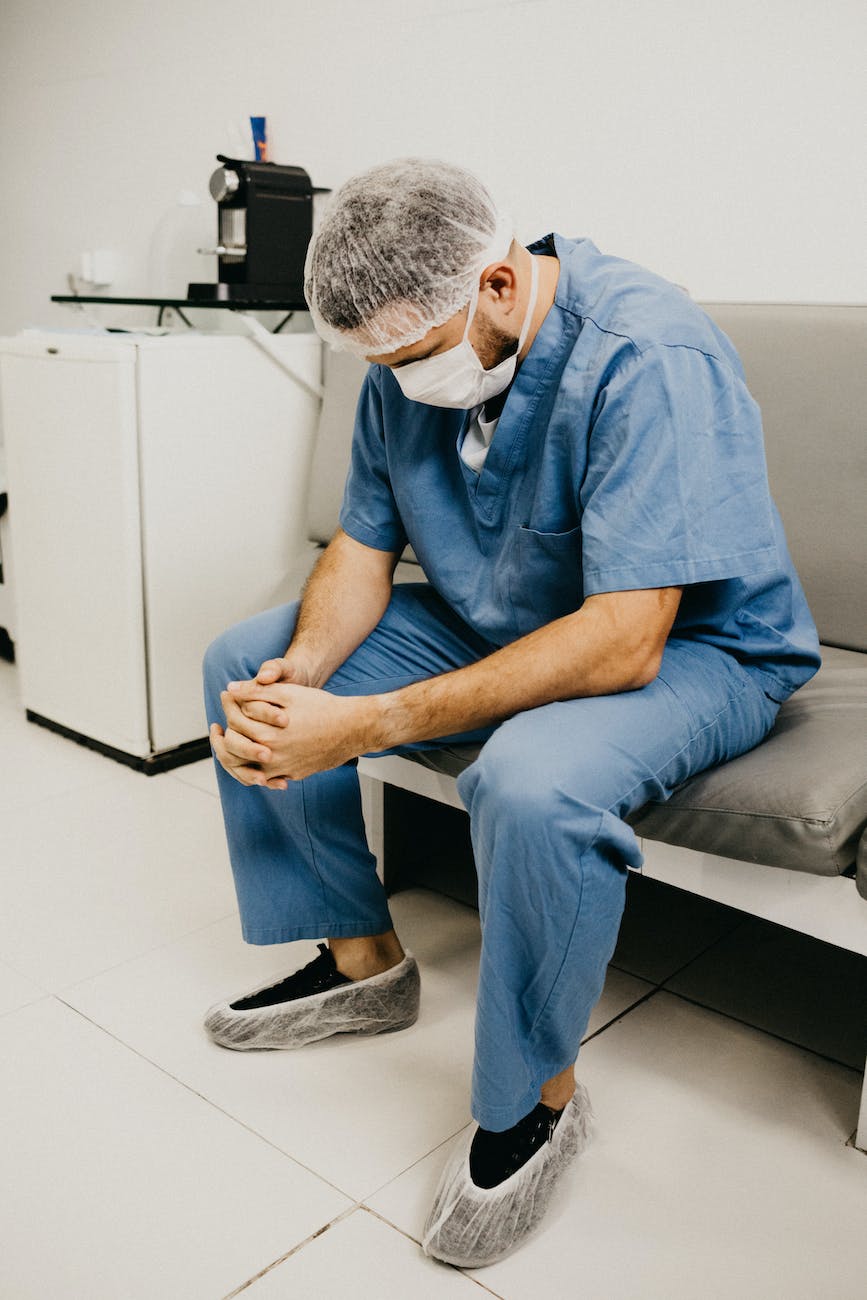
I shouldn’t joke. The seriousness of the situation in the National Health Service (NHS) isn’t a joking matter. Winter is testing the service to breaking point. Both the statistics and the experience of patients are not acceptable by any reasonable measure.

What’s intolerable is the general Ministerial response. Hard-line rhetoric about not budging on negotiations is callous. Dismissing every call for support by rattling-off lists of figures about Government spending is no help at all. Trying to redirect attention away from the things that need fixing. The shabby politics of avoidance is not what’s needed.

As a personal note, I find the situation indicative of broader failures too. My one term as a Surrey Country Councillor, between 1993 and 1997 is more history than anything else. The problem is that it’s not. I remember papers coming to full council meetings with a title that is pertinent and recognisable today. The subject being “bed blocking[3]”.

That’s 30-years ago, our institutions struggled with making the transition between hospital care and social care. It was clear that there was going to be a growing problem. The demographics pointed to a rising aging population. There was no ambiguity about the facts.

Ministers have come and gone. Quite rapidly over the last year. Each with the responsibility for NHS service delivery, performance, and social care policy. Some like incoherent gad flies, some who span like windmills in a storm, some like patrician overseers but none with the managerial skills needed to address the challenge that stares them in the face.

Most local authorities are dealing with cuts to their budgets, financial constraints and the cost of living demands we all confront. In some cases, they are tittering on the brink of bankruptcy[4]. Many local authorities have been forced to reduce their funding of social care at a time of rising demand. 

It’s mad that, after all this time, we have still not come up with an integrated health service. Pitching the NHS and local authorities against each other for funding is absolutely ludicrous. It’s costing lives.

Today, we must recover from a crisis. Tomorrow, real change must be implemented to prevent a future crisis. It isn’t as if we don’t know what to do!  


[1] https://www.gov.uk/government/people/stephen-barclay

[2] https://www.independent.co.uk/news/uk/politics/nhs-strikes-barclay-cooper-libdems-b2244466.html

[3] https://fullfact.org/health/bed-blocking-what-it-and-it-paralysing-nhs/

[4] https://www.kentonline.co.uk/kent/news/what-it-means-for-kent-residents-if-kcc-goes-bust-277075/

Where’s the common sense?

It’s two whole years since the end of the UK’s Brexit transitional period. That’s since the day when the UK fully withdrew from the European Union (EU). Have we seen any, I mean any, Brexit benefits from the day of the Brexit referendum? The sad truth is – No. We are worse-off. Investments haven’t happened, political turmoil persists and bureaucratic barriers have grown.

Certainly, it’s right to say that British politicians have been busy. They have found lots of targets to blame for this continuing underperformance. You name it; Remainers, young people, environmentalists, protesters, strikers, human rights, overseas aid, COVID, flu, global economic downturn, energy prices, war in Europe, Biden’s administration, China, France, Germany, hot weather, cold weather, the list goes on and on and on. The Brexiter’s blame list is an exceptionally long one. Add to this the fact that Boris Johnson comes in for caustic blame. Often strongest from the people who trumpeted his ascendancy to power in 2019.

Although we should not dwell too much on the past, it’s as well to not let what has happened in this last year be swept under the carpet. Remember 2022, after 44 days, Conservative Liz Truss resigned as British Prime Minister (PM). She was the first choice of the members of the political party most entrenched in Brexit thinking. This extraordinary farce made the country look it was run by like a bunch of incompetent fools, of ill-disciplined fanatics, of preposterous comics.

The blatant dishonesty behind Brexit can not be denied. A recent example was the Government statement on having not attained a promised boost from new trade agreements. A ridiculous political line about not signing deals until they are right for the country is a brazen smoke screen to cover-up a significant lack of achievement[1].

We need some serious common sense injected into our politics. The UK is not going away. The EU is not going away. Both share an immense common interest. Both are faced with similar challenges and threats. Both share the same values.

Brexit has added to costs, adding to inflation, labour shortage and under performance. Most people[2] now accept this analysis and want to see serious change[3]. The more both Conservatives and the Labour Party cling on to the mythology of Brexit, the more damage will be done. Keir Starmer has confirmed that the Labour Party will not seek for Britain to re‑join the EU. What a reckless folly from a would be PM.

POST: referendum – latest news, breaking stories and comment – The Independent


[1] https://www.bbc.co.uk/news/uk-politics-63808657

[2] https://www.statista.com/statistics/987347/brexit-opinion-poll/

[3] https://yougov.co.uk/topics/politics/explore/issue/European_Union

Strikes

Impossible to listen to the burbling of UK Minister Stephen Barclay. After a while the listener sinks into an overwhelming feeling of despondency. His words are strung together as if he was on a brain teasing quiz show run by Victoria Coren Mitchell. Barclay exudes a fear of making sense.

For one, please, please, please will he not keep saying the same thing about rigidly adhering to the results of a pay review body. Results which are widely known to be out-of-date. Afterall, if Ministers have any purpose at all, it goes way beyond rubber stamping the work of others.

Given his previous party-political roles it’s astonishing to see him in a serious government job like Health Secretary. A job where playing party-politics can cost lives. I think we all know that the crisis of the moment is not just about pay. However, to pretend that staffing levels and pay are not so important is beyond the understanding of most normal people.

This suited grey-haired man in his early 50s would be better employed on the London stage. I can see him as Marley’s ghost in a Westminster adaptation of A Christmas Carol[1]. Recounting the day when he had the opportunity to fix the problems of Health and Social Care but looked the other way and played for time.

The many strikes that are hitting Britain are avoidable. British politicians are failing to engage with the problem. What’s disheartening about this situation is that everyone knows there will be a settlement at some time. Recognising that fact, it’s about time the groups involved got together and talked long and hard. That is talking with no subject taken off the table.

The Secretary of State for Health and Social Care has a leadership role. It’s time for him, not to excuse the government at every media opportunity, but to engage, roll up his sleeves and meet the unions. Playing party-politics and courting right-wing public opinion was fine as he did in his Brexit job but now Barclay has a real job with real responsibility. It’s winter. This is tragic.

He needs to step up or ship out.

POST: Making a bad situation worse International nurses considering leaving UK if pay does not improve | Nursing Times


[1] https://youtu.be/ReprQS03ZM4

Windy Days

At a young age, I had learnt how to harness the power of the wind. One of my childhood constructions was based on a chunky 4-wheelled trolley that was used to move milk churns around our farm. It may have been redundant at the time when my boys own “land yacht” was created. What made it fun was that the front wheals were steerable. With a slight slope on the concrete farmyard and a windy day, it’s amazing how much fun could be had despite a crash now and then. My poor parents must have spent a lot of time patching up me and my brothers’ grazes, bumps, bruises and hurt pride.

In the 1960s, dad and mum were still milking cows, but milk churns had been replaced by a polished stainless steel bulk milk tank installed in the dairy at the back of the farmhouse. It wasn’t so much a dedicated dairy farm, as we had pigs and chickens and cattle, but the cheque from the Milk Marketing Board[1] probably kept the family finances in the black.

To create working sails there was plenty of discarded black plastic sheeting. This was used a lot to cover hay ricks so they would survive the winter without rotting. Nicely, this tough sheeting could easily be cut to any size and shape even if the discarded bits had rips and holes.

My first experiments with flight were unique. In so far as I know. More accurately the term “controlled falling” describes what we got up to when parents were not looking. Built on the fun had with my milk trolley yard yacht it seemed natural to experiment. Being in the Southwest windy days filled a sizeable number of days of the year.

Out the back, in a field behind the cow stalls was a standard Dutch barn. Quite a big one with a lean-to that faced roughly north. That painted red lead[2] barn was filled to the brim with hay. It was a sturdy construction that wasn’t going anywhere. A steel roof strong enough to hold an 11-year-old without any problem. I’m sure we were told off many times for getting up on that barn roof.

The black plastic rick covering material didn’t make good kites. It was too thick and heavy. What it did make was crude parachute constructions. I tried these as a substitute for a kite. Seeing a strange boy running with a string attached to an inflated plastic parachute must have been quite perplexing.

Having gained some feel for the power of the wind by playing, it was time to see if these experiments could be taken to the next level. Jumping off a hay barn roof may sound reckless and downright dangerous. However, I never was one disregard my own safety, even as a mischievous young boy. Having springy hay bales to land on or a soggy field where wellington boots sank deeply into the mud, lowered any physical risk considerably.

Parachuting off the hay barn roof proved to be a short-lived project. It almost worked. The wind did slow the inevitable plunge but not enough to make it enough fun to do it too many times. The baler twine parachute attachments got twisted and broke loose far too often. In so far as I remember no injuries were sustained in this boyhood madness. Well, a couple of bumps.


[1] https://discovery.nationalarchives.gov.uk/details/r/C179

[2] https://en.wikipedia.org/wiki/Lead-based_paint_in_the_United_Kingdom

Omnishambles

Ten years ago, the Oxford English Dictionary (OED) Word of the Year was a word that is as usable as ever. It wasn’t brought to the fore by social media. At that time, social media hadn’t bitten such a big chunk out of our attention time. We even had enough time to sit in front of the box on an evening. That said, the box hasn’t faded into the background entirely. The massive screens displayed in electrical stores remain a standard part of a typical living room.

“The Thick of It[1]” ran for four series and captured the insanity of Government spin-doctoring and fanatical incompetence. Unapologetically self-indulgent Ministers and their aides scuttled around reacting to every small vibration coming from the media. This was masterful fiction but it’s closeness to reality is the story of 2022.

In 2012, the media political arena adopted “Omnishambles” as shorthand for chaotic behaviour on a large scale. Although it started life as a way of describing the Labour Party’s muddles and confusions before 2010, it has a universal applicability. Westminster can be a whirlpool of volte-faces, embarrassments and unfathomable twists and turns. 2022 ends with none of this diminished.

So, what have we to look forward to in 2023? This winter of discontent[2] is mostly likely to escalate. The impact of inflation and energy bills are like an erupting volcano. A few minor earthquakes, then an explosive plum and finally the top gets blown off the mountain.

Brexit and the pandemic have left people feeling exhausted. So, to see their standard of living diminish as this Conservative Government shamelessly wobbles on regardless, then this becomes the straw that breaks the camel’s back.

The Prime Minister may try to mine what popularity there is in the public mind, but this is not the time when a new Margaret Thatcher[3] will step forward. This is where simple analogies with the past quickly unravel. In this case the Conservatives own the problems. There’s no denying their responsibility for the last 12-years.

To restore the hope, that things can improve, a new formula is needed. People are not looking for perfection but a convincing vison, some basic honesty, and robust resolve. 


[1] https://en.wikipedia.org/wiki/List_of_The_Thick_of_It_episodes

[2] https://www.bbc.co.uk/programmes/p06yc8k4

[3] https://www.businessinsider.com/thatcher-and-the-winter-of-discontent-2013-4?r=US&IR=T

Voters

It’s one of those things I do, most years. For the greatest part, I can predict what I’ll be doing in March-and April. It started back in the 1980s. At the time we lived in Cheltenham[1] town. Putting leaflets through doors. Knocking on doors. “Hello, I’m calling on behalf of …….” was usually the introductory line. With prepared words not only did I remind the town’s residents that there was a local election in May but let them know the name of the best candidate.

I’m writing this as credentials. Yes, I know a thing or two about the nitty gritty of local elections in the UK. My experience has been accumulated over nearly 40-years. Lots of cold early spring evenings and weekend delivery rounds to get a message out in a short space of time.

One of the biggest changes, in terms of practical organisation, has been a change that has affected all parts of life. In 1985, everything was paper based. If I said: “Shuttleworths[2]” to a 21st century campaigner there’s a good chance they will not have a clue what I’m talking about. These were paper pads used to record names and addresses of supporters.

Local campaigning has undergone a digital transformation. However, in the British electoral system paper is still at the heart of everything that is done. The ballot paper is sacrosanct. Voters put a cross in a box set against a name and a logo. It remains inclusive in that there are few people who cannot manage that basic act.

In all my time campaigning, I can remember no voter fraud or corrupt activities. Yes, over enthusiastic, or idiotic behaviours pop-up now and then, as they do in all walks of life. It’s always an important function but also amusing to check spoilt ballot papers at an election count. A small number of voters can be creative in the insults and images they draw on ballot papers.

So, listening to last night’s Parliamentary debate on new Voter ID Regulations was distressing. The Conservative Government plan is to spend £180 million on solving a problem that doesn’t exist. This law is being pushed forward aggressively at a time when local Councils are cutting services due to lack of funding. The Local Government Association (LGA)[3] is saying that there’s not enough time to make the demanded changes before next May.

Ministers are ignoring such advice. Additionally, these regulations seem nonsensical. They impose new requirements on the operation of polling stations but do nothing in respect of postal voting. The natural suspicion for the forceful timescale is that this act is to suppress votes at a time when Conservative candidates are expected to loose in great numbers next May.

A further reason to be sceptical that Voter ID can prevent instances of electoral fraud is that convictions for voting offences have overwhelmingly related to postal votes, not personation at polling stations. Measure that create a barrier to voting in person will lower local election turnout. That’s a voter turnout that is as low as 29% of registered voters in my Borough.

This is a sad day for British democracy.


[1] https://www.visitcheltenham.com/

[2] https://www.libdemvoice.org/how-did-shuttleworths-get-their-name-40299.html

[3] https://www.local.gov.uk/about/news/lga-statement-parliamentary-vote-plans-introduce-voter-id

Cold Data

It’s cold. The numbers on the energy meter keep clocking up and getting to new highs. Compared with last year my energy bill is going to be horrendous. Add to that inflation on just about everything else and it’s hard work to make it a winter of good cheer. Smart energy meters are useful in that they give real time feedback on household energy use. I’m not sure they have an impact on behaviour, but meters do forewarn of astronomical bills to come. Comparing Christmas past, present and Christmas future gave author Charles Dickens an idea.

Looking at media reports this year’s Christmas looks more Dickensian than ever. That is without the transformation that Mr Scrooge[1] underwent. It’s certain the attitudes of Ministers resemble that of Mr Scrooge. Protect the moneymen in their obsession with money and penalise the ordinary working soul. This story is being played out up and down Britain.

The fact that it’s not seen as strange to be talking of freeing up the City of Lonon from regulation at the same time as restricting and controlling working men and women is a bad indication of these difficult times. The Prime Minister may look like a busy light-hearted mouse, but he has a heart as cold as the winter mists.

As the Government has said it wants to collect data from our smart meters, I wonder what can possibly flow from that intrusion into our privacy. In so far as it might guide national policy and reminds Ministers of the benefits of insulating homes, data collection could be helpful. However, there’s a dangerous precedent set when Governments collect every bit of data homes produce.

There’s a creeping tendance to always ask for more data. Mr Scrooge can then compile a leger on the comings and goings of every citizen. Don’t believe for one moment that GDPR will protect our data. Personal information such as names, addresses and bank details are not stored on a smart energy meter. However, computing capability being as powerful as it is, relating energy data to its point of collection and thus bill payer isn’t so difficult to do.

To me, this recalls the saying about knowing the cost of everything but the value of nothing[2].


[1] Ebenezer Scrooge, character in the story A Christmas Carol (1843) by Charles Dickens

[2] Oscar Wilde’s famous definition — someone who “knows the price of everything and the value of nothing”

Reform

The UK’s recent political calamities make it look like we have a long-run soap opera rather than an example of effective governance. There are examples of good governance. Look at the role played by select committees in holding decision makers to account. That’s a rare example. One reason for the last six years of turmoil is that stultifying lack of innovation and blockheaded belief in MPs superiority. Gradually, Parliament has become disconnected from everyday life. It mimics a theatre of the absurd in its form and manners. 

Parliament will be relevant to people if it’s seen to work for people. Today, any claim that it works raises laughter and sullen looks.

So, I welcome Labour’s former Prime Minister proposing a rewiring of the UK Parliament. The House of Lords (HoLs) in its current form is “indefensible”. Naturally, the tabloid media uses the word “abolish” for its dramatic impact. Better to say that there’s a transformation to be undertaken to bring our democracy into the 21st century.

This is not as new as detractors might suggest. Here I sit not far from a rotten Borough[1] that returned two Members of Parliament at a time when cities like Manchester returned none. Gatton’s disfranchisement was agreed on 20 Feb. 1832. Yes, that’s 192 years ago but in terms of the evolution of the British constitution that isn’t that long ago.

The arguments against the current HoL should not be based on an attack against all its members. There are many who take their role extremely seriously and perform the scrutiny of Government bills with care and diligence. However, out of the large number of members many do little.

It’s the legitimacy and structure of the institution that are highly questionable in the 2020s. The form of the HoLs does not represent the country. It’s manner of working is stuck in pre-history. It’s a sign of reward for a tiny minority.

Both Canada and Australia have a Parliamentary system. Their second chambers are based on a more rational, democratic and effective structure. They provide regional representation as well as scrutiny.  A Senate of the UK makes sense to me.

It’s well overdue that the “Mother of Parliaments” stepped into the world we all inhabit.


[1] https://historyofparliamentonline.org/volume/1820-1832/constituencies/gatton

Air Safety List 2

It may seem obvious that there should be an Air Safety List that bans airlines that do not sufficiently met international standards. It’s a right that exists within the Chicago Convention[1]. The first words of the convention concern sovereignty. Every State has complete and exclusive sovereignty over their airspace. From the first days of flight the potential use of aircraft to wage war was recognised. Thus, it could be said that the first article of the Chicago Convention existed even before it was written down and agreed.

However, it’s similarly recognised that the future development of international civil aviation has always depended upon agreements between States. Without over-flight and permission to land in another country there is no international civil aviation.

I do remember some agonising over having an explicit list of banned countries and airlines. In a liberal democracy choice is greatly valued. Here the choice concerns passengers being permitted to board aircraft from another country where there is knowledge of safety deficiencies related to the operation of the aircraft of that country. Should the law make that choice for the air traveller, or should the air traveller be free to make an informed choice?

There lies the crux of the matter. How do ordinary citizens, without aviation safety expertise make judgements concerning complex technical information? Understanding the implications of failing to meet the International Civil Aviation Organization’s Standards and Recommended Practices (SARPs)[2] is not so easy even for aviation experts.

Additionally, there is the issue of third-party risks. It would not be wise to permit foreign aircraft, whose safety is not sufficiently assured, to fly over a nation’s towns and cities.

Regulatory legislation was framed not only to put airlines on the Air Safety List but to take them off the list too. In fact, sometimes this is harder law to frame. In this case the decisions must be made in a fair, transparent, and technically rigorous manner otherwise the politics of such choices could overwhelm the whole process.

There’s been much success in this endeavour. It’s clear that this is a valuable aviation safety measure. It may have driven some contracting States to improve the performance of their airlines.


[1] https://www.icao.int/publications/Pages/doc7300.aspx

[2] https://www.icao.int/safety/CMAForum/Pages/default.aspx