View

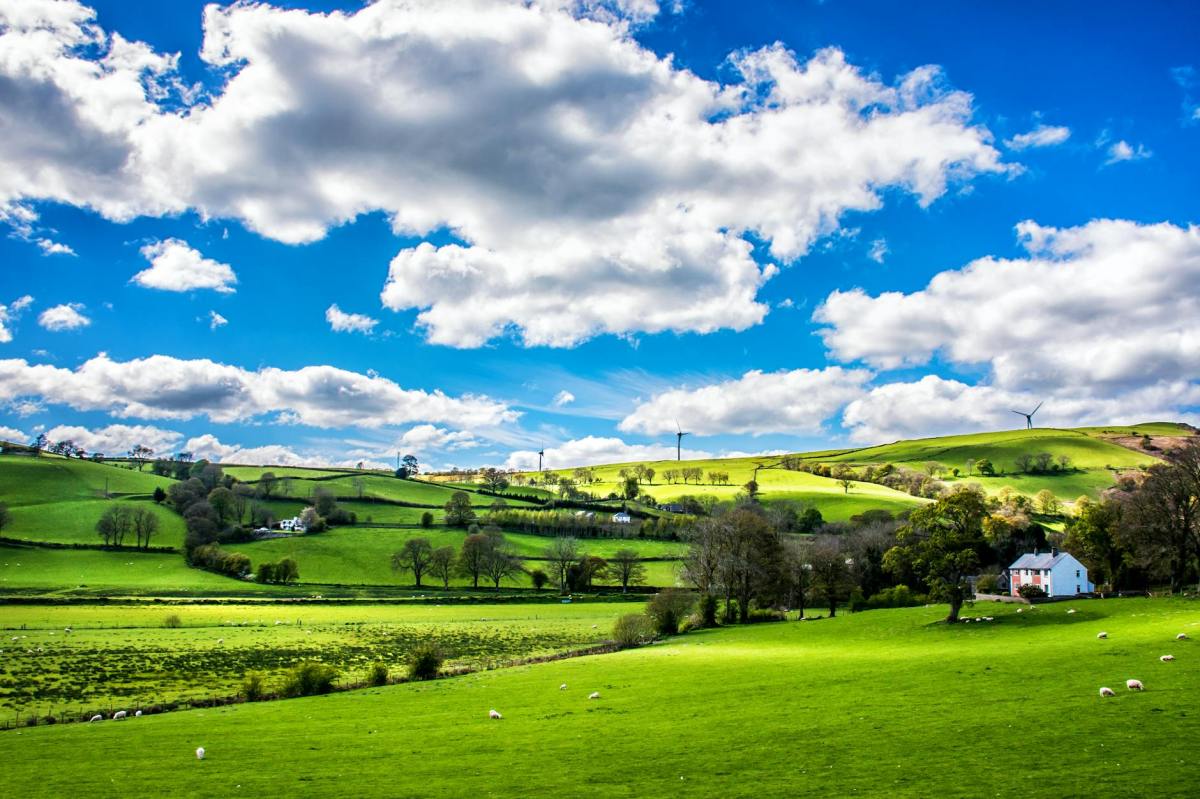
As I looked out of the kitchen window, this morning a face started back at me. It wasn’t a human face. Thank God. Silhouetted against the ultra-green spring grass of the field at the back of our house was the face of our new neighbours. Their shiny black coats and notably short standing is distinctive. One stately bull, two cows and two claves. A contented family group.

Just as the flood water has receded, and the ground hardened so the grass has shot-up in an instant. It’s a rough pasture but there’s plenty of grass for five cattle to munch away at. My calculation is that the small field out back is about seven acres is size. So, they have plenty of space to roam around all day long. A riverbank on one side. Large shady trees on the main road side. To the southside of the field about five houses, including ours. Some refer to this arrangement as conservation grazing. These cattle are complementary to the wildlife that inhabits this next-door greenspace.

It was funny to watch the Canada Geese get to realise that they have to share the field. There’s as many as 18 of them nibbling away at the grass. At first, they were spooked by the cattle, and their natural curiosity. Soon the two parties decided to ignore each other and get on with life.

Dexters are the smallest native breed of cattle in the British Isles[1]. They are often seen at agricultural shows[2]. They are a breed of cattle that are easier to keep on a small holding than some of the larger and more demanding breeds of cattle. That said, I am told that they can be temperamental and stubborn. However charming the black Dexter bull may look, I don’t think I would argue with him for one minute. He looks quite capable of repelling anyone he doesn’t know or thinks to be friendly.

Interestingly, these cattle are a native breed at risk. At least they are listed in the existing government guidance[3]. This situation does attract a supplement of a certain amount per area grazed. So, there is a useful incentive within the countryside stewardship scheme. This is subject to a whole set of conditions but that’s quite common for such grant schemes.

Frankly, I don’t think there’s any chance that Dexters will become extinct in the next hundred years. For one there’s the attractiveness of the breed. For another, Dexter beef is a quality product. True they are not “commercial” in the sense of being suitable for supermarket shelves.

In the last week, it’s nice to see our new neighbours settle in. They seem to be more than happy with their summer pastures. Seeing the two young claves run around with their tails in the air is a pure delight. They are having fun without a care in the world. The geese, ducks, moor hens, jackdaws, roe deer and red kites are all happy to share the small field and riverbank. Not forgetting the occasional swan. It’s a proper country scene.


[1] https://www.dextercattle.co.uk/

[2] https://www.stackyard.com/orgs/agricultural_shows/dates.html

[3] https://www.gov.uk/government/publications/uk-native-animal-breeds-at-risk-list

Two Issues

It’s all to play for, as they say. The UK General Election starting pistol has been fired. Politicians are out of the gate. We are in for six weeks of intense competition for every place where the poll result isn’t a horribly foregone conclusion. Even in some of those places there’s a renewed sense that anything is possible. So, far gone is the public image of the Conservatives that Westminster constituencies, formerly thought to be a wilderness of opposition parties are now possibilities.

What are, yes, I know it’s not new to say so, the elephants in the room? The political parties seem set on what they want to talk about but it’s not a couple of remarkably big issues.

One is Brexit, and its overall impact and the other is Social Care. Two massive pressing issues that politicians are ducking and weaving to avoid. Discussions about the UK’s economy should not happen without discussing Brexit effects. On the other issue, the big truth is that the population of the UK is aging. Yet, we really don’t like talking about it.

One point of agreement is that we need the UK economy to do better. That’s a conditional on generating the funds needed to be able to repair the damage done over the last decade. The overall performance of the UK economy during the Conservative period in power has been undeniably poor. A big part of that poor performance comes from the disruption caused to the UK’s primary marketplace by Brexit. It has been a self-inflicted wound.

On Social Care the Conservatives made a succession of promises. If we look at their record on delivery, there’s nothing to show. Local government has been beaten up over the last decade. Report after report has shown ways forward for social care. Sadly, politicians in power have not been brave enough to push hard enough to implement recommendations that can ease the heavy burden placed on many families.

In my view, our best hope on these two issues is to back the Liberal Democrats. The Conservatives have demonstrated their inability to address these issues. Labour has been timid on both. Fearful that the tabloid newspapers will attack them at a critical moment.

There’s an excellent case for rebuilding the UK’s relationship with the European Union. Single Market membership wouldn’t happen overnight but surely, it’s the direction to head in. The free flow of trade, in a marketplace that is so large, and on our country’s, doorstep would boost the UK’s economy overnight.

For the sake of a few billion of public spending. Set in the context that annual government spending of a thousand billion, then priority action could be taken on Social Care. The difference this would make in helping those in extreme difficulty would be enormous.

I dare say MP Micheal Gove, who is standing down at this election, is right. It’s time for a younger generation to take up leadership roles and to sort out the mistakes that have been made over the last decade. Our liberal democracy needs to get back on track.

Image

It’s strange what DNA throws up. I’m, apparently, one quarter Scottish. There’s a smidgen of Scandinavian ancestry too. I never would have thought that at all. Just about everything I’ve ever done in looking at family history points to one place and that’s the West Country. There are Dorset graveyards where the Vincent name is sprinkled around liberally. How we see ourselves, and others can shape our thinking more than the objective facts. It maybe stories that we’ve been told. It maybe dramatic events that left an indelible mark.

Popular culture plays a big part in shaping our impressions. Images stick. They can be a good shorthand for the recollection of past happenings. It’s General Election time. If you are of my age, who can forget the Spitting Image portrayal of David Steel and David Owen as leaders of the SDP/Alliance in the 1980s[1]. It was devastating.

The red and evil eyes of Tony Blair staring out of a newspaper page are difficult to forget. Even if using them as a campaign tactic proved futile. More recently Boris Johnson hanging from a zipwire[2] is difficult to erase from the mind, however hard one might try.

Social media has changed the landscape of image making and breaking. Video is cheap. Simple and freely available software tools make anything possible. What’s different is that proliferation of comic images means there are fewer that really hit home and become memorable.

I think the current Prime Minister (PM) getting completely soaked in the pouring rain, as he announced a snap election, is probably going to stick. Like London Mayor Johnson on the zipwire, he was stuck in a silly situation of his own making. A situation that slowly became more and more ridiculous.

What images do the current candidates for UK PM conjure up? Here’s my offering. 

Sunak is half Mr Bean and half a sort of slippery eel like wideboy[3] who’d sell you any pig in a poke. An undertone of a late-night shopping channel star fizzed around him.

Starmer has a hint of Mr Mainwaring[4] about him. Resolutely stoic, he’s making an art of being dull. It’s as if his only colour is a grey shade of marron. A practically lifeless monotone.

Davey, standing in front of one of his colourful and much-liked gimmicks, is more circus master. On other occasions he’s inclined to light-hearted sermons akin to Father Mulcahy in M.A.S.H.

Tice exudes a pre-INTERNET age pinstriped city trader who echoes the movie Wall Steet[5]. It’s the “greed is good” clip that most comes to my mind.

These are purely off-the-wall personal thoughts. No doubt more imaginative public images will come to the fore in the next 6-weeks.

POST: No Green party candidate comes to mind. The SNP are following the Labour party line in curated drabness.


[1] https://thecritic.co.uk/what-spitting-image-did-to-british-politics/

[2] https://www.bbc.co.uk/news/uk-england-london-19079733

[3] https://www.urbandictionary.com/define.php?term=%5BWide%5D%20Boy

[4] https://www.imdb.com/title/tt0062552/

[5] https://youtu.be/VVxYOQS6ggk

Turbulence

Turbulence is the result of atmospheric or environmental effects. Afterall, aircraft are craft that fly in the air. This is a hazard that is inherent in flying. Clear air turbulence (CAT) is common. However, extreme examples experienced in commercial aviation are rare. For one, aircraft operators and their crews do their best to avoid known potential atmospheric or environmental upsets, namely bad weather.

En-route turbulence accounts for a substantial number of cabin crew members injuries, and can occur at any time and at any altitude[1]. As far as I know, the UK Civil Aviation Authority (CAA) does not hold detailed data on turbulence injuries occurring on foreign registered aircraft. Numbers of injuries to passengers and flight crew on UK registered aircraft resulting from turbulence are recorded. However, it is not always known whether those injured in turbulence encounters were wearing seat belts.

Nevertheless, I can confidently say that the more passengers that are wearing seat belts during turbulence encounters the less the number of injuries. Deaths in these circumstances are rare. As might be expected fatalities are more likely to results from a combination of multiple causes and factors.

This subject is not immune from airline economics and competition. International flight routes can often be highly competitive. Fought over. So, the route taken, and associated fuel costs, can have an impact on the likelihood of a hazardous weather encounter. In fact, choosing to take routes for the benefit of picking-up specific winds is a common practice.

A high percentage of cases of turbulence events come about by flying too close to active storms[2]. Here there is often visual cues, reports, forecasts and feedback from turbulence encountered by other flights. This all helps crews avoid the worst weather encounters.

With very few exceptions, flight turbulence does not result in fatalities, permanent injure, or structurally damage commercial aircraft. However, turbulence is recognised as both an aviation safety and an economic issue, and it has been steadily increasing. Speculation and some research cites climate change as a reason for this increase. Also, there is the international growth in air traffic and development of new long-range routes.

One thing to say is that until recently, with INTERNET connections now in both in the cockpit and cabin, it could be the case that a passenger could access better real-time weather information than a flight crew. Now, SATCOM connections providing up-to-date weather information are more common on modern civil aircraft types.

There is still more that can be done to reduce crew and passenger injuries during turbulence encounters. There will inevitably happen despite any policy to avoid hazardous weather. The greatest threat to life exists to cabin crew. The cabin is their place of work.

There is potential to develop and employ better airborne detection systems to assist crews. That maybe by enhancing existing weather radar systems. It maybe by new means of turbulence detection using LIDAR, and possibly AI/ML. There is research and innovation that could be done to develop algorithms to better predict turbulence hazards.

Avoidance remains the best strategy.


[1] NASDAC Turbulence Study, August 2004

[2] US CAST briefing in 2004.

Star’s Law

It’s one thing to hear a report. It’s another to understand – what does it mean? Planning reform doesn’t often capture the national headlines. In this case, it’s a national celebrity that seems to be running changes in planning laws[1].

I’m more than a bit suspicious when I see the lines explaining legislation that say: “A full impact assessment has not been produced for this instrument as no, or no significant, impact on the private, voluntary or public sector is foreseen.” The word significant is purely subjective.

Like so many Statutory Instruments[2] (SIs) this subject makes for a hard read. SIs are English law that is made, not by parliamentarians debating and voting on it, but by amendments to existing law placed in front of them for a short while.

There’s no doubt that English farmers and landowners, under pressure post-Brexit, are going to be pleased by the planning alleviations offered by this new planning law. Being able to convert existing buildings into new houses, or new businesses, like farm shops, without local authorities intervening to say “no” has been dubbed – cutting red tape.

It needs to be noted that this action is being taken in the run up to a General Election (GE). For me, I see this as a two-edged sword. Sure, the name of UK Minister Michael Gove might be viewed more favourably by English farmers and landowners. That may not be the case by those people who live in the countryside adjacent to new developments.

Planning gets local people very agitated. A risk of a middle-class “civil war” is more likely to come from villagers and residents of small country towns than ever is the case from farmers. Neighbour disputes can be some of the worst disputes. I know of a case where a shotgun was used to make a point and that wasn’t by the farmer concerned. Boundaries being the issue.

Mr Gove has made a political choice. Framing the argument as cuts to “needless bureaucracy” may not be the whole picture, or even an accurate one but it does make Ministers feel good – like a sugar rush.

Converting more former agricultural buildings into dwellings or small businesses does make sense in many situations. Doing it without proper controls opens a pandora’s box of possible conflicts and disputes. Afterall the planning system is supposed to balance the rights and responsibilities of all concerned.

It’s all too easy for those in central government, heavily lobbied, to make local government the evil monster. I could say: a simple matter of power play and political expediency. Especially when the government minister making the decisions has just seen his political party devastated in local government elections.

Building more houses and shops without the need for planning permission might be a bit like that sugar rush, I mentioned. It last for a short while and then, well you know what happens.


[1] https://www.independent.co.uk/business/jeremy-clarkson-farm-shop-downing-street-b2341181.html

[2] https://www.legislation.gov.uk/uksi/2024/579/made

Challenger

It’s another phrase from HHGTTG. “Mostly harmless”. However, there are things that may seem mostly harmless that subsequently turn out to be far from harmless. It’s that law of unintended consequences playing out in real life.

In the UK, we are stuck with the First Past The Post (FPTP) electoral system. There is no good in pretending otherwise. Pretending that its perverse effects don’t exist is pure folly. Voting systems inevitably impact the results of elections.

What FPTP means is that the more parties, and their candidates that there are standing in an election, in each constituency, the more the votes cast can be spread. This reality often gives a big advantage to the incumbent. The one who came top of the poll last time votes were cast.

Thinking can go like this. The past winner always wins around here. So, my vote doesn’t count. If a past winner reinforces the impression that nothing has changed, then nothing will change. Because of this feeling of acquiescence, opposition voters may be more inclined to vote for a wide range of fringe candidates. Again, the thinking is that this doesn’t matter because the outcome of an election is a foregone conclusion.

In a lot of places up and down Britain this is how both Conservative and Labour politicians have stayed in power. It’s not because people think they are doing a good job. It’s more because their most immediate opposition struggles to marshal a concentration of votes for an alternative.

The conclusion from these facts is simple. If you are a voter who wants to see change then go for the opposition candidate likely to get the greatest number of votes. This is sometimes called tactical voting. It’s not so much tactical as realistic pragmatism aimed at bringing about real change. Look at the numbers. Unless the individuals concerned are one in a million, those formerly in 3rd place, or further adrift are there to do their best but not to bring about change. A vote for a mostly harmless candidate, way down the order, just helps to keep the current Member of Parliament in place.

2024 is a year of great potential. If change were ever needed it ‘s now. I’m confident that the British electorate is savvy enough to choose the path to change. This may mean choosing differently. This may mean taking a close look at the local situation.

No doubt a succession of bar charts will highlight who’s up and who’s down. Take a close look at them. Make sure the challenger really is the challenger. If the numbers say so, and you want change – go for it.

Mars steps

It’s strange what thoughts circulate in my head. If I was to say what kicked this off it was probably the story of the Preet Chandi[1]. It’s inspiring how some people see a challenge and just get up and throw themselves into overcoming it. Her commitment and determination are impressive. She was recounting the how and why of her striking endeavours on the radio. What’s much less inspiring are a some of the moronic comments that the web throws-up about her achievements. I hope she continues to take on great challenges and sweeps them aside.

Exploring and going that extra mile is built into the fabric of being human. Fine, it’s not for everyone but that’s no surprise given that there are 8 billion of us on this planet. A magazine popped through my letterbox this week speculating on what Earth will be like when that number gets to 10 billion people. Don’t worry it’s not all doom and gloom. It’s just that the world will be a very different place by the time we get to 2050. Wow, if I stay healthy, I might still be around.

A lot of public policy of the moment seems to be resisting this reality. Honestly building barriers and walls will do nothing whatsoever to build a better world. Cultivating political anxiety and fears about the future is the maddest short-termism that can be imagined. But sadly, there’s a lot of it about. It’s fashionable in the mature democracies around the globe.

Humanity has an endless list of “challenges” and opportunities ahead. Now, I don’t what to sound too much like the Musk man but we’ve a great deal to do off the planet. What we’ve achieved so far is chicken feed in respect of what we have the potential to achieve.

The big one, that taxes the imagination of writers and futurologists is what do we do about our sister planet: Mars. It’s impossible to ignore. It’s not that far away when compared with other distances in space. It’s intriguing in that it was once a water world. Like Earth.

Today, it’s a planet inhabited by robots. The only one we know that is so populated. Rovers drive around sending pictures back of a desolate barren landscape that has an eery beauty. So much of what we know about the place has only been discovered in the last decade.

Human exploration is natural and normal. Do we leave it to robots? Afterall they are becoming ever more sophisticated. Or do we plant boots on the ground and go there to explore in the way we have throughout the Earth. Well, except for parts of the deep ocean.

Here’s what crossed my mind. Just as Polar Preet, broke two Guinness World Records on her journey, so the incentive to be the first person on Mars is something that will land in the history books. The name of the person who makes those steps will echo through the centuries ahead. So, the trip to Mars will not need an incentive. The drive to do it, at almost any cost is already hanging in the air. What’s more complicated is the journey back to Earth. Going on an expedition has a clear goal. Getting back from an expedition has a different goal.

Being someone who recognises the benefits in the reliability of redundant systems it occurs to me that a mission to Mars needs two ships and not one. Both traveling together to the planet. One can be simple and utilitarian. That’s the one crewed as the outward-bound ship. The other, the homeward ship needs to be autonomous, secure and even luxurious. That way the hardest part of the journey, coming back, can be made easier and more likely to succeed.


[1] https://www.independent.co.uk/news/uk/home-news/preet-chandi-sikh-south-pole-b1987047.html

Harmonisation

There’s an example in of itself. I’ve used the British English spelling. Perhaps I should have standardised on the American spelling, namely Harmonization. Or does it matter at all given that the definition of the word remains the same, whatever. Oh, I can’t resist the temptation to say; you say Tomato, I say Tomato.

“You say tomato, I say tomato.

You eat potato and I eat potato,

Tomato, tomato, potato, potato,

Let’s call the whole thing off.”

Naturally, in the voice of Fred Astaire[1]. Nice though this is, my subject is not pronunciation.

Aviation is a highly regulated business. It’s been that since its potential for transporting huge numbers of people around the globe was recognised. Safety must be number one. Although, it’s not if you read the first few words of the all-important Chicago convention.

Article 1: Every state has complete and exclusive sovereignty over airspace above its territory.

In the minds of those who signed the convention it was sovereignty that took first place. That didn’t mean abusing the word “sovereignty” as has to often been done. Afterall, the whole basis of the Convention on International Civil Aviation was international cooperation. It still is.

Let’s put that to one side for a moment. One of the challenges of international aviation has been the different rules and regulations in place in each country. There’s a level of harmony in the standards of the International Civil Aviation Organization (ICAO). But ICAO is not a regulator and it’s for each country to interpret agreed standards within their domestic law.

Europe, or at least the European Union (EU) is different in this respect. Since there’s European law and an active European regulator then there’s common rules and regulation set for a regional grouping of countries. So far, Europe is the only region to go this far.

When it comes to aircraft airworthiness this has been a topic of a lot of discussion in the last four decades. In the 1990s, that discussion centred around the idea that a single worldwide code was a desirable achievement. That the time the two major entities engaged in the business of aviation rulemaking, and the maintenance of rules were the FAA (US) and the JAA (Europe).

A single worldwide code could greatly facilitate the movement of aviation produces around the globe. That done to ensure that common safety standards were maintained on every occasion. It proved hard to get to this utopian condition. That said, a great deal was achieved in the harmonisation of existing civil aviation codes. Today, we benefit from that work. I’d say we even take it for granted.

In around 2000, after much study, countries concluded that it was fine to seek some form of equivalence between respective rules rather than having to write done one single set of rules. Mutual recognition has flourished in the form of agreements between countries that has smoothed the path for the aviation industries.

That last major study of the pros and cons of harmonisation is now nearly a generation old. A lot has moved on. For one, in Europe the JAA transition to the EASA.

At the same time the manufacturing countries worked closely together to agree on measures to ensure that there was no great divergence in rules and regulations. Now subjects, like Safety Management Systems (SMS) became codified. However, sovereign countries continued to develop and maintain their own aviation rules and regulations.

International working groups often achieve remarkable commonality and convergence on detailed technical topics. Often because the few people who were deeply embedded in a technical subjects all knew each other and shared information relatively freely.

Discussion as to the viability of a single worldwide code has not completely faded into the past. In fact, there’s some good reason to breath life back into this historic debate. Here’s what’s added to the dynamics of the situation:

  1. Ongoing moves from prescriptive rules to more performance-based rules,
  2. Entirely new products in development, like eVTOL aircraft,
  3. Interdependency, interconnection, and integration all increased since 2000,
  4. Security and safety are becoming inseparable,
  5. Digitisation is changing the ways that we ensure that an aircraft is airworthy.

If you have knowledge of, and thoughts on this subject, I’d be happy to hear from you.


[1] https://youtu.be/LOILZ_D3aRg

Electrics & Mechanics

Yesterday, I wrote on LH2. The potential fuel for electric aircraft of any size. Yes, I’m not just talking about smaller commuter class transport aircraft.

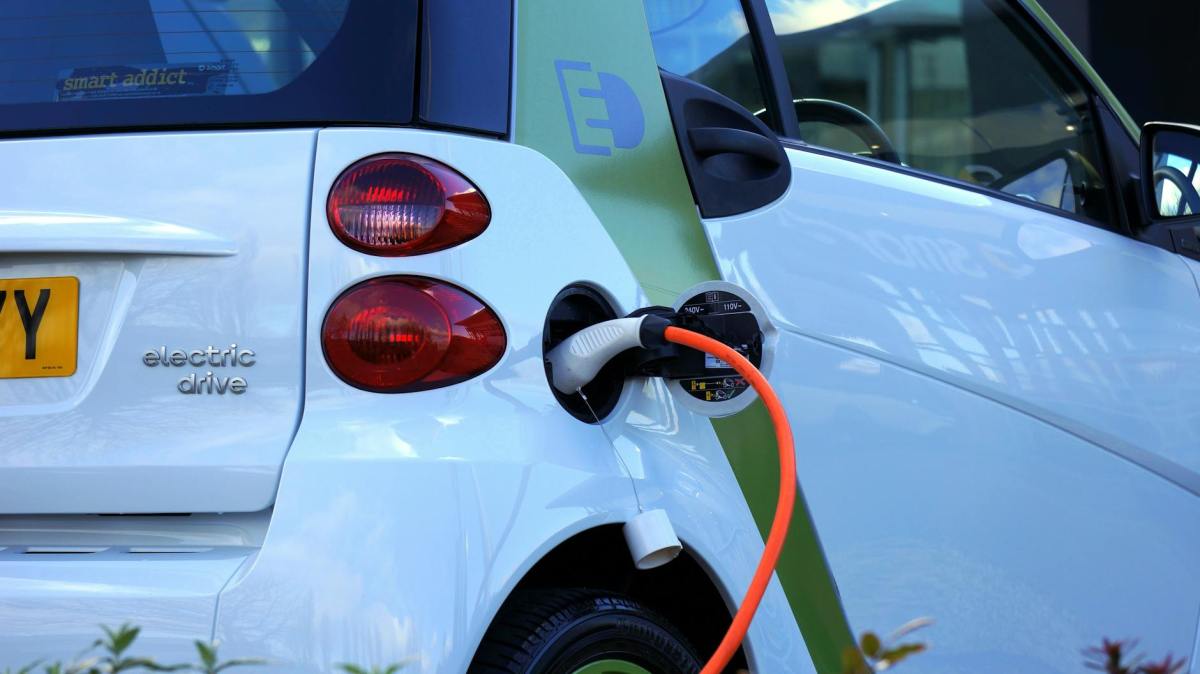
Let me take some anecdotal evidence from the transition that is going on in road transport. Repairer turns up to fix an electric car that will not start. It’s a simple matter given that the car has been standing unused for a long time. The battery had discharged. A quick charge from another battery pack and all is well. Meantime in conversation it’s clear that the repairer hates working on electric cars. I could say, no surprise, they were trained on combustion engines and have been forced to make a transition in technology.

What’s evident here is the apprehension of a person who likely has a mechanical bias towards their work and the necessity to take on fixing powerful electrics. Mechanics, those who love working with moving parts, often have a dislike of electrics and electronics. It’s an engineer’s “feeling” expressed to me casually over the last 40-years.

In fact, it can be the reason that a design or maintenance engineer took the career path that they did. There is a dividing line between mechanical engineers and electrical engineers that is embedded in our institutional, educational, and training systems.

So, there’s two practical human issues to grapple with in a transition:

  1. Propensity of one branch of technically capable people to find mechanical work less fearsome and more satisfying than electrics or electronics, and
  2. Streaming that is embedded in our institutional, educational, and training systems. Qualifications and recognition are often not so multi-disciplinary focused.

I’m not for one single moment making a luddite argument that mechanical engineers[1] and electrical engineers[2] are two tribes that must be kept apart. Far from it. What’s more important is to recognise that transitions are hard.

New electric aircraft are going to demand technical people with a multiplicity of both mechanical and electrical knowledge. The way the engineering world has been divided up in the past doesn’t cut it. Some of our most cherished niches will need to be challenged.

Transitions of this nature always take much longer than is originally anticipated. In a way, that should be such a surprise. It’s a generational change for a community that can be conservative with a small “c”.

This is NOT business as usual. For example, handling powerful 1000-volt electric technology is not for everyone. Removing and replacing cryogenic plumbing is, again, not for everyone. The hazards are clear. The skills needed are clear.

Reorienting the aircraft maintenance engineering world is going to need new plans and programmes. Better start by enthusing people about the change rather than just forcing it.


[1] https://www.imeche.org/

[2] https://www.theiet.org/

Hydrogen in Aviation

The potential for LH2 (liquid hydrogen) is enormous. That’s matched by the logistical and technical difficulties in exploiting this gas’s great potential. It offers energy for a means of propulsion that is nowhere near as environmentally damaging as existing means.

Society already integrates hazardous liquids and gases into everyday life. Each one has been through several iterations. It has been a rollercoaster. Each one has been at the root of disasters, at one time or another.

  • We use gas for cooking and heating in domestic settings. Periodically explosions demolish buildings. Leaks cannot be ignored. Harm can be done.
  • We use light and heavy oils widely in transport systems. Periodically intense fires burn vehicles. Care in handling is essential. Harm can be done.

Without having to say it, both above harm the environment. The search for non-CO2 emitting ways of flying is urgent. Here, I’m writing about harm to people. Physical harm. The business of aviation safety.

Often the physical harm is not associated with the design of the systems used but to the maintenance of those systems. Naturally, there was a learning curve. If we look at early versions of those systems, fatal accidents and incidents were far more regular. So, here’s the challenge for aviation. How do we skip the dangers of the early learning phase? How do we embed rigorous maintenance practices from day one? Big questions.

On the first one of these, lots of fine minds are engaged in putting together standards and practices that will address good design. If this works, and it will be tested extensively, the chance opens for introduction to service with a great deal of confidence that the main risks will be managed.

On the second of these, there’s not much happening. You might say there’s an element of chicken and egg. The shape and form of future LH2 systems needs much more work before we can think deeply about how they will be maintained.

I think that’s wrong. It’s old-fashioned thinking. As the industry has often practiced, making the systems first and then devising ways of maintaining them while in-service. That’s yesterday’s reasoning.

Making aviation system maintenance the Cinderella in the LH2 world is to invite failure. This is a situation where advancing the consideration of how the in-service realm could work, day by day, is necessary. It’s advantageous.

Here’s my reasons.

  1. There are generic approaches that can be tested without knowing the detailed design. That can take existing learning from other industries, like chemical and space industries, and consider their application in aviation.
  2. Emerging technologies, like machine learning, coupled with large scale modelling can provide ways of simulating the operational environment before it exists. Thereby rapidly testing maintenance practices in a safe way.
  3. It’s imperative to start early given the mountain that needs to be climbed. This is particularly true when it comes to education and training of engineers, flight crew, airport and logistics staff and even administrators.

Everyone wants to accelerate environmentally sustainable solutions. When they do get to be in-service, they will be there for decades. Thus, an investment, now, in study of maintenance systems will pay dividends in the longer term. Remember, early fatal accidents and incidents can kill otherwise sound projects or at least put them back on the drawing board for a long time.

NOTE 1: I didn’t mention Liquefied Petroleum Gas (LPG). It’s in the mix. Another CO2 contributor. LPG containers have pressure relief valves. LH2 containers will likely have pressure relief valves too. That said, venting LPG is a lot more environmentally damaging than LH2. From a safety perspective they can both create explosive conditions in confined spaces. Maintenance staff may not need to carry a canary in a cage, but they will certainly need to carry gas detectors when working on LH2 powered aircraft. Our noses will not do the job.

NOTE 2: Events on the subject: https://www.iata.org/en/events/all/iata-aviation-energy-forum/

https://events.farnboroughinternational.org/aerospace/sustainable-skies-world-summit-2024

2024 ICAO Symposium on Non-CO₂ Aviation Emissions