Uneasy

Commentating is a big industry. Every moment of every day something floats to the top of the News. To make sense of it, or to make no sense at all, talking heads sit on comfy sofas and talk. We soak it up from traditional media but increasingly from social media.

I’ve often wondered how much influence is exerted by those who commentate. They often set the context within which events are interpreted. They often act like a pack, magnifying what’s first said. They are at their best when they make something complex and messy reasonably understandable.

Could it be that Heisenberg’s uncertainty principle applies[1]? It’s impossible to measure anything without affecting it. Transformed those words that might read: It’s impossible to comment on anything without affecting it. I guess that depends on the nature of the commentary. Here, I’m hardly likely to affect anything at all but you never know.

What this all about? Well, last night I was sitting on my comfy sofa watching the BBC’s Newsnight. As it happens, the leader of the free world was being televised making a gaff that led to a sharp intake of breath. It’s human error. Nobody is gaff free. What was shocking is the choreography of the moment.

Standing next to the President of the US was Ukrainian President Volodymyr Zelensky, whose name is not all that easy to pronounce, who everyone had just committed to supporting. It makes me cringe to repeat what happened[2]. I won’t.

The commentators went into overdrive. That’s to be expected. Within minutes the follow-on illustrated the avalanche of social media piggy backing that’s on-going about Joe Biden. Let’s duck the subject of age. Regardless of that factor, errors that reverberate around the media echo chamber generate a political toxicity that sicks. It’s not fair. It’s just reality.

Age may bring wisdom, or I hope it does. What’s different now from the era during which Joe Biden accumulated his experience is the relentlessness, speed and volume of communications. Not only that but messages are distorted and twisted with great ease.

To thrive in top roles, new generation skills are essential. Being savvy to the nature of social media isn’t optional. When serious events are magnified by massive proportions and presented to a global audience there’s nowhere to hide.

With perception being pivotal in politics this is an uneasy new world we are entering. I wouldn’t be foolish enough to predict what might happen next. I’m reminded of that advice offered to tourist seeking directions ‘‘Well, if I were trying to get there, I wouldn’t start from here.’’


[1] https://www.scientificamerican.com/article/what-is-the-scientific-pr/

[2] https://www.bbc.co.uk/news/articles/cgl75kdm420o

Just Culture

My thought is that we’ve forgotten the discussion of more than a decade ago. There was a time when the thoughtful reflections on responsibility and accountability were much discussed.

Without focusing on specific examples, there are plenty to choose from, there’s the propensity of our institutions and politicians to reach for “blame” as a first response. When situations go bad the instinctive inclination to hunt out someone to blame. This is an all too prevalent habit.

Naturally, in cases, there’s the strong need to identify who is accountable for bad decisions. Society does not like it when the powerful protect, cocoon themselves and grab for immunity. Certainly, some people and organisations are genuinely blameworthy. However, if we scrutinise and point the finger of blame, it doesn’t help if that finger is pointed at a person’s honest errors. There isn’t a human on this planet who hasn’t made an error.

The finger of blame is easily pointed. Judgment so often falls after an event. The time when more is known, and hindsight comes into play. This tips the balance. It’s so much easier to say: why on Earth did you do that? I would never have done that.

For people to come forward and be fairly heard in an open and fair inquiry or investigation they need to have the confidence that they are not stepping into a public blame-fest. Without trust between those on all sides of it’s less likely that the truth will come out.

“Just Culture” is a concept written into aviation legislation and followed by others. The overriding aim is to learn from mistakes. It’s the surest way of not repeating the same mistakes time and time again. It’s beneficial to have that long-term learning objective. Why suffer the pain of a bad event when the means to avoid it are known and understood?

Now, I’m going back 20-years. I remember being part of an international working group[1] called GAIN. The group compiled guidance about organisational culture. At the time, the group was considering the subject in the context of the air traffic profession. Guidance like the one referenced, emphasise that a Just Culture is not simply a no-blame culture. It’s not, and never has been a way of circumventing accountability.

Determining culpability can be complex. There’s often a test to consider the wilfulness of the participants in a bad event. In other words, did they carelessly, intentionally, maliciously or negligently make decisions that resulted in the bad event? In these cases, the “they” could be an individual or an organisation.

Gross negligence, wilful abuses and destructive acts should be addressed by the enforcement of laws. If we say the criminalisation of honest people involved in bad events has a negative impact. That is not to negate the need for enforcement. Regulators in all sorts of walks of life have a duty to apply enforcement where and when it’s appropriate. Maybe we ought to have applied that to the UK water industry.

My plea here is to first consider the nature of the events in question. Was there an element of genuine honest human error? Is the right balance being struck between the need to learn and the need to ensure accountability?

NOTE: Just Culture is defined in EU law as “A culture in which operational staff or others are not held accountable for actions, acts, omissions or decisions commensurate with their experience and training, but gross negligence, intentional violations and destructive actions are not tolerated” EC 376/2014 Art. 2 Para. 12.


[1] A Roadmap to a Just Culture https://flightsafety.org/files/just_culture.pdf

No Sprint

The last couple of days have seen a new UK Parliament take shape. Beaming smiles from an intake of rearing to go new Members of Parliament (MPs). There’s lashings of energy and enthusiasm. Every problem is to be looked at afresh. No problem is too big to tackle, even if some problems may take while to cure. Horizons stretch ahead full of oceans of possibilities.

Back in May 1993, I was a freshly elected young County Councillor. It was such a magic moment. One evening, at County Hall for the first time sitting in a room with 29 colleagues. For the first time the Council being No Overall Control (NOC). One room full of a mix of battle-hardened pros and fresh faces. A manifesto in hand and magic in the air.

Today, there are 72 Liberal Democrat MPs. Yes, 72 MPs. I can imagine, without looking at the press pictures what that may feel like. A wonderful feeling of hope, ambition and warmth. A little trepidation. Thoughts like: what will be my role in this epic journey? Those with small electoral majorities might be focused not only on their role in the team but how they will secure more than one term of office.

Politics is a precarious way of life. Any electoral success is certainly never to be taken for granted. This UK General Election has shown that in spades. Volatility amongst the voting population is probably higher than it has ever been. That impulsiveness sits in the background of the overall wish to throw out the mediocre incumbents.

At least for the honeymoon period, often characterised as the first 100 days, the new government and new effective opposition will be given a period of grace. It’s a time when everyone wishes the nation to succeed and prosper in the direction that is set.

A modern UK Prime Minister has a great deal of power in the first period of their office. On this occasion, those that lost, Conservatives will be struggling to rebuild their shattered party. Whether they bury Thatcherism or reincarnate it, they will be in turmoil for a considerable while. They may even strike up an extreme ideology and march off into the political wilderness.

Liberalism is in rude health. The 72 Liberal Democrat MPs will surely work with conviction and proudly hold their principles aloft.

It’s not the first time that I’ve referenced the Stoics. I am reminded that despite the joys of the moment and the races that have been won, the battle of ideas never stops or starts. There are peaks and troughs of optimism and pessimism. There are opportunities taken and lost. There are times of progressive advance and there’s inevitable push backs. He’s no longer with us, in fact if he was still around, he’d be nearly 100 years old. Labour MP Tony Benn was wrong on Europe but often wise about the UK Parliament. I agree with his view of Parliament in this respect, however flawed it may be: “Through talk, we tamed kings, restrained tyrants, averted revolution.” Long may that continue. There’s no finality in politics; there is always another step to take.

His maxim for MPs to operate on two levels makes a lot of sense. One is to be an agent of practical action and the other is to operate in the realm of ideas. Not so easy to do. Nevertheless, democracy is healthier if both delivery and values are never strangers.

Rapid

Such a rapid change. In days we go from one governmental regium to another. The government of the UK has changed. It’s now dramatically different from what it was only a couple of days ago. It’s not overstating the case to say dramatic. On a relatively modest percentage of the overall national vote the Labour Party has been handed all the leavers of power.

The UK’s main electoral system is not proportional. It tends to exaggerate and distort performance. Lifting those who do well in the national vote numbers but suppressing those who are supported by smaller overall percentages. Interestingly, the Liberal Democrats, who have always been in favour of a proportional representation electoral system, have an approximate match between the number of seats won and the number of votes cast across the country.

Sticking with the positives, this rapid change does mean policy resets are possible. One significant example is the immediate scrapping of the policy mess that the previous government had got itself into over immigration.

Accepting a fresh start has a upside. However, the difficulty that can present itself is the challenge to continuity. Lots of new faces with new responsibilities. Lots of people learning the ropes. One answer to that challenge is to say that the civil service provides a seamless continuity. The mandarins in Whitehall guide the ship of State through the transition. Not only that but many of the people coming into power have been preparing for this opportunity for a long time.

The difficulty is that the mismatch between the national percentages of the General Election vote and the number of Westminster seats held is there for all to see. It’s a stark indicator of the reality of people’s wishes verses the outcome of a process.

I was a counting agent standing in a sports hall until the early morning totting-up an estimate of the vote for a political party. Pen in hand watching officers carefully unfold paper ballots. In a world of smart phones and tablets there’s something very retro about looking at piles of black and white paper for hours.

One aspect of First Past The Post (FPTP) is the theoretical simplicity of the counting process. Naturally, it’s far from simple. One cross, in one box is well within the capability of every kind of voter. However, it’s crude in terms of what it says about the voter’s views. It forces everyone to make stark choices. There’s no accommodation of preference. Say, you are a person who’s essentially conservative or socialist but can’t stand that Party in its current form, you are forced to leap to vote, if you vote at all, for a political candidate that may not be your natural choice.

So, society ought to ask itself, do we value the result of the electoral process most? Or do we value the expression of the individual preference the most? There’s an inevitability to the answer to that question, if the horizon set is a long one. Where so much of what we now do is addressed by algorithms designed to distil our individual preferences how can we stick with a paper based last century electoral system that ignores preference?

Change will come one day. The difficulty is that if the UK’s FPTP electoral system offers no incentive to the winning Party to change it, so we will be bound to stick with it. Well, at least for the next few years.

Next Day

It’s that moment when I pile-up used elastic bands, I know the election is over. The recycling bin is full, and I must remember to put it out on Sunday night. Sorting out one or two mementos to keep. Saying “Thank You” to a few important people. Watching the analysis of the results.

The UK General Election results are declared. Once again, everyone knows the lay of the land. That national barometer of politics has indicated the weather for the next few years. I never say, next 5-years, given what has happened in the recent past.

Has the election’s outcome sorted out how we feel and think about the big issues facing us? Up to a small point. It’s reality. The issues that faced us yesterday are now going to be sitting in the in-tray of the incoming administration. What we can hope for, is that the administration will be competent, or at least a great deal more competent that its predecessor.

Having been up until well past 3am, my facilities for making insightful comments are somewhat lacking. There is a headful of moments that have flashed by in the last 24 hours. Delightful, taxing and slightly strange moments. Like the person who said – don’t worry I am going to vote. I’ll be there tomorrow. As if the polling stations are always open if you will them to be so.

There’s also this embedded expectation that a candidate should think the same way a resident thinks. I know it’s often labelled representative democracy. But if every candidate thinks the same way as every one of over 70,000 individuals, then they are going to have a mental overload the like of which is unimaginable. Frankly, we don’t have a representative democracy. Members of Parliament are not delegates. Nevertheless, the basic expectation sticks.

For a Liberal Democrat, like me the evening and morning was full of reasons to cheer. So, many constituencies turned away from the Conservatives and towards the Liberal Democrats. I will be, in respect of one set of figures, downbeat. Looking at the aggregate numbers of votes for each political party across the whole country there’s a message. It’s not a nice one.

Just as in France the right-wing populists are clocking up votes so are the same types of people clocking them up in the UK. For once the First Past The Post (FPTP) electoral systems has had a relatively positive impact. Spread thinly across England, the populists haven’t been able to win a lot of parliamentary seats. The Greens are in the same place. The difference between the two is that the right-wing populists have accumulated more national vote share. That’s scary.

One other notable thought is about nationalism. Given the way the poll has panned out, nationalists are going to be on the back foot for a long time. The United Kingdom isn’t in jeopardy. Their leavers of influence are somewhat reduced.

Now, I’m fumbling around trying to get back to where I was before this summer election was called. Bet Sunak regrets his choice of dates. All those things that got put-off can no longer be put-off. Time to put out the trash and get back to “normal”.

Service

The subject of national service, and its reintroduction is part of a memorable Yes, Prime Minister. “He thinks it’s a vote winner[1]” and so, apparently does our current PM.

This sketch is a wonderful example of how someone can be hood-winked into saying “yes” to something regardless of circumstances, or the foolishness of the idea. It’s comedy genius. Sadly, it’s reality in this early stage of campaigning for this UK General Election.

Conservative PM Sunak’s knee-jerk proposal to reinstate national service falls apart like a toilet roll falling in a bath of cold water. Layer by layer the logic crumbles, with any scrutiny.

For one, how come £4 billion can be found at an instant for something previously ignored. Frankly, anything that resembled civic service has been consistently rundown over the last decade[2]. Not to mention the massive rundown in youth services over a couple of decades.

It might be wise to ask if the UK military want such a new system of national service. One that hosts around 30,000 young people a year. The answer so far is – absolutely “no”. At a time when our professional services are stretched, it seems ridiculous to ask them to take on the task of administering and running a scheme that is extremely unlikely to boost their combat readiness and overall effectiveness.

I’m old enough to have been told a long list of anecdotes from those people who had to do national services in the 1960s. I worked with many of them in the 1980s and 90s. The stories are often humorous, eccentric and riddled with tales of timewasting schemes that were invented to keep young men occupied and out of trouble. Well, out of big trouble.

National service doesn’t offer a life of adventure. More like peeling potatoes, picking fruit and driving scruffy delivery vans around. Although such schemes may benefit a very few, for the vast majority would be spinning wheels and filling time. Wating to put time served behind them before getting stuck into a career of their choice. For a few young people, who could already be on the path to a criminal career, giving them weapons training isn’t a good idea.

Mr Sunak is betraying his fickle nature. He’s a desperate politician inclined to grab at something shiny. Magpie like. Retro policies, perhaps picked-up watching classic TV series from the past, are not the way forward for a country keen to make a new start.

We will not see Mr Sunak running a flower stall outside Waterloo Station if he fails to secure re-election. The post of UK PM will be filed quickly. More likely to see him on a sunny beach in California soon. I wonder if he’s packed his suntan lotion.

POST 1: The last thing we need to do now is to take young people out of existing apprenticeship and training schemes. The demand for young engineers and technologists is high. It would be far more constructive to offer sponsorships and subsistence support to applying and existing students rather than vague one-year gimmicks.

POST 2: Even The Daily Mail is commenting on how this proposal was sprung on unsuspecting candidates and Ministers without warning. Maybe the lobbying of parents prepping their offspring for Oxbridge, and alike is echoing loudly. Clearly, no one thought through the real life implications of a mandatory national service scheme for all 18-year olds.


[1] https://www.youtube.com/watch?v=ahgjEjJkZks

[2] https://schoolsweek.co.uk/national-citizen-service-cuts-ties-with-largest-provider/

View

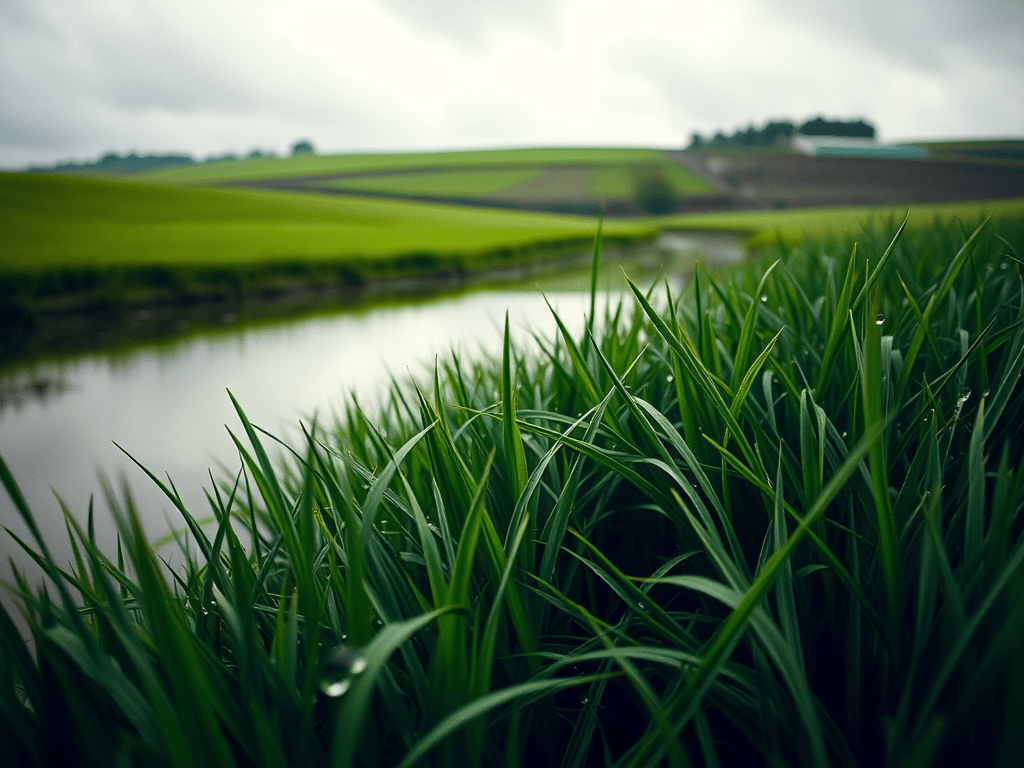
As I looked out of the kitchen window, this morning a face started back at me. It wasn’t a human face. Thank God. Silhouetted against the ultra-green spring grass of the field at the back of our house was the face of our new neighbours. Their shiny black coats and notably short standing is distinctive. One stately bull, two cows and two claves. A contented family group.

Just as the flood water has receded, and the ground hardened so the grass has shot-up in an instant. It’s a rough pasture but there’s plenty of grass for five cattle to munch away at. My calculation is that the small field out back is about seven acres is size. So, they have plenty of space to roam around all day long. A riverbank on one side. Large shady trees on the main road side. To the southside of the field about five houses, including ours. Some refer to this arrangement as conservation grazing. These cattle are complementary to the wildlife that inhabits this next-door greenspace.

It was funny to watch the Canada Geese get to realise that they have to share the field. There’s as many as 18 of them nibbling away at the grass. At first, they were spooked by the cattle, and their natural curiosity. Soon the two parties decided to ignore each other and get on with life.

Dexters are the smallest native breed of cattle in the British Isles[1]. They are often seen at agricultural shows[2]. They are a breed of cattle that are easier to keep on a small holding than some of the larger and more demanding breeds of cattle. That said, I am told that they can be temperamental and stubborn. However charming the black Dexter bull may look, I don’t think I would argue with him for one minute. He looks quite capable of repelling anyone he doesn’t know or thinks to be friendly.

Interestingly, these cattle are a native breed at risk. At least they are listed in the existing government guidance[3]. This situation does attract a supplement of a certain amount per area grazed. So, there is a useful incentive within the countryside stewardship scheme. This is subject to a whole set of conditions but that’s quite common for such grant schemes.

Frankly, I don’t think there’s any chance that Dexters will become extinct in the next hundred years. For one there’s the attractiveness of the breed. For another, Dexter beef is a quality product. True they are not “commercial” in the sense of being suitable for supermarket shelves.

In the last week, it’s nice to see our new neighbours settle in. They seem to be more than happy with their summer pastures. Seeing the two young claves run around with their tails in the air is a pure delight. They are having fun without a care in the world. The geese, ducks, moor hens, jackdaws, roe deer and red kites are all happy to share the small field and riverbank. Not forgetting the occasional swan. It’s a proper country scene.


[1] https://www.dextercattle.co.uk/

[2] https://www.stackyard.com/orgs/agricultural_shows/dates.html

[3] https://www.gov.uk/government/publications/uk-native-animal-breeds-at-risk-list

Two Issues

It’s all to play for, as they say. The UK General Election starting pistol has been fired. Politicians are out of the gate. We are in for six weeks of intense competition for every place where the poll result isn’t a horribly foregone conclusion. Even in some of those places there’s a renewed sense that anything is possible. So, far gone is the public image of the Conservatives that Westminster constituencies, formerly thought to be a wilderness of opposition parties are now possibilities.

What are, yes, I know it’s not new to say so, the elephants in the room? The political parties seem set on what they want to talk about but it’s not a couple of remarkably big issues.

One is Brexit, and its overall impact and the other is Social Care. Two massive pressing issues that politicians are ducking and weaving to avoid. Discussions about the UK’s economy should not happen without discussing Brexit effects. On the other issue, the big truth is that the population of the UK is aging. Yet, we really don’t like talking about it.

One point of agreement is that we need the UK economy to do better. That’s a conditional on generating the funds needed to be able to repair the damage done over the last decade. The overall performance of the UK economy during the Conservative period in power has been undeniably poor. A big part of that poor performance comes from the disruption caused to the UK’s primary marketplace by Brexit. It has been a self-inflicted wound.

On Social Care the Conservatives made a succession of promises. If we look at their record on delivery, there’s nothing to show. Local government has been beaten up over the last decade. Report after report has shown ways forward for social care. Sadly, politicians in power have not been brave enough to push hard enough to implement recommendations that can ease the heavy burden placed on many families.

In my view, our best hope on these two issues is to back the Liberal Democrats. The Conservatives have demonstrated their inability to address these issues. Labour has been timid on both. Fearful that the tabloid newspapers will attack them at a critical moment.

There’s an excellent case for rebuilding the UK’s relationship with the European Union. Single Market membership wouldn’t happen overnight but surely, it’s the direction to head in. The free flow of trade, in a marketplace that is so large, and on our country’s, doorstep would boost the UK’s economy overnight.

For the sake of a few billion of public spending. Set in the context that annual government spending of a thousand billion, then priority action could be taken on Social Care. The difference this would make in helping those in extreme difficulty would be enormous.

I dare say MP Micheal Gove, who is standing down at this election, is right. It’s time for a younger generation to take up leadership roles and to sort out the mistakes that have been made over the last decade. Our liberal democracy needs to get back on track.

Image

It’s strange what DNA throws up. I’m, apparently, one quarter Scottish. There’s a smidgen of Scandinavian ancestry too. I never would have thought that at all. Just about everything I’ve ever done in looking at family history points to one place and that’s the West Country. There are Dorset graveyards where the Vincent name is sprinkled around liberally. How we see ourselves, and others can shape our thinking more than the objective facts. It maybe stories that we’ve been told. It maybe dramatic events that left an indelible mark.

Popular culture plays a big part in shaping our impressions. Images stick. They can be a good shorthand for the recollection of past happenings. It’s General Election time. If you are of my age, who can forget the Spitting Image portrayal of David Steel and David Owen as leaders of the SDP/Alliance in the 1980s[1]. It was devastating.

The red and evil eyes of Tony Blair staring out of a newspaper page are difficult to forget. Even if using them as a campaign tactic proved futile. More recently Boris Johnson hanging from a zipwire[2] is difficult to erase from the mind, however hard one might try.

Social media has changed the landscape of image making and breaking. Video is cheap. Simple and freely available software tools make anything possible. What’s different is that proliferation of comic images means there are fewer that really hit home and become memorable.

I think the current Prime Minister (PM) getting completely soaked in the pouring rain, as he announced a snap election, is probably going to stick. Like London Mayor Johnson on the zipwire, he was stuck in a silly situation of his own making. A situation that slowly became more and more ridiculous.

What images do the current candidates for UK PM conjure up? Here’s my offering. 

Sunak is half Mr Bean and half a sort of slippery eel like wideboy[3] who’d sell you any pig in a poke. An undertone of a late-night shopping channel star fizzed around him.

Starmer has a hint of Mr Mainwaring[4] about him. Resolutely stoic, he’s making an art of being dull. It’s as if his only colour is a grey shade of marron. A practically lifeless monotone.

Davey, standing in front of one of his colourful and much-liked gimmicks, is more circus master. On other occasions he’s inclined to light-hearted sermons akin to Father Mulcahy in M.A.S.H.

Tice exudes a pre-INTERNET age pinstriped city trader who echoes the movie Wall Steet[5]. It’s the “greed is good” clip that most comes to my mind.

These are purely off-the-wall personal thoughts. No doubt more imaginative public images will come to the fore in the next 6-weeks.

POST: No Green party candidate comes to mind. The SNP are following the Labour party line in curated drabness.


[1] https://thecritic.co.uk/what-spitting-image-did-to-british-politics/

[2] https://www.bbc.co.uk/news/uk-england-london-19079733

[3] https://www.urbandictionary.com/define.php?term=%5BWide%5D%20Boy

[4] https://www.imdb.com/title/tt0062552/

[5] https://youtu.be/VVxYOQS6ggk

Turbulence

Turbulence is the result of atmospheric or environmental effects. Afterall, aircraft are craft that fly in the air. This is a hazard that is inherent in flying. Clear air turbulence (CAT) is common. However, extreme examples experienced in commercial aviation are rare. For one, aircraft operators and their crews do their best to avoid known potential atmospheric or environmental upsets, namely bad weather.

En-route turbulence accounts for a substantial number of cabin crew members injuries, and can occur at any time and at any altitude[1]. As far as I know, the UK Civil Aviation Authority (CAA) does not hold detailed data on turbulence injuries occurring on foreign registered aircraft. Numbers of injuries to passengers and flight crew on UK registered aircraft resulting from turbulence are recorded. However, it is not always known whether those injured in turbulence encounters were wearing seat belts.

Nevertheless, I can confidently say that the more passengers that are wearing seat belts during turbulence encounters the less the number of injuries. Deaths in these circumstances are rare. As might be expected fatalities are more likely to results from a combination of multiple causes and factors.

This subject is not immune from airline economics and competition. International flight routes can often be highly competitive. Fought over. So, the route taken, and associated fuel costs, can have an impact on the likelihood of a hazardous weather encounter. In fact, choosing to take routes for the benefit of picking-up specific winds is a common practice.

A high percentage of cases of turbulence events come about by flying too close to active storms[2]. Here there is often visual cues, reports, forecasts and feedback from turbulence encountered by other flights. This all helps crews avoid the worst weather encounters.

With very few exceptions, flight turbulence does not result in fatalities, permanent injure, or structurally damage commercial aircraft. However, turbulence is recognised as both an aviation safety and an economic issue, and it has been steadily increasing. Speculation and some research cites climate change as a reason for this increase. Also, there is the international growth in air traffic and development of new long-range routes.

One thing to say is that until recently, with INTERNET connections now in both in the cockpit and cabin, it could be the case that a passenger could access better real-time weather information than a flight crew. Now, SATCOM connections providing up-to-date weather information are more common on modern civil aircraft types.

There is still more that can be done to reduce crew and passenger injuries during turbulence encounters. There will inevitably happen despite any policy to avoid hazardous weather. The greatest threat to life exists to cabin crew. The cabin is their place of work.

There is potential to develop and employ better airborne detection systems to assist crews. That maybe by enhancing existing weather radar systems. It maybe by new means of turbulence detection using LIDAR, and possibly AI/ML. There is research and innovation that could be done to develop algorithms to better predict turbulence hazards.

Avoidance remains the best strategy.


[1] NASDAC Turbulence Study, August 2004

[2] US CAST briefing in 2004.