Election

US President Donald Trump a second time around. Now, there’s a thought to concentrate minds.

It was our summer holiday in 2015. Doesn’t seem all that long ago. In July, we took a British Airways flight out of London Heathrow to Boston[1]. Picked up a car and drove. This may have been my last flight on a jumbo, a Boeing 747-400 before COVID struck and pensioned them off[2].

It was a terrific adventure as we had about 10 days to explore New England and the Hudson Valley. Sue and I had done a similar trip before but this time we had a well-thought-out itinerary that took us to new places. A couple of nights here and a couple of nights there, as we drove through the beautiful countryside in the sunshine.

This is not a travelog. A part of the story of the trip is of arriving at a motel after a long day, switching on a scruffy TV and watching practically whatever comes on first. On this road trip, often, the News was first. The News had a focus on the selection process for Republican candidates for the coming Presidential race. That’s the November 2016 United States presidential election.

The News was really like a scene from The Usual Suspects[3]. A line of suited and booted candidates vying for position, looking uncomfortable and one strange turbulent outlier. It was as if an alien had landed at a bank clerks’ convention. Commentators were going out of their way to say that the outlier didn’t have what it took to win a grown-up race. Of course, you know who I’m taking about.

As we went from motel to motel it became apparent from the viewing that we snatched that the Republican selection was not a normal one. The orthodox candidates had no idea how to deal with a bawdy cocky Donald Trump. The idea that Trump might serve as the 45th president of the United States was way off the chart. This media personality, come self-proclaimed successful businessman was hammering away at the mild-mannered dull opposition somewhat like a man with a chainsaw might attack a chicken coop. Still commentators derided the idea that he might win.

Let’s just say we have all learnt a lot since mid-2015. There are few people who can claim to have predicted what was to happen for the next 8-years. That is with 2017 to 2021, with Trump installed as the most powerful man on Earth. It sends shivers down my spine thinking about it. That said, the golf courses of world probably gained a lot and social media has never looked back.

The habit of spewing out constant streams of falsehoods and odious propaganda worked first-time around. Aided and abetted by shadowy media forces and with loads of funding the real estate man won. Surprisingly, all of this is alive and kicking in 2023. Ready for the same outcome.

Millions of people believed Trump, and guess what, they still do. By urging his supporters to march on Capitol Hill, when the last election result was being certified, he showed what he might do next. An insurgency, the like of which the United States hasn’t ever seen. The Usual Suspects maybe two movies in one. 2016 and 2024 maybe two elections with one outcome. It doesn’t seem like the law, however it’s interpreted, will prevent him standing for public office.


[1] BOS Boston United States, Logan International

[2] https://www.stroudnewsandjournal.co.uk/news/18590175.boeing-747-jumbo-jet-graveyard-gloucestershire/

[3] https://www.imdb.com/title/tt0114814

Next Decade Aviation

Here, I thought I’d speculate on what’s coming our way. That’s looking at the next ten-years.

Although this maybe contradictory to my earlier writings the subject is by no means all or nothing. Aviation is a technology-based means of mobility. Without the technology component there is no flight. Aviation a youthful industry when compared with ships, roads, and rail.

On the other hand, people are at the heart of the aviation system. That’s particularly true in assuring its stability, safety, and security. People create, innovate and fix systems when they fail. People make go-no go decisions. People protect systems from attack.

Commercial aviation maybe a youthful industry but it has an inbuilt conservatism. It’s the characteristic of not wishing to change when systems are working well. This has both and upside and downside.

A maturity of rules, regulations, processes, and procedures comes about by continuous improvement. By people learning. However, it’s often the case that industry does not reflect the society that it serves. People are excluded or walk away when expectations are dashed.

Across the globe, the future of the aviation workforce depends upon change. There again is a rub. People operating in a successful system rarely welcome change. Especially, if the drivers for that change come from outside the tight knit community of aviation professionals.

The first decades of the jet-age were characterised by a sense of adventure, glamour, and pride. As commercial aviation became available to a wider traveling public there was a gradual opening to professional entrants from most sections of society, even if that was predominantly male.

Now, big company traditional career paths are more an exception rather than the norm. Aviation competes with other industries at a time of rapid digital transformation. This has the impact of opening a wide range of options to potential professional entrants. In the coming decade the trend is going to advance.

A successful aviation industry organisation looks for skills and behaviours as much as it looks for raw technical talent. Assuring stability, safety, and security means having a responsible attitude, an instinct to challenge and question.

Today in the post-pandemic world, the industry is going through a period some people have called the “great resignation”. A generation have walked away from the pressure and stresses of the crisis. Industry behaviour, in a rush to cut costs, exasperated this by treating people exceptionally poorly.

For a sustainable future, commercial aviation needs to work to eliminate the hire and fire cycle. The global aviation industry needs to think and act differently. Aviation needs to get off the trap of the “similar-to-me” effect found in hiring. When a selection bias dominates potential professional entrants are put off. Talented young people are likely to choose meritocratic employment where rewards are there for achievement and commitment regardless of non-relevant factors.

Some work will be replaced by automation. However, retaining aviation people with people skills, regardless of background, will be invaluable in the next decade.

Pod

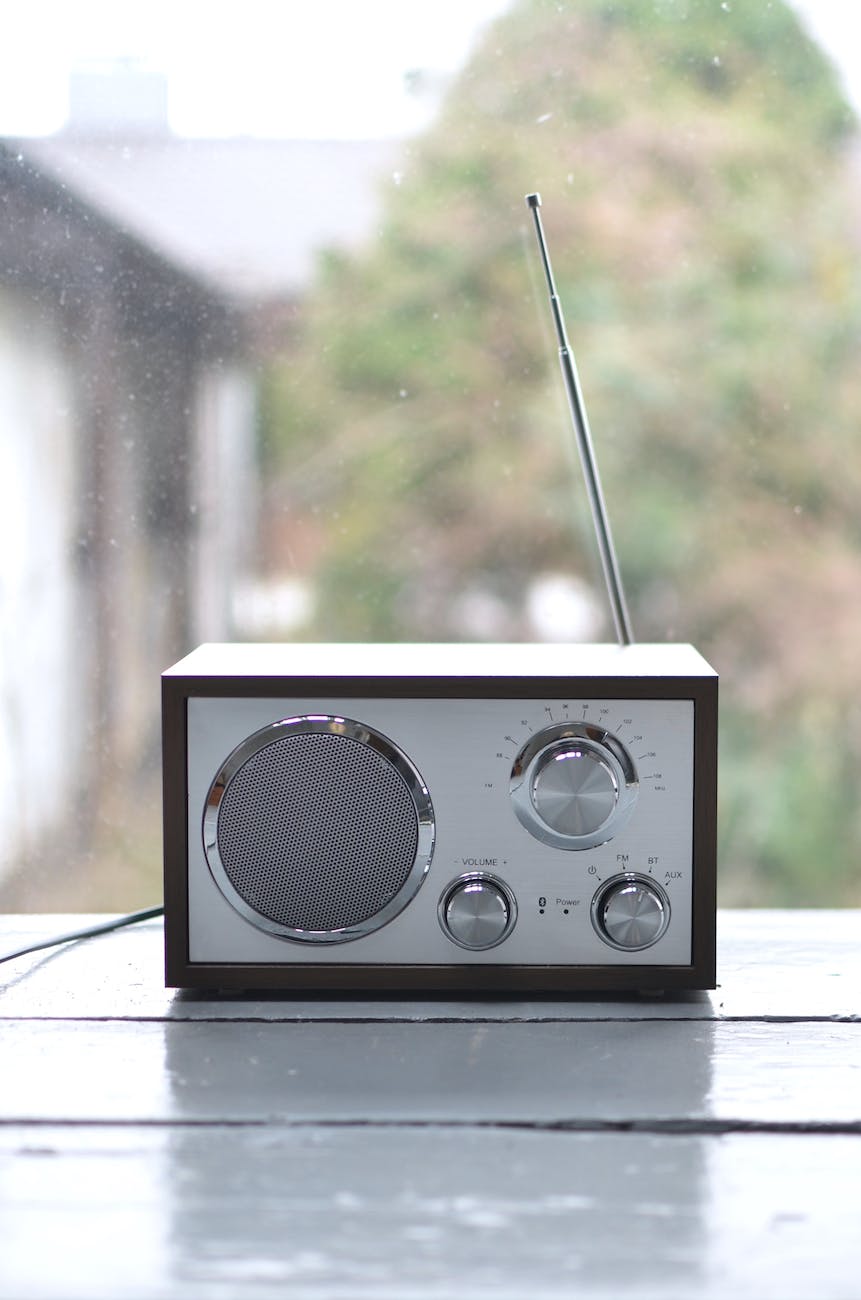
Will podcasts overtake broadcast radio? It’s a question that it had not occurred to me to ask until yesterday. I’ve not been a first adopter as far as listening to podcasts. There’s a routine of turning the radio on at a particular time of day to listen to news and current affairs. That daily routine or habit is born of a long tradition. The morning starts with the Today programme on BBC Radio 4.

Yes, I’m way behind the curve. Go into any large electrical shop, one wall of the warehouse will be filled with earpieces and headphones of every size and shape. The variety of choices is staggering. Sit on bus, train, or aeroplane and more than half the people around will be turned into a source of audio entertainment. Music and talk fight for our attention.

This is great for the streamers and downloaders but lossy for conversation. Sitting next to an interesting person on a long flight is a wonderful way of occupying a couple of hours. That opportunity is diminishing as people become absorbed in digital media. Even the smallest of phones has become a multipurpose entertainment system.

I have long been converted to digital media. FM radio is great for its universality but with less DAB[1] blind spots its life expectancy must be diminishing. Broadcast digital radio based on DAB is a global standard even though coverage is not universal. The digital avalanche is pushing aside any remaining analogue system that populate our lives. Ironically, as far as physical media ownership is concerned, vinyl and even cassettes are resurgent. On the airwaves it’s less likely there will be a romance for analogue radio.

Why have I reassessed the virtues of podcasts? Yesterday, I listened to The Rest Is Politics[2]. This podcast has a conversational style. It’s Alastair Campbell and Rory Stewart talking about current affairs in the UK. Two people who have had their moment in the political sun but remain articulate and inquisitive. They have something to say and it’s engaging.

This is a bridge to podcasts from broadcast radio in that the material is up to date. The topics discussed are wrapped around the news. It’s refreshing too. The ability of the two to argue in a calm and collected manner is unusual in our time. So much of the presentation of news is calamitous and confrontational that this is shocking to say.

Maybe that’s the role of podcasts. Reflection and analysis can be better done in slow time. Broadcast radio news is crammed full of snippets of what’s happening. It would loose its edge if it drifted off into too much extended investigations or drawn-out interviews. So, what may seem like competition between two forms of readily accessible media should be viewed as complementary. Both can fulfil an appealing role in the digital media landscape.


[1] https://www.worlddab.org/

[2] https://podcasts.apple.com/gb/podcast/the-rest-is-politics/id1611374685

Change needed

In so far as voting systems are concerned, it’s often been misleadingly said that Proportional Representation (PR) would result in endless back room deals and politics conducted behind the scenes. This is because different political parties would need to negotiate more often than they need to do so in a purely adversarial system. However, whether that political negotiation is in public or in private isn’t on the ballot.

Today, we have a perfect illustration of the downside of the current First Past The Post (FPTP) voting system in the UK. The results of the UK’s voting system are not a broad representation of the views of the voting public, rather it’s the representation of the factions of the dominant political party. That is dominant in terms of numbers of elected Members of Parliament (PMs).

Instead of negotiations going on between political parties with defined aims and objectives UK citizens have negotiations conducted behind the scenes in back rooms inside a political party.

Rather than tolerating more than one secret “star chamber” of MPs, we ought to be questioning these unstable undemocratic practices. The fragile coalitions within political parties, like the Conservative Party, are completely fragmented and hold wholly different views on important issues.

Surely, it would be much better if different party factions were honestly represented by the own political party. That would give the voting public a fair choice. That would make voting more meaningful. Today, under FPTP the voting public have no idea what they will get. Don’t doubt that statement just recall what has happened in the UK since 2010. The UK’s electoral system is broken. That’s why current opinion polling says that the level of trust in politicians is low and getting lower.

With PR difficult issues are openly discussed. Political parties exist to promote their philosophy. If they are liberal, they are liberal. If they are authoritarian, they are authoritarian. If they are progressive, they are progressive. If they are conservative, with a small “c”, they are conservative. If they are internationalist, they are internationalist. If they are nationalist, they are nationalist.

Today, for the two political parties often taking power in the UK their official names don’t mean a thing. It says little about what they will do when elected to a position of power.

In 2019, the Conservative Party were given a big majority of the seats in Parliament despite only winning 44% of the vote. Yet, MPs from fringe factions will stand-up pontificating about their representation of the people. Constantly, saying that the British people want this or that when such loud assertions are clearly untrue.

The UK’s FPTP system means that millions of public votes are wasted. Large numbers of people are denied a voice, and the make-up of Parliament does not reflect how people cast their votes. The UK’s electoral system is not fit for purpose.

Good News

It’s good to see. Sad, in terms of so many lost years. Now, the UK has rejoined the Horizon Europe and Copernicus programmes with a new agreement with the EU.

The evidence is clear. Most people in the UK have recognised the mistake of Brexit. What public polling there is shows a strong trend going one way and one way for sure. A post-TCA Brexit poll of polls shows a stable rejection of Brexit. The British public worried about the economy, inflation, and the NHS. Brexit is a minority interest[1].

Even those who voted for Brexit, including the current Prime Minister (PM) have come to recognise that the UK needs a new set of agreements with the European Union (EU).

Announced back in September[2], a new customised deal opens the world’s largest research programme to UK scientists, researchers, and businesses. It could be seen as baby steps, but the direction of travel is towards much more collaboration with our closest friends and neighbours across Europe is on the cards[3].

This week, the UK was welcomed back to the Horizon research family. Starting from 1 January 2024, UK citizens will be able to participate in the EU’s research and innovation programme. This is a tremendous victory for common sense and a win-win outcome for global scientific advancement. British researchers and scientists will now be able to apply for grants and projects with certainty.

The UK joins Canada and New Zealand with an association agreement[4]. Other non-EU countries are also negotiating for an association to Horizon Europe. The current version of Horizon Europe began in 2021 and runs until 2027.

I’d written before about how the UK had shot itself in the foot by being so dogmatic about Brexit that it had severed links that it had no need to sever. One day we will look back on the post 2016 madness and wonder what it was all about. Historians and social scientist will write voluminous tones on every aspect of the subject. Textbooks will fill libraries. They will do so to warn of the mistakes that can be made by headline chasing Conservative politicians.

The economy continues to be seen as a most important issue for the country. Reconstructing a productive relationship with our European partners is an absolute must.

Let’s hope this move will reestablish some of the wonderful industrious links between universities across Europe and with other global partners. In the past UK researchers led a high percentage of projects. Life will be different as a non-EU country. Nevertheless, participation in the programme is a great boost. It’s not free but it is worth every penny or cent.


[1] https://www.ipsos.com/en-uk/ipsos-issues-index-september-2023

[2] https://www.gov.uk/government/news/uk-joins-horizon-europe-under-a-new-bespoke-deal

[3] https://www.gov.uk/government/news/landmark-moment-for-scientists-researchers-and-businesses-as-uk-association-to-80-billion-horizon-research-programme-officially-sealed

[4] https://sciencebusiness.net/news/horizon-europe/uk-primed-rebuild-its-standing-eu-research-after-officially-joining-horizon

Half full

Winter Sunday mornings are a good time for mild depression. Awake to grey skies as the bedroom radio clicks into action. Well, that’s one way of looking at the words dribbling out of the airwaves. Bouncing off the bedroom walls and hitting my half awake ears.

It’s billed as a weekly reflections on topical issues from a range of contributors. That’s elementary well-crafted BBC wibble[1]. Range of contributors means radio chums who sit well with the semi-religious Sunday schedule.

If we go back a couple hundred years, a middle-class family would be huddled around a hulking great bible looking for insights and explanations of the world around. Technology, namely radio, gives us the opportunity to squeeze all that into a short morning sermon. Now, the internet means a keen listener can revisit an ephemeral broadcast, any time, and any place.

Sunday morning should, in my mind, mean an articulate 10-minute essay on anything. Yes, anything. Often, it’s a rush to be profound and tickle unwilling asleep brain cells. This can start with controversial words that are then diluted for the breakfast table. Rather than writing a best-selling self-help book that only sells at international airports, Radio 4 drags in a version of deep thought to churn over a subject that’s vaguely topical but not quite. Vaguely philosophical but not quite.

Strangely, I like listening to the laconic warbling of someone like Wil Self[2]. It’s true that I can only do that if the dosage is reasonably thin. An excessive exposure to early and intense thoughts about the human condition can get overwhelming. Especially when sentences are the length of a double decker bus.

Sunday’s awakening is a moment in the week when I can be assailed by adolescent optimism or gravelly pessimism. Bravura passages can run the gamut of the whole of history. Equally, they can dissect a microscopic moment of personal revelation.

I’m going to get Confucian. If I recollect correctly, he has something to say about NOT being obliged to accept gifts that are not given with the best of intentions. It’s a kind of allegory. It’s a good one for the social media age.

Let’s say Suella Braverman does a slot on the BBC’s Point of View. I might be included to turn the radio off. But that’s not a good reaction for me, a person who believes in freedom of speech within civilised and reasonable limits. There’s the rub.

The essence is that it’s one thing to be offered a gift of someone’s great “wisdom” but there’s no obligation on my part to accept it. I think, in this country there’s too much a tradition of not rocking the boat. That’s to accept a gift as a matter of politeness. Even if the gift is quite appalling or bound to be harmful. Some cultures and countries don’t have that problem. I’m a great fan of Dutch bluntness. It’s a classical Britishness that has unwanted repercussions whereby we tolerate that which should be given short shrift.

How did I get to this point? Don’t tell me pessimism is good for us on a damp gloomy Sunday morning. Human events are not mostly random. Agreed randomness is a big part of life but please drop the “mostly”. Understanding probability is a useful skill. Randomness isn’t so random. But don’t let such an understanding led you to think that choice is immaterial.

I will choose. Radio, on or off. Get up now, or slumber.


[1] https://www.bbc.co.uk/programmes/m001t34q

[2] https://www.theneweuropean.co.uk/out-of-their-minds/

B. P.

A forensic dissection of the recent past is highlighting how major decisions are made in the corridors of power. It’s not nice to hear but it is good to hear. Transparency is a benefit of democracy. What we see is not pretty. There’s that saying about politics and making sausages being much the same. We desire results but are shocked if we study how sausages are made.

We easily get trapped in the noisy interchange between personalities. Newspaper headlines draw on our fascination of who said what and when. The more embarrassing the chatter the bolder the headline. The questions how and why are not given as much attention.

Even sampling a little of the reports of the compilation of evidence there’s a trend emerging. Much of this has to do with the way administrators, politicians, and scientist (practitioners and the theoretical) understand each other or don’t.

The classic divided between the Bachelor of Arts, Humanities and Social Sciences (BA) and the Bachelor of Sciences (BSc) is firmly embedded in our society. The divide between Oxbridge and the rest can look like a deep gorge. The divide between those who are instinctive hustlers and gamblers, and analytical reasoning calculators is uncomfortable.

Putting the above to one side, what shines through the submissions of the UK COVID inquiry is an embedded lag between events and a reaction to events. Knowledge with hindsight is wonderful. Time and time again after big events, files are taken down from a dusty shelf and on their pages is a register of risks. Within that the register is a discussion of risk of an event that has just become history. This week we heard a former Prime Minister almost admit that the COVID pandemic wasn’t taken as seriously as it should have been until it nearly killed him.

What does this say about our propensity to plan or take plans seriously? What does it say about becoming overcome or steamrollered by events? What can we do better to be prepared in future?

Lessons learned are fundamental to improving any way of working. It’s a feedback mechanism. Taking what can be derived from a crisis, catastrophe or momentous event and writing it down. Using that to make strong recommendations. Then tracking changes and moving forward to what should be a better prepared state. 

We know we don’t have to wait for bad events to happen before we prepare. Our human imagination provides us with an effective means of anticipation. Tragic in the case of COVID is the ignorance of warnings that previous events had provided. The lesson from SARS[1] were know.

Maybe this is the Cub Scout coming out in me. Yes, that was part of my early upbringing in the village of Somerset. The motto of the British Scout movement[2] has a lot going for it: “Be Prepared”. Much of what goes with that motto is anachronistic, but the essence is immensely valuable.


[1] https://www.who.int/health-topics/severe-acute-respiratory-syndrome#tab=tab_1

[2] https://blog.scoutingmagazine.org/2017/05/08/be-prepared-scout-motto-origin/

Dangerous way to act

Why choose to make a deal with Rwanda the issue that breaks the UK Conservative party? It’s not the biggest issue facing the UK. It’s not the highest priority of voters if we take the opinion polls as an indicator. It’s only a totem for the far-right fringe. What we have is a sign of a stubborn disunity. Almost a fatalistic rush to collapse. An admission that there is only defeat over the horizon.

Clearly, the issue that should be addressed is to competently manage legal immigration. The numbers are orders of magnitude higher than those crossing the channel on small boats. Not only that but the backlog of unprocessed people dwarfs that which could be shipped to a third country.

A Government faces thousands of difficult policy choices every day. At this part of the electoral cycle, focusing down hard on one that is bound to cause disruption, dissent and disillusionment is politically foolish.

Let’s face it, to win a coming UK General Election progress must be shown on the two issues that are top of the concerns of voters. One: a cost-of-living crisis. Getting inflation under control. Two: fixing health and social care. Leading changes to health services and properly funding social care.

So, with the above in mind how is it best to react to the UK Government’s latest attempt to seal a deal with Rwanda. Through a legislative proposal there’s to be a definitive statement that Rwanda is a safe country. This is to be an unquestionable rule. Setting aside other existing laws.

What a dangerous way to act. Opening the door to this type of authoritarian legislative proposal opens the door to all sorts of acts that no one would want to see. Dictatorial nonsense. With the UK Conservative party’s current logic:

Why not a law that says that British rivers are clean. That would solve the problems of sewage discharge – not.

Why not a law that says that climate change is fixed. That would resolve global warming – not.

Why not a law that says that the tide must not come in. Dam – that one has been tried.

At the seashore, when King Canut[1] commanded the tide to stop, we all know the outcome. Since then, his name rather unfairly has become a byword for a delusional attempt to avoid the inevitable. When what he was attempting to do was to demonstrate the limits of his power.

It’s now more likely that my predictions of the date of the next General Election maybe driven by events. The limits of the power of a Prime Minister are most evident when those standing behind him slowly shrink away.


[1] https://www.royal.uk/canute-great-r-1016-1035

GE2024

Let me spectate. I’m no professional commentator, pollster or political pundit but do try to keep myself up to speed with the current affairs. The question in the mind of a lot of people is: when will the next UK General Election take place?

In these days before Christmas, it’s possible the Prime Minister (PM) doesn’t even know the answer to this question. It’s a balance of how strategic or opportunist he will be when it comes to making such big decisions. Most current predictions are that the Conservatives are destined to be defeated. The gap in the national opinion polls is substantial. That makes the decision of timing of an election one that could mark the end of the current PM’s term of office or elevation to Conservative saviour. Currently, political parties are desperately selecting candidates for each constituency. Something is afoot. Better stop there before I get tempted into a pun.

Let’s put aside any consideration of a winter vote. Arctic weather gloom hovers like cold mist. With the prospect of large heating bills upsetting most of the population there’s no politician who will want to accept the blame for that situation. Naturally, they will say that they are working at pace to tame inflation and overseas conflicts are the root of the pain.

The first step on the road ahead is next year’s springtime. Local elections are expected. Every year, they take place on the first Thursday in May. This is when a third, or less of the electorate put a cross in a box. At the same time London’s next mayor will be elected. So, 2nd May 2024 will be like a mini political barometer. Real votes in real ballot boxes are always a better indicator than sampling or sage views.

The European Parliament election is scheduled for 6th to 9th June 2024. You may think this European Union (EU) election has no bearing on the UK, but I beg to differ. If there’s a significant advance of right-wing political parties across Europe, then the impact will be felt in the UK.

The 2020 United States (US) presidential election was quite a show. In prospect, for the 2024 US presidential election is a gripping event despite the weak selection of candidates. That US national election is scheduled for Tuesday, 5th November 2024. Guy Fawkes day[1] in the UK.

Let’s assume the Conservative party will want to hang on, not to the bitter end, but to get as much time elapsed after the pandemic shockwave, Partygate, mini budget madness and the cost-of-living crisis as they can. We are still reeling from the post-Brexit political earthquakes that have trashed confidence and the economy. Will the cost of government be political exile? That all said, people have shifted a long way since last year. The big question is: who do you trust?

The UK’s Labour party opposition should be confident and smiling. However, the opposition probably feels aggrieved having to wait so long for others to fail before getting an opportunity to win a general election. What doesn’t help is that the electorate are now pessimistic about any sustained recovery. Sadly, the public mood is beset with quite a sense of decline-ism.

Traditionally, in the UK, September is party conference season. That leaves October open for an election. But as noted above there’s a news media attention getting clash between what’s happening in the UK and US. Since significant geopolitical tensions are going to be raging throughout 2024, I think that topic may not be an influencing factor on the UK election date question.

Rolling the dice as late as October 2024 has several advantages for the incumbents. If there’s good summertime news, say inflation reduced and a modicum of economic growth the government will claim a great success. The struggle between democracy or autocracy around the globe could give a UK PM a platform on which to make one or two grand gestures. Also, with nearly a year to go, the opportunity for the opposition parties to trip-up increases.

When polls ask is Britain a better place to live than it was ten years ago or a worse place to live than ten years ago the pointer points at worse. It’s hard to imagine this will not impact voter intentions. 

#ukpolitics #ukpolitics #politics #generalelection


[1] https://www.parliament.uk/about/living-heritage/evolutionofparliament/parliamentaryauthority/the-gunpowder-plot-of-1605/overview/people-behind-the-plot/guy-fawkes-/

Ineptitude

Yesterday’s announcement went like this: “The government will also increase the minimum income required for British citizens and those settled in the UK who want their family members to join them.” This Conservative view, that families are a burdening the State persists like a stubborn stain.

The Universal Declaration of Human Right says: The family is the natural and fundamental group unit of society and is entitled to protection by society and the State.

Clearly, by the measures announced, in the case of this UK Government the family is not a fundamental group unit of society. In fact, family members based overseas will be required to separate in the event of a person accepting a low income in the UK. That low income in the UK maybe relatively large when compared with what is available in their home country.

I guess this is fine for lawmakers when considering the level of a Minister or Member of Parliament’s salary and benefits. There’s no impediment that will impact their lives in this respect regardless of the nationality of their partner and children.

What I’m wondering is: what will be the case if a British pensioner, living in a European country, who wishes to return with a partner or children who don’t have British passports? If the increased threshold of £38,700 applies, then that will effectively ban them from returning unless they have a generous pension. It may be the case that they have worked on overseas and accumulated a non-UK pension, but this would be irrelevant if the deciding factors is a UK earnings threshold.

I don’t think there’s much disagreement that those who wish to move to the UK should be able to support themselves. The UK minimum wage is set at £21,673.60 for a 40-hour week. So, is the UK Government saying that no one can support themselves on the UK minimum wage?

Ministers have been quick to deny any responsibility for the chaotic state of the immigration system in the UK. Instead, they pretend that they are adapting to changing circumstances. The fact that they are 100% responsible for the current circumstances is brushed aside.

Having persisted for years with one set of flawed notions Ministers now announce another set of ill-thought-out proposals. The Brexit slogan of Take Back Control did not envisage giving control to a cabal of incompetence. In stark reality, that is what has happened.

The knee jerk reactions and ever shifting sand of the last decade need to come to an end. The British people should not be denied a General Election. More months of more chaos and ineptitude are incredibly damaging.

POST: U-turn. Minimum income requirement will not be increased as much as originally announced. A new threshold will be applied from the spring. A policy designed to exclude people from entry to the UK has been watered down for practical reasons.