Looking back

Yesterday, was a day for reflection. Sue and I attended the celebration of the life a former colleague and a friend who passed away recently.

Mostly, I was reflecting on the events of the 1990s. To me, that’s not so long ago. To the calendar that’s 30-years ago. Not an original thought but it was a moment when I was reminded that time passes remarkably quickly. Those years have raced by. In that time the country’s fortunes has gone backwards as much as forwards.

Baroness Thomas of Walliswood, to me Susan Thomas, was a Surrey County Councillor at the time that I also held that position in Reigate. I had one term of office from May 1993 to May 1997. Those years were special, and I don’t mean just to me. For one, the County Council was No Overall Control (NOC)[1] for the first, and only time in its history. During that 4-year period there was two Conservative budgets and two Liberal Democrat budgets. Susan was Chair of the full Council during the Liberal Democrat led period.

Susan was a parliamentary candidate in Mole Valley in the 1983 and 1987 General Elections. That’s when one of Thatcher’s Ministers Kenneth Baker held the seat for the Conservatives. A decade before I had my first outing as a parliamentary candidate in Surrey.

In the years up to 1997, the Liberal Democrats underwent a period of growth under the leadership of Paddy Ashdown. It was a time when change was happening. There was a strong wish to sweep away the stale remains of Thatcher’s legacy.

Lots of memories flooded back of sitting in meeting rooms in Kingston-on-Thames playing my part as a junior councillor. Although, that was before the executive system created a gulf between local government councillors. There may have been a mixture of long-standing and new members but each had an equal voice when it came to voting.

I sat in meetings were Susan put her experience to good use. As a large political group of 29 members it wasn’t a given that we would all go in the same direction. As has often been said, getting agreement could be like herding cats.

Susan was a strong supporter of our role in Europe. On that subject we agreed without question.

After the ceremony at the crematorium in Chichester there was a gathering at a pavilion in a park in the city. It was an opportunity to chat about those decades’ past reflections. One or two local campaign leaflets from the were displayed on a table with photos from the 1980s and 90s. This was before the internet dominated every aspect of campaigning. Simple printed paper with a message was the main way people with something to say said it. Party style and branding has moved on but the method remains.

A conversation with a lad who wasn’t born at the time that I’m recalling brought me back to 2023. Over sandwiches and nibbles we both discovered an affection for the city of Bristol. The city where Sue and I first met. It was good to hear that down the generations our political concerns of the moment were not so different. We agreed that change was in the wind and about time too.

There’s hope that the next generation that ventures into political activism will be driven by the same liberal instincts that united Susan and me. Just as in the years running up to 1997, the sense that change is on the way is growing. The failures of a long list of Conservative Prime Ministers, Brexit and the current air of sleeze can not be glossed over and forgotten. Change is on the way. Let’s hope that proves to be true.


[1] https://en.wikipedia.org/wiki/Surrey_County_Council

Overhead

Massive intertwining skyscrapers. Towering masts. Flying cars. Pulp magazines in the 50s and 60s had it all. Beautifully illustrated in bold colours. Sharp lines and chiselled faces. Heroic poses and streamlined transports.

Visions of the future. Idealistic imaginations of a utopian society. Don’t we just love them. That is until someone builds them in our neighbourhood. Until the bulldozers turn-up unannounced on a Sunday morning to root out the trees. The birds flee the vicinity (except the pigeons).

You can blame the draftsmen of the past if you like. In our heads there’s a disconnect between the images on a set of drawings and what that might become in concrete and steel. Grand designs are but few. A great deal of the building and planning of the last 60-years can justly be called dreadful.

We have an outcry over brutalist architecture or a lament about a Victorian park that has been paved over. Has anyone ever walked through a public car park that inspired?

If you dream it, you can make it. Nice phrase but often stifled because current technology and thinking are way behind the curve. It could be said that this is one of the drivers that pushes technology forward. The realising of dreams but who’s?

Where does the flying car fit in all this fiction and near realism? New forms of air mobility are just about to start operating.

It’s a habit of our times to jump to an instant polarised opinion. Those open toed sandalled greenies will object. Those red necked, but reforming petrol heads will welcome. That sort of stuff makes nice headlines. It’s only a basis for the crudest dialogue. Anticipate conflict and then fuel it with prejudice. Please, let’s avoid that pointless waste of time.

My thoughts are that the potential of the greater use of airborne transport is a nuanced.

Electrification is a pathway to more environmentally sustainable ways of moving around. If this helps to reduce miles of fuming traffic jams that must be good. At its best, flying can get people from point to point without having follow roads set-down at the time of the horse and cart. Accepted that concrete may be poured to create a take-off and landing zone but compare that with road building and there is no comparison.

On the more concerning side, contrast that with cluttering the skies up with fast moving machines.

In HHGTTG there’s a tale about a shoe event horizon. When gloom causes people to look down and so then buy new shoes to cheer themselves up. So, the whole economy switches to shoe production and then collapses as a result. The association with salvation coming from looking-up is there in the wit of Douglas Adams. We look up to cheer up.

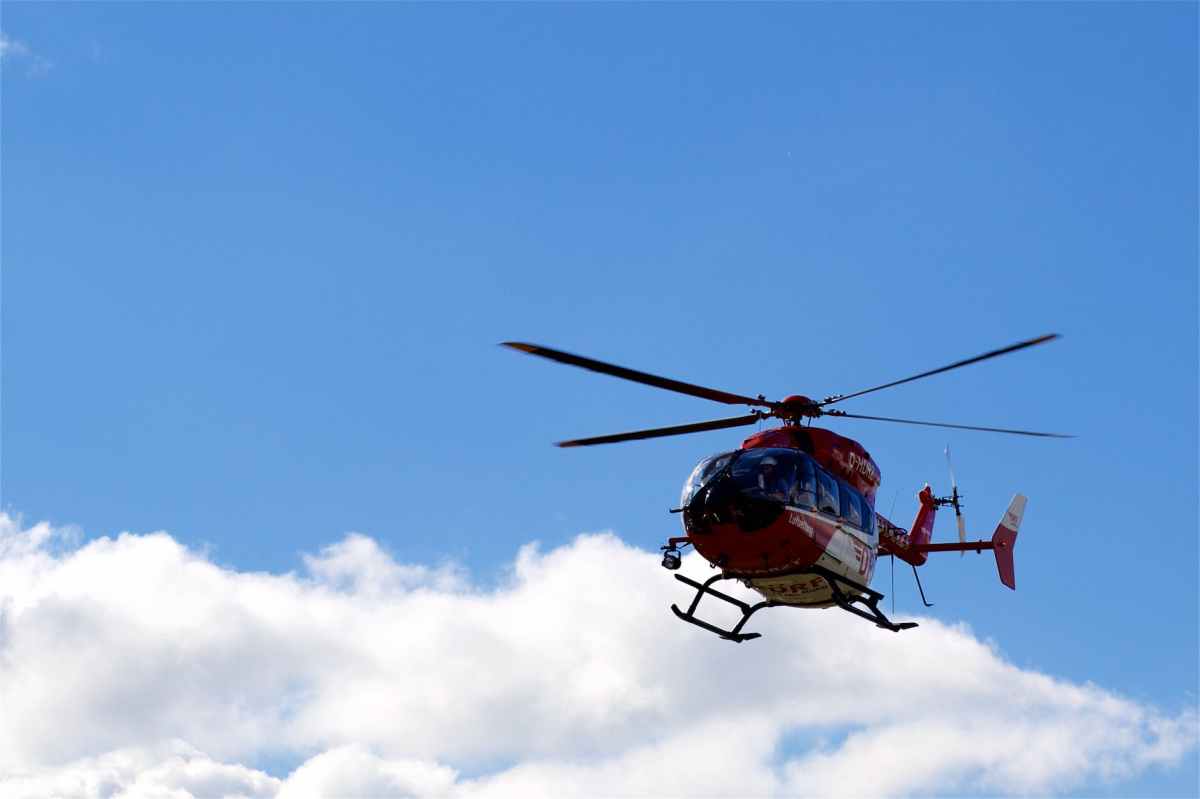
If looking up, as I do at home, to see high altitude vapour trails crisscrossing the sky, my thought is – I wonder where they are going? On the days when a light aircraft crosses the town, to or from our local airfield that doesn’t bother me. Even a noisy police helicopter keeping an eye on the traffic. That’s fine because they are solely there for our safety and security.

What will be the public reaction when we look up to see half a dozen new urban mobility vehicles buzzing past overhead? Perhaps we’ll accept new flying machines if it’s for a public service, an ambulance, fire services, police, or even newsgathering. Brightly coloured in emergency orange.

A public flying taxi service might raise a few eyebrows. A flashy private flying car, now that might be another matter altogether. There you are on a hot summer evening, in the garden, having a pleasant barbeque with friends and whiz a flying car swoops over the treetops. The passengers have their mobile phone out filming their trip. This is when fist will be raised skyward. It’s a time when you hope the next-door farmer hasn’t got a shotgun.

Today, a few pilots do get prosecuted for misbehaving when low flying private helicopters. Not often, it’s true. This happens with less than 1500 helicopters registered in the UK. What would happen with, say, 10,000 private flying cars? I wonder.

Scary 2

My list is still open for horror in aviation. I’ve opened the door to action movies with elements of horror. I’m excluding war movies and fighter pilot romps. A dramatic scene must have a moment of suspense when everything hangs on a thread. It could be a hide behind the sofa moment or felling that all is lost, and the faint light of hope is dimming. I was tempted to include zombie movies only to quickly come to my senses and say – no. I’ve avoided Snakes on a Plane. One, because I haven’t seen it. Two, because it’s write-ups suggest that it’s too ridiculous for words. Although, it’s not impossible. It’s even happened on general aviation flights.

Here’s five more movies, ancient and modern in my private list.

There’s an adaptation of the book No Highway. With actors James Stewart and Marlene Dietrich in the movie you would have thought it would have been a big smash. No Highway in the Sky is pedestrian, but the tension comes from us knowing that metal fatigue is real. Why don’t they believe it? We know the history of the first commercial jet, the Comet aircraft.

The original Flight of the Phoenix is a great suspense movie[1]. It’s not so much horror as intensely griping. Frightening in the sense that it tells us something about the good and bad of human behaviour. The constant battle between despair and what can seem like hopeless optimism in the face of terrible odds. Through gargantuan effort, crash survivors stranded in a desert survive.

There’s something especially frightening about aircraft crashes and danger in the cold white wastes of the poles. Again, passengers and crew struggle to stay alive in freezing weather in the desperate hope of rescue. Stranded, death visits the unfortunate survivors. Ordeal in the Artic[2] is a chilling movie of 1993 based on real events in 1991.

Final Destination has simple plot[3]. A student has a premonition, he and his friends get thrown-off a flight to Europe and then when they are back in the terminal there’s a fatal crash. They cheat death. But that’s not the end. That set-up is the ultimate scary imagining. It’s the what if? It’s the question survivors of aircraft accidents must ask – why me?

The 1955 British movie The Night My Number Came Up[4] plays on a similar theme but this time a nightmare before a planned journey. A bad dream of an aircraft crash. Will it happen just as the dream predicts. You must watch to find out.

Generally, in films there’s so much pure aeronautical nonsense on display. Commercial aircraft do not fall out of the sky when struck by lightning, flight crews do not lose control at the first sign of trouble, fuel doesn’t explode for no reason and the worst of weather doesn’t signal game over.

That said, there’s an inherent claustrophobic feeling inside an aircraft fuselage. It’s like a locked room drama. Passengers are isolated from the outside world. They are dependent on pilots, engineers and air traffic controllers all doing their jobs right. There’s the potential for this set-up to be the stage for an excellent dramatic horror movie. Tales of bravery, camaraderie, and sacrifice can all spring from the most dreadful of events. Unfortunately, so many movie makers make a mess of these situations.  


[1] https://www.imdb.com/title/tt0059183/?ref_=ttls_li_tt

[2] https://en.wikipedia.org/wiki/Ordeal_in_the_Arctic

[3] https://www.imdb.com/title/tt0195714/

[4] https://www.imdb.com/title/tt0047278/?ref_=ttls_li_tt

Scary

Let’s stick with fiction. In the run-up to Halloween there’s several stories where aviation and horror overlap. Not real-life dramas but concoctions of the imagination. Even with the coolest, most experienced passengers there’s moments of apprehension when encountering strong turbulence or unexpected diversions. We know that the risks are well managed but there’s the unforgiving nature of flying. Too many things going wrong at the same time and fate takes a hand.

There are far more action movies with aviation scenes than there are horror movies. So, forgive me if I step over the boundary between the two for a couple of this collections.

Who can forget the expression of a young William Shatner as he looks out of a window to see a large gremlin on the wing of his aircraft[1]. Panic sets in but no one sees what he sees. He becomes a hysterical. Grabs a gun. Opens a window and starts shooting at the gremlin. Everyone thinks he’s gone mad. Carried off in a straitjacket. Then in the last shot there is a view of the aircraft’s damaged engine cowling. Shatner had saved the day, only no one will ever believe him.

Again, in the category of iconic is Cray Grant being chased by a low flying aircraft in a cornfield. Running from machine gun fire he hides. Then in a spectacular explosion the aircraft crashes into a petrol tanker. Hitchcock pulls out all the stops. The film “North by Northwest[2]” will always be recalled for the crop duster scene. Grant’s character, Roger Thornhill gets away with his life.

There’s the in-flight abduction scene in the X-Files[3]. Aliens attempt to abduct character called Max Fenig from a commercial flight. He’s then found dead following a fatal crash. Agent Mulder theorises that the aircraft was forced down by aliens. The NTSB accident investigator is not buying it. Then there’s the mystery of the nine lost minutes between the aircraft crash and the time on the victims’ wristwatches. Yes, it gets a bit ridiculous. All in the vein of a good X-Files story.

Scary realism in science fiction qualifies. In this case 21st century technology as imagined in 1997. First to come to mind is the cab driver Bruce Willis driving his flying taxi. The Fifth Element[4] is a polished English-language French science fiction action movie. The flying taxicabs are terrifying. Weaving chaotically through the cityscape. Not something we will see with the current plans for urban air mobility – I hope.

The telling of the drama is a frightening fiction, but the events were real. This survival film is based on a crash in the Andes mountains on October 13, 1972[5]. A Uruguayan rugby team is faced with a terrible situation. Starving passengers debate how to stay alive. Pushed to the limit they eat the flesh of their dead relatives and friends. 29 died but 16 survived. More than one movie has been made of this awful tragedy. It speaks of the human instinct to survive as much as the catastrophe.

That’s five scary movies scenes with a commercial aviation theme. I’m sure there are more – what’s your favourite? 


[1] 1963 episode of “The Twilight Zone” called “Nightmare at 20,000 Feet.”

[2] https://www.imdb.com/title/tt0053125/plotsummary/

[3] https://en.wikipedia.org/wiki/Tempus_Fugit_%28The_X-Files%29

[4] https://en.wikipedia.org/wiki/The_Fifth_Element

[5] https://www.imdb.com/title/tt0106246/

Tip

You may think it was a bit of a joke. Certainly, some of the holiday makers around me thought the cabin crew were joking. I was at the back of the aeroplane and so one of the last passengers off.

We arrived at London Gatwick’s North Terminal at about 9:30 pm on a Sunday. Passengers were keen to get off and get home. That said, the amount of sizable luggage in the aircraft cabin overhead bins and maybe the sleepiness of one or two people meant the long line down the aisle was moving slowly and intermittently. The process was civilised but at a snail’s pace as it seemed from the back.

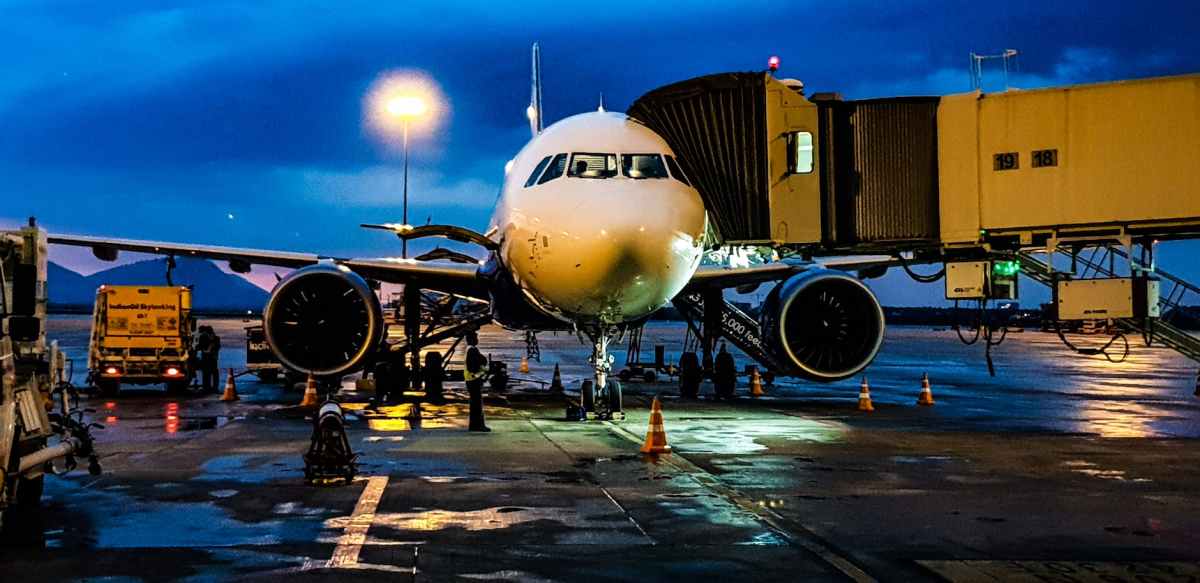
When you hear a request to hurry-up otherwise the plane will tip up it does instil some urgency. That and one or two questions. It also made me think; could that really happen in this situation? I was standing next to the cabin crew at the back, and I can attest to their concern being real. Being at the terminal gate there was only the front door open to exist the aircraft. When we got on-board the aircraft both the front and rear doors were available.

The Boeing 737 MAX-8 is a not an overly long aircraft. That said, under certain unfavourable conditions it can tip. In fact, there are longer versions of both the Boeing and Airbus single aisle aircraft that pose more of a challenge in this respect. There is much stretching of popular aircraft types to increase passenger capacity.

At the same time as we were deplaning[1] (ghastly word), the ground crew were unloading our luggage. As a result of all this movement of passengers and luggage it is possible to have too much weight at the back of the aircraft. Yes, you could blame it on masses of carry-on bags obstructing the aisle on a full aircraft, but it also takes the front passengers to have got off quickly. There are more passenger seats behind the aircraft wings than there are in front. On a cool Sunday evening when the airport’s public transport options are limited there’s an incentive to rush-off from the front. As the deplaning continued there was a sense that something was happening underfoot.

Does it happen? Do aircraft tip up? Yes, they do[2]. It’s not an attractive sight. I have no idea what the procedures are if it does happen. It certainly would be a shock for those on-board. Anyone in the vicinity of the aircraft would have to watch out too. In these unplanned events, there is a hazard to ground crew that can result in injury.

This sort of event happens more often in the air cargo world[3]. While these events maybe comical to witness, they are no joke for airlines. The possibility of damage and the disruption to aircraft operations can be significant. Nose wheels coming off the ground don’t always result in an aircraft tip, but this is not somewhere any crew responsible would want to go.

Weight and balance issues are real. Each aircraft will have weight and centre of gravity limits established at the time of aircraft certification. Aircraft operators will have procedures[4] that fully consider loading and unloading. That said, as we can see, miscalculations do get made.


[1] https://grammarist.com/spelling/deplane-or-disembark/

[2] https://youtu.be/JTDSS8unwQM

[3] https://www.independent.co.uk/news/world/middle-east/747-plane-tips-backward-airport-cargo-doha-qatar-fars-air-qeshm-a8829896.html

[4] https://www.faa.gov/documentLibrary/media/Advisory_Circular/AC_120-27F.pdf

Bad Seat

There’re bus trips, I can recount where people were packed in like sardines in hot sweaty environments. Never a pleasant situation but, in such circumstances, a way of getting from A to B. Maybe the only way of taking an essential journey. Life’s necessities.

I could rattle off the mantra “any safe flight is a good flight” and that remains true. It’s top of our normal priorities. Getting from A to B in one piece. No harm done. It’s the homing pigeon in all of us. I’ll put up with this unpleasantness because it gets me home.

Last night, I had that experience. It was my first flight on a Boeing 737 MAX. I’m not going to recount the saga of that aircraft type over the last couple of years. Much as to say, I reassured a nervous flyer with me that she was quite safe and nothing bad would happen. That is bar a small amount of turbulence in our three and a half hours in-flight.

I was returning from Preveza-Lefkas [PVK] to London Gatwick [LGW] on a TUi package flight. We got into Gatwick at about 9:30 pm with a full aircraft. The temperature change of having gone from a day of sunshine and about 28 degrees C in Greece to 6 degrees C and darkness on the ground at Gatwick was quite a shock. I must admit I was prepared with three layers to keep me warm.

What I want to recount is the gross unpleasantness of seat 32D. Row 32 is the last row of passenger seats in the aircraft cabin, with two toilets behind. By the way seat 32E is just as bad.

The aircraft was chock full of holiday makers returning home. Bags full and overhead bins stuffed. This shiny new Boeing 737 was fuller than anticipated. Left on the tarmac was an EasyJet aircraft that had been expected to depart earlier in the day. It had “gone technical” – as they say. So, to get home, many passengers had transferred to the later TUi flight ensuing that every aircraft seat was full.

Now, given that I’d checked-in for my return home flight in good time and I have no idea why TUi decided to punish me. I should have spotted that 32D meant the last row of seats. But you know how it is, it was enough to get that bit of administration behind me and carry on enjoying the day.

My intention was to do what I do well, at least in the past and that’s to get some sleep on an uneventful evening flight. I was ready to sit back and wander off to dreamland hoping to wake as the aircraft wheels hit the ground back at Gatwick airport. Unfortunately, I wasn’t to be given that opportunity last night.

Toilet flush motors are not silent. With a full aircraft, and three and a half hours the toilet traffic was almost continuous. The sequence of noises had a horrible rhythm. Door open. Clack of the door latch or fumbling around as a passenger worked out how to close the toilet door. Maybe even a few words with another passenger who block the aisle. Then the clank of the toilet seat. Maybe the walls get bumped as awkward manoeuvrings took place. There was no stop to this soundscape of lavatorial processes, ablutions, and choreographies.

It’s so British to que. When the trollies were not being pushed up and down the aisle, the aisle filled up with passengers waiting for the loos. Then those returning to their seats had to squeeze past the assembled que. Naturally, the 32nd row aisle seats got to see every kind of human shape and form. Trying to ignore a rear end sliding past your face gets tedious when it happens a lot.

That’s not all. When the toilet doors swing wide open, they bump against the back of seats 32D or 32E. What a mad design or stupid afterthought.

Then there’s the issue of well used aircraft toilet facilities, even on a new aircraft. They may start off as sweat smelling as the air freshener applied. After a few hours of constant use, they are nothing like sweat smelling.

My overall message is – when flying on a Boeing 737 MAX, do not accept passenger seats 32D or 32E unless you have been a very bad person and deserve punishment. Ideally, a good airline would remove these two seats altogether but to make such a suggestion is to p*** in the wind.

Climate

It’s an odd day that I write in agreement with The Pope in Rome. He says: “People are not responding at the level of urgency that is needed” on global climate change. The Pope has a go at a commonly held blind faith in transformative ways out of our troubles by technical innovation alone. He seems to say that we ignore reality in the hope of technological magical thinking popping-up just-in-time. His references are to the need for lifestyle changes rather than carrying on regardless.

Now, quite a number on the right of political debate will see this as a lefty intervention. Anytime religious people step over the boundaries from the ethereal into everyday life the standard conservative response is to shout – get back to the pulpit. The same response, but more polite, occurs when English bishops speak up in the UK House of Lords. I’m no advocate of them being an intrinsic part of our national political systems but they do, at least, speak from an ethical grounding[1]. If we are to talk of political long-term thinking this is very much it. There’s nothing more that prompts short-term thinking than a looming election.

Combating climate change and pushing for environmental justice are not fringe activities. It requires dialogue across the main political parties. Saddly, we are going through a phase of squandering opportunities to change. 

I agree that taking a puritan line and making “hairshirt” rules will not deliver the results that are needed. Most often such a sturdy approach just fuels luddite opposition and media outcry. Continuous graduated change and a robust commitment are needed. Unfortunately, these two are an anathema to the populist newspaper headline seekers.

Economic interests are often quoted as a reason to shelve changes. Yet, everyone knows that the costs ahead of us will be far bigger if change is not driven consistently – now. Resilient long-term policy isn’t a lefty luxury. Or liberal daydreaming. Or unafordable. It’s vital.

What’s interesting about active in-action is that there can be no such thing. Climate change will bite back. Action will have to be taken under presure. In civil aviation, for example the climate has an impact on aircraft operations. So, not only does aviation impact the environment but increasingly hazardous weather impacts aviation, with severe results in some cases. Turbulence experienced in-flight is increasing as the world is warming[2]

Approaching risks there are, at least, 3 positive actions to be taken. Eliminate it, reduce it, or mitigate it. With the climate emergency we’d better be committed to the first two because by the time we get to mitigation there’s likely to be few more unpalatable opportunities left.


[1] https://www.churchofengland.org/news-and-media/news-and-statements/bishops-warn-environmental-racism

[2] https://www.reading.ac.uk/news/2023/Research-News/Aviation-turbulence-strengthened-as-the-world-warmed

Adaptation

There was a time when AI was an esoteric subject that filled the minds of high-minded professors. They had real trouble trying to translate what they were doing into langauage that most of us would understand. Research in the subject area was the purview of national institutes and military facilities. Results flowed into academic journals and little read folders in the corners of university libraries.

That has changed. What was expensive to build and test because everything was unique or bespoke is no longer. Enough is known about algorithms that work, and the ones that don’t, to make practical experimentation much more viable. AI tools are turning up on our desktops, tablets, and phones without us even asking. Opting-in is often assumed.

A massive number of applications are nothing more than fizz. They can be useful, but they are not game changers, and our lives carry on much as before. What is new, or at least pushing at the door, is applications that control things in our everyday environment.

If traffic lights start guessing what my age is before allocating a maximum time to cross the road, we are going to start to see a good amount of pavement rage when they get it wrong. When AI algorithms drive my car for me it’s going to be a bad day when accidents start to accumulate[1] (even if the total system of systems is far safer than us mere humans). Anyway, it’s easy to write scary stuff about AI. In this case I’d like to highlight some positive gains that might be realised.

A lot of what is designed, produced, and sold is pretty much fixed the day it leaves the shop or showroom. Yes, for example, cars are recalled for fixing known deficiencies but the threshold for taking such action is extremely high. Even in a safe industry like civil aviation dealing with an unsafe condition that has been discovered takes time and a great deal of resources.

AI has the potential to be adaptive[2]. So, that thing that you buy, car, washing machine, or whatever, will have the inbuild ability to learn. To adapt to its situation. To be like others of its type but, over time, to customise itself to the needs of its user.

Just image a domestic appliance that can adapt to its pattern of use. Always staying with safe boundaries, producing maximum energy efficiency, and doing its job to the best of its specification. Let’s imagine a car that gets to know common routes and all the hazards on those routes and even takes the weather and time of day into account when driving those routes.

In all that adaptive potential there’s great benefit. Unlike buying gloves that are made to specific standard sizes and don’t quite fit you, the adaptive glove would be that malleable leather that slowly gets a better and better fit with use. AI will be able to do that if it gathers the right kind of data.

Now naturally, this gets complicated if the adaptive element is also safety related. The control system in a car, truck, tram, train, or aircraft must get it right day after day in a wide range of conditions. Nevertheless, if systems are constrained within known safe boundaries there’s much to be gained by adaptation. This is not taking control away from the human in the loop but making it easier to do what humans do best. Just a thought.


[1] https://www.washingtonpost.com/technology/2023/09/28/tesla-trial-autopilot-crash/

[2] https://luffy.ai/pages/IS-DR.html

Upfront

Years of looking at the reliability of aircraft components and structure have given engineers a good understanding of the natural decay of mechanical workings. To that extent even electronic components are mechanical. Materials oxidise (rust), random shocks and vibration take their toll, temperatures cycles from cold to hot and back again a whole range of impacts are relentless. You can say – nothing lasts forever.

Occasionally a discovery adds to the knowledge of how materials behave under high stress. Sadly, that’s what hit the early years of civil jet aviation. The de Havilland DH106 “Comet” was the world’s first passenger carrying jet airliner. It first took to the air in 1949, which I find remarkable.

Catastrophic metal fatigue failure of the aircraft fuselage put paid to this British aviation project but only after several tragic fatal accidents. In 1954, the Comet aircraft were all grounded during an extensive accident investigation. The jets were redesigned and re-entered commercial service in 1958. However, by then the aircraft had a damaged reputation and others were doing far better. Now, those Comet aircraft that remain are museum exhibits[1].

Last week, I walked through the fuselage of a Comet 1A built in 1953 at Hatfield for Air France. It’s fascinating to see what advanced aviation technology was 70-years ago. What was surprising to me was the read across from that first version of a jet aircraft and what we have in-service now.

Automation has removed the place of the navigator and the flight engineer, but the stations of the pilot and co-pilot are familiar. The fuselage is cramped but the seating is generous and spacious. This aircraft must have been a dramatic revolution in flying at the time.

As we look to advance aviation in the coming years, with new ways of flying and new ways of powering flight so the warning of the Comet project should be heeded. We are at a time of extraordinary changes in the aviation industry. Advanced technology can deliver great benefits to society. It’s up to us to make sure we cover all the possible disbenefits as far upfront as we can. If we don’t, they will come back to bite us.


[1] https://www.dehavillandmuseum.co.uk/aircraft/de-havilland-dh106-comet-1a/

Society & Innovation

Yesterday, I drove up the main A303[1] in the stifling last summer heat. It was a windless sticky 30C. I drove past the road sign that says Micheldever Station[2]. By the way, “up” meaning heading towards London. Going “up” to London isn’t an unusual West County way of expressing that trip.

On that busy highway there are few, if any noticeable road signs that point towards a railway station. I’ve often wondered why that one was deemed so necessary. It’s not a tourist attraction, like the Watercress line[3] is in that part of the world. It’s an ordinary everyday railway station.

The small English hamlet known as Micheldever Station is a bit of an oddity. It’s the sort of place that could have been the location for The Avengers or The Saint, the popular British TV series of the 1960s. It’s in the green and pleasant countryside of Hampshire and about 10 miles north of Winchester city. An area that’s as conservative as can be.

Micheldever Station has a curious technological history. In 1895, it was the starting point for the first automobile journey in Britain. At that time a British Act of Parliament required that all self-propelled vehicles on public roads must travel at no more than 4 miles per hour and to be preceded by a man waving a red flag. In 1805, highly sensible. There’s no way that those infernal new machines should be allowed to scare the horses.

Not everyone thinks such thoughts while thundering along the A303 at 70 miles per hour. However, to me, ever since I got my first driving license at the age of 16, it’s been my most familiar of arterial roads. So, much traffic passes that way there’s never a time when it can’t be heard.

Well, we have come a long way in 138 years. Now, we are getting nervous about the safety of driverless cars, and no one even questions having a self-propelled vehicle on public owned roads. If they do, the likelihood of transforming that formula into something else is astronomically small. I can’t think of a bad time to write on the subject of: “Innovation and Its Enemies[4].” In fact, what may have graced a Victorian bookshelf can have some resonance today.

Next year, we will see commercial flights taken in electrically powered air-taxies. Without a shadow of a doubt these flights will arouse some vocal public resistance. We can take that from the history of technology. The airborne version of the man waving a red flag could raise its ugly head. I don’t say throw caution to the wind, but we need to be mindful of the natural propensity to object.

Striking a societal balance will not be easy. It would be a fool who says it will be. Slowly but surely, we will need to become accustomed to advanced new forms of mobility. Sticking a fair balance between the utility of these new machines and any burden they may place upon us will be a mighty tricky job.

I wake-up to the noise of the residential road outside. People commuting to work. The local trains send a rumble through the air. I don’t want to wake-up to the sound of an air-taxi hovering outside my window. Given the research[5] and technology under development, none of us should have to tolerate an increase in noise. Mobility and quality of life shouldn’t always be in conflict.


[1] https://youtu.be/C0sL3_NKPao

[2] https://www.southwesternrailway.com/travelling-with-us/at-the-station/micheldever

[3] https://watercressline.co.uk/

[4] https://global.oup.com/academic/product/innovation-and-its-enemies-9780190467036?cc=us&lang=en&

[5] https://ntrs.nasa.gov/citations/20210014173