Flight, Risk & Reflections 16.

Worldwide COVID-19 deaths have now topped 1.9 million[1].  Uncertainty continues to cripple civil aviation. The lack of joined-up working across the globe is disappointing to say the least.  Different actions and support package of varying degrees are confusing and inconsistent. Many self-inflicted obstacles have led to aircraft operators burning up cash at an alarming rate. No one denies that the spread of COVID-19 is one of the biggest challenges to face all types of transport systems, but governments have created as many problems as they have solved.  Serious concerns about new variants of COVID-19 are leading to additional travel restrictions[2].

Cargo operators and airports are stepping up to distribute the vaccines for COVID-19. Aviation will continue to play a vital role in that distribution[3].

The UK has now left the European Union (EU), and the transitional period has expired.  The UK Government will be publishing UK aviation law (including retained EU law) on the website www.legislation.gov.uk in due course. The new deal that has been struck has several appendixes but overall, it’s quite thin.

EU aviation regulations (hard law) are often accompanied by Acceptable Means of Compliance (AMC), Guidance Material (GM), Certification Specifications (CS) and other technical information (soft law). For the time being the versions of AMC, GM, CSs and other technical information in force on 31 December 2020, remain policy in the UK.  In time one would expect to see a British aviation publication system that maintains these as new national documents. 

Now, the prospect of divergence means that readers should check both national and EU sources to get a full picture of the relevant material for civil aviation in the European region.  At this moment there are no administrative procedures for the harmonisation of technical requirements between the UK and EU.  Fortunately, both parties start from a harmonised position. How long that will last is anyones guess.

The EU-UK Trade and Cooperation Agreement announced on 24 December 2020 (TCA) is one hell of a lot better than the often threatened No-Deal outcome between the parties. However, it’s a long way from the comprehensive aviation and air transport agreement that industry and informed commentators, and indeed the EU-UK Political Declaration said was needed.  The TCA foresees cooperation between the EU and UK, but a lot remains to be done. There’s a great deal of committee work to come. It’s important to continue to stay alert for regulatory changes that are to come.


[1] From Johns Hopkins University

[2] https://www.oag.com/coronavirus-airline-schedules-data

[3] https://twitter.com/A4Europe/status/1346842821064589314?s=20

Flight, Risk & Reflections 15.

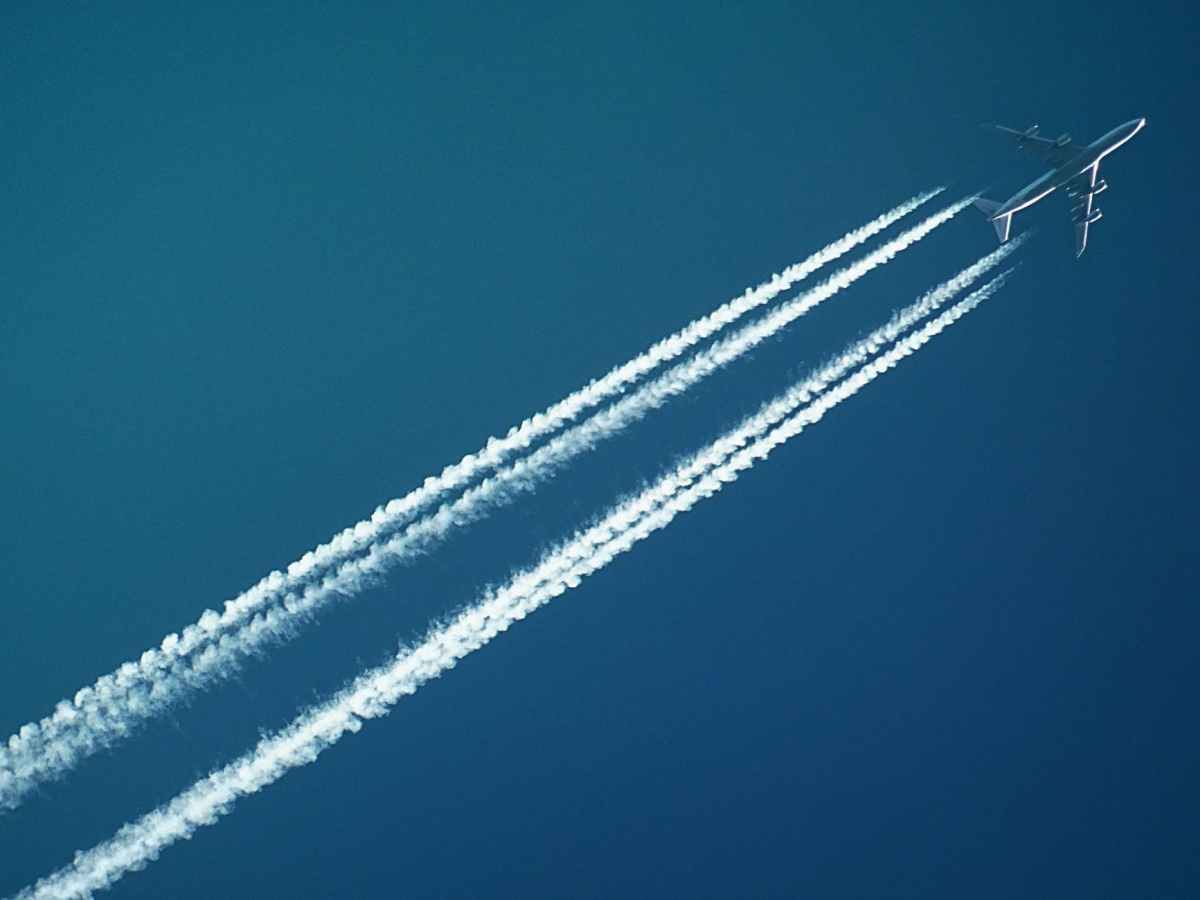
A large full moon graced the December sky early this morning. The local park was a picture of frosty ground, joggers and dog walkers, magpies and one or two wrens hopping around as the sun rose.  I looked up and slithers of cloud gave a reddish hew to the eastern sky. I remembered the farmer’s rhyme: Red in the morning, shepherds warning. Also, clear to me was the absence of aircraft streaking across the cold sky.  I’m located only a few miles north of London Gatwick airport.  Last December the same scene would have included aircraft contrails going left and right as morning flights arrived and departed London. 2020 is a year like no other.  In this pandemic year worldwide, deaths now approach 1.8 million. 

The UK left the European Union (EU) on 31 January 2020.  A Withdrawal Agreement that the UK Government agreed with the EU established a transition period that comes to an end in a couple of days.  I think many people are mighty relieved that the UK and EU reached an agreement in principle on Thursday 24 December 2020. This is about as last minute as it was possible to be in the long negotiations. 

All being well, a new agreement between the EU and UK should start from New Year’s Day, 1 January 2021.  This EU-UK Trade and Cooperation Agreement includes obligations on both parties for air transport and aviation safety. Again, many people will be mighty relieved that these topics are addressed.  In all I’ve written in this blog there’s been much speculation about the road ahead. Now, for the first time in four and a half years we have some indication of what comes next.  Like any long story, it’s not all good and its not all bad. 

There are implications for all aspects of European aviation.  In air transport, UK aircraft operators will not have the freedoms of the past. They may need to restructure to be able to offer comprehensive services to the destinations currently flown. Low-cost operator Ryanair is implementing voting restrictions on company shares owned by non-EU nationals from New Year.

It’s good to see the emphasis on cooperation[1] on aviation safety.  New dedicated committees will look at how to work together in the future.  I hope they work at a technical level and renew cooperation rather than further politicising inter-institutional relationships.  Regulatory duplication and barriers need to be avoided.  Now, practical processes and procedures must make good on the promise of close cooperation. The need to ensure implementation of aviation safety rules and regulations has not diminished.

It’s interesting to note that each party to the agreement may request consultations at any time concerning the safety standards maintained and administered by the other party in areas relating to aeronautical facilities, flight crew, aircraft and the operation of aircraft.  This suggests conditions for dealing with the immediate outcome of aircraft accidents and serious incidents but it’s not explicit.  As I found in the early days of the European Aviation Safety Agency (EASA), from 2004 a lot depends on how the relevant legal texts are interpreted. One small sentence can mean much if the parties choose to make it so.  A deal maybe agreed but this is not done. This is the start of work that can build a successful aviation system.  With good will on both sides this can happen, but it will take a decade of effort. 


[1]The Trade and Cooperation Agreement establishes the following Specialised Committees:……

(b) The Specialised Committee on Air Transport;

(c) The Specialised Committee on Aviation Safety;

Flight, Risk & Reflections 14.

The end of the transitional period of the process of UK withdrawal from the European Union (EU) is just days away. I believe most people are looking for some light at the end of the tunnel. A tunnel that we have been in since mid-2016. Now, that light looks dim. Dim as a dull cold winter’s day.     

The EU has triggered Brexit No-Deal contingency plans[1].  These plans are to ensure basic services between the UK and the EU for 6 months in 2021. Then it’s anybody’s guess what will happen.

Flying is down to levels last seen in the 1970s. This maybe joy for those who protest at aviation’s environmental footprint. But, given that aviation will be vital to power the world out of the economic crisis brought on by the COVID-19 virus, this is not good news. 

Said it before but I’ll say it again, the triple blow of a Brexit No-Deal and COVID-19 and urgent need for action on Climate Change are going to mean hair shirts years ahead. There’s a great deal of bluff from politicians but the bills keep mounting up. We cannot ignore the oncoming trains. 

Worldwide COVID-19 deaths have now topped 1.6 million[2]

In this crisis, there’s no doubt that the UK has a superbly capable science community. Within that specialist community there are world renowned experts[3]. They work in a global context.  So, the persistent echo of nationalism in politicians COVID-19 response is saddening.  Recently politicians have spoken as if the task of public safety regulation was a competition.  This is sheer folly. It undermines trust.  Ensuring either vaccines or transport systems are safe is NOT a matter for national competition.  We all have vulnerabilities and safety is only assured when we are all safe. 

The triple whammy means the UK aerospace industry is under pressure and needs strategic support from the UK Government to sustain its high value jobs. So far, a deaf ear is all they offer businesses that create prosperity across the country. 

Also, on the horizon is that the UK will be under pressure to scrap European tariffs applied to Boeing imports imposed as a result of the international dispute between Boeing and AIRBUS. The subsidy dispute was between the EU and US and so lawyers are saying the UK should step aside. Sadly, this is the sort of situation that will make Europeans seriously question future aerospace investments in the UK. 


[1] https://www.consilium.europa.eu/en/press/press-releases/2020/12/16/council-endorses-transport-contingency-measures-in-case-of-no-deal-brexit/#

[2] https://www.statnews.com/feature/coronavirus/covid-19-tracker/?utm_campaign=cv_landing

[3] https://www.bbc.co.uk/iplayer/episode/m000qdzd/panorama-the-race-for-a-vaccine

Flight, Risk & Reflections 13.

Last night, chatting about presentations and simple ways of making them better, I was reminded of: Ethos, Pathos, and Logos.  It’s ancient advice about how to persuade an audience of a point of view. The importance is to see a place for all three in a presentation. 

Looking at the day’s news, I see we are still on the brink of a deal. Negotiations drag on and on. Both EU and UK give the impression that they are stretching their negotiating mandates to try to come up with a good solution but time is ticking.

Outside of the negotiating room there remains the task of convincing different audiences that a deal is a good one. So, what of the classical three. In the UK, the media and politicians revel in Pathos. It’s almost as if the other two are consigned to be back seat drivers. For Ethos and Logos, objectivity is a must. Being honest means being factual. Arguing rationally means applying the facts.

Unfortunately, there are only a handful of places to go for that objectivity in the British media. So, it does make a difference to read the foreign media.  For some common sense, I recommend the thoughts of Julian King[1], the UK’s last European commissioner.  I agree that everybody stands to lose out with No-Deal.

This week we carry on with a multitude of unknowns. Only one thing is for sure. Life after 31st December will be different[2]

I do wish press articles would not say: “Otherwise, the U.K would have to strike individual agreements with EU countries to bypass these concerns, ……” Striking individual agreements with non-EU countries is what is happening. Striking individual agreements with EU countries will not happen. The reason for this is that for the major areas of interest the EU has competence[3].

It’s worth noting that the harmonisation of civil aviation requirements and procedures started a long time before the formation of European Union Aviation Safety Agency (EASA).


[1] https://www.irishtimes.com/opinion/brexit-the-uk-and-eu-both-need-to-put-aside-emotion-and-cut-a-deal-1.4425580

[2] https://www.politico.eu/article/5-things-to-know-about-post-brexit-aviation-airlines-eu-transition-cargo-travel-passengers/

[3] https://europa.eu/european-union/topics/transport_en

Flight, Risk & Reflections 12.

Ready for anything[1]. It’s a good position to take when no one can predict what might happen next. Such is the uncertainty that prevails. In a month and a bit, the UK Civil Aviation Authority (CAA) will be reverting to where it was when it was formed in the 1970s. All alone. Before 1972, regulation of civil aviation was the responsibility of the Air Registration Board (ARB). The CAA was established as a “modern” arms length regulator to act in the public interest. It did this successfully and drove European cooperation to become influential and highly respected.

Without agreement, being a British traveller, to and from the European Union (EU) after 1 January 2021 will not be much fun, to say the least. That said, the low levels of international travel in prospect, because of COVID-19 might well mask the full impact of new procedures and lost privileges. Although British passports will not command the seamless freedom of movement we have enjoyed for decades, there maybe some travel bargains to be had in the New Year.

Fishing is one of the roadblocks in UK-EU negotiations[2]. It would be immensely sad, and stupid if agreement on 99.9% of the issues fell based on not being able to compromise on fishing.  Aviation has the potential to lift us all out of economic gloom. Fishing will do no such thing. Publicly embracing failure is not a good strategy for a British Prime Minister (PM).

Unfortunately, the Brexit headbangers are still the Brexit headbangers.  These people exert disproportionate influence. Although it maybe politically cynical, the PM has a large majority in Parliament and the EU remains a bogyman to distract the British people from the pandemic pandemonium, so the No-Deal horse continues to run.  That tired nag should have long since been retired.

Where there is incompetence in Government, the official Opposition should be shedding light on it in Parliament. On Brexit, the largest Opposition Party in the UK is just as much in the mire as the Conservatives. Backing a lastminute deal, if negotiations succeed in coming days, maybe their final kick in the teeth to the 48%.

The UK Government is advising domestic businesses that “getting ready takes longer than you think”. Having given close attention to the last 4-years ups and downs, that warning should be applied to any discussion of British political decision-making. The wind and weather change rapidly over the British Isle and so do the ebbs and flows in and around Westminster. So, it does take a long time for a settled state to arise. Stability is much valued by aviation businesses that need to make long-term investments. Being hit by a double whammy of COVID-19 and Brexit is destroying otherwise viable aviation businesses[3]. But here we are in November 2020, still waiting for a “moment of truth”. 


[1] https://worldofaviation.com/2020/11/uk-working-to-mitigate-brexit-risks-as-deadline-looms/

[2] https://www.reuters.com/article/uk-britain-eu-fish/britain-not-accepting-eus-fish-offer-on-brexit-the-sun-idUSKBN2871EC

[3] https://twitter.com/ADSgroupUK/status/1330855509491142657?s=20

Flight, Risk & Reflections 11.

Next year, whatever happens with COVID-19 there will be a focus on limiting greenhouse gas emissions from aviation.  In a way, the virus has already had a positive environmental impact. Less efficient aircraft are being pensioned off earlier than would otherwise be.

The European Union (EU) has said it will take part in the Carbon Offsetting and Reduction Scheme for International Aviation (CORSIA) scheme from the start of its voluntary phase on 1 January 2021[1].

The COP26 United Nations (UN) climate conference will take place in a years’ time, between 1 and 12 November 2021 in Scotland[2]. All eyes will be on climate change

On the political climate, Downing Street dramas rival the most notable soap operas. That said, White House dramas still get top billing[3].  Some people raise the question: will the UK Government be more “collaborative and cooperative” after Dominic Cummings’ departure[4]?  Will UK Prime Minister (PM) Johnson now be exposed? I’m remined of the saying about being indispensable. If you think you are indispensable, get a glass of water and place your finger in it. Then remove the finger and observe the hole.

The Brexit trade talks enter another weekend with few signs of progress visible. Deadlines loom large in the volumes of commentary built on scant knowledge of what’s really going on. A crunch moment will come in the last week of November.

Some people say this PM is indecisive and will “cave in” on the UK’s relationship with the EU. I don’t think a radical change of direction is on the cards. The fundamental asks of a Tory Brexit haven’t changed. It’s a demand for privileges without the accompanying obligations. A Free Trade Area with a bigger neighbour with no constraints. Every time a constraint is mentioned the echo of sovereignty resounds around the room. It gets ridiculous as hard core Brexiters puff up their chests and say: you don’t show me no respect. 

Reality is reality. The EU would be unwise to let a powerful non-member have unfettered access to its market without contributing to the whole.  A problem with Dominic Cummings’ departure is that we are likely to see the Vote Leave people taking no responsibility what-so-ever for the world in 2021.  Instead when difficulties arise, they will apply their formidable campaigning skills to high power finger pointing. 

On the basis that the PM is an unscrupulous carpetbagger there will be a thin deal with the EU.  It will be presented as a great British success and the rest will be – work it out as you go along.   


[1] https://www.consilium.europa.eu/en/press/press-releases/2020/06/25/aviation-emissions-eu-confirms-its-participation-in-the-corsia-voluntary-phase-from-2021-and-chooses-more-ambitious-option-to-calculate-its-offsetting-requirements/

[2] https://www.gov.uk/government/news/new-dates-agreed-for-cop26-united-nations-climate-change-conference

[3] https://twitter.com/CBSNews/status/1327461255762817026?s=20

[4] https://twitter.com/standardnews/status/1327577348959514625?s=20

Flight, Risk & Reflections 10.

Today, the UK Civil Aviation Authority (CAA) ran a European Union (EU) exit webinar for aircraft Maintenance Organisations (Part-145)[1].  Negotiations between the UK and the EU on aviation safety requirements continue.  This series of UK CAA hosted webinars is to update civil aviation on what the UK may look like from 1st January 2021. 

It’s worth noting that the Chair of the UK Civil Aviation Authority, Sir Stephen Hillier[2] will be on a Royal Aeronautical Society webinar on the 19th November 2020.  Questions and comments on Brexit are sure to come up. It’s clear the UK will leave Europe’s aviation safety regulator at end of 2020.

I’m writing at a moment when the News is again sounding pessimistic about the UK-EU negotiations. The time remaining on the clock for a possible deal is running out. Once a final legal text is agreed there are still numerous parties who must read it and take it all in. 

In England, until 2 December businesses are in lockdown routine. Everyone is doing what they can to stop the spread of coronavirus. The time left to change how businesses operate and adapt to a new UK-EU relationship is ebbing away rapidly. 

Even in November, because of COVID-19 we are being told to open windows regularly to let fresh air in. One hope is that they are doing this in the rooms where the UK-EU negotiations are taking place. 

In a recent speech former UK Prime Minister (PM) John Major pointed out that Brexit set to be “more brutal than anyone expected”[3].  It doesn’t take much to see why. Given that the referendum vote was back in June 2016 it’s astonishing that UK-EU negotiations are not wrapped up by now.

My impression is that a referendum and the subsequent General Elections have put our entire political system into perpetual campaigning mode. The problem is that Governing mode and campaigning mode are not good bedfellows.  At this moment that clash is being played out inside Number 10 Downing Street. 

I’d like to sound optimistic but there’s more dismantling going on than building.  It’s easier to smash up the house than it is to build a new one.  


[1] https://info.caa.co.uk/uk-eu-transition/

[2] https://www.aerosociety.com/events-calendar/raes-webinar-brabazon-named-lecture-2020/

[3] https://www.bbc.co.uk/news/uk-politics-54879209

Flight, Risk & Reflections 9.

A month back it was said that the UK Government’s post-Brexit proposals on aviation would give Britain an unfair economic advantage[1].  There are no signs that the impasse of that time has been cleared. Far from “Getting Brexit Done” these complex negotiations drag on and on.

I’d penned a few words which have found their way to the delete folder. Now, as COVID-19 gathers pace again, the catchphrase: “We’re doomed!” comes to mind[2]. The BBC sitcom Dad’s Army and Private Frazer’s gloomy: “We’re doomed!” has become a classic moment in British comedy. As we do lock-down again, it captures the moment nicely. 

The sporadic imposition of national lockdowns and country-by-country travel restrictions have been a disaster for aviation. This crazy situation exists for both EU and non-EU States. Although the News of a potential vaccine has created buoyancy, the latest updates on the impact of the pandemic on the aviation industry makes grim reading[3]

COVID-19 is devastating the aviation and tourist industry. Add a clumsy exit to the transition period between UK and EU and it won’t just be lockdowns that keep Brits at home. That said, the more optimistic talkers in the industry big up the idea that an explosion of the desire to party will drive a return to normal air traffic levels next year. This is the upper end of the most optimistic projections.

Across the Atlantic, the fact of the matter is that the most powerful nation on Earth is going through a major transition. The Americans haven’t got over their midlife crisis – yet. Given the massive number of votes cast in the recent elections the margin of victory was surprisingly small. That’s a reminder of the Brexit referendum, here in the UK, if anything is. So, we know from experience there’s no such thing as an instant healing process. Moving to a more multilateral and outward looking vision of the world will take time. 

Meanwhile, what’s astonishing in Europe is UK Brexit supporter’s keenness to take a bad situation and make it even worse.  The UK Government’s Internal Market Bill is a perfect example of a bad apple turning a whole basket of apples bad. To its credit the UK Parliament’s House of Lords recognised the problem and addressed it. Trouble is the House of Commons is likely to ignore common sense and march ever more towards a cliff edge. 


[1] https://www.thetimes.co.uk/article/forget-brexit-deal-without-credible-guarantees-on-competition-michel-barnier-tells-uk-6zqp0bblv

[2] https://www.bbc.co.uk/programmes/b007tlxv

[3] https://www.oag.com/coronavirus-airline-schedules-data

Flight, Risk & Reflections 8.

2-years ago I wrote: “Early in the year, prudently the EU published a series of notices concerning the “No Deal” outcome.  These were stark and based upon the UK becoming a “Third Country” with a blank sheet of paper in front of it.  That’s a Country with no special arrangements with the EU.” It seems that they (EU) were very prudent

That said, let’s be optimistic. News reports are that the UK and EU have transitioned into an intensive phase of negotiations with the aim of getting a much-cherished Free Trade Agreement (FTA)[1].  Here we are coming up to the last week of October 2020. 

Although the outcome remains unclear the wisdom of being prepared for the end of the Transition Period is unquestionable[2]. Aviation has been trying to get to grips with the ups and downs of Brexit for 4-years, but this is the real crunch time. 

As I’ve commented before, the departure of the UK from the European Union Aviation Safety Agency (EASA) was unexpected only a year ago but it’s going to happen on 1 January 2021. This will mean more “red tape” and regulatory costs for UK industry, but the UK Government is unmoved in its position. 

For aircraft design, UK based Design approval holders need to apply to the UK Civil Aviation Authority (CAA) for a UK Design Organisation Approval (DOA)[3]. The UK CAA will continue to apply the European rules as set out in Regulation EU No 748/2012 that determines the rules for the certification of design organisations. Part-21 subpart J of this Regulation concerns the Design of aircraft or the associated components.

For aircraft production, UK based production approval holders are advised to apply for an EASA Third Country Production Organisation Approval (POA)[4]. The same is true for those maintenance organisations who want to work on European Member State registered aircraft.  This is an administrative procedure within EASA and so certificates will only be issued to UK organisations, all being well, after the transition period has expired. 

A lot will depend on what’s in any EU-UK aviation agreements as to any mutual acceptance or recognition of approvals.  Now, no one is able to predict the outcome of negotiations. We all must rely on statements from the UK Government and EU Commission on the latest progress of negotiations. 

To me this is a mighty strange state of affairs. If I reflect on the detailed and thoughtful groundwork done for the creation of EASA back in 2002-3, it’s as if a everything has been thrown to the four winds.  


[1] https://www.bloomberg.com/news/articles/2020-10-25/brexit-talks-extended-to-oct-28-as-u-k-indicates-optimism

[2] https://www.adsgroup.org.uk/blog/prepare-for-the-end-of-the-transition-period-with-our-brexit-webinars/

[3] https://www.caa.co.uk/Commercial-industry/Aircraft/Airworthiness/Organisation-and-maintenance-programme-approvals/EASA-Part-21/Apply-for-a-Part-21-Subpart-J-approval/

[4] https://www.easa.europa.eu/brexit-early-applications#others

Flight, Risk & Reflections 7.

Turbulence ahead. The week past has been one of more of continuous buffeting. Are we going to see a deal not? Is the door open or closed? And so, the wrangling between the UK and the EU manages to fill yet more media headlines, but no one is any the wiser. 

To repeat one of the few certainties, the United Kingdom (UK) has left the European Union (EU) and the transition period is in place until 31 December 2020.

During the week, the UK’s Transport Minister has confirmed that a No-Deal Brexit could ground UK – EU flights[1]. Although this negative scenario is unlikely the UK Government seems remarkably unconcerned about the whole subject. There’s an expectation that the EU to bring forward contingency measures to save the day[2]. More temporary measures, more uncertainty and more contraction of services. Not a good approach to take in the situation. 

Overwhelmingly, Aviation wants the UK Government to focus on reaching a Bilateral Aviation Safety Agreement (BASA) with the EU[3]

A year ago, claims were made that a UK-EU deal would be easy, in-fact that it such a deal was “oven ready”.  It’s now that we struggle to understand why the endless wrangling continues and that the No-Deal Brexit outcome is still on the table. We (UK) are tittering on the brink of the greatest failure of statecraft since the Suez Crisis in 1956.  Then with his health ruined and his political credibility brutally damaged, Sir Anthony Eden, the British Prime Minister in 1957, resigned. Will such a fate be waiting for British Prime Minister Johnson?

Johnson says the UK is primed ready for: “Australia-style terms” if a No Deal Brexit happens at the end of the year. This is pure theatrical political rhetoric designed to ratchet up tensions and appease members of the Conservative Party. It’s blatantly irresponsible nonsense since there’s no such thing as an Australian deal. 

It’s Monday and the fourth meeting of the EU-UK Joint Committee under the Withdrawal Agreement will takes place in London. No doubt the mood of this meeting will be tense. Oh to be a fly on the wall in that meeting. 


[1] https://www.cityam.com/brexit-no-deal-could-ground-uk-eu-flights-grant-shapps-admits

[2] https://euobserver.com/tickers/149765

[3] @PauleverittADS