Highways

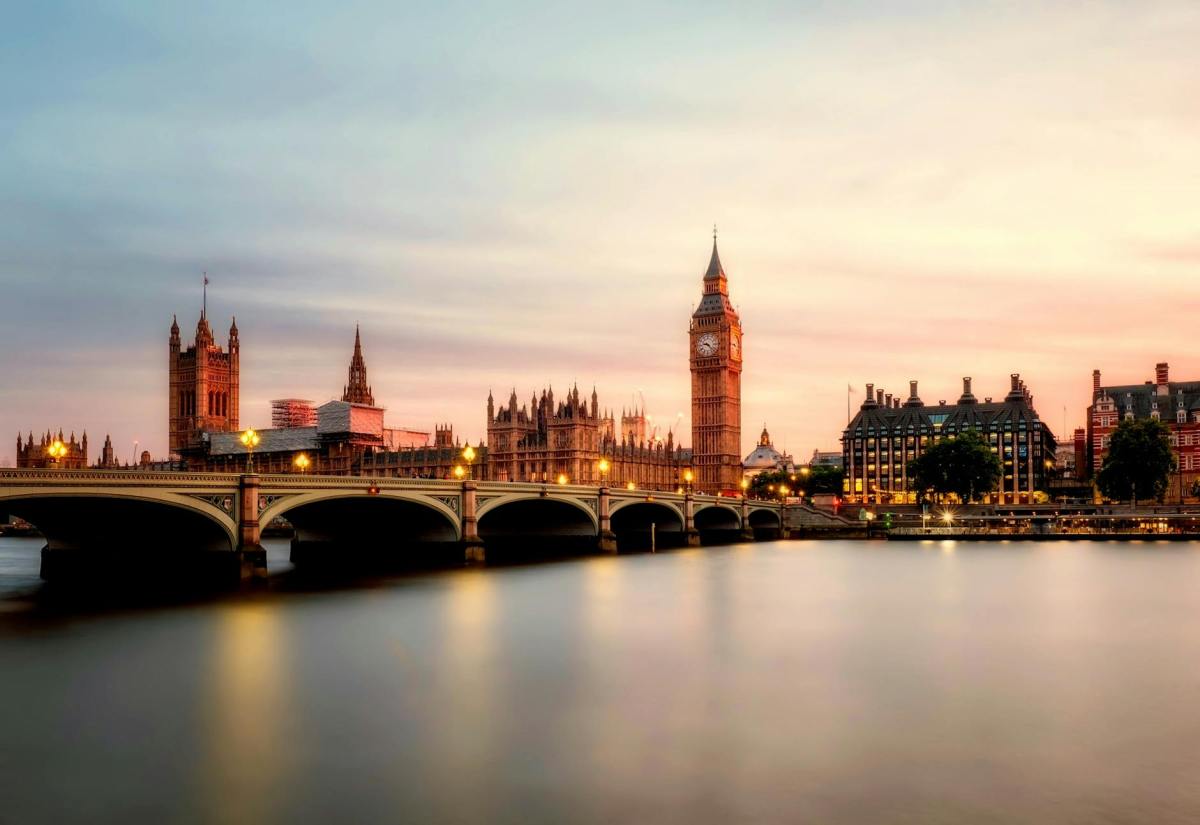
The last time I visited the city of Baltimore was in 2012. It was the location of the annual seminar of the International Society of Air Safety Investigators (ISASI)[1]. That was when I was representing the European Aviation Safety Agency (EASA) at such international events.

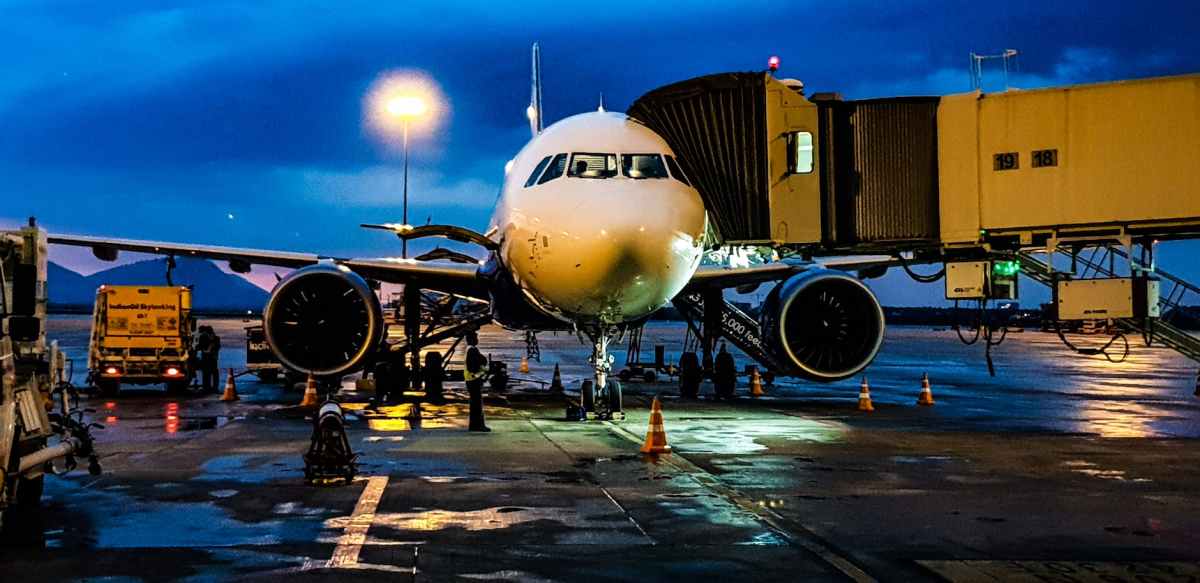
The relationship between aviation accident investigators and regulators are generally cordial. There’s a great deal of work that requires cooperation and good communication. That’s not to say that the relationships between these two vital parts of national and international aviation safety systems is easy. It’s not. My reflection on that fact is that a degree of constructive tension is inevitable and not always a bad thing.

One way of seeing that relationship is that the primary role of an investigator is to make findings to prevent the repeat of a given accident. For a regulator the primary role is to ensure the complete aviation system runs safely on a day-to-day basis. Both organisations have the public interest at their heart. However, their operational context and perspective are different.

Firstly, my condolence to the families and friends of those who perished because of the Francis Scott Key Bridge accident[2]. The collapse victims and survivors had no way of knowing what was to happen on the night of the accident. I use the word “accident”. This was not an act of God, as some commentators would have it. The safety risks involved in the operation of the port in Baltimore could be anticipated.

In the US there’s an independent federal agency that is tasked with such major investigations. Interestingly, it’s the same one as that investigates aviation accidents and incidents. The National Transportation Safety Board (NTSB) is a multi-modal organisation. That is something we don’t have in the UK. Also, we don’t have a divide between federal and state organisations. Since in the UK we have separate independent national Air, Marine and Rail investigation agencies that cover the country (England, Scotland, Wales, and Northern Ireland).

I will not comment on the accident sequence or causes. It’s the job of an independent investigation to arrive at the technical facts. Recommendations will flow from that investigation.

Where a comment may be in order is that there are many locations across the globe where a vital piece of infrastructure, like a bridge being struck by a large container ship is a possibility. I’d generalise that further. When infrastructure that was designed a built 50 years ago meets modern day operational stress there’s going to be vulnerabilities. Yes, the aviation system is not immune from this fact too. It wasn’t so long ago when I read of PDP-11 computer hardware used for air traffic control (now, historic artifacts[3]). I’m sure there are still Boeing 747s, and alike that need floppy disks to update their hardware.

So, the wider subject is operational legacy systems working with modern systems. This is the interface that requires particular care. The safety risk appetite and exposure in the 1970s/80s was quite different from that which we expect upheld today.

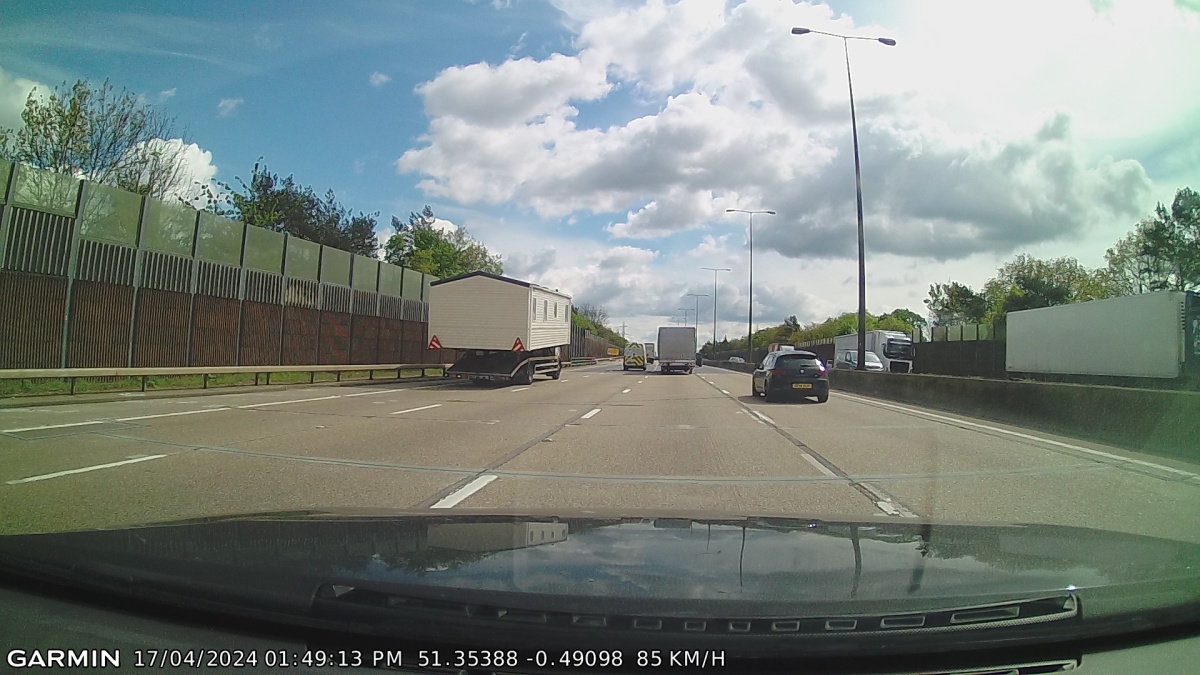
Unfortunately, society is often reluctant to revisit this subject. Additionally, there’s the incentive to go for quick fixes and sweating assets. The example I have in mind the so-called “smart motorways” in the UK[4]. I don’t know how many fatalities can be linked to “smart motorways” but I’m sure, sadly, it’s too many.

POST: In time-off I enjoyed a trip out to Fort McHenry and a walk around the places where The Wire was filmed. The Fort McHenry story is interesting given its role in times of war. The British burnt the White House but the navy didn’t get past Fort McHenry in 1812.


[1] https://www.isasi.org/

[2] https://www.bbc.co.uk/news/av/world-us-canada-68661318

[3] https://www.tnmoc.org/air-traffic-control

[4] https://www.gov.uk/government/speeches/plans-for-new-smart-motorways-cancelled

Smart

One of the most irritating peak-time adverts on British TV, now, is the one where a fake Albert Einstein wibbles on to a fake dog in a hideously fake humorous manner. It’s condescending and preachy. What on earth the Albert Einstein has to do with household energy meters I can’t imagine. His famous equation is more useful for making nuclear bombs than measuring domestic power consumption. You might think the great man was an annoying Italian computer gaming character.

The smart meter is pushed on the basis that “you can better manage your energy”. I expect that’s true in most cases when they work well. I’ve had one for some time. We recently changed energy supplier. Guess what? In the transition I had to throw away an indicator and replace it with another.

In the news are reports of defunct smart meters causing people concerning problems. Smart meter mode means a meter can automatically send readings to an energy supplier. When they don’t work, lack of meter readings opens the door to energy companies making up bill estimates often to their advantage.

When I informed our power company, I got an education that put me right. Can’t possibly call the whole system a smart meter. No, that would be wrong. So, says the company:

“The smart meter you are enquiring about is actually an In Home Display, the smart meter is the meter on the wall.”

That informative reply reminded me of the Not The Nine O’clock sketch set in a gramophone shop. Foolish householder not knowing that it’s called an In Home Display (IHD). The smart meter is installed on the wall.

I’m in support of energy saving and the role an intelligent meter can play in monitoring the use of domestic energy. What are they trying to do – put me off?

Long gone are the days when meter readers knocked on the door and with a cheery smile jotted down the gas or electricity numbers in the understairs cupboard.

Now, I see the claim is that the “vast majority” of smart meters are operating as intended. That’s good. Those words mean about 88% according to a BBC report[1]. That sounds fine but what about the 12% who are in limbo? That’s not an inconsiderable number of people.

The roll out of smart metering technology started in 2011. There’s a first-generation and second-generation set-up out there in homes. A lot of work has been done to sort out communication problems. However, network coverage is not universal. Those connection issue are familiar to anyone with even the best mobile phone.

The BBC report is right to highlight problems. There ought to be a bigger focus on a plan for maintenance of the system as much as pushing new smart meter installations.


[1] https://www.bbc.co.uk/news/articles/cz9zqn77ezno

Safety Culture 2

This may sound at variance with my last blog. I hope it’s not. I hope it’s complementary. What I’m highlighting here has been observed over decades of contact with a wide variety of organisations.

The term safety culture is fused into the pillars of ICAO Annex 19. The essence of building a good safety culture that fosters sound practices and encourages communications, in a non-punitive environment is at the heart of standards and recommended practices. With all those decades behind us the reader might assume that there’s unambiguous and well aligned attitudes and ways of working throughout the aviation industry. That’s not so.

On a spectrum of what could be called hard to soft the manner of application of know best practices can take different forms. By the way, please disassociate those two words with both easy and difficult. That’s not what I mean.

In my interpretation “hard” means like pages of Niccolo Machiavelli’s The Prince[1]. Aggressive, persistent, mandatory, uncompromising and all encompassing.

In my interpretation “soft” means like pages of The Little Book of Calm by Paul Wilson[2]. Harmonious, enlightened, progressive, sympathetic, and understanding.

As with extremes on any scale, going to the ends of that scale are not the best way to operate. I say “best” in terms of getting to ways of working to endure with engagement and effectiveness. I observe much of this depends on how power is disseminated through an organisational structure. Highly hierarchical organisations will approach culture differently from organisations with a relatively flat management system.

It may not be surprising to suggest that aviation Authorities can veer towards the “hard” approach and staff Unions towards the “soft” approach. Even when both are trying to reach the same goal. Where people come from a military background, command and control can be an instinctive reaction. Where people come from an advanced technology company background, collaboration and communication can be an instinctive reaction. In my observation there are advantages in both a hard and soft safety cultural approaches.

One advantage of a hard safety culture is that the time between discovery of a safety problem, taking corrective action and resolving that operational problem can be short. Clearly, that has distinct safety advantages. Certain airlines come to mind.

One advantage of a soft safety culture is that there can be the discovery of safety problems that would otherwise remain hidden. Where collective ownership of the problem is not in question. Again, clearly, that has distinct safety advantages too. Certain manufacturers come to mind.

I guess my message is as per much ancient thinking. All things in moderation. Try to reap the benefits of both ends of the scale. Balance.


[1] https://www.londonreviewbookshop.co.uk/stock/the-prince-niccolo-machiavelli

[2] https://www.waterstones.com/book/the-little-book-of-calm/paul-wilson/9780241257449

Safety Culture

Civil aviation remains an extremely safe means of transport. That said, any form of complacency must be addressed. It’s reassuring to say the past has been great but what passengers are most concerned about is their next flight. To have the confidence, to think it irrational to be afraid of flying, to look forward to the next journey, we must have a safe aviation system everywhere and all the time.

For any widespread system that has complex interactions between people and technology there’s never a moment when it can be taken for granted. We count the numbers, but safety is not purely an absence of accidents and incidents. Numbers counted are always past events. They have no direct causal influence on what happens next. True, there are factors in past accidents and incidents that will pop up again and again, but every flight is a unique event.

One of my colleagues who was a senior captain in a major international airline always remined me of the fact that, for all that has gone before, flight risk begins the moment an aircraft sets off down the runway with the intention getting to a destination. When the wheels lift off the ground there’s no stopping time. Reliant on the diligence, vigilance, and integrity of everyone who made a flight possible, flight risk is then in the hands of the crew.

The above is perhaps why we talk a lot about safety culture. The whole aviation family has a role to play. The care, professionalism, and watchfulness of every person makes a difference.

This can extend from the drafting of a new component for a new design, that a decade down the line. ends up as a part of an aircraft just about to leave the gate. This can go back to a flight instructors’ message that emphasised a key point back in a pilot’s initial training, years ago. This can encompass the extra care a couple of air traffic controllers took as they changed shifts.

Safety culture comes from caring. It’s that heightened awareness of the consequence of actions. Being alert to possibilities. Both the good kind, and the bad.

Safety culture is a matter for both individuals and organisations. One without the other doesn’t work. Placing a vigilant person in an organisation that doesn’t care is much like placing a reckless person in an organisation that does care. Although this is what I’ve written, systemic problems are likely the ones that are most likely to cause negative outcomes. This is where the role of management has the most impact.

Culture exists in context. When the ways people interact are determined by practices, processes, and procedures there’s an obligation on management to ensure they fit the bill. Drivers are often economic. In a commercial operation that’s no surprise. It’s when that driver displaces the safety imperative then safety suffers. There’s been several occurrences of this negative phenomena in the last year.

Unfair

That’s one way to start a note. “As a member of the post-active population”, I now feel that all the activity I now do is conveniently wrapped up as being somewhat like cosmic dark matter. It’s there in theory but no one knows what it is in fact. It’s activity that’s hidden activity.

There’s a great deal of talk about the large number of those people in their 50s, and above who have left the conventional workforce post-COVID. Unfortunately, much of it is tainted. The general implication being that the protestant work ethic runs deep and those who are not on the traditional 9-5 treadmill are letting society down. As if the only work worth counting is that which statisticians count into that magic number, namely Gross domestic product (GDP). The tyranny of an abbreviation. A great deal of useful productive and valuable activity is excluded from GDP.

Trogging off to Sunshine Deserts[1] every day, electronically or physically, and making or processing stuff and pushing rocks up hill is counted as the gold standard. This way of looking at the society is foolish. It comes from commentators being way behind the curve and politicians living life as if they were stuck in an idyllic childhood.

This way of thinking is especially true in the UK. More so than other European countries, we are dependent up charities and voluntary workers. German visitors are often struck by the number of charity shops in the UK. If you ask how palliative care, emergency services, children’s support, food banks, homeless shelters and crisis support are funded in German the response is simple – taxes.

The amount of unpaid work, like that performed in the home or by volunteers, in a massive range of organisations, is huge in the UK. That’s not wholly a bad thing. Sadly, this reality not recognised in government policy circles, other than being a way of off-loading responsibilities as funding cuts kick in. Of course, there’s politicians who turn-up for photo shoots at election time when there’s smidgen of recognition. If a charity is not in vogue or well known even those opportunities to raise funds and profile are few and far between.

All the above said, I do support the call for some education organisations that are deemed charities to lose the privileges rightly afforded to much more worthy charities. I know that’s a matter of judgement but not all fish in the sea are the same.

Often, it’s has struck me as strange that tertiary colleges (public funded education)[2] must pay Value Added Tax (VAT), but private colleges deemed to be “charities” do not. An uneven distribution of privileges is another characteristic of a way of doing things in this country.

As I understand, it what’s going on looks like this. Staff at Any Town College, where most local young people get their post-16 educational experience, order reams of paper for a printer. They pay 20% VAT. Staff at an expensive Public School, like the Prime Minister’s ex-college, order reams of paper for a printer. They don’t pay 20% VAT. That’s crazy.

No wonder growth is slow. No wonder social mobility is stifled. No wonder people are desperate for political change.


[1] https://en.wikipedia.org/wiki/The_Fall_and_Rise_of_Reginald_Perrin

[2] https://feweek.co.uk/no-plans-to-exempt-colleges-from-vat-says-treasury-secretary/

Dependency

It’s not unique. Charle Dickens wrote about it. We don’t like to admit it. We have a dependency on bureaucracy. Our complex society runs on it.

Whatever we do when it comes to the meeting of an individual with an organisation, it’s inevitable. Irrational people deny this fact or say it’s only true of public bodies, like government departments. It’s as if the generally high performance of modern computer systems renders them completely invisible.

One apt illustration of a dependency on systematic bureaucracy and digitisation combined can be read in a carefully constructed e-mail from the CEO of Sainsbury’s this weekend.

“I’m writing to update you on the technical issue that has affected our Groceries Online deliveries and some services in our stores this weekend.”

This could have come from any large complex organisation that exists in today’s digital world. When outages happen, we all sit patiently for affected systems to come back online with the full services that we normally take for granted. A sudden reversion to traditional cash transactions was a shock to the average post-COVID consumer.

This weekend my experience of one major hotel chain was that they would not accept cash at all in their restaurant. My “paper” money was useless. It sat in my pocket.

What we have is the power of utility. Systems become so good that we build ever more dependency into them doing the right thing, every time. The problem is that systems are often programmed to do certain tasks exceptionally well but as soon as there’s an unexpected deviation outside normal parameters the situation does not go well. 

An illustration of that experience can be read in the public version of the interim report on UK NATS[1]. After the event, and similar unfortunate events, there’s a cavalcade of calls for more contingency, more resilience, more planning, more training, more checking and so on.

That list is perfectly sensible. But wouldn’t it have been better if those actions had been taken up-front? I often saw this discovery in my time doing systems certification audits. Companies who spend a lot of money upfront to build software that was well characterised and tested were not guaranteed success, but their chances were greatly improved. Those who hit the road with over-confidence, marketing hype and rigorous cost cutting had a high probability of negative outcomes. It’s not a simple cause and effect but good system architecture, robust software and a management that understood the need to spend time and money judiciously do well.  

Just think. If a runner ran a marathon without a strategy, training, basic fitness, planning and sound motivation no one would expect them to be winning anything unless they were exceptionally lucky or unbelievably talented. Not many in the latter category.

There’s a lesson here. It’s been copied over and over. Saddy the almost completely invisibly of complex system that work well in everyday life means we soon take them for granted. And the result is?


[1] https://www.caa.co.uk/publication/download/21478

Transform

Watching the BBC’s Sort Your Life Out[1] is cathartic. Stacey Solomon and her team are bubbling with enthusiasm. They get in there, and in one big swoop change the lives of a family that has become trapped in their own clutter. Everyday surrounded by way too much stuff.

This is so relatable. I’m in denial. I am not a hoarder. The truth is that there’s no place on a TV programme for me but that doesn’t mean I don’t have one or two “challenges”. Even in that double negative there’s the shifting sand of denial. Just don’t look in the garage.

To transform our lives, we have just moved house. Now, over a month in the new place. That has left the job of clearing out our former house and tidying it up. One thing with clearing out the accumulation of ages is the need for a deadline. Solomon’s show has that built in. Our deadline is a floating one that can’t float for long.

This week, I got temporarily mesmerised by a pile of old newspapers. Yes, it’s down to me. For the strangest of reasons or no reason at all, I’d kept a pile of curious newspapers that went back to 2010. Events like General Elections, Budget days, disasters, the local MP’s misdemeans and the rise and fall of people in public life. A real mix of general interest.

Like Sort Your Life Out, politics in the UK is full of stories of notable names that have come and gone. One or two have been upcycled (Nick Clegg), others were recycled (Lord Cameron[2]), and some previously prominent names disappeared altogether. Acknowledging the obituaries too.

What struck me was not only the names that come and go but the rollercoaster that has been the last 14-years. Underlying that is a cycle that goes bust, boom, bust as that rollercoaster thunders along on rails that disappear into the mists.

Regarding government budgets, we have regularly been promised transformations. Chancellors who don’t promise more for less are rare. Those who deliver it are even rarer. For the most part, in aggregate, our wealth per capita is going in an unhealthy direction. I’d say government budgets are an expression of political priorities, but they are far less important than events.

What do we learn from the whirlpool of public life? One thing is that history is constantly being rewritten. In the longer term what’s said about Johnson, Farage, May, Brown, Blair, Major, Clegg, and Cameron is going to be rewritten time and time again.

Back to my comparison of Sort Your Life Out and General Elections. To quote a quote[3] that is not by Mark Twain but is commonly attributed to him: Politicians are like nappies (diapers), they should be changed regularly.

If we genuinely want transformation, we need to vote for it. In my mind, voting either Conservative or Labour amounts to more of the same.


[1] https://www.bbc.co.uk/programmes/m00116n4

[2] https://en.wikipedia.org/wiki/David_Cameron

[3] https://quoteinvestigator.com/2018/10/17/diaper/

14-years

All political parties have factions.  If the aim is to corral all liberals, social democrats, conservatives, or socialists and keep them under one roof it’s always going to be a hard job. Even as we speculate about the shelf-life of the traditional political ideologies, they remain powerful.

Liberals can be particularly difficult in this respect. It has been said that getting liberals to go in one direction is like trying to herd cats.  However, that picture is a dubious one in times when great injustices must be addressed, or a good cause strongly fires campaigning spirits.

What’s fascinating is the decline and fall of “normal” conservatism. That mild mannered compromise between self-interest, traditional values and deference has slowly fallen apart. It could be because of its poor fit with modern society but it’s more likely to be because it has ripped itself apart from within. Factions have strengthened and the core beliefs that formerly bonded people together have fractured. Brexit may have been both symptom and cause.

There’s the case that populism has been radically amplified by modern media. A crescendo of views and all we hear and see is the peaks and troughs. Anything in the middle is drowned out.

So, the current Prime Minister’s (PM), let’s remember we’ve had a few, calls for unity. It’s a trumpet sounding in an anechoic chamber. Not likely to be heard, except by himself and those standing next to him. Their smiles are professional smiles. Their hopes are forlorn.

Analogies are fun. Another one came up this week as the Parliamentary byelection results appeared. The British electorate could be compared to a sea going super tanker. That is, being big and having so much momentum, changing direction takes a long time. Once that direction has set there’s not much that can be done in the short-term. That national super tanker maybe going slightly left of centre whatever happens. Of course, a crude analogy isn’t necessarily true. It’s more of a prediction of what might happen if pivotal events do not intervene. That’s easy to say. It’s less easy to anticipate such dramatic earthshaking events.

One thing I can feel confident about is that this is not a re-run of 2019. No way. Nor is it a re-run of 1997. A vital ingredient is missing. We have no charismatic political leaders. Vision is in short supply.

Facebook has a habit of throwing up pictures from the past. One it threw my way this week was of me standing in Crawley town looking every bit a parliamentary candidate. That was 2010. I looked at the image and thought – if only I’d had some inclining of what was to come in the next 14-years.

If only I’d anticipated how badly the coalition would turn out for liberalism. If only I’d anticipated what foolish gamblers Cameron and Clegg were in thinking a national referendum would silence the Europhobic hordes. If only the Labour Party hadn’t gone on a doomed left-wing romp. If only the reality of Johnson’s unfitness for office had sunk in earlier.

Looking back provides lessons. It doesn’t predict what will happen next. We all to often get hooked on linear projections based on where we stand now. Forecasting is as much a mystery as ever it has been. That said, I think doing the maths is better than looking at the tea leaves or seaweed. A narrative for the future could read – don’t think “that’ll never happen,” think change is natures way of keeping us on our toes.

Here’s a prophecy. This one has good and bad. Long talked about and feared by those who milk the status quo, Proportional Representation (PR) will be implemented for national elections in the UK in the next 14-years. The dated model of big tent political parties will crumble. Ballot papers in years to come will have something for everyone. So, what’s bad about that transformation? Populism will not die. It will just eke out an existence in many new forms.

EVs

I do find the anti-EV campaigning on social media a bit peculiar. It’s a bit like the arguments for smoking that were made in the 1950s and 60s. Combustion engine vehicles are slowly but surely going to become history. The time for that change is the subject that should be discussed and not whether it’s a good idea or not[1].

One “argument” out there is that adding together all the elements that make-up an electric vehicle there’s a lot of environmental cost in their production. There’s no doubt that nothing is for free. For example, mining lithium and cobalt are not nice in every respect. There’s the concern that demand could quickly eat-up global supply too.

The “arguments” I’ve seen fall apart when considering not only the vehicle production environmental costs but the lifetime costs of an EV when compared with an internal combustion engine vehicle. 20-years of belching out toxic emissions stacks-up. 20-years of using renewable electricity is a far better solution. In theory the potential for recycling valuable materials is high with EVs too. However, we have yet to see if that works successfully in practice.

Other “arguments” look to demean the performance of EV’s when compared to conventional vehicles. Naturally, the time taken to recharge is one of the biggest gripes. For a conventional fuelling at a petrol station a tank can be filled with 500 miles worth of fuel in 15 minutes. For a current EV more preparation, planning and patience are needed to achieve a lesser range.

Some EV performance figures are far superior to conventional air breathing vehicles. Acceleration is one. Powerful electric motors unencumbered by complex mechanical transmission systems react immediately to demands[2]. EVs use power better.

There’s another gripe or moan and that’s about weight. Taking two comparable vehicles, in performance terms, the electric one will be heavier. That’s the technology we have now.

It’s a different kind of weight if that makes any sense. What I mean is that an EV is roughly the same weight whatever the state of the machine. Whereas a vehicle that uses liquid fuel varies in weight according the amount of fuel on-board. Of course, all vehicles vary in weight depending on the payload they carry (goods or passengers or both).

What’s a little difficult to take from the anti-EV lobby is that those who complain about EVs impacting roads, due to their weight, are rarely the same people who express concerns about heavy diesel delivery trucks or Chelsea tractors thundering down residential roads.

There’s one hazard that must be managed for all types of vehicles. A view of a serious fire involving either an EV or a conventional vehicle quickly shows what that threat can do. What we have now less experience dealing with EV fires. They can be severe and difficult to supress.

Regulation is often reactive. The fire threat is real. In this case maybe we do need fire suppression systems in integrated household garages. Multistorey car parks packed full of EVs are going to be a real challenge if a major fire sparks off. That said a fire started with a “diesel-powered vehicle” can be just as challenging[3].


[1] https://www.ft.com/video/95f86c5d-5a94-4e63-bbe8-6cc5ffb59a2b

[2] https://www.caranddriver.com/features/a38887851/why-are-evs-so-quick/

[3] https://www.bbc.co.uk/news/uk-england-beds-bucks-herts-67077996

Housing

It was astonishing to listen to a Conservative Minister this morning. My diet of News and current affairs always starts with the Today programme on BBC Radio 4. Lee Rowley MP was everything you would expect from a former management consultant turned poltico.

Basically, the man is in denial. Everything is fine and all we need is one or two tweaks. Housing problems, only happen in Labour run areas. Everything is peaches and cream. Converting offices and shops into dwellings is perfectly fine. High prices for small cubes without windows – what’s the problem?

Then Mr Rowley wiggled around in his seat when asked outright: what’s the aim? How many houses will the latest proposal delivery? The answer was evasive. It’s not about numbers so the Minister said. Policies without a measure of success or failure are like sentences without meaning. This Minister couldn’t stand on the record of Ministers gone by, so he waffled.

The Minister for Housing is the person in the UK Government responsible for national housing policy. So, after 14 years in power we might expect us, the public, to be reaping the benefits of the seeds sown at the start of a term of Government. Nothing like that is remotely true. Initiative launched now are framed as if a unique and radical new approach is being taken to improve a dire record. Ignoring that the record is that of the current Government.

I don’t want to forgive the Minister, but he has only been in the job since November last. Chopping and changing Ministers is a habit of this Conservative Government. It’s almost like they hot desk, a few weeks here and then a few weeks there. Never enough to get much done.

UK housing, planning, and building is in a poor state. The demand far outstrips supply. Prices are ridiculous. Typically, the percentage of a young person’s income spent on accommodation is horrendous. Rents are high and first-time house buyers are finding it harder and harder. Tenancies are insecure and landlords are giving up.

Although, I remember having to endure high interest rates, at least housing was affordable in the mid-1980s. On a moderate income a mortgage could be secured for about 2 to 3 times annual income. My first brick built two up, two down, was a big step but it was affordable.

I believe this is going to be a General Election issue. Or it should be. It’s time for young people to come out and vote. It’s time for their voice to be heard. It’s time for a major shake-up in the way housing is provided in the UK. Policies enacted in recent years have punished those at the bottom of the ladder.

That’s my thought for the day. Change is vital.

POST: In his BBC radio programme, Tim Harford explains the statistics used in political debate and the News. The Minister above was comparing apples and pears, as is so often the case, when talking about the social housing that has been built[1]. Comparing the period before the Conservatives came to power with the period afterwards, using different metrics is a deception.


[1] https://www.bbc.co.uk/sounds/play/m001w86h