Eurostar

More than a few times the thought that climate change will impact transport has been raised. Not so much as transport impacting climate change but the two go hand in hand. Whereas the assumptions built into roads, rails and airports were of their time, time doesn’t stand still.

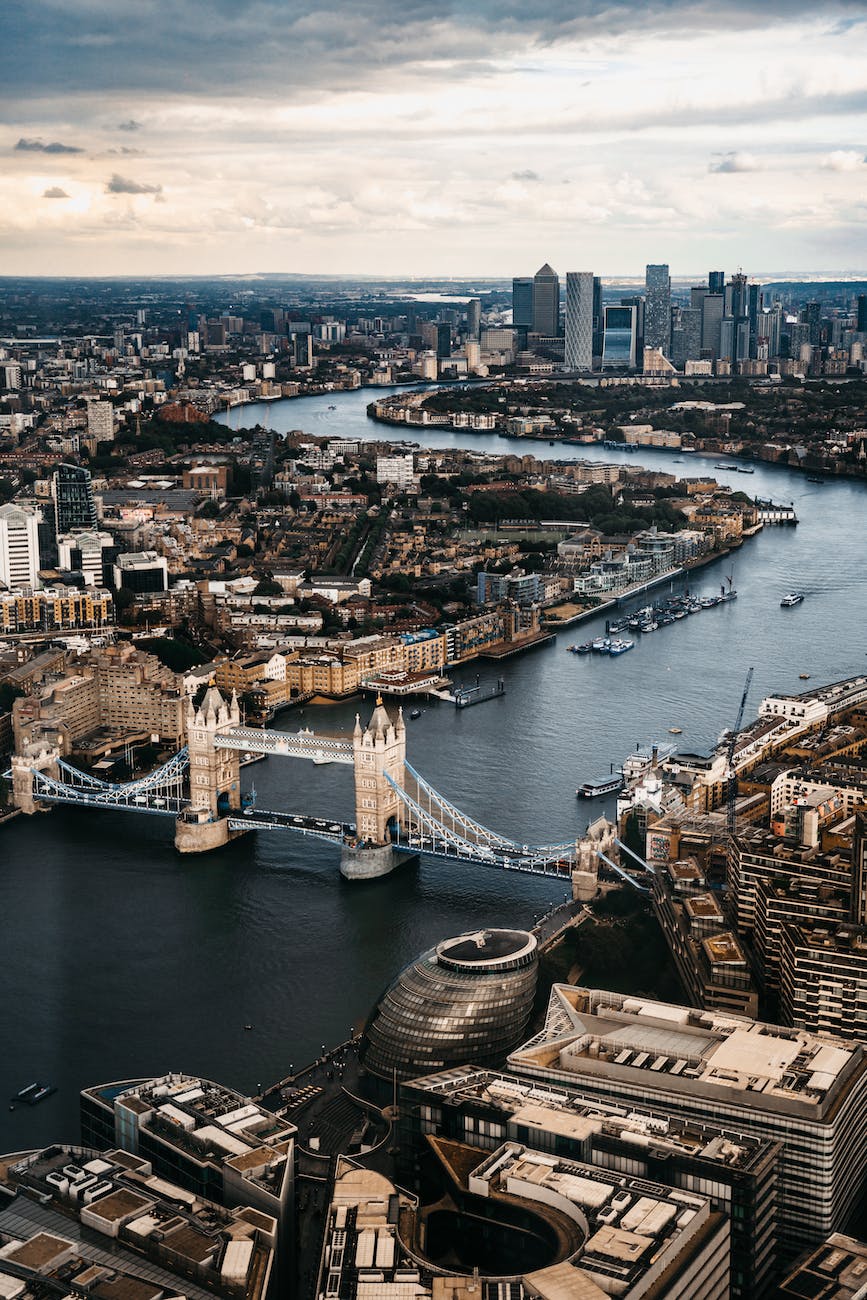
More frequent heavy rain and raised tides, and the flooding associated with them, are to be expected. To hear that the rail tracks between London and the Channel Tunnel have been underwater shouldn’t be too much of a shock. Flooding is a worldwide threat to public transport systems. In London, over the last couple of days, flooded tunnels brought travel chaos. Millions of gallons of water were not where they were supposed to be.

We can get used to disruption caused by strong winds and torrential rain sweeping across the country. The question to ask is – should we? I always wonder as soon as I see the word: “unprecedented” in a public statement. Huge volumes of water may not have been predicted to overwhelm the pumping systems designed to keep them under control, but now we know. It makes me think we are going to hear the word “unprecedented” a lot more in future.

This city centre to coastline railway is relatively new[1]. It cost £6.84 billion and opened in November 2007. Most travel commentators would say that it has been a great success. I was looking forward to the day that the German train company, Deutsche Bahn was to implement plans for a London to Frankfurt train service. Sadly, that project was shelved in 2018. I wonder why[2]? That “B” word again.

The subject of these comment, the Thames Tunnel is over 3km long. The rail lines dive beneath the river from the counties of Essex to Kent. This High-Speed rail tunnel goes under the river near Fiddler’s Reach. This part of the River Thames, much like most of the tidal river, was once busy with commercial shipping. It’s been the site of unfortunate events before[3].

Further upstream is the Thames Barrier. A truly magnificent structure. The barrier protects central London against a storm surge. It works well. However, it will eventually need to be replaced. The inexorable tide, no pun intended, is moving just one way.

Risk is a multifaceted factor: operational, economic, social, political, safety, security. Did current risk assessments foresee a likelihood of flooding? I don’t know. The safe running of High-Speed trains through underwater tunnels should be subject to risk assessment. I’m sure it is.

Eurostar has experienced a set back as 2023 comes to an end. Eurostar services are again running as normal. But this weather-related event highlights the fact that climate change will impact transport systems. If the thought has not found its way onto the desk of a civil servant, it might be as well to do a high-level audit of the nations transport infrastructure.

Either that or get used to using the word “unprecedented” a lot more.


[1] High Speed 1 (HS1) is a 109.9-kilometre high-speed railway linking London with the Channel Tunnel.

[2] https://www.independent.co.uk/news/uk/politics/london-frankfurt-cologne-train-deutsche-bahn-db-eurostar-cancelled-shelved-a8394806.html

[3] https://www.britainfromabove.org.uk/en/image/EAW143996

Next Decade Aviation

Here, I thought I’d speculate on what’s coming our way. That’s looking at the next ten-years.

Although this maybe contradictory to my earlier writings the subject is by no means all or nothing. Aviation is a technology-based means of mobility. Without the technology component there is no flight. Aviation a youthful industry when compared with ships, roads, and rail.

On the other hand, people are at the heart of the aviation system. That’s particularly true in assuring its stability, safety, and security. People create, innovate and fix systems when they fail. People make go-no go decisions. People protect systems from attack.

Commercial aviation maybe a youthful industry but it has an inbuilt conservatism. It’s the characteristic of not wishing to change when systems are working well. This has both and upside and downside.

A maturity of rules, regulations, processes, and procedures comes about by continuous improvement. By people learning. However, it’s often the case that industry does not reflect the society that it serves. People are excluded or walk away when expectations are dashed.

Across the globe, the future of the aviation workforce depends upon change. There again is a rub. People operating in a successful system rarely welcome change. Especially, if the drivers for that change come from outside the tight knit community of aviation professionals.

The first decades of the jet-age were characterised by a sense of adventure, glamour, and pride. As commercial aviation became available to a wider traveling public there was a gradual opening to professional entrants from most sections of society, even if that was predominantly male.

Now, big company traditional career paths are more an exception rather than the norm. Aviation competes with other industries at a time of rapid digital transformation. This has the impact of opening a wide range of options to potential professional entrants. In the coming decade the trend is going to advance.

A successful aviation industry organisation looks for skills and behaviours as much as it looks for raw technical talent. Assuring stability, safety, and security means having a responsible attitude, an instinct to challenge and question.

Today in the post-pandemic world, the industry is going through a period some people have called the “great resignation”. A generation have walked away from the pressure and stresses of the crisis. Industry behaviour, in a rush to cut costs, exasperated this by treating people exceptionally poorly.

For a sustainable future, commercial aviation needs to work to eliminate the hire and fire cycle. The global aviation industry needs to think and act differently. Aviation needs to get off the trap of the “similar-to-me” effect found in hiring. When a selection bias dominates potential professional entrants are put off. Talented young people are likely to choose meritocratic employment where rewards are there for achievement and commitment regardless of non-relevant factors.

Some work will be replaced by automation. However, retaining aviation people with people skills, regardless of background, will be invaluable in the next decade.

Earthrise

24th December 1968 did change everything. What was achieved in that year hasn’t been matched. An unexpected event took place on an adventure to orbit our Moon. Now, 55-years have gone by. Enormous strides have changed lives. Technology has raced ahead. We reside on a beautiful and bountifully planet. Yet, we have continued to pump massive amounts of carbon into the Earth’s atmosphere. I wonder, does this tell us anything about human nature? If there is such a thing.

The photograph called “Earthrise” was taken while the Apollo 8 spacecraft was skimming over the surface of our Moon[1]. I don’t suppose there has ever been a more significant colour photograph in human history. As one of the astronaut’s said, he could hold his thumb up at a window and mask everything and everybody alive except for the three of them in the capsule.

The Earth appeared as a swirly blue marble set in the dark emptiness of space. The image is stark. Eyes are drawn to the lush colour and liveliness of the globe. Contrasted with the darkness and vastness of space. Clouds, oceans, and landmasses all scattered across this lonely planet. At the time of the Apolo mission there was about three and a half billion inhabitants. Today, there’s eight billion people spread across the surface of the Earth.

This image has become pivotal in our thinking. So much of our debates and discussions about the future are dominated by conflict and competition for resources. When there’s the opportunity to stand back and realise that our small homeland is shared, those tensions fade, at least a little.

Fragility and, almost irrelevance, when set against the vastness of space, is our daily reality. Illuminated by the Sun, a minor star, and in just the right place for life, so we fight and war as if humanity was at the centre of the universe. That animalistic behaviour could be the route of our downfall. Only, we are doing something else to top that persistent stupidity.

What sets Earth apart? That cultivated atmosphere. Such are the interactions going on in the first 100 kilometres above the surface of the planet that a sustained healthy atmosphere exists. It takes a quick look at the images coming back from the exploratory rovers on Mars to see how alive and miraculous Earth’s atmosphere has become.

The question is, are we the generations of humans who will permanently degrade it? Presently we are struggling with the needs and desires of the eight billons of us and the realising that a balance must be struck. For one pumping massive amounts of carbon into the Earth’s atmosphere is pure idiocy. It’s even greater idiocy when we have advanced and invented technologies that mean we don’t need to do it.

COP28 may be another step on the road to sanity but we continue to struggle with the realities of our situation. A human-made climate crisis and a dramatic increase in climate related catastrophes may wake us up. Perhaps every screen saver on the planet ought to be the Earthrise image.

POST: The first such image of the Earth seen from the Moon was taken by Lunar Orbiter 1 in 1966. It was in black and white and of poor quality.


[1] https://www.smithsonianmag.com/science-nature/who-took-legendary-earthrise-photo-apollo-8-180967505/

Two upfront

One of the fundamentals that remains a part of civil aviation is having two pilots in the cockpit. It’s an indication of the safety related activities of the crew of a civil aircraft. Today, we have a mixture of human control and management. Pilots still fly hands-on when the need arises. The expectation is that throughout their working lives pilots have the competence to do so, at any stage in a flight.

Progressively, since the establishment of aviation’s international order in the 1940s the required crewing of aircraft has changed. Back in September, I visited the de Havilland Aircraft Museum in Hertfordshire. There I walked through the fuselage of a de Havilland DH106 Comet[1]. This was the first turbojet-powered airliner to go into service and it changed the experience of flying forever and a day.

That passenger aircraft, like aircraft of the time, had four crew stations in the cockpit. Two pilots, a navigator and flight engineer. It was the era when electronics consisted of valves in large radio sets and such long since forgotten devices as magnetic amplifiers. The story from the 1940s of IBM saying, “I think there is a world market for maybe five computers” is often repeated.

For modern airliners the navigator and flight engineer have gone. Their functions have not gone. It’s that having a crew member dedicated to the tasks they performed is no longer required. As the world of vacuum-tube electronics gave way to transistors and then to integrated circuits so computing got more powerful, cheaper, and abundant.

With a few significant failures along the way, commercial flying got safer and safer. The wave of change in a human lifetime has affected every mode of transport. More people travel to more places, more safely than ever could have been imagined 80-years ago. Does that mean the path ahead will take a similar shape? Excitable futurologists may paint a colourful picture based on this history.

Let’s get away from the attractive notion of straight lines on graph paper. That idea that progress is assumed to be linear. Tomorrow will be progressively “better” by an incremental advance. That’s not happening now. What we have is differential advances. Some big and some small. 

The aviation safety curve is almost flat. The air traffic curve, with a big hole made by COVID, is climbing again. The technology curve is rapidly accelerating. The environmental impact curve is troubling. The air passenger experience curve may even be at a turning point.

Touchscreen tablets already help flight preparation and management[2]. Flight plan changes can be uploaded and changed with a button press[3]. The squeezing of massive computing power into small spaces is being taken for granted. What does this leave a crew to do?

Back to the start. Two pilots in the cockpit, with executive responsibilities, remains the model that maintains public confidence in civil aviation. The golden rules still apply. Fly, navigate and communicate in that order. Crews, however much technology surrounds them, still need to act when things do not go as expected. Does this mean two cockpit crew forever? I don’t know.


[1] https://www.dehavillandmuseum.co.uk/aircraft/de-havilland-dh106-comet-1a/

[2] https://aircraft.airbus.com/en/newsroom/news/2021-02-electronic-flight-bag-the-new-standard

[3] https://simpleflying.com/datalink-communications-aviation-guide/

Flight Ahead

Although, I’m an advocate of having people in control of machines it isn’t people that are opening new opportunities in transport. Technology is racing ahead and making the past illustrations of popular science magazines become a reality. I can do without the hype in the headlines of flying cars. Building expectations of one in every garage remains a 1950s dream or nightmare, dependent upon your point of view. Aside from that hot air viable new electric vehicles are in the works.

Heavier-than-air machine that do more than buzz around our heads are going to proliferate. The inevitability of this is open to question but if I was to assign a probability to it, the number would be close to one. If we stretch our minds back to an unobserved small corner of the planet in late 1903, a couple of diligent brothers flew a machine that hopped a short distance into the air under its own power. Many newspapers of the time didn’t bother to print this breakthrough story because wise and eminent scientists had told them that it was impossible for people to fly.

It’s clear, getting into the prediction business should be done with humility.

We have a dilemma. It’s so rare of us to turn away from advancing technology when we know it can be made. It’s even more irresistible when the economics scream out buy me. So, a ticket to ride in the realm of Urban Air Mobility (UAM) will need to be no more than a typical taxi ride. Given that a taxi ride from my home to Gatwick Airport is about £20 then that’s the mark to hit. True that short journey may not be commonplace by air at that price until around 2033, a decade away, but it will be irresistible when it comes.

This chapter in air transport, that is being written is as significant as that in late 1903. I know that’s a mega statement, but the signs do point that way.

Eventually, UAM will become a network of piloted and autonomous electric air vehicles operating between cities and major destinations like airports.

Now, a couple of solvable challenges stand in the way. One is the endurance and portability of the energy storage devices. The other is complexity and mastering the science and art of functional safety. There’s plenty of confident hyperbole to suggest that these two are short-term barriers to progress. I say they are not.

Weight is one of aviation’s biggest enemies particularly on small vehicles. Batteries are expensive, heavy and require tailored control. Autonomy or the semi autonomy, needed to make the economics click is challenging systems engineering orthodoxy. Both tasks require the meticulous diligence of the Wright brothers to get past. No fanfare or flashy investor can push them aside.

Making the absolute most of energy storage technology is essential. Finding the optimal configuration of batteries, transmission and control electrics means iteration and the tolerance of a good handful of failures. The engineering of what’s becoming a system of systems, with the complexity of vehicles and the complexity of traffic management, interacting at great speed demands extensive analysis and testing.

These tasks can be accomplished. Rushing them would be foolish. That’s difficult to resist when everyone wants to be first.

Future

The road to fixing climate change is not an endless road. Today, our whole approach to climate change goes somewhat like this:

I’m not sure I’m convinced. Yeah, maybe we have a problem. We should do something. Definitely, but send me the plans, I’ll get to it, I’m busy. Time passes. What was it we should be doing? Oh yes, but that plan is for (insert a name) not me. I’m not contributing much to the problem. Anyway, there’s time between now and (insert a date).

So, we go on. There’s no doubt that there are changes needed to tackle climate change that are immensely difficult to do. Trouble is that by fixating on those difficult problems we talk ourselves out of doing the easier things. Let’s put simple actions like home insulation on the agenda again. Let’s loosen-up on our ridiculously restrictive policy on wind farms. Let’s invest in our national electrical grid to permit more connections to be made easier and quicker.

Yes, it’s advantageous for the PR companies employed by high carbon businesses to talk up difficulties and herald small gains as miracles. I mean, that’s what they are employed to do. On the other side we have PR companies employed by activists and campaigners who paint pictures of dire consequences and delinquent Governments.

I keep pointing out the dangers of populism and nationalism. The history of both is not a good one. They generally make most people poorer and a minority richer and more powerful. However, the tactics they use to gain popular appeal don’t seem to die off down the ages. A case in point is the story of Rome and Julius Caesar, as he crushed Roman democracy and seized power[1]. The chronicle is being well told on BBC 2. In the Britian, it’s often only their incompetence that halts the progress of Caesar like characters. Not mentioning any names.

To make change happen on climate change there needs to be a greater appeal to the populous. Expecting politicians to take a lead on the subject is nice in theory but wanton of hope. In our system of governance terms of office can be measured in days. Expecting neurotic politicians to step-up to a challenge that requires real long-term commitment is asking a bit much.

Campaigners will not give up on highlighting the challenges ahead. Periodically, politicians will pick-up on that campaigning fervour and try to jump on-board. However, as soon as a more immediate public concern comes along, they will jump-off.

I’m not saying that the cost-of-living crisis isn’t a number one priority. What I am saying is that a cost-of-living crisis is not an excuse to put climate policy on a dusty shelf for another few years. The road to fixing climate change is not an endless road.


[1] https://www.bbc.co.uk/programmes/p0gjlmkv

Way back

It’s easy to sound like a takeout from the four Yorkshire[1]. That emulated sketch where a group of drinking men on holiday try to upstage each other with tales of hardship. It’s beautifully comic because it ventures off into the absurd. Each man is determined to out do the other.

Back in my day. Any sentence that starts like that conjures up a man leaning on a bar in a rustic pub where time has stopped. There are people who make a speciality of reminiscence. A rambling epistle about hardship and struggle. Peppered with a contrast with the ease of contemporary living. Point being how weak and wishy-washy we are now. How enduring and mighty we were in the way back. Most of this is pure nostalgic babble. The Monty Python sketch is funny because it crosses a line. Please reprimand me severely if I cross that wobbly line. Beside it takes comic genius to write a good sketch and I’ve never claimed that ability.

However, telling stories that paint pictures of former times is a good way of setting this time in context. Change is a constant. The decades are ones of accelerating change. That can be unsettling.

This week, for inexplicable reasons my mind wandered off to my parent’s farmhouse kitchen in the mid-1960s. That’s boyhood memories. The back of house room was not quite square. At one end, two substantial painted wood doors faced each other. A draft blow under one when the outside door was open.

A standing stainless-steel sink sat between the two doors. Opposite, a thin steel framed window looked out on the farmyard. Stone walls were a couple of feet thick. That left space for a seat under the window. It was a farmer’s window. Being able to see the road and all business comings and goings from the kitchen table. Looking direct West, the evening sun would play across the yard.

On a weekday. Not a high day or a holiday. That would be a reason to light a fire in the front room. The kitchen was the warmest place in the house. A thumping great cast iron Aga[2] filled an alcove and filled the kitchen with a warmth all day and night. In winter, other parts of the house could be an ice box. Bedroom windows had as much ice on the inside as on the outside of the glass. There’s a good explanation of why the image of that kitchen is so rooted in my mind.

A large sturdy wooden kitchen table sat right in the centre of the room. It had a Formica top in a deep maroon colour. Four chunky turned legs at each corner. An eclectic mix of wheelback chairs permanently tucked in when not in use. If they weren’t, there was no squeezing around the table.

The habit of sitting in the same spot was deep-rooted in practicality. It’s as if we had assigned seating. Naturally the best place to sit was with the Aga at your back. Opposite the Aga, up against the wall was a fridge that must have come from Noah’s days. Next to that was a peculiar free-standing kitchen cabinet unit. They are sold on eBay as mid-century vintage now. Ghastly thing that today’s sellers describe as gorgeous.

One corner of the room had a beaten and battered two-seat sofa. That was a comfortable warm spot. Above it, in the wall was the remains of a bread oven. A hinged iron door was a curiosity covering nothing but cobwebs. It was an age when Linoleum remained a popular floor covering. It was a lot nicer underfoot than the flagstone floor. The flooring took such a bashing that it got replaced with more of the same when holes started to appear.

That room was the heartbeat of the farmhouse. The kitchen table played so many different parts in farm life. It could go from being a butchers block heavy with a side of pork to a desk for tidying up the paperwork. Even the kitchen cabinet unit had a draw full of Sturminster Newton market reports. Auctioneers Senior & Goodwin sent out blue printed reports listing cattle prices every week.

In the simplest way, that’s how I was first introduce to data analytics!


[1] https://en.wikipedia.org/wiki/Four_Yorkshiremen_sketch

[2] https://www.agaliving.com/

Overhead

Massive intertwining skyscrapers. Towering masts. Flying cars. Pulp magazines in the 50s and 60s had it all. Beautifully illustrated in bold colours. Sharp lines and chiselled faces. Heroic poses and streamlined transports.

Visions of the future. Idealistic imaginations of a utopian society. Don’t we just love them. That is until someone builds them in our neighbourhood. Until the bulldozers turn-up unannounced on a Sunday morning to root out the trees. The birds flee the vicinity (except the pigeons).

You can blame the draftsmen of the past if you like. In our heads there’s a disconnect between the images on a set of drawings and what that might become in concrete and steel. Grand designs are but few. A great deal of the building and planning of the last 60-years can justly be called dreadful.

We have an outcry over brutalist architecture or a lament about a Victorian park that has been paved over. Has anyone ever walked through a public car park that inspired?

If you dream it, you can make it. Nice phrase but often stifled because current technology and thinking are way behind the curve. It could be said that this is one of the drivers that pushes technology forward. The realising of dreams but who’s?

Where does the flying car fit in all this fiction and near realism? New forms of air mobility are just about to start operating.

It’s a habit of our times to jump to an instant polarised opinion. Those open toed sandalled greenies will object. Those red necked, but reforming petrol heads will welcome. That sort of stuff makes nice headlines. It’s only a basis for the crudest dialogue. Anticipate conflict and then fuel it with prejudice. Please, let’s avoid that pointless waste of time.

My thoughts are that the potential of the greater use of airborne transport is a nuanced.

Electrification is a pathway to more environmentally sustainable ways of moving around. If this helps to reduce miles of fuming traffic jams that must be good. At its best, flying can get people from point to point without having follow roads set-down at the time of the horse and cart. Accepted that concrete may be poured to create a take-off and landing zone but compare that with road building and there is no comparison.

On the more concerning side, contrast that with cluttering the skies up with fast moving machines.

In HHGTTG there’s a tale about a shoe event horizon. When gloom causes people to look down and so then buy new shoes to cheer themselves up. So, the whole economy switches to shoe production and then collapses as a result. The association with salvation coming from looking-up is there in the wit of Douglas Adams. We look up to cheer up.

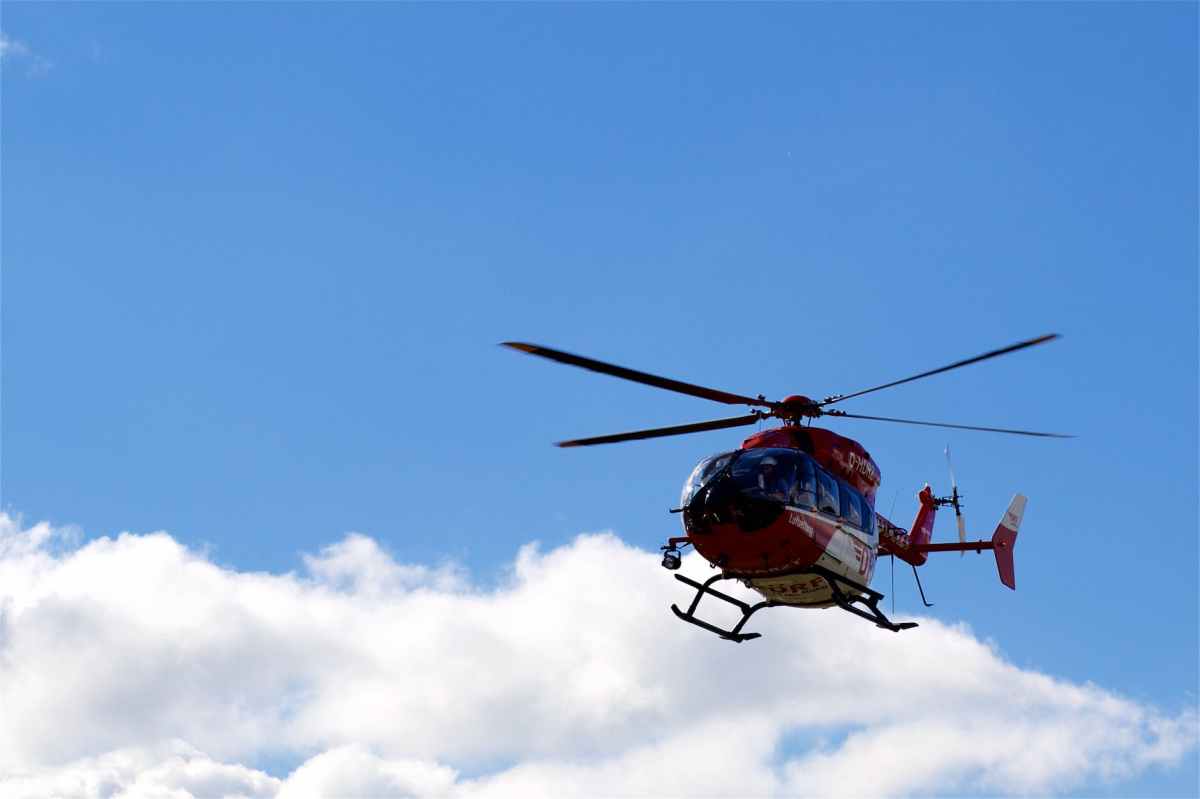
If looking up, as I do at home, to see high altitude vapour trails crisscrossing the sky, my thought is – I wonder where they are going? On the days when a light aircraft crosses the town, to or from our local airfield that doesn’t bother me. Even a noisy police helicopter keeping an eye on the traffic. That’s fine because they are solely there for our safety and security.

What will be the public reaction when we look up to see half a dozen new urban mobility vehicles buzzing past overhead? Perhaps we’ll accept new flying machines if it’s for a public service, an ambulance, fire services, police, or even newsgathering. Brightly coloured in emergency orange.

A public flying taxi service might raise a few eyebrows. A flashy private flying car, now that might be another matter altogether. There you are on a hot summer evening, in the garden, having a pleasant barbeque with friends and whiz a flying car swoops over the treetops. The passengers have their mobile phone out filming their trip. This is when fist will be raised skyward. It’s a time when you hope the next-door farmer hasn’t got a shotgun.

Today, a few pilots do get prosecuted for misbehaving when low flying private helicopters. Not often, it’s true. This happens with less than 1500 helicopters registered in the UK. What would happen with, say, 10,000 private flying cars? I wonder.

Climate

It’s an odd day that I write in agreement with The Pope in Rome. He says: “People are not responding at the level of urgency that is needed” on global climate change. The Pope has a go at a commonly held blind faith in transformative ways out of our troubles by technical innovation alone. He seems to say that we ignore reality in the hope of technological magical thinking popping-up just-in-time. His references are to the need for lifestyle changes rather than carrying on regardless.

Now, quite a number on the right of political debate will see this as a lefty intervention. Anytime religious people step over the boundaries from the ethereal into everyday life the standard conservative response is to shout – get back to the pulpit. The same response, but more polite, occurs when English bishops speak up in the UK House of Lords. I’m no advocate of them being an intrinsic part of our national political systems but they do, at least, speak from an ethical grounding[1]. If we are to talk of political long-term thinking this is very much it. There’s nothing more that prompts short-term thinking than a looming election.

Combating climate change and pushing for environmental justice are not fringe activities. It requires dialogue across the main political parties. Saddly, we are going through a phase of squandering opportunities to change. 

I agree that taking a puritan line and making “hairshirt” rules will not deliver the results that are needed. Most often such a sturdy approach just fuels luddite opposition and media outcry. Continuous graduated change and a robust commitment are needed. Unfortunately, these two are an anathema to the populist newspaper headline seekers.

Economic interests are often quoted as a reason to shelve changes. Yet, everyone knows that the costs ahead of us will be far bigger if change is not driven consistently – now. Resilient long-term policy isn’t a lefty luxury. Or liberal daydreaming. Or unafordable. It’s vital.

What’s interesting about active in-action is that there can be no such thing. Climate change will bite back. Action will have to be taken under presure. In civil aviation, for example the climate has an impact on aircraft operations. So, not only does aviation impact the environment but increasingly hazardous weather impacts aviation, with severe results in some cases. Turbulence experienced in-flight is increasing as the world is warming[2]

Approaching risks there are, at least, 3 positive actions to be taken. Eliminate it, reduce it, or mitigate it. With the climate emergency we’d better be committed to the first two because by the time we get to mitigation there’s likely to be few more unpalatable opportunities left.


[1] https://www.churchofengland.org/news-and-media/news-and-statements/bishops-warn-environmental-racism

[2] https://www.reading.ac.uk/news/2023/Research-News/Aviation-turbulence-strengthened-as-the-world-warmed

Trees 2

The story of a Sycamore has captured the imagination of a wide range of people this week.

To be frank, I’m much more a fan of the venerable Oak tree than the humble Sycamore. It’s the quintessential English tree. The Oak is the most Shakespearean of trees[1]. Even my pathetic education in English literature means I know the role played by Birnam Wood.

Again, maybe it’s my childhood. Certainly, Somerset’s farmland is peppered with old Oaks. Not as many as in the 1960s and 70s but they are still the most longstanding living organisms in the open western countryside. As far as I’m aware. Happy to be corrected on that one.

Yesterday, I wandered around under the canopy of the trees in our local park. The park has a random selection of tree species. It may have been planted with a logic. No logic is evident when wandering around. Most prolific are the Beech and Birch trees that tower, straining to reach the sunlight.

Yesterday was the last day of September. The woodland canopy’s colour is slowly changing. Leaf fall is testing the air. A few rustles underfoot and one or two falling Chestnut leaves bounce off me. Colours are mellowing. The intense green of springtime has long since faded.

I’m no wild man of the woods. To me they are more places of contemplation. It’s a contrasting atmosphere we have in our local park. I can be totally alone, except with a nod to an occasional dog walker, but only a couple hundred feet away all the noise of Saturday morning football pitches fills the air. It’s the peacefulness of a woodland cathedral with the business of life just outside its walls.

Time runs differently in woods. The rhythm of the seasons is underscored by a longer timescale. Tens of years, if not hundreds, tick away oblivious to human concerns. If left alone, a wood would make its own story of struggle, tree on tree, as the younger ones fight with their mature colleagues for space.

I did find a healthy Sycamore sapling. I felt compelled to apologies for the goings on of the week’s news. That sounds a little crazy. For a tree in the sandy soil of Surrey the fate of a distant cousin up North isn’t going to mean a lot. The point is that it made me feel better. It’s the cycle of life.

A mystical element occupies a wood[2]. There’s never a moment when our eyes and ears, sensitive to movement, are not alerted to a disturbance. However small. In our park it’s likely a squirrel. That’s no threat at all. But because our senses, however acute, can’t penetrate the depths of a wood there’s always a sense of mystery as to what’s ahead or behind.


[1] https://www.cam.ac.uk/research/features/into-the-woods-with-shakespeare

[2] https://www.thedavidhockneyfoundation.org/chronology/2008