Way back

It’s easy to sound like a takeout from the four Yorkshire[1]. That emulated sketch where a group of drinking men on holiday try to upstage each other with tales of hardship. It’s beautifully comic because it ventures off into the absurd. Each man is determined to out do the other.

Back in my day. Any sentence that starts like that conjures up a man leaning on a bar in a rustic pub where time has stopped. There are people who make a speciality of reminiscence. A rambling epistle about hardship and struggle. Peppered with a contrast with the ease of contemporary living. Point being how weak and wishy-washy we are now. How enduring and mighty we were in the way back. Most of this is pure nostalgic babble. The Monty Python sketch is funny because it crosses a line. Please reprimand me severely if I cross that wobbly line. Beside it takes comic genius to write a good sketch and I’ve never claimed that ability.

However, telling stories that paint pictures of former times is a good way of setting this time in context. Change is a constant. The decades are ones of accelerating change. That can be unsettling.

This week, for inexplicable reasons my mind wandered off to my parent’s farmhouse kitchen in the mid-1960s. That’s boyhood memories. The back of house room was not quite square. At one end, two substantial painted wood doors faced each other. A draft blow under one when the outside door was open.

A standing stainless-steel sink sat between the two doors. Opposite, a thin steel framed window looked out on the farmyard. Stone walls were a couple of feet thick. That left space for a seat under the window. It was a farmer’s window. Being able to see the road and all business comings and goings from the kitchen table. Looking direct West, the evening sun would play across the yard.

On a weekday. Not a high day or a holiday. That would be a reason to light a fire in the front room. The kitchen was the warmest place in the house. A thumping great cast iron Aga[2] filled an alcove and filled the kitchen with a warmth all day and night. In winter, other parts of the house could be an ice box. Bedroom windows had as much ice on the inside as on the outside of the glass. There’s a good explanation of why the image of that kitchen is so rooted in my mind.

A large sturdy wooden kitchen table sat right in the centre of the room. It had a Formica top in a deep maroon colour. Four chunky turned legs at each corner. An eclectic mix of wheelback chairs permanently tucked in when not in use. If they weren’t, there was no squeezing around the table.

The habit of sitting in the same spot was deep-rooted in practicality. It’s as if we had assigned seating. Naturally the best place to sit was with the Aga at your back. Opposite the Aga, up against the wall was a fridge that must have come from Noah’s days. Next to that was a peculiar free-standing kitchen cabinet unit. They are sold on eBay as mid-century vintage now. Ghastly thing that today’s sellers describe as gorgeous.

One corner of the room had a beaten and battered two-seat sofa. That was a comfortable warm spot. Above it, in the wall was the remains of a bread oven. A hinged iron door was a curiosity covering nothing but cobwebs. It was an age when Linoleum remained a popular floor covering. It was a lot nicer underfoot than the flagstone floor. The flooring took such a bashing that it got replaced with more of the same when holes started to appear.

That room was the heartbeat of the farmhouse. The kitchen table played so many different parts in farm life. It could go from being a butchers block heavy with a side of pork to a desk for tidying up the paperwork. Even the kitchen cabinet unit had a draw full of Sturminster Newton market reports. Auctioneers Senior & Goodwin sent out blue printed reports listing cattle prices every week.

In the simplest way, that’s how I was first introduce to data analytics!


[1] https://en.wikipedia.org/wiki/Four_Yorkshiremen_sketch

[2] https://www.agaliving.com/

Overhead

Massive intertwining skyscrapers. Towering masts. Flying cars. Pulp magazines in the 50s and 60s had it all. Beautifully illustrated in bold colours. Sharp lines and chiselled faces. Heroic poses and streamlined transports.

Visions of the future. Idealistic imaginations of a utopian society. Don’t we just love them. That is until someone builds them in our neighbourhood. Until the bulldozers turn-up unannounced on a Sunday morning to root out the trees. The birds flee the vicinity (except the pigeons).

You can blame the draftsmen of the past if you like. In our heads there’s a disconnect between the images on a set of drawings and what that might become in concrete and steel. Grand designs are but few. A great deal of the building and planning of the last 60-years can justly be called dreadful.

We have an outcry over brutalist architecture or a lament about a Victorian park that has been paved over. Has anyone ever walked through a public car park that inspired?

If you dream it, you can make it. Nice phrase but often stifled because current technology and thinking are way behind the curve. It could be said that this is one of the drivers that pushes technology forward. The realising of dreams but who’s?

Where does the flying car fit in all this fiction and near realism? New forms of air mobility are just about to start operating.

It’s a habit of our times to jump to an instant polarised opinion. Those open toed sandalled greenies will object. Those red necked, but reforming petrol heads will welcome. That sort of stuff makes nice headlines. It’s only a basis for the crudest dialogue. Anticipate conflict and then fuel it with prejudice. Please, let’s avoid that pointless waste of time.

My thoughts are that the potential of the greater use of airborne transport is a nuanced.

Electrification is a pathway to more environmentally sustainable ways of moving around. If this helps to reduce miles of fuming traffic jams that must be good. At its best, flying can get people from point to point without having follow roads set-down at the time of the horse and cart. Accepted that concrete may be poured to create a take-off and landing zone but compare that with road building and there is no comparison.

On the more concerning side, contrast that with cluttering the skies up with fast moving machines.

In HHGTTG there’s a tale about a shoe event horizon. When gloom causes people to look down and so then buy new shoes to cheer themselves up. So, the whole economy switches to shoe production and then collapses as a result. The association with salvation coming from looking-up is there in the wit of Douglas Adams. We look up to cheer up.

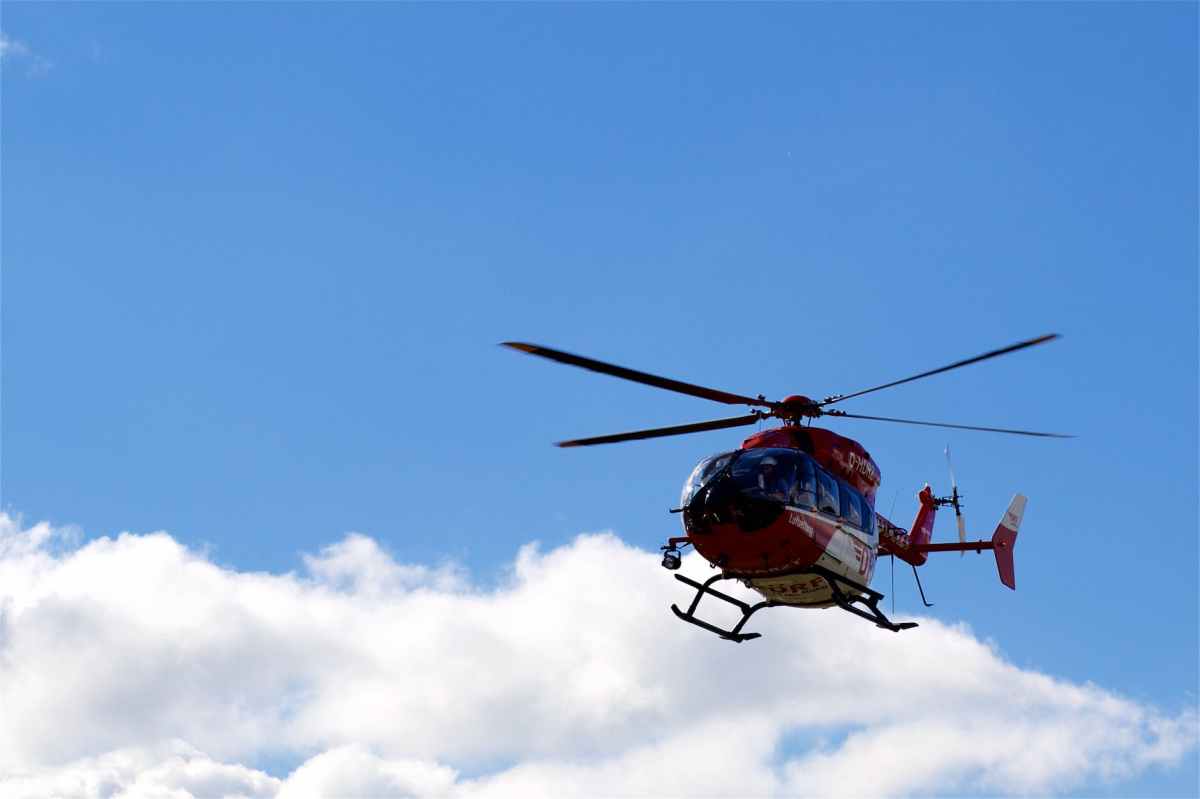
If looking up, as I do at home, to see high altitude vapour trails crisscrossing the sky, my thought is – I wonder where they are going? On the days when a light aircraft crosses the town, to or from our local airfield that doesn’t bother me. Even a noisy police helicopter keeping an eye on the traffic. That’s fine because they are solely there for our safety and security.

What will be the public reaction when we look up to see half a dozen new urban mobility vehicles buzzing past overhead? Perhaps we’ll accept new flying machines if it’s for a public service, an ambulance, fire services, police, or even newsgathering. Brightly coloured in emergency orange.

A public flying taxi service might raise a few eyebrows. A flashy private flying car, now that might be another matter altogether. There you are on a hot summer evening, in the garden, having a pleasant barbeque with friends and whiz a flying car swoops over the treetops. The passengers have their mobile phone out filming their trip. This is when fist will be raised skyward. It’s a time when you hope the next-door farmer hasn’t got a shotgun.

Today, a few pilots do get prosecuted for misbehaving when low flying private helicopters. Not often, it’s true. This happens with less than 1500 helicopters registered in the UK. What would happen with, say, 10,000 private flying cars? I wonder.

Climate

It’s an odd day that I write in agreement with The Pope in Rome. He says: “People are not responding at the level of urgency that is needed” on global climate change. The Pope has a go at a commonly held blind faith in transformative ways out of our troubles by technical innovation alone. He seems to say that we ignore reality in the hope of technological magical thinking popping-up just-in-time. His references are to the need for lifestyle changes rather than carrying on regardless.

Now, quite a number on the right of political debate will see this as a lefty intervention. Anytime religious people step over the boundaries from the ethereal into everyday life the standard conservative response is to shout – get back to the pulpit. The same response, but more polite, occurs when English bishops speak up in the UK House of Lords. I’m no advocate of them being an intrinsic part of our national political systems but they do, at least, speak from an ethical grounding[1]. If we are to talk of political long-term thinking this is very much it. There’s nothing more that prompts short-term thinking than a looming election.

Combating climate change and pushing for environmental justice are not fringe activities. It requires dialogue across the main political parties. Saddly, we are going through a phase of squandering opportunities to change. 

I agree that taking a puritan line and making “hairshirt” rules will not deliver the results that are needed. Most often such a sturdy approach just fuels luddite opposition and media outcry. Continuous graduated change and a robust commitment are needed. Unfortunately, these two are an anathema to the populist newspaper headline seekers.

Economic interests are often quoted as a reason to shelve changes. Yet, everyone knows that the costs ahead of us will be far bigger if change is not driven consistently – now. Resilient long-term policy isn’t a lefty luxury. Or liberal daydreaming. Or unafordable. It’s vital.

What’s interesting about active in-action is that there can be no such thing. Climate change will bite back. Action will have to be taken under presure. In civil aviation, for example the climate has an impact on aircraft operations. So, not only does aviation impact the environment but increasingly hazardous weather impacts aviation, with severe results in some cases. Turbulence experienced in-flight is increasing as the world is warming[2]

Approaching risks there are, at least, 3 positive actions to be taken. Eliminate it, reduce it, or mitigate it. With the climate emergency we’d better be committed to the first two because by the time we get to mitigation there’s likely to be few more unpalatable opportunities left.


[1] https://www.churchofengland.org/news-and-media/news-and-statements/bishops-warn-environmental-racism

[2] https://www.reading.ac.uk/news/2023/Research-News/Aviation-turbulence-strengthened-as-the-world-warmed

Trees 2

The story of a Sycamore has captured the imagination of a wide range of people this week.

To be frank, I’m much more a fan of the venerable Oak tree than the humble Sycamore. It’s the quintessential English tree. The Oak is the most Shakespearean of trees[1]. Even my pathetic education in English literature means I know the role played by Birnam Wood.

Again, maybe it’s my childhood. Certainly, Somerset’s farmland is peppered with old Oaks. Not as many as in the 1960s and 70s but they are still the most longstanding living organisms in the open western countryside. As far as I’m aware. Happy to be corrected on that one.

Yesterday, I wandered around under the canopy of the trees in our local park. The park has a random selection of tree species. It may have been planted with a logic. No logic is evident when wandering around. Most prolific are the Beech and Birch trees that tower, straining to reach the sunlight.

Yesterday was the last day of September. The woodland canopy’s colour is slowly changing. Leaf fall is testing the air. A few rustles underfoot and one or two falling Chestnut leaves bounce off me. Colours are mellowing. The intense green of springtime has long since faded.

I’m no wild man of the woods. To me they are more places of contemplation. It’s a contrasting atmosphere we have in our local park. I can be totally alone, except with a nod to an occasional dog walker, but only a couple hundred feet away all the noise of Saturday morning football pitches fills the air. It’s the peacefulness of a woodland cathedral with the business of life just outside its walls.

Time runs differently in woods. The rhythm of the seasons is underscored by a longer timescale. Tens of years, if not hundreds, tick away oblivious to human concerns. If left alone, a wood would make its own story of struggle, tree on tree, as the younger ones fight with their mature colleagues for space.

I did find a healthy Sycamore sapling. I felt compelled to apologies for the goings on of the week’s news. That sounds a little crazy. For a tree in the sandy soil of Surrey the fate of a distant cousin up North isn’t going to mean a lot. The point is that it made me feel better. It’s the cycle of life.

A mystical element occupies a wood[2]. There’s never a moment when our eyes and ears, sensitive to movement, are not alerted to a disturbance. However small. In our park it’s likely a squirrel. That’s no threat at all. But because our senses, however acute, can’t penetrate the depths of a wood there’s always a sense of mystery as to what’s ahead or behind.


[1] https://www.cam.ac.uk/research/features/into-the-woods-with-shakespeare

[2] https://www.thedavidhockneyfoundation.org/chronology/2008

HS2 – again

Travelled on the Elizabeth Line yesterday. It was an expensive project to build. Tunnelling under London and erecting new stations was a costly business. It was called “Crossrail”. Approval was given in 2007 and construction started in 2009[1]. In 2022, one-sixth of the UK’s total rail journeys took place on the Elizabeth Line. The billions spent were a major investment in the future. Over £18 billion in fact. It was a national demonstration that huge civil engineering projects can be undertaken and mastered[2].

As a passenger the Elizabeth Line is a pleasure to use. It’s clean, speedy, and simple to use. Comparing it to the older London Tube lines is like comparing a Tesla with a Ford Anglia[3]. Sadly, a great deal of our national rail infrastructure is trapped in the Ford Anglia era.

So, what of HS2[4]? The wibbling and wobbling that has plagued the project is sucking the energy out of the resolve needed to see through an even bigger undertaking than Crossrail. Some people argue that the billions needed for HS2 could be better spent on other projects. However, the portfolio of transport projects that are suggested as alternatives never seem to materialise.

Talk of cancellations feed the political turbulence over infrastructure investments. The impression this presents goes way beyond the shores of this country. There’s no Global Britain on show here. It’s more signals of dither and lack of determination that are publicly on display. Instability and the short-term outlook is the motif of the current generation of politicians.

If there are superior and smarter alternatives to HS2 they should have come up during the planning phase of the project. What we know about vast engineering projects is that chopping and changing them midstream adds massively to costs. It also diminishes the usefulness of the outcome.

Britain needs a backbone. A rail backbone and a political backbone. The spending on HS2 is large but that spending is in country. It’s jobs and investment onshore for the benefit of the whole country, not just the Southeast of England.

The last few years have seen that banner “levelling up” heralded by Conservative politicians. This slogan will be as nothing if HS2 is wound down or constricted. The signal will be loudly heard that all that talk of levelling up the regions of Britain was shadow boxing.

In the long-term improved connectivity across the country will be a great asset. The Victorians knew a thing or two about engineering great projects. Their legacy should give us resolve.

POST: Still it is good to see the rest of the world getting on with High Speed Rail High-speed Archives – International Railway Journal (railjournal.com)


[1] https://www.timeout.com/london/news/the-new-elizabeth-line-your-crossrail-questions-answered-052322

[2] https://www.theguardian.com/uk-news/2022/mar/13/elizabeth-line-crossrail-opening-london

[3] https://www.autoexpress.co.uk/ford/104979/ford-anglia-105e-and-123e-buying-guide-and-review-1959-1968

[4] https://www.hs2.org.uk/

Upfront

Years of looking at the reliability of aircraft components and structure have given engineers a good understanding of the natural decay of mechanical workings. To that extent even electronic components are mechanical. Materials oxidise (rust), random shocks and vibration take their toll, temperatures cycles from cold to hot and back again a whole range of impacts are relentless. You can say – nothing lasts forever.

Occasionally a discovery adds to the knowledge of how materials behave under high stress. Sadly, that’s what hit the early years of civil jet aviation. The de Havilland DH106 “Comet” was the world’s first passenger carrying jet airliner. It first took to the air in 1949, which I find remarkable.

Catastrophic metal fatigue failure of the aircraft fuselage put paid to this British aviation project but only after several tragic fatal accidents. In 1954, the Comet aircraft were all grounded during an extensive accident investigation. The jets were redesigned and re-entered commercial service in 1958. However, by then the aircraft had a damaged reputation and others were doing far better. Now, those Comet aircraft that remain are museum exhibits[1].

Last week, I walked through the fuselage of a Comet 1A built in 1953 at Hatfield for Air France. It’s fascinating to see what advanced aviation technology was 70-years ago. What was surprising to me was the read across from that first version of a jet aircraft and what we have in-service now.

Automation has removed the place of the navigator and the flight engineer, but the stations of the pilot and co-pilot are familiar. The fuselage is cramped but the seating is generous and spacious. This aircraft must have been a dramatic revolution in flying at the time.

As we look to advance aviation in the coming years, with new ways of flying and new ways of powering flight so the warning of the Comet project should be heeded. We are at a time of extraordinary changes in the aviation industry. Advanced technology can deliver great benefits to society. It’s up to us to make sure we cover all the possible disbenefits as far upfront as we can. If we don’t, they will come back to bite us.


[1] https://www.dehavillandmuseum.co.uk/aircraft/de-havilland-dh106-comet-1a/

The Week

Conversations can go in a strange direction. It’s well and good to be sceptical. I mean, questioning newspaper headlines, social media hot shots and politician’s pontifications. Lies are common enough, but everything is not a lie. My experience is that most people are honest, straightforward, and reasonable. So, yes, be sceptical but don’t think everything is a conspiracy. The evidence simply doesn’t point that way.

How did this chat kick-off? Surprise, surprise, a conversation about COVID-19. There’s no doubt that a lot of big mistakes were made in the last few years. Balance that fact with the dedication and hard work people put in to mitigating the pandemic and the suffering of those who lost loved ones. It was a crisis that most of us had never experienced. The pains and shocks were real.

When I hear someone say – it wasn’t a real pandemic, you know. Following up with – do you know who was funding the chaos? That question left me with a blank expression. Then an answer, as if this confident speaker had discovered something no one else knew – it was Bill Gates. Although I’d heard this conspiracy theory before it still left me doing a shocked double-take. How can someone be so convinced of such utter nonsense?

I’m a liberal, so I question those who follow a crowd for the sake of following the crowd. On top of that way of thinking, free speech is to be cherished. If my judgment is that the world of conspiracy theories is not new and is just part a colourful world, am I ignoring the harm that untrue utter nonsense can do? It’s a difficult dilemma. When someone gets sucked into conspiracy thinking they become chained to lies but they freely take-up those chains. Is it harmful for people to buy crystals or silver foil hats to protect themselves from the evils of 5G[1]? It certainly is nutty. Maybe, they have a right to be nutty.

Switching subjects. Thundery skies, dusty, a sweaty 25 degrees C and bright shafts of intense sunlight. Lanes full of cars, bikes, buses, trucks, and vans. The writhing unpleasantness that is the M25 motorway. That’s too mild a word. As the song by Chris Rea goes – The Road to Hell[2]. A song made for the M25 that never grows old.

Yesterday, hell was a bad place to be (Not what AC/DC wrote). Stop and go. Stop and go. It was a self-imposed torture sitting in lines of traffic on the country’s longest moving car park. Moving only as an afterthought. I did the 60 miles between the towns of Reigate and Hatfield. That’s almost 180 degrees around London’s circular motorway. From South to North. If it’s not the noisy concrete sections, then it’s the countless number of congested lanes under the Heathrow flight path that are top of my worst list. Grinding slow, mind numbing and an indictment of our failure to take the environment seriously. Transport policy is in a mess.

What’s crazy is our country’s response to this everyday transport pain. Make it bigger and wider. Carve out more of the countryside and cover it with concrete, steel and tarmac. I’m talking about the current work on the A3/M25 interchange at Wisley[3]. Heavy machinery has dug out trees and shifted massive amounts of soil to shape the land to the demands of the internal combustion engine. Add a lane. Fill up a lane. Add another lane. Fill another lane. Build a bridge but never bridge the gap. That been the way of the last 30-years and more. A monster that just keeps eating up more land.


[1] https://www.cancerresearchuk.org/about-cancer/causes-of-cancer/cancer-myths/do-mobile-phones-cause-cancer

[2] https://youtu.be/OcW-BSEB3ng

[3] https://nationalhighways.co.uk/our-roads/south-east/m25-junction-10/

Horizon

There’s been a couple of false dawns. Now, the morning’s News is that the UK will rejoin the European Horizon programme. The EU’s Horizon Europe Framework Programme (HORIZON) provides grant funding for research priority topics for the years 2021-2027.

The recognition that there’s a common interest in research across Europe is welcome. There are important areas of investigation that go well beyond the resources available to any one country. Benefiting from collaboration is a win-win.

Access to Horizon Europe will be a great opportunity for UK aerospace[1]. It has been in the past and surly will be in the future. Of the billions available there’s a good chunk for funding opportunities for aerospace research and technology. This funding is particularly focused on greening aviation.

Such subjects as the competitiveness and digital transformation in aviation are addressed too. Advancing the regions capabilities in a digital approach to aerospace design, development and manufacturing will be invaluable to UK industry. Artificial Intelligence (AI) used for Machine Learning (ML) and complex modelling are the tools that will be deployed throughout the global industrial environment.

Europe can pioneer the first hydrogen-powered commercial aircraft. The major role the UK can play in advancing this aim is self-evident. Ambition, capabilities, and expertise reside here. The magnification of this to tackle what are enormous challenges can only be a good move.

Projects like ENABLEH2[2] provide a pathway to the introduction of liquid H2 for civil aviation. These projects are not easy, but they do provide a long-term environmental and sustainability advantages. Access to these projects can minimise duplication and the dangers of spending valuable resources on pursuing blind alleys.

Research is not just a matter of hard technology. Without the new skills that are required to meet the targets for a green transition it will fail. Investments in upskilling and reskilling opportunities are equally important to enabling change.

The principles of propulsion of hydrogen and electric systems need to be taught at every level. It’s not academics in lab coats that will keep civil aviation flying on a day-by-day basis. Training programmes for a new generation of manufacturing and maintenance engineers will need to be put in place. Research will underpin that work. 


[1] https://www.ati.org.uk/news/access-to-horizon-europe/

[2] https://www.enableh2.eu/

Reform

The words: “A long time ago in a galaxy far, far away….” – who doesn’t know those words? They come to mind in my thoughts of the last few years.

I caught a “Have I Got a Bit More News for You” on TV[1] last night. I think it was only from May last year but the world it described was miles from the situation of today. By the way, I must be of a certain age given that I’m still watching TV. I put the iPhone and iPad down for ten minutes. The box in the living room still has a place even if the day they pension-off Ian Hislop and Paul Merton can’t be far off.

Fine, there was some enduring themes that just keep giving and giving. Personalities pop-up with new roles even if reputations were long since trashed. What’s moving on is that feeling of being in a post-COVID world and the good bits of the Elizabethan era. The signs saying keep a distance from the next person are fading. Discussion about QEII is now about memorials and statues.

In less than a decade, the global reputation of the UK has seen some remarkable turbulence. I’m not being romantic about some time when everything worked smoothly. It never did. Governance is a difficult business. Turbulence is a permanent feature even if it doesn’t always star in the everyday News.

What should be enduring is a frankness and ability to acknowledge when mistakes have been made. To reflect and learn from experience is a wonderful human ability. It likely that if this didn’t exist then neither would we. Every step forward that’s made is often on the backs of many failures.

The pre-2016 era, what we could call a time relative civility, fraternity, and sanity, was not immune from turbulence. What was better was the mechanisms available to address that turbulence. The space available for dialogue was much bigger.

Brexit, for our country has been the biggest blunder we have has made in a lifetime. As predicted, Brexit’s reality has made the UK a paradise for speculators, spivs, and smugglers. Brexit has imposed extra costs and border restrictions on goods. It’s wrecked freedom of movement. It’s encouraged petty finger pointing on every major difficult subject.

Brexit pledges are now broken with such regularity that it’s impossible to count them all. Whether it’s a downgrading of the environment or attacks on employment rules or fake political storms they are too numerous to mention.  

This blog started in a long time ago in a country far, far away, or at least it feels that way. My view remains that we need to be at the heart of Europe to succeed in the future. To do that we need to make some big changes at home. I’m no great fan of Rory Stewart[2] but he’s right to engage with populism and take on the need for constitutional change.


[1] https://www.bbc.co.uk/iplayer/episodes/b00877q4/have-i-got-a-bit-more-news-for-you

[2] https://www.barbican.org.uk/whats-on/2023/event/an-evening-with-rory-stewart

Learn by testing

Back in the mid-1980s, aircraft system integration was part of my stock-in-trade. Project managing the integration of a safety critical system into a large new helicopter. It was a challenging but rewarding job. Rewarding in that there was a successful new aircraft at the end of the day.

For big and expensive development projects there are a great number of risks. The technical ones focus on functionality, performance, and safety. The commercial ones focus on getting the job done on-time and at a reasonable price. Project managers are in the middle of that sandwich.

Naturally, the expectations of corporate managers in the companies that take on these big challenges is that systems and equipment integration can be done to the book. Quickly and without unexpected outcomes. The practical reality is that people must be well prepared and extremely lucky not to encounter setbacks and resets. It’s not just test failures and anomalies that must be investigated and addressed. Systems integrators are working on shifting sand. The more that is known about overall aircraft flight test performance and customers preferences so technical specifications change.

With cockpit display systems, in the early days, that was often feedback from customer pilots who called for changes to the colour, size or shape of the symbology that was displayed on their screens. What can seem a simple post-flight debriefing remark could then turn into a huge change programme.

That was particularly true of safety critical software-based systems. Equipment suppliers may have advanced their design to a state where much of the expensive design validation and verification was complete. Then a system integrator comes up with a whole set of change that need to be done without additional costs and delivered super-fast. Once a flight test programme gets going it can’t be stopped without serious implications. It’s a highly dynamic situation[1].

I’m writing this blog in reaction to the news coming from Vertical Aerospace. Their VX4 prototype aircraft was involved in an flight test incident that did a lot of damage[2]. There’s no doubt this incident can provide data to feedback into the design, performance, and safety of future versions of their aircraft[3]. Integrating complex hardware and software is hard but the rewards are great.

“Excellence is never an accident. It is always the result of high intention, sincere effort, and intelligent execution.” – Aristotle


[1] https://youtu.be/Gb_eta4mZkc

[2] https://evtolinsights.com/2023/08/vertical-aerospace-identifies-propeller-as-root-cause-of-august-9-vx4-incident/

[3] https://investor.vertical-aerospace.com/news/news-details/2023/Vertical-Aerospaces-VX4-Programme-Moves-to-the-Next-Phase/default.aspx