Star’s Law

It’s one thing to hear a report. It’s another to understand – what does it mean? Planning reform doesn’t often capture the national headlines. In this case, it’s a national celebrity that seems to be running changes in planning laws[1].

I’m more than a bit suspicious when I see the lines explaining legislation that say: “A full impact assessment has not been produced for this instrument as no, or no significant, impact on the private, voluntary or public sector is foreseen.” The word significant is purely subjective.

Like so many Statutory Instruments[2] (SIs) this subject makes for a hard read. SIs are English law that is made, not by parliamentarians debating and voting on it, but by amendments to existing law placed in front of them for a short while.

There’s no doubt that English farmers and landowners, under pressure post-Brexit, are going to be pleased by the planning alleviations offered by this new planning law. Being able to convert existing buildings into new houses, or new businesses, like farm shops, without local authorities intervening to say “no” has been dubbed – cutting red tape.

It needs to be noted that this action is being taken in the run up to a General Election (GE). For me, I see this as a two-edged sword. Sure, the name of UK Minister Michael Gove might be viewed more favourably by English farmers and landowners. That may not be the case by those people who live in the countryside adjacent to new developments.

Planning gets local people very agitated. A risk of a middle-class “civil war” is more likely to come from villagers and residents of small country towns than ever is the case from farmers. Neighbour disputes can be some of the worst disputes. I know of a case where a shotgun was used to make a point and that wasn’t by the farmer concerned. Boundaries being the issue.

Mr Gove has made a political choice. Framing the argument as cuts to “needless bureaucracy” may not be the whole picture, or even an accurate one but it does make Ministers feel good – like a sugar rush.

Converting more former agricultural buildings into dwellings or small businesses does make sense in many situations. Doing it without proper controls opens a pandora’s box of possible conflicts and disputes. Afterall the planning system is supposed to balance the rights and responsibilities of all concerned.

It’s all too easy for those in central government, heavily lobbied, to make local government the evil monster. I could say: a simple matter of power play and political expediency. Especially when the government minister making the decisions has just seen his political party devastated in local government elections.

Building more houses and shops without the need for planning permission might be a bit like that sugar rush, I mentioned. It last for a short while and then, well you know what happens.


[1] https://www.independent.co.uk/business/jeremy-clarkson-farm-shop-downing-street-b2341181.html

[2] https://www.legislation.gov.uk/uksi/2024/579/made

Harmonisation

There’s an example in of itself. I’ve used the British English spelling. Perhaps I should have standardised on the American spelling, namely Harmonization. Or does it matter at all given that the definition of the word remains the same, whatever. Oh, I can’t resist the temptation to say; you say Tomato, I say Tomato.

“You say tomato, I say tomato.

You eat potato and I eat potato,

Tomato, tomato, potato, potato,

Let’s call the whole thing off.”

Naturally, in the voice of Fred Astaire[1]. Nice though this is, my subject is not pronunciation.

Aviation is a highly regulated business. It’s been that since its potential for transporting huge numbers of people around the globe was recognised. Safety must be number one. Although, it’s not if you read the first few words of the all-important Chicago convention.

Article 1: Every state has complete and exclusive sovereignty over airspace above its territory.

In the minds of those who signed the convention it was sovereignty that took first place. That didn’t mean abusing the word “sovereignty” as has to often been done. Afterall, the whole basis of the Convention on International Civil Aviation was international cooperation. It still is.

Let’s put that to one side for a moment. One of the challenges of international aviation has been the different rules and regulations in place in each country. There’s a level of harmony in the standards of the International Civil Aviation Organization (ICAO). But ICAO is not a regulator and it’s for each country to interpret agreed standards within their domestic law.

Europe, or at least the European Union (EU) is different in this respect. Since there’s European law and an active European regulator then there’s common rules and regulation set for a regional grouping of countries. So far, Europe is the only region to go this far.

When it comes to aircraft airworthiness this has been a topic of a lot of discussion in the last four decades. In the 1990s, that discussion centred around the idea that a single worldwide code was a desirable achievement. That the time the two major entities engaged in the business of aviation rulemaking, and the maintenance of rules were the FAA (US) and the JAA (Europe).

A single worldwide code could greatly facilitate the movement of aviation produces around the globe. That done to ensure that common safety standards were maintained on every occasion. It proved hard to get to this utopian condition. That said, a great deal was achieved in the harmonisation of existing civil aviation codes. Today, we benefit from that work. I’d say we even take it for granted.

In around 2000, after much study, countries concluded that it was fine to seek some form of equivalence between respective rules rather than having to write done one single set of rules. Mutual recognition has flourished in the form of agreements between countries that has smoothed the path for the aviation industries.

That last major study of the pros and cons of harmonisation is now nearly a generation old. A lot has moved on. For one, in Europe the JAA transition to the EASA.

At the same time the manufacturing countries worked closely together to agree on measures to ensure that there was no great divergence in rules and regulations. Now subjects, like Safety Management Systems (SMS) became codified. However, sovereign countries continued to develop and maintain their own aviation rules and regulations.

International working groups often achieve remarkable commonality and convergence on detailed technical topics. Often because the few people who were deeply embedded in a technical subjects all knew each other and shared information relatively freely.

Discussion as to the viability of a single worldwide code has not completely faded into the past. In fact, there’s some good reason to breath life back into this historic debate. Here’s what’s added to the dynamics of the situation:

  1. Ongoing moves from prescriptive rules to more performance-based rules,
  2. Entirely new products in development, like eVTOL aircraft,
  3. Interdependency, interconnection, and integration all increased since 2000,
  4. Security and safety are becoming inseparable,
  5. Digitisation is changing the ways that we ensure that an aircraft is airworthy.

If you have knowledge of, and thoughts on this subject, I’d be happy to hear from you.


[1] https://youtu.be/LOILZ_D3aRg

Electrics & Mechanics

Yesterday, I wrote on LH2. The potential fuel for electric aircraft of any size. Yes, I’m not just talking about smaller commuter class transport aircraft.

Let me take some anecdotal evidence from the transition that is going on in road transport. Repairer turns up to fix an electric car that will not start. It’s a simple matter given that the car has been standing unused for a long time. The battery had discharged. A quick charge from another battery pack and all is well. Meantime in conversation it’s clear that the repairer hates working on electric cars. I could say, no surprise, they were trained on combustion engines and have been forced to make a transition in technology.

What’s evident here is the apprehension of a person who likely has a mechanical bias towards their work and the necessity to take on fixing powerful electrics. Mechanics, those who love working with moving parts, often have a dislike of electrics and electronics. It’s an engineer’s “feeling” expressed to me casually over the last 40-years.

In fact, it can be the reason that a design or maintenance engineer took the career path that they did. There is a dividing line between mechanical engineers and electrical engineers that is embedded in our institutional, educational, and training systems.

So, there’s two practical human issues to grapple with in a transition:

  1. Propensity of one branch of technically capable people to find mechanical work less fearsome and more satisfying than electrics or electronics, and
  2. Streaming that is embedded in our institutional, educational, and training systems. Qualifications and recognition are often not so multi-disciplinary focused.

I’m not for one single moment making a luddite argument that mechanical engineers[1] and electrical engineers[2] are two tribes that must be kept apart. Far from it. What’s more important is to recognise that transitions are hard.

New electric aircraft are going to demand technical people with a multiplicity of both mechanical and electrical knowledge. The way the engineering world has been divided up in the past doesn’t cut it. Some of our most cherished niches will need to be challenged.

Transitions of this nature always take much longer than is originally anticipated. In a way, that should be such a surprise. It’s a generational change for a community that can be conservative with a small “c”.

This is NOT business as usual. For example, handling powerful 1000-volt electric technology is not for everyone. Removing and replacing cryogenic plumbing is, again, not for everyone. The hazards are clear. The skills needed are clear.

Reorienting the aircraft maintenance engineering world is going to need new plans and programmes. Better start by enthusing people about the change rather than just forcing it.


[1] https://www.imeche.org/

[2] https://www.theiet.org/

Hydrogen in Aviation

The potential for LH2 (liquid hydrogen) is enormous. That’s matched by the logistical and technical difficulties in exploiting this gas’s great potential. It offers energy for a means of propulsion that is nowhere near as environmentally damaging as existing means.

Society already integrates hazardous liquids and gases into everyday life. Each one has been through several iterations. It has been a rollercoaster. Each one has been at the root of disasters, at one time or another.

  • We use gas for cooking and heating in domestic settings. Periodically explosions demolish buildings. Leaks cannot be ignored. Harm can be done.
  • We use light and heavy oils widely in transport systems. Periodically intense fires burn vehicles. Care in handling is essential. Harm can be done.

Without having to say it, both above harm the environment. The search for non-CO2 emitting ways of flying is urgent. Here, I’m writing about harm to people. Physical harm. The business of aviation safety.

Often the physical harm is not associated with the design of the systems used but to the maintenance of those systems. Naturally, there was a learning curve. If we look at early versions of those systems, fatal accidents and incidents were far more regular. So, here’s the challenge for aviation. How do we skip the dangers of the early learning phase? How do we embed rigorous maintenance practices from day one? Big questions.

On the first one of these, lots of fine minds are engaged in putting together standards and practices that will address good design. If this works, and it will be tested extensively, the chance opens for introduction to service with a great deal of confidence that the main risks will be managed.

On the second of these, there’s not much happening. You might say there’s an element of chicken and egg. The shape and form of future LH2 systems needs much more work before we can think deeply about how they will be maintained.

I think that’s wrong. It’s old-fashioned thinking. As the industry has often practiced, making the systems first and then devising ways of maintaining them while in-service. That’s yesterday’s reasoning.

Making aviation system maintenance the Cinderella in the LH2 world is to invite failure. This is a situation where advancing the consideration of how the in-service realm could work, day by day, is necessary. It’s advantageous.

Here’s my reasons.

  1. There are generic approaches that can be tested without knowing the detailed design. That can take existing learning from other industries, like chemical and space industries, and consider their application in aviation.
  2. Emerging technologies, like machine learning, coupled with large scale modelling can provide ways of simulating the operational environment before it exists. Thereby rapidly testing maintenance practices in a safe way.
  3. It’s imperative to start early given the mountain that needs to be climbed. This is particularly true when it comes to education and training of engineers, flight crew, airport and logistics staff and even administrators.

Everyone wants to accelerate environmentally sustainable solutions. When they do get to be in-service, they will be there for decades. Thus, an investment, now, in study of maintenance systems will pay dividends in the longer term. Remember, early fatal accidents and incidents can kill otherwise sound projects or at least put them back on the drawing board for a long time.

NOTE 1: I didn’t mention Liquefied Petroleum Gas (LPG). It’s in the mix. Another CO2 contributor. LPG containers have pressure relief valves. LH2 containers will likely have pressure relief valves too. That said, venting LPG is a lot more environmentally damaging than LH2. From a safety perspective they can both create explosive conditions in confined spaces. Maintenance staff may not need to carry a canary in a cage, but they will certainly need to carry gas detectors when working on LH2 powered aircraft. Our noses will not do the job.

NOTE 2: Events on the subject: https://www.iata.org/en/events/all/iata-aviation-energy-forum/

https://events.farnboroughinternational.org/aerospace/sustainable-skies-world-summit-2024

2024 ICAO Symposium on Non-CO₂ Aviation Emissions

Mindset

Safety is a mindset. Having a sense of risks and which ones to accept and which to reject is something we all develop. It’s a big part of childhood. Most of us have had burns, cuts or bruises that have resulted in doing something we would now consider having been stupid.

Some are destined to be over-cautious, and others are more openly adventurous. In time, we settle around a frame of thinking that suites us best. That’s fine in so far as taking personal risk is concerned. Whether to cross the street every time you see a mean looking dog or to buy a powerful motorcycle later in life that’s a personal preference.

Where activities, positive or negative only impact the risk taker then that’s an area where society shouldn’t be too heavy handed. Naturally, there are boundaries. The classic one is motorcycle crash helmets. Mandating them led to a lot of heated debate. Yes, we are discussing a personal risk in respect of the rider but the risk to society is an unacceptable number of fatalities, brain injuries and publicly borne health care costs.

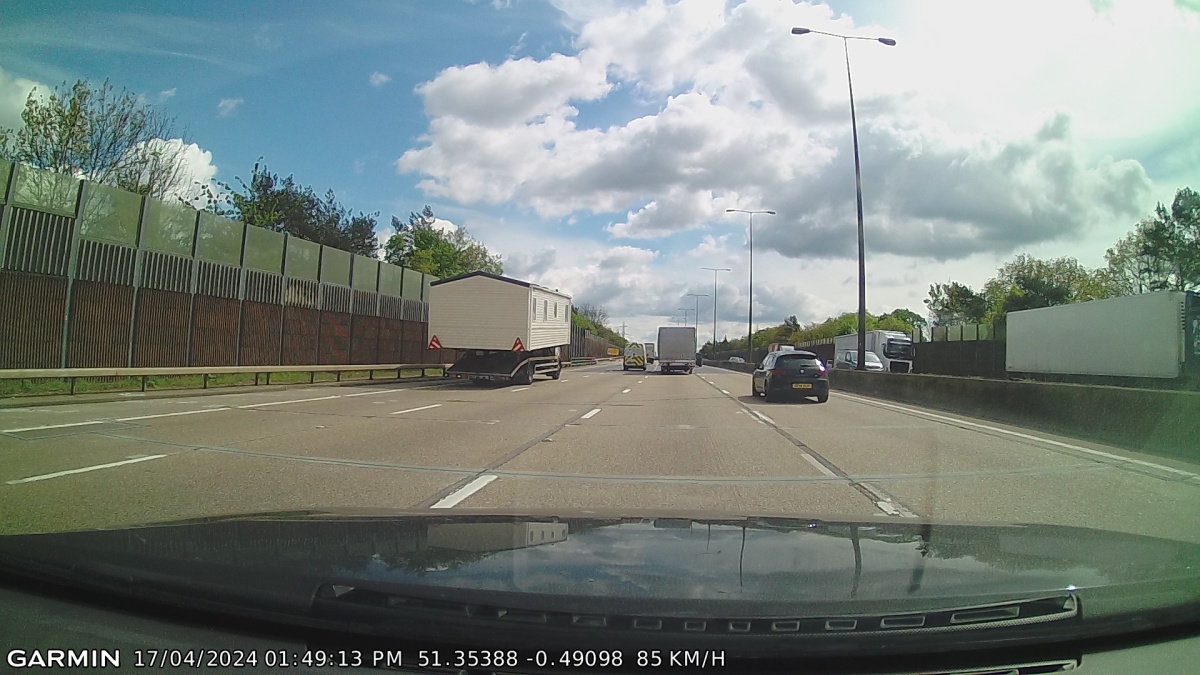
There I was, driving at less than the regulation speed (yes, I was) eastward on the M25 motorway. The details are stamped on a picture taken by my neat little Garmin dashcam. What’s in the picture? It’s a moveable building sitting on the back of a lorry. Nothing unusual about a lorry transporting stuff from A to B. What I saw was a large building on a relatively small lorry. When first seeing something like this on a busy road, my instinct is to give it a very wide margin.

The rectangular building was rocking gently. It was not a windless day. Not overly windy but a strong gusty breeze was blowing. Clear skies and dry tarmac. So, good driving conditions for a normal lorry with a normal load on a normal day. I’d estimate that this lorry was doing about 80km/hr. It wouldn’t be too difficult to do the sums in terms of the wind resistance of the building. It’s going to be significant. A large flat surface being pushed through the air at motorway speeds. As for sidewinds and gusts, this is a horrendous monster.

Back to safety being a mindset. My thought was – what on earth gave the carriers the idea that this arrangement for a wide load was a safe one for a motorway journey? No escort vehicle. No flashing lights. Just a couple of small red triangles. The straps and wooden blocks holding the load in place looked feeble. A powerful gust of wind on an exposed stretch of road and who knows what would have happen next. It wouldn’t have been pretty. I hope they got to their destination without incident.

Had this been done on private land then there would have been little public risk. Being done on a busy motorway – that’s a different matter. How do people convince themselves that such transport arrangements will be fine? I speculate:

  • Money. Maybe the haulage contractor undercut rivals to get the job. Maybe using a small lorry and ditching any escort vehicle saved money. Maybe there was time pressure and this was all that was available.
  • Bravado: A carrier imagines they have special skills and abilities so they can take risks that others would not take. Something uniquely puts them above others in the field. This cock-sure attitude is not uncommon.
  • Short Cuts. I’ve heard this argument used before – we did it last time and it worked, so we’ll do it again. That learned deviance is the source of many accidents. Past and present can have very different outcomes.
  • Shoulder shrugging: I’ve heard this argument used too – it’s legal, it’s within the rules so it can’t be wrong, can it? (The load maybe within the approved weight limits for the lorry. There may be no explicit rule on shape and size).

A good safety mindset means saying “no” when no is the right answer. All three of the above points can come into play and produce a toxic mix. Such is the way accidents happen. It doesn’t have to be this way but it often is. Before a critic says don’t be so high and mighty – yes, I’ve done foolish things too.

NOTE: The loading rules HGV maximum weights – GOV.UK (www.gov.uk)

AAM

This week, I watched an FAAs Advanced Air Mobility (AAM) webinar[1]. The subject was community engagement. AAM could be air taxies but it’s many uses of the new electric aircraft that are becoming a reality. The term eVTOL is used for those aircraft that have the capability of vertical flight. My reflection is that there are several aspects of AAM that need much more attention. Naturally, I’m taking the discussion of what’s going on in the US and thinking about it in relation to the UK.

  • Land Use Planning

Generally, National Aviation Authorities (NAAs) are consultees when it comes to land use planning. They do not determine planning applications. NAAs may well have set out policies and guidance on the subject but they will not be determining the site of vertiports.

It seems to me that there’s little chance that eVTOL aircraft routes will be established without sufficient community consent.  Community engagement has been appropriately recognised as essential. The aspects in play are like those for existing aerodromes. Often for AAM applications proposals are for the use of new locations, hence a concern. Anytime there’s a serious proposal for a new aerodrome the opposition is up and running long before the proposers have got their act together.

The subject is complicated by the mix of public and private ownership of infrastructure. If the intention is to interconnect AAM with other transport services (bus/train/boat/road), then complicated agreements are going to be inevitable. It’s not just about buildings and tarmac but having a trained workforce available is a location dependent issue too.

  • Business Models

I’m about to sound as if I’m securitising the plans of a contestant on The Apprentice[2]. There are plenty of way of losing money in commercial aviation. It’s been a well-practiced art over the years. Great ideas fall by the wayside after huge amounts of money have been expended. Customers are key. People must want to fly the routes available, time and time again. And like London Black Cabs be prepared to pay the fare. Given the relatively small cabin sizes that are on offer these people are likely to be moderately prosperous groups or individuals.

Regular schedules air services can produce a reliable income. Airport-to-airport connections seem like a good bet. Problem there is the conveyancing of weighty luggage. Busy airspace could be a challenge too. That said, with tens of thousands of people at both ends of a route, no doubt some people will choose a comfortable, speedy direct connection.

There are good possibilities for major event driven transport services. Getting to and from a motor race or horse race event or a concert or festival can be hell when tens of thousands of people are all trying to get to and from a location or venue. The numbers may well stack-up to make eVTOL a premium way of dodging the crowds in an environmentally sound way.

  • Batteries, Batteries, Batteries

Everything in respect of aircraft performance depends on power density. How much oomph can you get out of a small, light weigh physical space. Recharge and go. Do it, again and again. It’s as simple as that. Not only that but aircraft battery packs must be affordable and available. Whizzy technology that cost a mountain of cash and can only be use for a few hundred cycles is no use at all.

Power distribution infrastructure must be up to the job too. Who will pay for this is up for grabs. There’s a good case for public funding given that there are multiple uses of enhanced electrical supply. Given the monopolistic nature of power generation and distribution this will not be easy or quick.

That’s only three issues that require a great deal of attention. Not the attention of researchers. Not the attention of academics, Not the attention of political policy wonks. Connecting entrepreneurs and public bodies needs practical stimulus. The possibilities are exciting.


[1] https://youtu.be/1sfVuJlPQoY

[2] https://www.independent.co.uk/arts-entertainment/tv/news/the-apprentice-2024-winner-pies-b2531331.html

Highways

The last time I visited the city of Baltimore was in 2012. It was the location of the annual seminar of the International Society of Air Safety Investigators (ISASI)[1]. That was when I was representing the European Aviation Safety Agency (EASA) at such international events.

The relationship between aviation accident investigators and regulators are generally cordial. There’s a great deal of work that requires cooperation and good communication. That’s not to say that the relationships between these two vital parts of national and international aviation safety systems is easy. It’s not. My reflection on that fact is that a degree of constructive tension is inevitable and not always a bad thing.

One way of seeing that relationship is that the primary role of an investigator is to make findings to prevent the repeat of a given accident. For a regulator the primary role is to ensure the complete aviation system runs safely on a day-to-day basis. Both organisations have the public interest at their heart. However, their operational context and perspective are different.

Firstly, my condolence to the families and friends of those who perished because of the Francis Scott Key Bridge accident[2]. The collapse victims and survivors had no way of knowing what was to happen on the night of the accident. I use the word “accident”. This was not an act of God, as some commentators would have it. The safety risks involved in the operation of the port in Baltimore could be anticipated.

In the US there’s an independent federal agency that is tasked with such major investigations. Interestingly, it’s the same one as that investigates aviation accidents and incidents. The National Transportation Safety Board (NTSB) is a multi-modal organisation. That is something we don’t have in the UK. Also, we don’t have a divide between federal and state organisations. Since in the UK we have separate independent national Air, Marine and Rail investigation agencies that cover the country (England, Scotland, Wales, and Northern Ireland).

I will not comment on the accident sequence or causes. It’s the job of an independent investigation to arrive at the technical facts. Recommendations will flow from that investigation.

Where a comment may be in order is that there are many locations across the globe where a vital piece of infrastructure, like a bridge being struck by a large container ship is a possibility. I’d generalise that further. When infrastructure that was designed a built 50 years ago meets modern day operational stress there’s going to be vulnerabilities. Yes, the aviation system is not immune from this fact too. It wasn’t so long ago when I read of PDP-11 computer hardware used for air traffic control (now, historic artifacts[3]). I’m sure there are still Boeing 747s, and alike that need floppy disks to update their hardware.

So, the wider subject is operational legacy systems working with modern systems. This is the interface that requires particular care. The safety risk appetite and exposure in the 1970s/80s was quite different from that which we expect upheld today.

Unfortunately, society is often reluctant to revisit this subject. Additionally, there’s the incentive to go for quick fixes and sweating assets. The example I have in mind the so-called “smart motorways” in the UK[4]. I don’t know how many fatalities can be linked to “smart motorways” but I’m sure, sadly, it’s too many.

POST: In time-off I enjoyed a trip out to Fort McHenry and a walk around the places where The Wire was filmed. The Fort McHenry story is interesting given its role in times of war. The British burnt the White House but the navy didn’t get past Fort McHenry in 1812.


[1] https://www.isasi.org/

[2] https://www.bbc.co.uk/news/av/world-us-canada-68661318

[3] https://www.tnmoc.org/air-traffic-control

[4] https://www.gov.uk/government/speeches/plans-for-new-smart-motorways-cancelled

Dependency

It’s not unique. Charle Dickens wrote about it. We don’t like to admit it. We have a dependency on bureaucracy. Our complex society runs on it.

Whatever we do when it comes to the meeting of an individual with an organisation, it’s inevitable. Irrational people deny this fact or say it’s only true of public bodies, like government departments. It’s as if the generally high performance of modern computer systems renders them completely invisible.

One apt illustration of a dependency on systematic bureaucracy and digitisation combined can be read in a carefully constructed e-mail from the CEO of Sainsbury’s this weekend.

“I’m writing to update you on the technical issue that has affected our Groceries Online deliveries and some services in our stores this weekend.”

This could have come from any large complex organisation that exists in today’s digital world. When outages happen, we all sit patiently for affected systems to come back online with the full services that we normally take for granted. A sudden reversion to traditional cash transactions was a shock to the average post-COVID consumer.

This weekend my experience of one major hotel chain was that they would not accept cash at all in their restaurant. My “paper” money was useless. It sat in my pocket.

What we have is the power of utility. Systems become so good that we build ever more dependency into them doing the right thing, every time. The problem is that systems are often programmed to do certain tasks exceptionally well but as soon as there’s an unexpected deviation outside normal parameters the situation does not go well. 

An illustration of that experience can be read in the public version of the interim report on UK NATS[1]. After the event, and similar unfortunate events, there’s a cavalcade of calls for more contingency, more resilience, more planning, more training, more checking and so on.

That list is perfectly sensible. But wouldn’t it have been better if those actions had been taken up-front? I often saw this discovery in my time doing systems certification audits. Companies who spend a lot of money upfront to build software that was well characterised and tested were not guaranteed success, but their chances were greatly improved. Those who hit the road with over-confidence, marketing hype and rigorous cost cutting had a high probability of negative outcomes. It’s not a simple cause and effect but good system architecture, robust software and a management that understood the need to spend time and money judiciously do well.  

Just think. If a runner ran a marathon without a strategy, training, basic fitness, planning and sound motivation no one would expect them to be winning anything unless they were exceptionally lucky or unbelievably talented. Not many in the latter category.

There’s a lesson here. It’s been copied over and over. Saddy the almost completely invisibly of complex system that work well in everyday life means we soon take them for granted. And the result is?


[1] https://www.caa.co.uk/publication/download/21478

EVs

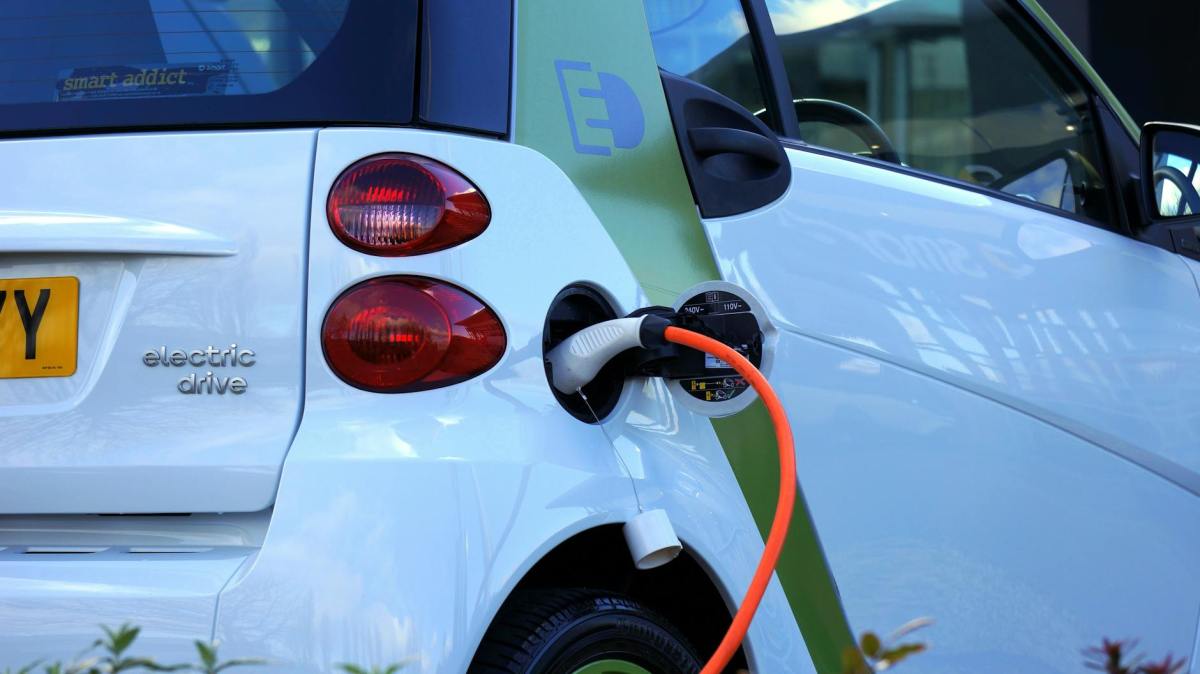
I do find the anti-EV campaigning on social media a bit peculiar. It’s a bit like the arguments for smoking that were made in the 1950s and 60s. Combustion engine vehicles are slowly but surely going to become history. The time for that change is the subject that should be discussed and not whether it’s a good idea or not[1].

One “argument” out there is that adding together all the elements that make-up an electric vehicle there’s a lot of environmental cost in their production. There’s no doubt that nothing is for free. For example, mining lithium and cobalt are not nice in every respect. There’s the concern that demand could quickly eat-up global supply too.

The “arguments” I’ve seen fall apart when considering not only the vehicle production environmental costs but the lifetime costs of an EV when compared with an internal combustion engine vehicle. 20-years of belching out toxic emissions stacks-up. 20-years of using renewable electricity is a far better solution. In theory the potential for recycling valuable materials is high with EVs too. However, we have yet to see if that works successfully in practice.

Other “arguments” look to demean the performance of EV’s when compared to conventional vehicles. Naturally, the time taken to recharge is one of the biggest gripes. For a conventional fuelling at a petrol station a tank can be filled with 500 miles worth of fuel in 15 minutes. For a current EV more preparation, planning and patience are needed to achieve a lesser range.

Some EV performance figures are far superior to conventional air breathing vehicles. Acceleration is one. Powerful electric motors unencumbered by complex mechanical transmission systems react immediately to demands[2]. EVs use power better.

There’s another gripe or moan and that’s about weight. Taking two comparable vehicles, in performance terms, the electric one will be heavier. That’s the technology we have now.

It’s a different kind of weight if that makes any sense. What I mean is that an EV is roughly the same weight whatever the state of the machine. Whereas a vehicle that uses liquid fuel varies in weight according the amount of fuel on-board. Of course, all vehicles vary in weight depending on the payload they carry (goods or passengers or both).

What’s a little difficult to take from the anti-EV lobby is that those who complain about EVs impacting roads, due to their weight, are rarely the same people who express concerns about heavy diesel delivery trucks or Chelsea tractors thundering down residential roads.

There’s one hazard that must be managed for all types of vehicles. A view of a serious fire involving either an EV or a conventional vehicle quickly shows what that threat can do. What we have now less experience dealing with EV fires. They can be severe and difficult to supress.

Regulation is often reactive. The fire threat is real. In this case maybe we do need fire suppression systems in integrated household garages. Multistorey car parks packed full of EVs are going to be a real challenge if a major fire sparks off. That said a fire started with a “diesel-powered vehicle” can be just as challenging[3].


[1] https://www.ft.com/video/95f86c5d-5a94-4e63-bbe8-6cc5ffb59a2b

[2] https://www.caranddriver.com/features/a38887851/why-are-evs-so-quick/

[3] https://www.bbc.co.uk/news/uk-england-beds-bucks-herts-67077996

Housing

It was astonishing to listen to a Conservative Minister this morning. My diet of News and current affairs always starts with the Today programme on BBC Radio 4. Lee Rowley MP was everything you would expect from a former management consultant turned poltico.

Basically, the man is in denial. Everything is fine and all we need is one or two tweaks. Housing problems, only happen in Labour run areas. Everything is peaches and cream. Converting offices and shops into dwellings is perfectly fine. High prices for small cubes without windows – what’s the problem?

Then Mr Rowley wiggled around in his seat when asked outright: what’s the aim? How many houses will the latest proposal delivery? The answer was evasive. It’s not about numbers so the Minister said. Policies without a measure of success or failure are like sentences without meaning. This Minister couldn’t stand on the record of Ministers gone by, so he waffled.

The Minister for Housing is the person in the UK Government responsible for national housing policy. So, after 14 years in power we might expect us, the public, to be reaping the benefits of the seeds sown at the start of a term of Government. Nothing like that is remotely true. Initiative launched now are framed as if a unique and radical new approach is being taken to improve a dire record. Ignoring that the record is that of the current Government.

I don’t want to forgive the Minister, but he has only been in the job since November last. Chopping and changing Ministers is a habit of this Conservative Government. It’s almost like they hot desk, a few weeks here and then a few weeks there. Never enough to get much done.

UK housing, planning, and building is in a poor state. The demand far outstrips supply. Prices are ridiculous. Typically, the percentage of a young person’s income spent on accommodation is horrendous. Rents are high and first-time house buyers are finding it harder and harder. Tenancies are insecure and landlords are giving up.

Although, I remember having to endure high interest rates, at least housing was affordable in the mid-1980s. On a moderate income a mortgage could be secured for about 2 to 3 times annual income. My first brick built two up, two down, was a big step but it was affordable.

I believe this is going to be a General Election issue. Or it should be. It’s time for young people to come out and vote. It’s time for their voice to be heard. It’s time for a major shake-up in the way housing is provided in the UK. Policies enacted in recent years have punished those at the bottom of the ladder.

That’s my thought for the day. Change is vital.

POST: In his BBC radio programme, Tim Harford explains the statistics used in political debate and the News. The Minister above was comparing apples and pears, as is so often the case, when talking about the social housing that has been built[1]. Comparing the period before the Conservatives came to power with the period afterwards, using different metrics is a deception.


[1] https://www.bbc.co.uk/sounds/play/m001w86h