Fatal Aircraft Accident Investigation – Update

Given the tragic nature of VoePass Linhas Aéreas flight PTB2283, it is a fatal aircraft accident investigation of global importance. The Brazilian Aeronautical Accidents Investigation and Prevention Center (CENIPA) is investigating. CENIPA investigations are based on the international standard, namely ICAO Annex 13.

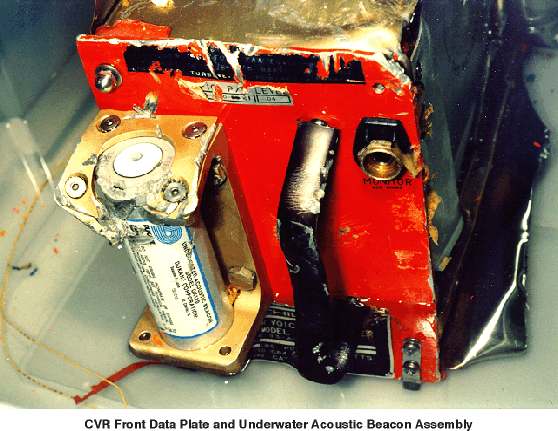
Both the Cockpit Voice Recorder (CVR) and the Flight Data Recorder (FDR) of the civil aircraft, registered PS-VPB, have been successfully replayed[1]. This is a task that required great care and diligence. The replay data now available to the investigators for detailed analysis, is of the utmost significance.

From the pictures available the external impact damage to the flight recorders is evident. What is important is that the crash protected memory module works as intended. This is solid-state digital memory that is packaged in a way that protects it from extreme conditions.

Finding from this accident investigation could have implications for the whole ATR aircraft fleet worldwide. It’s certain the authorities in Brazil will notify the aviation community if findings indicate corrective action that needs to be immediately taken.

Reports in the public domain indicate that the ATR aircraft had an ice detection system and that alerts could be heard in the cockpit during the flight[2]. Additionally, there is the indication that the crew acted in relation to those cockpit alerts.

[My apologies for a post where I suggested that there may not have been an ice detection sensor and alert on this class of turboprop aircraft. I was in error.].

This chain of events may suggest a simple set of explanations for the loss of control of the aircraft as it approached its destination. However, these matters are never simple, as most catastrophic aviation accidents are a combination of factors.

Even though the crew noted that there was icing, there is, as yet, no indication that the atmospheric conditions experienced by the aircraft in-flight were of a truly exceptional nature. The ATR aircraft is certified for specific icing conditions. There is training and procedures for the encounter of icing conditions.

It is pure speculation on my part, but I am reminded of an aviation accident of more than 40-years ago[3]. The conditions of the accident are different, but a factor may link the two. The last line of the NTSB report abstract says: “and the limited experience of the flight crew in jet transport winter conditions.” A small amount of ice contamination in the wrong place at the wrong time can have much more impact that might be immediately assumed.


[1] https://www2.fab.mil.br/cenipa/index.php/ultimas-noticias/1766-cenipa-extrai-com-exito-dados-dos-gravadores-de-voo-da-aeronave-ps-vpb

[2] https://www.flightglobal.com/safety/voepass-atr-crash-probe-analyses-crews-response-to-ice-alerts-before-fatal-flat-spin/159888.article

[3] https://www.ntsb.gov/news/press-releases/Pages/mr20220112b.aspx

Brazilian Air Crash

Two weeks have elapsed since the tragic loss of VoePass Linhas Aéreas flight PTB2283[1].

Reports are that the Brazilian air accident investigators[2] have successfully downloaded recordings from the aircraft Cockpit Voice Recorder (CVR) and Flight Data Recorder (FDR).

A detailed analysis of both recordings should provide a replay of the flight events on the fateful day. This means that any flight anomalies can be interpreted. Both actions of the crew and the response of the aircraft can be used to understand the sequence of events.

Those conducting the analysis will need to verify the past serviceability[3] of both recorders. It’s easy to assume that what’s presented in the recovered replay is what happened. However, that depends on the calibration of sensors and the correct functioning of the aircraft’s audio system.

CVRs and FDRs are primarily tools for the investigation of accidents and serious incidents by investigating authorities. Accident recordings can be a rich source of information. It’s not just the obvious contribution technical records make to an investigation. The CVR, via a cockpit area microphone picks up much more than just the speech of the crew and their communications with air traffic. Engines, propellers, aircraft warning systems, aerodynamic noise and the impact of structural failures all produce audio signatures.

I assume that the aircraft operator has a Flight Data Monitoring Program. Such a program can support continuing airworthiness and operational safety of an aircraft. It can be a vital part of a Safety Management System (SMS). Also, the regular analysis of flight data is one way of ensuring that the serviceability of the data acquisition system for an FDR is known.

A preliminary report on this fatal accident is expected in early September. It is up to CENIPA if the publish any transcript of the accident recordings.

VoePass, the airline in question, operates a regional network in Brazil. Not surprisingly it has now come under greater scrutiny by the Brazilian aviation regulator, Agência Nacional de Aviação Civil (ANAC).

It’s worth noting that the Brazilian civil aircraft fleet is one of the largest in the world. It’s a sizable country. Both ANAC and CENIPA are well experienced in addressing the aftermath of a major aviation accident. Expectations are high that the causes of this fatal accident will be fully understood. Appropriately then corrective action will be taken.


[1] https://asn.flightsafety.org/wikibase/409335

[2] Brazilian Aeronautical Accidents Investigation and Prevention Center (CENIPA)

[3] https://www.caa.co.uk/publication/download/12811

Navigating Speculation in the Age of Abundant Information

Speculation is a natural human response. When faced with a paucity of information we often put together what we know and then make a best guess as to what happened or what might happen. However, wise or unwise it’s not possible to stop speculation. Well, that is assuming that autocratic power doesn’t use force to crush the free exchange of ideas.

Since the rise of the INTERNET, with a proliferation of all kinds of material, it becomes less and less possible to quell speculation. A sprinkling of information can grow into a monstrous conspiracy but equally it can grow into a stepping stone to greater understanding. Living with this two-edged sword is our modern dilemma.

In a more deferential society, that we may have been immediately post WWII, officialdom was accustomed to restricting information. The principal of “need to know” and statements like – wait for the official report – were enough to quell Press intrusion and intense public curiosity. On occasions this deference turned out to be tragic and been an enabler for authorities to cover up dreadful errors and failings. My mind goes to the Hillsborough disaster[1] when I think of tragedies made worse by the manipulation of information.

What’s all this about – you might say. I’m giving a thought to the post- accident scenarios that become more common. When major fatal transport accidents happen to planes, boats and trains there’s an instant demand for detailed information.

This is happening in relation to the recent Brazilian ATR aircraft accident and, this morning, to the sinking of a large modern yacht off the coast of Sicily. Both tragedies seem astonishing in their own way. So much of our technological world works so perfectly, a great deal of the time, that we get accustomed to reliability, safety and security. Almost taking it for granted.

Basic technical information, like registration numbers, type and age of the vehicle all surface quickly after an event. Even numbers of fatalities are verified within a couple of days. What gets the speculators going is the answers to the question – why?

A list of circumstantial factors can soon emerge. The time, the weather, the location and the organisations involved. All of this creates a mix that feeds both intelligent and unintelligent speculation. I’m not saying this is de-facto bad. It’s reality.

What’s all this about? There are reports across the media of the “last words of Brazil plane crash pilots.” This speculation surrounds the words spoken in the cockpit and seem to come from someone’s knowledge of a transcript. How can that be? Through international agreement the independent aviation investigation organisations across the globe are committed to a protection of this type of recorded information (Cockpit Voice Reporter (CVR)[2]). Accident flight recorders are there for the purposes of the investigation of an accident or incident.

Back to our modern dilemma. Is it good or bad that sensitive protected information leaks into the public domain before it’s been thoroughly analysed and properly understood? There is a cost to a dilution of the protection of information. For one, it may discourage the voluntary application of safety enhancements, like fitting a recorder to a plane, boat or train.


[1] https://www.bbc.co.uk/news/topics/c8m8v3p0yygt

[2] https://skybrary.aero/articles/cockpit-voice-recorder-cvr

Free Speech or Unregulated Chaos?

Twitter grew to a global scale. It didn’t make money. It was a social media success but a commercial mess or, at least, that’s how a lot of people saw it. Its snappy short text became the playground for people pushing press releases and journalists seeking immediate printable lines. On top of the professional users were a mountain of commentators that ranged from the highly credible and reliable to the outlandish crazies promoting their every possible madness.

For whatever reason it caught the attention of Elon Musk. He has a numerous selection of descriptions ranging from wry businessman to futurist visionary. There’s no doubt he’s a risk taker who has an uncanny ability to come up smiling where others would likely have collapsed in bankruptcy or chaos.

Reports of “X”, as it is known now, are that Musk sees it as a platform for free speech. There’s an absolutism about this mandate. Although there’s legislative obligations in most countries that put some boundaries around what’s called “free speech” the platform X has become one that pushes at the boundaries.

Generally, moderate opinions don’t stir-up controversy. So called “mainstream” factual reporting can be boring and somewhat dry. What seems to trigger a lot of activity are opinions that are “extreme”. That is often extreme in the political sense from the left and the right. Tapping into the popularity of populism – if that makes any sense. Polarisation if it doesn’t.

As a platform for legitimate political views, however disagreeable, there’s not so much to complain about the openness of a lightly moderated space. Through history public spaces have been created for people to vent their views[1]. However, this is not done without regulation on conduct.

Where free spaces get extremely toxic is the riotous spread of misinformation. It’s one thing to have strong socialist or liberal views or hard conservative views but when views are presented as based on facts when they are not[2], and expressions are intended to create aggressive responses, there’s a line of unacceptability that has been crossed.

I am taking the view that today’s X is not a place for a reputable organisation or person. It’s not that social media platforms are intrinsically bad. No, it’s the way that they are managed. My observation is that there is a connection between the mindless riots of recent days in England and the lack of attention to civilised regulation of certain digital platforms. It’s a question of both written regulation and its consistent implementation.

This situation is recoverable. Putting digital social media back into a good shape for the public to conduct a dialogue about the issue of the day will require effort from its owners and governments across the globe. Is there a willingness to step up and act? Let’s see. Surely these subjects need urgent action. 


[1] https://www.royalparks.org.uk/visit/parks/hyde-park/speakers-corner

[2] https://www.vox.com/technology/2023/5/20/23730607/elon-musk-conspiracy-twitter-texas-shooting-bellingcat-taylor-lorenz-psyops

Solar farms

New Government signs off solar farms. Not everyone happy.

It would be good if we could all agree that the UK needs to recognise the importance of locally produced food and drink. There’re large environmental gains to be made by reducing the distance between production and consumption. Thousands of heavy trucks thunder up and down the inadequate road infrastructure in the UK. Colossal amounts of food waste get thrown away from supermarkets. Questionable preservatives enable supply chains to grow longer and longer. There’s are bad trends.

On a related subject, I do have a problem with proposals for large solar arrays that will take out productive farmland. However, that is by no means an objection to large solar arrays, or onshore wind farms for that matter.

It’s not as if we have always been so precious about what we do with our glorious countryside. One observation I’d make is that there has been a huge increase in the urbanisation of the countryside in my lifetime. Areas that were either wild or exclusively used for agriculture are now pony paddocks, car parks, golf courses, housing estates, out-of-town shopping warehouse, fulfillment centres[1], and bypasses. In 50-years, there’s little that remains untouched.

I’d sing “They paved paradise and put up a parking lot” if I could. We really do need to think carefully about what we industrialise and what we preserve and protect.

For me large solar arrays are in the same category as acres of poly tunnels. Both serve a fundamental purpose, and both are structure that can be relatively easily removed. Keeping the lights on and eating fresh food are both part of society’s basic needs.

So, I’m not going to raise an eyebrow at new Minister Ed Miliband approving 3 large solar arrays[2]:No shock but no blank cheque either. No jumping on a political bandwagon to condemn the immediate decision.  

It’s likely the decision was sitting on the former Conservative Minister’s desk. Is this a case of difficult decisions deliberately delayed because of an election? We may never know. It would be a bit disingenuous for such politicians to complain now. Wouldn’t it?

Let’s get it right. Failure to decarbonise our national energy system is a contribution to global warming we can’t afford to make. Long-term that global warming will impact food production.

In years to come it will be interesting to see what research flags up with respect to solar farms and biodiversity in an area. There’s some chance that the results will not be entirely negative. There’s all that sheltered and undisturbed soil under the array structures. A habitat for wildlife.

Choosing between what might seem as the lesser of two evils is often the situation a politician finds themselves in. Afterall, that’s the role they must play in a democracy. The outcome may not be popular in the short-term, but a balance must be struck.

Maybe we should reverse some of the urbanisation of the countryside. Return some little used roads to nature. Demolish unused industrial units. Put back the hedges that have been lost. Rewild one or two golf courses. It’s something to consider when building new infrastructure.


[1] Fulfillment centres enables outsourcing, warehousing and shipping. This is for online businesses to have the physical space to store stuff.  

[2] https://www.bbc.co.uk/news/articles/c4ng6036vgqo

Just Culture

My thought is that we’ve forgotten the discussion of more than a decade ago. There was a time when the thoughtful reflections on responsibility and accountability were much discussed.

Without focusing on specific examples, there are plenty to choose from, there’s the propensity of our institutions and politicians to reach for “blame” as a first response. When situations go bad the instinctive inclination to hunt out someone to blame. This is an all too prevalent habit.

Naturally, in cases, there’s the strong need to identify who is accountable for bad decisions. Society does not like it when the powerful protect, cocoon themselves and grab for immunity. Certainly, some people and organisations are genuinely blameworthy. However, if we scrutinise and point the finger of blame, it doesn’t help if that finger is pointed at a person’s honest errors. There isn’t a human on this planet who hasn’t made an error.

The finger of blame is easily pointed. Judgment so often falls after an event. The time when more is known, and hindsight comes into play. This tips the balance. It’s so much easier to say: why on Earth did you do that? I would never have done that.

For people to come forward and be fairly heard in an open and fair inquiry or investigation they need to have the confidence that they are not stepping into a public blame-fest. Without trust between those on all sides of it’s less likely that the truth will come out.

“Just Culture” is a concept written into aviation legislation and followed by others. The overriding aim is to learn from mistakes. It’s the surest way of not repeating the same mistakes time and time again. It’s beneficial to have that long-term learning objective. Why suffer the pain of a bad event when the means to avoid it are known and understood?

Now, I’m going back 20-years. I remember being part of an international working group[1] called GAIN. The group compiled guidance about organisational culture. At the time, the group was considering the subject in the context of the air traffic profession. Guidance like the one referenced, emphasise that a Just Culture is not simply a no-blame culture. It’s not, and never has been a way of circumventing accountability.

Determining culpability can be complex. There’s often a test to consider the wilfulness of the participants in a bad event. In other words, did they carelessly, intentionally, maliciously or negligently make decisions that resulted in the bad event? In these cases, the “they” could be an individual or an organisation.

Gross negligence, wilful abuses and destructive acts should be addressed by the enforcement of laws. If we say the criminalisation of honest people involved in bad events has a negative impact. That is not to negate the need for enforcement. Regulators in all sorts of walks of life have a duty to apply enforcement where and when it’s appropriate. Maybe we ought to have applied that to the UK water industry.

My plea here is to first consider the nature of the events in question. Was there an element of genuine honest human error? Is the right balance being struck between the need to learn and the need to ensure accountability?

NOTE: Just Culture is defined in EU law as “A culture in which operational staff or others are not held accountable for actions, acts, omissions or decisions commensurate with their experience and training, but gross negligence, intentional violations and destructive actions are not tolerated” EC 376/2014 Art. 2 Para. 12.


[1] A Roadmap to a Just Culture https://flightsafety.org/files/just_culture.pdf

Star’s Law

It’s one thing to hear a report. It’s another to understand – what does it mean? Planning reform doesn’t often capture the national headlines. In this case, it’s a national celebrity that seems to be running changes in planning laws[1].

I’m more than a bit suspicious when I see the lines explaining legislation that say: “A full impact assessment has not been produced for this instrument as no, or no significant, impact on the private, voluntary or public sector is foreseen.” The word significant is purely subjective.

Like so many Statutory Instruments[2] (SIs) this subject makes for a hard read. SIs are English law that is made, not by parliamentarians debating and voting on it, but by amendments to existing law placed in front of them for a short while.

There’s no doubt that English farmers and landowners, under pressure post-Brexit, are going to be pleased by the planning alleviations offered by this new planning law. Being able to convert existing buildings into new houses, or new businesses, like farm shops, without local authorities intervening to say “no” has been dubbed – cutting red tape.

It needs to be noted that this action is being taken in the run up to a General Election (GE). For me, I see this as a two-edged sword. Sure, the name of UK Minister Michael Gove might be viewed more favourably by English farmers and landowners. That may not be the case by those people who live in the countryside adjacent to new developments.

Planning gets local people very agitated. A risk of a middle-class “civil war” is more likely to come from villagers and residents of small country towns than ever is the case from farmers. Neighbour disputes can be some of the worst disputes. I know of a case where a shotgun was used to make a point and that wasn’t by the farmer concerned. Boundaries being the issue.

Mr Gove has made a political choice. Framing the argument as cuts to “needless bureaucracy” may not be the whole picture, or even an accurate one but it does make Ministers feel good – like a sugar rush.

Converting more former agricultural buildings into dwellings or small businesses does make sense in many situations. Doing it without proper controls opens a pandora’s box of possible conflicts and disputes. Afterall the planning system is supposed to balance the rights and responsibilities of all concerned.

It’s all too easy for those in central government, heavily lobbied, to make local government the evil monster. I could say: a simple matter of power play and political expediency. Especially when the government minister making the decisions has just seen his political party devastated in local government elections.

Building more houses and shops without the need for planning permission might be a bit like that sugar rush, I mentioned. It last for a short while and then, well you know what happens.


[1] https://www.independent.co.uk/business/jeremy-clarkson-farm-shop-downing-street-b2341181.html

[2] https://www.legislation.gov.uk/uksi/2024/579/made

Harmonisation

There’s an example in of itself. I’ve used the British English spelling. Perhaps I should have standardised on the American spelling, namely Harmonization. Or does it matter at all given that the definition of the word remains the same, whatever. Oh, I can’t resist the temptation to say; you say Tomato, I say Tomato.

“You say tomato, I say tomato.

You eat potato and I eat potato,

Tomato, tomato, potato, potato,

Let’s call the whole thing off.”

Naturally, in the voice of Fred Astaire[1]. Nice though this is, my subject is not pronunciation.

Aviation is a highly regulated business. It’s been that since its potential for transporting huge numbers of people around the globe was recognised. Safety must be number one. Although, it’s not if you read the first few words of the all-important Chicago convention.

Article 1: Every state has complete and exclusive sovereignty over airspace above its territory.

In the minds of those who signed the convention it was sovereignty that took first place. That didn’t mean abusing the word “sovereignty” as has to often been done. Afterall, the whole basis of the Convention on International Civil Aviation was international cooperation. It still is.

Let’s put that to one side for a moment. One of the challenges of international aviation has been the different rules and regulations in place in each country. There’s a level of harmony in the standards of the International Civil Aviation Organization (ICAO). But ICAO is not a regulator and it’s for each country to interpret agreed standards within their domestic law.

Europe, or at least the European Union (EU) is different in this respect. Since there’s European law and an active European regulator then there’s common rules and regulation set for a regional grouping of countries. So far, Europe is the only region to go this far.

When it comes to aircraft airworthiness this has been a topic of a lot of discussion in the last four decades. In the 1990s, that discussion centred around the idea that a single worldwide code was a desirable achievement. That the time the two major entities engaged in the business of aviation rulemaking, and the maintenance of rules were the FAA (US) and the JAA (Europe).

A single worldwide code could greatly facilitate the movement of aviation produces around the globe. That done to ensure that common safety standards were maintained on every occasion. It proved hard to get to this utopian condition. That said, a great deal was achieved in the harmonisation of existing civil aviation codes. Today, we benefit from that work. I’d say we even take it for granted.

In around 2000, after much study, countries concluded that it was fine to seek some form of equivalence between respective rules rather than having to write done one single set of rules. Mutual recognition has flourished in the form of agreements between countries that has smoothed the path for the aviation industries.

That last major study of the pros and cons of harmonisation is now nearly a generation old. A lot has moved on. For one, in Europe the JAA transition to the EASA.

At the same time the manufacturing countries worked closely together to agree on measures to ensure that there was no great divergence in rules and regulations. Now subjects, like Safety Management Systems (SMS) became codified. However, sovereign countries continued to develop and maintain their own aviation rules and regulations.

International working groups often achieve remarkable commonality and convergence on detailed technical topics. Often because the few people who were deeply embedded in a technical subjects all knew each other and shared information relatively freely.

Discussion as to the viability of a single worldwide code has not completely faded into the past. In fact, there’s some good reason to breath life back into this historic debate. Here’s what’s added to the dynamics of the situation:

  1. Ongoing moves from prescriptive rules to more performance-based rules,
  2. Entirely new products in development, like eVTOL aircraft,
  3. Interdependency, interconnection, and integration all increased since 2000,
  4. Security and safety are becoming inseparable,
  5. Digitisation is changing the ways that we ensure that an aircraft is airworthy.

If you have knowledge of, and thoughts on this subject, I’d be happy to hear from you.


[1] https://youtu.be/LOILZ_D3aRg

Electrics & Mechanics

Yesterday, I wrote on LH2. The potential fuel for electric aircraft of any size. Yes, I’m not just talking about smaller commuter class transport aircraft.

Let me take some anecdotal evidence from the transition that is going on in road transport. Repairer turns up to fix an electric car that will not start. It’s a simple matter given that the car has been standing unused for a long time. The battery had discharged. A quick charge from another battery pack and all is well. Meantime in conversation it’s clear that the repairer hates working on electric cars. I could say, no surprise, they were trained on combustion engines and have been forced to make a transition in technology.

What’s evident here is the apprehension of a person who likely has a mechanical bias towards their work and the necessity to take on fixing powerful electrics. Mechanics, those who love working with moving parts, often have a dislike of electrics and electronics. It’s an engineer’s “feeling” expressed to me casually over the last 40-years.

In fact, it can be the reason that a design or maintenance engineer took the career path that they did. There is a dividing line between mechanical engineers and electrical engineers that is embedded in our institutional, educational, and training systems.

So, there’s two practical human issues to grapple with in a transition:

  1. Propensity of one branch of technically capable people to find mechanical work less fearsome and more satisfying than electrics or electronics, and
  2. Streaming that is embedded in our institutional, educational, and training systems. Qualifications and recognition are often not so multi-disciplinary focused.

I’m not for one single moment making a luddite argument that mechanical engineers[1] and electrical engineers[2] are two tribes that must be kept apart. Far from it. What’s more important is to recognise that transitions are hard.

New electric aircraft are going to demand technical people with a multiplicity of both mechanical and electrical knowledge. The way the engineering world has been divided up in the past doesn’t cut it. Some of our most cherished niches will need to be challenged.

Transitions of this nature always take much longer than is originally anticipated. In a way, that should be such a surprise. It’s a generational change for a community that can be conservative with a small “c”.

This is NOT business as usual. For example, handling powerful 1000-volt electric technology is not for everyone. Removing and replacing cryogenic plumbing is, again, not for everyone. The hazards are clear. The skills needed are clear.

Reorienting the aircraft maintenance engineering world is going to need new plans and programmes. Better start by enthusing people about the change rather than just forcing it.


[1] https://www.imeche.org/

[2] https://www.theiet.org/

Hydrogen in Aviation

The potential for LH2 (liquid hydrogen) is enormous. That’s matched by the logistical and technical difficulties in exploiting this gas’s great potential. It offers energy for a means of propulsion that is nowhere near as environmentally damaging as existing means.

Society already integrates hazardous liquids and gases into everyday life. Each one has been through several iterations. It has been a rollercoaster. Each one has been at the root of disasters, at one time or another.

  • We use gas for cooking and heating in domestic settings. Periodically explosions demolish buildings. Leaks cannot be ignored. Harm can be done.
  • We use light and heavy oils widely in transport systems. Periodically intense fires burn vehicles. Care in handling is essential. Harm can be done.

Without having to say it, both above harm the environment. The search for non-CO2 emitting ways of flying is urgent. Here, I’m writing about harm to people. Physical harm. The business of aviation safety.

Often the physical harm is not associated with the design of the systems used but to the maintenance of those systems. Naturally, there was a learning curve. If we look at early versions of those systems, fatal accidents and incidents were far more regular. So, here’s the challenge for aviation. How do we skip the dangers of the early learning phase? How do we embed rigorous maintenance practices from day one? Big questions.

On the first one of these, lots of fine minds are engaged in putting together standards and practices that will address good design. If this works, and it will be tested extensively, the chance opens for introduction to service with a great deal of confidence that the main risks will be managed.

On the second of these, there’s not much happening. You might say there’s an element of chicken and egg. The shape and form of future LH2 systems needs much more work before we can think deeply about how they will be maintained.

I think that’s wrong. It’s old-fashioned thinking. As the industry has often practiced, making the systems first and then devising ways of maintaining them while in-service. That’s yesterday’s reasoning.

Making aviation system maintenance the Cinderella in the LH2 world is to invite failure. This is a situation where advancing the consideration of how the in-service realm could work, day by day, is necessary. It’s advantageous.

Here’s my reasons.

  1. There are generic approaches that can be tested without knowing the detailed design. That can take existing learning from other industries, like chemical and space industries, and consider their application in aviation.
  2. Emerging technologies, like machine learning, coupled with large scale modelling can provide ways of simulating the operational environment before it exists. Thereby rapidly testing maintenance practices in a safe way.
  3. It’s imperative to start early given the mountain that needs to be climbed. This is particularly true when it comes to education and training of engineers, flight crew, airport and logistics staff and even administrators.

Everyone wants to accelerate environmentally sustainable solutions. When they do get to be in-service, they will be there for decades. Thus, an investment, now, in study of maintenance systems will pay dividends in the longer term. Remember, early fatal accidents and incidents can kill otherwise sound projects or at least put them back on the drawing board for a long time.

NOTE 1: I didn’t mention Liquefied Petroleum Gas (LPG). It’s in the mix. Another CO2 contributor. LPG containers have pressure relief valves. LH2 containers will likely have pressure relief valves too. That said, venting LPG is a lot more environmentally damaging than LH2. From a safety perspective they can both create explosive conditions in confined spaces. Maintenance staff may not need to carry a canary in a cage, but they will certainly need to carry gas detectors when working on LH2 powered aircraft. Our noses will not do the job.

NOTE 2: Events on the subject: https://www.iata.org/en/events/all/iata-aviation-energy-forum/

https://events.farnboroughinternational.org/aerospace/sustainable-skies-world-summit-2024

2024 ICAO Symposium on Non-CO₂ Aviation Emissions