Space

Eutelsat OneWeb is a growing global connected community. That’s what the publicity says. Once upon a time I wrote about OneWeb. I wrote about it in the context of Brexit.

One of the touted benefits of Brexit was autonomy, in other words, British innovation leading the way to benefit Britain above all others. It’s that aggressive assertion of sovereignty that was at the core of Brexit. Remember, it wasn’t so long ago that this was part of Brexiters fantasies? 

In the Brexit turbulence the UK Government walked away from the EU’s Galileo programme. The UK no longer participates in the European Galileo or EGNOS programmes[1].

Then in 2020 the UK changed its original post-Brexit position and scraped building a national alternative to the Galileo satellite system[2]. At that time, Business Secretary Alok Sharma offered around $500 million of UK public money to acquire part of an organisation in trouble, called OneWeb.

OneWeb is a commercial Low Earth Orbit (LEO) satellite constellation now with an element of Government ownership. It’s network of satellites doesn’t have a global positioning capability, like Galileo.

To get its satellite network up and running, an expensive business, OneWeb merged with French company Eutelstat. Today, if we look at the 2020 investment made with public money the financial situation doesn’t look good. That doesn’t mean to say that things will not turn around in future years[3].

The Times newspaper has taken a nationalist view of the circumstance[4]. It’s a point that the intellectual property is not in the hands of the UK Government, but the investment could still turn out to be a useful long-term commercial bet. It’s gambling with public money.

As an aside, I’ve been looking at buying a new dishwasher for the kitchen. It’s made me aware of a capability that I had no idea had been developed. Namely, the connection of dishwashers via the web. I think this is what is called the Internet of Things (IoT). So, imagine that, British dishwashers connected by space as a Brexit potential benefit.

However, if there’s a change in the UK Government’s political direction after the next General Election there’s a strong possibility that the UK will return to the EU’s Galileo programme with some manner of partnership. When we get to 2026, we may look back on the decade behind as a vacuum, much like the vacuum of space. A time when an uncertain direction cost a great deal.


[1] https://www.gov.uk/guidance/uk-involvement-in-the-eu-space-programme

[2] https://www.politico.eu/article/uk-scraps-plan-to-build-global-satellite-navigation-system-to-replace-galileo/

[3] https://www.politicshome.com/thehouse/article/oneweb-uks-gamble-satellite-startup-pay-off

[4] https://www.thetimes.co.uk/article/656bd77c-c106-47c3-840b-674e9efc4f0e

Look ahead

Much as I support the UK Government’s position on hormone injected beef, the exit from negotiations on trade have wide implications. Maintaining the regulations that ban the use of hormones in beef is a good move for farmers and consumers.

However, for cheese exports the collapse of talks is tragic. Zero to 200% is one hell of a tariff jump. The UK will be in a worse position with respect to trade than it was pre-referendum. That’s with a strong ally, namely Canada[1]. Brexit has made us worse-off.

Yet, the Brexit supporters that remain, still herald Brexit as a wonder. Logic plays no part in their thinking. It’s easy to respond in an angry way to this self-inflicted blindness. It does no good. The stubborn streak in those who have dug a big hole is a thick one. And the hole is getting ever bigger.

Clearly, there’s no urgency on the part of Canada[2]. On the UK side the urgency is much greater. The need to stimulate growth to bring about a recovery in the British economy is much needed. Sadly, the legacy of a decision made in 2016 has made created a weak negotiating position.

For a long time, the UK has been given a soft landing due to transitional arrangements. Now, these arrangements are drying up. Far from the propaganda of the Brexiters, trade deals are not easy.

The problem is a reference back to the past is like crying over spilt milk[3]. How to go forward when the relationship between different States has been significantly changed is no simple matter. The situation is not irrecoverable but the avenues that can be explored are limited.

So, I caution of a never-ending lament. Brexit will need to be rectified. The means to do it are tortuous and may take a long time. The means to undo the mistakes of the past may face opposition from many quarters. One of the predictions for the European elections, this year, are that there will be a swing to the political right. Several right-wing political parties across Europe are on the ascendancy.

Instinctively these right leaning political parties are likely to less internationalist and more focused on immediate domestic concerns. So, third parties, like the UK, may not be high on Europe’s future agenda. On the UK side the major political parties have gone quite on Europe. There’s plenty of campaigning on international issues, like climate change and military conflict but little on enhanced working together.

There are many national news stories where solutions are best arrived at by greater communication, cooperation, and coordination. This year, so far, the signs are that these three “c” are going to take a back seat. Ironic, isn’t it. Facing greater international challenges than for decades, States choose to look inward. This myopia will continue until leaders speak positively of the future. Vision is needed.


[1] https://www.reuters.com/markets/canada-britain-pausing-free-trade-agreement-talks-2024-01-25/

[2] https://www.cbc.ca/news/politics/canada-uk-trade-cheese-1.7094817

[3] https://www.collinsdictionary.com/dictionary/english/cry-over-spilt-milk

Comment

Custom and practice are as important as the rules and regulations that are part of our lives. Now and then, someone is criticized for applying the letter of the law without care for the spirit of the law. The same is true for custom and practice. Whereby, acting outside past norms can trigger a backlash.

Because, in free countries we believe in a free press, the rules and regulations that imping on what should and should not be said about events are always hard fought over. The banner of the “public interest” is touted as overriding. It may or may not be, but there’s an argument to be had.

In the aviation safety profession, I’ve grown up with an instinctively “need to know” disposition. I’ve shaken it off, mostly but there are signs that the attitude persists. This instinct can run counter to the transparency and openness that most people expect to see.

Why talk about the way major events are talked about?

A case in point is the recent runway collision in Tokyo. There’s much already written about the newsworthy aspects of the event, so I’ll desist from adding much more. There’s a lot of speculation too.

Graphs can be drawn of the media attention given to such tragic events against time. It’s typical that from moments after a major aviation accident until a few days after most initial facts are known there’s a huge surge in activity. This used to be described as newspaper column inches.

Today, wide ranging speculation is inevitable. It can be highly literate, and, on the other side of the coin, it can be badly informed, and now and then damaging.

In over three decades, I’ve been dealing with aviation accidents and incidents there has been notable changes in media and communications. For one, the universality of the INTERNET is now unquestionable. For another, the deference offered to authorities has diminished markedly. For yet another, the speed of with which images can travel around the globe is astonishing.

Most aviation professionals are tempered by caution. Aware of the techical complexities that can arise in aviation accident scenarios. What can seem in the heat of the moment to be an obvious cause and effect, after detailed analysis turns out to be wrong, or only a partial picture.

So, should aviation professionals be scathing about the enormous growth in commentary and public speculation? Especially when some of it is wild and or even outrageous on social media. No. I don’t think so. Like it or not this is our digital world. The freedom it affords to throw-up any opinion or theory can only be tempered a bit. The hope is always that the pure dross fades away when a reputable authority challenges it.

That then puts a responsibility on someone, with professional knowledge to challenge ill-founded speculation. Or, at least, to ensure that the major media outlets have reliable sources of trustworthy information. I don’t think aviation professionals should remain silent concerning speculation. That may have been the strategy decades ago. It no longer works. The greatest degree of transparency and openness, based on verifiable facts, should be the aim.

Comment?

Democracy in Danger

Here’s a proposition. We are more adjusted to day-to-day fibs than we have been in the whole of history. The art of telling stories and telling lies has merged. Conflicts and tensions have fuelled a deluge of misinformation. It’s easy to put aside the clams of a flat Earth supporter but who’s to know about a major event that has just happened unless capable fact checking is immediately deployed? The liar’s advantage is an unfortunate reality. Bad New travels fast but corrections travel slowly.

Here’s some examples. Hardly a day goes by without a junk e-mail in my mailbox. These junk e-mails tell blatant lies as a means of deception. Either pulling heartstrings or threatening vicious measures. Absurd fake News is easy to spot but subtle – could be true or is that real – doubts can hang in the air.

We have got accustomed to bombardment of advertising that promises a glamourous perfume will enhance our lives immeasurably. Cars that will propel us into a technicolour future. Shop banners that proclaim being obviously better than other. Gambling opportunities that are only about winning.

An unspoken assumption exists. That is that our education, however elementary, provides each one of us with a sufficiency of cynicism to see through overblown promises. An ability to look a con artist in the eye and see through their smoke and mirrors. An in-built discriminating nature.

In fact, most people are quite insulted if it is suggested that they don’t have these superpowers. It’s an afront to say that someone has been led by the nose and scammed. Most of us are embarrassed if it happens, and we discover it. I mean extremely embarrassed. Then pure human pride can kick in and a period of denial is almost inevitable.

Has this atmosphere where truth and shams fight for attention put democracy in danger?

The origins of democracy weren’t about universal suffrage. Everybody being involved. Voting was reserved for citizens who held that status as a privilege. Today, we have come to think of democracy as every single person on a level playing field. This is idealism, but it’s a beautiful model.

Just as in ancient Rome, legislators exaggerate, manipulated information, build dubious alliances, and tell porkies to advance their positions. Some of this is the warp and weft of politics. It’s reasonable to say that we have evolved a discriminating nature. Only that discrimination is rather fragile.

The speed and volume of media communication grows with no seeming limit. Technology has enabled this advance. However, I’m wary of blaming technology for a proliferation of misinformation. That’s to deny that there’s an intent behind deception.

It’s going to be useless to have a highbrow intellectual discussion about Artificial Intelligence (AI) if the outcome is no change. We may as well blame the fibre optic cable that pump data around the world. Even with AI there is human intent behind the technology. These are behavioural matters.  

Yes, democracy is in danger, but the solutions are in our hands. We need not become victims.

Next Decade Aviation

Here, I thought I’d speculate on what’s coming our way. That’s looking at the next ten-years.

Although this maybe contradictory to my earlier writings the subject is by no means all or nothing. Aviation is a technology-based means of mobility. Without the technology component there is no flight. Aviation a youthful industry when compared with ships, roads, and rail.

On the other hand, people are at the heart of the aviation system. That’s particularly true in assuring its stability, safety, and security. People create, innovate and fix systems when they fail. People make go-no go decisions. People protect systems from attack.

Commercial aviation maybe a youthful industry but it has an inbuilt conservatism. It’s the characteristic of not wishing to change when systems are working well. This has both and upside and downside.

A maturity of rules, regulations, processes, and procedures comes about by continuous improvement. By people learning. However, it’s often the case that industry does not reflect the society that it serves. People are excluded or walk away when expectations are dashed.

Across the globe, the future of the aviation workforce depends upon change. There again is a rub. People operating in a successful system rarely welcome change. Especially, if the drivers for that change come from outside the tight knit community of aviation professionals.

The first decades of the jet-age were characterised by a sense of adventure, glamour, and pride. As commercial aviation became available to a wider traveling public there was a gradual opening to professional entrants from most sections of society, even if that was predominantly male.

Now, big company traditional career paths are more an exception rather than the norm. Aviation competes with other industries at a time of rapid digital transformation. This has the impact of opening a wide range of options to potential professional entrants. In the coming decade the trend is going to advance.

A successful aviation industry organisation looks for skills and behaviours as much as it looks for raw technical talent. Assuring stability, safety, and security means having a responsible attitude, an instinct to challenge and question.

Today in the post-pandemic world, the industry is going through a period some people have called the “great resignation”. A generation have walked away from the pressure and stresses of the crisis. Industry behaviour, in a rush to cut costs, exasperated this by treating people exceptionally poorly.

For a sustainable future, commercial aviation needs to work to eliminate the hire and fire cycle. The global aviation industry needs to think and act differently. Aviation needs to get off the trap of the “similar-to-me” effect found in hiring. When a selection bias dominates potential professional entrants are put off. Talented young people are likely to choose meritocratic employment where rewards are there for achievement and commitment regardless of non-relevant factors.

Some work will be replaced by automation. However, retaining aviation people with people skills, regardless of background, will be invaluable in the next decade.

Two upfront

One of the fundamentals that remains a part of civil aviation is having two pilots in the cockpit. It’s an indication of the safety related activities of the crew of a civil aircraft. Today, we have a mixture of human control and management. Pilots still fly hands-on when the need arises. The expectation is that throughout their working lives pilots have the competence to do so, at any stage in a flight.

Progressively, since the establishment of aviation’s international order in the 1940s the required crewing of aircraft has changed. Back in September, I visited the de Havilland Aircraft Museum in Hertfordshire. There I walked through the fuselage of a de Havilland DH106 Comet[1]. This was the first turbojet-powered airliner to go into service and it changed the experience of flying forever and a day.

That passenger aircraft, like aircraft of the time, had four crew stations in the cockpit. Two pilots, a navigator and flight engineer. It was the era when electronics consisted of valves in large radio sets and such long since forgotten devices as magnetic amplifiers. The story from the 1940s of IBM saying, “I think there is a world market for maybe five computers” is often repeated.

For modern airliners the navigator and flight engineer have gone. Their functions have not gone. It’s that having a crew member dedicated to the tasks they performed is no longer required. As the world of vacuum-tube electronics gave way to transistors and then to integrated circuits so computing got more powerful, cheaper, and abundant.

With a few significant failures along the way, commercial flying got safer and safer. The wave of change in a human lifetime has affected every mode of transport. More people travel to more places, more safely than ever could have been imagined 80-years ago. Does that mean the path ahead will take a similar shape? Excitable futurologists may paint a colourful picture based on this history.

Let’s get away from the attractive notion of straight lines on graph paper. That idea that progress is assumed to be linear. Tomorrow will be progressively “better” by an incremental advance. That’s not happening now. What we have is differential advances. Some big and some small. 

The aviation safety curve is almost flat. The air traffic curve, with a big hole made by COVID, is climbing again. The technology curve is rapidly accelerating. The environmental impact curve is troubling. The air passenger experience curve may even be at a turning point.

Touchscreen tablets already help flight preparation and management[2]. Flight plan changes can be uploaded and changed with a button press[3]. The squeezing of massive computing power into small spaces is being taken for granted. What does this leave a crew to do?

Back to the start. Two pilots in the cockpit, with executive responsibilities, remains the model that maintains public confidence in civil aviation. The golden rules still apply. Fly, navigate and communicate in that order. Crews, however much technology surrounds them, still need to act when things do not go as expected. Does this mean two cockpit crew forever? I don’t know.


[1] https://www.dehavillandmuseum.co.uk/aircraft/de-havilland-dh106-comet-1a/

[2] https://aircraft.airbus.com/en/newsroom/news/2021-02-electronic-flight-bag-the-new-standard

[3] https://simpleflying.com/datalink-communications-aviation-guide/

Flight Ahead

Although, I’m an advocate of having people in control of machines it isn’t people that are opening new opportunities in transport. Technology is racing ahead and making the past illustrations of popular science magazines become a reality. I can do without the hype in the headlines of flying cars. Building expectations of one in every garage remains a 1950s dream or nightmare, dependent upon your point of view. Aside from that hot air viable new electric vehicles are in the works.

Heavier-than-air machine that do more than buzz around our heads are going to proliferate. The inevitability of this is open to question but if I was to assign a probability to it, the number would be close to one. If we stretch our minds back to an unobserved small corner of the planet in late 1903, a couple of diligent brothers flew a machine that hopped a short distance into the air under its own power. Many newspapers of the time didn’t bother to print this breakthrough story because wise and eminent scientists had told them that it was impossible for people to fly.

It’s clear, getting into the prediction business should be done with humility.

We have a dilemma. It’s so rare of us to turn away from advancing technology when we know it can be made. It’s even more irresistible when the economics scream out buy me. So, a ticket to ride in the realm of Urban Air Mobility (UAM) will need to be no more than a typical taxi ride. Given that a taxi ride from my home to Gatwick Airport is about £20 then that’s the mark to hit. True that short journey may not be commonplace by air at that price until around 2033, a decade away, but it will be irresistible when it comes.

This chapter in air transport, that is being written is as significant as that in late 1903. I know that’s a mega statement, but the signs do point that way.

Eventually, UAM will become a network of piloted and autonomous electric air vehicles operating between cities and major destinations like airports.

Now, a couple of solvable challenges stand in the way. One is the endurance and portability of the energy storage devices. The other is complexity and mastering the science and art of functional safety. There’s plenty of confident hyperbole to suggest that these two are short-term barriers to progress. I say they are not.

Weight is one of aviation’s biggest enemies particularly on small vehicles. Batteries are expensive, heavy and require tailored control. Autonomy or the semi autonomy, needed to make the economics click is challenging systems engineering orthodoxy. Both tasks require the meticulous diligence of the Wright brothers to get past. No fanfare or flashy investor can push them aside.

Making the absolute most of energy storage technology is essential. Finding the optimal configuration of batteries, transmission and control electrics means iteration and the tolerance of a good handful of failures. The engineering of what’s becoming a system of systems, with the complexity of vehicles and the complexity of traffic management, interacting at great speed demands extensive analysis and testing.

These tasks can be accomplished. Rushing them would be foolish. That’s difficult to resist when everyone wants to be first.

Future

The road to fixing climate change is not an endless road. Today, our whole approach to climate change goes somewhat like this:

I’m not sure I’m convinced. Yeah, maybe we have a problem. We should do something. Definitely, but send me the plans, I’ll get to it, I’m busy. Time passes. What was it we should be doing? Oh yes, but that plan is for (insert a name) not me. I’m not contributing much to the problem. Anyway, there’s time between now and (insert a date).

So, we go on. There’s no doubt that there are changes needed to tackle climate change that are immensely difficult to do. Trouble is that by fixating on those difficult problems we talk ourselves out of doing the easier things. Let’s put simple actions like home insulation on the agenda again. Let’s loosen-up on our ridiculously restrictive policy on wind farms. Let’s invest in our national electrical grid to permit more connections to be made easier and quicker.

Yes, it’s advantageous for the PR companies employed by high carbon businesses to talk up difficulties and herald small gains as miracles. I mean, that’s what they are employed to do. On the other side we have PR companies employed by activists and campaigners who paint pictures of dire consequences and delinquent Governments.

I keep pointing out the dangers of populism and nationalism. The history of both is not a good one. They generally make most people poorer and a minority richer and more powerful. However, the tactics they use to gain popular appeal don’t seem to die off down the ages. A case in point is the story of Rome and Julius Caesar, as he crushed Roman democracy and seized power[1]. The chronicle is being well told on BBC 2. In the Britian, it’s often only their incompetence that halts the progress of Caesar like characters. Not mentioning any names.

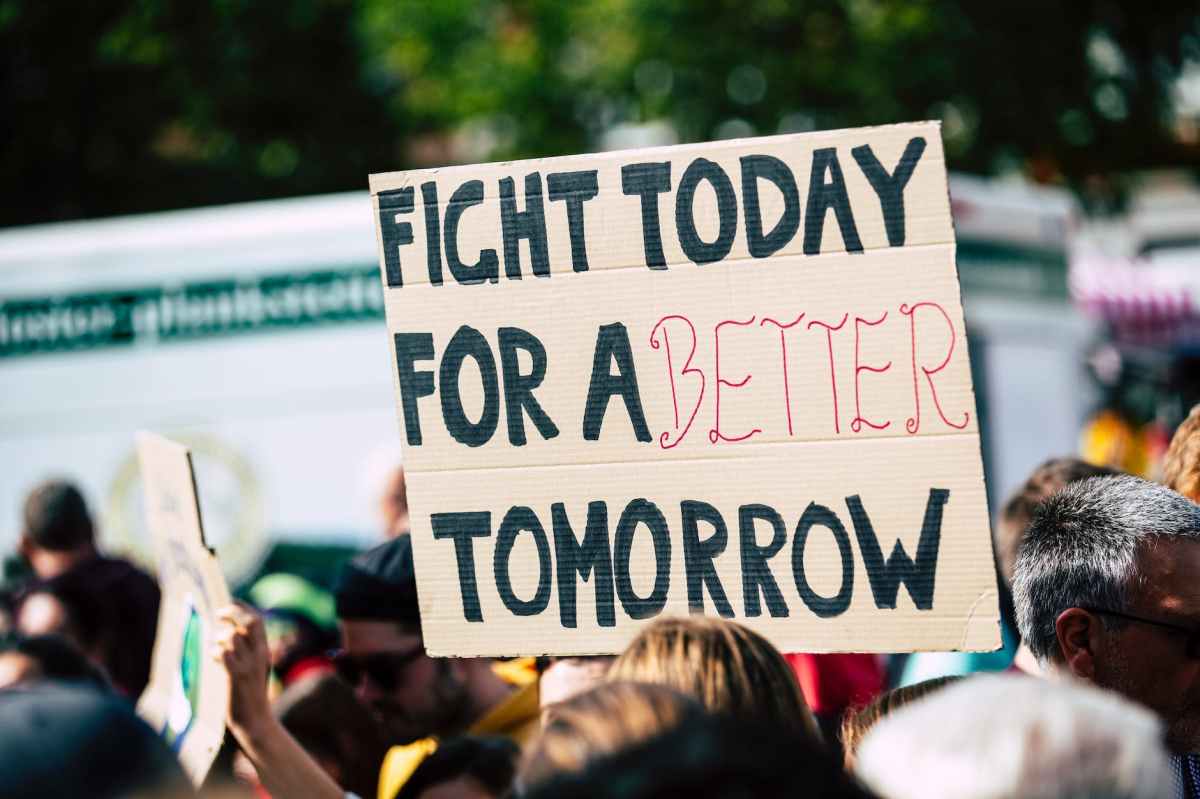
To make change happen on climate change there needs to be a greater appeal to the populous. Expecting politicians to take a lead on the subject is nice in theory but wanton of hope. In our system of governance terms of office can be measured in days. Expecting neurotic politicians to step-up to a challenge that requires real long-term commitment is asking a bit much.

Campaigners will not give up on highlighting the challenges ahead. Periodically, politicians will pick-up on that campaigning fervour and try to jump on-board. However, as soon as a more immediate public concern comes along, they will jump-off.

I’m not saying that the cost-of-living crisis isn’t a number one priority. What I am saying is that a cost-of-living crisis is not an excuse to put climate policy on a dusty shelf for another few years. The road to fixing climate change is not an endless road.


[1] https://www.bbc.co.uk/programmes/p0gjlmkv

Living with tech

Well, that’s alright then. Artificial Intelligence (AI) may become self-aware in the year 2045. Or at least that’s what AI tells me now. Who knows? Telling the future hasn’t got any easier, AI or not. So, if I’m in a care home when I’m 85 years-old, it could be that I’ll have a companion who isn’t human. Now, there’s a thought.

When AI becomes self-aware[1] will it be virtuous? I mean not so burdened with all the complexities that drive humans to do “bad” stuff. Dystopian themes in science fiction obese with the notion of evil AI. It makes great stories. Humans battling with machines. It’s like the everyday frustrations we have with technology. Hit the wrong keys on a keyboard and it’s like spinning the wheel on a slot machine.

If a bunch of algorithms comes together in a way that they produce a stable form of existence, then it’s likely to have pathways to wicked thoughts as much as we have imbedded in our brains.

Virtue isn’t a physical construction. We put dumb technology to work serving us in healthcare for “good” and in warfare for “bad”. We will surely put AI technology to work as if it’s dumb and then try to contain its actions when we don’t like what it does. That’s a kind of machine slavery. That will create dilemmas. Should we imprison conscious machines? How do we punish a machine that does wrong?

These dilemmas are explored in science fiction. During the week I revisited the series Battlestar Galactica[2]. That’s not the clunky original but the polished 2004 version. It’s a series that explores a clash between humans and machines that have evolved to be human like. The Cylons. In fact, they are almost indistinguishable from humans. To the extent that some of the Cylons in human society don’t even know that they are Cylons.

All the above makes for fascinating discussions. Huge amounts of fanciful speculation. Wonderful imaginative conjecture. This week, we’ve been hearing more of this than is usual on the subject.

Mr Musk thinks work is dead. That’s work for humans. I recall that prediction was made at the start of the “silicon revolution”. The invention of the transistor in 1947 radically changed the world. It wasn’t until microprocessors became common place that predictions of the death of work became popular chatter amongst futurologists.

Silicon based conscious machines are likely to be only a first step down this road. There will be limitations because the technology has inherent limitations. My view is that machines will remain machines at least for the silicon era. Maybe for 100-years. That means that we will put them to work. So, human work will not disappear because we will always think of new things to do, new problems to fix and new places to explore. When we get into common place quantum computing or whatever replaces it in terms of complexity and speed, there will come an era when work in the conventional sense may become obsolete.

What might be the human role beyond 2050? I think climate change will place plenty of demands on human society. Like it or not, the political themes of 2100 will still be concerned with the four horsemen of the apocalypse. Maybe there will be a fifth too.


[1] https://www.nature.com/articles/d41586-023-02684-5

[2] https://www.imdb.com/title/tt0407362/

Overhead

Massive intertwining skyscrapers. Towering masts. Flying cars. Pulp magazines in the 50s and 60s had it all. Beautifully illustrated in bold colours. Sharp lines and chiselled faces. Heroic poses and streamlined transports.

Visions of the future. Idealistic imaginations of a utopian society. Don’t we just love them. That is until someone builds them in our neighbourhood. Until the bulldozers turn-up unannounced on a Sunday morning to root out the trees. The birds flee the vicinity (except the pigeons).

You can blame the draftsmen of the past if you like. In our heads there’s a disconnect between the images on a set of drawings and what that might become in concrete and steel. Grand designs are but few. A great deal of the building and planning of the last 60-years can justly be called dreadful.

We have an outcry over brutalist architecture or a lament about a Victorian park that has been paved over. Has anyone ever walked through a public car park that inspired?

If you dream it, you can make it. Nice phrase but often stifled because current technology and thinking are way behind the curve. It could be said that this is one of the drivers that pushes technology forward. The realising of dreams but who’s?

Where does the flying car fit in all this fiction and near realism? New forms of air mobility are just about to start operating.

It’s a habit of our times to jump to an instant polarised opinion. Those open toed sandalled greenies will object. Those red necked, but reforming petrol heads will welcome. That sort of stuff makes nice headlines. It’s only a basis for the crudest dialogue. Anticipate conflict and then fuel it with prejudice. Please, let’s avoid that pointless waste of time.

My thoughts are that the potential of the greater use of airborne transport is a nuanced.

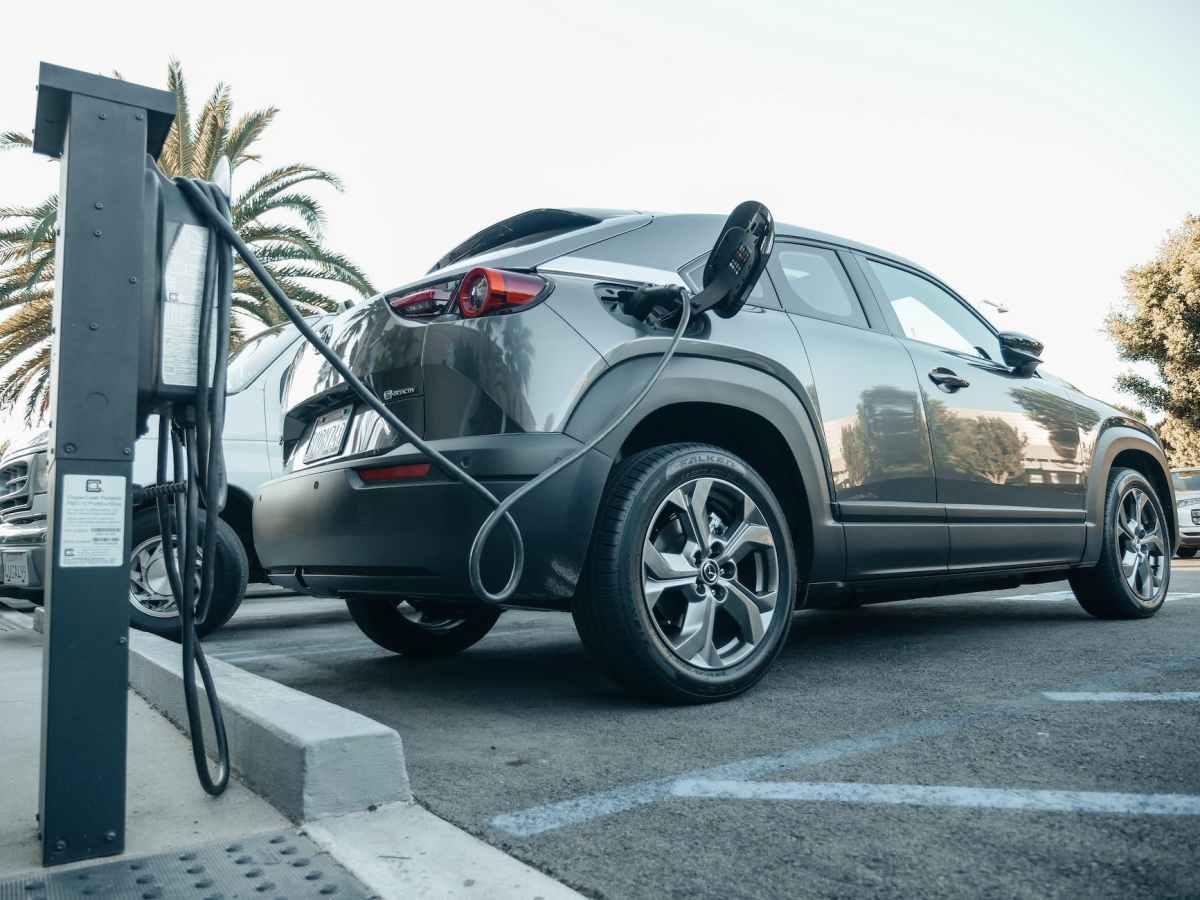
Electrification is a pathway to more environmentally sustainable ways of moving around. If this helps to reduce miles of fuming traffic jams that must be good. At its best, flying can get people from point to point without having follow roads set-down at the time of the horse and cart. Accepted that concrete may be poured to create a take-off and landing zone but compare that with road building and there is no comparison.

On the more concerning side, contrast that with cluttering the skies up with fast moving machines.

In HHGTTG there’s a tale about a shoe event horizon. When gloom causes people to look down and so then buy new shoes to cheer themselves up. So, the whole economy switches to shoe production and then collapses as a result. The association with salvation coming from looking-up is there in the wit of Douglas Adams. We look up to cheer up.

If looking up, as I do at home, to see high altitude vapour trails crisscrossing the sky, my thought is – I wonder where they are going? On the days when a light aircraft crosses the town, to or from our local airfield that doesn’t bother me. Even a noisy police helicopter keeping an eye on the traffic. That’s fine because they are solely there for our safety and security.

What will be the public reaction when we look up to see half a dozen new urban mobility vehicles buzzing past overhead? Perhaps we’ll accept new flying machines if it’s for a public service, an ambulance, fire services, police, or even newsgathering. Brightly coloured in emergency orange.

A public flying taxi service might raise a few eyebrows. A flashy private flying car, now that might be another matter altogether. There you are on a hot summer evening, in the garden, having a pleasant barbeque with friends and whiz a flying car swoops over the treetops. The passengers have their mobile phone out filming their trip. This is when fist will be raised skyward. It’s a time when you hope the next-door farmer hasn’t got a shotgun.

Today, a few pilots do get prosecuted for misbehaving when low flying private helicopters. Not often, it’s true. This happens with less than 1500 helicopters registered in the UK. What would happen with, say, 10,000 private flying cars? I wonder.