Ban

Some policies are directly targeted to fix a problem, other policies maybe aimed at indicating a direction of travel. I think the measures in France to ban domestic flights on short routes is the later.

Internal routes that can be flown in less than two-and-a-half hours, are prohibited[1]. That can be done because high-speed rail transport offers a means of connecting certain French cities.

The calculation being that greenhouse gas emissions will be reduced by this control. There had been many calls for even stricter restrictions on flying in France. Lowering carbon emissions is a priority for many European governments. Sovereignty is primary in this respect. A State can take measures to control domestic flying much more readily than they can internationally. Connecting flights will not be changed by this new legislation.

High-speed trains do take passengers from airlines and take cars off the roads. Where a mature rail network exists, there are significant benefits in focusing on rail transport between cities. Often rail and air are complementary, with major high-speed rail stations at airports.

Given the rhetoric surrounding the “climate emergency” these restrictions are a modest measure that will make only a small difference to carbon emissions. The symbolism is significant. It’s a drive in a transport policy direction that may go further in time and other States may do the same.

Flying between Paris and Lyon doesn’t make much sense when a good alternative is available. Flying between London and Birmingham doesn’t make much sense either. However, changes like these need to be data-driven transformations. There needs to be a measure reduction in greenhouse gas emissions because of their implementation. For example, displacing travellers onto the roads would be a negative outcome.

The imperative of greenhouse gas emission reduction means creative and new measure will happen. It’s far better for aviation to adapt to this framework of operations rather than push back. The direction of travel is set.


[1] https://www.bbc.co.uk/news/world-europe-65687665

Bad Moon

Despite climate change, economic downturns, war, and recovery from a pandemic no one was prepared for, this is a good time to be alive. We are a long way from the end of days. Or at least I hope we are.

The past is another country. Only that can be said of the future too. The difference is a record book. Behind us we have the chronicles, from the first written words to this next key I’m about to tap. In front of us spreads a great deal of uncertainty.

What’s with the gloom and doom? Media of all kinds seems to bathe in a pool of pessimism. I can hear Creedence Clearwater Revival singing Bad Moon Rising[1] in the background. Despite climate change, economic downturns, war, and recovery from a pandemic no one was prepared for, this is a good time to be alive. We are a long way from the end of days. Or at least I hope we are.

In so far as fiction is concerned, I love a good dystopia. Unfortunately, some of the movies on this theme are quite ridiculous or dammed right annoying. The Day After Tomorrow[2] is a bucket load of piety and the remake of The Day the Earth Stood Still[3] has me throwing things at the TV.

Last night, I tried to get through the first half of a more recent movie called Reminiscence. It does amaze me that what must have seemed like such good ideas on paper can be transformed, at great expense, into a relatively average film. Yes, we are going to have to cope with rising sea levels and it will change the way people live.

What I’m addressing is the assertion made by a journalist who covers the cultural effect of science and technology[4]. It’s basically, that all this focus on the end of the world stuff stops us from planning a positive future. I can quite understand the basis for such a proposition.

Dare I make a HHGTTG reference? Well, I’m going to anyway[5]. It’s that society collapses if we spend all day looking at our feet, or to be more precise our shoes. Looking down all the time is equated with being depressed about the future. That leads to people buying more colourful shoes to cheer themselves up. Eventually, that process gets out of control and civilization collapses.

For someone like me who has spent a lot of time looking at accidents and incidents in the aviation world, I’m not on-side with the notion that bad news leads to gloominess and then immobility. I guess it does for some people. For me, it’s almost the reverse.

What we learn from disasters and calamities is of great benefit. It stops us from making the same mistakes time and time again. Now, I know that doesn’t last forever. Human memory is not like a machine recording. We are incredibly selective (hence films like Reminiscence).

In my mind, none of this persistent immersion in stories with bad outcomes stops us from planning. To be positive, it stops us taking our plans for what we can do into the realms of pure fantasy. Or at least it should.


[1] https://youtu.be/zUQiUFZ5RDw

[2] https://en.wikipedia.org/wiki/The_Day_After_Tomorrow

[3] https://en.wikipedia.org/wiki/The_Day_the_Earth_Stood_Still_(2008_film)

[4] https://www.newscientist.com/article/mg25834380-100-why-we-shouldnt-fill-our-minds-with-endless-tales-of-dystopia

[5] https://hitchhikers.fandom.com/wiki/Shoe_Event_Horizon

Fake/Real?

So, why might artificial intelligence (AI) be so dangerous in a free society?

Democracy depends upon information being available to voters. Ideally, this would be legal, decent, and honest information. All too often the letter of the law may be followed whilst shaping a message to maximise its appeal to potential supporters. Is it honest to leave out chunks of embarrassing information for the one nugget that makes a politician look good? We make our own judgement on that one. We make a judgement assuming that outright lying is a rare case.

During key elections news can travel fast and seemingly small events can be telescoped into major debacles. I’m reminded of the remark made by Prime Minister Gordon Brown[1] when he thought the media’s microphones were dead. In 2010, when an aide asked: What did she say? Gordon Brown was candid in his reply. It’s an occasion when the honest thoughts of a PM on the campaign trail popped into the public domain and livened up that election coverage considerably.

What’s concerning about AI[2] is that, in the hands of a “bad actor,” such events could be faked[3] extremely convincingly. Since the fast pace of election campaigning leaves never enough time for in-depth technical investigations there’s a chance that fake events can sway people before they are uncovered. The time between occurrence and discovery need only be a few days. Deep fakes are moving from amateur student pranks to the tools of propagandists.

Misinformation happens now, you might say. Well, yes it does, and we do need people to fact-check claims and counter claims on a regular basis. However, we still depend on simple techniques, like a reporter or member of the public asking a question. It’s rather a basic in format.

This leaves the door open for AI to be used to produce compelling fakes. Sometimes, all it needs is to inject or eliminate one word from a recording or live event. The accuracy and speed of complex algorithms to provide seamless continuity is new. It can be said that we are a cynical lot. For all the protest of fakery that a politician may make after an exposure there will be a plenty of people who will not accept any subsequent debunking.

My example is but a simple one. There’s a whole plethora of possibilities when convincing fake pictures, audio and videos are only a couple of keyboard stokes away.

Regulatory intervention by lawmakers may not be easy but it does need some attention. In terms of printed media, that is election leaflets there are strict rules. Same with party political broadcasts.

Being realistic about the risks posed by technology is not to shut it down altogether. No, let’s accept that it will become part of our lives. At the same time, using that technology for corrupt purposes obviously needs to be stamped on. Regulatory intervention is a useful way of addressing heightened risks. Some of our 19th century assumptions about democracy need a shake-up. 


[1] https://www.independent.co.uk/news/uk/politics/bigotgate-gordon-brown-anniversary-gillian-duffy-transcript-full-read-1957274.html

[2] https://edition.cnn.com/2023/05/16/tech/sam-altman-openai-congress/index.html

[3] https://www.nytimes.com/2023/02/07/technology/artificial-intelligence-training-deepfake.html

Chips

Semiconductor superpower. Where have I heard that before? Let’s go back to the moment when the silicon revolution was a topic of popular conversations. Today, as much as people are speaking of AI. It has been difficult to accept that Moore’s Law is real. Early on, the notion that the number of transistors on a microchip would double every two years seemed far fetched.

I remember the 1980s, and the privatisation drive that effectively gave away the country’s technology crown jewels. UK semiconductor manufacturers of the 1980s such as GEC, Plessey, Ferranti and Inmos waned or sold-up[1]. Policy makers of that time saw globalisation as risk free. Now, that looks like selling off the family silver.

At the time, silicon chips were predicted to kill off a substantial percentage of white colour jobs. Only a few people saw the potential for massive new industries to spring-up and employ large numbers of new workers. It’s true that the jobs created were, on the whole, quite different from the ones they displaced. Admin work in a giant insurance office is miles from that of a being an on-line games developer, tester, or marketer.

My point is that Government intervention in technology hasn’t got a good record. That’s not an argument for a hands-off approach. That too has proven to have negative outcomes. I’m often tempted to go back to the story of videotape and VHS against Betamax[2] The better technology is not always the one that wins in the global marketplace. Boring reality and dull pragmatic considerations can tip the balance.

The record shows Government Ministers get swayed by the whizzy, super advanced, “superpower” labels that get stuck on the latest promotion. Let’s face it, a photo opportunity next to an exciting futuristic image gets the media’s heart beating. Marketing hype is not new. It has a role in druming-up investments in risky ventures.

Unquestionable is the intense level of competition in the global semiconductor marketplace. If the UK is to be taken seriously when billions of dollars are placed on the table by others there really must be a matching offer. One billion over a decade will end up getting spread as thin as oil on water. A strong collaboration with other, who have common interests would help. Let’s not forget that doing the “dull stuff” can be highly profitable too.

The open market, in deals of the past, has seen a concentration of power. This is not good for a medium sized country on the edge of a continent. Inward investment is to be welcomed. At the same time strategic domestic protections should have a place. Investments in domestic technology capabilities secures a future.


[1] https://www.ft.com/content/470bf7d8-cd32-472d-b75f-6019eb4b100a

[2] https://en.wikipedia.org/wiki/Videotape_format_war

Deregulation

There’s nothing wrong with making an argument for deregulation. What’s absurd is to make that argument as an unchallengeable dogma. It’s the irrationality of saying that deregulation is good, and regulation is bad, de-facto. This kind of unintelligent nonsense does permeate a particular type of right-wing political thinking. It pops it’s head up in a lot of Brexiters utterances. For advocates of Brexit their great goal is to throw away rules and lower standards. Mostly, this is for financial gain.

Let’s take some simple examples. The reasons for rules and regulations can often be found in recent history. Hazards are recognised and action is taken.

There’s still lead paint to be found in many older houses. There was a time when such paint was used on children’s toys. Toy safety has been a confusing area of law, and there have been several sets of regulations since the 1960. From our current perspective this past laxness seems insane, but such lead paint mixtures were commonplace. In fact, all sorts of toxic chemicals have been used in widely used paints.

I remember working in one factory building where a survey was done of the surrounding grounds. Outside certain windows there were small fluorescent flags placed at in the grass verges. They marked places where minor amounts of radiation had been detected. This came from discarded paint brushes and tins that had accumulated in the war years. At that time radioactive luminescent paint was used to paint aircraft instrument dials.

Any arguments for the deregulation of toxic chemicals in commonly used paints should be one that is quashed instantly. However, some deregulation fanatics are only to happy to endorse a loosening of the rules that protect the public from toxic chemicals.

One result of the loosening of public protection is often to put greater profits in the hands of unscrupulous industrialist. Across the globe there are numerous cases studies of this sad folly. Newspapers and political parties that push the line that rules, regulations and regulators, by their very nature are crushing our freedoms are as bad as those unscrupulous industrialists.

Yes, there’s a case to be made for pushing back over-regulation. There’s risks we are prepared to take where the risks are low, and the benefits are large. This is a matter for intelligent debate and not throwing around mindless slogans. We should not be cowed by loud voices from small corners of society intent on tearing down decades of learning and sound practical laws. I could come up with an encyclopaedic list of examples. Opponents rarely, if ever want to address a particular case since it’s much easier for them to thunder off sweeping assertions. Beware these siren voices.

NOTE: The Toys (Safety) Regulations 2011 implemented the requirements of Directive 2009/48/EC, whose purpose is to ensure a high level of toy safety.

Protest

Any study about “change” will tell you that it’s not easy. Take a few of the big social transformations that have occurred over the last six decades. I can’t point to one that just happened without a campaign or fight. Social and political change comes when momentum has built-up. Pressure is needed. Often that pressure comes in the form of protest and extensive campaigning in public.

As ever faster digital connections are becoming universal, it’s still possible to buy physical digital media. Charity shops have piles and piles of CDs and DVDs as people off-load the stuff that clutters their shelves. It’s remarkable that yesterday’s whizzy new thing has become a historic artefact so quickly[1]. In 40-years, the optical digital disk has risen and then faded into the background.

I picked up a little bit of social history in a Red Cross charity shop. It’s a series of 3 DVDs that captures a slice of the career of the well-known journalist and broadcaster Alan Whicker. Stretching over six decades of travelling around the globe it’s a great watch. The series is called “Journey of a Lifetime” and was published in 2009[2]. Although, there’s plenty that dates Whicker’s documentary style there’s no doubt that his ability to quickly summing up big changes is a masterclass.

That straightforward diction and incongruous club jacket became a trademark. It gave him a neutral camouflage so he could talk eye-to-eye with hippies, dictators, evangelists, social campaigners, film stars and dubious gurus. That’s what created so many revealing conversations that are now time stamped as emblematic of an era. I recommend viewing the Whicker’s reflections on six decades of social history. It’s a great reminder of where we have been and how learning the lessons of the past is so difficult.

Back to my initial subject – change. It’s easy to say that it’s inevitable and unrelenting but its nature is less easy to discern. Change undulates. We go forwards then we go backwards in differing amounts.

I have a theory that our social progression can be plotted like an inclined wood saw. Yes, I know. It’s the engineer in me. Look at the shape of the saw’s teeth. They go forwards, and then quickly go backwards but they always go backwards less than they go forwards. That’s how a saw’s teath cut.

This is one of my abstrat reasons why the UK Government’s most recent laws to supress public protest are as stupid as political debate can get. Resisting change is nothing new. After all, the word “conservative” has a simple commonplace meaning. When all else fails, the basic political instinct to push out laws that comfort supporters is built in. As a direction for a whole country to take, this way of working is foolish and naive.

Locking up climate change protestors is not going to fix climate change. Locking up protestors against sewage on beaches and in rivers not going to fix greedy water companies. Locking up republican protestors is not going to fix the decline in public support for the monarchy.

Using the pretext that – this is what the public want – as a cover for these policies is to show the vacuum that conservative political thinking is thrashing around in. Sadly, as I’ve said, reflection on the last six decades of conservative thinking shows regressive tendencies in abundance.


[1] https://www.bbc.co.uk/archive/optical-storage-technology/zv7bpg8

[2] https://en.wikipedia.org/wiki/Whicker%27s_World

Experts

The rate of increase in the power of artificial intelligence (AI) is matched by the rate of increase in the number of “experts” in the field. I’ve heard that jokingly said. 5-minutes on Twitter and it’s immediately apparent that off-the-shelf opinions run from – what’s all the fuss about? to Armageddon is just around the corner.

Being a bit of a stoic[1], I take the view that opinions are fine, but the question is what’s the reality? That doesn’t mean ignoring honest speculation, but that speculation should have some foundation in what’s known to be true. There’s plenty of emotive opinions that are wonderfully imaginative. Problem is that it doesn’t help us take the best steps forward when faced with monumental changes.

Today’s report is of the retirement of Dr Geoffrey Hinton from Google. Now, there’s a body of experience in working with AI. He warns that the technology is heading towards a state where it’s far more “intelligent” than humans. He’s raised the issue of “bad actors” using AI to the detriment of us all. These seem to me valid concerns from an experienced practitioner.

For decades, the prospect of a hive mind has peppered science fiction stories with tales of catastrophe. With good reason given that mind-to-mind interconnection is something that humans haven’t mastered. This is likely to be the highest risk and potential benefit. If machine learning can gain knowledge at phenomenal speeds from a vast diversity of sources, it becomes difficult to challenge. It’s not that AI will exhibit wisdom. It’s that its acquired information will give it the capability to develop, promote and sustain almost any opinion.

Let’s say the “bad actor” is a colourful politician of limited competence with a massive ego and ambition beyond reason. Sitting alongside, AI that can conjure-up brilliant speeches and strategies for beating opponents and that character can become dangerous.

So, to talk about AI as the most important inflection point in generations is not hype. In that respect the rapid progress of AI is like the invention of the explosive dynamite[2]. It changed the world in both positive and negative ways. Around the world countries have explosives laws and require licenses to manufacture, distribute, store, use, and possess explosives or its ingredients.

So far, mention of the regulation of AI makes people in power shudder. Some lawmakers are bigging-up a “light-touch” approach. Others are hunched over a table trying to put together threads of a regulatory regime[3] that will accentuate the positive and eliminate the negative[4].


[1] https://dailystoic.com/what-is-stoicism-a-definition-3-stoic-exercises-to-get-you-started/

[2] https://en.wikipedia.org/wiki/Dynamite

[3] https://digital-strategy.ec.europa.eu/en/policies/european-approach-artificial-intelligence

[4] https://youtu.be/JS_QoRdRD7k

Light touch folly

Light touch regulation. Now, there’s a senseless folly. It’s a green light to bad actors wherever they operate. It’s like building a medieval castle’s walls half as thick as planned to save money in the belief that enemies are too stupid to work it out. Saying that the public good far less important than the speed of developments is unwise to say the least.

The INTERNET arrived in the UK in the late 1980s. Now, it seems strange to recount. Clunky Personal Commuters (PCs) and basic e-mail were the hight of sophistication as we moved from an office of typewriters and Tipp-Ex to the simple word processor[1]. Generations will marvel at the primitive nature of our former working lives. Getting scissors and cutting out paper text and pasting it into a better place in a draft document. Tippexing out errors and scribbling notes in the spaces between sentences. Yet, that’s what we did when first certifying many of the commercial airliners in regular use across the globe (Boeing 777. Airbus A320). Desktop computers took centre stage early in the 1990s, but administrations were amid a transition. Clickable icons hit screens in 1990. Gradually and progressively new ways of working evolved.

Microsoft Windows 95 and the INTERNET were heralded as the dawn of a new age. Not much thought was given to PCs being used for criminal or malicious purposes. No more thought than the use of a typewriter to commit crime. That doesn’t mean such considerations were ignored it just means that they were deemed a lower-level importance.

In 2023, everyday there’s a new warning about scammers. Even fake warnings about scammers coming from scammers with the aim of scamming. Identifying whose real and whose a fake is becoming ever more difficult. Being asked to update subscriptions that were never opened in the first places is a good indicator that there’s some dirty work afoot. Notices that accounts are about to be blocked referring to accounts that don’t exist is another.

In 30-years the INTERNET has taken on the good and bad of the greater world. It hasn’t become a safer place. In fact, it’s become a bit like the Wild West[2].

Our digital space continues to evolve but has nowhere near reached its potential. It’s like those great western plains where waggons headed out looking for rich new lands. In any towns on the way the shop fronts are gleaming and inviting but if you look around the back there’s a desperate attempt to keep bad actors at bay.

Only a fraction of the suspicious, emails, texts, and messages get reported. People unconsciously pile up a digital legacy and rarely clean out the trash that accumulates. A rich messiness of personal information can lie hidden to the eyes but just bellow the digital surface.

When politicians and technocrats talk of “light touch regulation” it’s as if none of this matters. In the race to be first in technology, public protection is given a light touch. This can’t be a good way to go.


[1] Still available – Tipp-Ex Rapid, Correction Fluid Bottle, High Quality Correction Fluid, Excellent Coverage, 20ml, Pack of 3, white.

[2] https://en.wikipedia.org/wiki/American_frontier

Pointless Brexit

Democracy’s malleable frame. I don’t recall the people of the UK being given a referendum on joining a trade block in the Pacific. Nice thou it is to have good relations with trading nations across the globe it seems strange that the other side of the world is seen as good and next door is seen as bad. It’s like a person looking through a telescope through the wrong end.

Back on 23rd June 2016, voters in the UK were asked if Britain should leave the EU. No one really knew what “leave” meant as all sorts of, what now turns out to be blatant lies were told to the public. The words “customs union” were not spoken in 2016. If they were it was in a tone of – don’t worry about all that, we hold all the cards, nothing will change.

Today, UK sectors from fishing to aviation, farming to science report being bogged down in ever more red tape, struggling to recruit staff, and racking up losses. Sure, Brexit is not the only trouble in the world, but it was avoidable unlike the pandemic and Putin’s war.

We (UK) became a country that imposed sanctions on itself. A unique situation in Europe. If some people are surprised, we have significant problems the really ought to examine what happened in 2016. It’s a textbook example of how not to do thing. The events will probably be taught in schools and universities for generations to come as a case of national self-harm.

Democracy is invaluable but when a government dilutes a massive question into a simple YES or NO, they dilute democracy too. It’s the territory that demigods thrive in. Mainly because this approach encourages the polarisation that then drives ever more outlandish claims about opponents. The truth gets buried under a hail of campaign propaganda, prejudice, and misinformation.

What Brexit has stimulated. A growth sector, I might say. Is the blame game. Now, when things go wrong, UK politicians can always blame those across the other side of the Channel. Standing on the cliffs in Dover its easy to survey the mess and point a finger out to sea.

If some people’s motivation for voting for Brexit was to control borders and stopping immigration the failures are so obvious that they hardly need to be pointed out. Yet, politicians persist with they myth that a solution is just around the corner if only UK laws were made ever more draconian. A heavier hand, criminalisation and the blame game are not solutions. These acts will merely continue the round of calamities and failures.

Brexit has unlocked a grand scale of idiocy. The solution is to consign this dogma to the past.

Who’s in control?

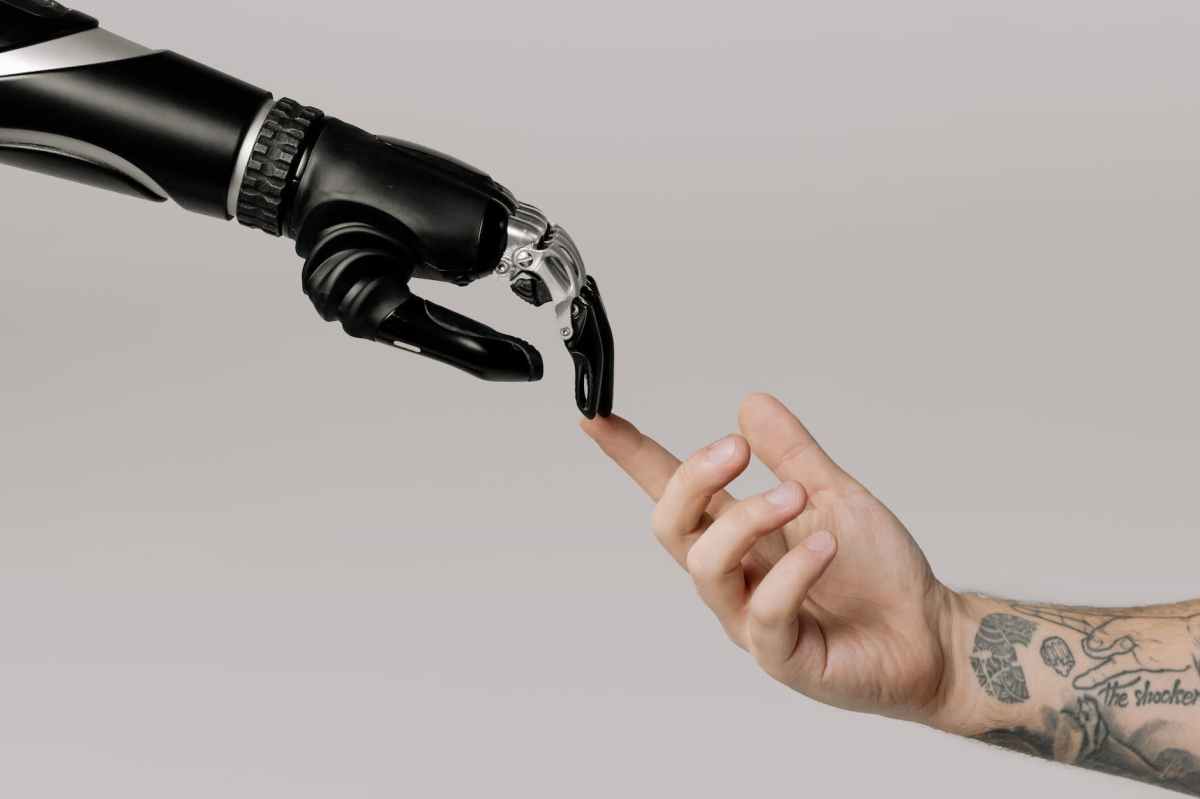
The subject of artificial intelligence (AI) in an aircraft cockpit stirs-up reactions that are both passionate and pragmatic. Maybe, it’s a Marmite issue[1]. Mention of the subject triggers an instant judgement. 

Large passenger transport civil aircraft are flown by two human operators. Decisions are made by those two human operators. They are trained and acquire experience doing the job of flying. A word that has its origins in the marine world is used to describe their role – pilot.

One of my roles, early on in my career, was to lead the integration of a cockpit display system into a large new helicopter[2]. New, at the time. The design team, I was part of comprised of people with two different professional backgrounds. One had an engineering background, like me, and the other had qualification associated with psychology. The recognition that an aircraft cockpit is where the human and machine meet is not new. A lot of work was done in simulation with flight crews. 

The first generation of jet aircraft put the pilot in full-time command. It’s as we moved from purely mechanical interactions with aircraft, the balance of flight control has been shared between pilot and aircraft systems. There’s no doubt, in the numbers, that this has improved aviation safety.

Nobody is calling for the removal of aircraft autopilot systems. Much of the role of the formerly required flight engineer has been integrated into the aircraft systems. Information is compressed and summarised on flat screen displays in the aircraft cockpit.

Today, AI is not just one thing. There’s a myriad of different types and configurations, some of which are frozen and some of which are constantly changing as they learn and grow. That said, a flawless machine is a myth. Now, that’s a brave statement. We are generations away from a world where sentient machines produce ever better machines. It’s the stuff of SiFi.

As we have tried to make ever more capable machines, failures are a normal part of evolution. Those cycles of attempts and failures will need to lead into the billions and billions before human capabilities are fully matched. Yes, I know that’s an assertion, but it has taken humans more than a million years to get to have this discussion. That’s with our incredible brains.

What AI can do well is to enhance human capabilities[3]. Let’s say, of all the billions of combinations and permutations, an aircraft in flight can experience, a failure that is not expected, not trained, and not easily understood occurs. This is where the benefits and speed of AI can add a lot. Aircraft system using AI should be able to consider a massive number of potential scenarios and provide a selection of viable options to a flight crew. In time critical events AI can help.

The road where AI replaces a pilot in the cockpit is a dead end. The road where AI helps a pilot in managing a flight is well worth pursuing. Don’t set the goal at replacing humans. Set the goal at maximising the unique qualities of human capabilities.


[1] https://www.macmillandictionary.com/dictionary/british/marmite_2

[2] https://en.wikipedia.org/wiki/AgustaWestland_AW101

[3] https://hbr.org/2021/03/ai-should-augment-human-intelligence-not-replace-it