Communication Prevents Disasters

It’s often forgotten that there’s a need to repeat messages. We are not creatures that retain everything we see and hear. There are exceptional people, it’s true, those who cram away facts and have an amazing level of recall. Often that’s my reaction to watching students leading teams on University Challenge[1]. How on earth do they know those obscure facts?

Most of us do not respond well to those who say, “Well, I told them once. I’m not going to tell them again.” That line is probably one of the most misguided utterances a teacher can make. Like it or not, this approach is part of our heritage. Past ages, when deference was expected, listening was mandatory, and misremembering was entirely the listener’s fault.

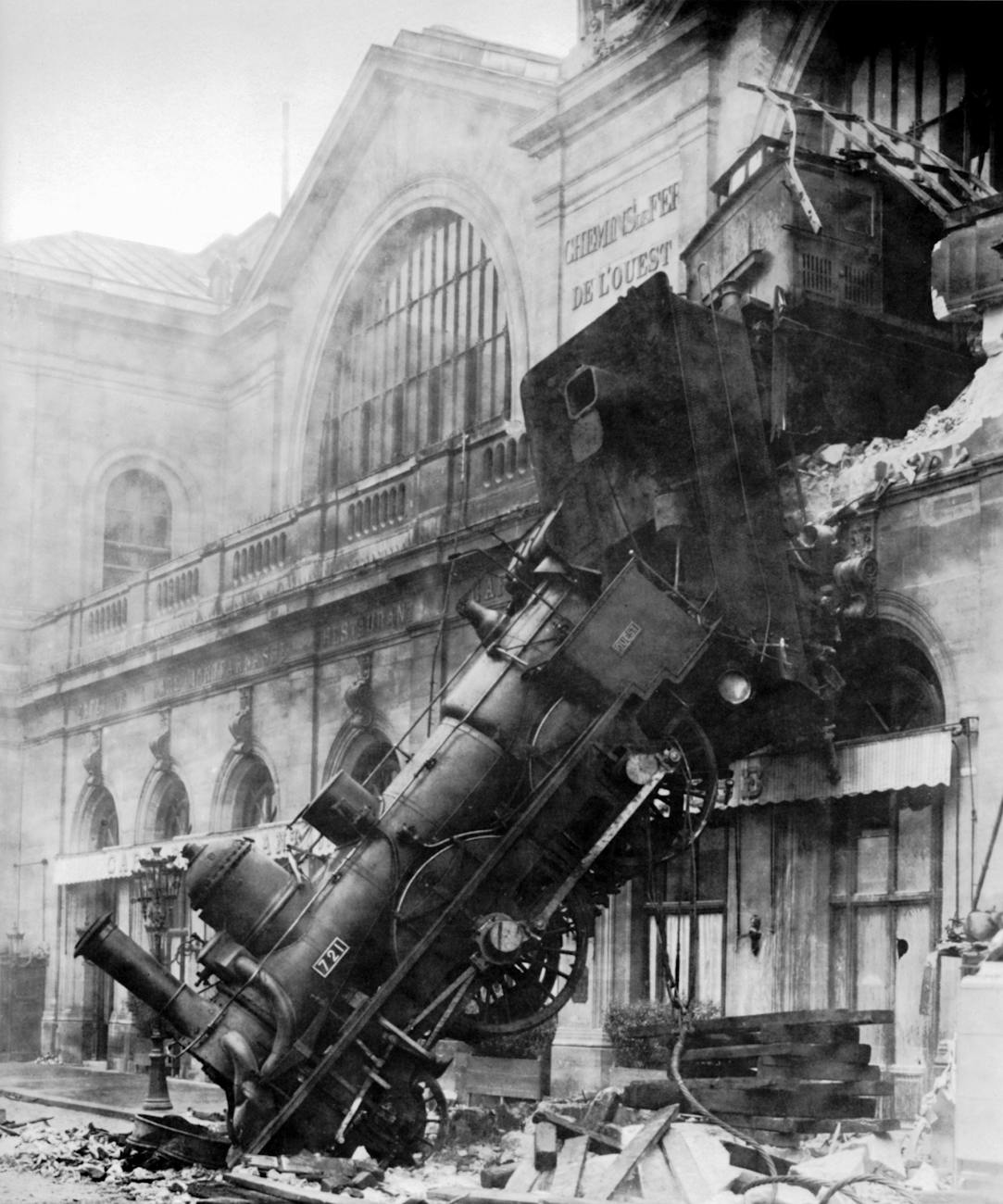
We’ve had a cultural shift. Our complex technological society doesn’t work in a command-and-control way. Too many disasters can be traced to miscommunications and misunderstanding. Now, the obligation exists on those delivering a message to go some way to ensure that it’s received with a degree of comprehension. That’s when repetition has a role to play.

One of the pillars of Safety Management Systems (SMS) is Safety Promotion. It’s the Cinderella of the aviation safety world.

Why do I say that? Experience for one. It’s much easier to get policy made and funding for the “hard” sciences like data acquisition, analysis and decision-making systems. These are often perceived as providing tangible results. Actionable recommendations that satisfy the need to be recognised as doing something. Even if that something is questionable.

Communication is key to averting disasters. It’s no good having pertinent information and failing to do anything with it, other than file it. The need to know is not a narrow one. Confined to a specialist few.

Let’s go back to 2003 and the Space Shuttle Columbia accident[2]. This craft was destroyed in a disaster that claimed the lives of its crew. The resulting investigation report is extremely compressive, if slightly overwhelming, but it has some key points to make.

To quote, “That silence was not merely a failure of safety, but a failure of the entire organization.” [Page 192]. In other words, the hidden concerns and internal machinations of an organisation can smother safety messages and led to failure. Since 2003, it’s sad to say that there are multiple occasions when what has been learned has been ignored. The impact has been devastating.

So, to shape the future let’s remember the Cinderella of the aviation safety. Discovering problems is not enough. It’s vital that practical solutions and good practice gets promoted. That needs to be done forcefully and repetitiously.

NOTE: This is, in part, a reaction to watching this video presentation. https://acsf.aero/an-unforgettable-closing-to-the-2025-acsf-safety-symposium-with-tim-and-sheri-lilley/


[1] https://www.bbc.co.uk/programmes/b006t6l0

[2] https://ntrs.nasa.gov/api/citations/20030066167/downloads/20030066167.pdf

Life on Mars Remains a Dream

Exploration is part of our DNA. There are parts of the planet that we don’t know well. That said, there are not so many spots where a human foot has not trod. The mysteries of the deep ocean remain to be better known. Only we more often look heavenward than we study deep waters.

Looking up at the night sky the fascination with a twinkling red dot runs through history. It’s surprisingly recent that the notion that Mars might be inhabited prevailed. A 100 years ago a scientist might be frowned upon but wouldn’t get locked up for such a conjecture.

The possibility of Martian life still gets discussed. If existing, it would be extremely rare and unlike the life we take for granted on Earth. Discoveries are more likely to tell us about the history of Mars than the present.

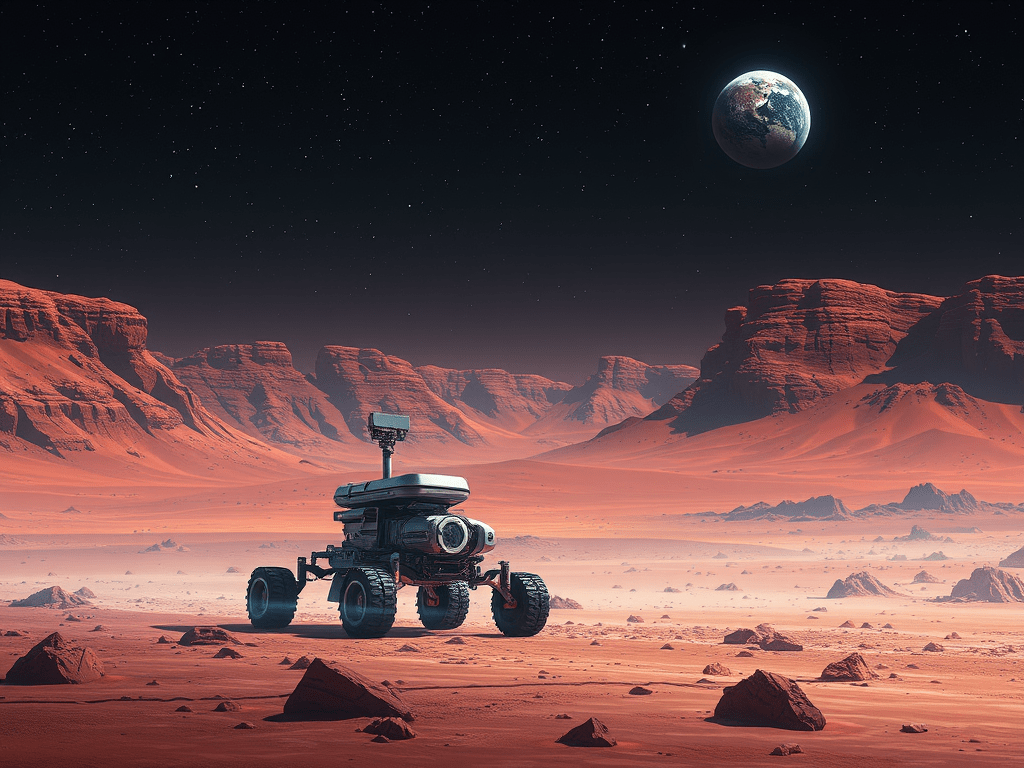
A search for other civilisations goes on. Today, Mars is a planet for robots. Rovers and other contrivances are best equipped to deal with the harshness of the natural environment. If the radiation doesn’t get you the wide-ranging temperature fluctuations will. Humans are not well suited to live in extremely harsh environments.

On a trip to Phoenix in the United States about 30-years ago, I drove out into the desert. This was to have a look at the Biosphere[1]. A curious experiment in human behaviour. The experiment attempted to reproduce what it would be like to live as extraterrestrials. We’d be the alien civilisation on Mars. Living in a huge greenhouse on Earth. As much as to say this brave but shaky experiment proved that extraterrestrial living is very hard. In fact, impossible in the way it was conceived. The lesson from such empirical experiments is to value our unique circumstances even more. Polluting and trashing Earth is about the stupidest act “intelligent” but fragile beings could do.

There are plenty of extremely harsh environments on Earth. Wisely we (humans) choose not to live in them on a permanent basis although we like to make documentaries about them. For example, there must be an exceptional motivator to get people to live in a box in Antarctica.

It’s reported that Musk says that Space X will go to Mars next year. Adding more robots to the Martian population. In the field of exploration this makes sense to me. What doesn’t make any sense at all is the determination to put humans on the surface of Mars.

The only civilisation that is likely to inhabit Mars successfully, in the next century, is an android one. Every sign is that the capability of robotic life will advance ever more rapidly. They can be designed to thrive where we would fall by the wayside. What better use can we put our future robotic friends to than advancing exploration?

Putting a date on the first human footsteps on Mars is about as ridiculous as last century’s imaginative speculation about a Martian invasion. Although, such popular stories make great science fiction.

POST: This remote station has had reported problems. A case in point. Antarctic scientists plead for help after colleague ‘threatens to kill’ team members | The Independent


[1] https://www.euronews.com/green/2022/01/29/living-in-a-bubble-did-this-failed-90s-experiment-predict-the-future

Mars steps

It’s strange what thoughts circulate in my head. If I was to say what kicked this off it was probably the story of the Preet Chandi[1]. It’s inspiring how some people see a challenge and just get up and throw themselves into overcoming it. Her commitment and determination are impressive. She was recounting the how and why of her striking endeavours on the radio. What’s much less inspiring are a some of the moronic comments that the web throws-up about her achievements. I hope she continues to take on great challenges and sweeps them aside.

Exploring and going that extra mile is built into the fabric of being human. Fine, it’s not for everyone but that’s no surprise given that there are 8 billion of us on this planet. A magazine popped through my letterbox this week speculating on what Earth will be like when that number gets to 10 billion people. Don’t worry it’s not all doom and gloom. It’s just that the world will be a very different place by the time we get to 2050. Wow, if I stay healthy, I might still be around.

A lot of public policy of the moment seems to be resisting this reality. Honestly building barriers and walls will do nothing whatsoever to build a better world. Cultivating political anxiety and fears about the future is the maddest short-termism that can be imagined. But sadly, there’s a lot of it about. It’s fashionable in the mature democracies around the globe.

Humanity has an endless list of “challenges” and opportunities ahead. Now, I don’t what to sound too much like the Musk man but we’ve a great deal to do off the planet. What we’ve achieved so far is chicken feed in respect of what we have the potential to achieve.

The big one, that taxes the imagination of writers and futurologists is what do we do about our sister planet: Mars. It’s impossible to ignore. It’s not that far away when compared with other distances in space. It’s intriguing in that it was once a water world. Like Earth.

Today, it’s a planet inhabited by robots. The only one we know that is so populated. Rovers drive around sending pictures back of a desolate barren landscape that has an eery beauty. So much of what we know about the place has only been discovered in the last decade.

Human exploration is natural and normal. Do we leave it to robots? Afterall they are becoming ever more sophisticated. Or do we plant boots on the ground and go there to explore in the way we have throughout the Earth. Well, except for parts of the deep ocean.

Here’s what crossed my mind. Just as Polar Preet, broke two Guinness World Records on her journey, so the incentive to be the first person on Mars is something that will land in the history books. The name of the person who makes those steps will echo through the centuries ahead. So, the trip to Mars will not need an incentive. The drive to do it, at almost any cost is already hanging in the air. What’s more complicated is the journey back to Earth. Going on an expedition has a clear goal. Getting back from an expedition has a different goal.

Being someone who recognises the benefits in the reliability of redundant systems it occurs to me that a mission to Mars needs two ships and not one. Both traveling together to the planet. One can be simple and utilitarian. That’s the one crewed as the outward-bound ship. The other, the homeward ship needs to be autonomous, secure and even luxurious. That way the hardest part of the journey, coming back, can be made easier and more likely to succeed.


[1] https://www.independent.co.uk/news/uk/home-news/preet-chandi-sikh-south-pole-b1987047.html

DUNE Part Two

It’s long. It’s engrossing and it’s a saga well told. That was my Monday afternoon. Sat in a comfortable seat curtsey of the Everyman in Reigate. The movie of DUNE is spread over 2-parts[1]. The second part is just out. It’s release was much delayed by the strikes in Hollywood. I’d say from my viewing this movie was well worth waiting for.

The whole world of DUNE centres around the most valuable commodity in the galaxy. A flash of an explanation can easily be missed. The desert planet Arrakis is the one source of that commodity. Science Fiction has a wonderful way of taking us to fantastical worlds filled with issues that are not so far from current day dilemmas. The commodity of Spice reminds me of several sought-after substances. The exploiting of valuable commodities at the expense of indigenous life has been a hallmark industrial progress.

In the imagination of Frank Herbert civilisations exist and compete within one almighty empire. The story in part 1 and 2 movies hinges on the dreams of a young man named Paul Atreides. I don’t want to give away key plot points but he’s special in so many ways.

Themes extend over the role of brutality and war in either imprisoning people or liberating them. I guess Frank Herbert didn’t see the passage of 800 centuries as a pathway to saving us from the 4-horsemen of the apocalypse. With that in mind, he’s stollen from religious texts as much as a Shakespearean landscape of ideas and the hero’s journey from Greek myths.

The enduring nature of grand sagas that show “good” overcoming “evil” have an immense appeal. All the twist and turns along the way and the troublesome megalomania that accompanies the coming of a liberator are as fresh ever.

DUNE long precedes Star Wars. The latter is cruder in pulling the emotional hearts strings and much more simplistic. The leadership of the Fremen people and mastering of “desert power” to defeat a devious Emperor doesn’t bring universal peace. In the span of the film, the planet Arrakis is freed form the cruel Harkonnen family. That is by no means the end of the story.

The intriguing role played by the Bene Gesserit women is a play over generations where influence is maintained regardless of who’s Emperor. This poses the question of the source of religion. Does it guide the Bene Gesserit (high priests), or do they guide it?

Back to the movie. I like the way it veers from the intimate relationships between individuals to the incredible sweep of vistas and strange technological imaginations. It deals with the environment and the nitty gritty drives and motivations of tyrants and powerful leaders. Is it inevitable that concentrated power produces a dark future. If the answer is “yes” we are in deep trouble with the digital world of now. We will not need to wait for thousands of years.

My recommendation is – see it. Choose the most comfortable seat in the cinema. Go on a rainy overcast day. Don’t go if your mind is cluttered up with trivia. By the way, the list of movies coming soon is dreadful. We are going into a nostalgic remake agony fest.


[1] https://www.dunemovie.net/

Space

Eutelsat OneWeb is a growing global connected community. That’s what the publicity says. Once upon a time I wrote about OneWeb. I wrote about it in the context of Brexit.

One of the touted benefits of Brexit was autonomy, in other words, British innovation leading the way to benefit Britain above all others. It’s that aggressive assertion of sovereignty that was at the core of Brexit. Remember, it wasn’t so long ago that this was part of Brexiters fantasies? 

In the Brexit turbulence the UK Government walked away from the EU’s Galileo programme. The UK no longer participates in the European Galileo or EGNOS programmes[1].

Then in 2020 the UK changed its original post-Brexit position and scraped building a national alternative to the Galileo satellite system[2]. At that time, Business Secretary Alok Sharma offered around $500 million of UK public money to acquire part of an organisation in trouble, called OneWeb.

OneWeb is a commercial Low Earth Orbit (LEO) satellite constellation now with an element of Government ownership. It’s network of satellites doesn’t have a global positioning capability, like Galileo.

To get its satellite network up and running, an expensive business, OneWeb merged with French company Eutelstat. Today, if we look at the 2020 investment made with public money the financial situation doesn’t look good. That doesn’t mean to say that things will not turn around in future years[3].

The Times newspaper has taken a nationalist view of the circumstance[4]. It’s a point that the intellectual property is not in the hands of the UK Government, but the investment could still turn out to be a useful long-term commercial bet. It’s gambling with public money.

As an aside, I’ve been looking at buying a new dishwasher for the kitchen. It’s made me aware of a capability that I had no idea had been developed. Namely, the connection of dishwashers via the web. I think this is what is called the Internet of Things (IoT). So, imagine that, British dishwashers connected by space as a Brexit potential benefit.

However, if there’s a change in the UK Government’s political direction after the next General Election there’s a strong possibility that the UK will return to the EU’s Galileo programme with some manner of partnership. When we get to 2026, we may look back on the decade behind as a vacuum, much like the vacuum of space. A time when an uncertain direction cost a great deal.


[1] https://www.gov.uk/guidance/uk-involvement-in-the-eu-space-programme

[2] https://www.politico.eu/article/uk-scraps-plan-to-build-global-satellite-navigation-system-to-replace-galileo/

[3] https://www.politicshome.com/thehouse/article/oneweb-uks-gamble-satellite-startup-pay-off

[4] https://www.thetimes.co.uk/article/656bd77c-c106-47c3-840b-674e9efc4f0e

Earthrise

24th December 1968 did change everything. What was achieved in that year hasn’t been matched. An unexpected event took place on an adventure to orbit our Moon. Now, 55-years have gone by. Enormous strides have changed lives. Technology has raced ahead. We reside on a beautiful and bountifully planet. Yet, we have continued to pump massive amounts of carbon into the Earth’s atmosphere. I wonder, does this tell us anything about human nature? If there is such a thing.

The photograph called “Earthrise” was taken while the Apollo 8 spacecraft was skimming over the surface of our Moon[1]. I don’t suppose there has ever been a more significant colour photograph in human history. As one of the astronaut’s said, he could hold his thumb up at a window and mask everything and everybody alive except for the three of them in the capsule.

The Earth appeared as a swirly blue marble set in the dark emptiness of space. The image is stark. Eyes are drawn to the lush colour and liveliness of the globe. Contrasted with the darkness and vastness of space. Clouds, oceans, and landmasses all scattered across this lonely planet. At the time of the Apolo mission there was about three and a half billion inhabitants. Today, there’s eight billion people spread across the surface of the Earth.

This image has become pivotal in our thinking. So much of our debates and discussions about the future are dominated by conflict and competition for resources. When there’s the opportunity to stand back and realise that our small homeland is shared, those tensions fade, at least a little.

Fragility and, almost irrelevance, when set against the vastness of space, is our daily reality. Illuminated by the Sun, a minor star, and in just the right place for life, so we fight and war as if humanity was at the centre of the universe. That animalistic behaviour could be the route of our downfall. Only, we are doing something else to top that persistent stupidity.

What sets Earth apart? That cultivated atmosphere. Such are the interactions going on in the first 100 kilometres above the surface of the planet that a sustained healthy atmosphere exists. It takes a quick look at the images coming back from the exploratory rovers on Mars to see how alive and miraculous Earth’s atmosphere has become.

The question is, are we the generations of humans who will permanently degrade it? Presently we are struggling with the needs and desires of the eight billons of us and the realising that a balance must be struck. For one pumping massive amounts of carbon into the Earth’s atmosphere is pure idiocy. It’s even greater idiocy when we have advanced and invented technologies that mean we don’t need to do it.

COP28 may be another step on the road to sanity but we continue to struggle with the realities of our situation. A human-made climate crisis and a dramatic increase in climate related catastrophes may wake us up. Perhaps every screen saver on the planet ought to be the Earthrise image.

POST: The first such image of the Earth seen from the Moon was taken by Lunar Orbiter 1 in 1966. It was in black and white and of poor quality.


[1] https://www.smithsonianmag.com/science-nature/who-took-legendary-earthrise-photo-apollo-8-180967505/

Another -isation

Coming across a new word kicks off some mixed feelings. What should I think? Should I be a pedant? Should I start using it right away or write to the newspapers in disgust?

This morning, I put a new word to Sue at breakfast. Her reaction was “that’s obscene”. It’s true that only one of us might be eligible or think about joining the Apostrophe Protection Society[1]. I was ambivalent towards technical colleagues making-up a new word. In this case, there’s no ambiguity in meaning. No need to explain. Chunking two ideas together is creativity – isn’t it?

I can’t go as far as to sniff at a newfound English word. Modern language must evolve. It must branch off onto fresh exotic paths. I’ve always thought the idea that there should be legislation to protect a “true” version of a langauage is as useful as hammering the nails into its coffin.

Composite words can be a delight. For one Christmas, I got a wonderful book of some of the longest German words that know no English equivalent. Naming objects or expressing combinations of circumstances in one gigantic word can be a lot of fun and surprisingly practical.

Who doesn’t like: Streichholzschächtelchen. Yes, it’s a matchbox.

Today, we talk of streaming as if that word had been around since prehistoric times but there are limits as to how we use it. For example, I’d sound strange if I said I was all streamed-up or streamed-out. My meaning being the memory on my mobile device was full of endless streamed material.

The word software[2] started its life as the name suggests. Something, like wool that was soft to ware. Say; I like this well-made winter coat. It’s good quality software. A crate in a coat makers factory might have a label with that humble word attached.

Today, no one would normally make that association. Almost since the date of my birth. And I could say the era of my birth was the beginning of the Space Age. The 1960s. Since the date of my birth, and the major part computers take in our everyday lives the term software has grown and grown. If a child of 5-years-old doesn’t know the word, there education must be wanting.

Living a sheltered existence, it’s only this morning that the word softwarisation came to my notice. Even the spellchecker and text prediction want to turn it into something else. The word does follow that simple composting convention that seems so popular, particularly amongst technical society. Assuming everyone knows what software is then it adds an ending that suggest a transformation from something into software. I’m not talking about turning a lump of cheese into software, so context is all important.

Software’s forefather, or mother was hardware. That’s the physical electronics that you can touch and hold. Loads of semiconductors and tiny circuits in our devices that are constantly taken for granted. Softwarisation is a way of saying that more and more digital device functionality is dependent on software and not physical hardware. More and more device hardware is becoming general purpose and it’s the software does the thinking. I’ll go with that. It’s happening.

PS: I didn’t use Microsoft Bing (software) to help create the above but after I’d written it I did have a look to see what it said about the subject. Help, there’s no going back.


[1] https://www.apostrophe.org.uk/

[2] https://www.etymonline.com/word/software

The Dr

There’s something wonderfully peculiar about a time traveller wandering around the universe in a British police box. Time and space are the stuff of an infinite number of story lines. But the ones who strike a cord with us most are the humancentric ones. Our home, Earth is under threat. Humanity is in peril. Nobody knows what to do. Then stepping out of street furniture from the 1960s comes a hero. Not a muscle bound, gun toting superhero with magical powers. No, an eccentric, cerebral alien who looks like a college professor who took too many happy pills in their hippy phase. Humanoid in appearance. Wherever The Doctor goes so enemies follow, set for a final showdown[1].

Iconic features of Dr Who’s[2] life echo down through our decades. The Doctor’s vehicle is nothing like H G Well imagined. With a nice trick of being bigger inside than out it dazzles all who hitch a ride. If only we could master that transformation. I for one, don’t think it’s entirely impossible. Afterall isn’t physics up to about 12 dimensions now?

No saviour of the human race is complete without uniquely bad adversaries. Strangely enough quite a few are machine-based baddies. How in the moment is that? With increasing neurosis about what machines may be capable of in the near future. Daleks look a bit crude with what we know now. Unlike the iPhone we haven’t yet seen an upgrade to a version of the Dalek 15 Pro. I dread to think what that might do. They may have a resistance to any means of destruction.

Some Science Fiction can bore with an intensely serious inspection of our planetary dilemmas. Dr Who steers clear of that trap. Injecting humour and simple everyday relationships into the stories, the level is more connectable. One person matters, as much as billions.

My Doctor is Tom Baker. As a Time Lord, he captured that frenetic, unpredictable, jumbo schoolboy who knew no bounds. Yet, he retained a masterly command of dangerous situations. He could look stern as well as overjoyed. Never did I think that he would turn to the darkside.

My favourite evil monsters are the Cybermen. The idea that machines should decide that humans would be better if they were transformed into machines is a true horror story. It a kind of malevolent evil that doesn’t know it’s evil. It’s possible to believe that could exist.

Pure fiction, mixed with a scary look at expanding technology and always a partnership between good folk to overcome despots like The Master and singularly driven uncharitable aliens. That blend makes for wonderful entertainment. Long may television, and its replacements celebrate this combination. Regeneration has no end.

Today, it’s Doctor Who’s 60th Anniversary[3]. Happy birthday.


[1] https://www.imdb.com/title/tt0056751/

[2] https://en.wikipedia.org/wiki/Doctor_Who

[3] https://www.doctorwhotv.co.uk/doctor-who-is-60-today-99309.htm

UAP

….none of us are familiar with the variety in shape and size of flying machines currently being designed and developed for general use

There was a time when anyone raising the issue of the potential for an asteroid to send humans back to the stone age was mocked and derided. Anyone bringing apparent sci-fi plots into Parliament was jeered. Now, the subject is studied with intensity and considerable resources. The probabilities of Near-Earth Object[1] (NEO) impact is calculated, and small asteroid and comet orbits are monitored in detail.

Really bad films, like the one starring Bruce Willis have a lot to answer for. That space between fiction and reality gets filled with more than a few eccentrics and conspiracy theories. Trouble is that gives you, and me licence to smirk anytime cosmic occurrences come into discussion.

I must admit I like the term Unidentified Anomalous Phenomena (UAP) better than UFO. They are airborne phenomena, they are unidentified until we know better, and they are anomalous. Although, most reports are attributed to things that are known, even if they are rare events. Some are pooly reported and only scant evidence is avialable.

Discovering all there is to know about such airborne phenomena is a matter of both safety and security. However remote it might seem, part of this is the safety of aircraft in flight. I know of no examples of extra-terrestrial objects colliding with aircraft but it’s not impossible. I’m reminded of that classic picture of a bullet hitting a bullet in-flight and fusing together. It’s from the Battle of Gallipoli.

We might be entering a new era of transparency in the scientific study of UAP. This is a wholly good thing and highly necessary given the coming expansion in the number of air vehicles in flight. If Advanced Air Mobility (AAM) is going to do anything, it’s going to led to an increase in aviators and public reports. For one, none of us are familiar with the variety in shape and size of flying machines currently being designed and developed for general use. It’s likly that red and green lights moving through the sky at night is going to prompt public reports of the “unknown”.

Perspective plays a part too. A small drone close can look like a large airship at distance. As environmental conditions change so the perception of airborne objects can change dramatically. So, what we might observe and confidently attribute to be a drone or helicopter or aircraft in-flight is not always definitive. Applying disciplined scientific analysis to the data that is available has benefits.

Given that our airspace is likely to become ever more crowded, NASA’s study[2] of UAP has much merit. Recognising that resources are needed for this work is a lesson most nations need to learn. We can sit on our hands or giggle at the more ridiculous interpretations of observations, but this kind of reporting and analysis will be advantageous to aviation safety and security. It’s part of giving the public confidence that nothing unknown, unmanaged or uncontrolled is going on abover their heads too.

POST: UFOs: Five revelations from Nasa’s public meeting – BBC News


[1] https://neo.ssa.esa.int/home

[2] https://www.youtube.com/watch?v=bQo08JRY0iM

Comms

The long history of data communications between air and ground has had numerous stops and starts. It’s not new to use digital communications while flying around the globe. That said, it has not been cheap, and traditional systems have evolved only slowly. If we think Controller Pilot Data Link Communications (CPDLC)[1] is quite whizzy. It’s not. It belongs to a Windows 95 generation. Clunky messages and limited applications.

The sluggishness of adoption of digital communications in commercial aviation has been for several reasons. For one, standardised, certified, and maintainable systems and equipment have been expensive. It’s not just the purchase and installation but the connection charges that mount-up.

Unsurprisingly, aircraft operators have moved cautiously unless they can identify an income stream to be developed from airborne communication. That’s one reason why the passengers accessing the internet from their seats can have better connections than the two-crew in the cockpit.

Larger nations’ military flyers don’t have a problem spending money on airborne networking. For them it’s an integral part of being able to operate effectively. In the civil world, each part of the aviation system must make an economic contribution or be essential to safety to make the cut.

The regulatory material applicable to Airborne Communications, Navigation and Surveillance (CS-ACNS)[2] can be found in publications coming from the aviation authorities. This material has the purpose of ensuring a high level of safety and aircraft interoperability. Much of this generally applicable material has evolved slowly over the last 30-years.

Now, it’s good to ask – is this collection of legacy aviation system going to be changed by the new technologies that are rapidly coming on-stream this year? Or are the current mandatory equipage requirements likely to stay the same but be greatly enhanced by cheaper, faster, and lower latency digital connections?

This year, Starlink[3] is offering high-speed, in-flight internet connections with global connectivity. This company is not the only one developing Low Earth Orbit (LEO)[4] satellite communications. There are technical questions to be asked in respect of safety, performance, and interoperability but it’s a good bet that these new services will very capable and what’s more, not so expensive[5].

It’s time for airborne communications to step into the internet age.

NOTE: The author was a part of the EUROCAE/RTCA Special Committee 169 that created Minimum Operational Performance Standards for ATC Two-Way Data Link Communications back in the 1990s.

POST 1: Elon Musk’s Starlink Internet Service Coming to US Airlines; Free WiFi (businessinsider.com)

POST 2: With the mandate of VDLM2 we evolve at the pace of a snail. Internet Protocol (IP) Data Link may not be suitable for all uses but there’s a lot more that can be done.


[1] https://skybrary.aero/articles/controller-pilot-data-link-communications-cpdlc

[2] https://www.easa.europa.eu/en/document-library/easy-access-rules/easy-access-rules-airborne-communications-navigation-and

[3] https://www.starlink.com/

[4] https://www.esa.int/ESA_Multimedia/Images/2020/03/Low_Earth_orbit

[5] https://arstechnica.com/information-technology/2022/10/starlink-unveils-airplane-service-musk-says-its-like-using-internet-at-home/