Overhead

Massive intertwining skyscrapers. Towering masts. Flying cars. Pulp magazines in the 50s and 60s had it all. Beautifully illustrated in bold colours. Sharp lines and chiselled faces. Heroic poses and streamlined transports.

Visions of the future. Idealistic imaginations of a utopian society. Don’t we just love them. That is until someone builds them in our neighbourhood. Until the bulldozers turn-up unannounced on a Sunday morning to root out the trees. The birds flee the vicinity (except the pigeons).

You can blame the draftsmen of the past if you like. In our heads there’s a disconnect between the images on a set of drawings and what that might become in concrete and steel. Grand designs are but few. A great deal of the building and planning of the last 60-years can justly be called dreadful.

We have an outcry over brutalist architecture or a lament about a Victorian park that has been paved over. Has anyone ever walked through a public car park that inspired?

If you dream it, you can make it. Nice phrase but often stifled because current technology and thinking are way behind the curve. It could be said that this is one of the drivers that pushes technology forward. The realising of dreams but who’s?

Where does the flying car fit in all this fiction and near realism? New forms of air mobility are just about to start operating.

It’s a habit of our times to jump to an instant polarised opinion. Those open toed sandalled greenies will object. Those red necked, but reforming petrol heads will welcome. That sort of stuff makes nice headlines. It’s only a basis for the crudest dialogue. Anticipate conflict and then fuel it with prejudice. Please, let’s avoid that pointless waste of time.

My thoughts are that the potential of the greater use of airborne transport is a nuanced.

Electrification is a pathway to more environmentally sustainable ways of moving around. If this helps to reduce miles of fuming traffic jams that must be good. At its best, flying can get people from point to point without having follow roads set-down at the time of the horse and cart. Accepted that concrete may be poured to create a take-off and landing zone but compare that with road building and there is no comparison.

On the more concerning side, contrast that with cluttering the skies up with fast moving machines.

In HHGTTG there’s a tale about a shoe event horizon. When gloom causes people to look down and so then buy new shoes to cheer themselves up. So, the whole economy switches to shoe production and then collapses as a result. The association with salvation coming from looking-up is there in the wit of Douglas Adams. We look up to cheer up.

If looking up, as I do at home, to see high altitude vapour trails crisscrossing the sky, my thought is – I wonder where they are going? On the days when a light aircraft crosses the town, to or from our local airfield that doesn’t bother me. Even a noisy police helicopter keeping an eye on the traffic. That’s fine because they are solely there for our safety and security.

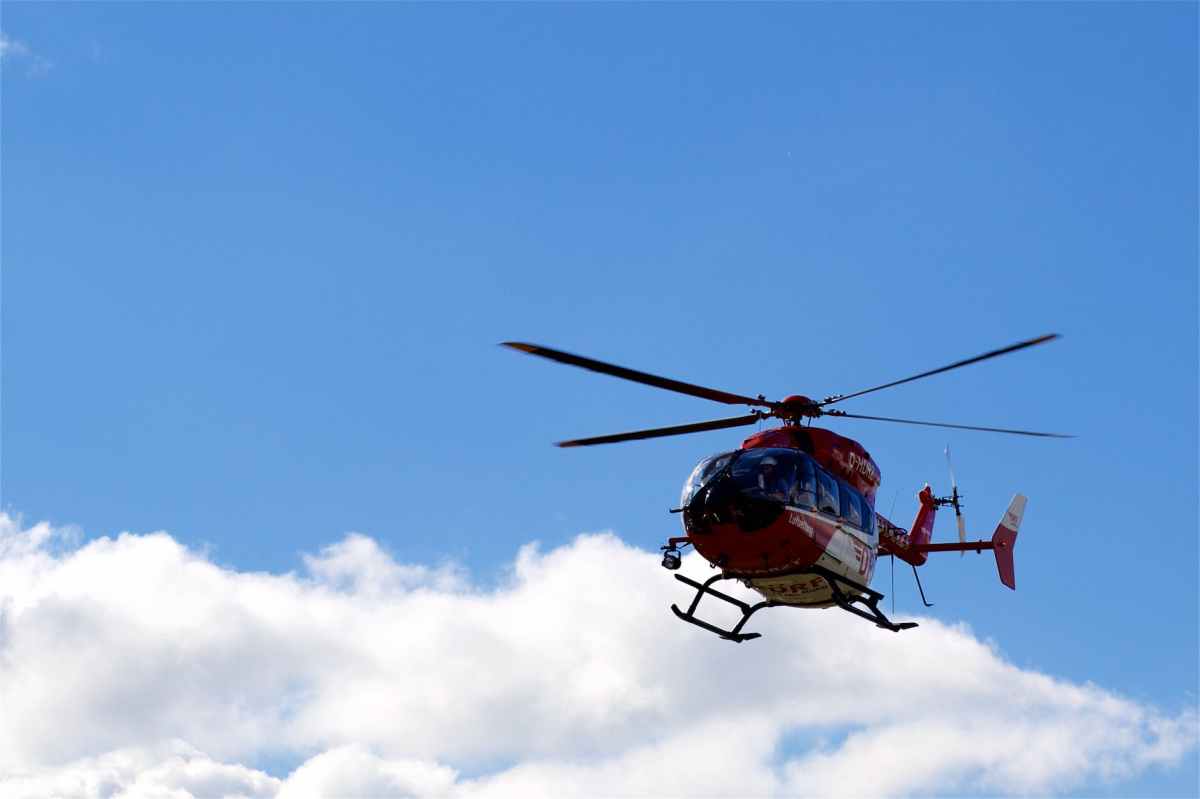
What will be the public reaction when we look up to see half a dozen new urban mobility vehicles buzzing past overhead? Perhaps we’ll accept new flying machines if it’s for a public service, an ambulance, fire services, police, or even newsgathering. Brightly coloured in emergency orange.

A public flying taxi service might raise a few eyebrows. A flashy private flying car, now that might be another matter altogether. There you are on a hot summer evening, in the garden, having a pleasant barbeque with friends and whiz a flying car swoops over the treetops. The passengers have their mobile phone out filming their trip. This is when fist will be raised skyward. It’s a time when you hope the next-door farmer hasn’t got a shotgun.

Today, a few pilots do get prosecuted for misbehaving when low flying private helicopters. Not often, it’s true. This happens with less than 1500 helicopters registered in the UK. What would happen with, say, 10,000 private flying cars? I wonder.

What do you think?

A bill poster looked down at me. In big bold letters the word “Good” was the main message. It was the fact that a local college had been graded as good. They clearly wanted everyone to know that an inspection had gone well. Afterall, the rent of street posters is not cheap.

So, for all the efforts of all the staff, and the whole educational institution their work was summed up in one simple word. Four colourful letters displayed to passers-by. To be categorised as “Good” is read as having crossed a line. It’s a positive statement and a long way from – fail. Equally, it’s a mile off – excellent. The trouble is that “Good” is such a bland word. We have such a wide spectrum of use for that word that it’s difficult to know what it means.

One wonderful comedy sketch is that of Statler and Waldorf in the Muppets[1]. The two argumentative elderly men master the art of heckling. They start by saying: “that was wonderful” and then “it really wasn’t that good”, then keep on going until they get to “that was terrible” before they sign off.

It’s a nice reminder of a range of opinions being like shifting sand. In the range of one to ten the word “Good” is smack bang in the middle. Probably the most inoffensive classification.

If you are like me, you will have experienced a stream of e-mails asking for an opinion. Surveys are the number one marketing tool. To lure us they often have prize draws or the prospect of a giveaway.

“As a valued customer we welcome your feedback”. “We wondered if you could spare 5 – 6 minutes?” In theory, the fact that a business is interested in feedback is a positive. I like to know that a restaurant or airline is taking customer feedback. The hope is that feedback assists businesses in improving and developing their services.

However, an invitation to “share your thoughts” is reduced to box ticking. It’s almost as if we are still in the world of computers run on punched cards. These electronic surveys are constructed for the processor rather than that of the user.

They are quite checky too. Tick a particular box on a survey and another one comes up to ask – why do you feel that way? It’s almost as if you are required to justify a freely given opinion and threatened with being ignored if you don’t.

For all the above customer surveys have been a part of the landscape for since the early days of the internet. Categorisations put a stamp on what we think. It’s crude. Sometimes it’s merely a set of five stars with a request to choose one. Cantankerous opinions are mixed with indifferent answers. The aggregation of a pile of data can make the results as bland as tasteless soup. This can then be pasted into company reports. Thus becoming more of a security blanket rather than real feedback.

Let’s end on a positive note. This is a subject where Artificial Intelligence (AI) can contribute. Instead of box ticking why not have a dialogue with customers. Ask them what they really think. Imagine an animated AI version of Statler and Waldorf. Now, that would be fun.


[1] https://youtu.be/NpYEJx7PkWE

HS1 and a bit

John F. Kennedy made speeches that have become legendary. My favourite is: “Ask Not What Your Country Can Do For You.[1]” In it he stepped up to meet the challenges of the times with clear purpose. There was no dither or wishy-washy ambiguity. The speech was a signal to the world saying: this is where we stand.

This morning, this is not the speech that I’m thinking of. I mention it because without Kennedy setting the scene in his Inaugural Address of January 1961, then his next steps would have been more difficult. There are epoch changing words. There are few modern words that match these: “We choose to go to the Moon in this decade and do the other things, not because they are easy, but because they are hard.[2]

In the context of the decision on the future of the HS2 railway project the words “but because they are hard” rings in my ears. In the whole saga of this national railway project did anyone say it would be easy. No one said it would be inexpensive. It was always going to be hard from the start.

If Kennedy had announced just to have a look at the Moon and return. No need to land. And he said that after a strong commitment to land on the Moon had been made, the achievement would not have changed the world. It would have been a footnote in 20th century history because others would have made the first steps on our satellite.

In a country that gave birth to the railways you would imagine that ambition in that field of endeavour would be high. Britain had energy. Britain had innovative engineers. Britain had a technological lead. The early days of the railways fuelled the industrial revolution.

Today, we need a bold and ambitious infrastructure plan in the UK. Living off the legacy of Victorian construction has lasted longer than is wise. Tracks that were set down almost two centuries ago are still the arteries that transport people and goods throughout Britain. Where is the Isambard Kingdom Brunel[3] of the 21st century?

Now, Conservative politicians are attempting to con the country – yet again. The idiotic line that – people don’t travel by train anymore – is insulting and wrong. The thin line that we can do more with our inherited Victorian infrastructure is pitiful. The Prime Minister’s hotch-potch of projects, with no timescales given, are no alternative.

Commitments can be hard to keep. Politicians that make “firm” promises and then back track in the days before a General Election are will-o’-the-wisps. Then to claim that they are working for the long-term is newspeak. Not to be trusted. Infinity forgettable.  

POST 1: Promises to upgrade main roads, that had been already anounced but delayed is not adding transport projects at all.

POST 2: HS2 explained: What is the route now, what are the costs and why is the Manchester leg being axed? | Business News | Sky News


[1] https://www.jfklibrary.org/learn/about-jfk/historic-speeches/inaugural-address

[2] https://www.jfklibrary.org/learn/about-jfk/historic-speeches/address-at-rice-university-on-the-nations-space-effort

[3] GWR was designed and built by Isambard Kingdom Brunel between 1835 and 1841 and is regarded as the most complete early railway in the world.

HS2 – again

Travelled on the Elizabeth Line yesterday. It was an expensive project to build. Tunnelling under London and erecting new stations was a costly business. It was called “Crossrail”. Approval was given in 2007 and construction started in 2009[1]. In 2022, one-sixth of the UK’s total rail journeys took place on the Elizabeth Line. The billions spent were a major investment in the future. Over £18 billion in fact. It was a national demonstration that huge civil engineering projects can be undertaken and mastered[2].

As a passenger the Elizabeth Line is a pleasure to use. It’s clean, speedy, and simple to use. Comparing it to the older London Tube lines is like comparing a Tesla with a Ford Anglia[3]. Sadly, a great deal of our national rail infrastructure is trapped in the Ford Anglia era.

So, what of HS2[4]? The wibbling and wobbling that has plagued the project is sucking the energy out of the resolve needed to see through an even bigger undertaking than Crossrail. Some people argue that the billions needed for HS2 could be better spent on other projects. However, the portfolio of transport projects that are suggested as alternatives never seem to materialise.

Talk of cancellations feed the political turbulence over infrastructure investments. The impression this presents goes way beyond the shores of this country. There’s no Global Britain on show here. It’s more signals of dither and lack of determination that are publicly on display. Instability and the short-term outlook is the motif of the current generation of politicians.

If there are superior and smarter alternatives to HS2 they should have come up during the planning phase of the project. What we know about vast engineering projects is that chopping and changing them midstream adds massively to costs. It also diminishes the usefulness of the outcome.

Britain needs a backbone. A rail backbone and a political backbone. The spending on HS2 is large but that spending is in country. It’s jobs and investment onshore for the benefit of the whole country, not just the Southeast of England.

The last few years have seen that banner “levelling up” heralded by Conservative politicians. This slogan will be as nothing if HS2 is wound down or constricted. The signal will be loudly heard that all that talk of levelling up the regions of Britain was shadow boxing.

In the long-term improved connectivity across the country will be a great asset. The Victorians knew a thing or two about engineering great projects. Their legacy should give us resolve.

POST: Still it is good to see the rest of the world getting on with High Speed Rail High-speed Archives – International Railway Journal (railjournal.com)


[1] https://www.timeout.com/london/news/the-new-elizabeth-line-your-crossrail-questions-answered-052322

[2] https://www.theguardian.com/uk-news/2022/mar/13/elizabeth-line-crossrail-opening-london

[3] https://www.autoexpress.co.uk/ford/104979/ford-anglia-105e-and-123e-buying-guide-and-review-1959-1968

[4] https://www.hs2.org.uk/

Get Back

The big picture story is that Europe needs unity more and more to face the future.

Today, a National Rejoin March takes place in London. This march takes place when it’s all to evident that Brexit has been an abject failure. Having the bravery to admit that Brexit is a failure remains challenging. UK political leaders are shying away from admitting the reality of our common situation.

Thousands of those who support the UK being a European Union (EU) member are gathering in the capital. It’s time to ensure a message gets sent that re-joining the EU is a popular and gaining momentum. Members of Parliament (MPs) may not be in Parliament on the weekend, but the message sent by those on the city’s streets is strong and clear.

It’s true that this is a frustrating experience. I’ve been on many organised London marches. They are characterised by their camaraderie, positivity, and great spirit. Marching makes a difference to the people who march and it’s also makes a wider impact. Media coverage may be sparce. What they do see and hear is a sense of solidarity and unity.

Sadly, there are no apparent results flowing from this national campaign, so far. The UK’s out of touch political parties are trying to look the other way. Today, the fearful nature of the bland mixture of our political leaders is immensely disappointing. They scurry around like little brown rats. Looking busy but terrified of stepping outside their comfort zone.

Tinkering with the Trade and Cooperation Agreement signed by former Prime Minister Boris Johnson will deliver only more disappointment. Papering over that public disappointment, we can rely on a part of the tabloid media spinning threatening stories. The artificial culture wars raging between the political right and left have little to do with reality. This noisy nonsense plunders the opportunity to make life better for the vast majority. It’s a side show.

The big picture story is that Europe needs unity more and more to face the future. If it’s climate change, war, immigration, or economic troubles sustainable solutions cannot be found in isolation. Our region of the world is so interconnected and interdependent that events in one part of Europe inevitably affect others. Brexit does not work.

Future generations will look back on this era as being a regressive one. Opportunities lost and difficulties increased by a lack of political bravery. A lack of direction. A lack of leadership. This will be overcome in time, but that change will not come soon enough.

POST: Reporting on the event Pro-EU supporters march for Britain to rejoin the European Union (france24.com)

Get Back

It’s painful to watch. Frightening. Seeing them take over London. Yes, I did hide behind the sofa when the Cybermen[1] came on. But then again, I was only around 6 or 7-years old. They converted humans to their kind by removing emotions and personalities. Scary stuff. The sort of evil creatures that nightmares are made of. With bodies made of cybernetic parts they seemed undefeatable but like so many great science fiction stories they had weaknesses, and the Doctor knew them. My early Dr Who knew exactly what to do.

In this case it’s not fiction that I’m writing about. Just the same it was painful to watch. Frightening. Seeing them take over London and the whole country. We had years of this scary drama. In fact, its still going on around us now. Laura Kuenssberg’s State of Chaos[2] has been a true horror story. This week I caught the Part 2. I don’t think I can take another Part.

History is being penned quickly in our media age. Watching the story of how our political system was smashed-up by a bunch of marauding, well, I don’t know what to call them. Is there a collective term for careless, egotistic, idiotic, manic, obsessive, power-hungry politicians? A term one can use in polite company, that is.

Since 2016, and to a lesser degree just before, the march of Conservative politicians has been to the tune with a dangerous beat. Smash-up the norms, disregard sound advice and steam ahead with blind arrogance. Much of this is epitomised by the character of Boris Johnson, but there are so many other in the cast strange and obsessive people.

Kuenssberg must tread a fine line because getting caught up in the finger pointing polarisation of the politicians is perilous. In her time as BBC Political Editor, it must have been like walking across Niagara on a tightrope every day.

The State of Chaos is giving us a new perspective on the Conservative Party’s on-going civil war. It seems the situation was even worse than we had been led to believe. This documentary is a treasure-trove of extraordinary material that is only a sample of what happened.

I’d say we all agree. It doesn’t matter which side of the Brexit argument that you stand or stood. Utter chaos has transpired in the reign of the last 5 Conservative Prime Ministers. Interviewees can point fingers at each other, all the same the word chaos applies.

In the coming months the lessons from this fearful period need to be learned. A new normal need to be established. We need to get back[3] what we have lost. Get back a sense of responsibility. Get back a reputation for competence. Get back ambition for the future.


[1] Dr Who. The Cybermen first appear in the serial The Tenth Planet in 1966, set in 1986.

[2] https://www.bbc.co.uk/iplayer/episodes/m001qgww/laura-kuenssberg-state-of-chaos

[3] I must be channelling The Beatles.

Upfront

Years of looking at the reliability of aircraft components and structure have given engineers a good understanding of the natural decay of mechanical workings. To that extent even electronic components are mechanical. Materials oxidise (rust), random shocks and vibration take their toll, temperatures cycles from cold to hot and back again a whole range of impacts are relentless. You can say – nothing lasts forever.

Occasionally a discovery adds to the knowledge of how materials behave under high stress. Sadly, that’s what hit the early years of civil jet aviation. The de Havilland DH106 “Comet” was the world’s first passenger carrying jet airliner. It first took to the air in 1949, which I find remarkable.

Catastrophic metal fatigue failure of the aircraft fuselage put paid to this British aviation project but only after several tragic fatal accidents. In 1954, the Comet aircraft were all grounded during an extensive accident investigation. The jets were redesigned and re-entered commercial service in 1958. However, by then the aircraft had a damaged reputation and others were doing far better. Now, those Comet aircraft that remain are museum exhibits[1].

Last week, I walked through the fuselage of a Comet 1A built in 1953 at Hatfield for Air France. It’s fascinating to see what advanced aviation technology was 70-years ago. What was surprising to me was the read across from that first version of a jet aircraft and what we have in-service now.

Automation has removed the place of the navigator and the flight engineer, but the stations of the pilot and co-pilot are familiar. The fuselage is cramped but the seating is generous and spacious. This aircraft must have been a dramatic revolution in flying at the time.

As we look to advance aviation in the coming years, with new ways of flying and new ways of powering flight so the warning of the Comet project should be heeded. We are at a time of extraordinary changes in the aviation industry. Advanced technology can deliver great benefits to society. It’s up to us to make sure we cover all the possible disbenefits as far upfront as we can. If we don’t, they will come back to bite us.


[1] https://www.dehavillandmuseum.co.uk/aircraft/de-havilland-dh106-comet-1a/

Newspeak

Listening to the drivel coming from The Rt Hon Kemi Badenoch MP[1] this morning on the radio reminds me that we have a long way to go. The road travelled is a long one.

The tendency to either speak like a badly typed up press release or repeatedly call apples – pears is astonishing. It must be that there’s a switch that has been thrown in the brains of Ministers that is hit to engage illogical nonsense. From that moment a droning sound emanates. Jumbled up words are contrived to say Brexit = good – not Brexit = bad. You would imagine that such Ministers think they are talking to naughty 5-year-olds. It doesn’t mater what the facts are this behaviour continues.

Even good news, like BMW’s continued investment in the UK, is flipped into an EU bashing session. The fact is that the UK had to demonstrate its willingness to support the car industry to retain that much needed investment.

Brexit has been, and is, a complete catastrophe, and everyone knows it. That is everyone who isn’t a Conservative Minister, or a Labour would be Minister. Badenoch plays childish games to paint a picture of great success when the reality is one of significant pressure.

The Foreign Direct Investment Statistics are not good[2]. To quote a recent report to Parliament: “Net investment from the EU was -£24.1 billion, compared to £28.0 billion in 2020, while net investment from Europe as a whole was -£27.6 billion “. Note the “-“, in other words negative.

To quote further:” The UK’s share of inward investment projects has stabilised after “falling sharply following the 2016 vote for Brexit”, with the 21% of projects attracted in 2015 “representing the high-water mark.” In other words, the UK was doing exceptionally well until Brexit came along.

And so much for so called – levelling up. London retained its status as the UK’s largest destination for inward investment projects. London continues to attract the world’s attention.

What’s further idiocy is the random pick and mix approach that this Conservative Government has adopted. There appears to be no strategy. No direction. Just an opportunism. Jump in a wholly reactive manner and then announce success, as if it was planned.

Looking at investment going the other way. The UK’s outward investment flows to the US reached their highest level since 2017. So, post-Brexit, British investors see opportunity in the US. Could it be because they are investing? The US Infrastructure Law targets a range of spending from repaving roads and water system upgrades.

With the News, such as it is, surely, we need a UK Infrastructure Law. Would British investors not want to support that idea?

POST 1: Badenoch would not face the reality. On Sky News she skirted around the subject but let slip that cars will be more expensive in the UK because of Brexit. Rules of origin impact the British car industry.

POST 2: For the sake of balance. At least Badenoch is taking a practical approach to China. The Conservative back benchers who push for a hard line are not thinking about the need for dialogue on climate change and trade. Intelligence and Security Committee of Parliament China (independent.gov.uk)


[1] https://www.gov.uk/government/people/kemi-badenoch

[2] https://researchbriefings.files.parliament.uk/documents/CBP-8534/CBP-8534.pdf

Reform

The words: “A long time ago in a galaxy far, far away….” – who doesn’t know those words? They come to mind in my thoughts of the last few years.

I caught a “Have I Got a Bit More News for You” on TV[1] last night. I think it was only from May last year but the world it described was miles from the situation of today. By the way, I must be of a certain age given that I’m still watching TV. I put the iPhone and iPad down for ten minutes. The box in the living room still has a place even if the day they pension-off Ian Hislop and Paul Merton can’t be far off.

Fine, there was some enduring themes that just keep giving and giving. Personalities pop-up with new roles even if reputations were long since trashed. What’s moving on is that feeling of being in a post-COVID world and the good bits of the Elizabethan era. The signs saying keep a distance from the next person are fading. Discussion about QEII is now about memorials and statues.

In less than a decade, the global reputation of the UK has seen some remarkable turbulence. I’m not being romantic about some time when everything worked smoothly. It never did. Governance is a difficult business. Turbulence is a permanent feature even if it doesn’t always star in the everyday News.

What should be enduring is a frankness and ability to acknowledge when mistakes have been made. To reflect and learn from experience is a wonderful human ability. It likely that if this didn’t exist then neither would we. Every step forward that’s made is often on the backs of many failures.

The pre-2016 era, what we could call a time relative civility, fraternity, and sanity, was not immune from turbulence. What was better was the mechanisms available to address that turbulence. The space available for dialogue was much bigger.

Brexit, for our country has been the biggest blunder we have has made in a lifetime. As predicted, Brexit’s reality has made the UK a paradise for speculators, spivs, and smugglers. Brexit has imposed extra costs and border restrictions on goods. It’s wrecked freedom of movement. It’s encouraged petty finger pointing on every major difficult subject.

Brexit pledges are now broken with such regularity that it’s impossible to count them all. Whether it’s a downgrading of the environment or attacks on employment rules or fake political storms they are too numerous to mention.  

This blog started in a long time ago in a country far, far away, or at least it feels that way. My view remains that we need to be at the heart of Europe to succeed in the future. To do that we need to make some big changes at home. I’m no great fan of Rory Stewart[2] but he’s right to engage with populism and take on the need for constitutional change.


[1] https://www.bbc.co.uk/iplayer/episodes/b00877q4/have-i-got-a-bit-more-news-for-you

[2] https://www.barbican.org.uk/whats-on/2023/event/an-evening-with-rory-stewart

Learn by testing

Back in the mid-1980s, aircraft system integration was part of my stock-in-trade. Project managing the integration of a safety critical system into a large new helicopter. It was a challenging but rewarding job. Rewarding in that there was a successful new aircraft at the end of the day.

For big and expensive development projects there are a great number of risks. The technical ones focus on functionality, performance, and safety. The commercial ones focus on getting the job done on-time and at a reasonable price. Project managers are in the middle of that sandwich.

Naturally, the expectations of corporate managers in the companies that take on these big challenges is that systems and equipment integration can be done to the book. Quickly and without unexpected outcomes. The practical reality is that people must be well prepared and extremely lucky not to encounter setbacks and resets. It’s not just test failures and anomalies that must be investigated and addressed. Systems integrators are working on shifting sand. The more that is known about overall aircraft flight test performance and customers preferences so technical specifications change.

With cockpit display systems, in the early days, that was often feedback from customer pilots who called for changes to the colour, size or shape of the symbology that was displayed on their screens. What can seem a simple post-flight debriefing remark could then turn into a huge change programme.

That was particularly true of safety critical software-based systems. Equipment suppliers may have advanced their design to a state where much of the expensive design validation and verification was complete. Then a system integrator comes up with a whole set of change that need to be done without additional costs and delivered super-fast. Once a flight test programme gets going it can’t be stopped without serious implications. It’s a highly dynamic situation[1].

I’m writing this blog in reaction to the news coming from Vertical Aerospace. Their VX4 prototype aircraft was involved in an flight test incident that did a lot of damage[2]. There’s no doubt this incident can provide data to feedback into the design, performance, and safety of future versions of their aircraft[3]. Integrating complex hardware and software is hard but the rewards are great.

“Excellence is never an accident. It is always the result of high intention, sincere effort, and intelligent execution.” – Aristotle


[1] https://youtu.be/Gb_eta4mZkc

[2] https://evtolinsights.com/2023/08/vertical-aerospace-identifies-propeller-as-root-cause-of-august-9-vx4-incident/

[3] https://investor.vertical-aerospace.com/news/news-details/2023/Vertical-Aerospaces-VX4-Programme-Moves-to-the-Next-Phase/default.aspx