Ticket to ride

The latest political rouse is not a new one. There must be a cabinet full of these tactics stashed away in Conservative party headquarters. In a desperate attempt to prepare prospective candidates for a forthcoming General Election we are going to see a lot of slight of hand. None of it will be magic. It takes blind ambition and the ability to deny yesterday’s plans in a heartbeat.

Most of the News about rail travel around here has been about industrial action. That said, at least one other issue has got people rallied in opposition over recent weeks.

Back in July a public consultation[1] was launched to consider how rail tickets are sold and how to improve customer service. The public were invited to comment on proposals which were made by rail operators across the country.

Now, that’s the interesting bit: proposals which were made by rail operators. So, they say. The reality is that rail operators would not have been able to make major proposals for change in customer services unless there was some kind of tacit agreement with the Department of Transport DfT[2]. This is reasonable because a great deal of public money is made available to the railways. Guidance on the issue is a matter for the Secretary of State for Transport.

One proposal was made that must have been known would spark protests. Not everyone uses local rail ticket offices, but their removal was never going to be a simple matter. Reigate has one. It’s not always open but when it is open the ticket office is immensely useful. Ministers when questioned about the unpopular move to close ticket offices windows defended this proposal.

Now, let’s jump to the outcome of the consultation and the decision made as a result. Through the 3-months after the closure of the public consultation period the issue was allowed to fester. As the post-party conference season weather limits doorstep campaigning so political social media activity is ramping up to take us through the winter.

The results of the consultation pointed to an obvious decision. This is particularly true because the issue of rail ticket office hours was not a new one, having done the rounds ten years ago.

So, what do we have? Conservative prospective parliamentary candidates claiming victory. Single handed they defeated an unpopular measure and listened to peoples’ complaints.

Honestly, am I being cynical? We must look back at where the recent public consultation came from and the fact that changes to railway ticket office opening hours were addressed in 2012, with the same result. Proposals dropped.

The way the roles of station staff have been used to stir-up controversy is a political ploy. Then to step-in to slap down wicked rail operators across the country is a rouse in my opinion. Will this issue of major changes to ticket offices come back again. Sure, it will but only after the next General Election.


[1] https://www.southernrailway.com/publicconsultation

[2]Not a new issue https://www.gov.uk/government/publications/changes-to-railway-ticket-office-opening-hours/changes-to-railway-ticket-office-opening-hours

Overhead

Massive intertwining skyscrapers. Towering masts. Flying cars. Pulp magazines in the 50s and 60s had it all. Beautifully illustrated in bold colours. Sharp lines and chiselled faces. Heroic poses and streamlined transports.

Visions of the future. Idealistic imaginations of a utopian society. Don’t we just love them. That is until someone builds them in our neighbourhood. Until the bulldozers turn-up unannounced on a Sunday morning to root out the trees. The birds flee the vicinity (except the pigeons).

You can blame the draftsmen of the past if you like. In our heads there’s a disconnect between the images on a set of drawings and what that might become in concrete and steel. Grand designs are but few. A great deal of the building and planning of the last 60-years can justly be called dreadful.

We have an outcry over brutalist architecture or a lament about a Victorian park that has been paved over. Has anyone ever walked through a public car park that inspired?

If you dream it, you can make it. Nice phrase but often stifled because current technology and thinking are way behind the curve. It could be said that this is one of the drivers that pushes technology forward. The realising of dreams but who’s?

Where does the flying car fit in all this fiction and near realism? New forms of air mobility are just about to start operating.

It’s a habit of our times to jump to an instant polarised opinion. Those open toed sandalled greenies will object. Those red necked, but reforming petrol heads will welcome. That sort of stuff makes nice headlines. It’s only a basis for the crudest dialogue. Anticipate conflict and then fuel it with prejudice. Please, let’s avoid that pointless waste of time.

My thoughts are that the potential of the greater use of airborne transport is a nuanced.

Electrification is a pathway to more environmentally sustainable ways of moving around. If this helps to reduce miles of fuming traffic jams that must be good. At its best, flying can get people from point to point without having follow roads set-down at the time of the horse and cart. Accepted that concrete may be poured to create a take-off and landing zone but compare that with road building and there is no comparison.

On the more concerning side, contrast that with cluttering the skies up with fast moving machines.

In HHGTTG there’s a tale about a shoe event horizon. When gloom causes people to look down and so then buy new shoes to cheer themselves up. So, the whole economy switches to shoe production and then collapses as a result. The association with salvation coming from looking-up is there in the wit of Douglas Adams. We look up to cheer up.

If looking up, as I do at home, to see high altitude vapour trails crisscrossing the sky, my thought is – I wonder where they are going? On the days when a light aircraft crosses the town, to or from our local airfield that doesn’t bother me. Even a noisy police helicopter keeping an eye on the traffic. That’s fine because they are solely there for our safety and security.

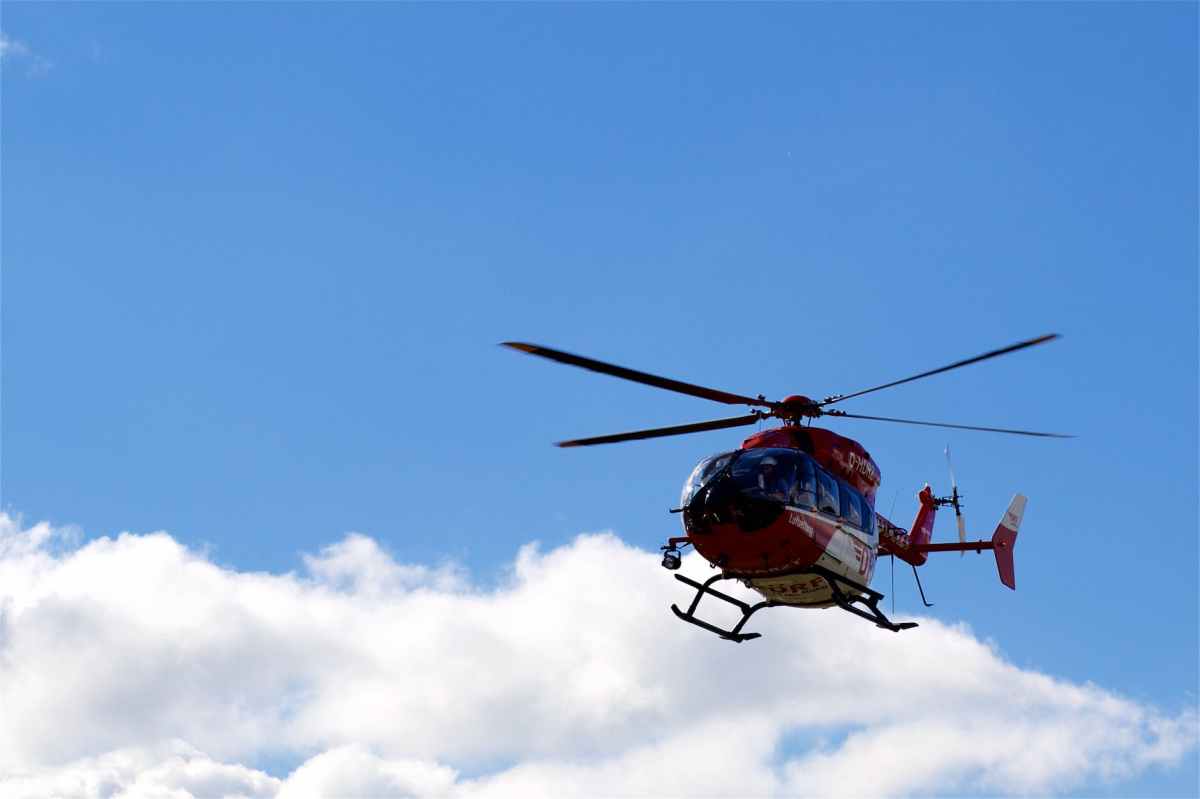
What will be the public reaction when we look up to see half a dozen new urban mobility vehicles buzzing past overhead? Perhaps we’ll accept new flying machines if it’s for a public service, an ambulance, fire services, police, or even newsgathering. Brightly coloured in emergency orange.

A public flying taxi service might raise a few eyebrows. A flashy private flying car, now that might be another matter altogether. There you are on a hot summer evening, in the garden, having a pleasant barbeque with friends and whiz a flying car swoops over the treetops. The passengers have their mobile phone out filming their trip. This is when fist will be raised skyward. It’s a time when you hope the next-door farmer hasn’t got a shotgun.

Today, a few pilots do get prosecuted for misbehaving when low flying private helicopters. Not often, it’s true. This happens with less than 1500 helicopters registered in the UK. What would happen with, say, 10,000 private flying cars? I wonder.

Scary 2

My list is still open for horror in aviation. I’ve opened the door to action movies with elements of horror. I’m excluding war movies and fighter pilot romps. A dramatic scene must have a moment of suspense when everything hangs on a thread. It could be a hide behind the sofa moment or felling that all is lost, and the faint light of hope is dimming. I was tempted to include zombie movies only to quickly come to my senses and say – no. I’ve avoided Snakes on a Plane. One, because I haven’t seen it. Two, because it’s write-ups suggest that it’s too ridiculous for words. Although, it’s not impossible. It’s even happened on general aviation flights.

Here’s five more movies, ancient and modern in my private list.

There’s an adaptation of the book No Highway. With actors James Stewart and Marlene Dietrich in the movie you would have thought it would have been a big smash. No Highway in the Sky is pedestrian, but the tension comes from us knowing that metal fatigue is real. Why don’t they believe it? We know the history of the first commercial jet, the Comet aircraft.

The original Flight of the Phoenix is a great suspense movie[1]. It’s not so much horror as intensely griping. Frightening in the sense that it tells us something about the good and bad of human behaviour. The constant battle between despair and what can seem like hopeless optimism in the face of terrible odds. Through gargantuan effort, crash survivors stranded in a desert survive.

There’s something especially frightening about aircraft crashes and danger in the cold white wastes of the poles. Again, passengers and crew struggle to stay alive in freezing weather in the desperate hope of rescue. Stranded, death visits the unfortunate survivors. Ordeal in the Artic[2] is a chilling movie of 1993 based on real events in 1991.

Final Destination has simple plot[3]. A student has a premonition, he and his friends get thrown-off a flight to Europe and then when they are back in the terminal there’s a fatal crash. They cheat death. But that’s not the end. That set-up is the ultimate scary imagining. It’s the what if? It’s the question survivors of aircraft accidents must ask – why me?

The 1955 British movie The Night My Number Came Up[4] plays on a similar theme but this time a nightmare before a planned journey. A bad dream of an aircraft crash. Will it happen just as the dream predicts. You must watch to find out.

Generally, in films there’s so much pure aeronautical nonsense on display. Commercial aircraft do not fall out of the sky when struck by lightning, flight crews do not lose control at the first sign of trouble, fuel doesn’t explode for no reason and the worst of weather doesn’t signal game over.

That said, there’s an inherent claustrophobic feeling inside an aircraft fuselage. It’s like a locked room drama. Passengers are isolated from the outside world. They are dependent on pilots, engineers and air traffic controllers all doing their jobs right. There’s the potential for this set-up to be the stage for an excellent dramatic horror movie. Tales of bravery, camaraderie, and sacrifice can all spring from the most dreadful of events. Unfortunately, so many movie makers make a mess of these situations.  


[1] https://www.imdb.com/title/tt0059183/?ref_=ttls_li_tt

[2] https://en.wikipedia.org/wiki/Ordeal_in_the_Arctic

[3] https://www.imdb.com/title/tt0195714/

[4] https://www.imdb.com/title/tt0047278/?ref_=ttls_li_tt

What do you think?

A bill poster looked down at me. In big bold letters the word “Good” was the main message. It was the fact that a local college had been graded as good. They clearly wanted everyone to know that an inspection had gone well. Afterall, the rent of street posters is not cheap.

So, for all the efforts of all the staff, and the whole educational institution their work was summed up in one simple word. Four colourful letters displayed to passers-by. To be categorised as “Good” is read as having crossed a line. It’s a positive statement and a long way from – fail. Equally, it’s a mile off – excellent. The trouble is that “Good” is such a bland word. We have such a wide spectrum of use for that word that it’s difficult to know what it means.

One wonderful comedy sketch is that of Statler and Waldorf in the Muppets[1]. The two argumentative elderly men master the art of heckling. They start by saying: “that was wonderful” and then “it really wasn’t that good”, then keep on going until they get to “that was terrible” before they sign off.

It’s a nice reminder of a range of opinions being like shifting sand. In the range of one to ten the word “Good” is smack bang in the middle. Probably the most inoffensive classification.

If you are like me, you will have experienced a stream of e-mails asking for an opinion. Surveys are the number one marketing tool. To lure us they often have prize draws or the prospect of a giveaway.

“As a valued customer we welcome your feedback”. “We wondered if you could spare 5 – 6 minutes?” In theory, the fact that a business is interested in feedback is a positive. I like to know that a restaurant or airline is taking customer feedback. The hope is that feedback assists businesses in improving and developing their services.

However, an invitation to “share your thoughts” is reduced to box ticking. It’s almost as if we are still in the world of computers run on punched cards. These electronic surveys are constructed for the processor rather than that of the user.

They are quite checky too. Tick a particular box on a survey and another one comes up to ask – why do you feel that way? It’s almost as if you are required to justify a freely given opinion and threatened with being ignored if you don’t.

For all the above customer surveys have been a part of the landscape for since the early days of the internet. Categorisations put a stamp on what we think. It’s crude. Sometimes it’s merely a set of five stars with a request to choose one. Cantankerous opinions are mixed with indifferent answers. The aggregation of a pile of data can make the results as bland as tasteless soup. This can then be pasted into company reports. Thus becoming more of a security blanket rather than real feedback.

Let’s end on a positive note. This is a subject where Artificial Intelligence (AI) can contribute. Instead of box ticking why not have a dialogue with customers. Ask them what they really think. Imagine an animated AI version of Statler and Waldorf. Now, that would be fun.


[1] https://youtu.be/NpYEJx7PkWE

Wolseley

In the early 1960s, there was a wonderful appreciation of Italian design. Car manufacturers looked for stylish Latin lines to package their popular models. The public were up for this, and some models became iconic. The BMC[1] Mini is often thought of as Italian in design even though it’s not.

In amongst the popular cars of the 1960s, were some that faded into the background and, although cherished at the time, now don’t star much in classic car magazines or shows. My childhood memories are pepper dashed with images of a standard family saloon. In fact, a luxury version of a car that was a workhorse of the BMC line.

It looked like two cardboard boxes lumped one on top of the other. The “style” was added by understated fins at the rear and a chrome grill that looked like a big carp mouth. Contrary to so much Italian design, aerodynamics was not a consideration. The classic four in-line 1600cc engine had the job of pushing this brick through the air.

For my family the advantage, in the pre-seatbelt era, was wide seats capable of taking parents and four boys without difficulty. Tones of junk could be carried in the boot. The “luxury” came from these seats being robust leather. Sweaty in the summer and cold in the winter. The walnut venerer dashboard and Smiths instruments tried to distinguish the model.

I’m recalling this shiny black Wolseley 16/60[2], because it was so much part of our families’ excursions around Somerset, Dorset, and Wiltshire that it really was part of the family. Sundays were reserved for visiting the uncles, aunties, and cousins. Trips to the Weymouth beach or the pantomime in Bournemouth were great motoring adventures. Studland bay was our best day out. Slowly weaving up and down rolling hills. Peerling out of the windows as the countryside drifted by.

In the early days there was the need to get back to milk the cows or set-off after the work was done. This made the day busier than most. Pre-packing the car for every eventuality we set-off with anticipation and excitement. Although there was less traffic on our country roads in the 60s, there was enough to create jams on hot sunny summer days. My mum and dad must have had fun keeping an eye on squabbling boys, bored with playing I-Spy. Return journeys were easier as we all snoozed.

I can close my eyes and clearly see a couple of those return journeys late at night. After all the excitement of shouting our hearts out: “look behind you” a dozen times my brothers slept until we got close to home. It must have been so tiring motoring through the wind and driving rain to be confronted by a flood about a mile from the farm. River waters spilled over the road. Easily a couple of feet deep.

That’s how it was late in a winter evening. I can distinctly remember my dad, in his best clothes pushing the lumbering Wolseley through a flood with us sitting high and dry. Headlight beams shining on the turbulent water. I never heard a bad word coming from him but I’m sure if I was faced with that situation the air would have turned blue.

The family’s Wolseley 16/60 was a gateway to other worlds. The marque has long since gone. Nevertheless, my memories of that car are etched into every corner of my childhood.


[1] British Motor Corporation (BMC)

[2] https://www.wolseleyownersclub.com/wolseley-cars/farina-design/wolseley-16-60/

Tip

You may think it was a bit of a joke. Certainly, some of the holiday makers around me thought the cabin crew were joking. I was at the back of the aeroplane and so one of the last passengers off.

We arrived at London Gatwick’s North Terminal at about 9:30 pm on a Sunday. Passengers were keen to get off and get home. That said, the amount of sizable luggage in the aircraft cabin overhead bins and maybe the sleepiness of one or two people meant the long line down the aisle was moving slowly and intermittently. The process was civilised but at a snail’s pace as it seemed from the back.

When you hear a request to hurry-up otherwise the plane will tip up it does instil some urgency. That and one or two questions. It also made me think; could that really happen in this situation? I was standing next to the cabin crew at the back, and I can attest to their concern being real. Being at the terminal gate there was only the front door open to exist the aircraft. When we got on-board the aircraft both the front and rear doors were available.

The Boeing 737 MAX-8 is a not an overly long aircraft. That said, under certain unfavourable conditions it can tip. In fact, there are longer versions of both the Boeing and Airbus single aisle aircraft that pose more of a challenge in this respect. There is much stretching of popular aircraft types to increase passenger capacity.

At the same time as we were deplaning[1] (ghastly word), the ground crew were unloading our luggage. As a result of all this movement of passengers and luggage it is possible to have too much weight at the back of the aircraft. Yes, you could blame it on masses of carry-on bags obstructing the aisle on a full aircraft, but it also takes the front passengers to have got off quickly. There are more passenger seats behind the aircraft wings than there are in front. On a cool Sunday evening when the airport’s public transport options are limited there’s an incentive to rush-off from the front. As the deplaning continued there was a sense that something was happening underfoot.

Does it happen? Do aircraft tip up? Yes, they do[2]. It’s not an attractive sight. I have no idea what the procedures are if it does happen. It certainly would be a shock for those on-board. Anyone in the vicinity of the aircraft would have to watch out too. In these unplanned events, there is a hazard to ground crew that can result in injury.

This sort of event happens more often in the air cargo world[3]. While these events maybe comical to witness, they are no joke for airlines. The possibility of damage and the disruption to aircraft operations can be significant. Nose wheels coming off the ground don’t always result in an aircraft tip, but this is not somewhere any crew responsible would want to go.

Weight and balance issues are real. Each aircraft will have weight and centre of gravity limits established at the time of aircraft certification. Aircraft operators will have procedures[4] that fully consider loading and unloading. That said, as we can see, miscalculations do get made.


[1] https://grammarist.com/spelling/deplane-or-disembark/

[2] https://youtu.be/JTDSS8unwQM

[3] https://www.independent.co.uk/news/world/middle-east/747-plane-tips-backward-airport-cargo-doha-qatar-fars-air-qeshm-a8829896.html

[4] https://www.faa.gov/documentLibrary/media/Advisory_Circular/AC_120-27F.pdf

Bad Seat

There’re bus trips, I can recount where people were packed in like sardines in hot sweaty environments. Never a pleasant situation but, in such circumstances, a way of getting from A to B. Maybe the only way of taking an essential journey. Life’s necessities.

I could rattle off the mantra “any safe flight is a good flight” and that remains true. It’s top of our normal priorities. Getting from A to B in one piece. No harm done. It’s the homing pigeon in all of us. I’ll put up with this unpleasantness because it gets me home.

Last night, I had that experience. It was my first flight on a Boeing 737 MAX. I’m not going to recount the saga of that aircraft type over the last couple of years. Much as to say, I reassured a nervous flyer with me that she was quite safe and nothing bad would happen. That is bar a small amount of turbulence in our three and a half hours in-flight.

I was returning from Preveza-Lefkas [PVK] to London Gatwick [LGW] on a TUi package flight. We got into Gatwick at about 9:30 pm with a full aircraft. The temperature change of having gone from a day of sunshine and about 28 degrees C in Greece to 6 degrees C and darkness on the ground at Gatwick was quite a shock. I must admit I was prepared with three layers to keep me warm.

What I want to recount is the gross unpleasantness of seat 32D. Row 32 is the last row of passenger seats in the aircraft cabin, with two toilets behind. By the way seat 32E is just as bad.

The aircraft was chock full of holiday makers returning home. Bags full and overhead bins stuffed. This shiny new Boeing 737 was fuller than anticipated. Left on the tarmac was an EasyJet aircraft that had been expected to depart earlier in the day. It had “gone technical” – as they say. So, to get home, many passengers had transferred to the later TUi flight ensuing that every aircraft seat was full.

Now, given that I’d checked-in for my return home flight in good time and I have no idea why TUi decided to punish me. I should have spotted that 32D meant the last row of seats. But you know how it is, it was enough to get that bit of administration behind me and carry on enjoying the day.

My intention was to do what I do well, at least in the past and that’s to get some sleep on an uneventful evening flight. I was ready to sit back and wander off to dreamland hoping to wake as the aircraft wheels hit the ground back at Gatwick airport. Unfortunately, I wasn’t to be given that opportunity last night.

Toilet flush motors are not silent. With a full aircraft, and three and a half hours the toilet traffic was almost continuous. The sequence of noises had a horrible rhythm. Door open. Clack of the door latch or fumbling around as a passenger worked out how to close the toilet door. Maybe even a few words with another passenger who block the aisle. Then the clank of the toilet seat. Maybe the walls get bumped as awkward manoeuvrings took place. There was no stop to this soundscape of lavatorial processes, ablutions, and choreographies.

It’s so British to que. When the trollies were not being pushed up and down the aisle, the aisle filled up with passengers waiting for the loos. Then those returning to their seats had to squeeze past the assembled que. Naturally, the 32nd row aisle seats got to see every kind of human shape and form. Trying to ignore a rear end sliding past your face gets tedious when it happens a lot.

That’s not all. When the toilet doors swing wide open, they bump against the back of seats 32D or 32E. What a mad design or stupid afterthought.

Then there’s the issue of well used aircraft toilet facilities, even on a new aircraft. They may start off as sweat smelling as the air freshener applied. After a few hours of constant use, they are nothing like sweat smelling.

My overall message is – when flying on a Boeing 737 MAX, do not accept passenger seats 32D or 32E unless you have been a very bad person and deserve punishment. Ideally, a good airline would remove these two seats altogether but to make such a suggestion is to p*** in the wind.

Climate

It’s an odd day that I write in agreement with The Pope in Rome. He says: “People are not responding at the level of urgency that is needed” on global climate change. The Pope has a go at a commonly held blind faith in transformative ways out of our troubles by technical innovation alone. He seems to say that we ignore reality in the hope of technological magical thinking popping-up just-in-time. His references are to the need for lifestyle changes rather than carrying on regardless.

Now, quite a number on the right of political debate will see this as a lefty intervention. Anytime religious people step over the boundaries from the ethereal into everyday life the standard conservative response is to shout – get back to the pulpit. The same response, but more polite, occurs when English bishops speak up in the UK House of Lords. I’m no advocate of them being an intrinsic part of our national political systems but they do, at least, speak from an ethical grounding[1]. If we are to talk of political long-term thinking this is very much it. There’s nothing more that prompts short-term thinking than a looming election.

Combating climate change and pushing for environmental justice are not fringe activities. It requires dialogue across the main political parties. Saddly, we are going through a phase of squandering opportunities to change. 

I agree that taking a puritan line and making “hairshirt” rules will not deliver the results that are needed. Most often such a sturdy approach just fuels luddite opposition and media outcry. Continuous graduated change and a robust commitment are needed. Unfortunately, these two are an anathema to the populist newspaper headline seekers.

Economic interests are often quoted as a reason to shelve changes. Yet, everyone knows that the costs ahead of us will be far bigger if change is not driven consistently – now. Resilient long-term policy isn’t a lefty luxury. Or liberal daydreaming. Or unafordable. It’s vital.

What’s interesting about active in-action is that there can be no such thing. Climate change will bite back. Action will have to be taken under presure. In civil aviation, for example the climate has an impact on aircraft operations. So, not only does aviation impact the environment but increasingly hazardous weather impacts aviation, with severe results in some cases. Turbulence experienced in-flight is increasing as the world is warming[2]

Approaching risks there are, at least, 3 positive actions to be taken. Eliminate it, reduce it, or mitigate it. With the climate emergency we’d better be committed to the first two because by the time we get to mitigation there’s likely to be few more unpalatable opportunities left.


[1] https://www.churchofengland.org/news-and-media/news-and-statements/bishops-warn-environmental-racism

[2] https://www.reading.ac.uk/news/2023/Research-News/Aviation-turbulence-strengthened-as-the-world-warmed

HS1 and a bit

John F. Kennedy made speeches that have become legendary. My favourite is: “Ask Not What Your Country Can Do For You.[1]” In it he stepped up to meet the challenges of the times with clear purpose. There was no dither or wishy-washy ambiguity. The speech was a signal to the world saying: this is where we stand.

This morning, this is not the speech that I’m thinking of. I mention it because without Kennedy setting the scene in his Inaugural Address of January 1961, then his next steps would have been more difficult. There are epoch changing words. There are few modern words that match these: “We choose to go to the Moon in this decade and do the other things, not because they are easy, but because they are hard.[2]

In the context of the decision on the future of the HS2 railway project the words “but because they are hard” rings in my ears. In the whole saga of this national railway project did anyone say it would be easy. No one said it would be inexpensive. It was always going to be hard from the start.

If Kennedy had announced just to have a look at the Moon and return. No need to land. And he said that after a strong commitment to land on the Moon had been made, the achievement would not have changed the world. It would have been a footnote in 20th century history because others would have made the first steps on our satellite.

In a country that gave birth to the railways you would imagine that ambition in that field of endeavour would be high. Britain had energy. Britain had innovative engineers. Britain had a technological lead. The early days of the railways fuelled the industrial revolution.

Today, we need a bold and ambitious infrastructure plan in the UK. Living off the legacy of Victorian construction has lasted longer than is wise. Tracks that were set down almost two centuries ago are still the arteries that transport people and goods throughout Britain. Where is the Isambard Kingdom Brunel[3] of the 21st century?

Now, Conservative politicians are attempting to con the country – yet again. The idiotic line that – people don’t travel by train anymore – is insulting and wrong. The thin line that we can do more with our inherited Victorian infrastructure is pitiful. The Prime Minister’s hotch-potch of projects, with no timescales given, are no alternative.

Commitments can be hard to keep. Politicians that make “firm” promises and then back track in the days before a General Election are will-o’-the-wisps. Then to claim that they are working for the long-term is newspeak. Not to be trusted. Infinity forgettable.  

POST 1: Promises to upgrade main roads, that had been already anounced but delayed is not adding transport projects at all.

POST 2: HS2 explained: What is the route now, what are the costs and why is the Manchester leg being axed? | Business News | Sky News


[1] https://www.jfklibrary.org/learn/about-jfk/historic-speeches/inaugural-address

[2] https://www.jfklibrary.org/learn/about-jfk/historic-speeches/address-at-rice-university-on-the-nations-space-effort

[3] GWR was designed and built by Isambard Kingdom Brunel between 1835 and 1841 and is regarded as the most complete early railway in the world.

Button down

More as a matter of amusement than anything else, I’ll write about something that I’m entirely unqualified to raise. It’s the sartorial styles of the Conservatives as they huddle in Manchester this week. Pictures of prominent people or would be prominent people are scattered around the media and it’s impossible not to have a response. My main point of reference is the standard press shots of the MPs who have planned to stand up to speak. Standing up in public is not something to be done in one’s underwear.

Business casual hasn’t got to the Conservative Party Conference. Even business casual is now a bit of a blast from the past[1]. More suited to an industrial estate office complex in Slough than the real world. Wearing clothes that are more “modern and casual” has by-passed Manchester’s gathering of politicians. Shirts are all buttoned down.

The Conservative men’s recipe remains a strict and traditional. Even Moss Bross[2] have stepped into the 2020s. The Conservative have not. They are buttoned up and best seen against a grey background. Male politicians assembled in Manchester exhibit a dress code that is country club or what was once known as, when we had them in Britain, bank manager like. A regiment of blue ties are tightened to the neckline. Stiff collars look like they came straight out of the packet.

So much of what we see is the typecasted stereotype. No wonder a great mass of people are put off ever standing for election. It’s a good question to ask? Should British politicians look like standard politicians, and long lines of past politicians?

It’s true appearance can shape attitudes. However, my thought on the subject is that politicians shouldn’t look that much different from the population they serve. Afterall, if I turn up on your doorstep as if I was dressed to go to a funeral you might only give me the directions to the local cemetery. Strict and traditional apparel doesn’t help break down barriers. Nothing signals remoteness better than expensive dress shoes and a sharp button-down shirt. 

So many years ago, it seems like another century, it was in-fact, I did do the Colour Me Beautiful training[3] at a party conference. I only have favourable memories of that brief experience. It was fun. Somewhere in a draw, I still have the colour patch that was given away as part of the course. The message is that confidence can flow from dressing in tune with who you are.

It does matter what politicians look like. I know that sounds superficial. Like it or not, what we see, as first impressions can make a huge impact on subsequent reactions. This is not a fixed phenomenon. Gradually, understated casual appearances have become the new code. Smart attire can be put together to form an individual style. More politicians should do just that.


[1] https://www.bbc.co.uk/programmes/b00jd68z

[2] https://www.moss.co.uk/

[3] https://www.colourmebeautiful.co.uk/training-academy