+/- leadership

Daily writing prompt
What makes a good leader?

I’m past expecting “good”. There’re a million management books that pamper the art of perfection. Buy another book on management and the keys to success are assured. Like hell they are. There’s certainly more than enough advice about what makes a good leader.

Why don’t we focus on being a normal human leader? Let’s just say that we are all flawed. It’s embedded in Christianity with the biblical phrase – let’s he who is without sin throw the first stone. A great imperative but easily ignored by a bad leader.

I’d say a good leader is one that doesn’t consciously act as a bad leader. What do I mean? Here’s a snippet of the worst of the most mediocre managers I’ve worked for over the decades.

A traitor. A head who will have a group hug to agree a line on a difficult subject before going into an important meeting. Then as the meeting progresses poorly, throws his team members under the bus to save his own skin. When the going gets tough, the tough get going.

A showman. A polished head who drips with confidence and hutzpah. Says and does anything that raises their profile above any of his team. Always takes credit when things go well. Always in the picture. Ready for a quote. Rarely wavers or sees any damage done.

An emperor. An attractive head who initially engages and embraces his team members. Has a strong intellect. Learns all he can of their ideas and experiences. Uses that knowledge to his own advantage. Then demotes or discards or rides rough shod over his former colleagues.

A good leader maybe flawed. But “good” does not pursues the three above. Now, let’s turn to a positive reflection. Here’s three categories to look for.

A mentor. When you meet a head and your first thought is – I want to be like them. I want to know what they know. That’s the time when “good” becomes real. Here’s a learning opportunity to be grabbed with both hands.

A motivator. There are heads who walk into a room and the whole atmosphere changes. They stand at a podium and with a few words change the agenda. Never dull and predicable. They tackle the gritty questions of why and how.

A doer. That head who doesn’t just spout fine words. Through their reputation and list of achievements they show that positive change can happen. They can lead a team to achieve more than the sum of the parts.

Turn the clock back

Daily writing prompt
If you could un-invent something, what would it be?

Innovation is much of a byword. Climate crisis, feeding the world, ending wars, curing disease, creating endless energy, conquering space – they can all be done if someone, somewhere, just invents something smart right now. We are greater believers in the power of “invention” than we have ever been. Doesn’t matter if sitting on the right or left of politics.

Invention and discovery are not the same. Discovery is to uncover something we had not known or understood before. However, that something was always there waiting to be discovered.

Invention is for makers and dreamers. A contraption, a connection, a way of doing business, a machine or a crazy idea. Invention has a huge spectrum. I’ve never been to the Heath Robinson Museum[1]. Now, I mean to go.

To un-invent presupposes that it can be done. It has been done in the past. The classical world benefited from inventions that were lost in the dark ages. Later to be rediscovered.

Genuinely to uninvent is hard. Human imagination, with so many people on the planet, mitigates against it. Uninventing may be a short-lived move.

My view is that it would be best to try to un-invent a damaging idea or process. For example, let’s uninvent slavery or subjugation.


[1] https://www.heathrobinsonmuseum.org/

Classic Sports Car’s Legacy

I had two of them. It was a basic sports car that last came off the production line at the end of 1979. About 45 years-ago in Oxfordshire, England. The MG Midget was much loved.

The “Frogeye” Sprite came first. Then this small sports car went through several evolutions. Ending with the 1500 version[1]. Some say the 1500 version was the worst. I’d say that it had its ideocracies but remained great fun to own and drive. The heavy rubber bumpers were added to meet US market safety requirements. The extra power of the Triumph 1500 engine compensated to some extent, but they were a style disaster. On the positive side, whenever parked, those slab like matt black rubber bumpers, front and back, doubled up as seats.

It’s something in common with most roadgoing cars of the past. The MG Midget was considerably smaller than most cars being driven in 2025. Strange that the roads themselves haven’t changed as much as the cars of the day.

The lanes of Somerset and Dorset wind through the countryside in a pattern that makes little sense unless you study either the size and shape of ancient field systems or the Romans. The contrast is great. Twisting cart tracks that became tarmacked roads or straight lines that were forced onto the landscape in a point-to-point style. The lesser of them hasn’t had a great deal of attention. Thank God, you might say. There are still lanes that link small hamlets and farms that have grass growing down their middle. Overhanging dense hedges on either side.

Those were the roads that gave the most joy of driving my MG sports car. Not at any great speed. Open top with the summer sunshine through the trees and a breeze, what could be better?

Fine, caution is, and was, needed where fresh mud and tractors conspired to add some hazards. Visibility restricted and deep ditches or dirt banks added a few more. I did once come to grief because of farmyard mud. One of those places where the farmyard and the lane were indistinguishable. A herd of cows being paraded up and down the lane every day.

Sadly, my jet black “V” registration MG Midget sat in my garage for many years. Plans to get welding done and tidy-up the soft top never came to anything. I sold it. I can say: I wish I’d kept it. Trouble is that nice wish was never going to be realised.

Now, I live just down the road from Abingdon where all the MG sports cars were made. I do mean to explore the town as the weather improves.


[1] https://www.mgcc.co.uk/midget-register/midget-register/history/

Advancements in Flight Recorder Technology and Regulations

My last posting addressed accident flight recorders and airworthiness requirements. That’s not enough. It’s important to note that aircraft equipage standards are addressed in operational rules. So, the airworthiness requirements define what an acceptable installation looks like but as to whether an operator needs to have specific equipage or not, that’s down to the operational rules in each country.

Internationally, the standards and recommended practices of ICAO Annex 6 are applicable. These cover the operation of aircraft. Flight recorders are addressed in para 6.3.1. and Appendix 8. Let’s note that ICAO is not a regulator. There are international standards but operational rules in each country apply to each country’s aircraft.

One of the major advances in accident flight recorders technology is the capability to record more data than was formerly practical. This has led to standards for Cockpit Voice Recorders (CVRs) advancing from 2-hour recording duration to 25-hours.

Proposed rule changes have been hampered by the impact of the global pandemic. Some new operational rules apply only to newly built aircraft. That means some existing aircraft can retain their 2-hour CVRs.

Another technology advance is what’s known as Recorder Independent Power Supply (RIPS). RIPS can provided power to the CVR for at least 10 minutes after aircraft electrical power is lost. The RIPS is often offered as a relatively straightforward aircraft modification.

I do not know if the South Korea Boeing 737-800 was required to have accident recorders with the capabilities listed above. If they were not, then there’s a good basis for recommending that changes be made to existing aircraft.

Understanding Aircraft Accident Recorders

There’s quite a bit of chatter on social media about accident flight recorders.

One of the skills required by an aircraft accident investigator, and not often mentioned, is the ability to grapple with rules, regulations, and technical requirements. This is given that civil aviation is one of the most highly regulated industries in the world.

The story of the development of the accident flight recorder is a long one. No way can a few words here do justice to all the efforts that has been made over decades to ensure that this vital tool for accident and incident investigation does what it’s intended to do.

In fact, that’s the first technical requirement to mention for accident recorders. Namely, FAR and CS Subpart F, 25.1301: Each item of installed equipment must be of a kind and design appropriate to its intended function. That basic intended function being to preserve a record of aircraft operational data post-accident.

Aircraft accident recorders are unusual. They are mentioned in the airworthiness requirements, however they play no part in the day-to-day airworthiness of an aircraft. The reality is more nuanced than that, but an aircraft can fly safely without working flight recorders.

FAR and CS 25.1457 refers to Cockpit Voice Recorders (CVR)[1] and 25.1459 refers to Flight Data Recorders[2]. Both CVR and FDR receive electrical power from the aircraft electrical bus that provides the maximum reliability for operation of the recorder without jeopardising service to essential or emergency electrical loads. Both CVR and FDR should remain powered for as long as possible without jeopardising aircraft emergency operations.

Before drawing too many conclusions, it’s important to look at the above certification requirements in relation to their amendment state at the time of type certification of an aircraft.

If the aircraft of interest is the Boeing 737-800 then the FAA Type Certification date is 13 March 1998 and the EASA / JAA Type Certification date is 9 April 1998. Without wading through all the detailed condition, the certification basis for the above aircraft type was FAR Part 25 Amendment 25-77 and JAR 25 Change 13 [Note: EASA did not exist at the time].

FAR and CS 25.1457 and 25.1459 were in an earlier state than that which is written above. That said, the objective of powering the recorders in a reliable way was still applicable. There was no requirement for the CVR or FDR to be powered by a battery. What hasn’t changed is the requirement for a means to stop a recorder and prevent erasure, within 10 minutes after a crash impact. That’s assuming that aircraft electrical power was still provided.

So, when it’s reported that the South Korea Boeing 737 accident recorders[3] are missing the final 4 minutes of recoding, the cause is likely to be the loss of the aircraft electrical buses or termination by automatic means or the removal of power via circuit breakers. We will need to wait to hear what is found as the on-going accident investigation progresses.


[1] https://www.ecfr.gov/current/title-14/section-25.1457

[2] https://www.ecfr.gov/current/title-14/section-25.1459

[3] https://www.bbc.co.uk/news/articles/cjr8dwd1rdno

Navigating AI

In my travels, I’ve seen derelict towns. The reason they were built has passed into history. A frantic fever swept through an area like an unstoppable storm. It might have been precious metals that excited the original residents. Gold rushes feed the desire to get rich quick. It doesn’t take the greatest minds in the world to figure out why gold fever will always have an appeal. The onrush of people joining the throng keeps going until opportunities have collapsed.

Breakthrough technologies, or their potential, can be just like a gold rush. There’s no doubt that 2025 will be a year of such phenomena. Top of the list is Artificial Intelligence AI[1]. If you want to be a dedicated follower of fashion[2], then AI is the way to go. Thank you, The Kinks. Your lyrics are as apt now as they were in the 1960s.

Predications range from the best thing since sliced bread to the end of humanity. Somewhere along that line is realism. Trouble is that no one really likes realism. It can be somewhat dull.

I’ve always viewed advancing technologies as a two-edged sword. On the one hand there are incredible benefits to be reaped. On the other, costs can be relatively unpredictable and devastating. I say “relatively unpredictable” as there’s always the advantage of knowledge with hindsight. Lots of commentators love to practice that one.

In desperation to gain the economic benefits of AI the current utterances of the UK Government may seem a little unwise[3]. Certainly, there’s nothing wrong with wishing to build a significant domestic capacity in this area of technology. What’s concerning is to always talk of legislation and regulation as a burden. Particularly when such language comes from lawmakers.

The compulsion to free-up opportunity for a western style gold rush like scenario has a downside. That is all too evident in the historic records. Ministers in this new Labour Government remind me of Mr. Gove’s past mantra – we’ve had enough of experts. Rational dialogue gets sidelined.

Even now we have seen generative search engines produce summaries of complex information sources that are riddled with holes. This experience reminds me of past work cleaning up aviation accident databases. Removing all those 2-engined Boeing 747s and airport IDs with one letter transposed. Data by its nature isn’t always correct. The old saying, to err is human, is always applicable.

The concerning aspect of AI output is its believability. If error rates are very low, then we stop questioning results. It gets taken for granted that an answer to a question will be good and true. There we have a potential problem. What next. AI to check AI? Machines to check machines? There lies a deep rabbit hole.


[1] https://www.technologyreview.com/2025/01/08/1109188/whats-next-for-ai-in-2025/

[2] https://youtu.be/stMf0S3xth0

[3] https://www.theguardian.com/technology/2025/jan/11/uk-can-be-ai-sweet-spot-starmers-tech-minister-on-regulation-musk-and-free-speech

Don’t panic

If you had a freeway billboard, what would it say?

Don’t panic. It’s difficult to better the great Douglas Adam’s words. They seem even more pertinent in 2025 than ever. In essence if you think life is wacky now just wait until you get around the next corner. So, save your energy.

POST: if ever there was a day for these two words then it’s 20th January 2025. Reputedly the most depressing day of the year

A35

Daily writing prompt
What makes you feel nostalgic?

Call me a motorhead if you like. It’s the cars and bikes of my youth. I suppose they are associated with good memories. It’s the freedom of the road. In the 1970s-80s that was still a freedom. Summer jams hadn’t crushed the spirt of motoring.

It’s nice to hark back to the analogue era. Long before digital engine controllers made engines practically untouchable.  Looking at the basic BMC “A” series engine. Everything was fixable. No degree in engineering required. A 15-year-old could do it.

Now, the Austin A35 van has been elevated to the hall of fame. Without it how would Wallace and Gromit[1] ever foil their nemesis? It’s iconic shape is unmistakable.

The van we owned as a field car had a former life as a chicken shed. Some friends and I bought it from a schoolteacher who’d put it back together. We raced it around the open fields. The rugged little engine held-up long before the bodywork fell apart.

Shame we didn’t see the value in it. 50-years on they are much valued[2]. But I don’t think I’d spend ten grand on one.


[1] https://www.wallaceandgromit.com/

[2] https://www.carandclassic.com/car/C1777209

Political Challenges: A 2025 Outlook

British Prime Minister Keir Starmer’s dive to an incredibly low level of popularity is notable. In fact, it’s a bit more than that. It’s record breaking.

A commonly held view seems to be that we elected the Labour Party government in July as the least bad choice. The Tory years had got so utterly terrible that even their devoted supporters bulked at giving them yet another term in office. Combine that with an inexplicable inability to frame a simple story about what Labour stands for and the problem is less surprising.

Keir Starmer is no fool. He’s an intelligent and experienced politician. He’s taken the hard knocks. He’s climbed the slippery pole. But, and there’s a but, something doesn’t jell.

I my humble opinion, the ingredients missing or in excess are categorised like so.

Charisma. It’s so much easier if leader has that indefinable quality. I remember this of Paddy Ashdown. One: you know when they are in the room. No question. People look. Two: they never lack inspiring ideas. Even if they could be off-the-wall. Three: what they say makes an impact.

Eloquence: That ability to coin words and phrases that resonate with lots of everyday people (not just supporters). To speak persuasively, in a way that says we are going on a great journey together. Scripted or not, fluency that appears natural and unforced. Lightness of touch.

Managerialism: Everyone expects confident, capable, competent governance (although we rarely get it). However, we don’t want to see it live on the mainstage, all the time. That phrase about political policy and making sausages is a good one. Lots of people like sausages but few like to know how they are made.

Now, the question I have is: are the “local difficulties” of present fixable?

2025 is going to be a roller coaster of a year. We have washed away any residual millennial mysticism that hit the world in 2000. A whole generation has slipped by. Babies born as London’s Millennium dome was both viewed both with amazement and distain, have jobs that didn’t exist as the fireworks went off.

The so called “smart” phone, and tablets have carved a way into our lives that’s deep and unmovable. Even if the next leap in technology will surely leave them as obsolete.

So, what’s the narrative for 2025 – 2050? Will we sink into the quicksand of nostalgia or herald a new era full of promise? I don’t know. I’ll just keep topping up my glass to ensure it’s half full.

Fatal Boeing 737 Crash in South Korea

Jeju Air Flight 7C2216, arriving from the Thai capital of Bangkok, at South Korea’s Muan Airport (MWX), crashed at around 9am local time (00:00 GMT/UTC) on Sunday, 29 December 2024.

My condolences to the families and loved ones of those who died or were injured in this fatal aircraft accident.

Pictures of the Jeju Air Boeing 737-800 landing[1] show that no landing gear can be seen deployed. A video image shows the aircraft skidding down the runway at high speed. The aircraft is wings level. It is reported the aircraft overrunning the runway and colliding with a wall or ramp. The video image does suggest that the aircraft engine thrust reversers were deployed. This is wrong. Weight on wheels is needed for deployment.

MWX runway 19 has a Landing Distance Available (LDA) of 2800 m. The local visibility was reported as 9000m and the wind speed at 2kt.

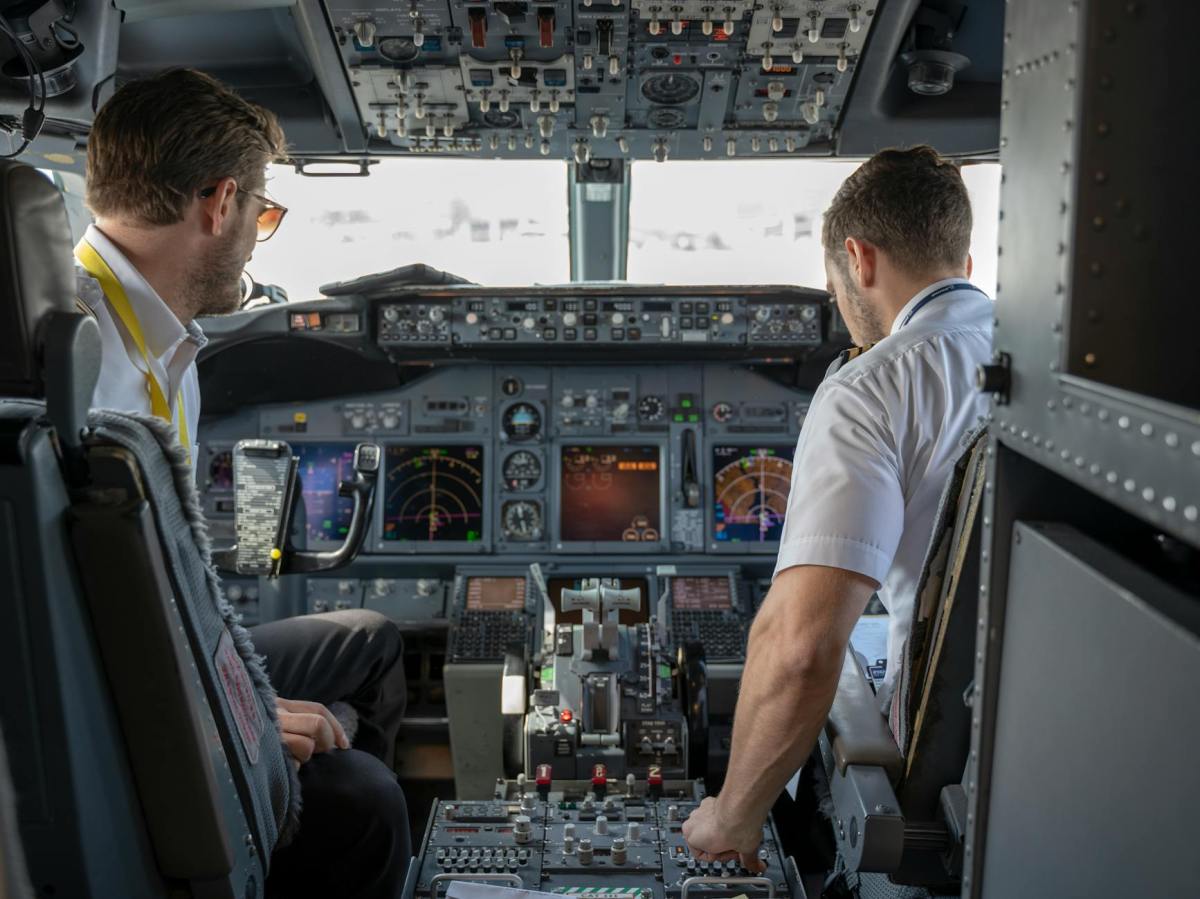
Was the pilot in command trying to go around? The accident flight recordings should answer this question. That is from the aircraft Flight Data Recorder (FDR) and Cockpit Voice Recorder (CVR).

This remains a hope. Reports are that the FDR has been damaged. This should not be a surprise given the nature of the impact it suffered. However, both FDR and CVR are designed and tested to survive extreme cases.

The South Korean Ministry of Land, Infrastructure and Transport says that the accident flight and voice recorders have been recovered[2].

Jeju Air is a popular South Korean low-cost airline. The airline was established in 2005.

A full independent accident investigation will no doubt take place. That is in accordance with the standards and recommended practices of ICAO Annex 13.

Current media speculation surrounding possible causes of this Boeing 737 accident do not offer any satisfactory explanation for the sequence of events. For example, it would be astonishing if the root cause of the accident was a bird strike or multiple bird strike shortly before landing. The aircraft has several means to deploy its main undercarriage.

It is likely that safety culture, controller and pilot training, and airport facilities are bigger factors in this fatal accident than the fact that it involved the loss of a Boeing 737-800 aircraft.

NOTE: Boeing 737 “If the gear fails to extend properly or hydraulic system A is lost, the gear can be manually extended by pulling the manual gear extension handles, located in the flight deck.” Landing Gear

POST: The impact test in the applicable technical standards EUROCAE ED55 (FDR) and ED56A (CVR) are demanding. The recorder’s crash protected memory module is fired out of a canon into a shaped target to simulate an accident scenario. It must be readable afterwards.


[1] https://www.independent.co.uk/tv/news/south-korea-jeju-air-crash-b2671085.html

[2] https://www.bbc.co.uk/news/live/c4glr85l2ldt