Call for Action and Change

When I hear promising ideas, I instinctively say to myself – don’t be negative. Try and see the plus side of these proposals. Afterall the proposer is doing their best to solve a problem. I hope. Same with the recognition of a problem, even if solutions are nowhere to be seen. Just saying it or writing it out is an acceptance that something needs doing. Action needs to be taken. As is often said, every journey begins with the first step.

It ‘s easy to be cynical when so many first steps have been taken before. Well-meaning, and not so well-meaning, individuals have stood at lecterns saying what needs to be done. So, tackling the troubling situation of social care in the UK is a great ambition for a Prime Minister to have. A good task to set before a new Cabinet. Where they will go with it, no one knows, at the moment. Making a commitment, in public, is a good place to start.

That’s not what I’m going to write about this morning. There’s a ghastly term that has entered discussions of recent. I say ghastly because it’s a faceless product of statistical analysis. Carved out of a pile of numbers it proports to describe a whole group of young people as if there were a homogonous lump.

The term is NEET. It makes me cringe every time I hear it. Meaning – the number of 16 to 24-year-olds not in Employment, Education, or Training. A moral panic sets in when people say this is “a lost generation”. It’s as if a million young people had wandered off into oblivion. Makes me think of the 1960s/70s and the moral panic that set in as young people – turned-on, tuned-in and dropped-out. The counterculture slogan of those decades. Like so many situations the truth is a lot more complex. It usually is. Here’s a number of factors that undoubtably come into play.

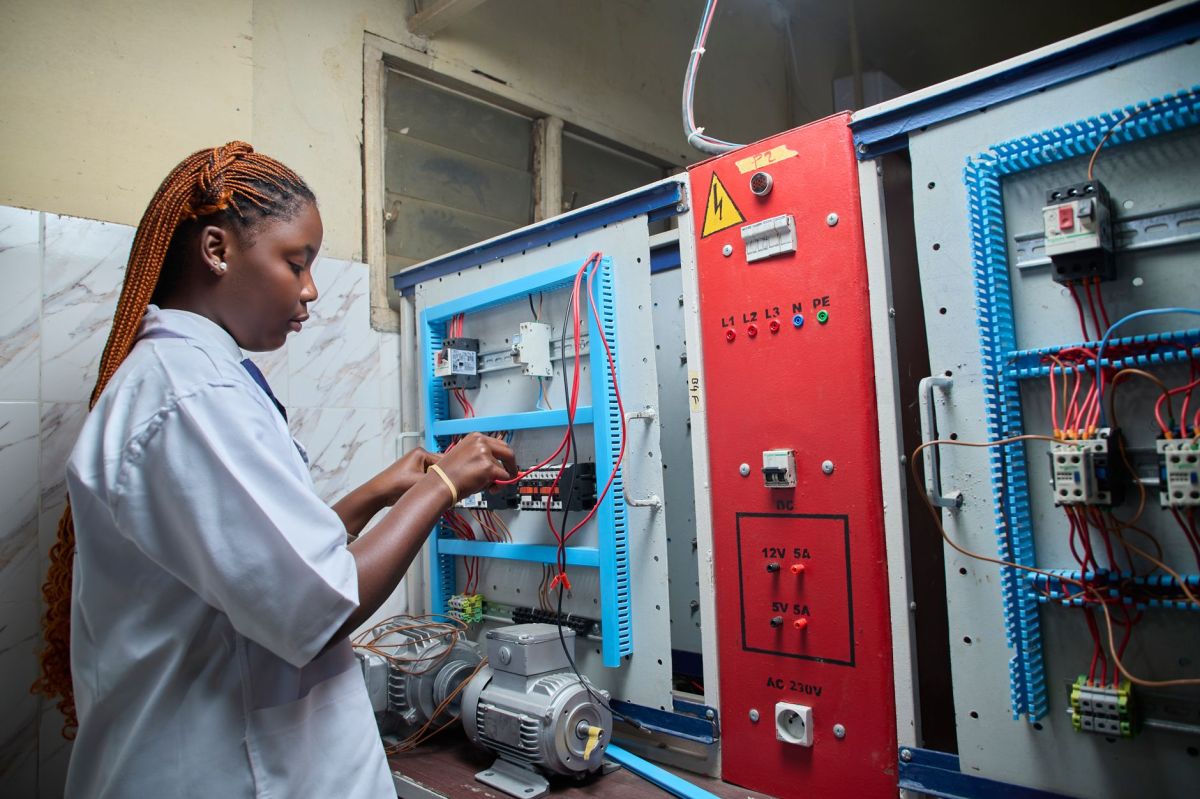
Yes, that hardy perennial, the decline of “real” apprenticeships. The low value society still puts on training craft and manual skills of a practical nature. Despite the nice words of successive politicians. I’ve yet to see a Minister’s daughter start aircraft maintenance training.

Penny pinching that’s turned local colleges into factories. Pile them high and get them through the door fast. An attitude to young people that’s driven by key performance indicators.

The pernicious side of social media. Past generations may have had their excesses but didn’t have this inescapable attention draining impact on mental health. It’s unrelenting.

Role models are hard to come by unless they are family members. Many potential opportunities appear unobtainable. The media often portrays a future wrapped in glamour and littered with overnight success. Perhaps, Andy Warhol was right.

Lack of orientating to dramatic changes in the future working environment. Pushed by Conservative Minister Gove and alike, education has taken a retro path in emphasising academia and rote learning. Exams as the pinnacle. The wrong path.

The “new” Labour Government must address all of these and more if they want to shift the dial. On this score, I’ll say a word about a past opponent of mine. We were both local Councillors at the same time. In 2017, as Minister of State for Skills and Apprenticeships, Conservative Anne Milton at least tried to shift the dial on this subject. Then that menace Boris Johnson came along, and Brexit took the whole country backwards at a very rapid pace.

I look with optimism. However, the “new” Labour Government is a bit like the “old” Labour Government. Ministers carved out of an Oxbridge tradition. Happy to talk about their illustrious working-class origins but a million miles from real word experience of leaving school at 16 years old and getting a paying job. Supporting themselves through training.

Transforming lives will require focus on multiple issues, as I’ve illustrated, and it would be nice to see actions take precedent over nice speeches. Wittering on about the value of apprenticeships isn’t enough.

POST: Technical pathways for 14-year-olds could build on UTC model

Will Andy Burnham Lead a New Era?

It’s not so unbelievable. With the volatility of politics in the 2020s, that a leadership role flips from one person to the next in the blink of an eye. The man tipped to run the country has won one constituency in his hometown. Now, lots of people envisage him in the biggest of jobs, sweeping aside the wows of recent years.

One view of this change is that the decades of past allegiances, that we almost took for granted, have now dissolved. The way we view others in our society has become far more complex.

British comedy is littered with these stereotypes. Comic strip characters. Property owning, upper middle class, broadsheet newspaper reader equates to a Conservative. Open toed saddle, tweed jacket owning teacher who goes on improving camping holidays, a Liberal. Football supporting, factory worker, from a generation of factory workers almost certainly a Labour supporter with Socialist friends. At the margines, long retired colonel who inherited a large countryside mansion and estate may even be a Fascist. These animated cartoon images persist. What’s different is that there are dwindling numbers of them in society at large.

Initialled AB, Andy Burnham, comes to us as a smiling face. Down with the people in a way Sir Keir Starmer found incredibly hard. AB has charm and a warm accent that suggest a relaxed demeaner. He talks with enough wriggle room for a wide swath of people to think that he’s on their side. A good skill to have to be successful in politics. As it is, what he stands for when push comes to shove isn’t so easy to discern.

In know the spelling is different but it’s out there in social media land. The fictional Birnam Wood, a forest near Dunsinane Hill in William Shakespeare’s Macbeth. A place of prediction.

[That was one of the texts our teachers chose for us in my school days. Maybe they imagined troubled times ahead. Or wanted to warn us of power’s potential corrupting effect].

Three witches appeared to assure Macbeth that he was a winner. Only seemingly impossible events would defeat him. The message was critic. Bit like the Oracle of Delphi in the ancient Greek world. Nothing like recycling a good idea.

The British media’s prophecy is that Burnham will quickly step into the job of UK Prime Minister and restart the Labour Government with fresh vigour and new imagination. Not to mention better public communication. The constituency who thinks he’s a potential saviour is much bigger than the consistency who thinks he’s a devil in the making.

Will ambition and power’s potential corrupting effect take a hand. Or will the man with the name: “King of the North” have accumulated the knowledge and experience needed to shape history to the country’s benefit. A good sprinkle of luck will no doubt be needed too.

Despite what has passed in our post-Brexit land. UK PM’s coming and going, will Burnham be a force for good? I wouldn’t say past performance is any predictor at all. Making the buses run on time in Greater Manchester is a far cry from being a political party leader and UK PM.

I, as do so many, wish him a fair wind. Let’s hope he and his team can get to grips with the need to adapt, change and even be disruptive where it’s warranted. I hope he will not shy away from big decisions or be cowed by either his own side or the perfidious British right-wing media.

Political Downfall

I’m not sure. Transparency is a good thing. Well, generally that’s the cases. Shedding a light on the dark places leads to better understanding. So, they say. That’s conventional thinking. The assumption being that the public prefer raw trust to a fabricated sort of truth.

The utterings of Peter Benjamin Mandelson are now going to fill more newspaper column inches than the great fire of London. It doesn’t take much looking around to realise that Mandelson has become public enemy number one. And for the British right-wing media cohort, is the Achilles heal of the current UK Labour Prime Minister. Retrospectively seen as the stupidest decision the man in power has made to date.

In bold letters the words “nightmare” and “bombshell” are already out there. Next, we can expect “Armageddon” and talk of nails in coffins. This is where the cynic in me clicks. What a lovely political opportunity to relentlessly attack, knowing that there’s always another twist or turn to add at any convenient moment.

In mathematics, the Mandelbrot set acts like News of Mandelson[1] and does not diverge. It’s complex but repetitive. I expect the thousands of pages of correspondence dumped on the public will take that path. Complex but repetitive. Sadly too, the juicy bits, like criticism of the administration in Washington DC may be redacted.

There’re immortal themes in the story of political downfall. As if the plot of Star Wars were brought to life. A dark lord strides confidently across a stage set for his demise.

In what I’ve written above, make no mistake. This is not an argument for sweeping stuff under the carpet. None whatsoever. In this modern media age, we must get used to the drop of more than 1,000 pages. If nothing else, it gives good investigative journalists a lot of work to do.

The thing is, I wonder what we will learn that may turn out to be really useful in future. I mean, surly the point of these exercises in public transparency are to ensure that corrective action is taken to avoid the same mistakes being made again. That maybe where the problem is centred. We’ve gone from the ludicrous times of Boris Johnson and Liz Truss and yet I wonder if learning from mistakes is in our DNA. If learning from real mistakes was intrinsic, then no one would be contemplating voting UK Reform.

Yet, if they are to be believed, that extreme UK political party has a high opinion poll rating. Our love of words like “catastrophe” and “apocalypse” are so great they seem to trump common sense. It’s as if a major hole has appeared in the heads of a potential electorate. The simplistic, flat, two-dimensional, world of UK Reform gets its appeal from people not wanting to engage with stubborn complexity. Those who utter simple solutions, even if they are obviously wrong, get the press attention. From here to infinity by way of nonsense.

Back to Mandelson. He got jobs that others strive for without hope of getting. His confident personality, guile and cunning got him places. There’s the lesson. All that glitters is not gold. Much as people might want to believe in political magic it’s extremely rare. Ten to the minus nine at least.


[1] https://www.theguardian.com/politics/2026/may/27/peter-mandelson-questions-vetting-clearance-mitigations

Unity and Conflict

New news? Party sources say x% believed there should be a different leader. So said a notable political correspondent under the banner “Labour leaders try to restore morale.” The article went on to say: “…arguing that the party must pull itself together and “steer a straight course” if it wanted to win the next general election.”

“But Mr Kinnock, facing mounting criticism, has chosen a different forum to launch his fightback after an unhappy three weeks that has seen the Conservatives take a 12 percent lead in the polls.”

Party politics can be a terribly cruel sport. That’s not new in all of history. This quoted article, from the 1980s has a kind of resonance with what’s happening now. The roles are different as Labour was trying to find a way of ousting the Conservative Party from power. It took them until 1997 to find a formula that worked. There’s no doubt that Kinnock did the groundwork that made the electoral success of New Labour possible. Reading my newspaper cutting, it wasn’t exactly a pleasant time.

Is this what’s happening to the Labour Party now? Sir Keir Starmer did the groundwork to win power. But Mr Starmer, facing mounting criticism, has chosen to continue his fightback after an unhappy few weeks that has seen the others prosper from his numerous shortcomings.

What next? Is it for the next Party leader, and thus Prime Minister, to make effective use of the power that remains? The threat is no longer the past enemy, the Conservative Party. Now, Reform UK are giving the impression of being the greater opposition come the next general election.

Why are we so distressed at squabbling within an important political party? This has been an almost permanent feature of British politics.

A combination of at least two fixed elements makes conflict inevitable with Parties. As well as between Parties. One is the adversarial style of British politics. Two is the primitive First Past The Post (FPTP) electoral system.

Both elements assume that two of the largest political Parties will forcefully lock horns. To maintain their preeminent positions, as the largest, they must encompass a lot of people who simply do not agree with each other. There’s as much politics within the politics as there is in the real world. Leadership is as much about maintaining a degree of unity as it is governing the country.

With decades of accumulated experience, it might be reasonable to think that the established political Parties would have this one nailed. Surprisingly, that never seems to be the case.

The advice in the 1980s was: “His closest friends believe that the only way forward is to try to turn the situation around by going on the offensive against …………….” The target for an offensive here has changed but the idea is a classic one.

Will we be seeing Labour Prime Minister Sir Keir Starmer mount an all-out offensive against UK Reform? Thus, keeping his colleagues from plotting and scheming. I wonder. Certainly, this will make for an interesting month ahead.

Manchester

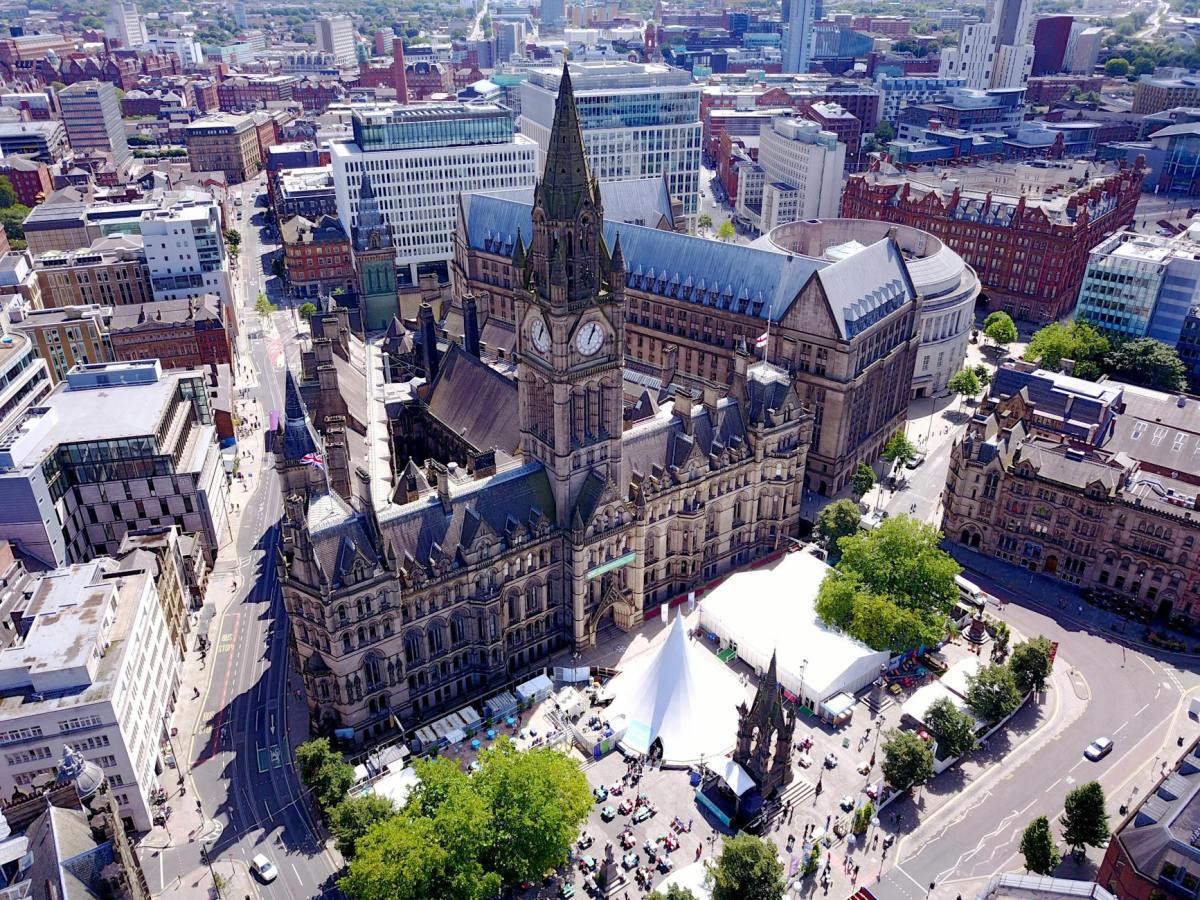
Crunching numbers after a British by-election is rather like taking one racehorse win and saying that all races will be won by that horse in future. There’s one or two who get hysterical. A test of public opinion, in one spot on the globe, is a good indicator. It’s not an absolute pointer to every future event.

How can I possibly disagree with Sir John Curtice[1] this morning on the BBC. He’s that human hardy perennial of domestic election analysis. Number one guru that the media runs to. A track record for an on the money sum-up.

In essence, the British electorate wishes to support candidates who can articulate their concerns. No prevarication, all manner of obfuscation or jam tomorrow speeches. Preferably tailored to the location where they stand.

Sir John is thinking like this John. In moments, as per yesterday in Manchester[2], clarity matters. True, that in a by-election it’s easier to do for a candidate who carries little political baggage. A fresh set of well-presented phrases and a new broom. A relatable individual.

Not for one moment do I believe that the Green Party will surge forward so powerfully as to become a national leader. What may happen is that, with the fragmentation of the British political landscape, the Greens will play a bigger part than they have in the past.

And you know what? As a liberal, I’m fine with that shift. Balance is so important if positive change is to happen. Representation means just that – representation. If the Greens say the exact opposite to the Reform Party, which mostly they do, then they will occupy the two ends of the classical normal distribution – the bell curve.

Perhaps, I need to be careful with this basic analysis. My presumption is that most people are not highly involved in everything party political. That on the typical doorstep often the key task is not to engage in detailed debate but to remind people that there is an election taking place. That the tie to traditional voting patterns continues to weaken.

The last one on my list is perhaps the biggest. Gone are the huge factories and industrial heartland that provided the Labour Party with their core support. Gone are the dependents of the shire country manor houses that provided the Conservative Party with their core support.

In 2028 or 2029[3] the make-up of the British electorate will have changed markedly. Seems obvious to say – doesn’t it, but politicians love to fight the last war not the next one. The political landscape will have shifted. Traditional voting patterns will have further disolved. There will be no let-up in the dynamic nature of public discourse. A small number of big issues will dominate the campaigns of the parties able to make an impact.

Clarity will matter. Distinctiveness will matter. Relatability will matter.

In the background, a bucket load of past performance and costed polices will be chewed over by professional commentators. That will not be the deciding factor. At the end of this decade there’s a break away coming. Busting out of past patterns. Setting new horizons.


[1] https://www.bbc.co.uk/news/articles/cwygpdjq9jjo

[2] https://www.manchestereveningnews.co.uk/

[3] https://www.instituteforgovernment.org.uk/our-work/topics/parliament-and-constitution/general-elections

Political Landscape

One of the motivators in politics is that prospect of the shining city on the hill. The ability of an able politician to articulate a vision of a future where aspirations are met, harmony pervades the land and the world becomes a better place for all. Naturally, this expression has religious originals. That interweaving of religion and politics is hardly new. It’s us. It’s us humans who give form to our desire to see our communities thrive and adversity overcome.

However, this ability to project hope isn’t the only tool in the politician’s toolbox. The other side of the coin is fear. Sadly, this gets used just as much as in rhetorical flurries and backroom decisions making. As the week has passed so there’s been a fair amount of both.

I like to think that, of the two, hope transcends. It is not an even coin. Our in-built propensity to strive regardless of the barriers and failures along the way, that’s powerful.

What am I saying? It’s that loosing sight of the shining city on the hill and getting stuck in the weeds of everyday gloom and despondency, that’s the monster problem.

Scandals will come and go. It’s a national preoccupation. That’s not to say that such each and every one deserves significant attention. In the most recent one, involving the UK Prime Minister (PM) and a prominent former Labour politician, there’s clearly much work to do.

It seems to me that the whole process of making appointments to significant national posts needs a thorough review. The discretionary powers that a PM has are a key part of the job, but that exercise of power without sufficient scrutiny has led to dangerous errors being made.

Thus, we have a serious man who espoused a brilliant future, at the last UK General Election, only to deliver more of the same. True, the current PM hasn’t yet plummeted the depths of the Johnson or Truss era. A wave of relief sounded across the nation when those two Conservative politicians were effectively banished.

Righteousness is not something that sits well with a cynic. And our daily News loves to adopt a cynical tone. Every journalist must have a streak of it running through them like a stick of rock. On the positive side, in many ways when political scrutiny fails it’s the News media that we depend up. Maybe to shine a light on the less than shiny city on the hill.

At this moment in early 2026 there’s good reason to be concerned. Now, at the dispatch box in the House of Commons we have two gladiators who want to make mincemeat of the opponent but are each covered in a disagreeable mess. Both as a legacy of incidents that their Party has had a hand in. It’s easy to say – twas ever so. Only that’s not good enough in 2026.

It’s as if both Party leaders have wadded through a muddy smelly swamp to meet face to face. To meet covered in mud, slime and weeds that they have dragged with them. Not an attractive sight. Neither in a position to project the prospect of a shining city on the hill. Credibility is low with both parties. These are strange times.

[What might happen if more than 45 Conservative MPs jump to the Reform Party? Crossing the house could become an avalanche breakdown. Will we see the Liberal Democrats as His Majesty’s official Opposition? That would surely put the cat amongst the pigeons.].

Pitfalls of Messaging

Listening to a Government minister bleat on the radio this morning, I do wonder how they ever became a person of influence. It’s as if the elevation to Westminster has wiped all their political sensibilities and replaced brain cells with wet putty.

The general theme is that this UK Labour Government has got to get its act together. It seems obvious to say. However, as they plod on talking of aims and ambitions the trend of public opinion is shifting against them with potentially dire consequences. The sad reality is that this Labour team has only been in power for a little over a year. Although they are really struggling, in our heart of hearts, most of us know that they are nowhere near as pathetically appalling as the past Conservative rabble of May, Johnson and Truss.

Here’s something that I don’t thinks works. It’s trying to scare supporters, and the public by saying repeatedly that if we don’t win you over the evil ones will grab power. In this case it’s the spectre of the Reform party extremists. It’s not a return of the Conservatives. They are going down their own freshly dug rabbit hole never to be seen again.

It’s almost to admit that – we (Labour) are pathetic but those who could come next are even more pathetic and dreadful with it. That approach doesn’t win an argument. Maybe it does scare a cohort of political activities to deliver one or two more leaflets. It doesn’t make, as was once said, the man or woman on the Clapham omnibus feel any better.

To me this morning’s Labour minister sounds like they are saying: sod it, this is harder than I thought it would be, but don’t you dare blame me. If you do blame me then monsters will devour the land and there will never be another chance to make the world a better place.

Let’s just say, for good measure there are no Elysian fields where every day the British tabloid newspapers sing the praise of a Labour government. Where cuddly commentators heap praise on Government’s achievements. Where opposition politicians have nothing to say because they are stunned into silence. Contentment sweeps across the land.

For me one of Labour’s most stupid lines is that there are certain subjects that can’t be mentioned or at least mentioned as if something was going to be done. That these subjects merely fuel the opposition and although we (Labour) may have strong feelings about these subjects we must be silent and non-committal.

Talking about Brexit for more than a minute, and the harm that it has done the country, is too dangerous. It’s like giving the Reform party dog a bone. As if right-wing extremists wouldn’t do what they do regardless of any bones, thrown or otherwise. They will do what they do.

The Labour party comes across as with the same caution that they had in the run-up to the last UK General Election. It has been described as carrying a valuable Ming vase. So scared of dropping this metaphoric vase that extreme caution dictates every move. Constantly looking over their shoulder anticipating an avalanche that might consume any possible success. A kind of neurotic sterility that’s as attractive as grey paint on a grey wall on a grey day.

There was a time when I joked about former UK Prime Minister (PM) John Major’s attempts at regain public support. His wooden soap box in the streets. His slogan – back to basics. He was living under a shadow. Maybe his timing was poor. Maybe for each political idea there’s a time and place.

That standing and talking honestly on a tatty soap box, that human touch is perhaps what the current PM needs. Can he do it?

A New Customs Union

Let’s not put up taxes. Let’s trade more. Seem obvious. Well not in late 2025 in Britain. This possibility must be forcefully put on the agenda for debate in parliament. Raise revenue, rather than raising new taxes, has got to be the better way to go. The bigger the pot the more chance that a government has got to balance the books. Taxes have their place but not to be the default opinion, in all cases.

The Labour Party has been talking the talk on growth in the economy but frequently marching in the opposite direction. It’s as if they embrace the comfort blanket of domestic tax increases too readily without thinking of the long-term impact. Habits are hard to change.

Before, what a majority agree was a mistake, Brexit, trade with our next-door neighbours was in a much healthier position than it is now. We’ve (UK) created barriers and obstacles that have diminished our trading position to no advantage whatsoever. Coming up for a decade of backward thinking.

In parliament, the Liberal Democrats are tabling a bill that calls for creating new Customs Union (CU) with the European Union (EU).

What is a CU? Simply put, it’s a trade agreement between countries to abolish tariffs on the goods they trade with each other. So, instead of barriers and obstacles to trade, the whole process becomes easier and cheaper.

Yes, such an agreement with the EU would have implications for relations with non-EU countries. What I’d say in that respect is that such negotiations with non-EU countries on tariffs haven’t been going so well in the last year. The UK has been buffeted by the policy of other nations, where their policy often spins on a dime. On / off fragile agreements don’t add enduring value.

Such a new CU with our next-door neighbours would boost the UK’s GDP by a significant amount. A boost of £25bn a year for the public finances is predicted. Thus, the growing demands that drive for domestic tax increases would be abated or at least be affordable.

Do you remember? So, many advocates of Brexit said we’d never leave the CU. It’s easily forgotten but some of the most ardent Brexit supports were saying this to the electorate. In essence being untruthful.

Back in January 2017, the Conservative Prime Minister (PM) of the time confirmed that the UK would not remain in the EU CU. What a massive mistake PM May made. The repercussions have been devastating for businesses and the public up and down the UK. It was an act of disfigurement that damaged our economy for nothing more than political dogma.

Sadly, we are where we are. I wouldn’t start from here. Wouldn’t it be great if negotiations started to take the UK into a new CU with our nearest, biggest trading neighbours and partners.

Sadly, the way the parliamentary vote will go is rather predicable. The Labour Party, in its current form, is not the internationalist Labour Party of its history and traditions. Currently, government support is not forthcoming. They prefer to talk the talk without walking the walk.

Post: Fix Britain’s Trade – Liberal Democrats

Engaging the 70%

A little analysis goes a long way. When that analysis chimes with what I observe, then all the better. Not that just because I agree with something that it therefore makes it beyond question. No, what’s satisfying here is to see that overlap on the Venn diagram of thoughts.

In an entirely off the cuff remark I said that if the major, and not so major, UK political parties all go off hunting for the votes of about 30% of the population, then there’s a huge opportunity for someone to address the 70%.

The UK political conference season is in full swing. Four political parties have completed their annual get together. Spent time agonising over their next moves. Damming and praising in equal measure both of rising and falling stars. Trying to avoid the media instinct to go for the live on-air gotcha moment. Being seen when the spotlight is turned on.

Back to my 70 / 30 relationship. This one strikes a bell for me having been a fan of the Pareto principle. That’s often called the 80 /20 rule.

For example, a lot of work may need to be done but it’s often only about 20% of that work that makes a difference, in certain situations. I could campaign over a wide area, without focus, and find that most of my effort had been wasted. Identifying the most fruitful areas to campaign, namely the 20%, might just as likely result in a win but with a greatly reduced effort.

National opinion polls can be deceptive. However, in the absence of real elections they are what people turn to get an indication of what’s going on – now. Today’s opinion polls have politicians spooked[1]. What the meaning of the Reform Party hovering at 30% is an open question.

Is it just like the days of the Social Democratic Party (SDP) in 1980s? A strong move for change that resulted in a flash in the pan. Well, it did open the door for Tony Blair and Co, years later.

Back to my 70 / 30 relationship. Labour, Conservatives and Reform all see this 30% voting intention. It hardly matters if it’s real. They are attracted to it like a moth to a lamp. There’re both data and a perception of who the 30% might be. Suddenly their importance is magnified out of all proportion. Phrase like “hard working people” are banded around. Classifications are sought to move away from past stereotypes like “white van man.”

I read Ben Ansell’s article[2]. I think he’s right. An enormous number of political campaigners fit into what can be called the Professional Managerial Class (PMC). Lots of people aspire to be of the PMC or think they are when they are not. Why do the two biggest political parties, Labour and Conservatives appear to dislike their activists and members so much?

Back to my 70 / 30 relationship. There is an enormous opportunity here for the Liberal Democrats. Not so much the Greens or nationalists. Just by speaking to the 70%. Just by addressing the issue that concern the 70%. Just signing up the 70%.

Not so much the vital few, more the vital many. Parliament could be a very different place in four years’ time.


[1] https://www.politico.eu/europe-poll-of-polls/united-kingdom/

[2] https://substack.com/@benansell

Myths vs. Reality

We live in a world of contradictions. What am I thanking about? The current febrile immigration debate has all the hallmarks of magical thinking. Here we are surrounded by water, living in an economically active favourable part of the world and yet public concern is directed at “others”.

I’ve no problem with the current British Government berating the past Government for not fixing a problem. It’s normal for a governing party in the first couple of years of their term of office to point the finger of blame. It’s easy. Painting a picture of past failure makes the road ahead clearer. It’s easier to start from a point of low expectations.

However, it seems it’s not the resurgence of the Conservative Party that the Labour Party are concerned about. Today, such a prospect would be like the reincarnation of a squirrel that had been run-over by a 42-ton truck driven by the electorate.

The announcement of the day is setting an ambition to squeeze immigration. Recent local elections have shown that this banner flies well with those who vote in local elections. Because the opinion polls give bizarre indications too, the questionable assumption is that if a General Election was called by an irrational Prime Minister there’d be a surge in far right-wing voting.

We have new kids on the block. They are not at all new even if the have a new name. It’s an Orwellian name. Because an ultra-conservative party isn’t in the business of newness as much as they are stirring up ancient antagonism.

Anyway, the Reform Party are the current snake oil salesman selling their easy solutions to difficult problems. They were once named; Referendum, UKIP and Brexit Party. All proponents of magical thinking and with a poor track record.

The story goes like this. Stop overseas immigration and make the hordes of economically inactive people of Britan take-up the vacancies that would result. When Reform voters hear this narrative, they don’t think it applies to them. They believe there’s a mythical group of lazy people who need to be forced back to work and off overly generous State benefits.

In this public debate it’s as well to look at the numbers[1]. Reform voters are predominantly of 50-years and older and the economically inactive are predominantly 50-years and over[2]. Thus, I say, we live in a world of contradictions.

COVID did see a large number of people take, or be forced into early retirement. Those who have experienced a lifetime of their terms and conditions of employment being degraded took the opportunity to do something else. Often that included voluntary work or caring roles. Reform have concocted plans to pressure people back into conventional employment. These plans are uncosted and not cheap. Lots of government funded incentives and training, for example. In the real world, funding must come from somewhere. That’s likely to be from the privatisation of health services and cancelled benefits. In this scenario don’t expect to get a state pension until well past 70 years


[1] https://researchbriefings.files.parliament.uk/documents/SN07119/SN07119.pdf

[2] https://www.gov.uk/government/statistics/economic-labour-market-status-of-individuals-aged-50-and-over-trends-over-time-september-2023/economic-labour-market-status-of-individuals-aged-50-and-over-trends-over-time-september-2023