Electrics & Mechanics

Yesterday, I wrote on LH2. The potential fuel for electric aircraft of any size. Yes, I’m not just talking about smaller commuter class transport aircraft.

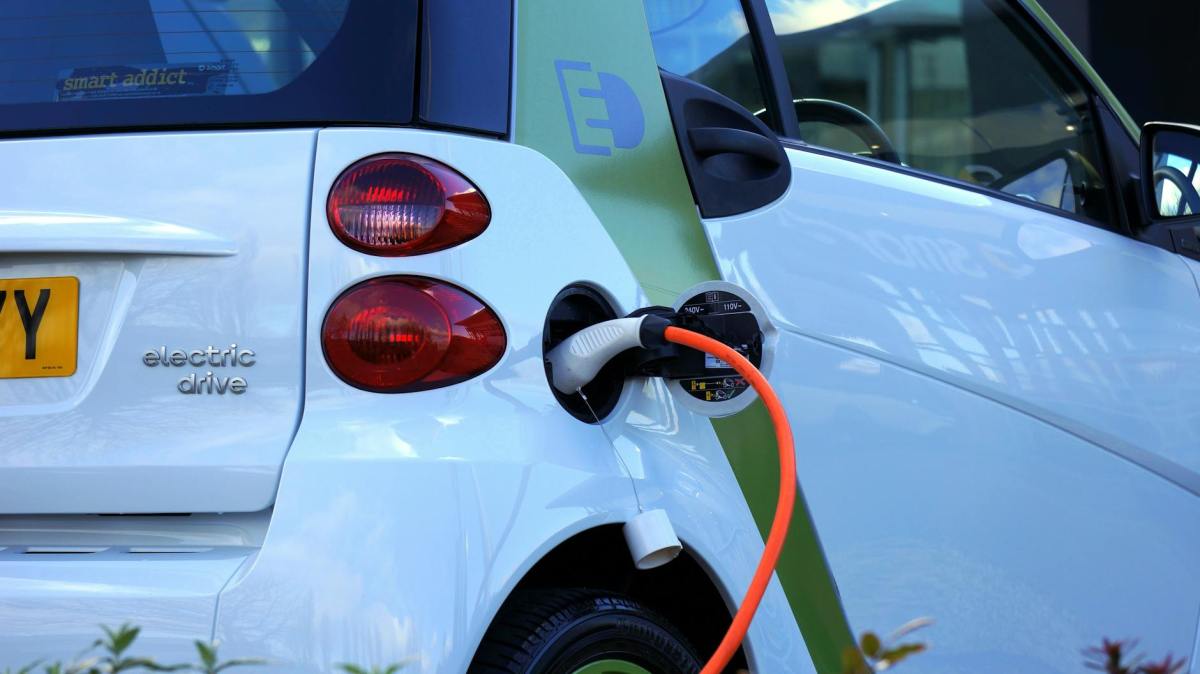
Let me take some anecdotal evidence from the transition that is going on in road transport. Repairer turns up to fix an electric car that will not start. It’s a simple matter given that the car has been standing unused for a long time. The battery had discharged. A quick charge from another battery pack and all is well. Meantime in conversation it’s clear that the repairer hates working on electric cars. I could say, no surprise, they were trained on combustion engines and have been forced to make a transition in technology.

What’s evident here is the apprehension of a person who likely has a mechanical bias towards their work and the necessity to take on fixing powerful electrics. Mechanics, those who love working with moving parts, often have a dislike of electrics and electronics. It’s an engineer’s “feeling” expressed to me casually over the last 40-years.

In fact, it can be the reason that a design or maintenance engineer took the career path that they did. There is a dividing line between mechanical engineers and electrical engineers that is embedded in our institutional, educational, and training systems.

So, there’s two practical human issues to grapple with in a transition:

  1. Propensity of one branch of technically capable people to find mechanical work less fearsome and more satisfying than electrics or electronics, and
  2. Streaming that is embedded in our institutional, educational, and training systems. Qualifications and recognition are often not so multi-disciplinary focused.

I’m not for one single moment making a luddite argument that mechanical engineers[1] and electrical engineers[2] are two tribes that must be kept apart. Far from it. What’s more important is to recognise that transitions are hard.

New electric aircraft are going to demand technical people with a multiplicity of both mechanical and electrical knowledge. The way the engineering world has been divided up in the past doesn’t cut it. Some of our most cherished niches will need to be challenged.

Transitions of this nature always take much longer than is originally anticipated. In a way, that should be such a surprise. It’s a generational change for a community that can be conservative with a small “c”.

This is NOT business as usual. For example, handling powerful 1000-volt electric technology is not for everyone. Removing and replacing cryogenic plumbing is, again, not for everyone. The hazards are clear. The skills needed are clear.

Reorienting the aircraft maintenance engineering world is going to need new plans and programmes. Better start by enthusing people about the change rather than just forcing it.


[1] https://www.imeche.org/

[2] https://www.theiet.org/

Hydrogen in Aviation

The potential for LH2 (liquid hydrogen) is enormous. That’s matched by the logistical and technical difficulties in exploiting this gas’s great potential. It offers energy for a means of propulsion that is nowhere near as environmentally damaging as existing means.

Society already integrates hazardous liquids and gases into everyday life. Each one has been through several iterations. It has been a rollercoaster. Each one has been at the root of disasters, at one time or another.

  • We use gas for cooking and heating in domestic settings. Periodically explosions demolish buildings. Leaks cannot be ignored. Harm can be done.
  • We use light and heavy oils widely in transport systems. Periodically intense fires burn vehicles. Care in handling is essential. Harm can be done.

Without having to say it, both above harm the environment. The search for non-CO2 emitting ways of flying is urgent. Here, I’m writing about harm to people. Physical harm. The business of aviation safety.

Often the physical harm is not associated with the design of the systems used but to the maintenance of those systems. Naturally, there was a learning curve. If we look at early versions of those systems, fatal accidents and incidents were far more regular. So, here’s the challenge for aviation. How do we skip the dangers of the early learning phase? How do we embed rigorous maintenance practices from day one? Big questions.

On the first one of these, lots of fine minds are engaged in putting together standards and practices that will address good design. If this works, and it will be tested extensively, the chance opens for introduction to service with a great deal of confidence that the main risks will be managed.

On the second of these, there’s not much happening. You might say there’s an element of chicken and egg. The shape and form of future LH2 systems needs much more work before we can think deeply about how they will be maintained.

I think that’s wrong. It’s old-fashioned thinking. As the industry has often practiced, making the systems first and then devising ways of maintaining them while in-service. That’s yesterday’s reasoning.

Making aviation system maintenance the Cinderella in the LH2 world is to invite failure. This is a situation where advancing the consideration of how the in-service realm could work, day by day, is necessary. It’s advantageous.

Here’s my reasons.

  1. There are generic approaches that can be tested without knowing the detailed design. That can take existing learning from other industries, like chemical and space industries, and consider their application in aviation.
  2. Emerging technologies, like machine learning, coupled with large scale modelling can provide ways of simulating the operational environment before it exists. Thereby rapidly testing maintenance practices in a safe way.
  3. It’s imperative to start early given the mountain that needs to be climbed. This is particularly true when it comes to education and training of engineers, flight crew, airport and logistics staff and even administrators.

Everyone wants to accelerate environmentally sustainable solutions. When they do get to be in-service, they will be there for decades. Thus, an investment, now, in study of maintenance systems will pay dividends in the longer term. Remember, early fatal accidents and incidents can kill otherwise sound projects or at least put them back on the drawing board for a long time.

NOTE 1: I didn’t mention Liquefied Petroleum Gas (LPG). It’s in the mix. Another CO2 contributor. LPG containers have pressure relief valves. LH2 containers will likely have pressure relief valves too. That said, venting LPG is a lot more environmentally damaging than LH2. From a safety perspective they can both create explosive conditions in confined spaces. Maintenance staff may not need to carry a canary in a cage, but they will certainly need to carry gas detectors when working on LH2 powered aircraft. Our noses will not do the job.

NOTE 2: Events on the subject: https://www.iata.org/en/events/all/iata-aviation-energy-forum/

https://events.farnboroughinternational.org/aerospace/sustainable-skies-world-summit-2024

2024 ICAO Symposium on Non-CO₂ Aviation Emissions

Choice

Desperate British Prime Minister (PM) comes out with the line that the future will be troubled and fast paced change will outstrip past progress. Ok, so what’s new? Hasn’t that been the path of the world since the invention of the computer? Acceleration of change is now locked into humanities destiny.

The audacity of the man is astonishing. Having been intimately associated with calamitous failures of the past decade he espouses his unique abilities to keep us safe and secure.

Hell, I thought former PM Boris Johnson had a big ego. Monday’s speech goes beyond ridiculous[1]. When he says: “People are abusing our liberal democratic values” what comes to my mind is the right-wing government he leads.

We all know, it’s reported continuously, how dangerous the world has become. Noone in any major political party would dismiss that reality. That is bar the eccentric, downright crazy and maybe the fringes of the Greens party.

Interestingly, as far as I know, PM Rishi Sunak isn’t a climate change denier, but he doesn’t have much to say on this monumental global issue. When he says: “And in this world of greater conflict and danger, 100 million people are now displaced globally.” It should occur to him that competition for resources in a world where the climate is changing is at the root of this movement. By the way, there are 8 billion people in the world[2]. So, let’s get our reality in proportion. True, the 0.1 billion people now displaced globally is a figure likely to grow in the next decade. But they are not the enemy.

I had to laugh when I came to the mention in the speech of “robust plans”. The thing that has been characteristic of this Conservative period of government is the distinct lack of planning.

The country’s whole relationship with its neighbours was changed without any plan (Brexit). The ups and downs of the COVID epidemic were endured without a plan, other than that which was made up day-to-day. Year-on-year cuts in defence spending have only been reversed in the wake of global events not a plan of any kind. Surely the Conservatives can only offer a – make it up as we go along – way of governing? It’s what they’ve always done. Hence, the slow decline that has afflicted the country.

The PM lapses into a lazy “needs must” argument that sprinkled with Brexit bull****. Shakespeare would have approved. One example, in All’s Well That Ends Well:

Countess: Tell me thy reason why thou wilt marry.

Clown: My poor body, madam, requires it: I am driven on by the flesh; and he must needs go that the devil drives.

Nothing wrong with being positive about the future. As a country we can do great things. What the PM claims is to have a plan. What he hasn’t got is a plan. And if he did have a plan the likelihood of his own side following that plan is absolutely minimal. He only goes where the devil drives. 


[1] https://www.gov.uk/government/speeches/pm-speech-on-security-13-may-2024

[2] https://www.census.gov/popclock/world

ID

Photo ID is essential, or your ballot will be denied to you in the UK. You can’t vote in elections. That was the case for service veterans, last Thursday. The armed forces veteran card was not deemed acceptable ID[1]. This card was heralded as a great step forward by Conservative Ministers. It seems they had not thought through the implications of the new ID card.

The Electoral Reform Society pointed out that the arbitrary nature of voter ID rules is a problem.

No doubt to get milk the publicity, Boris Johnson, former PM, praised the officials who turned him away from the polling station where he attempted to vote in the South Oxfordshire police commissioner vote[2]. That inspired one or two cartoons. As you would expect featuring clowns. The legacy of Boris Johnson’s chaotic time in the premiership continues to echo.

News is not all negative on the voting front. The 15-year time limit on the eligibility of British people living overseas has been lifted. They will now be permitted to vote in UK elections[3]. Most interestingly, around 3.5 million additional people will have the right to vote in the forthcoming UK General Election. I wonder how those living in the European Union (EU) will vote.

Anyway, if we look at the results from last Thursday, the Conservative attempt at what could be called voter suppression seem to have backfired. Big time. My view is that we should be making it easier for citizens to vote and not harder to vote. As one joker pointed out, in this Parliament, there have been more cases of MP’s misdemeanours than there have been of voter fraud.

I agree that many of the heartfelt arguments of 25-years ago about ID cards are now somewhat moot. The way we use mobile phones has put paid to those arguments. Big Brother is here to stay. It’s astonishing how much personal information we give away freely, not to the Government, but to commercial entities committed to extracting profits from our data.

Formally proving ID is an anarchic process in the UK. There are multiple means, and they are all confusing or mixtures of one another. What is becoming a fixed point is one’s mobile phone number. So many computer systems send a text message that requires acknowledgement to prove who you are who you say you are. The assumption being that the person with the mobile phone is the person who owns the phone, and its number.

Maybe it is time for one unified and recognised official UK ID system.


[1] https://www.telegraph.co.uk/politics/2024/05/02/minister-apologises-veteran-turned-away-refused-voter-id/

[2] https://www.theguardian.com/politics/article/2024/may/04/boris-johnson-pays-tribute-to-polling-staff-who-refused-to-let-him-vote-without-id

[3] https://www.gov.uk/voting-when-abroad

Culture

Yet again, Boeing is in the news. The events of recent times, I feel are immensely sad. Now, it is reported that the FAA has opened an investigation into a possible manufacturing quality lapse on the Boeing 787 aircraft[1]. Concern is that inspection records may have been falsified.

A company that once had a massive professional engineering reputation has sunk to a place where expectations are low. It’s not so much that the company is having a Gerald Ratner moment. Unfortunately, the constant stream of bad news indicates something deeper.

It’s interesting to note that Frank Shrontz[2] passed away last Friday at the grand age of 92. He was the CEO and Chairman of Boeing, who led the company during development of the Boeing 737NG and Boeing 777 aircraft. In the 1990s, I worked on both large aircraft types.

A commonly held view is that, after his time and the merger with McDonnell Douglas the culture of the organisation changed. There’s a view that business schools graduates took over and the mighty engineering ethos that Boeing was known for then went into decline. Some of this maybe anecdotal. Afterall, the whole world has changed in the last 30-years. However, it’s undoubtably true that a lot of people lament the passing of an engineering culture that aimed to be the best.

A famous quote comes to mind: “Culture eats strategy for breakfast.” Those sharp 5 words get discussed time and time again. Having been involved in a lot of strategic planning in my time it’s not nice to read. How wonderful intent, and well described policies can be diluted or ignored is often an indicator of decline. It’s that cartoon of two cavemen pushing a cart with a square wheel. One says to the other: “I’ve been so busy. Working my socks off”. Ignored, on the ground is an unused round wheel. If an organisation’s culture is aggressively centred on short-term gain, then many of the opportunities to fix stuff gets blown out of the window.

We keep talking about “performance” as if it’s a magic pill. Performance based rules, performance-based oversight, and a long list of performance indicators. That, in of itself is not a bad thing. Let’s face it we all want to get better at something. The problem lies with performance only being tagged to commercial performance. Or where commercial performance trumps every other value an engineering company affirms.

To make it clear that all the above is not just a one company problem, it’s useful to look at what confidential reporting schemes have to say. UK CHIRP is a long standing one. Many recent CHIRP reports cite management as a predominant issue[3]. Leadership skills are an issue.


[1] https://aviationweek.com/air-transport/some-787-production-test-records-were-falsified-boeing-says

[2] https://www.seattletimes.com/business/boeing-aerospace/frank-shrontz-former-ceo-and-chairman-of-boeing-dies-at-92/

[3] https://chirp.co.uk/newsletter/trust-in-management-and-cultures-is-the-key-to-promoting-confidence-in-safety-reporting/

Mojo

There are days when I walk down the street, and everything is peaches and cream. I smile. People smile back. And there are days when I walk down the street, and everything is gloomy and downcast. I frown. People frown back. Like a coin has been flipped.

It’s true there are one or two tiggers to these phenomena. One is so British it’s often taken for granted. The marked difference between a warm, sunny summer day and a chilly, grey overcast winter one can be massive. Fresh green leaves, flowering plants and dry footpaths are on one side of the coin. Bare trees, barren hedge rows and cold puddles underfoot are on the other.

Those are the environmental factors that play with us poor humans as if we were puppets. It’s so much easier to feel optimistic and upbeat when the weather treats us kindly. Air, light, and heat cast a magical spell over all of us. We spend our savings, and we jump on aeroplanes to seek out these influences.

My thoughts stray into the realms of the unknown. I can be analytical and scientific about what sets feelings or moods for a day. What I see and hear can defy simple explanation. Dig deep enough and logic can prevail but not always. Not on every occasion.

I walk down the street perfectly cheerful about the world and its ways, at a time when the world kicks back. Equally, I walk down the street gloomy and pessimistic with the world and its ways, at a time when the world beams happily. What’s going on? Is it me?

An unexplainable factor is interfering. It’s as if I’ve flipped from a good mojo to a bad mojo. There it is. A word that wraps up an intangible feeling. A mysterious material hanging in the ether. My mojo. Or the mojo of those around me. The term is in common usage, so it must be meaningful in some useful sense. We certainly sprinkle the word into conversations when it’s clear that something magical has been lost or is drifting away.

My conclusion is that its one of those phenomena that just must be accepted. It’s written into nature. It’s an example of random chance in everyday life. It’s a probability that can’t be calculated. Even the most sophisticated computation isn’t going to tell that my lottery ticket numbers are winners on any one day, or not.

Today, my mojo and me are happy. But I can’t say much about what might happen tomorrow.

1997 & Today

Thursday was the anniversary of a moment of great political change in Britian. In fact, it was more than political change. It was a renaissance. 1997 was the year Tony Blair became Britain’s youngest Prime Minister (PM) in 185 years. Recession lingered as the British economy had been stumbling along since the previous General Election (GE). People were ready for change. Where have we heard that before?

Paddy Ashdown’s leadership secured a net gain of 28 seats for the Liberal Democrats. That made their total in Parliament to be 46 MPs. Blair landed with 418 seats in the Commons and the Conservatives fell to 165 seats. And to think, for all his failings, former PM John Major was nothing like as ineffective as the current crop of Conservative MPs.

In 1997, there was an air of excitement. What was suppressed energy and optimism burst to the surface. For a short while there was a great sense of possibilities. The chaos of past years could be put behind the country and a new era could start. OK, that positivity had a shadow. There were one or two signs of more chaos to come less than 20 years later. The Referendum Party failed to secure any seats in Parliament, but their troublesome movement did not die.

It was the year I stepped down from Surrey County Council. My four-year term on the council had come to an end. Happily, I won a seat on Reigate and Banstead Borough Council. Surrey has a two-tier system of local government.

How do I describe the feelings of that that spread through that Thursday and the weekend of almost 27 years ago? Wow. It seems such a long time ago when I spell it out in numbers. Those years have passed quickly.

“It was a new age. It was the end of history. It was the year everything changed.” For Science Fiction fans that’s a few words from the series called: Babylon 5. Probably the keenest to tackle “political” stories of any popular Science Fiction series. It was certainly littered with great monologues and speeches.

“It was the year of fire, the year of destruction, the year we took back what was ours.” It’s that last bit that echoes in today’s gloomy situation. I think most of the nation wants a General Election – now. They want that opportunity take back what was ours. To take back our democracy. For good or ill, it’s people’s votes that should determine what happens next.

It’s 2024. We’ve got a PM that we didn’t vote for, a Foreign Secretary that is unelected and rouge right-wing MPs, on his own side, clawing at the PM day-by-day. Not to mention a stack of discredited former PMs. And discredited MPs. And a long line of capable one-nation conservative MPs who have been hounded out of their party.

Putting the personality politics to one side, polluted rivers and seas, overstretched public services, crumbling infrastructure, failure to sort out social care for an aging population, lack of industrial policy, you name it there’s a massive list of issues that need attention.

The Conservatives have stollen what was ours. The story of the last decade is a sad one. Distractions, broken promises and divisive pandering have taken center stage putting sound governance firmly on the back burner.

Now, we are at the dawn of a new age. Or at least we could be. Our best hope for peace and prosperity is to welcome change. Embrace it. Not delay it. Change is coming one way, or another. Let’s return the UK to be a shining beacon in Europe. A shining beacon in the world. I could be as dramatic as to say: “All around us, it was as if the universe were holding its breath . . . waiting.”

We have the power to put chaos and despair behind us. We must choose to use it. The ballot box is the place to start.

POST: Change is happening. The local election results are in. Local election results 2024 in England – BBC News

Runaway

Real votes in real ballot boxes are the best way to get an indication of where we are in these unsettling times. OK, I admit that the voter turnout for local elections doesn’t match that of a General Election (GE) in the UK, by a long way. However, what you can say is that those who are motivated to vote in local elections are certainly going to make the effort to vote in a GE.

So, the voting trend that has been observed over the last year, at least, continues. The Labour Party is gaining ground. The Conservative Party is sinking rapidly. The Liberal Democrats and Greens are making measured progress. Independents are gaining. Nationalists are treading water. The newcomer, the Reform Party is growing rapidly from a petite base.

If you have any association with, or supportive opinion of the Conservative Party this must be an extremely unsettling time. Yes, a lot can change in the next few months but the political party in power in the UK is steaming towards an iceberg at high speed. It’s the modern-day Titanic of the British political scene. It’s quite sinkable. It’s members running in different directions.

Often vigorously supported by “conservatives” is the British First Past The Post (FPTP) voting system for GEs. As is self-evident from any inspection of its history, FPTP punishes harshly small political parties or political parties whose national support dips below a certain point. Probably for the first time in decades the British Conservative Party looks as if its heading for that fine line whereby it’s devastated by the results of a national election. The political dynamics are different in England, Scotland, Wales, and Northern Ireland. That said, the general trend of decline of the modern Conservative Party is national.

Brexit is a failed past experiment. The Banking crisis of 20-years ago, COVID-19 and so called “woke” don’t cut it as excuses. That’s pure desperation. Agreed, that no one predicted how conflict and war would be such a pressing concern.

It’s an opinion, but I’ll express it anyway, that the public are swept by a mood of discontent. They are soundly fed-up with the British Conservative Party. There’s little, if anything, that can be done about the trend set by this public mood. It’s an abstract concept, the “public mood” and not so easy to quantify or qualify. It’s the sort of thing that we only know by its symptoms.

The tone of language used to describe the Prime Minister (PM) and his Cabinet is one sign. It’s as much to say – who the hell would want his job unless they were barking mad? Putting on a brave face when the trend is set.

Moving away from the Titanic analogy to that of a runaway train[1], the image in my mind is that of a steam train driver frantically pulling every leaver that can be found but nothing changes. The train is going to crash.

T’was in the year of 24. On that old Westminster line. When the wind was blowing shrill. The polls closed. And the party would not hold. And Number 10 came racing down the hill.

I’ll bet someone can do better than me with that children’s favourite.

POST: Here’s why I made that reference from the 1960s-70s. Ed Stewpot Stewart’s Junior Choice ( 1OOO Tracks For Kidz Of The 60’s n 70’s ) – playlist by ANDREW HARRY BRIGGS | Spotify and Ed Stewart’s Junior Choice – playlist by Shaun Russell | Spotify


[1]Michael Holliday ‘The Runaway Train’ 1956 78 rpm https://www.youtube.com/watch?v=rNgpzF9N3_M

Pheasant

It’s a wonder to me that common Pheasants[1] survive at all in the wild. I guess they are of a certain size that means there are not so many predators in the English countryside. Their greatest predator is us. Males are particularly colourful and stately in appearance. Quite unlike the Canadian Geese who inhabit the riverbank, Pheasants walk like well-dressed gentlemen on their way to the theatre. They rarely take to the air. It’s such an inconvenience. They don’t so much dive and swoop as much as hop and jump.

Here we have a bird that surveys the world from the roof of our small garden shed. He likes the garden fence as much as plodding around on the lawn. Never troubled by the other bird life, it’s as if he’s related to royalty. Male Pheasants are definite show-offs.

A lot of UK Pheasants are reared for shooting. They are “non-native” birds. That doesn’t seem so much like sport to me. It’s more like shooting fish in a barrel. Love that wonderful idiom. The lack of self-awareness exhibited by the male Pheasant that visits us suggests that shooting him would be a pointless exercise. It would just be a way of covering the ground with lead shot.

Now, that springs to mind a traditional tongue twisting rhyme, namely:

I’m not a pheasant plucker,

I’m a pheasant plucker’s son,

But I’ll keep on plucking pheasants

‘Till the pheasant plucker comes.

One thing to try is to say the rhyme slowly and then speed-up each time you repeat it. It’s bad enough for native English speakers to master that one.

That simple English rhyme has some heritage[2]. As a modern idiom the pheasant plucker can become a pleasant, well you fill in the next word. It has an “f” at the start. If we had wandering bands of minstrels in 21st Century England, then I’m sure they would make something of those more challenging words. It would probably be done on an iPad in a blackened-out bedroom and launched on social media first.

Maybe we need a cyberspace version of a cobbled stone village square where such nonsense can be attempted. One that’s not owned by a massive corporate proprietor determined to scrape advertising revenues out of it. A place for off-the-wall acts to test their metal. And not one that’s a desperate scrolling fest for bored fingers. Not so much a Tick and a Tock but a gather round experience, I’ve got something interesting to show you. A curious audience gathers and stays for more than 10 seconds. A lively cultural experience is put-on to delight and amuse.

Let’s just say our structing pheasant inspired this thought. From birdsmith to wordsmith.


[1] https://www.rspb.org.uk/birds-and-wildlife/pheasant

[2] https://www.learnarhyme.com/tongue-twisters/pheasant-plucker

Mindset

Safety is a mindset. Having a sense of risks and which ones to accept and which to reject is something we all develop. It’s a big part of childhood. Most of us have had burns, cuts or bruises that have resulted in doing something we would now consider having been stupid.

Some are destined to be over-cautious, and others are more openly adventurous. In time, we settle around a frame of thinking that suites us best. That’s fine in so far as taking personal risk is concerned. Whether to cross the street every time you see a mean looking dog or to buy a powerful motorcycle later in life that’s a personal preference.

Where activities, positive or negative only impact the risk taker then that’s an area where society shouldn’t be too heavy handed. Naturally, there are boundaries. The classic one is motorcycle crash helmets. Mandating them led to a lot of heated debate. Yes, we are discussing a personal risk in respect of the rider but the risk to society is an unacceptable number of fatalities, brain injuries and publicly borne health care costs.

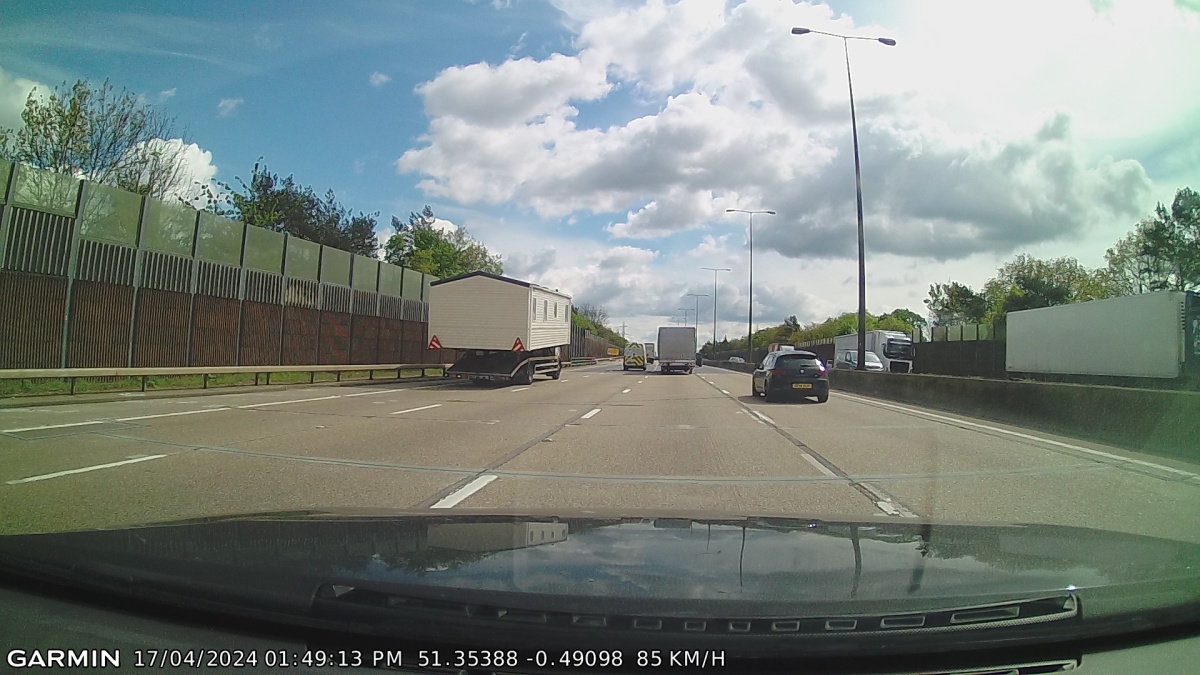
There I was, driving at less than the regulation speed (yes, I was) eastward on the M25 motorway. The details are stamped on a picture taken by my neat little Garmin dashcam. What’s in the picture? It’s a moveable building sitting on the back of a lorry. Nothing unusual about a lorry transporting stuff from A to B. What I saw was a large building on a relatively small lorry. When first seeing something like this on a busy road, my instinct is to give it a very wide margin.

The rectangular building was rocking gently. It was not a windless day. Not overly windy but a strong gusty breeze was blowing. Clear skies and dry tarmac. So, good driving conditions for a normal lorry with a normal load on a normal day. I’d estimate that this lorry was doing about 80km/hr. It wouldn’t be too difficult to do the sums in terms of the wind resistance of the building. It’s going to be significant. A large flat surface being pushed through the air at motorway speeds. As for sidewinds and gusts, this is a horrendous monster.

Back to safety being a mindset. My thought was – what on earth gave the carriers the idea that this arrangement for a wide load was a safe one for a motorway journey? No escort vehicle. No flashing lights. Just a couple of small red triangles. The straps and wooden blocks holding the load in place looked feeble. A powerful gust of wind on an exposed stretch of road and who knows what would have happen next. It wouldn’t have been pretty. I hope they got to their destination without incident.

Had this been done on private land then there would have been little public risk. Being done on a busy motorway – that’s a different matter. How do people convince themselves that such transport arrangements will be fine? I speculate:

  • Money. Maybe the haulage contractor undercut rivals to get the job. Maybe using a small lorry and ditching any escort vehicle saved money. Maybe there was time pressure and this was all that was available.
  • Bravado: A carrier imagines they have special skills and abilities so they can take risks that others would not take. Something uniquely puts them above others in the field. This cock-sure attitude is not uncommon.
  • Short Cuts. I’ve heard this argument used before – we did it last time and it worked, so we’ll do it again. That learned deviance is the source of many accidents. Past and present can have very different outcomes.
  • Shoulder shrugging: I’ve heard this argument used too – it’s legal, it’s within the rules so it can’t be wrong, can it? (The load maybe within the approved weight limits for the lorry. There may be no explicit rule on shape and size).

A good safety mindset means saying “no” when no is the right answer. All three of the above points can come into play and produce a toxic mix. Such is the way accidents happen. It doesn’t have to be this way but it often is. Before a critic says don’t be so high and mighty – yes, I’ve done foolish things too.

NOTE: The loading rules HGV maximum weights – GOV.UK (www.gov.uk)