Talent

This coming week an international tradeshow takes place in London. It’s easier to get to than it’s ever been, at least for me. The wonderful new Elizabeth line[1] goes directly to the ExCeL London.

The organisers describe the event as for the commercial aviation aftermarket. Personally, I don’t like those terms, but I guess it’s a way of grouping together all the activities that happen after an aircraft has been delivered by an airframe manufacturer. That’s maintenance, repair, overhaul and a good deal of other activities. It might be sophisticated test equipment or spanners. It might be hanger facilities or complete aero engine overhauls.

MRO Europe[2] is a major European event. Along with the exhibition there’s a conference highlighting some of the challenges aviation faces. There are a whole lot of uncertainties that are rippling through the industry. Recovery from the impact of the COVID pandemic is happening but it has taken its toll. 

The conference subject that caught my eye is that concerning the shortage of qualified people. Civil aviation must compete with every other international technology-based industry. Long gone are the days of the 1960s and 70s when aviation was associated with glamour and a kind of post-war kudos. Now, those with the right abilities, attitude and experience can command excellent reward packages in a wide variety of digital high-tech industries.

The MRO industry is aging. Offering an attractive pathway to young people is proving to be difficult. It’s a two-sided problem. On the one side the industry is inherently conservative. Afterall it’s in the safety business where reputation for quality matters. On the other side the attitudes, beliefs and expectations of younger people are markedly different from those of their potential mentors and teachers. Bridging this divide isn’t easy.

Apprenticeship schemes do help[3]. However, they are often picking up the people who already know they want a career in aviation.

The challenge is not just recruitment but retention. The aviation industry must make it attractive to retain talent. Working in an aircraft hanger, or on the ramp in the middle of a cold winter isn’t everyone’s cup of tea. Especially when comparing stories with a colleague in a nice warm office of a telecoms or social media company.

Building community, professionalism and a love of aviation is a priority. I’ve seen this done in the US. Next April at MRO Americas at the Georgia World Congress Center in Atlanta a competition[4] takes place. It’s an excellent example of how to create excitement in this field. Check it out.


[1] https://tfl.gov.uk/modes/elizabeth-line/

[2] https://mroeurope.aviationweek.com/en/home.html

[3] https://www.stsaviationgroup.com/sts-aviation-services-launches-newly-formed-apprenticeship-scheme-united-kingdom-1/


[4] Aerospace Maintenance Council – YouTube

Blah Blah Blah

To comment on British politics, Twitter maybe the perfect platform. It’s one of the ways commentary and observations can keep up with the pace of change. So febrile is the current landscape of British politics that it’s almost impossible to predict what will happen next. Naturally, there’s thousands who will volunteer their views. It’s a wonderful entertainment but probably not terribly helpful.

What makes a good politician, or at least what makes an effective politician in 2022? Let’s forget what makes a great politician because that category is only ever seen in the story books.

Setting our situation in the context: however good a person maybe they will make errors and have failures. Let’s not get hooked on the ridiculous idea that perfection is out there to be found. That’s the territory of ideology and fanatics. There’s too many of them in Twitter-land.

What makes a good politician? I think it does come down to fundamentals. There is a big word that stands out in any community. It has done throughout history. It’s that simple but sometimes illusive quality of TRUST.

It’s not enough to stand in front of a group of citizens and espouse trustworthiness. It’s not enough to say – trust me, I know what I’m doing. There must be believability built on sound evidence. That’s a record of saying things and doing things that are correct, consistent, and coherent.

Not easy to do. The frenetic speed of News is like a hungry monster wanting to be feed minute by minute. Say too much and arguments are pulled apart ruthlessly. Say too little and the vacant space is filled with speculation.

Getting beyond the blah blah blah of ephemeral commentary is not so easy. Trust and communication can’t be separated. Saying what you mean and meaning what you say must run through every message.

Am I being naively contradictory? To start, I emphasised that it’s human to get thing wrong now and then. If public communications must meet unobtainable standards what hope does any politician have in this new media world?

Well, there’s a balance to be struck. That’s where we are – way off balance. Like a wobbly wheel spinning on a worn out axal. Both the wheel and the axel need replacing.

chaos

October 2022 and the art of defending the indefensible is rife. There’s a lot of it about. In Great British Bake-Off style, it’s to take a really badly made sponge cake and coving it with colourful decorative icing and sprinkles. It’s a simple deception. It’s the practice of turning awful News on its head. Intention being to avoid accountability for that unwelcome daily News.

Ministers so up to their necks in almighty screw-ups, travel the media studios spouting endless reasons why things have never been better and there’s no other choice but to stick with “the plan.” The word Growth gets banded around as it was glue powerful enough to hold smashed atoms togther.

Global economic headwinds, pressures amplified by conflict and devious opponents all are all depicted as the reasons why international markets are sticking two fingers up to this Conservative Government. Speculators are loving it. As unpredictable turbulence always opens opportunity for a few people to make a great deal of money.

Articles with such titles as: power cuts are not so bad, higher mortgage costs create a sense of responsibility, don’t pamper poor children and global issues cause our woes. It’s difficult to understand journalists and newspaper readers who think misery is good for you. It must be that the people who write such material are hired guns without a moral compass. They are paid to churn out counter factual editorials, warped options, and shock jock entertainments.

What’s the answer to this cavalcade of absurdly? Unsustainable situations are not solved by walking on by. There’s a strong need for a refresh. That does mean a General Election.

I know I’ve said a General Election is not on the cards for 2022. What’s new is that the more old school Conservatives, who’s order of priority is – Country, Consitituency, Party – are showing signs that they realise their Party is hurting the Country.

There is a petition to “Call an immediate general election to end the chaos of the current government[1]” and it is scheduled to be debated in Westminster. No prizes for what the outcome will be but, in a way, that’s not the point. An election is on the agenda.

NOTE: Sacking Kwasi Kwarteng is a desperate attempt to distract from the disastrous consequences of the PM’s own policies. It has been a day when the chickens have come home to roost.


[1] https://petition.parliament.uk/petitions/619781

Air Taxi 2

As a quick effort at simple research, I looked at several local government websites searching for Air Taxi or Urban Air Mobility (UAM) or Advanced Air Mobility (AAM). The result was lots of blanks with one or two exceptions[1][2]

There’s numerous articles about e-scooters and how they might be integrated into cityscapes.

Addressing local governments, much of what has been published to date concerns the use of drones. Yes, the use of drones is happening here and now, so this is not such a surprise. However, to me, this was a reminder that the frenetic world of aviation often discussed the future in rooms full of like-minded people. Embracing a wider audience is overdue.

In the case of UAM/AAM, innovations in civil aviation are move beyond airports, upper airspace, and specialist technical interest. If the electrification of flight is to take hold it will touch the lives of many more people than conventional commercial aviation.

These new aviation developments will generate new business models and offer new services. This is challenging stuff. It’s clear to me that, without the agreement of local authorities such enterprises will be dead before they start.

National governments may take a regulatory approach that imposes on local governments. That would be ill advised and ultimately unsustainable. A cooperative partnership would open a smooth transition from transport novelty to accepted everyday part of mobility.

Local authorities will need to adapt their formal local plans to include planning considerations of zoning, land-use, multi-modal matters, environmental impact, construction, utilities/support infrastructure, public privacy and much more.

Local government is a partner in risk management too. Just as highway authorities wrestle with improving road safety so, no doubt, UAM/AAM accidents and incidents will be on their agenda.

Fostering public-private partnerships is talked about but few examples have moved beyond theory and into practice.

POST 1: These issues have been highlighted at ICAO this year Urban Air Mobility and the Role of Air Transport – ICAO 2022 Innovation Fair – ICAO TV

POST 2: The organisation is looking at possible future operations https://varon.aero/

POST 3: People taking a holistic view http://www.supernal.aero


[1] https://www.civataglobal.org/

[2] https://www.urbanairmobilitynews.com/global-map/

Air Taxi

My daily routine once comprised of walking across a bridge over the Rhine to an office in Ottoplatz in Köln-Deutz[1]. That’s in Cologne, Germany on the eastern side of the river.

In the square outside the railway station is a small monument to a man called Otto. A small monument marking a massive transformation that took place in the way transport has been powered for well over than a century. This monument honours Nicolaus August Otto who created the world’s first viable four-stroke engine in 1876.

Today, the internal combustion engine hasn’t been banished. At least, not yet and Otto could never have known the contribution his invention would make to our current climate crisis. But now, rapid change is underway in all aspect of transport. It’s just as radical as the impact of Otto’s engine.

As the electrification of road transport gathers apace so does the electrification of flying. That transformation opens new opportunities. Ideas that have been much explored in SiFi movies now become practically achievable[2]. This is not the 23rd Century. This is the 21st Century. Fascinating as it is that in The Fifth Element the flying taxi that is a key part of the story, has a driver. So, will all flying cars of the future have drivers?

I think we know the answer to that already. No, they will not. Well, initially most of the electric vehicles that are under design and development propose that a pilot (driver) will be present. Some have been adventurous enough to suggest skipping that part of the transition into operational service. Certainly, the computing capability exists to make fully autonomous vehicles.

The bigger question is: will the travelling public accept to fly on a pilotless vehicle? Two concerns come up in recent studies[3][4]. Neither should be a surprise. One concerns passengers and the other concerns the communities that will see flying taxies every day of the week.

Public and passenger safety is the number one concern. I know that’s easy to say and seems so obvious, but studies have show that people tend to take safety for granted. As if this will happen de-facto because people assume the authorities will not let air taxies fly if they are unsafe.

The other major factor is noise. This historically has prevented commercial public transport helicopter businesses taking-off. Strong objections come from neighbourhoods effected by aircraft constantly flying overhead. Occasional noise maybe acceptable but everyday operations, unless below strict thresholds, can provoke strong objections.

So, would you step into an air taxi with no pilot? People I have asked this question often react quickly with a firm – No. Then, after a conversation the answer softens to a – Maybe.


[1] https://www.ksta.de/koeln/innenstadt/ottoplatz-in-koeln-deutz-eroeffnet–das-muss-nicht-gruen-sein–2253900?cb=1665388649599&

[2] https://www.imdb.com/title/tt0119116/

[3] https://www.easa.europa.eu/en/newsroom-and-events/press-releases/easa-publishes-results-first-eu-study-citizens-acceptance-urban

[4] https://verticalmag.com/news/nasa-public-awareness-acceptance-of-aam-is-a-big-challenge/

Where are we?

From time to time, we do need to remind ourselves what the differences are between pollical parties and their thinking. Those differences are particularly stark now. In fact, dangerously stark.

So called “conservatives” are in defensive mode. They are lashing out having lost popular support and legitimacy across the nation. The misinformation is suggesting the opposition will form a “monstrous coalition” with other parties. Failing to recognise that the Conservative Party of 2022 is as monstrous coalition at war with itself.

In my mind there has never been a better time to argue for Proportional Representation (PR).  It’s a good way that a diversity of political thinking can be fairly represented. My words here are not an academic discourse so please don’t quote literate sources that point to flaws in my opinion.

Libertarian: It’s Anti-Government Government. In other words, reduce the size of the State to the absolute minimum. Thus, remove regulation and social support to create what is often called “UK PLC”. It’s a devil take the hind most thinking. Images of such a society are best captures in William Hogarth’s Gin Lane[1]. A small elite control and prosper but the majority languish.

Socialist: Almost the reverse of the above. Where the State is mother and father of every citizen. The “greater good” transcends individual aspirations and rights. Life is codified and regimented. A levelling takes place where tall poppies[2] are loped off ruthlessly. A small elite control and prosper but the majority languish.

Traditionally, these two have been characterised as far “right” and “left” in politics. Naturally, it’s not so simple as that because there’s lots of variations on the above themes. One common thread is that they both end up becoming authoritarian and destructive. Some would show the ends of the political spectrum as anti-authoritarian (anarchists) at one end and dictators at the other. So, there’s more than a few different ways of cutting the cake.

Where are we? It’s my belief that the vast majority to not fit in either of these two camps.

We live in a liberal democracy or have done until now. That, when it’s working well, balances individual aspiration with social responsibility. Our rights are respected at the same time as recognising our common journey as a nation. We work together to ensure that opportunity is spread far and wide. We cherish our environment. We build coalitions with common goals.

Britan needs to stop and take stock. The Conservative Party is pushing the whole nation in a direction it doesn’t not want to go. It’s strident libertarians are on a disastrous path. These are dangerous times.


[1] https://www.theguardian.com/artanddesign/picture/2012/sep/12/william-hogarth-gin-lane

[2] https://wordhistories.net/2018/11/12/tall-poppy-origin/

Eurovision

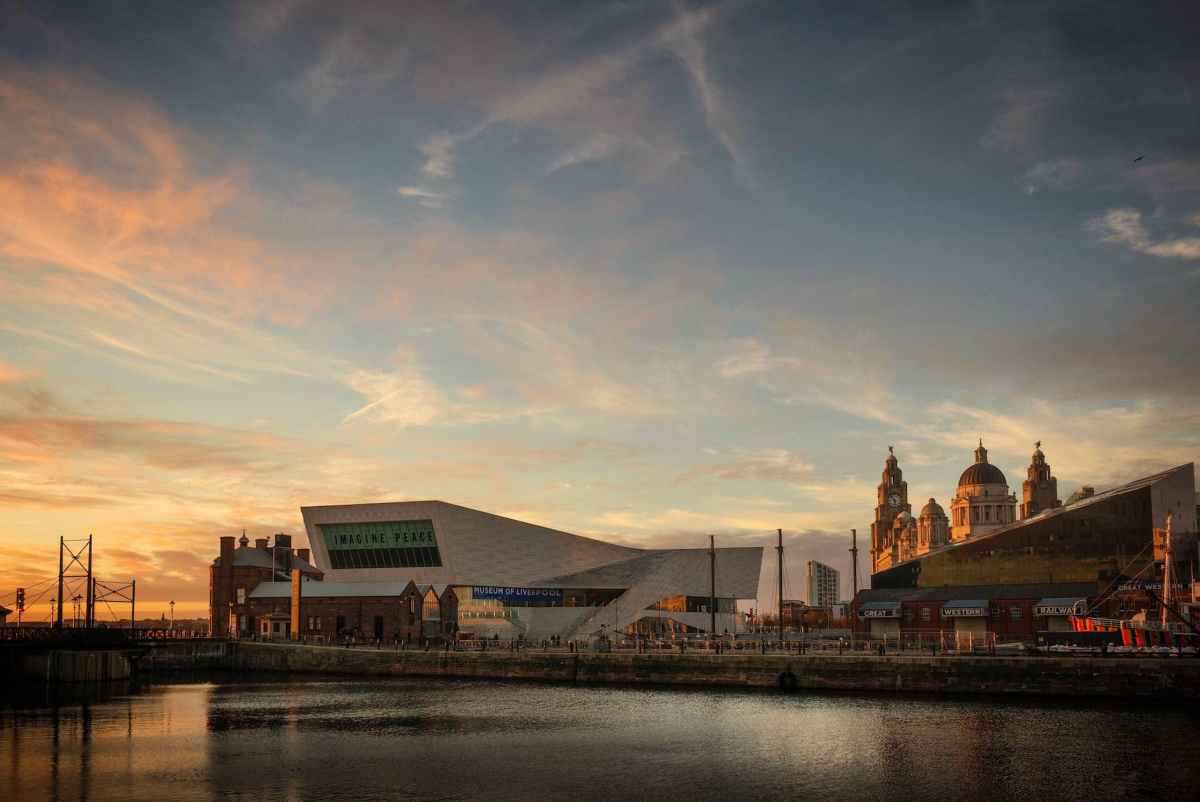
The right choice. Liverpool will make the best of best hosts for the 67th Eurovision Song Contest[1]. Last night, Liverpool was chosen as the location of the 2023 Eurovision Song Contest.

Don’t get me wrong. Glasgow would have done an excellent job too. It was a difficult choice to make between the two front runners. On balance, Liverpool can offer the excitement Europe needs after what will be a gloomy winter.

In 2008, Liverpool woke everyone up with its year as European Capital of Culture[2].

Being a long-standing political activist, I’ve participated in party conferences up and down the country. It’s a fantastic way of getting to know the heart of a city. Yes, I know it’s a superficial exposure in terms of seeing conference venues, hotels, and shopping centres but even so, the sense of a place comes across.

Party conferences are held in locations across the UK, at conference and convention centres that offer big enough venues, in fact the whole package, hotels, public transport and a good atmosphere. I’ve conferenced: Blackpool, Birmingham, Bournemouth, Brighton, Cardiff, Eastbourne, Gateshead, Glasgow, Harrogate, Liverpool, Southport, Torquay and York in springtime and autumn.

One of the most enjoyable conferences in my back catalogue is Liverpool. It’s a city that surprises. It has cultural and historic depth. It’s that mix of the city’s strong sense of identity and the pivotal role it has played in our collective history.

I had a, not all too uncommon, southerners’ ignorance of Liverpool. That was quickly dispelled by being there and enjoying its welcoming invitation, even when it’s raining.

What could be better? Liverpool has been twinned with Odessa in Ukraine since 1957. Fittingly, the 2023 Eurovision Song Contest is to be a Ukrainian celebration in the UK.

Also, Liverpool has been twinned with the German city of Cologne for more than 50-years. That’s a European city that feels like a second home to me.

Congratulations Liverpool. It’s a massive #Eurovision to look forward too.


[1] https://eurovision.tv/story/liverpool-will-host-eurovision-2023

[2] https://www.cultureliverpool.co.uk/

Unsustainable

One Minister say we want more immigration. Another Minister says we want less immigration. One Minister say we want to tax less. Another Minister says we want to keep taxes. One Minister say we want shale gas. Another Minister says we do not want shale gas. One Minister say we want more building everywhere. Another Minister says we want less building everywhere. One Minister say we can put tackling climate change on hold. Another Minister says we must act on the climate. One Minister wants to privatise the NHS. Another Minister supports public health provision. And, so on and so on.

What we have is an unsustainable UK Government without a mandate. No wonder the financial markets have been spooked. The more Ministers zigzag, U-turn, and twist and turn the more damage they do. In Truss and Kwarteng’s first month of Government chaos, it is reported that around £300 billion has been wiped off value of UK assets.

The UK is facing its biggest crisis since the Second World War. The threat is the Conservative Party. Their abject inability to set-out what they stand for has left the Conservative Party vulnerable to volatile knee jerk reactions and being led by the nose by fringe interests.

Poltical parties contain people with different interests and views. When there’s no alignment and common purpose holding those people togther then the fabric of a party fails. Trying to head this off, leaderships often get louder, more irrational and clutch at straws. Prime Minister Truss received Conservative Party conference applauds to her “anti-growth coalition” slogan but this is crazy in the context of recent Government preformance.

What is observable across the globe is that right-wing populist politicians love confrontation. They enjoy shouting down opponents. They like controversies of their own making that they can then attribute to others. The Conservative Party is broken.

Our immediate concern needs to be that this Government is sleep-walking into a mass of avoidable catastrophes as we move into the winter of 2022. Sadly, now, they are practicing the cartoon pose of an ostrich with its head in the sand.

Decaying Fantasy

I never thought that I’d read a political conference speech that referenced Jethro Tull[1]. Not the long-lived British rock band. Personally, I doubt if Minister Jacob Rees Mogg has ever heard of that group.

Like a cake baker who knows they have baked a poor cupcake his conference speech is sprinkled with 100s and 1000s. The bitterness of the sniping that interleaves every other sentence is an unsteady grumpy excess.

True that references to Adam Smith might be expected given the Minister’s known inclinations. However, reference to the Navigation Acts[2] is beyond the pale. The Navigation Acts, while profitable for Britain, caused anger in the colonies and contributed to the American Revolution.

The so called “Brexit Freedoms Bill”, a fantasy island piece of legislation, that is exactly the opposite of what is needed. We need to collaborate with others to increase the size of markets and not create even more barriers to trade.

On one major point on energy, fusion reactors remain as expensive experiments. Yes, they are expensive experiments that should be continued as global collaborative research, but they are a million miles away from being operational power systems.

Even the companies that have explored the possibilities of shale gas have concluded that it doesn’t have a future in this country. Our countryside, geology and ground water should not be put at great risk by a headlong rush into such folly.

The highlight of the Conservative party conference could be attributed bullnosed stubborn buffoonish fantasising. Meaningless slogans like: “We are the only party with the determination to deliver.” Have nothing to offer. Especially when the premise has already been shown to be a con.

The speech indicates a political party void of ideas and in terminal decline.


[1] https://www.ukpol.co.uk/jacob-rees-mogg-2022-speech-to-conservative-party-conference/

[2] https://en.wikipedia.org/wiki/Navigation_Acts

Election now?

Unless turkeys vote for Christmas, there will not be a UK General Election (GE) in 2022[1]. Well, I say that assuming that there will not be a total and utter breakdown of the governing political party. In the current state of play that event is within the realms of possibility. However, with a sizable remaining majority in the House of Commons, the Conservatives intend to continue regardless of their habit of swapping out party leaders.

It was pointed out to me that since the changes made to the UK Electoral Commission[2] earlier in the year, it’s much to the Conservative Party’s advantage to use their new powers to their benefit. The Electoral Commission is the “independent” organisation that oversees elections and regulates political finance in the UK. Ministers now have much more influence over the workings of the Commission.

There’s more than one Commission in the mix too.  The Boundary Commission for England (BCE) is in the process of coming up with a new map of proposed Parliamentary constituencies. From the 8th November, members of the public will be able to view and comment on new constituency boundaries. With this boundary review underway there’s little incentive to have an early UK GE.

Embarrassingly, Parliament will have to debate a public petition[3] that is signed by about half a million people. So shocked are people by the ineptitude of this Conservative Government, this petition calls for an immediate UK GE.

The calling of an early UK GE is at the discretion for the sitting Prime Minister (PM), whoever that might be. So, as I’ve said the case for a turkey voting for Christmas pertains.

Certainly, winter national elections are not popular amongst political party activists. The shorter days and weather conditions often make conventional campaigning activities like doorstep canvasing difficult to do. There’re other complexities too. For an election held in December, the notice of election will be published before the deadline for publishing the revised electoral register.

There are, and there have been unprecedented crises threatening the UK. The new PM’s team looks and acts febrile and inept, but it looks like we are stuck with them for a while longer.

POST: Reports from Birmingham are that the supernova like explosion of the Conservative party is indeed a possibility.


[1] The 2019 General Election was held on Thursday, 12 December 2019. It resulted in the Conservative Party receiving a majority of 80 seats in the House of Commons.

[2] https://www.independent.co.uk/news/uk/politics/electoral-commission-elections-bill-independence-b2067888.html

[3] https://petition.parliament.uk/petitions/619781