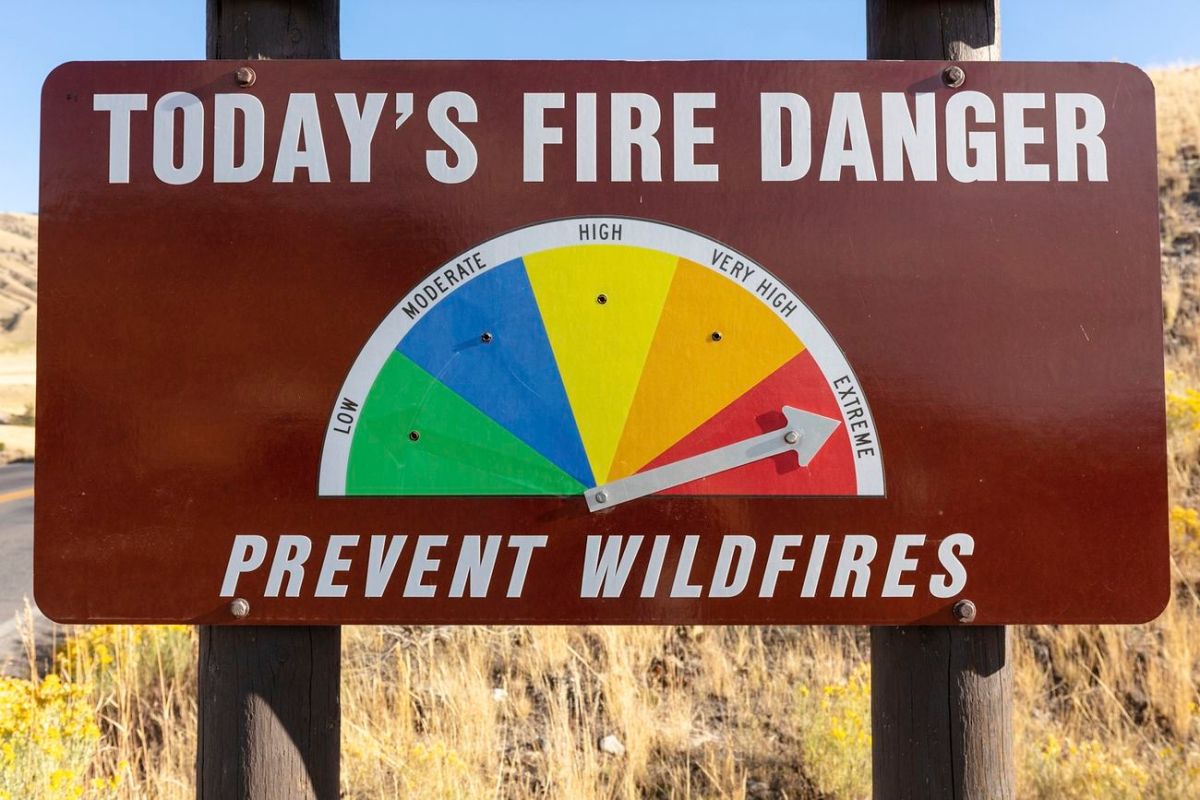
Last Chance

Dining at the last chance saloon, Rishi Sunak calls for unity. The man who will become Conservative Prime Minister (PM) has his work cut out. It’s one thing to point towards the 2019 General Election as the basis of the legitimacy of this coming Government but we now know, beyond a doubt, that the manifesto of that time was no more than a con. A majority in Parliament has been shown to not be enough alone to get things done.

Marketing Richi Sunak[1] as a knight in shining armour in troubled times may sing with Members of Parliament (MPs). Boris Johnson’s former supporters will just sit on their hands and steam.

So, has his selection stopped the Conservative Party imploding? I think not. 

For one, how will it be possible to construct a credible cabinet when the choices are limited to the people who have been less than capable, loyal, or reliable?

Two, the country’s Conservative party members have been kicked in the teeth. Having spent the summer consulting them, their opinions and votes have now been put in the dustbin.

Three, if we are we on the way to austerity Mk2 the Government’s popularity will further sink like a stone. Yet, financial stability will only be achieved by reversing the errors of recent times.

Four, the intemperate language of the Brexiters continues as they interpret every set back as a Socialists/Remainer plot and call most Conservative MPs “wets”[2]. In other words; weak and ineffective and against their beloved project.

Five, the public have been bystanders in all this poltical nonsense. They are shrugging their shoulders in dismay watching the antics of their MPs. This cannot be erased by just shuffling the cards.

It may be time for a little calm. A moment of calm will be good for everyone. Behind the curtains in that last chance saloon the panic will take a week or so to get going. Unity is a mysterious beast. People can desire it all they like but if the basic conditions are not in place, it will be illusive.


[1] https://twitter.com/schrankartoons/status/1584658993838002177?s=20&t=Z053gFJk1s45cdwrg7KQJg

[2] https://www.telegraph.co.uk/authors/n/nf-nj/nile-gardiner/

1982

In 40 years, much has changed but not everything. For me, a good part of 1982 was spent in Buckhorn Weston[1]. A small village on the edge of the 3 English countries, Somerset, Dorset, and Wiltshire.

It was the year, I graduated from Lanchester Polytechnic in Coventry (The Lanch). Having been a student apprentice, I returned to the employer who had sponsored my engineering education. That company and its name have disappeared from the lexicon of British manufactures. The Plessey company[2] was divided and swallowed up by others. The work that it did, at that time, continues but as part of a large European multinational organisation[3].

As a young design engineer, I found myself developing low noise preamplifiers. Yes, at that time analogue electronics played the major part in our lives. Digital systems were starting to break through as the recipe of choice for new designs. Each engineer had their own hardback orange catalogue of Texas transistor–transistor logic (TTL) chips[4]. It was the new frontier. Speculation was rife about growing miniaturisation.

It was a year of change. However, the pivotal moment of mine didn’t come until the end of the year. I was a fresh 22-year-old graduate with ambition and a rosy outlook as to what the world had to offer. Economically, the UK had been through some depressing years but in late 1982 the job market was good for a graduate of electronic engineering.

Living in the Dorset village of Buckhorn Weston had its eccentric moments. There were more than a few evenings spent at The Stapleton Arms[5]. On the opposite side of the road to the pub was a Post Office and a telephone box. When I moved to the village, I had little idea how that vivid red telephone box would shape my life for decades.

The daily routine started to have a rhythm to it, as there was a great deal to do at work. There wasn’t a moment when my diary wasn’t full. The summer had opened wonderful opportunities to cruise around the West Country lanes in my bright yellow MG Midget. My family being near by meant that family occasions didn’t go amiss either.

Then a Christmas party in Bristol had unexpected repercussions. It was early December. A good friend from The Lanch had got a job in Bristol working for a wine merchant. I had no hesitation in saying “yes” to an invitation to a party in the city. It wasn’t far to travel.

Now, 40-years on, Sue and I enjoy a life in the southeast. At that Bristol party we met for the first time. That’s when the cold nights standing in a village telephone box started. So, red Post Office telephone boxes will always have a special place in my heart.

In this mobile phone orientated era, a line from Monty Python comes to mind: “And you try and tell the young people of today that … they won’t believe you”[6]


[1] https://bwandkmpc.org/

[2] https://en.wikipedia.org/wiki/Plessey

[3] https://www.thales.com/

[4] This remains with us in a different form https://www.ti.com/lit/ug/scyd013b/scyd013b.pdf

[5] https://www.stapletonarms.co.uk/

[6] https://genius.com/Monty-python-four-yorkshiremen-live-annotated

Break the cycle

It’s almost as if the UK is a private country club run by a desperate array of fundamentalist eccentrics. Interview after interview ponders on the machinations within this rotten privileged club. Manoeuvrings and diversions take on a soap opera quality where none of the characters are likable and all are fatally flawed. It’s a daily Machiavellian[1] mystery show.

Although I’ve concluded that our governance problems are systemic the case for letting the country’s people decide what to do next is now overwhelming. Political parties with a large majority in the House of Commons become warped after a long period of power.

The UK is a Parliamentary democracy or is struggling to remain one. The prospect of Boris Johnson returning as Prime Minister (PM) is truly astounding. If he strides back into No 10 Downing Street as the Conservative top dog, then we have flipped into an undemocratic presidential malaise. 

Today, No 10 staff are preparing to give evidence at the privileges committee inquiry. Tommorrow, imagine the subject of that inquiry returning to be their boss.

Commentators are saying that many Conservative MPs will resign the party whip if Boris Johnson[2] wins the party leadership race. Sadly, this may not concern party managers given that they will still retain a majority in the House of Commons. Numbers matter.

Please don’t ask why is Boris Johnson has been on holiday when the House of Commons is sitting?

There’re a few oddballs who are saying that the British political opposition is scared stiff of Boris Johnson returning as PM, because “they know he’s a winner”. This really is turning the whole show into a sale of the century where honesty and integrity play no part in the proceedings.

The call an immediate General Election, so that the people can decide who should lead us through the extraordinary times, is right and proper. The chances of it happening are extremely thin. Pressing the reset button is of paramount importance. Trouble is that Conservative MPs prioritise protecting their jobs rather than the greater good of the country.

Britain’s last Prime Minister ran as bad a show as can be done in a short time. Likelihood is that Britain’s next Prime Minister will come the same discredited stable. Catastrophic results last time. Catastrophic results in prospect next time. The cycle needs to be broken.

POST: However strange, the support for Boris Johnson isn’t hiding under the covers https://twitter.com/LeoDochertyUK/status/1583418690120212482?s=20&t=08UMtfqXbbHzNjgiSahPjw


[1] https://marketbusinessnews.com/financial-glossary/machiavellianism/

[2] https://www.independent.co.uk/news/uk/politics/boris-johnson-flight-liz-truss-sunak-prime-minister-b2208264.html

Air Taxi 3

Urban mobility by air, had a flurry of success in the 1970s. However, it did not end well.

Canadian Joni Mitchell is one of the most celebrated singer-songwriters and my favourite. She has tapped into the social and environmental issues that have concerned a lot of us for decades. Of her large catalogue, I can’t tell you how much I love this song[1]. The shear beauty of the lyric.

Anyway, it’s another track on the album called “Hejira” that I want to refer. When I looked it up, I found out, I was wrong. The song I want to refer to is on the 1975 album “The Hissing of Summer Lawns”. The song “Harry’s House[2]” contains the line “a helicopter lands on the Pan Am roof like a dragon fly on a tomb.” Without going into what it’s all about, the lyrical image is that flying from a city skyscraper roof was seen as glamorous and the pinnacle of success.

In 1970, prominent aviation authorities were talking about the regulatory criteria needed for the city-centre VTOL[3] aircraft of the future. Then on the afternoon of 16 May 1977, New York Airways Flight 971, a Sikorsky S-61 helicopter, crashed[4] on Pan Am’s building rooftop heliport[5]. That ghastly fatal accident reset thinking about city centre operations air transport operations.

So, what’s different 50-year on? Proposals for city centre eVTOL operations are much in the News. City planners are imagining how they integrate an airborne dimension into public transport operations. Cars, busses, trains and eVTOL aircraft may all be connected in new multimodal terminals. That’s the city transport planners’ vision for less than a decade ahead.

For one, the vehicles are radically different. Yes, the physics of flight will not change but getting airborne is quite different between a conventional large helicopter and the plethora of different eVTOL developments that are underway across the world.

Another point, and that’s why I’m writing this piece, is the shear amount of safety data that can be made available to aircraft operators. Whereas in the 1970s, a 5-parameter flight recorder was thought to be neat, now the number of digital parameters that could be collected weighs in over thousands. In the 1970s, large helicopters didn’t even have the basic recording of minimal flight data as a consideration. The complexity in the future of eVTOL will be, not how or where to get data but what to do with all the data that is streamed off the new aircraft.

Interestingly, this changes the shape of the Heinrich and Bird “safety pyramid” model[6]. Even knowing about such a safety model is a bit nerdy. That said, it’s cited by specialist in countless aviation safety presentations.

Top level events, that’s the peak of the pyramid, remain the same, but the base of the pyramid becomes much larger. The amount of safety data that could be available on operational occurrences grows dramatically. Or at least it should.

POST: Growing consideration is being given to the eVTOL ecosystem. This will mean a growing need to share data Advanced Air Mobility Portal (nasa.gov)


[1] https://youtu.be/nyj5Be5ovas

[2] A nice cover https://youtu.be/bjvYgpm–tY

[3] VTOL = Vertical Take Off and Landing.

[4] https://www.nytimes.com/1977/05/17/archives/5-killed-as-copter-on-pan-am-building-throws-rotor-blade-one-victim.html

[5] https://www.thisdayinaviation.com/16-may-1977/

[6] https://skybrary.aero/articles/heinrich-pyramid

Reigate

You may well know that Alexander Boris de Pfeffel Johnson is the British politician that led the Conservative Party from 2019 to 2022. He served as Prime Minister (PM) of the UK. This is history. His term of office was a disaster. It was peppered with gaffs, lavish holidays, “terminological inexactitudes[1]” and jobs for his chums. Conservative MPs could take no more, so they got rid of him.

Circulating in the rumour mill is the possibility that this gentleman will be doing the “chicken run.” Boris Johnson’s current parliamentary seat, Uxbridge and South Ruislip would be among the 125 seats the Labour Party would likely win to secure a majority at the next General Election[2].

The rumour is that this former leader of the Conservative Party has his eye on Reigate. It’s a county constituency that has been a Conservative parliamentary seat in modern times. The only exception to this was in 1906 when a Liberal MP was returned to Parliament.

Reigate is a prosperous Surrey town, south of the North Downs and north of London Gatwick Airport. It’s at the heart of a Westminster constituency that extends north to Banstead and encompasses the town of Redhill. Next door are seats that have a simillar history as being safe for Conservatives.

The term “chicken run” became popular in the mid-1990s. As General Election defeat loomed, leading Conservative politicians started abandoning their parliamentary seats and getting themselves what they thought to be safer ones. This move was seen as a clear sign that the Conservative Party was conceding defeat. In fact, it took a while but it did turn out that way.

With Reigate’s current MP promising to stand down at the next General Election. There’s a vacancy. Who will the local party members choose? Boris Johnson in Reigate would be a dreadful prospect. However, this might bring about 1906[3] all over again. In the General Election of January 1906, the Liberals swept to victory with a landslide result.

Yes, Reigate could go Liberal Democrat. Now, that would be a good day.

POST 1: A Bring Back Boris petition has toped 10,000 in two days. It’s seems the rock and the hard place is playing out as Conservatives up and down Britain panic.

POST 2: Now, Reigate’s MP has been doing the rounds of the national media sudios calling for the current PM to stand down. Asking for the British electorate to tollerate yet another switch of PM. Absolute bonkers are far too mild words to describe the Conservative Party.


[1] https://en.wikipedia.org/wiki/Terminological_inexactitude

[2] https://www.theguardian.com/politics/2022/may/28/could-boris-johnson-lose-his-seat-in-the-next-election

[3] https://liberalhistory.org.uk/history/1906-election/

Our political class is sclerotic

It’s been pointed out time and time again. It’s not like it’s a new phenomenon. The education of our politicians is dominated by a small number of schools, universities, and courses. Having an Oxford PPE[1] puts someone in pole position. So, does attendance at Eton.

Yes, we are not the only society to exhibit such educational polarisation, but it’s deep rooted in the UK. Centuries of domination of select institutions are well documented. The UK is long in the tooth. One set of privileged people are often in the wings to replace another set of similar people.

Simple generalisations about this fact being bad are not so easy to sustain. On the list of those who were educated in this way have been some real reformers and progressive thinkers. Nevertheless, there are a significant number of dangers that come from such a narrow streaming.

Although the overarching heading of Philosophy, Politics and Economics contains a variety of options and differences, it’s been constructed as a machine in a factory for politicians. It’s a cooky cutter for a template Member of Parliament (MP). For a long, long time, local constituency party’s and a significant number of voters have taken it as read that this is the model for an MP.

An interesting question arises in the current chaotic political maelstrom. Is this phenomenon one of the roots of periodic failures and catastrophes in the UK?

Here’s several reasons why the suggestion can not be easily dismissed.

Narrow streaming is a great way to instil a “group think” in our governance. Thing is, I don’t think we (voters) need or want this to happen. The risks are self-evident. There’s a greater propensity to agreement on the wrong course of action. An example is the decision to go to war in Iraqi.

Linking “orthodoxy” and stability in the minds of the population may limit what can be done. This is a strange one in that politicians with a common background can be strongly motivated to be unconventional just for the sake of doing it. Maybe that’s what has just happened.

Diversity is not just a nice to have. Diversity brings strengths that are not available in a monoculture. It’s a good strategy to bring in new ideas. New thinking. Bring in people with a wide variety of different backgrounds and experiences.

Change is needed. The UK’s political class is sclerotic. It shouldn’t be a surprise that we just had a national heart attack.


[1] https://www.theguardian.com/education/2017/feb/23/ppe-oxford-university-degree-that-rules-britain

Talent

This coming week an international tradeshow takes place in London. It’s easier to get to than it’s ever been, at least for me. The wonderful new Elizabeth line[1] goes directly to the ExCeL London.

The organisers describe the event as for the commercial aviation aftermarket. Personally, I don’t like those terms, but I guess it’s a way of grouping together all the activities that happen after an aircraft has been delivered by an airframe manufacturer. That’s maintenance, repair, overhaul and a good deal of other activities. It might be sophisticated test equipment or spanners. It might be hanger facilities or complete aero engine overhauls.

MRO Europe[2] is a major European event. Along with the exhibition there’s a conference highlighting some of the challenges aviation faces. There are a whole lot of uncertainties that are rippling through the industry. Recovery from the impact of the COVID pandemic is happening but it has taken its toll. 

The conference subject that caught my eye is that concerning the shortage of qualified people. Civil aviation must compete with every other international technology-based industry. Long gone are the days of the 1960s and 70s when aviation was associated with glamour and a kind of post-war kudos. Now, those with the right abilities, attitude and experience can command excellent reward packages in a wide variety of digital high-tech industries.

The MRO industry is aging. Offering an attractive pathway to young people is proving to be difficult. It’s a two-sided problem. On the one side the industry is inherently conservative. Afterall it’s in the safety business where reputation for quality matters. On the other side the attitudes, beliefs and expectations of younger people are markedly different from those of their potential mentors and teachers. Bridging this divide isn’t easy.

Apprenticeship schemes do help[3]. However, they are often picking up the people who already know they want a career in aviation.

The challenge is not just recruitment but retention. The aviation industry must make it attractive to retain talent. Working in an aircraft hanger, or on the ramp in the middle of a cold winter isn’t everyone’s cup of tea. Especially when comparing stories with a colleague in a nice warm office of a telecoms or social media company.

Building community, professionalism and a love of aviation is a priority. I’ve seen this done in the US. Next April at MRO Americas at the Georgia World Congress Center in Atlanta a competition[4] takes place. It’s an excellent example of how to create excitement in this field. Check it out.


[1] https://tfl.gov.uk/modes/elizabeth-line/

[2] https://mroeurope.aviationweek.com/en/home.html

[3] https://www.stsaviationgroup.com/sts-aviation-services-launches-newly-formed-apprenticeship-scheme-united-kingdom-1/

[4] Aerospace Maintenance Council – YouTube

Blah Blah Blah

To comment on British politics, Twitter maybe the perfect platform. It’s one of the ways commentary and observations can keep up with the pace of change. So febrile is the current landscape of British politics that it’s almost impossible to predict what will happen next. Naturally, there’s thousands who will volunteer their views. It’s a wonderful entertainment but probably not terribly helpful.

What makes a good politician, or at least what makes an effective politician in 2022? Let’s forget what makes a great politician because that category is only ever seen in the story books.

Setting our situation in the context: however good a person maybe they will make errors and have failures. Let’s not get hooked on the ridiculous idea that perfection is out there to be found. That’s the territory of ideology and fanatics. There’s too many of them in Twitter-land.

What makes a good politician? I think it does come down to fundamentals. There is a big word that stands out in any community. It has done throughout history. It’s that simple but sometimes illusive quality of TRUST.

It’s not enough to stand in front of a group of citizens and espouse trustworthiness. It’s not enough to say – trust me, I know what I’m doing. There must be believability built on sound evidence. That’s a record of saying things and doing things that are correct, consistent, and coherent.

Not easy to do. The frenetic speed of News is like a hungry monster wanting to be feed minute by minute. Say too much and arguments are pulled apart ruthlessly. Say too little and the vacant space is filled with speculation.

Getting beyond the blah blah blah of ephemeral commentary is not so easy. Trust and communication can’t be separated. Saying what you mean and meaning what you say must run through every message.

Am I being naively contradictory? To start, I emphasised that it’s human to get thing wrong now and then. If public communications must meet unobtainable standards what hope does any politician have in this new media world?

Well, there’s a balance to be struck. That’s where we are – way off balance. Like a wobbly wheel spinning on a worn out axal. Both the wheel and the axel need replacing.

chaos

October 2022 and the art of defending the indefensible is rife. There’s a lot of it about. In Great British Bake-Off style, it’s to take a really badly made sponge cake and coving it with colourful decorative icing and sprinkles. It’s a simple deception. It’s the practice of turning awful News on its head. Intention being to avoid accountability for that unwelcome daily News.

Ministers so up to their necks in almighty screw-ups, travel the media studios spouting endless reasons why things have never been better and there’s no other choice but to stick with “the plan.” The word Growth gets banded around as it was glue powerful enough to hold smashed atoms togther.

Global economic headwinds, pressures amplified by conflict and devious opponents all are all depicted as the reasons why international markets are sticking two fingers up to this Conservative Government. Speculators are loving it. As unpredictable turbulence always opens opportunity for a few people to make a great deal of money.

Articles with such titles as: power cuts are not so bad, higher mortgage costs create a sense of responsibility, don’t pamper poor children and global issues cause our woes. It’s difficult to understand journalists and newspaper readers who think misery is good for you. It must be that the people who write such material are hired guns without a moral compass. They are paid to churn out counter factual editorials, warped options, and shock jock entertainments.

What’s the answer to this cavalcade of absurdly? Unsustainable situations are not solved by walking on by. There’s a strong need for a refresh. That does mean a General Election.

I know I’ve said a General Election is not on the cards for 2022. What’s new is that the more old school Conservatives, who’s order of priority is – Country, Consitituency, Party – are showing signs that they realise their Party is hurting the Country.

There is a petition to “Call an immediate general election to end the chaos of the current government[1]” and it is scheduled to be debated in Westminster. No prizes for what the outcome will be but, in a way, that’s not the point. An election is on the agenda.

NOTE: Sacking Kwasi Kwarteng is a desperate attempt to distract from the disastrous consequences of the PM’s own policies. It has been a day when the chickens have come home to roost.


[1] https://petition.parliament.uk/petitions/619781

Air Taxi 2

As a quick effort at simple research, I looked at several local government websites searching for Air Taxi or Urban Air Mobility (UAM) or Advanced Air Mobility (AAM). The result was lots of blanks with one or two exceptions[1][2]

There’s numerous articles about e-scooters and how they might be integrated into cityscapes.

Addressing local governments, much of what has been published to date concerns the use of drones. Yes, the use of drones is happening here and now, so this is not such a surprise. However, to me, this was a reminder that the frenetic world of aviation often discussed the future in rooms full of like-minded people. Embracing a wider audience is overdue.

In the case of UAM/AAM, innovations in civil aviation are move beyond airports, upper airspace, and specialist technical interest. If the electrification of flight is to take hold it will touch the lives of many more people than conventional commercial aviation.

These new aviation developments will generate new business models and offer new services. This is challenging stuff. It’s clear to me that, without the agreement of local authorities such enterprises will be dead before they start.

National governments may take a regulatory approach that imposes on local governments. That would be ill advised and ultimately unsustainable. A cooperative partnership would open a smooth transition from transport novelty to accepted everyday part of mobility.

Local authorities will need to adapt their formal local plans to include planning considerations of zoning, land-use, multi-modal matters, environmental impact, construction, utilities/support infrastructure, public privacy and much more.

Local government is a partner in risk management too. Just as highway authorities wrestle with improving road safety so, no doubt, UAM/AAM accidents and incidents will be on their agenda.

Fostering public-private partnerships is talked about but few examples have moved beyond theory and into practice.

POST 1: These issues have been highlighted at ICAO this year Urban Air Mobility and the Role of Air Transport – ICAO 2022 Innovation Fair – ICAO TV

POST 2: The organisation is looking at possible future operations https://varon.aero/

POST 3: People taking a holistic view http://www.supernal.aero


[1] https://www.civataglobal.org/

[2] https://www.urbanairmobilitynews.com/global-map/