Ice Cream

It’s a conspiracy! A devious plot by those government bureaucrats meddling with my fundamental freedoms. There I am, all innocent, in a local supermarket looking for my favourite ice cream. A woman of my age is staring at the upright freezer compartment at the same time. She’s frustrated. “Can’t find what I’m looking for”. In a grumpy voice she further remarked: “Staff told me it’s a government directive not to put fatty foods at eye level. They’ve been told to move them.”

I said: “That’s a new one on me.” I opened the tall glass door and bent down to pick out the nearest selection they had to my favourite ice cream. As I put the box in my cart, “it may not be good for my physical health but it’s dam good for my mental health” I said. She smiled.

My first thought is that the staff member with the all-knowing knowledge was a number one idiot. This is how conspiracies get going. Supermarkets are always moving goods around the shelves. 

So, I looked it up. Yes, a British charity called the Royal Society for Public Health (RSPH)[1] has recommended that supermarkets move junk foods from eye-level shelves. It’s the sort of statement a public health charity would say. They are not the government.

On the basis that nothing is left to chance in the way supermarkets are designed, there’s no doubt that health advice would go into their deliberations about shelving. The shelving manufactures[2] have advice too: Keep Them Busy. That’s not just a way of making us move around the store, probability good for physical health, but it’s to get us to see more products. Buy, buy, buy.

In the winter to come, supermarket shelves could be left empty of some food and drink as companies go bust due to exceptional energy prices, but government officials aren’t going to help much with that problem. They certainly were not when that happened due to Brexit.

Back to my theme. Why is the first assumption made that there must be a government conspiracy? Not by everyone but by a significant number of people. I’d venture it’s the disconnection people believe that exists between media savvy politicians and real live everyday folk.

In this case, it’s also the abdication of responsibility on the part of the store worker. It’s a matter of not understanding, or not being bothered, or their own conspiratorial thinking.


[1] https://www.retailgazette.co.uk/blog/2019/07/grocers-urged-scrap-junk-foods-eye-level-shelves-obesity-crisis-bites/

[2] https://www.monarchshelving.co.uk/blog/shelving/effective-shelving-strategies-grocery-stores/

Corporate Failure

I watched the documentary on the Boeing 737 MAX 8 last night. It’s on Prime[1]. Called Flight/Risk. It starts with the launch of the new aircraft and ends as the aircraft returns to service and the consequences of the disaster that are still rippling through aviation. Seattle Times journalist, Dominic Gates appears frequently. His perspective is one that I was reading as the accidents and following events unfolded.

It’s a well-made production. I my view it focuses too much on whistle-blowers and too little on the appalling design errors made in certifying the aircraft. However, I can understand the choices made by the film makers. It’s primarily aimed at a public audience and not technical experts.  

This was a massive and fatal corporate failure. My recollections of working with Boeing in Seattle, in the mid-1990s are that such events could never have occurred in that era. It was a preeminent engineering company, with a proud heritage and safety was as important as the blood that flows through our veins. What happened in this last decade is beyond shocking.

Now, corrective action is being taken. Efforts are being made to re-establish an effective safety culture. All over the world technical experts have securitised the modified Boeing 737 MAX to the n-th degree. The company expects the Boeing 737 MAX 7 will be certified by the end of the year and the larger MAX 10 in the first half next year.

What is regretful is how long the design and manufacturing industries resisted the introduction of Safety Management Systems (SMS). I remember doing presentations to industry on that subject more than 2-decades ago.

So, what does a bad corporate and safety culture look like? We must recognise it, and not ignore the signs. What concerns me is, however much we have learned from the Boeing 737 MAX saga; it will soon be forgotten. Pasted over like wallpaper.

As if to give me an illustration, I was standing in a high street shop, browsing sale items in the normal way. It’s always nice to pick up a bargain. Even though it was a busy Saturday afternoon, there wasn’t many people in the shop. Behind me, were two store employees chatting away. They didn’t pay much attention to me until they had finished. They were close enough for me to hear most of what they were saying. One of them was the store manager.

Basically, they were having a whinge about the company that owned the shop. One key aspect was the waste of time, as they saw it, of being sent on company training courses where expensive consultants rabbited on to them about matters that were totally irrelevant to their day-to-day business. They blamed the corporate management. They haven’t got a clue, and it’s getting worse was the gist of the chat. They both expressed love of their jobs. It was a cry of desperation and frustration as they feared the company was on the road to go bust.

I guess that’s it. When little, or no communication exists between shop floor, literally in this case, and corporate management then that’s a big indicator of grave troubles ahead.


[1] https://www.amazon.co.uk/Flight-Risk-Karim-Amer/dp/B0B5K615MZ

Public Service

Today, Charles III is to be proclaimed King following the death of Queen Elizabeth II. My thoughts are with His Majesty The King and his family.

The Queen has shown us how statecraft is done. With exceptional charm, dedication, and wisdom, she brought together the people of many nations. Her example will shine bright for eons to come. Now, a new era will begin. The monarchy will continue to be at the centre of British life but it’s a world, a family of nations, a Britain that is so different from the one of 70-years ago.

There are three thoughts of recollections I’d like to highlight. One is the late Queen’s love of the countryside and rural life, and another is her celebration of public service and the third is truly being an internationalist.

The Queen didn’t take sides. That contrasted so acutely with the partisan nature of political debate.

Rural communities saw The Queen as a knowledgeable, interested and concerned countrywoman. She spoke up at times of hardship especially for those living and working in rural societies not just in the UK but worldwide.

At a time when the whole idea of public service has been under attack The Queen stood four-square in support of those who give up their time and energies to work for a better society, helping others and upholding the role of those who serve their community.

Having travelled the world and experienced the horrors of war, The Queen was prominent in bringing together peoples of all faiths, beliefs, and backgrounds. The Queen at the Council of Europe in 1992, talking about the European Convention on Human Rights, Magna Carta and changing times is well worth a listen.

The Queen’s death does raise fundamental questions over future of monarchy, but they are not for now. There will be time enough to explore the future.  

May Queen Elizabeth II rest in peace.

21st Century Gothic

It took over 600 years to complete, Cologne Cathedral[1] was finished in on 14 August 1880. That was about six months before the Conservative politician who served as United Kingdom (UK) Prime Minister (PM) twice, passed away. None other than Benjamin Disraeli. 

The Gothic revival has started. Europe became awash with gothic architecture. Cologne Cathedral ranks as a pre-eminent example of the style in all its glory.

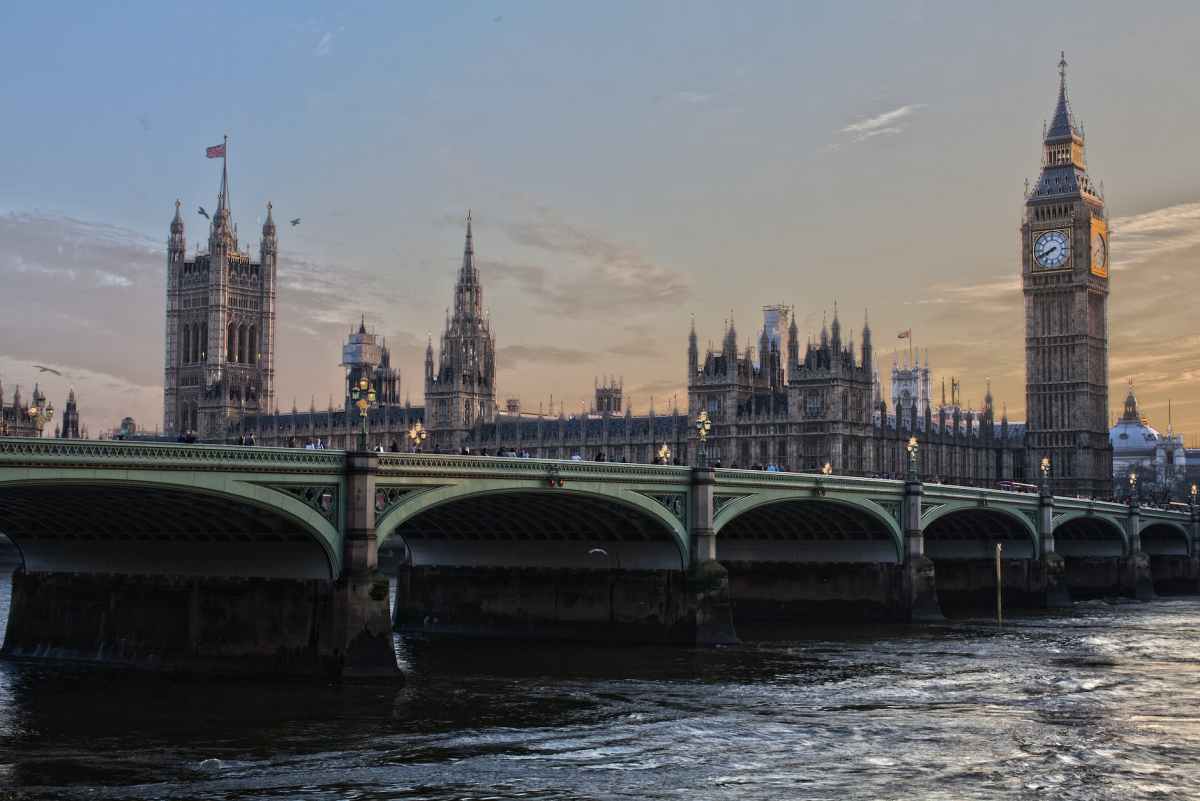
Today, our UK Houses of Parliament, more accurately the “Palace of Westminster” is as gothic as gothic comes. After both houses has been burnt to the ground, in 1835 it was decided to rebuild. I guess that’s a clue as to why the architectural choice was made the way it was made.

The Germans, Czechs, Hungarians and British all had a taste for this grand nationalistic style. It had become fashionable with the Church as much as being a symbol of national triumphalism. It pushed aside the Classical style. Although many important buildings were still built in the Classical style at that time.

Honestly, I’m not being unkind. This week’s Ministerial appointment had more than one outstanding eyebrow lifer. I really wish I could do that trademark Roger Moore facial gesture[2]. What a handsome chap. I’ll forgive him his conservative leanings.

What got me thinking about a Gothic revival was not the famous painting: American Gothic[3]. Which is a wonderful parody. No, it was the image of a newly appointed Minister of Her Majesty’s Government. My thought was that this is NOT normal. This is worthy of exceptionally grave concern.

Jacob Rees-Mogg MP has been appointed Secretary of State for Business, Energy and Industrial Strategy. However, he might be most suited to the Gothic palace where he spends his time, the notion that that gentleman is the best choice for that office astounds me.

We are in 2022, aren’t we? There hasn’t been as sudden slip in the time continuum, and we are back in 1822, by any chance?

The UK Houses of Parliament have become iconic and symbolises the UK throughout the world. Big Ben, the clock tower, is in the Gothic style. I had no idea that this revival of the Medieval impacted the choice of Government Ministers. I’ve been shaken. I hate to use the words but – we’re all doomed[4].


[1] German: Kölner Dom

[2] https://britishheritage.org/en/roger-moore

[3] https://en.wikipedia.org/wiki/American_Gothic

[4] “We’re all doomed!” the classic catchphrase of Private Frazer in Dad’s Army.

Next Please

There’s no celebration. No fanfare. Today, the UK get a new PM. The 4th in 6-years. We have seen Cameron, May, come and go. Now Johnson is going in favour of Truss. If there’s a celebration, it’s that Johnson is going out of Number 10 Downing Street. The removal van is, no doubt, fully laden.

This is a transition that needs to be made as quickly as possible. For too long the Johnson cabal has been lingering and doing little of any use to the nation. However, the jobs are distributed it’s a time when decisions must be made fast, but with a degree of smart flexibility.

Truss has none of Johnson’s ability to bluff and shtick. The new PM has a delivery that’s wooden and gaff prone. Nevertheless, Tuss has beaten others who would dearly love to be in the hot seat. Although, there’s good reason to question why anyone sane would want to be PM in September 2022, given the vast size of the in-tray that is waiting.

Smaller taxes and smaller Government may have been Truss’s shop window to Tory members but that’s not what’s necessary to dig the country out of the doldrums. This is a time for intervention. We have markets that are actively working against the interests of the British people.

Denying the aftereffects of Brexit also needs to go in the dustbin. It’s only by recognising a problem that a better path can be taken.

The last thing we need is a laissez-faire leadership. The textbooks of the Reagan era do not contain the solutions to the problems of the 2020s. Immediate changes to the energy market are needed. Regulation is a major part of those changes. Not micromanagement but structural change. The accumulation of huge profits because of our peculiar regulatory structure can’t continue.

On this momentous day, change must happen. However, as a word of caution, that transformation must not disregard the real and urgent nature of climate change. If our hot summer wasn’t an indicator sufficient to catch the attention of the new PM, and whoever is appointed as energy secretary, then look at what’s happening in Pakistan[1].

Winter is coming. Short-term measures must prepare us for winter, but the long-term perspective is vital. Not only do we need to decarbonise but reducing demand for energy for heating is achievable. For too long the benefits of improving Britain’s housing stock have been neglected. We don’t need more spiel and the hands-off approach should be for the dustbin.


[1] https://www.msn.com/en-gb/news/world/pakistan-floods-more-than-450-children-killed-in-e2-80-98horror-show-e2-80-99-with-death-toll-feared-to-rise-further/ar-AA11uXnL

Platform & Mockery

It’s accurate to say that there will be a new leader of the British Conservative Party. An announcement is expected and there’s not much that can derail it. Up and down the country the members of that national political party have been twiddling their thumbs and marking ballot papers.

To me, the use of the word “new” is to stretch the langauage to the far corners of the Earth. The politician backed by the pollsters to win is nowhere new on the block. What’s fascinating is the two Conservative candidates for Prime Minister (PM) have been spending their time rubbishing the record of the last decade of Conservative Government. Funny old world.

In a huff from starting blocks The Mail, newspaper, has screamed unfair because mainstream comedians love to mock the likely winner of the Conservative Party’s selection process. This is mega silly. Mocking our leaders is as British a British can be. Recently, I was in the V&A[1] in London and I couldn’t resist a look at the Spitting Image puppet of Margaret Thatcher. If anything, in terms of mockery, we are getting tame. Leaders of any poltical creed are fair game in a free country. Often the humour is spiky but shines a light on a truth. That is so much better than the playground bickering and insults that are gaining momentum among the far right and left.

Exercising a lot of media pundits is the question of when there will be a General Election. The drop-dead date is at the end of 2024. So, practically, any new British PM will have not much more than 18 months to make a big show, and shift the agenda onto their ground. Tough task at any time.

Today’s News suggest that this natural poltical ambition will be incalculably difficult to deliver. The phrase: “Events, my dear boy, events,” comes to mind. When asked what troubles a PM, former PM Harold Macmillan[2] answered with those words. It’s become a popular quotation and so true.

Past events linger. Banking crisis, Brexit, COVID and international tensions. Current events are unpredictable. War, Energy prices, Inflation and the Climate Crisis. Future events often give no notice. None of these are small. All we need now is another troublesome Icelandic Volcano to burst into life.

By the way, Harold Macmillan was the target of wonderfully sharp mockery by a cartoonist called Vicky[3]. His works are a good study of British culture and society in the 1950s – 60s. I expect poltical cartoonists will be happy to mark this day as a good one for future work.

POST 1: There are 605 days until the 2nd May 2024, a likely date for the next General Election. The last one was 998 days ago, meaning we are 62% of the way through the current Parliament. Much can happen.

POST 2: It is my great pleasure to introduce the new British PM Liz Truss ‘Cheese Speech’ to Conservative Party Conference 2014 – video Dailymotion


[1] https://www.helenacurrycreative.co.uk/margaret-thatcher

[2] British Conservative politician who was Prime Minister from 1957 to 1963.

[3] https://www.cartoons.ac.uk/cartoonist-biographies/u-v/VictorWeisz_Vicky.html

Humans in Space

Smart people have strong views on human space flight. In my mind, human space flight isn’t a football for arguments over public verse private. How missions are funded is less important than the fact that they are funded. Space flight will always be a high-risk activity. Those risks will sometimes be borne by the public sector and sometimes by the private sector.

Saying that all we need is robotics in space is to overstate the case for robotics. No doubt, robotics will play a fundamental part in exploration. It’s one component in a bigger picture. Humans need to go to space. That’s a rather a didactic statement. It needs to be challenged. So, my answer has several parts, and here they are:

Firstly, it’s not that we have a choice, given the nature humans have demonstrated over the last million years. Discontent with staying in one place, we are constantly on the move. We’ve inhabited every part of the globe. Even the most inhospitable parts. It’s extremely unlikely we will counter that instinct to travel, to go, and to see for ourselves. First-hand.

Secondly, every robotic mission has limitations based on the design of the machines we send into space. A designer must use the knowledge of their time to anticipate what may be needed, often a decade from the first moment they sat at their computer. The adaptive capability of humans is unmatched. However, machines advance, it will be unmatched for tens of decades ahead.

Thirdly, our lives are full of stories of imaginary flights. From Leonardo da Vinci vivid creativity to the practical achievements of the Wright brothers. Imagination spurred on inventors to bring to life ways in which humans could take to the air. The same applies to space flight. Flash Gordan is a comic book character. We know that Star Trek is a fiction. The film Gravity stressed the dangers of space. None of this detracts from an imbedded predisposition we have for space-based adventures.

Fourthly, when faced with the new it’s not always clear what to do. However, if unprecedented situations arise, we humans rise to the occasion. The inventive capacity of people is unique. When the machinery around us fails we come up with answers. We work out a way to get over the problems. Being able to rapidly fix things matters in space[1].

Fifthly, our species is successful, in part, is because we face risks. It could be said that existence requires us to face risk, but we do it anyway. Our enjoyment of dangerous sports is one indicator. People train to face perils and are thrilled to overcoming challenging circumstances. Collectively we delight in their achievements. Why go to space? – Because it’s there[2].

It’s more than evident that from the perspective we have in the here and now, we can only see so far ahead. A few will see further. What seems obvious to a highly educated commentator on human space flight may be rendered null and void at a stoke come the next discovery.

NOTE 1: On the third point, I found a quote from Orville Wright. “No flying machine will ever fly from New York to Paris. That seems to me to be impossible. What limits flight is the motor.” So, even with his inventiveness and imagination it only went so far. [Early Flight – From Balloons to Biplanes].

NOTE 2: On the fourth point, the experience of my early career working on ground test equipment for communications satellites comes into play. Extensive testing is needed on any space borne systems. As I remember it being said – we don’t make ladders that high.


[1] https://www.nasa.gov/mission_pages/apollo/missions/apollo13.html

[2] Why climb a mountain? British climber George Mallory gave a famous response in a New York Times interview in 1923: “Because it’s there.”

Moon Mission

Wishing Artemis well in the plan to go back to the Moon

The universe is big, I mean really big, but our nearest neighbour is close by. Seeing our unique satellite orbit the Earth is as common an experience watching the weather. No need for a telescope.

The circumference of Earth (distance around Earth at the equator) is roughly 40,000 kilometres (25,000 miles). The distance to the Moon is 10 times the circumference of the Earth, or roughly 400,000 kilometres (250,000 miles[1]). That sounds like a lot but compared with the dimensions of our solar system it’s nothing much.

The first humans walked on the Moon on 20th July 1969. I was 9-years old. I watched the event in our living room on a small black and white TV. Around the globe, hundreds of millions of people watched as Armstrong stepped out on the surface of the Moon for the first time[2]. For good or ill, humanity changed on that day.

A plan for returning humans to the Moon is underway[3]. NASA’s new lunar mission is ready for launch. Called “Artemis” a mission is on the launch pad. In ancient Greek mythology, Artemis was heavily identified with Selene, the Moon.

This project will work with industry and international partners, like the European Space Agency (ESA)[4] to send astronauts to the surface of the Moon. The European Service Module (ESM) will provide for future astronauts’ basic needs, such as water, oxygen, nitrogen, temperature control, power, and propulsion.

It’s a big day. Exploration is a part of human DNA. These are the next steps. I wish the project every success.

POST: Well, we get to use that well used phrase – Space is hard. “Space is hard.” But why? — Elizabeth A. Frank (elizabethafrank.com)


[1] 225,623 miles away when it’s at its closest. The Moon’s orbit is not a perfect circle. When the Moon is furthest, it’s 252,088 miles away.

[2] https://en.wikipedia.org/wiki/Moon_landing

[3] https://www.nasa.gov/specials/artemis/

[4] https://www.esa.int/ESA_Multimedia/ESA_Web_TV

Do something

Understanding British reticence is part of understanding Brexit. This phenomenon is not new. Not new at all. It maybe culturally embedded. There’s an array of wonderful cartoons from Punch on the theme.

The late 1950s were peppered with such an inclination to paint a colourful picture: “You’ve never had it so good[1]” but closing a blind eye to unemployment, industrial stagnation, threatening Russians, and the aftermath of Suez. Substitute inflation for unemployment and Brexit for Suez. It’s all too familiar.

The early 2020’s is the era of unwillingness to do something about Brexit or talk about its damaging impact. All the time knowing that an accumulation of evidence all points one way. The nation is playing the 3-monkeies, in pretending that the facts don’t matter. It’s a lack of moral responsibility on the part of politicians who refuse to accept facts, looking the other way or faking ignorance.

Today, we see that Britain’s Brexitism, if there is such a word, is dedicated to a permanent anti-European sentiment. We see it in national newspapers like The Telegraph all the time. We hear it from would be political leaders. I’d even say we smell it.

This is done by politicians and establishment figures to preserve the sanctity of the 2016 referendum and as a means of explaining daily political failures. There must be a wild European ogre on the horizon otherwise the danger is that people might blame Brexit.

There are more successful times when the national code was discretion, pragmatism, and realism. These options have been thrown out of the window by the true believers in power. Such wise options are seen as “lefty” or U-Turns.

Johnson’s Government has capitalised on British reticence. Indications are that his successor will do the same, if not more so. The ideology of Brexitism is an over-simple belief. Which maybe explains why it spawns so many meaningless political slogans.[2] If it was complicated or in touch with reality the ideology would be more difficult to sustain. Hence the Brexiters inclination to capitalise on British reticence.

The means to break this destructive chain, whose links go from bad to worse, is radical change. The important part is that it must be change that the British people want. I suspect the conditions of that change are brewing. The next General Election must not be more of the same but under a different colour. There must be higher matters on the table when the country next decides.

POST: For balance, I’ll put the case for the Brexiters. The Brexit project has failed because the “liberal” and “lefty” establishment and outsiders that have sabotaged it. That is the civil service, the unions, the opposition parties, the judges, lawyers, the media, including the BBC, the banks, including the Bank of England, industrialist, immigrants, local government and anyone who isn’t a Brexiter and those countries that are punishing the UK. If that doesn’t work they then blame Harry and Megan. Yes, it is that mad.


[1] Conservative slogan in 1959.

[2] Get Brexit Done. Brexit means Brexit.

Sun & Wind

My morning routine includes switching on the radio. That already marks me down as being of a certain age. News and current affairs isn’t always a cheerful way to start the day but, at least, as a result I feel a bit better informed about the world and its ways.

Listening to Vince Cable[1], at the end of the BBC’s Today programme this morning[2] I agree. [At run time 2:37]. Sir John Vincent Cable, yes that makes me even more inclined to listen to him, has a wealth of knowledge and experience and puts his case well.

Yes, we have had four major shocks to the British economy. The banking crisis, Brexit, COVID pandemic, and war in Europe. Amongst these Brexit was self-inflicted and has cost the UK a great deal. To lump on top of all that we have had incompetence in Government the like of which hasn’t been seen for decades.

The blatant idiocy of suggesting that the answer is fracking to produce more gas and more exploratory drilling is needed are the ultimate in short-term planning. The UK is not the US. Believe it or not, there is a global climate crisis and burning more fossil fuels makes it worse. Short-term planning is one of the reasons that the UK economy is underperforming. Proposing more of that approach is to further embed reckless incompetence.

Vince is right. We should make it easier to build onshore wind turbines in the UK. I’m not saying completely deregulate the planning systems. That would be entirely foolish. However, in local development plans we have ridiculous absurdities that name wind turbines and solar farms as a particular danger to the character of the landscape. So, any proposal that is brave enough to come forward gets slapped down immediately. Local politicians run for the hills.

Like all such regulatory issues, there needs to be a balance struck. There are numerous places in the UK were wind turbines and solar farms have a great deal more positive impact than negative. Proposals for renewable energy developments should be given a leg up. The UK is blessed with renewable energy assets in wind, seas, rain, and enough sun to make a difference.

I am first in-line to defend the beauty of our countryside but not everywhere is equal in that respect. Not only that but compared to nuclear power stations of any size, wind turbines and solar farms can be removed after a life of service with little sign of their former presence.


[1] https://en.wikipedia.org/wiki/Vince_Cable

[2] https://www.bbc.co.uk/sounds/play/m001bbsv