Rebuilding Relations

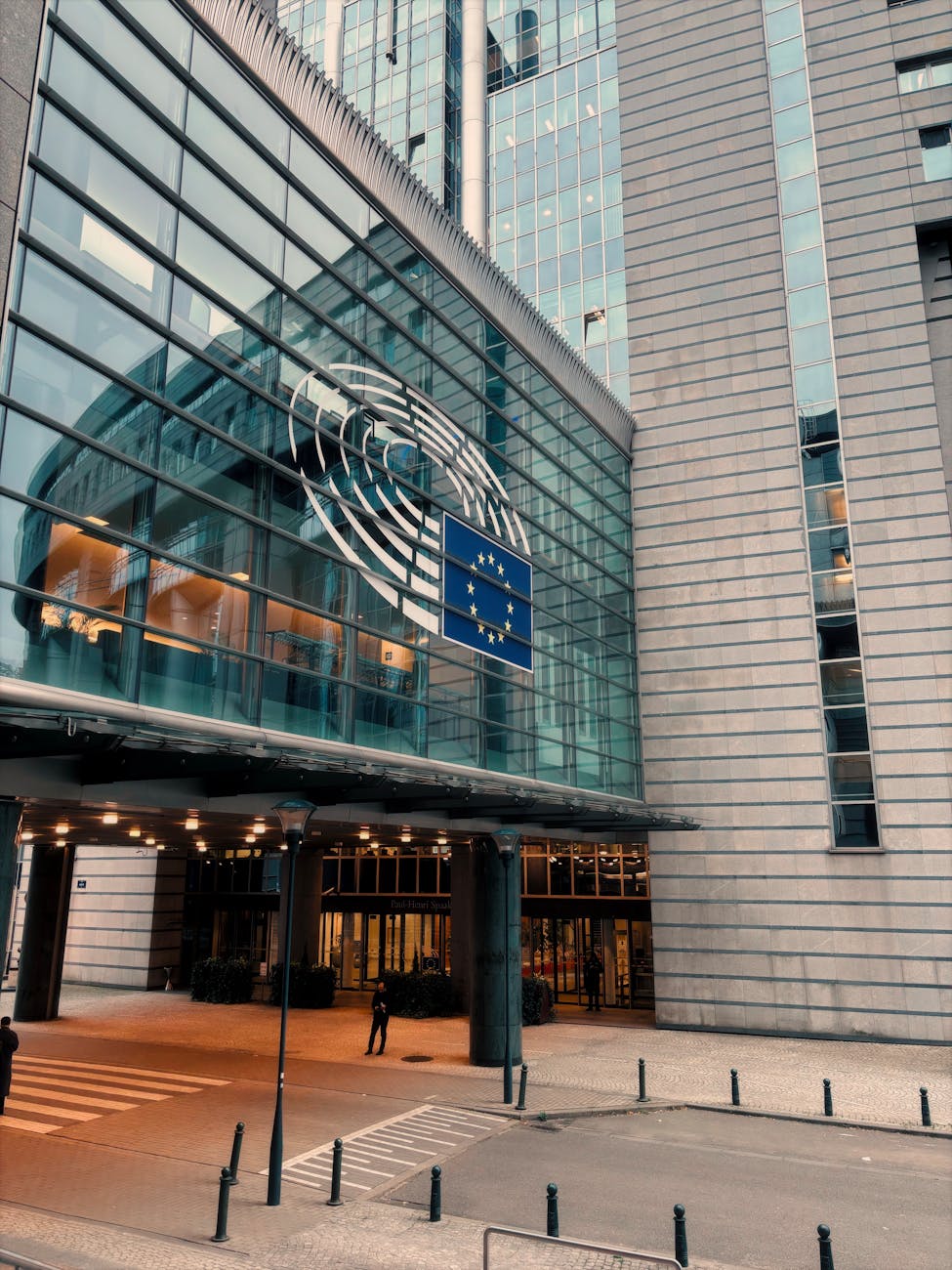
Here I’ve posted a thousand posts. So, it might be a good time to reflect. It was back in April 2016 that this blog started. The provocation being the then pending UK referendum vote. What was to become Brexit and a long litany of mistakes and missteps.

I’d not long returned to the UK from my time in Germany. I had a what I thought was a reasonable sense of the UK political landscape, only to find I was wrong. Here’s what I wrote:

“It’s the biggest event since the Berlin Wall fell. Yes, not to mince my words the UK referendum on EU membership could change the political landscape for a generation or more. It could be a terrible gamble that erects dark walls all over Europe or it could start a new period of enlightenment within the European project.”

I wasn’t far wrong with that statement. The landscape suffered a landslide. Even though the results of the votes were practically even- evens, for reasons that now seem bizarre the electorate swung in favour of leaving the European Union (EU). If the polls are to be believed, then the overwhelming majority now regret that choice[1].

“I’m firmly convinced that our place is in Europe. We are strong enough, we are clever enough and we are determined enough to make that project work. What a bonus that would be: Expanding a market that covers half a billion people on our doorstep. Guaranteeing that the world sits-up and listens to Europe. Unlocking a diverse creative powerhouse where the UK would thrive.”

My then time arguments were coherent, logical and straightforward. I didn’t know we were entering a phase when such attributes were to decline in importance. Should I have been wiser? With hindsight it’s easy to say that the campaign to remain in the EU was appallingly poor. Even if, at the time, I did wonder if the pomposity of the then UK Prime Minister would play a negative part in the outcome.

“The frightening alternative is to gamble with millions of jobs and invite a plunge into recension. If this happens it’s the younger generation who will pay the price. We should not condemn them to isolation and struggle for reasons of narrow nationalism.”

Oh brother. With something like 4% knocked off the country’s prosperity and a government struggling to finance public services, sadly I was spot on the money.

“I’m not saying the EU is perfect. In fact, I wouldn’t say Westminster or my local council are perfect – far from it. But the EU is a work-in-progress and not a finished project. It’s better for British pragmatism. It’s a two-way street as free movement brings people to these shores who then go home with a positive view of what we have to offer. In the next generation that means more trade and better international relations.”

Having seen at first hand the workings of both the British civil service and the European Commission, British parliamentarians and European ones, I could see a common thread. The foolish notion that escaping into glorious isolation would produce prosperity was nuts.

Here we are in 2025. It would be nice to say that – I wouldn’t start from here – but that’s useless. The thing to do is to reconcile, reaffirm and rebuild relations with Europe.  


[1] https://yougov.co.uk/politics/articles/52410-nine-years-after-the-eu-referendum-where-does-public-opinion-stand-on-brexit

Global Ambitions to National Introspection

When did it start? At least in recent times. When did we start looking inward rather than outward? That introverted xenophobia that’s infected about a third of the country. If the polls are to be believed (and that’s a leap).

It’s strange, isn’t it? Britain, a country that spanned the globe with its trading accomplishments went from imagining a transformed world to sitting in front of an iPad complaining about either putting up Union flags on lampposts to taking them down. Painting roundabouts with red crosses or decrying the idiocy of it. Dressing up as crusader knights and thundering on about some lost imaginary England.

Pictures tell a story. Being in the aviation business, a global business, one picture that sticks in my mind involves a handkerchief and a British Prime Minister (PM). It seems a long time ago, now. Nearly 30-years ago. Back in 1997 British Airways (BA) took to celebrating their global coverage by getting international artists to produce new artworks for their aircraft fleet[1]. This was not to the liking of a former PM at the time.

For me this slippery slope was particularly evident. Living in the Surrey town of Reigate. An affluent former Conservative Party supporter, James Goldsmith set-up a new political party dedicated to one issue. The name gives it away. The Referendum Party took to the stage in 1994. Initially, seen as a joke and merely a plaything of a wealthy man, it captured the Member of Parliament for my town. For all the good it did (not), for a couple of weeks in 1997, George Gardiner, the MP for Reigate, joined the new party.

So, the British political mood in 1997 was evident, or so it may have been thought. Nothing of the sort. Of course that was the year of Tony Blair’s Labour landslide victory.

It’s possible to trace a lot of strangeness back to Margaret Thatcher. Although initially internationalist in outlook, she broke a domestic consensus and crushed a lot of hopes. Yes, the country needed radical change. It was the brutality of that change that people reacted against.

In 2001, BA succumbed and returned the Union flag to its tailplanes. Lots of poor excuses were made as to the reason for reverting. A Boeing 747 model and the handkerchief bit back.

Can I construct a thread of events from that moment to the European referendum in 2016? Certainly, there are connections as the country shook off the Blair and Brown years and plunged into a messy 14-years of incoherence. The financial crisis of 2008 didn’t help in the slide to introspection. A government that bailed out the bankers whilst making the population pay did nothing to earn a moral reputation. It further encouraged a growth of a blame culture.

So, if you supported the Referendum Party, the UKIP Party and the Brexit Party that followed, and now the Reform Party surely, it’s possible to see that you are barking up the wrong tree. It’s an empty cul-de-sac. It’s a fruitless orchard. It’s a road to decline.

These are not the heirs to Margaret Thatcher. They are bandwagon hopping con men. Money men who like their pockets lined. They will not help those who have missed out on their share of the country’s prosperity – past, present or future.


[1] https://www.flickr.com/photos/linda_chen/albums/72157625997434719/

Unintended Consequences

There’s a list that must exist somewhere in the bowels of Government which describes the dumbest things that have ever been done. The law of unintended consequences. Where an aim may have been honest, but the reality was a deep dive in embarrassment and failure.

If this list doesn’t exist it dam well should. It’s a sort of lessons learned for civil servants, politicians and think tanks. Don’t propose anything X because the last time someone did that they crashed and burned. Or more subtly it was years later that people cursed the day that such a dumb idea was advanced.

I’m not going to argue against market forces. How could I. From an early age markets were part of my life. That’s local agricultural markets. My father bought and sold livestock. The bread and butter of livestock farming is to buy at one price, add value and then, hopefully, sell at a better price. Markets rise and fall in ways that are often mystical.

The UK imports approximately 46% of the food it consumes. Even that figure is 5 years old. I suspect that food imports have increased in the meantime. That’s in a country that is richly blessed with quality agricultural land. Fine, we (UK) are none too good at growing olives or avocados but the range of produce that it is possible to grow is huge.

Grassland is our greatest asset. Every time I flew back from an overseas trip, just looking down from the aeroplane remined me just how the UK is a carpet of green. Field systems that have ancient origins still dominate the landscape.

Livestock farming has changed radically since my father’s time. Fortunately, we have avoided, in most cases, the levels of intensification and factory methods that others have adopted. Hormone injected beef comes from cattle that live sad lives. People know this and have hands down rejected industrial farming to that level of intensity.

Domestic food production has changed because of Brexit and not for the better. One threat to domestic food production has been some of the ridiculous trade deals that have been struck by this Government and its predecessors. Making it harder for exporters and easier for importers.

Political policy towards the countryside has rightfully taken up the need to restore biodiversity and preserve some of our most precious landscapes. Trouble is that at the same time, little or no thought has been given to the need to support domestic food production. It’s like a policy desert. It’s one thing to talk about food security. It’s another to do anything about it.

With the Labour Government threatening to take large amounts of capital out of UK farming with their inheritance tax plans, they will be making family farming a thing of the past. It’s one of the dumbest things that have ever been done.

There’s general agreement that we shouldn’t encourage wealthy people to use land as a repository for their wealth. However, tax advisors have been telling them to do that for decades. Buy land and pay less tax. Reversing that long standing trend needs an intelligent policy not a crude sledgehammer to crack a nut. Even if it’s impossible to ween Labour politicians off their ideas on inheritance tax, there ought to be a way of doing it without penalising the innocent. Letting off those non-farming interests that politicians were aiming at originally. Dogma makes bad policy. It’s time to reemphasise the place family farming has in food production.

Revisiting Brexit: Lessons

In life partnership is key. Most of us have no desire to live as a hermit. The dull confines of a hermitage are best left to a small few. That extends to communities as well. It’s rare for societies to live in isolation and avoiding relationships with others. People come together when they share values. So, it has been in Europe in the post-war era.

Relative to the astronomical losses that the whole UK accumulated because of Brexit, the gains of the latest European Union (EU) – UK deal are modest. The positive take, from Monday, is the direction of travel. Cool heads have prevailed, and a new deal of mutual benefit to both parties has been agreed. There’s more detail to follow as might be expected.

Unsurprisingly, those who failed miserably over the last decade are now carping bitterly[1]. Remember Johnson, who as UK Prime Minister (PM) had a large parliamentary majority that he threw away. His incompetent administration sealed an extremely bad deal.

The years following the 2016 referendum have been wasted years. Tedious nonsense about Brexit benefits have echoed through those years without anything good arising. Brexit “freedoms” are a metaphor for acting foolishly and without any relation to prevailing facts.

Last July, the British electorate said “no” to the parade of Conservative Party catastrophes[2]. The UK decided to go in a different direction. It was the Labour Party that toped the poll. Lib Dems and Greens doing well too. Since the General Election, and since the beginning of the year, the ebb and flow of global events has been truly turbulent. In historic terms, when UK PM Harold Macmillan was asked what the biggest challenge for a statesperson was, he replied: “Events, dear boy, events”[3]. Seems he was right.

Starmer is a fascinating character. Not the characteristic statement of a lifelong liberal, like me. The tool makers son, who schooled in Reigate, to become a top lawyer, climbed the slippery pole of pollical life, to become PM. Along the way he’s done what’s most typical of successful British politicians. That is, he’s changed his mind and allegiances along the way. Going from Labour Party leader to PM in 4-years is quite an achievement.

I don’t have to agree with the PM. In fact, as far as his priorities in government, I don’t agree with the PM a lot. Although, I’ve personalised these words, I wish to take due care. I speak only of him as PM. I’ve never met him. So, let’s focus on his role.

An EU-UK Brexit “reset” was inevitable. If it didn’t happen now, it would have happened eventually. Why would both global trading partners persist with a lose-lose situation? Dealing with serious national issues is a PM’s job. It’s not to avoid or obfuscate. Here Starmer is praiseworthy. Instead of struggling on as if nothing could be done, he’s acted.

What I dislike is the mindless bile that emerges in the conservative Press and in dark corners of social media. Swilling around with ever more hostile adjectives, it’s as if all sense has been lost by part of society. By all means express unhappiness if the cherished beliefs of Brexit are being contested. Everyone has a right to criticise. Please do it in a civilised manner.

What’s foolish is the leader of the Conservative Party who has jumped on the pessimist’s bandwagon. Why do they persist in talking Britain down? Gloomy and unattractive it’s no wonder their poll ratings are plunging. Instead of speaking on Europe, with eloquent and knowledgeable thoughtfulness, we get a diatribe of prejudice and backward thinking. Sad indeed.


[1] Read the Daily Telegraph, The Mail or Express. Newspapers in name only.

[2] https://researchbriefings.files.parliament.uk/documents/CBP-10009/CBP-10009.pdf

[3] Harold Macmillan’s time as PM (1957-1963) was marked by major events, including the Suez Crisis.

Relationship with the EU

Monday, Monday[1]. It’s a wonderful 60s song. Harmonies and mood are perfect. I wonder if the harmonies and mood will be perfect for the Prime Minister (PM) on Monday. Already the Sunday Press are setting the stage for Monday’s performance.

Reset, recalibration, reheat, rekindle, re-whatever. It’s a moment when relations between the UK and the European Union (EU) can make realistic progress[2]. In world full of uncertainty (could be a song in that one), for once the direction of travel is a constructive and positive.

I think the word “deal” is getting overplayed. Indications are that there’s no fundamental shift from Brexit meaning Brexit, as one former PM liked to say. In fact, the current PM is being highly cautious in the light of his Party’s reading of the latest opinion polls. For no sane reason I can think of, the swivel-eyed loons of the far-right are making hay.

It’s astonishing me how dim-witted the Conservative Party is in objecting to something when they don’t even know, for sure, what it is. Mind-blowing. And the rum cult of Reform Party doing the same with extra bile. What a load of prehistoric fruit loops.

Brexit supporters are spreading misinformation, again. Saying that UK has no influence. It’s true, the UK doesn’t have votes in the European Council or Parliament, but significant influence can be exercised on standards, and regulatory guidance, nevertheless. A better “deal” can bring much greater influence. Absolutely vital in the digital world, and for the UK, a country with a services-based economy.

Brexit has cost the UK dearly. The UK Treasury would have billions more in its coffers if the 2016 referendum had never taken place. The standard of living of every person in the UK is lower because of Brexit bungling. Ideally, that great mistake is an event to be written up for the history books and then forgotten.

On top of the above, uncharacteristic moves in the US, with Trump tariffs there’s nasty hit at the UK’s future prosperity. There couldn’t be a better time to repair relationships with the UK’s nearest neighbours. The countries with which we share most of our long history.

Even for those on the political right, practically, the EU is never going away, so until the day the UK rejoins the block, it’s wise to have the best possible relationship in all matters. Goods, services and people need to connect as a case of mutual benefit.

It’s time for hope. An optimistic tone should be set. A smile. Let’s hope we are singing Monday, Monday so good to me, Monday morning was all I hoped it would be. Naturally, that there be no crying, come Monday evening.


[1] https://genius.com/The-mamas-and-the-papas-monday-monday-lyrics

[2] https://www.independent.co.uk/news/uk/politics/brexit-uk-eu-reset-trade-deal-starmer-b2752285.html

Europe Day Highlights the Need for Unity

Keeping the peace is never easy. There’s an irrational propensity to conflict in human nature. Keeping the peace is not a passive task. First, it requires communication and engagement. When those two go, trouble is not far behind. It’s by expressing concerns that each side knows where the other stands. Escalation can come when ignorance and propaganda take over.

After the second world war, institutions were established to ensure that communication and engagement became a non-stop affair. With only a small number of exceptions, the countries of the regions of the world engaged in these institutions. Those measure have contributed to making a more prosperous world.

“Never again” are two words that refer to the atrocities of war. The moto is to remind everyone that the worst can and does happen, and that perpetual effort is needed to ensure that history does not repeat itself. The concept of “lessons learned” is essential for safety and security. This is as much true for micro day to day activities as it is for the macro events that shape the path global ahead. Taking teaching not from narcissistic demigods and snake oil salesman but from the pages of history. Appeasing tyranny is not an option.

This week has been a reminder of the lessons learned from the world wars. For most people it’s been a continuing commitment to ensure such events never happen again in Europe. Sadly, let’s not be coy. Despite an overwhelming desire for peace, conflict in still Europe is a reality. But the lesson is there in black and white, appeasing tyranny never works.

Today, Friday 9th May is Europe Day. That’s because a speech by Robert Schuman[1] changed the course of European history on this day. Five years after the war in Europe had come to an end, he put forward a proposal that would make a future similar conflict impossible. The idea was to create an interdependence that would secure peace, unity and solidarity.

It worked. His proposal led to the creation of a European Coal and Steel Community. That measure lay solid foundation for what would later become the European Union (EU). Behind this is move is the echo of “Never again”. Europe has seen centuries of war. This was a moment in time to bring that to an end.

For now, 75-years on, this has been a success. It’s not a regional project with a defined end, even if it has a defined beginning. Where the EU chooses to go next is in the hands of its Member States and its citizens. Changing the course of European history doesn’t stop because the EU exists. Without the cooperation and dialogue, it provides there’s always a chance that ancient rivalries will be reignited. In fact, unscrupulous right-wing politicians[2] are trying to do that just now.

Sadly, in the UK, we stand on the sidelines, looking across the water at continental Europe. Brexit has done a great deal of damage. But as I have said, nothing is static, the world is entering an ever-uncertain phase. The opportunity for the UK to restore EU relations is open. I see the wisdom in the words of the Governor of the Bank of England. He has said the UK now needs to “rebuild” Britain’s relationship with the EU. Amen to that.


[1] www.europa.eu/!9JbCd9

[2] https://www.politico.eu/article/germany-spy-agency-walk-back-extremist-label-afd/

Finding Balance

Regulation can be a contentious issue. That’s an understatement. A spectrum of views extends from the complete libertarian to the past soviet model. Citizens shouldn’t be encumbered by any restrictions to the State has the right to dictate every aspect of life. Clearly, there are immense downsides to either of these extremes. Luckily, although not everyone will agree, the set of political choices available in the UK covers the wide range from the far-right to the far-left. These labels are deficient when it comes to the detail. Often these two camps are similar in their authoritarian ways and means.

Rejecting the extremes, being a liberal, means finding a balance. That means a minimal number of rules and regulations to achieve the prosperity, safety and security goals that most people happily support.

A pendulum swings in the British political cycle. Never quite sure what the cycle time is on this one. What’s for sure is that our society’s tendency is to go from urges to tighten-up rules and regulations to impulses to eliminate or relax them with gusto. Often, the aim is to tweak or protect economic stability or tweak or promote economic growth. After the banking crisis of 2008 it was the first of these, now it’s the second.

Brexit is a strange oddity. Although, great claims were made for the loosening of the ties that bind us, the reality has been much onshoring of past rules and regulation. The forces of continuity have some good arguments.

It’s reported that Prime Minister Starmer is considering dynamically aligning UK regulations with EU regulations, as if that’s not happening pragmatically and piecemeal already. OK, this is not consistent across every sector of the economy. It’s a mixed bag. Politicians banging the drum but not doing much.

Let’s say the financial services market goes a different way from the technology sector. One has a history as long as your arm the other is being made-up as we speak. Clearly, there are risks in both deregulation and overregulation. Thus, I get back to that notion of finding a balance.

To hardened Brexiters EU and UK rules constrain. To their supporters they enable, facilitate and transform.

Now, what’s difficult to discern is where do Starmer and Reeves stand?

A direction of travel, to encourage investment in the UK, has been touted. That implies alignment rules. Investors rightly seek the largest market on offer. Like it or not, the UK is not the US, or even the EU when it comes to the size of its economy. Maybe, it’s taken Brexit to realise that we align as a matter of common interest. Mutual benefit.

Most of our safety and security goals are not subjects of intense competition. If you fly internationally, why would it make sense to compete on safety or security? The general expectation is that common high levels of safety and security are desirable.

As the weather improves so we are heading towards a year of the Labour Party in power. There’s disappointment and concern about the timidity of their actions. The word “reset” is banded about. A ridiculous word. Press the reset button to restore a past condition. No, choices need to be made. Closer alignment and partnership with the EU are the rational choices.

The UK’s Path Back to the EU

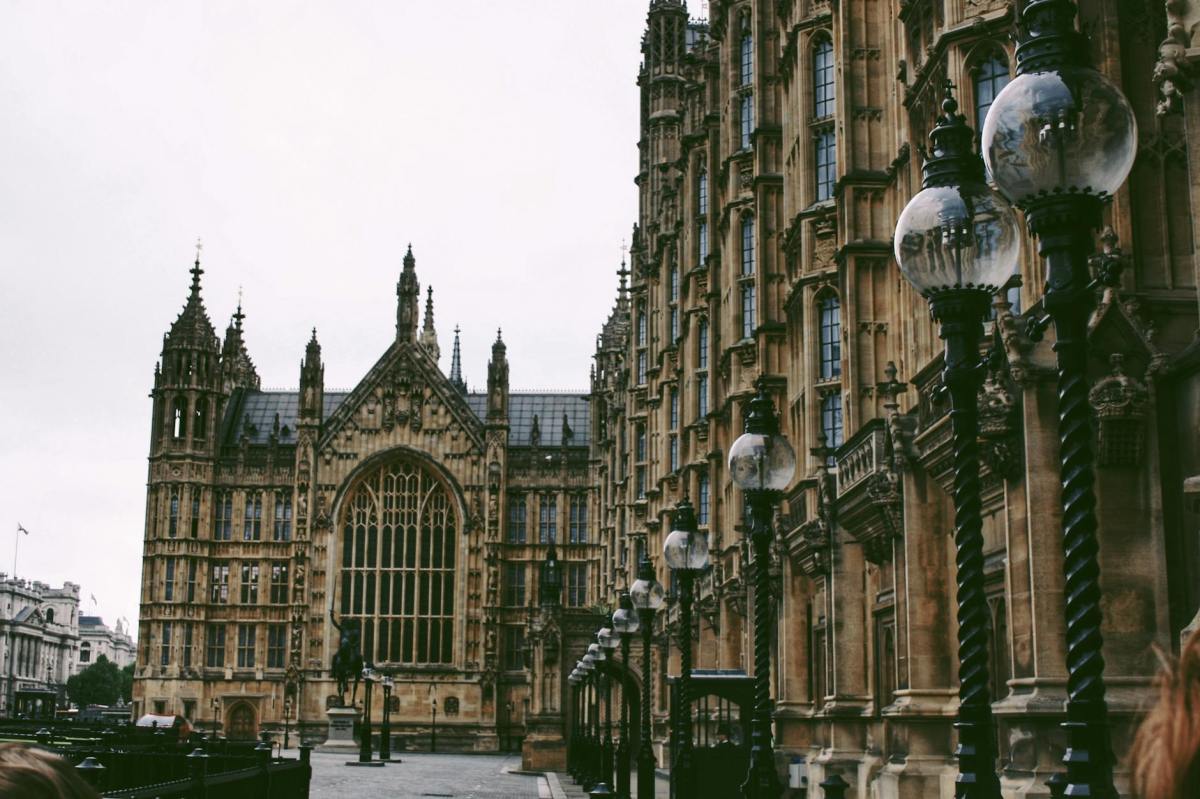
It’s great to see a debate in the UK Parliament[1]. Monday, 24 March saw a debate on the UK joining the European Union (EU). A public electronic petition[2] called for this debate. UK MPs get the opportunity to speak openly of their experiences of the outcomes of Brexit. There’s little that is positive and an ocean of negative.

Lucky for them, at the end of the debate, MPs are not called to vote on the issues raised in this petition. Nevertheless, there’s enormous merit in putting the facts in the public domain.

The 2016 Brexit vote was an unpatriotic act of self-harm, but it is history. Gradually, bit by bit, every part of British society is coming to the realisation that we need to do differently in the future. One day, I have no doubt that the UK will join the EU. The “will of the people” is not static. It is incredibly arrogant of Brexit supporters to say that it is static.

Besides, the inevitability of change means that new ways of cooperating will be found because it is in the best interest of all the parties. The UK is a liberal free-trading country that believes in the rule of law.

In the debate, Government Ministers can take what is being said and rethink. It is no threat to democracy to consider a rethink. In fact, for democracy to be stuck in a deep rut – now, that would be dangerous.

Today, Brexit has been a wonderful generator of piles of meaningless paperwork. It’s destroyed businesses and ruined lives. The enormous damage that has been caused is clear. Sadly, the people who cause that damage are not inclined to take any accountability for the mess.

In the debate, a shadow minister digs-up the grumpy past. It is shameful that the Conservative Party has nothing useful to say on this important issue. It is like listening to a bad recording of an old set of lies and proven nonsense. In speaking, this politician displayed no interest what-so-ever in improving the position of the country.

With all the talk of “growth” being so important to our future, it is difficult to understand a reluctance to address the festering wound that has been caused by Brexit. We can only be more secure and prosperous if we work more closely with our nearest neighbours.

The Labour Party leans on its election manifesto of last July. It’s an awkward act of sitting on the fence and sticking their head in the sand. Now, that paints a picture.

So called, “ruthless pragmatism” is a peculiar Government policy position. It can mean 101 things to 101 different people in 101 different places. Citing “global headwinds” to excuse obvious failings is no excuse for sustaining a burnt-out Brexit winding on like a runaway train. It would be wiser to question everything as the wholly new circumstances dictate.

2025 is dramatically different from 2015. When I first returned to the UK from Germany. The tectonic plates of global affairs have shifted. The Atlantic is wider. The Channel is narrower.

Oceanus Britannicus should be no barrier to trade and cooperation.


[1] https://youtu.be/yJdFBSAvAhU

[2]  https://petition.parliament.uk/

Economic Growth in Post-Brexit UK: A Call to Action

I do remember when there was a British newspaper called The Daily Telegraph. It represented establishment views. Was rather stuffy and what you might expect a certain type of middle-class accountant or lawyer to be reading on their commute to work.

It has become a pamphlet for the alt-right, supporters of oligarchies and whacky think-tanks pumped full of money from climate change deniers and overseas sources.

The sort of right-thinking people who gifted us with Liz Truss as Prime Minister. I shouldn’t be so dismissive because as recent history has shown these daily publications still have influence.

Now, Labour’s Chancellor of the Exchequer is shouting growth, growth, growth from the rafters. Not that her cry is an entirely bad one, it’s just that she is saying this with mufflers on her ears.

The Chancellor is right that the most important issue of the moment is the economy. There are a lot of people pointing out that a quick way to improve the UK’s economic situation is to knock down the barriers we have erected with mainland Europe. Next door is a huge market for our products and services.

Labour was telling us to believe in Brexit and that they could make it work. Most people know that this was last year’s meaningless words spread about before an election. Polling now shows that most people favour closer ties with our neighbours[1].

In some senses there’s little change. People are more likely to see the Lib Dems as anti-Brexit and the Conservatives as pro-Brexit. They remain unsure about Labour’s position. So, when the call goes out from the Lib Dems for closer economic ties with the European Union (EU) a whole host of predicable nonsense is said and published in newspapers like The Daily Telegraph.

Labour’s dithering makes the possibility of growth, growth, growth seem as unreliable as their protestations of love for Brexit before last year’s election.

The direction of travel is mighty obvious. Brexit has failed. Corrective action is long overdue. Forward thinking politicians really need to step-up and fight for a prosperous and economically successful Europe. One that includes us.

Labour has this term of government to make its mark. If it doesn’t then the possibility of extreme political elements getting a foothold in the UK are significant. Dithering for 5-years will be the biggest mistake after that of 2016. Corrective action may have a political cost in the immediate short-term, but the long-term benefits are there for all to see.


[1] https://yougov.co.uk/topics/politics/trackers/how-the-government-is-handling-the-issue-of-brexit-in-the-uk

Political Challenges: A 2025 Outlook

British Prime Minister Keir Starmer’s dive to an incredibly low level of popularity is notable. In fact, it’s a bit more than that. It’s record breaking.

A commonly held view seems to be that we elected the Labour Party government in July as the least bad choice. The Tory years had got so utterly terrible that even their devoted supporters bulked at giving them yet another term in office. Combine that with an inexplicable inability to frame a simple story about what Labour stands for and the problem is less surprising.

Keir Starmer is no fool. He’s an intelligent and experienced politician. He’s taken the hard knocks. He’s climbed the slippery pole. But, and there’s a but, something doesn’t jell.

I my humble opinion, the ingredients missing or in excess are categorised like so.

Charisma. It’s so much easier if leader has that indefinable quality. I remember this of Paddy Ashdown. One: you know when they are in the room. No question. People look. Two: they never lack inspiring ideas. Even if they could be off-the-wall. Three: what they say makes an impact.

Eloquence: That ability to coin words and phrases that resonate with lots of everyday people (not just supporters). To speak persuasively, in a way that says we are going on a great journey together. Scripted or not, fluency that appears natural and unforced. Lightness of touch.

Managerialism: Everyone expects confident, capable, competent governance (although we rarely get it). However, we don’t want to see it live on the mainstage, all the time. That phrase about political policy and making sausages is a good one. Lots of people like sausages but few like to know how they are made.

Now, the question I have is: are the “local difficulties” of present fixable?

2025 is going to be a roller coaster of a year. We have washed away any residual millennial mysticism that hit the world in 2000. A whole generation has slipped by. Babies born as London’s Millennium dome was both viewed both with amazement and distain, have jobs that didn’t exist as the fireworks went off.

The so called “smart” phone, and tablets have carved a way into our lives that’s deep and unmovable. Even if the next leap in technology will surely leave them as obsolete.

So, what’s the narrative for 2025 – 2050? Will we sink into the quicksand of nostalgia or herald a new era full of promise? I don’t know. I’ll just keep topping up my glass to ensure it’s half full.