Unintended Consequences

There’s a list that must exist somewhere in the bowels of Government which describes the dumbest things that have ever been done. The law of unintended consequences. Where an aim may have been honest, but the reality was a deep dive in embarrassment and failure.

If this list doesn’t exist it dam well should. It’s a sort of lessons learned for civil servants, politicians and think tanks. Don’t propose anything X because the last time someone did that they crashed and burned. Or more subtly it was years later that people cursed the day that such a dumb idea was advanced.

I’m not going to argue against market forces. How could I. From an early age markets were part of my life. That’s local agricultural markets. My father bought and sold livestock. The bread and butter of livestock farming is to buy at one price, add value and then, hopefully, sell at a better price. Markets rise and fall in ways that are often mystical.

The UK imports approximately 46% of the food it consumes. Even that figure is 5 years old. I suspect that food imports have increased in the meantime. That’s in a country that is richly blessed with quality agricultural land. Fine, we (UK) are none too good at growing olives or avocados but the range of produce that it is possible to grow is huge.

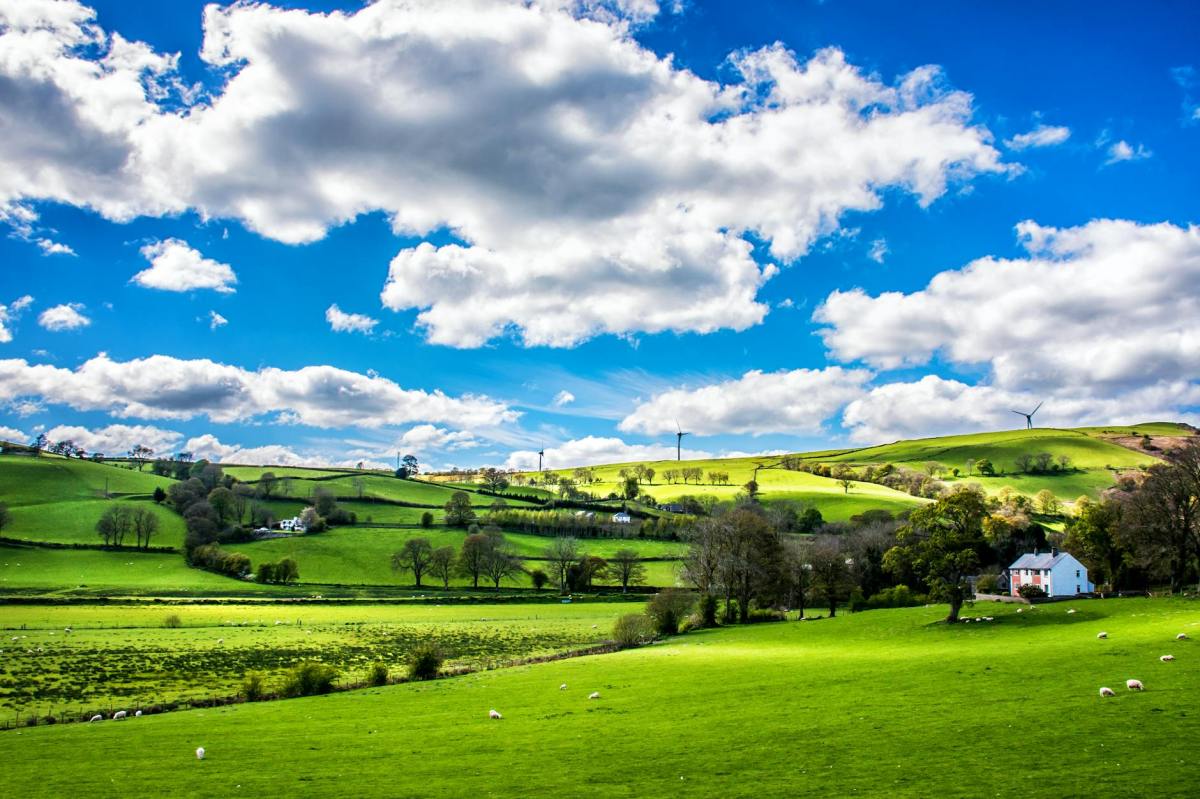
Grassland is our greatest asset. Every time I flew back from an overseas trip, just looking down from the aeroplane remined me just how the UK is a carpet of green. Field systems that have ancient origins still dominate the landscape.

Livestock farming has changed radically since my father’s time. Fortunately, we have avoided, in most cases, the levels of intensification and factory methods that others have adopted. Hormone injected beef comes from cattle that live sad lives. People know this and have hands down rejected industrial farming to that level of intensity.

Domestic food production has changed because of Brexit and not for the better. One threat to domestic food production has been some of the ridiculous trade deals that have been struck by this Government and its predecessors. Making it harder for exporters and easier for importers.

Political policy towards the countryside has rightfully taken up the need to restore biodiversity and preserve some of our most precious landscapes. Trouble is that at the same time, little or no thought has been given to the need to support domestic food production. It’s like a policy desert. It’s one thing to talk about food security. It’s another to do anything about it.

With the Labour Government threatening to take large amounts of capital out of UK farming with their inheritance tax plans, they will be making family farming a thing of the past. It’s one of the dumbest things that have ever been done.

There’s general agreement that we shouldn’t encourage wealthy people to use land as a repository for their wealth. However, tax advisors have been telling them to do that for decades. Buy land and pay less tax. Reversing that long standing trend needs an intelligent policy not a crude sledgehammer to crack a nut. Even if it’s impossible to ween Labour politicians off their ideas on inheritance tax, there ought to be a way of doing it without penalising the innocent. Letting off those non-farming interests that politicians were aiming at originally. Dogma makes bad policy. It’s time to reemphasise the place family farming has in food production.

Protecting Green Spaces

Listening to a Labour Minister use the word “streamlining” I reached for the off switch. My morning radio was bubbling away with a spokesperson justifying changes that remined me of that moment when the Earth was about to be demolished in the HHGTTG. I could imagine him saying; houses must be built because houses must be built.

Labour have been in power for less then a year but more and more they sound like the people they displaced. My thought was, with these recent land planning proposals, what’s the difference between what the Conservatives did and what Labour is doing now?

Let’s go back in time. One of the most dreadful planning changes of the past was the selling-off of school playing fields[1]. Green space, often surrounded by dwellings were erased. Countrywide, bricks, concrete and tarmac were prioritised over green spaces, local sports and nature. Not much to guess as to why the national is not as healthy as it should be.

It’s not new to say – what we learn from history is that we don’t learn from history.

Don’t get me wrong. I’m in favour of building more affordable houses where they are needed. It’s eminently reasonable to provide support for small and medium sized housebuilders. There are spaces that can take more dwellings provided the associated infrastructure comes along too.

By law, let’s not tip the balance in a way makes us all poorer. Our natural environment has taken one hell of a bashing in my lifetime. One of the indicators is the bug count. If I travelled any distance in the summer, in the early 1980s, in my bright red Sunbeam Imp, it wouldn’t be long before I’d need to stop to clean the windscreen of dead bugs. Today, drive as far as you like through the English countryside and there’s no such problem to address.

Labour’s Minister doing the morning rounds, spoke from a prepared script. Everything is above board. Government consulted on the proposals. Houses must be built because houses must be built. Consultations are fine. However, doing it and ignoring what people are saying is tantamount to manipulative deception.

Concreting over nature is not the way to go. Especially for small pockets of green spaces that still bring nature into cities, towns and villages. Infill and the eradication of small green spaces is just as bad as the momentous school playing field mistakes. It’s a one way trip. Watering down measures designed to protect nature is not the way to go.

Pushing forward with an aggressive approach to building foregoes long-term benefits for short-term political gain and blinkered treasury wishes. With the lessons learned over decades, priority to protecting our natural environment should not be sacrificed[2]. The Labour Government’s Planning & Infrastructure Bill needs amendment. Let’s hope that happens.


[1] https://www.itv.com/news/update/2012-08-17/how-previous-governments-compare-on-selling-off-playing-fields/

[2] https://www.wildlifetrusts.org/news/planning-bill-breaks-labours-nature-promises-say-wildlife-trusts-and-rspb

Local Wildlife

I’m wondering – what is the definition of a marsh? This has been a wet February. It’s now passed having left water, water everywhere. Put my Wellington boots on, and underfoot a squidgy noise comes from the waterlogged ground.

On the plus side, saturated fields are great for the local wildlife. Not so great for simply walking. It’s a season of mud and trodden down grass. Puddles and soggy pools. The water weaves its way through a boggy marsh. It spreads out in a minor flood, covering sedges and fence poles. There’s that word again – marsh. Still wetland.

That said, so many English marshes have been drained to create fertile agricultural land. Over decades fields have been “improved” by engineering drainage to turn swamps into workable farmlands. Sometimes with limited success in the winter.

I grew up on Horsington Marsh. The name that lives on. It’s farmed grassland with much of it liable to annual flooding. A clay valley of marshland formed between a winding brook and a temperamental river. Bow Brook and the River Cale. Both these eventually met up with the River Stour and head on down to the coast in Dorset.

Now, I live looking out on the lower part of the River Lambourn. In shape and form are totally different from the Cale or Stour. The Lambourn is shallow and fast flowing. It’s a chalk river that’s normally crystal clear. Locally, it does spillover into the fields. It’s a superficial flood that soaks riverbank.

The River Lambourn Special Area of Conservation (SAC) is a protected site[1]. Which means that there’s plenty of information on the wildlife habitat and the threats to the river. One of the biggest threats to the river is a water company. Thames Water storm overflows discharge into the river. It makes me wonder what it means to be a protected site.

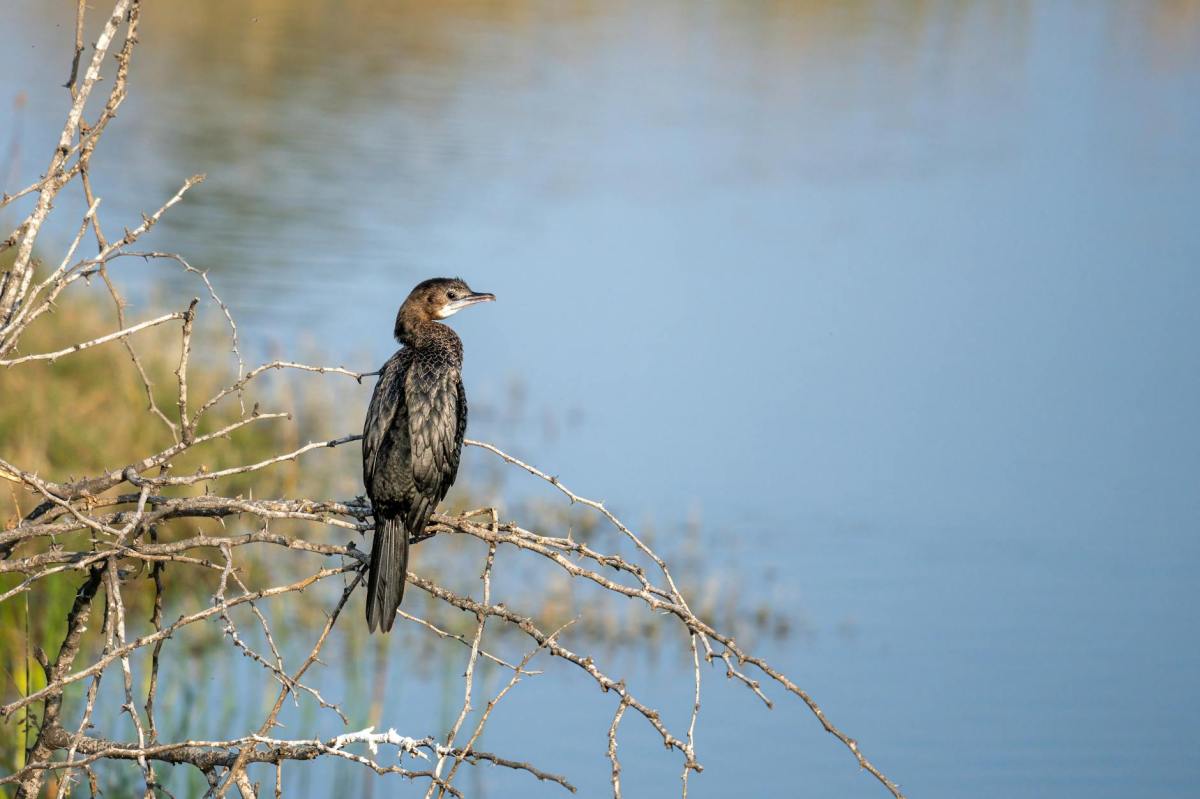
The river has many different fish species. Most of all the Trout and some Grayling. Feasting on these we have Herons and Egrets. This week, I was surprised to see a large Cormorant[2] high up in a tree, wings spread, enjoying the morning sunshine.

So, however marshy the rising ground water and overflowing river might make it, there’s nature just outside the back door.


[1] https://www.westberks.gov.uk/article/41082/River-Lambourn-Special-Area-of-Conservation-SAC

[2] https://www.rspb.org.uk/birds-and-wildlife/cormorant

SONAR in Ocean Wreckage Recovery

Finding aircraft wreckage in the deep ocean is possible. However, it requires a degree of good fortune. Most of all, it requires the searcher to look in the right places. Lots of other factors come into play, particularly if the ocean floor is uneven or mountainous.

The primary tool for imaging the ocean floor is SONAR. That’s using the propagation of sound in water. SONAR can be of two types. One is called “passive” and the other called “active”.

The first case is like using a microphone to listen to what’s going on around. Of course, the device used is named appropriately: a hydrophone. It’s a device tuned to work in water and not air. Afterall, sound travels much faster in a liquid than it does in air.

Passive SONAR depends on the object of interest making a noise. Just like we have directional microphones so we can have directional hydrophones.

Passive SONAR is only useful if the aircraft wreckage is making a noise. Since in the case of Flight MH370, the battery powered underwater location beacons attached to the accident flight recorders have long since stopped working this kind of SONAR isn’t going to be much use.

Active SONAR is analogous to RADAR. That is where a pulse of high frequency sound is sent out through a body of water. Then sensitive hydrophones pick up a reflection of that pulse. It is detected and all sorts of miraculous digital signal processing is done with the acoustic signal, and an image is then formed. From that displayed image the human eye or sophisticated algorithms can make sense of what they are looking at on the sea floor.

Active SONAR can give both range and bearing (direction). Timing the sound pluses from their transmission to reception can give a way of calculating range. Or distance from the object providing a reflection. Bats know how to do this as they navigate the dark.

In sea water, there are complications. Sound does not always travel in a straight line in sea water. The speed of sound in water depends on salinity, temperature and pressure. All three of these factors can be measured and compensated for in the SONAR signal processing that I mentioned above. Helpfully at ocean depths beyond a kilometre the calculations become easier.

The average depth of the Indian Ocean is over 3 kilometres. It’s mountainous underwater too. So, what are the chances of finding flight MH370 on the ocean floor after 10-years[1]? This prospect goes back to my earlier comment. It requires the searcher to look in the right places.

Just imagine encountering the Grand Canyon for the first time. It’s nighttime. An important object is lost in the canyon. You only have the vaguest theories as to where the object has come to rest. With a handheld touch you go out to search. What are the chances of finding the object?

There are several factors that are in your favour. One, you know what the object might look like or, at least, in part. Two, the easy search locations (flat/smooth) may be covered relatively quickly. Three, certain areas of the rocky canyon have already been searched. Still the odds are against finding the lost object without a high degree of good fortune. 

I wish the new planned searchers much good future[2].

NOTE 1: one of my student apprentice projects was to design and build a Sing-Around Velocimeter for use in relatively shallow sea water[3]. It worked but was cumbersome in comparison with the simple throw away devices used for temperature depth profiling.

NOTE 2: To get down to the ocean depths required it’s a side-scan sonar that may be used. This active sonar system consists of a towed transducer array that can be set to work at different depths. Imaging objects on the seafloor and underwater terrain is done as a towed array moves slowly forward through the water. The scanning part is the acoustic beam sweeps left and right. Each scan builds up part of an image.

In operation, as the frequency of the sound in water goes up so does the resolution of a potential image but, at the same time, the range of the sonar system goes down. Thus, a sonar system used for surveying may have low and high frequency settings. Unlike sound in air, here high frequency means above 500kHz.

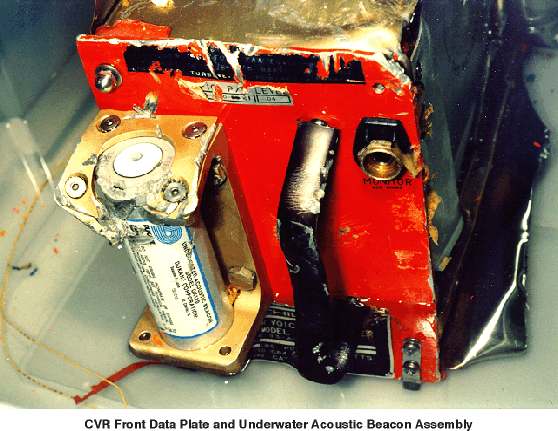
NOTE 3: What will an aircraft accident recorder look like after a decade in the deep ocean? It might have survived well given the nature of the dark cold pressured environment. This picture is of an accident recorder recovered from relatively shallow sea water (Swiss Air Flight 111).

POST: Nice view of what SONAR can do, at least in shallow water Bristol Beaufort wreckage found


[1] https://www.cbsnews.com/news/mh370-plane-malaysia-new-search/

[2] https://www.bbc.co.uk/news/articles/cewxnwe5d11o

[3] https://apps.dtic.mil/sti/tr/pdf/AD0805095.pdf

Ignoring Climate Change?

In a way, I’m not immune from a little hypocrisy. Petrol prices go up and I’m not going to jump for joy. Prices go down. I’m not suddenly thinking that’s just going to encourage more consumption. No, I’m looking at the pound in my pocket. It will cost me less to fill up the tank.

There was a whole swath of apocalyptic tales of the world in the 1970s. The “oil crisis” of 1973 should have been a warning. Humanity might have taken the opportunity to look at the trends related to oil and gas consumption. There might have been a more sustained reaction.

Instead, alternative lifestyles, renewable energy projects and energy conservation were thought of as quaint novelties or scientific curiosities that would never really catch on. The political addiction to short-termism overrode consideration of substantial change. Increased exploration led to new sources of oil and gas being found.

Today, we should know better. The fight against climate change has a decade of talk behind it. Humanity knows that the link exists between burning hydrocarbon and a changing global climate. We are ignorant no more. Now, I almost wish I hadn’t written that last sentence.

Across the pond there’s a powerful nation. One that influences the behaviour of 100s of other nations. The US is the largest producer of oil and gas in the world. However, until the last few weeks it had recognised that maybe that isn’t a good formula for the future.

Back to that dollar in the pocket. Despite the US being a powerful nation many its people didn’t feel that way. All politics is local. When filling up with gas gets more expensive people do not jump for joy. In fact, there’s that human tendance to romanticise the past and remember when everything was cheaper. Life was easier. Can’t we go back?

It’s being reported that US President elect Trump’s choice for energy secretary is going to be like turning the clocks back. Prospect is that the fight against climate change is going to get a back seat. At least for the next 4-years.

Does this spell global disaster? Well, it certainly is a great big lost opportunity. Just like here in the UK, Brexit ignited the tendance to romanticise the past. It looks as if the same phenomena have taken root in the US. Burning more and more hydrocarbons is like a sugar rush. A boom to begin then followed by exhaustion. I expect after this presidential term the results will be one of regret. Just like Brexit. A wonderment – why on earth did we do that?

Still, there’s an opportunity for other countries to race ahead with advanced and alternative technologies to reduce energy dependency. It’s hard to think and act long-term. I’m confident it can be done. If it’s done successfully the prize will be great.

Star’s Law

It’s one thing to hear a report. It’s another to understand – what does it mean? Planning reform doesn’t often capture the national headlines. In this case, it’s a national celebrity that seems to be running changes in planning laws[1].

I’m more than a bit suspicious when I see the lines explaining legislation that say: “A full impact assessment has not been produced for this instrument as no, or no significant, impact on the private, voluntary or public sector is foreseen.” The word significant is purely subjective.

Like so many Statutory Instruments[2] (SIs) this subject makes for a hard read. SIs are English law that is made, not by parliamentarians debating and voting on it, but by amendments to existing law placed in front of them for a short while.

There’s no doubt that English farmers and landowners, under pressure post-Brexit, are going to be pleased by the planning alleviations offered by this new planning law. Being able to convert existing buildings into new houses, or new businesses, like farm shops, without local authorities intervening to say “no” has been dubbed – cutting red tape.

It needs to be noted that this action is being taken in the run up to a General Election (GE). For me, I see this as a two-edged sword. Sure, the name of UK Minister Michael Gove might be viewed more favourably by English farmers and landowners. That may not be the case by those people who live in the countryside adjacent to new developments.

Planning gets local people very agitated. A risk of a middle-class “civil war” is more likely to come from villagers and residents of small country towns than ever is the case from farmers. Neighbour disputes can be some of the worst disputes. I know of a case where a shotgun was used to make a point and that wasn’t by the farmer concerned. Boundaries being the issue.

Mr Gove has made a political choice. Framing the argument as cuts to “needless bureaucracy” may not be the whole picture, or even an accurate one but it does make Ministers feel good – like a sugar rush.

Converting more former agricultural buildings into dwellings or small businesses does make sense in many situations. Doing it without proper controls opens a pandora’s box of possible conflicts and disputes. Afterall the planning system is supposed to balance the rights and responsibilities of all concerned.

It’s all too easy for those in central government, heavily lobbied, to make local government the evil monster. I could say: a simple matter of power play and political expediency. Especially when the government minister making the decisions has just seen his political party devastated in local government elections.

Building more houses and shops without the need for planning permission might be a bit like that sugar rush, I mentioned. It last for a short while and then, well you know what happens.


[1] https://www.independent.co.uk/business/jeremy-clarkson-farm-shop-downing-street-b2341181.html

[2] https://www.legislation.gov.uk/uksi/2024/579/made

EVs

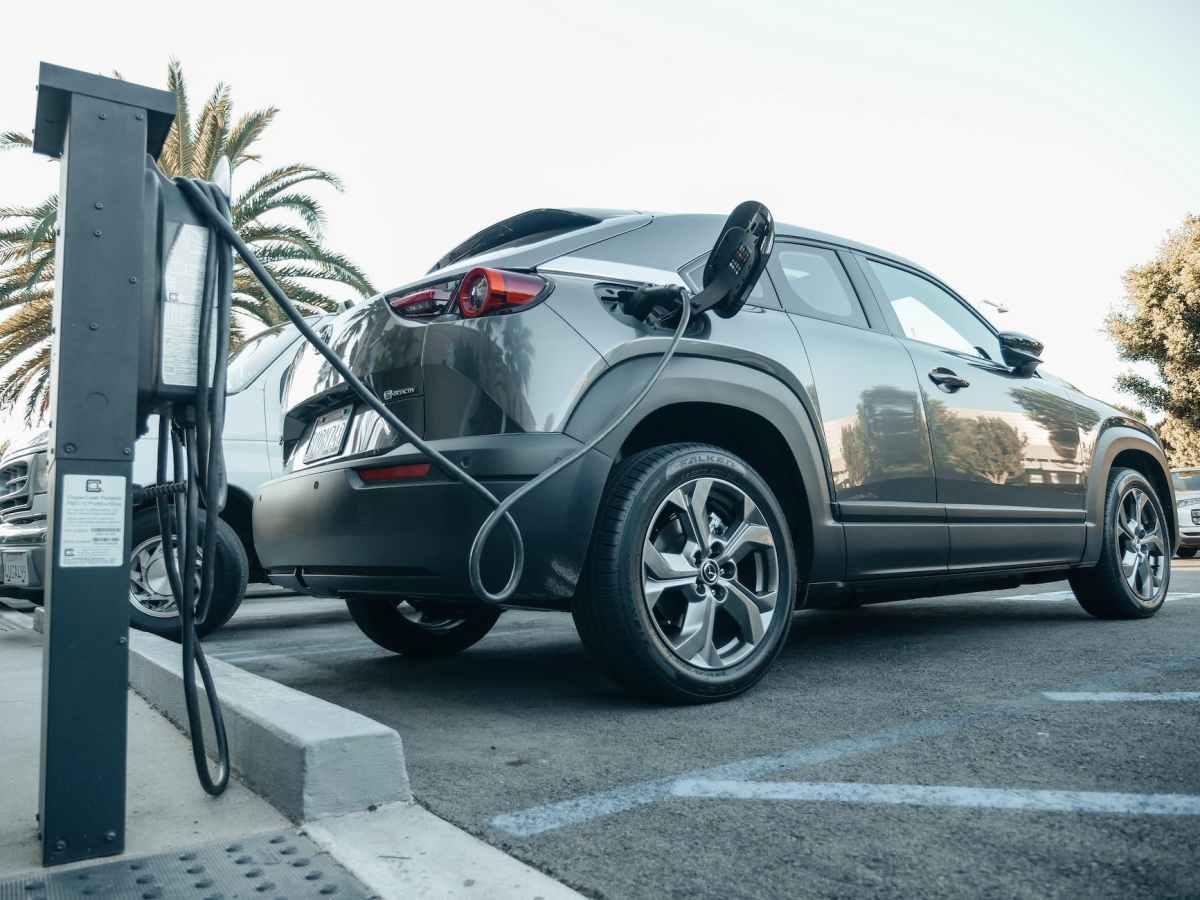
I do find the anti-EV campaigning on social media a bit peculiar. It’s a bit like the arguments for smoking that were made in the 1950s and 60s. Combustion engine vehicles are slowly but surely going to become history. The time for that change is the subject that should be discussed and not whether it’s a good idea or not[1].

One “argument” out there is that adding together all the elements that make-up an electric vehicle there’s a lot of environmental cost in their production. There’s no doubt that nothing is for free. For example, mining lithium and cobalt are not nice in every respect. There’s the concern that demand could quickly eat-up global supply too.

The “arguments” I’ve seen fall apart when considering not only the vehicle production environmental costs but the lifetime costs of an EV when compared with an internal combustion engine vehicle. 20-years of belching out toxic emissions stacks-up. 20-years of using renewable electricity is a far better solution. In theory the potential for recycling valuable materials is high with EVs too. However, we have yet to see if that works successfully in practice.

Other “arguments” look to demean the performance of EV’s when compared to conventional vehicles. Naturally, the time taken to recharge is one of the biggest gripes. For a conventional fuelling at a petrol station a tank can be filled with 500 miles worth of fuel in 15 minutes. For a current EV more preparation, planning and patience are needed to achieve a lesser range.

Some EV performance figures are far superior to conventional air breathing vehicles. Acceleration is one. Powerful electric motors unencumbered by complex mechanical transmission systems react immediately to demands[2]. EVs use power better.

There’s another gripe or moan and that’s about weight. Taking two comparable vehicles, in performance terms, the electric one will be heavier. That’s the technology we have now.

It’s a different kind of weight if that makes any sense. What I mean is that an EV is roughly the same weight whatever the state of the machine. Whereas a vehicle that uses liquid fuel varies in weight according the amount of fuel on-board. Of course, all vehicles vary in weight depending on the payload they carry (goods or passengers or both).

What’s a little difficult to take from the anti-EV lobby is that those who complain about EVs impacting roads, due to their weight, are rarely the same people who express concerns about heavy diesel delivery trucks or Chelsea tractors thundering down residential roads.

There’s one hazard that must be managed for all types of vehicles. A view of a serious fire involving either an EV or a conventional vehicle quickly shows what that threat can do. What we have now less experience dealing with EV fires. They can be severe and difficult to supress.

Regulation is often reactive. The fire threat is real. In this case maybe we do need fire suppression systems in integrated household garages. Multistorey car parks packed full of EVs are going to be a real challenge if a major fire sparks off. That said a fire started with a “diesel-powered vehicle” can be just as challenging[3].


[1] https://www.ft.com/video/95f86c5d-5a94-4e63-bbe8-6cc5ffb59a2b

[2] https://www.caranddriver.com/features/a38887851/why-are-evs-so-quick/

[3] https://www.bbc.co.uk/news/uk-england-beds-bucks-herts-67077996

Earthrise

24th December 1968 did change everything. What was achieved in that year hasn’t been matched. An unexpected event took place on an adventure to orbit our Moon. Now, 55-years have gone by. Enormous strides have changed lives. Technology has raced ahead. We reside on a beautiful and bountifully planet. Yet, we have continued to pump massive amounts of carbon into the Earth’s atmosphere. I wonder, does this tell us anything about human nature? If there is such a thing.

The photograph called “Earthrise” was taken while the Apollo 8 spacecraft was skimming over the surface of our Moon[1]. I don’t suppose there has ever been a more significant colour photograph in human history. As one of the astronaut’s said, he could hold his thumb up at a window and mask everything and everybody alive except for the three of them in the capsule.

The Earth appeared as a swirly blue marble set in the dark emptiness of space. The image is stark. Eyes are drawn to the lush colour and liveliness of the globe. Contrasted with the darkness and vastness of space. Clouds, oceans, and landmasses all scattered across this lonely planet. At the time of the Apolo mission there was about three and a half billion inhabitants. Today, there’s eight billion people spread across the surface of the Earth.

This image has become pivotal in our thinking. So much of our debates and discussions about the future are dominated by conflict and competition for resources. When there’s the opportunity to stand back and realise that our small homeland is shared, those tensions fade, at least a little.

Fragility and, almost irrelevance, when set against the vastness of space, is our daily reality. Illuminated by the Sun, a minor star, and in just the right place for life, so we fight and war as if humanity was at the centre of the universe. That animalistic behaviour could be the route of our downfall. Only, we are doing something else to top that persistent stupidity.

What sets Earth apart? That cultivated atmosphere. Such are the interactions going on in the first 100 kilometres above the surface of the planet that a sustained healthy atmosphere exists. It takes a quick look at the images coming back from the exploratory rovers on Mars to see how alive and miraculous Earth’s atmosphere has become.

The question is, are we the generations of humans who will permanently degrade it? Presently we are struggling with the needs and desires of the eight billons of us and the realising that a balance must be struck. For one pumping massive amounts of carbon into the Earth’s atmosphere is pure idiocy. It’s even greater idiocy when we have advanced and invented technologies that mean we don’t need to do it.

COP28 may be another step on the road to sanity but we continue to struggle with the realities of our situation. A human-made climate crisis and a dramatic increase in climate related catastrophes may wake us up. Perhaps every screen saver on the planet ought to be the Earthrise image.

POST: The first such image of the Earth seen from the Moon was taken by Lunar Orbiter 1 in 1966. It was in black and white and of poor quality.


[1] https://www.smithsonianmag.com/science-nature/who-took-legendary-earthrise-photo-apollo-8-180967505/

Climate

It’s an odd day that I write in agreement with The Pope in Rome. He says: “People are not responding at the level of urgency that is needed” on global climate change. The Pope has a go at a commonly held blind faith in transformative ways out of our troubles by technical innovation alone. He seems to say that we ignore reality in the hope of technological magical thinking popping-up just-in-time. His references are to the need for lifestyle changes rather than carrying on regardless.

Now, quite a number on the right of political debate will see this as a lefty intervention. Anytime religious people step over the boundaries from the ethereal into everyday life the standard conservative response is to shout – get back to the pulpit. The same response, but more polite, occurs when English bishops speak up in the UK House of Lords. I’m no advocate of them being an intrinsic part of our national political systems but they do, at least, speak from an ethical grounding[1]. If we are to talk of political long-term thinking this is very much it. There’s nothing more that prompts short-term thinking than a looming election.

Combating climate change and pushing for environmental justice are not fringe activities. It requires dialogue across the main political parties. Saddly, we are going through a phase of squandering opportunities to change. 

I agree that taking a puritan line and making “hairshirt” rules will not deliver the results that are needed. Most often such a sturdy approach just fuels luddite opposition and media outcry. Continuous graduated change and a robust commitment are needed. Unfortunately, these two are an anathema to the populist newspaper headline seekers.

Economic interests are often quoted as a reason to shelve changes. Yet, everyone knows that the costs ahead of us will be far bigger if change is not driven consistently – now. Resilient long-term policy isn’t a lefty luxury. Or liberal daydreaming. Or unafordable. It’s vital.

What’s interesting about active in-action is that there can be no such thing. Climate change will bite back. Action will have to be taken under presure. In civil aviation, for example the climate has an impact on aircraft operations. So, not only does aviation impact the environment but increasingly hazardous weather impacts aviation, with severe results in some cases. Turbulence experienced in-flight is increasing as the world is warming[2]

Approaching risks there are, at least, 3 positive actions to be taken. Eliminate it, reduce it, or mitigate it. With the climate emergency we’d better be committed to the first two because by the time we get to mitigation there’s likely to be few more unpalatable opportunities left.


[1] https://www.churchofengland.org/news-and-media/news-and-statements/bishops-warn-environmental-racism

[2] https://www.reading.ac.uk/news/2023/Research-News/Aviation-turbulence-strengthened-as-the-world-warmed

Trees 2

The story of a Sycamore has captured the imagination of a wide range of people this week.

To be frank, I’m much more a fan of the venerable Oak tree than the humble Sycamore. It’s the quintessential English tree. The Oak is the most Shakespearean of trees[1]. Even my pathetic education in English literature means I know the role played by Birnam Wood.

Again, maybe it’s my childhood. Certainly, Somerset’s farmland is peppered with old Oaks. Not as many as in the 1960s and 70s but they are still the most longstanding living organisms in the open western countryside. As far as I’m aware. Happy to be corrected on that one.

Yesterday, I wandered around under the canopy of the trees in our local park. The park has a random selection of tree species. It may have been planted with a logic. No logic is evident when wandering around. Most prolific are the Beech and Birch trees that tower, straining to reach the sunlight.

Yesterday was the last day of September. The woodland canopy’s colour is slowly changing. Leaf fall is testing the air. A few rustles underfoot and one or two falling Chestnut leaves bounce off me. Colours are mellowing. The intense green of springtime has long since faded.

I’m no wild man of the woods. To me they are more places of contemplation. It’s a contrasting atmosphere we have in our local park. I can be totally alone, except with a nod to an occasional dog walker, but only a couple hundred feet away all the noise of Saturday morning football pitches fills the air. It’s the peacefulness of a woodland cathedral with the business of life just outside its walls.

Time runs differently in woods. The rhythm of the seasons is underscored by a longer timescale. Tens of years, if not hundreds, tick away oblivious to human concerns. If left alone, a wood would make its own story of struggle, tree on tree, as the younger ones fight with their mature colleagues for space.

I did find a healthy Sycamore sapling. I felt compelled to apologies for the goings on of the week’s news. That sounds a little crazy. For a tree in the sandy soil of Surrey the fate of a distant cousin up North isn’t going to mean a lot. The point is that it made me feel better. It’s the cycle of life.

A mystical element occupies a wood[2]. There’s never a moment when our eyes and ears, sensitive to movement, are not alerted to a disturbance. However small. In our park it’s likely a squirrel. That’s no threat at all. But because our senses, however acute, can’t penetrate the depths of a wood there’s always a sense of mystery as to what’s ahead or behind.


[1] https://www.cam.ac.uk/research/features/into-the-woods-with-shakespeare

[2] https://www.thedavidhockneyfoundation.org/chronology/2008