Free Speech or Unregulated Chaos?

Twitter grew to a global scale. It didn’t make money. It was a social media success but a commercial mess or, at least, that’s how a lot of people saw it. Its snappy short text became the playground for people pushing press releases and journalists seeking immediate printable lines. On top of the professional users were a mountain of commentators that ranged from the highly credible and reliable to the outlandish crazies promoting their every possible madness.

For whatever reason it caught the attention of Elon Musk. He has a numerous selection of descriptions ranging from wry businessman to futurist visionary. There’s no doubt he’s a risk taker who has an uncanny ability to come up smiling where others would likely have collapsed in bankruptcy or chaos.

Reports of “X”, as it is known now, are that Musk sees it as a platform for free speech. There’s an absolutism about this mandate. Although there’s legislative obligations in most countries that put some boundaries around what’s called “free speech” the platform X has become one that pushes at the boundaries.

Generally, moderate opinions don’t stir-up controversy. So called “mainstream” factual reporting can be boring and somewhat dry. What seems to trigger a lot of activity are opinions that are “extreme”. That is often extreme in the political sense from the left and the right. Tapping into the popularity of populism – if that makes any sense. Polarisation if it doesn’t.

As a platform for legitimate political views, however disagreeable, there’s not so much to complain about the openness of a lightly moderated space. Through history public spaces have been created for people to vent their views[1]. However, this is not done without regulation on conduct.

Where free spaces get extremely toxic is the riotous spread of misinformation. It’s one thing to have strong socialist or liberal views or hard conservative views but when views are presented as based on facts when they are not[2], and expressions are intended to create aggressive responses, there’s a line of unacceptability that has been crossed.

I am taking the view that today’s X is not a place for a reputable organisation or person. It’s not that social media platforms are intrinsically bad. No, it’s the way that they are managed. My observation is that there is a connection between the mindless riots of recent days in England and the lack of attention to civilised regulation of certain digital platforms. It’s a question of both written regulation and its consistent implementation.

This situation is recoverable. Putting digital social media back into a good shape for the public to conduct a dialogue about the issue of the day will require effort from its owners and governments across the globe. Is there a willingness to step up and act? Let’s see. Surely these subjects need urgent action. 


[1] https://www.royalparks.org.uk/visit/parks/hyde-park/speakers-corner

[2] https://www.vox.com/technology/2023/5/20/23730607/elon-musk-conspiracy-twitter-texas-shooting-bellingcat-taylor-lorenz-psyops

Rethinking the House of Lords: Toward a Balanced and Democratic Approach

Good to hear that there’s a prospect of House of Lords reform in next week’s Kings speech. Change is on the agenda.

It’s astonishing that “hereditary” is a valid qualification for the job as a legislator. I’ve nothing against the individuals involved. Especially those who try to do the best they can. Put all that to one side, there’s a huge gulf between what’s normal in normal life and what’s normal in the Place of Westminster. It’s time to consider merit as more important than who your parents were.

The removal of hereditary peers should be just a first step. One of the most egregious unfairnesses is that way the HoL gets topped-up with political cronies a regular basis. We’ve institutionalised political tribalism in the second chamber. Ennobling people for dubious reasons has become a habit of Prime Ministers. Making contributions to political Party funds should not be a ticket to the HoLs.

There’s the religious element too. Whereas there’s a lot to be said for a level or moral guidance to be given to Peers there’s little justification for them to have votes in the HoL. I’m not denying the important part region plays in many people’s lives. What I am saying is that the laws that affect every citizen shouldn’t be shaped by a small cohort of clerics. Two countries have religious clerics in places of legislative power, and they are UK and Iran. That doesn’t sit well with me, and no doubt most people.

One change maybe controversial given that it smacks of discrimination and that is the setting of an age threshold. If Peers are given a compulsory retirement at the age of 80, it may meet an objective of getting the overall number of Peers down. What disconcerting is the implication that beyond the age of 80 a Peer’s potential contribution is less valuable.

I don’t agree that the compulsory retirement age for the HoL should be set at the state pension age. For some people age does mark a dimming of their intellect but for others they can be as sharp as a pin. The only easy option is a fixed threshold, but it should be a temporary measure.

Ideally, the size of the HoL should be fixed. Ideally, the size of both chambers should be similar. Not just because that number line-up but because the political weight should be set closer to a balance. I do assume in this formula that every Peer is a working Peer.

It’s been pointed out that in its current state the HoL makes it the second largest political chamber in the world. It’s reached ridiculous proportions for a country of our size.

Modest changes can only be a start. There’s the real need for permanent restructuring. Parliament’s second chamber must be replaced with a democratic upper house. One model would be an elected upper house with two members elected per UK region based on current/proposed metro mayoral regions or former regions used for electing MEPs.

Even the chamber’s name must go. It’s not good that we have legislators lording over us. Those sitting on the red benches are not superior beings. They are privileged. One would hope for them to be humble given that great privilege. Afterall they should be there to serve us. To serve the country.

Just Culture

My thought is that we’ve forgotten the discussion of more than a decade ago. There was a time when the thoughtful reflections on responsibility and accountability were much discussed.

Without focusing on specific examples, there are plenty to choose from, there’s the propensity of our institutions and politicians to reach for “blame” as a first response. When situations go bad the instinctive inclination to hunt out someone to blame. This is an all too prevalent habit.

Naturally, in cases, there’s the strong need to identify who is accountable for bad decisions. Society does not like it when the powerful protect, cocoon themselves and grab for immunity. Certainly, some people and organisations are genuinely blameworthy. However, if we scrutinise and point the finger of blame, it doesn’t help if that finger is pointed at a person’s honest errors. There isn’t a human on this planet who hasn’t made an error.

The finger of blame is easily pointed. Judgment so often falls after an event. The time when more is known, and hindsight comes into play. This tips the balance. It’s so much easier to say: why on Earth did you do that? I would never have done that.

For people to come forward and be fairly heard in an open and fair inquiry or investigation they need to have the confidence that they are not stepping into a public blame-fest. Without trust between those on all sides of it’s less likely that the truth will come out.

“Just Culture” is a concept written into aviation legislation and followed by others. The overriding aim is to learn from mistakes. It’s the surest way of not repeating the same mistakes time and time again. It’s beneficial to have that long-term learning objective. Why suffer the pain of a bad event when the means to avoid it are known and understood?

Now, I’m going back 20-years. I remember being part of an international working group[1] called GAIN. The group compiled guidance about organisational culture. At the time, the group was considering the subject in the context of the air traffic profession. Guidance like the one referenced, emphasise that a Just Culture is not simply a no-blame culture. It’s not, and never has been a way of circumventing accountability.

Determining culpability can be complex. There’s often a test to consider the wilfulness of the participants in a bad event. In other words, did they carelessly, intentionally, maliciously or negligently make decisions that resulted in the bad event? In these cases, the “they” could be an individual or an organisation.

Gross negligence, wilful abuses and destructive acts should be addressed by the enforcement of laws. If we say the criminalisation of honest people involved in bad events has a negative impact. That is not to negate the need for enforcement. Regulators in all sorts of walks of life have a duty to apply enforcement where and when it’s appropriate. Maybe we ought to have applied that to the UK water industry.

My plea here is to first consider the nature of the events in question. Was there an element of genuine honest human error? Is the right balance being struck between the need to learn and the need to ensure accountability?

NOTE: Just Culture is defined in EU law as “A culture in which operational staff or others are not held accountable for actions, acts, omissions or decisions commensurate with their experience and training, but gross negligence, intentional violations and destructive actions are not tolerated” EC 376/2014 Art. 2 Para. 12.


[1] A Roadmap to a Just Culture https://flightsafety.org/files/just_culture.pdf

Star’s Law

It’s one thing to hear a report. It’s another to understand – what does it mean? Planning reform doesn’t often capture the national headlines. In this case, it’s a national celebrity that seems to be running changes in planning laws[1].

I’m more than a bit suspicious when I see the lines explaining legislation that say: “A full impact assessment has not been produced for this instrument as no, or no significant, impact on the private, voluntary or public sector is foreseen.” The word significant is purely subjective.

Like so many Statutory Instruments[2] (SIs) this subject makes for a hard read. SIs are English law that is made, not by parliamentarians debating and voting on it, but by amendments to existing law placed in front of them for a short while.

There’s no doubt that English farmers and landowners, under pressure post-Brexit, are going to be pleased by the planning alleviations offered by this new planning law. Being able to convert existing buildings into new houses, or new businesses, like farm shops, without local authorities intervening to say “no” has been dubbed – cutting red tape.

It needs to be noted that this action is being taken in the run up to a General Election (GE). For me, I see this as a two-edged sword. Sure, the name of UK Minister Michael Gove might be viewed more favourably by English farmers and landowners. That may not be the case by those people who live in the countryside adjacent to new developments.

Planning gets local people very agitated. A risk of a middle-class “civil war” is more likely to come from villagers and residents of small country towns than ever is the case from farmers. Neighbour disputes can be some of the worst disputes. I know of a case where a shotgun was used to make a point and that wasn’t by the farmer concerned. Boundaries being the issue.

Mr Gove has made a political choice. Framing the argument as cuts to “needless bureaucracy” may not be the whole picture, or even an accurate one but it does make Ministers feel good – like a sugar rush.

Converting more former agricultural buildings into dwellings or small businesses does make sense in many situations. Doing it without proper controls opens a pandora’s box of possible conflicts and disputes. Afterall the planning system is supposed to balance the rights and responsibilities of all concerned.

It’s all too easy for those in central government, heavily lobbied, to make local government the evil monster. I could say: a simple matter of power play and political expediency. Especially when the government minister making the decisions has just seen his political party devastated in local government elections.

Building more houses and shops without the need for planning permission might be a bit like that sugar rush, I mentioned. It last for a short while and then, well you know what happens.


[1] https://www.independent.co.uk/business/jeremy-clarkson-farm-shop-downing-street-b2341181.html

[2] https://www.legislation.gov.uk/uksi/2024/579/made

ID

Photo ID is essential, or your ballot will be denied to you in the UK. You can’t vote in elections. That was the case for service veterans, last Thursday. The armed forces veteran card was not deemed acceptable ID[1]. This card was heralded as a great step forward by Conservative Ministers. It seems they had not thought through the implications of the new ID card.

The Electoral Reform Society pointed out that the arbitrary nature of voter ID rules is a problem.

No doubt to get milk the publicity, Boris Johnson, former PM, praised the officials who turned him away from the polling station where he attempted to vote in the South Oxfordshire police commissioner vote[2]. That inspired one or two cartoons. As you would expect featuring clowns. The legacy of Boris Johnson’s chaotic time in the premiership continues to echo.

News is not all negative on the voting front. The 15-year time limit on the eligibility of British people living overseas has been lifted. They will now be permitted to vote in UK elections[3]. Most interestingly, around 3.5 million additional people will have the right to vote in the forthcoming UK General Election. I wonder how those living in the European Union (EU) will vote.

Anyway, if we look at the results from last Thursday, the Conservative attempt at what could be called voter suppression seem to have backfired. Big time. My view is that we should be making it easier for citizens to vote and not harder to vote. As one joker pointed out, in this Parliament, there have been more cases of MP’s misdemeanours than there have been of voter fraud.

I agree that many of the heartfelt arguments of 25-years ago about ID cards are now somewhat moot. The way we use mobile phones has put paid to those arguments. Big Brother is here to stay. It’s astonishing how much personal information we give away freely, not to the Government, but to commercial entities committed to extracting profits from our data.

Formally proving ID is an anarchic process in the UK. There are multiple means, and they are all confusing or mixtures of one another. What is becoming a fixed point is one’s mobile phone number. So many computer systems send a text message that requires acknowledgement to prove who you are who you say you are. The assumption being that the person with the mobile phone is the person who owns the phone, and its number.

Maybe it is time for one unified and recognised official UK ID system.


[1] https://www.telegraph.co.uk/politics/2024/05/02/minister-apologises-veteran-turned-away-refused-voter-id/

[2] https://www.theguardian.com/politics/article/2024/may/04/boris-johnson-pays-tribute-to-polling-staff-who-refused-to-let-him-vote-without-id

[3] https://www.gov.uk/voting-when-abroad

Responsibility

What do I have in common with former Prime Minister Liz Truss. Well, not much, I hope. Only I will stop myself from jumping on the band waggon and rubbishing the entirety of what she has to say. It’s astonishing to think that she was once a fully paid-up Liberal Democrat member. Her exit to the dark side is the stuff of decades past pulp fiction.

Truss’s published plans are clearly as mad a bag of frogs. Damming and disbanding anything and everything that you personally don’t like is a page out of the Trump playbook. Oh yes, there’s a community of enraged folks who will not read the detail and pied piper like follow the music. That will sell a tiny number of books before they pile-up in the high street charity shops of the country. Even they might flinch at stocking her castoffs in print. 10p would be too much.

Now, comes the; ah but. If I go back to the mid-1990s, I was writing about the proliferation of QANGOS[1]. Being a local Councillor at the time I felt a great deal of irritation in finding that so much government policy was focused on taking power away from elected local government and giving it to appointed bodies with no local accountability.

The Liberal Democrat approach has long been that power should be decentralised from central to regional and local government. A great deal of what we have seen in the last three decades has been exactly the opposite. Devolution in Scotland and Wales being the exception. Although, that didn’t make much difference when Brexit came along.

Giving specific powers to executive agencies is not the problem. You might think I’d say it was. No, the problem is the relationships between elected bodies and those who act as its agents. Once a democratically elected body has determined a course of action there’s benefit in having expert agencies, given clear terms of reference and a job to implement specific policies.

Politicians, generally make lossy managers. This is where the Truss / Trump doctrine, that politicians should control or manage everything as being extremely foolish. Centralisation does help when unified action is needed but for the most part keeping all decision making in-house degrades administration and enables it to become detached from reality.

Politicians are great critics. Their skills are best used to scrutinises activities at a high level. To exercise oversight and provide feedback derived from real life experiences (The Post Office scandal being an exception to this general assertion).

The former Prime Minister who holds the record for being the shortest in office had to take responsibility for her actions. In that most peculiar way, UK democracy worked. No well, but at least corrective action was taken in reaction to a calamitous situation.

Take back control in my mind means returning powers to regional and local government. Where QANGOS are necessarily then make sure they are kept under effective scrutiny. A lot of what I have said here is better said in a policy paper from 2007[2]. We know what to do but rarely do we do it.


[1] In the UK, the term QUANGO addresses “arm’s-length” government bodies, including “non-departmental public bodies” (NDPBs), non-ministerial government departments, and some executive agencies.

[2] https://www.libdemnewswire.com/files/2016/02/77.-Green-and-Prosperous-Communities-Local-Regeneration-for-the-21st-Century.pdf

Friday evening

I listened. Well, it was unusual. On a Friday night, the country’s Prime Minister (PM) addresses the nation. Not much prior indication it was going to happen. What’s afoot, I thought. Could this be the moment a General Election is called? In the end it wasn’t an earth-shaking moment or likely to change the direction of the course of world events. The intention was good. There’s a strong need to step back. To condemn violent extremism in all its forms. Whether it’s ideological, from a political stance or religious in motivation.

Yes, people have a right to be passionate in pursuit of their beliefs. The limit comes in a liberal democracy when action steps over into aggression, intimidation, hate and violence.

Yes, it’s a sad day when a Westminster byelection results in the election of a maverick who as a disturbing track record of associating himself with alarming people and beliefs.

We (UK) are sure not in a good place, now. That does call for political leadership to step-up and face down those who would corrupt, divide, and wreak havoc. To do that across the board whether it be from the extreme left or extreme right. Wreckers are not new. They pop-up through history. Often using a false narrative to antagonise and stir-up insurrection. The results are always to the detriment of most people and to the advantage of a very few.

Is the PM facing down the those who’d happily wreck our liberal democracy? Friday evening was one attempt.

I agree with some commentators. If a speech is to be made outside the front door of Number 10, such an iconic setting, then there ought to be something of great substance in that speech. Afterall this is the place where PMs come and go, elections are called, and major crises are addressed. In this case there wasn’t much of great substance and vague messages were scattered throughout the PM’s rambling speech.

One problem is the misguided mixing of multiple different concerns in a mishmash. For example, protest is not de-facto bad. Illegal actions during a protest must be addressed much as illegal action any other time. If extra resources are needed to address those illegal actions surely it is for the government of the day to provision them appropriate to the task.

Perception matters. Condemning those who are clearly in opposition to the PMs political stance but turning a blind eye to those in the PMs camp who are just as bad, just smells bad.

Let’s be positive. It’s a good start. Leaders should come out an defend and preserve the liberty we all enjoy. They should craft langauage that unites. They should engage in robust debate on the side of truth. I wonder where we go from here. Will electioneering polticans stop the slurs and cheep remarks – unlikely.

POST 1: The PMs words on extremists and democracy have slipped off the on-line headlines rather quickly. Maybe his aim was for the weekend media to pick-up the debate in a thoughtful manner. Good luck with that one.

POST 2: Now, the PM is facing both ways. Paul Scully’s[1] utterances follow those of former Conservative Lee Anderson. When the majority of his party’s members think Islam is “A Threat To British Way Of Life[2]” and they would prefer a different leader from him no wonder the PM is calling for unity.


[1] https://www.telegraph.co.uk/politics/2024/02/26/paul-scully-no-go-areas-birmingham-london-islamophobia/

[2] https://www.huffingtonpost.co.uk/entry/majority-of-tory-members-believe-islam-is-a-threat-to-british-way-of-life_uk_65df4fd4e4b0e4346d54a740

EVs

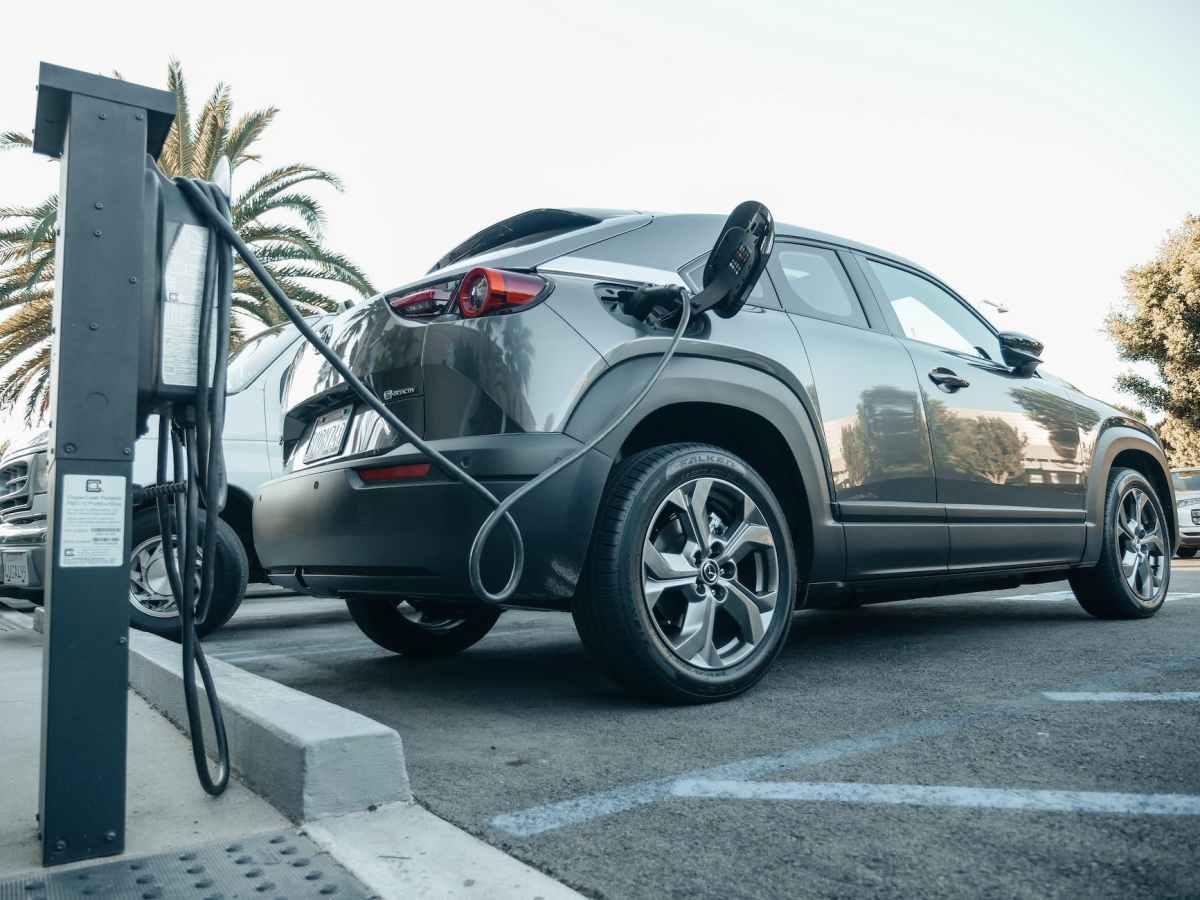
I do find the anti-EV campaigning on social media a bit peculiar. It’s a bit like the arguments for smoking that were made in the 1950s and 60s. Combustion engine vehicles are slowly but surely going to become history. The time for that change is the subject that should be discussed and not whether it’s a good idea or not[1].

One “argument” out there is that adding together all the elements that make-up an electric vehicle there’s a lot of environmental cost in their production. There’s no doubt that nothing is for free. For example, mining lithium and cobalt are not nice in every respect. There’s the concern that demand could quickly eat-up global supply too.

The “arguments” I’ve seen fall apart when considering not only the vehicle production environmental costs but the lifetime costs of an EV when compared with an internal combustion engine vehicle. 20-years of belching out toxic emissions stacks-up. 20-years of using renewable electricity is a far better solution. In theory the potential for recycling valuable materials is high with EVs too. However, we have yet to see if that works successfully in practice.

Other “arguments” look to demean the performance of EV’s when compared to conventional vehicles. Naturally, the time taken to recharge is one of the biggest gripes. For a conventional fuelling at a petrol station a tank can be filled with 500 miles worth of fuel in 15 minutes. For a current EV more preparation, planning and patience are needed to achieve a lesser range.

Some EV performance figures are far superior to conventional air breathing vehicles. Acceleration is one. Powerful electric motors unencumbered by complex mechanical transmission systems react immediately to demands[2]. EVs use power better.

There’s another gripe or moan and that’s about weight. Taking two comparable vehicles, in performance terms, the electric one will be heavier. That’s the technology we have now.

It’s a different kind of weight if that makes any sense. What I mean is that an EV is roughly the same weight whatever the state of the machine. Whereas a vehicle that uses liquid fuel varies in weight according the amount of fuel on-board. Of course, all vehicles vary in weight depending on the payload they carry (goods or passengers or both).

What’s a little difficult to take from the anti-EV lobby is that those who complain about EVs impacting roads, due to their weight, are rarely the same people who express concerns about heavy diesel delivery trucks or Chelsea tractors thundering down residential roads.

There’s one hazard that must be managed for all types of vehicles. A view of a serious fire involving either an EV or a conventional vehicle quickly shows what that threat can do. What we have now less experience dealing with EV fires. They can be severe and difficult to supress.

Regulation is often reactive. The fire threat is real. In this case maybe we do need fire suppression systems in integrated household garages. Multistorey car parks packed full of EVs are going to be a real challenge if a major fire sparks off. That said a fire started with a “diesel-powered vehicle” can be just as challenging[3].


[1] https://www.ft.com/video/95f86c5d-5a94-4e63-bbe8-6cc5ffb59a2b

[2] https://www.caranddriver.com/features/a38887851/why-are-evs-so-quick/

[3] https://www.bbc.co.uk/news/uk-england-beds-bucks-herts-67077996

Votes count

Sneaking past the national news this week was a change that is of more than a little significance.

For more than a decade, I did live outside these shores. All the time that I did, I continued to vote in local and national elections. At that time, I still had an address in the UK. What would have happened if I’d continued to live abroad, for more than 15-years, is that my right to vote would have been taken away. This so-called 15-year rule meant that millions of British citizens were excluded from voting.

During the referendum of 2016 a great number of British citizens living abroad were unable to vote for or against Brexit. At the time this was seen as a great injustice. This was especially true for those who maintained strong links with the UK.

Now, almost without anyone noticing, the UK is aligning itself with other major democracies in the world. The 15-year rule has been scrapped. Some people estimate that the change to the franchise could mean an additional 3 million British citizens will have the right to vote restored.

British citizens living abroad, who no longer have an address in the UK, can now register to vote in UK General Elections. Which is convenient given that one is imminent. Naturally, this still requires those who are eligible to know about the change and to register to vote.

Interestingly, it’s the Conservatives who promised to enact “Votes for Life” in three previous election manifestoes. It’s taken a long time but the reality of the extension of the franchise is now with us[1].

The ability to donate to political parties comes with these changes. Maybe that’s one reason that Conservatives were persuaded of the need to change voting rights for the British abroad.

There’s still a possible Brexit related uncertainty. Should they occur, each UK referendum has different voting rules. So, the general restoration of the franchise may not impact any future vote on the reversal of Brexit. That would be a matter for specific legislation.

Lifelong voting rights have both a plus and a minus. For most people who retain interests in the UK it’s a matter of natural justice. They may have UK pensions, pay taxes, or have family members that are directly affected by changes that British politicians can, and do make.

For those people who have completely severed ties with the UK it maybe argued that this restored right to vote is generous. However, there’s no obligation for those who have no interests in British governance to register to vote.

Given that the British abroad can all participate in national elections, it will be interesting to see if future UK governments take more interest in their situations.

Starting on 16 January 2024, if you are a British citizen living abroad, now is the time to act. Register to vote.


[1] https://www.gov.uk/voting-when-abroad

Beware

There is some corrupt b****** out there in INTERNET land. They would dip their hand in your pockets and take whatever they can in a second. It’s downright evil. The wild-west element of the INTERNET has never gone away. It’s a global problem.

I’ve never had a Netflix account. Maybe that’s unusual. It would be nice to have one but, personally I’m not convinced that the costs are warranted. Not today. I’m slow to step on the streaming bandwagon. I still have a pile of DVDs and CDs. Yes, I’m a primitive. In some things an early adopter but when it comes to services that require regular payments, I’m cautious.

As regular as clockwork junk e-mails turn-up saying that I need to update my payment details, or my Netflix account will be suspended. Followed by an exclamation mark. On closer inspection they are amateurish cons. In fact, it’s good that the junk mail filter can see through them as they come in.

This kind of fishing is criminal. Somewhere there’s a group on con artists thinking up ever more devious ways of taking money from people. The amateurish ones may not be a threat to me, but I wonder how many people they do catch. Even one in a hundred thousand would net a nice return for virtually zero outlay.

It may be the case that lots of people think that they are not so stupid as to fall for these blatant entrapments. What’s concerning is that cybercrime is becoming ever more inventive. We’ve yet to see what developments in intelligent algorithms will do to this landscape.

The best advice around is to never ever, I mean never ever, give personal payment details in response to an unwanted request. Most honest organisations make a point of saying that they will never request bank details in unsolicited e-mails. Unjustified urgency and a threatening tone are another sign that something is wrong.

Electronic means, namely the digital economy is not as robust as the traditional over the counter transaction. Organisations are aware of this fact. Warnings saying that they will not take responsibility if money is transferred to an incorrect bank account are commonplace.

The digital economy has been a boom for the major banks. High Streets up and down the country now have grand imposing buildings that are coffee shops, restaurants and, in the case of my town a kitchen showroom. Banks have retreated from face-to-face relationships. The responsibility for being aware of the potential for cybercrime has been firmly placed on the shoulders of the individual.

Talking to people remains important. Certainly, if a request for payment seems strange or unexpected there’s no substitute for picking up the phone, however tedious that process can be. Notes, and paper records still matter or, at least, they still matter to me.

NOTE: Useful information can be found here http://www.actionfraud.police.uk/