About Animals and Flying

Pigs do fly[1]. But only the more privileged ones. Yes, animals that fly are not restricted to those with their own wings. It’s true that the animal kingdom has been showing us how to fly long before powered flight took-off. Nothing more graceful than a bird of pray swooping and diving. We (humans) can’t match much of what they do with our flying machines however hard we try.

Birds long inspired great thinkers. They opened the prospect of human flight. If they can do it – why can’t we? Surely the right combination of aerodynamic structures and a source of power would solve the problem. Shocking, in a way, that it wasn’t until a couple of keen bicycle repair men and a smart mechanic persisted until they had a working machine. That was only just over a hundred years back.

So, today’s novelty News item[2] of a cat that didn’t want to leave an aircraft puts a smile on my morning face. For all the farm cats I have known, the story doesn’t surprise me at all. It’s the sort of situation where humans are almost powerless in the face of the preferences of a feline.

Naturally, the engineering staff of an airline will have a good look at where the cat has been in its wanderings. There’s always the remote chance for a rogue moggy to play with something they shouldn’t ought to play with. Even on a modern Boeing 737.

I used the word “remote” but there are definite cases of loose animals causing air safety hazards. Looking this one up, because it sits vaguely in my memory, I do recall a dog that crewed through electrical cables after it got free in a cargo hold. Now, however lovable and cuddly a dog maybe that’s a place that no one wants to be in.

Back in 2002, American Airlines Flight 282 approached New York’s JFK. It was a Boeing 757 that landed with chewed-up electrical cables. Crew members heard noises coming from the cargo hold and found that some aircraft radio and navigational equipment wasn’t working. A dog had chewed its way through a cargo bulkhead and attacked wires in an electronics compartment. 

A quick search reveals that there are more cases of incidents caused by loose animals than might first be thought. Animals are potentially hazardous cargo. Sadly, often these flight incidents are not good for the animals concerned.

One thing to remember is that a large aircraft, at flight altitude, is pressurised. That’s not at the air pressure on the ground (unless an airport is a long way up a mountain range). A dog with breathing difficulties is going to find an aircraft environment distressing. Dogs can be skillful escape artists. Myself, I’m not keen to share a flight with them.


[1] https://intradco-global.com/livestock-transport/

[2] https://www.thesun.co.uk/news/33273791/cat-causes-chaos-ryanair-plane-rome/

The Swiss Cheese Model in Aviation Safety

Models in safety thinking take different shapes and forms. A conversation might start – what’s a model? Why are they useful?

Here’s a go at an answer. It’s always risky to explain why something works. It can be like a dry analysis of the particulars of a good joke. That kills the essence. As the words attributed to Albert Einstein say: if you can’t explain it simply then you don’t understand it well enough. Even if that’s not literally a quote it sums-up the need for simplicity.

Aviation is a highly complex, interconnected, socio-technical system with a legacy that coexists with rapid advancement. There are few parts of the globe that are not touched by aviation in some way or another. Getting to and from Arctic wastes, commuting between vast cities or traversing the widest oceans. Aviation touches all of them every day.

There is no piece of paper big enough to write a detailed description of every part of the worldwide aviation system. Even the most extensive computer simulations just take on a small part of the whole. I often use this phrase – “it’s more than a head full”. What I mean is that however smart we might think we are, the normal person can only comprehend a slice of what’s happening. A slice frozen in time.

We get over our limitations in perception and understanding but approximating. That is to carve out a “model” of what’s happening and how parts of a complex system interact. That sounds easy enough to construct. It’s a lot harder than first might be thought.

For one, a model needs to be sufficiently universal to capture an underlying reality or theme.

Next, a model needs to be useful. It has utility. It’s proven to work. To produce useful outcomes.

Thirdly, a model needs to communicate a message across cultures, beliefs and disciplines.

A model that meets all the needs described above can be as big an advancement as any hard technology. I guess it’s not surprising that a professor of psychology comes up with one that has been used and reused successfully over decades.

This week has seen the passing of Professor James T. Reason. He’s left us with a legacy that’s almost incomparable. His Swiss cheese model[1] has become a basic part of every aviation safety professional’s training.

I’ve debated and discussed accident causation a lot. The Swiss cheese model[2] is not the only way of thinking about how accidents happen, but it is an extremely good one. It promotes a way of thinking about how to defend against accidents. That’s powerful.

Like all models it’s a simplification of a highly complex system. Its great strength is that this model allows us to see through the mist. To see part of what is obscured by complexity. That is immensely valuable.

Thank you, Professor Reason. 

NOTE: An IFA Video with Professor Reason Every Day – 20 min film – International Federation of Airworthiness.


[1] https://en.wikipedia.org/wiki/Swiss_cheese_model

[2] https://www.eurocontrol.int/sites/default/files/library/017_Swiss_Cheese_Model.pdf

Pragmatism in British Politics

Pragmatism has long been a part of British life. Idealism too but to a lesser extent. That said, the shelves of literary works probably tip in the balance of idealism. There’s always an “insightful” quote to pull of the shelf and plonk into a speech or scribblings like this.

There’s a comfort in putting important decisions down to known facts and up-to-date realities. This way of working tends to favour short-term action based on weighing-up the here and now. What’s best for us where we stand at this moment? How much money have we got?

If you are an ardent socialist or committed liberal or dyed-in-the-wool right-winger, then pragmatism can make your flesh crawl. It leads to the question – what do you really believe in? Intellectual prowess is challenged by a call to make it up as we go along.

Pragmatism encourages hypocrisy. Now, that might be phrased as an uncomfortable negative. The truth is that no successful organisation has ever escaped a great deal of honest hypocrisy. Positions on even the most hard-fought issues do change. That’s not a negative. Just a couple of minutes surveying the history of the last half century, more than proves the case.

So, when I hear the UK Prime Minister (PM) talk of “ruthless pragmatism” I do wince a bit. It’s not that pragmatism per-se is an evil. No way. Mere survival in any political landscape and someone must react to the here and now in a way that doesn’t sink the ship.

PM Keir Starmer talking on Europe[1] is like listening to a rich Victorian woman having on extremely tight underwear. There’s no way she can loosen it in public. Her peers would disown her. When no one is looking an immense sense of relief can be gained in shedding the constraining garments. Behind closed doors the ridiculous restraints are shed.

Frankly, UK opposition to joining youth mobility schemes[2] in Europe is a stupid as stupid can get. I mean stupid times a billion. Now, some madcap idealists might be scared that British youth might, if taught early, be influenced in ways that would last throughout their lives. Such would be their indoctrination that eventual the push on the UK to join to European Union (EU) would be overwhelming.

There’s another word beginning with “p”. Take pragmatism and replace it with paranoia. The later seems to be fashionable just now. Forget the idealist approach where at least views tend to be based on a plausible creed. Paranoia is such that no previous experience is necessary. It’s all-over social media and more and more conventional media. Pragmatism is met with disbelief. So, is it wise for Keir Starmer to make that word a number one headliner?

A philosophical political pragmatism has been long practiced in the UK. I don’t see that stopping anytime soon. But what’s to be gained by headlining it? Not a lot I’d say. In fact, it gives ammunition to the light blue swivel-eyed loons[3].


[1] https://www.independent.co.uk/voices/editorials/keir-starmer-brexit-reset-europe-b2692118.html

[2] https://lordslibrary.parliament.uk/youth-mobility-schemes/

[3] https://www.independent.co.uk/news/uk/politics/swivelgate-david-cameron-goes-to-war-with-the-press-over-swiveleyed-loons-slur-8622277.html

Future of Single Pilot Operations in Aviation

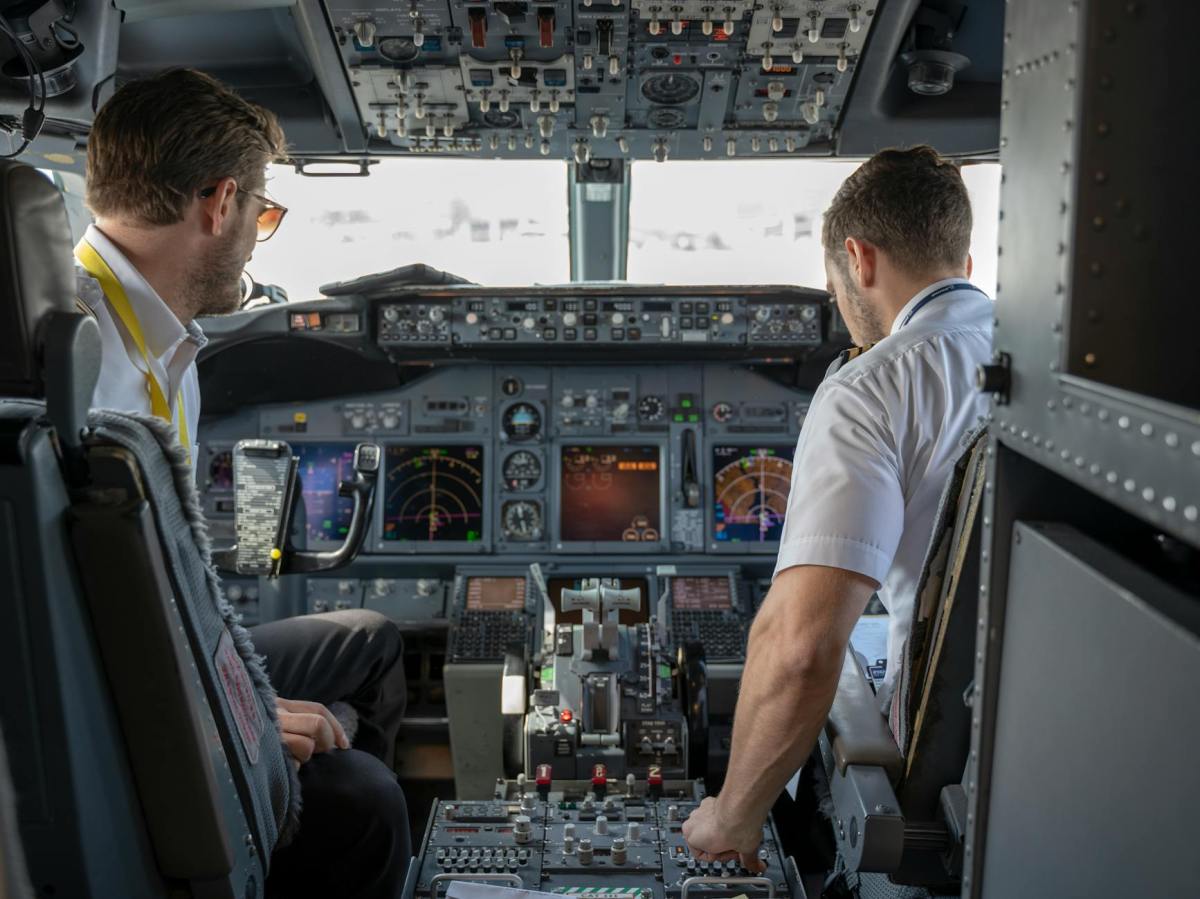
Flying embraces automation. Now, there’s a statement that didn’t ought to be controversial, but it can be. Even before we became engulfed by the modern digital age, analogue autopilots could assist in the task of flying. Some early ones were mechanical.

The need for full-time hands-on piloting of the physical controls that linked a human and an aircraft’s control surfaces is not fundamental. Large transport aircraft have stepped further, somewhat mimicking what their military counterparts did, and fly-by-wire systems have become commonplace.

As far as technological evolution is concerned, we remain in a transitionary phase. Commercial aircraft that fly overhead are a mixed community. Some, like the Boeing 737 series continue to have cables and pulleys that link aircraft systems and controls. Others, like the Airbus A320 series are the fly-by-wire digital aircraft types in regular service.

Between the pilots in the cockpit and the motion of an aircraft there is a computer. In fact, several computers arranged in a manner so that they continue to work even when subject to failures. A great deal of thought and effort has gone into designing aircraft systems that will be reliable in-service.

Looking at the safety numbers, starting in the 1980s when fly-by-wire was introduced, the overall service experience is extremely good. The practice of system safety assessment has delivered dependable and robust aircraft. Rigorous certification processes are applied. 

Through the technical developments that marched on from the 1980s one requirement has remained. That is that two pilots are needed in the aircraft cockpit. Granted there are exceptions to this rule for smaller transport aircraft. Single pilot operations are not new. For example, in many countries, the Cessna Caravan[1] is approved for a single pilot.

It’s 2025. It’s difficult not to notice the debate around Single Pilot Operations (SPO). That is to open large transport aircraft operations to a new rule. Lower operating costs may be achievable by making a change. It’s even said that this move is a way of continuing aviation’s growth as it becomes more and more difficult worldwide to increase the number of qualified pilots.

It’s good to see this subject being taken up in a forthcoming conference.

RAeS Flight Operations Conference 2025: Single Pilot Operations – Logical Progression or a Step Too Far?[2] 19 March 2025 – 20 March 2025. Royal Aeronautical Society Headquarters in London.

SPO may be enabled by use of complex systems to help make mission-critical decisions. The next step maybe with real-time “artificial” copilots and intelligent monitoring. Will this move the aviation industry toward safer and more efficient aircraft operations? That is the question.


[1] https://cessna.txtav.com/en/turboprop/caravan

[2] https://www.aerosociety.com/events-calendar/raes-flight-operations-conference-2025-single-pilot-operations-logical-progression-or-a-step-too-far

Investigating the Black Hawk and American Eagle Collision

What’s mysterious about the recent tragic collision between a US Army Sikorsky UH-60 Black Hawk helicopter and the American Eagle Flight 5342, was the failure of the normal procedure of “see and avoid” and the lack of an avoiding manoeuvre from the helicopter[1].

Taking the timings from reports of the investigators’ work so far, the air traffic controller’s instruction to the military helicopter to pass behind the commercial jet was seventeen seconds before the catastrophic collision impact. Given the trajectory of the commercial jet, as the pilots were focused on a landing, they had little possibility for an evasive manoeuvre other than a go-around. I imagine the commercial pilots and the tower controller reasonably assumed that the military helicopter would comply. In fact, why would they have any reason to question that assumption?

A question has arisen about night-vision goggles. Were the crew of the military helicopter using these devices? Night Vision Imaging System (NVIS) are not new[2]. They are used in both in military and commercial flying. There are a series of technical requirements that address their safe use. For commercial flying helicopters, that use such visual systems, they must additionally be equipped with a Terrain Avoidance and Warning System (TAWS). 

One of the down sides of night-vision systems are that the greatly enhanced capability can lead to overconfidence and potential misjudgements by pilots. When used by pilots these systems amplify ambient light and thus help pilots maintain visual references. That’s good for night flying over difficult terrain at low altitude. It’s not so good when there are multiple bright light sources all around, as there are in a big city.

I’m sure that the accident investigators will be giving the above subject a great deal of consideration. Afterall, the evening of this tragic accident was one of fine weather and fair visibility. The investigators have a significant task ahead analysing data and verifying the performance of both humans and machines in the accident situation.

NOTE 1: Worth a watch https://youtu.be/hlMTpIAlpw0

NOTE 2: Key safety system off in Army helicopter that collided with American Airlines jet, senator says | Reuters

NOTE 3: Night Flying “there are factors that can make it more challenging, like the lack of visual references and encountering visual illusions”. Flying into the Dark. What You Need to Fly at Night | by FAA Safety Briefing Magazine | Cleared for Takeoff | Jan, 2025 | Medium


[1] Evidence of a last-minute manoeuvre may still come to light. Sadly, the outcome remains the same.

[2] https://skybrary.aero/articles/night-vision-imaging-system-nvis

Economic Growth in Post-Brexit UK: A Call to Action

I do remember when there was a British newspaper called The Daily Telegraph. It represented establishment views. Was rather stuffy and what you might expect a certain type of middle-class accountant or lawyer to be reading on their commute to work.

It has become a pamphlet for the alt-right, supporters of oligarchies and whacky think-tanks pumped full of money from climate change deniers and overseas sources.

The sort of right-thinking people who gifted us with Liz Truss as Prime Minister. I shouldn’t be so dismissive because as recent history has shown these daily publications still have influence.

Now, Labour’s Chancellor of the Exchequer is shouting growth, growth, growth from the rafters. Not that her cry is an entirely bad one, it’s just that she is saying this with mufflers on her ears.

The Chancellor is right that the most important issue of the moment is the economy. There are a lot of people pointing out that a quick way to improve the UK’s economic situation is to knock down the barriers we have erected with mainland Europe. Next door is a huge market for our products and services.

Labour was telling us to believe in Brexit and that they could make it work. Most people know that this was last year’s meaningless words spread about before an election. Polling now shows that most people favour closer ties with our neighbours[1].

In some senses there’s little change. People are more likely to see the Lib Dems as anti-Brexit and the Conservatives as pro-Brexit. They remain unsure about Labour’s position. So, when the call goes out from the Lib Dems for closer economic ties with the European Union (EU) a whole host of predicable nonsense is said and published in newspapers like The Daily Telegraph.

Labour’s dithering makes the possibility of growth, growth, growth seem as unreliable as their protestations of love for Brexit before last year’s election.

The direction of travel is mighty obvious. Brexit has failed. Corrective action is long overdue. Forward thinking politicians really need to step-up and fight for a prosperous and economically successful Europe. One that includes us.

Labour has this term of government to make its mark. If it doesn’t then the possibility of extreme political elements getting a foothold in the UK are significant. Dithering for 5-years will be the biggest mistake after that of 2016. Corrective action may have a political cost in the immediate short-term, but the long-term benefits are there for all to see.


[1] https://yougov.co.uk/topics/politics/trackers/how-the-government-is-handling-the-issue-of-brexit-in-the-uk

Discontent with Conservatives

Those who stuck with the Conservatives at the last UK General Election must be regretting it. After their appalling record in government there are still 121 Conservative Party members of Parliament (MPs). This is the lowest number in the history of the Conservative Party. Parliamentary consistencies, like Reigate[1] and Staines[2], places where I have lived, have little, or no effective representation as the new year gets into its stride.

For what worth they are at this time in the electoral cycle, the Conservative Party and Reform Party (or company) are scrambling around trying to salvage any influence they can get. Both parties are no longer supported by their signed-up membership preferring major donors to pay the bills instead.

Frankly, we have no idea of their real membership numbers[3]. Political party membership hasn’t exactly been booming across the board. What’s clear is that the residual Conservative Party and Reform people are fishing in the same pond.

Last night, I happened to catch part of a Conservative political broadcast on the BBC. The general theme was politicians have let you down. This was said by Conservative leader Kemi Badenoch in a non-specific way to avoid saying Conservative politicians have let you down.

I did begin to wonder if she wouldn’t have done better by hosting a daytime cooking show from her immaculate kitchen. Now, I want to know if her mug had coffee or tea in it or was it just and empty prop? It seems to me every time Conservative rebrand, we see a different shade of blue being presented in the media. They are lucky that so many shades of blue are possible.

In the News too is Nigel Farage’s cold shouldering in the US. He may no longer be the far-right’s political great hope for the future. Reform may have to look elsewhere for its champion.

The 650 MPs that were elected by you and me to the House of Commons, at the 4 July 2024 UK General Election are likely to get a full-term. I’d guess that the new government can live with being relatively unpopular for at least a couple of years. After that they had better start showing that life has got better, public services work otherwise they will be a one hit wonder.

For political watchers its going to be fascinating to see how the pseudo-war on the right of politics will pan out in the UK. Will they combine? Having lived through the SDP–Liberal Alliance back in the 1980s, I know how hard it can be to restructure and reorientate in the British context.

There’s a lot of spinning of the wheels. Interim pain and uncomfortable partnering. The certainty being that not everyone will be happy or contented. Some notable people will go off in a huff. Eggs will get broken.

Or are we in a new era media where all that’s needed is tons of fakery and magical thinking. Plush marketing and dramatic assertions backed up by absolutely nothing.


[1] https://www.bbc.co.uk/news/election/2024/uk/constituencies/E14001442

[2] https://www.bbc.co.uk/news/election/2024/uk/constituencies/E14001505

[3] https://www.bbc.co.uk/news/articles/cq62qv3486qo

Financial Pressures and Local Government Restructuring

It was a long time ago, but I remember the travails of local government reorganisation. A massive amount of councillor and officer time was consumed. Endless discussions going backwards and forwards. Loads of heat but little light.

I had my one term as a Surrey County Councillor between 1993 and 1997. Now, that is 30-years back. A lot of water has passed under the bridge since. That said, the issues are still hanging in the air. The outcome of that Conservative attempt at local government reorganisation was no change for the one million people in Surrey. That meant one large County Council and eleven smaller Boroughs and Districts. Not forgetting several Town and Parish Councils.

Having moved, my concern is now local government reorganisation in Berkshire. The situation here is that the two-tier structure of local government has already been swept away. We pay our council tax to one unitary local authority.

Here we are in a different time and place. Labour’s first six months in government behind us. A new era. All smiles to begin. Sadly, the write-ups of the last six-months are less than flattering[1]. It would be reasonable to think that during a period of opposition in Parliament. Those 14-years. The prospective future government would have put in place policies and plans that would have been “oven ready,” to use a term an unsuccessful past Prime Minister would use.

Just as it was 30-years ago, English local government is facing huge financial pressures. Residents are struggling to access good services. Local issues, like potholes, planning, special educational needs and social care are as intractable as they always have been.

So, is this the time to bring out local government reorganisation again? Regardless of what I think, it’s clear that Jim McMahon MP, Minister of State (Minister for Local Government and English Devolution) has local government reorganisation on his agenda[2].

From what I hear, existing county Boroughs and Districts are going to become history. Small unitary authorities had better watch out too. Council leaders are being asked to find ways of building scale. That means no English local authority smaller than a population of half a million.

Will this turn around performance? Economies of scale may have some benefits. The problem that strikes me is the notion that “local”, meaning a natural community, is generally much less than 500,000 people. Especially in rural areas.

The Government White Paper that sets out these plans is called “English Devolution”. An interesting use of that nice word. In the circumstances that the new Minister imagines it could be that local government becomes more and more an implementing arm of central government. No more or less. To some extent this is already the cases, but localism and community are not completely extinguished. The tension continues to be one between governance being top-down or bottom-up driven.

The Labour government might imagine this “silver bullet” will harmonise, sanitise and make local services run like clockwork. I wonder if it will.


[1] https://inews.co.uk/news/messy-muddled-starmer-struggles-worse-rebellion-3444812

[2] https://www.instituteforgovernment.org.uk/event/government-2025-conference

Classic Sports Car’s Legacy

I had two of them. It was a basic sports car that last came off the production line at the end of 1979. About 45 years-ago in Oxfordshire, England. The MG Midget was much loved.

The “Frogeye” Sprite came first. Then this small sports car went through several evolutions. Ending with the 1500 version[1]. Some say the 1500 version was the worst. I’d say that it had its ideocracies but remained great fun to own and drive. The heavy rubber bumpers were added to meet US market safety requirements. The extra power of the Triumph 1500 engine compensated to some extent, but they were a style disaster. On the positive side, whenever parked, those slab like matt black rubber bumpers, front and back, doubled up as seats.

It’s something in common with most roadgoing cars of the past. The MG Midget was considerably smaller than most cars being driven in 2025. Strange that the roads themselves haven’t changed as much as the cars of the day.

The lanes of Somerset and Dorset wind through the countryside in a pattern that makes little sense unless you study either the size and shape of ancient field systems or the Romans. The contrast is great. Twisting cart tracks that became tarmacked roads or straight lines that were forced onto the landscape in a point-to-point style. The lesser of them hasn’t had a great deal of attention. Thank God, you might say. There are still lanes that link small hamlets and farms that have grass growing down their middle. Overhanging dense hedges on either side.

Those were the roads that gave the most joy of driving my MG sports car. Not at any great speed. Open top with the summer sunshine through the trees and a breeze, what could be better?

Fine, caution is, and was, needed where fresh mud and tractors conspired to add some hazards. Visibility restricted and deep ditches or dirt banks added a few more. I did once come to grief because of farmyard mud. One of those places where the farmyard and the lane were indistinguishable. A herd of cows being paraded up and down the lane every day.

Sadly, my jet black “V” registration MG Midget sat in my garage for many years. Plans to get welding done and tidy-up the soft top never came to anything. I sold it. I can say: I wish I’d kept it. Trouble is that nice wish was never going to be realised.

Now, I live just down the road from Abingdon where all the MG sports cars were made. I do mean to explore the town as the weather improves.


[1] https://www.mgcc.co.uk/midget-register/midget-register/history/

Advancements in Flight Recorder Technology and Regulations

My last posting addressed accident flight recorders and airworthiness requirements. That’s not enough. It’s important to note that aircraft equipage standards are addressed in operational rules. So, the airworthiness requirements define what an acceptable installation looks like but as to whether an operator needs to have specific equipage or not, that’s down to the operational rules in each country.

Internationally, the standards and recommended practices of ICAO Annex 6 are applicable. These cover the operation of aircraft. Flight recorders are addressed in para 6.3.1. and Appendix 8. Let’s note that ICAO is not a regulator. There are international standards but operational rules in each country apply to each country’s aircraft.

One of the major advances in accident flight recorders technology is the capability to record more data than was formerly practical. This has led to standards for Cockpit Voice Recorders (CVRs) advancing from 2-hour recording duration to 25-hours.

Proposed rule changes have been hampered by the impact of the global pandemic. Some new operational rules apply only to newly built aircraft. That means some existing aircraft can retain their 2-hour CVRs.

Another technology advance is what’s known as Recorder Independent Power Supply (RIPS). RIPS can provided power to the CVR for at least 10 minutes after aircraft electrical power is lost. The RIPS is often offered as a relatively straightforward aircraft modification.

I do not know if the South Korea Boeing 737-800 was required to have accident recorders with the capabilities listed above. If they were not, then there’s a good basis for recommending that changes be made to existing aircraft.