Pitfalls of Messaging

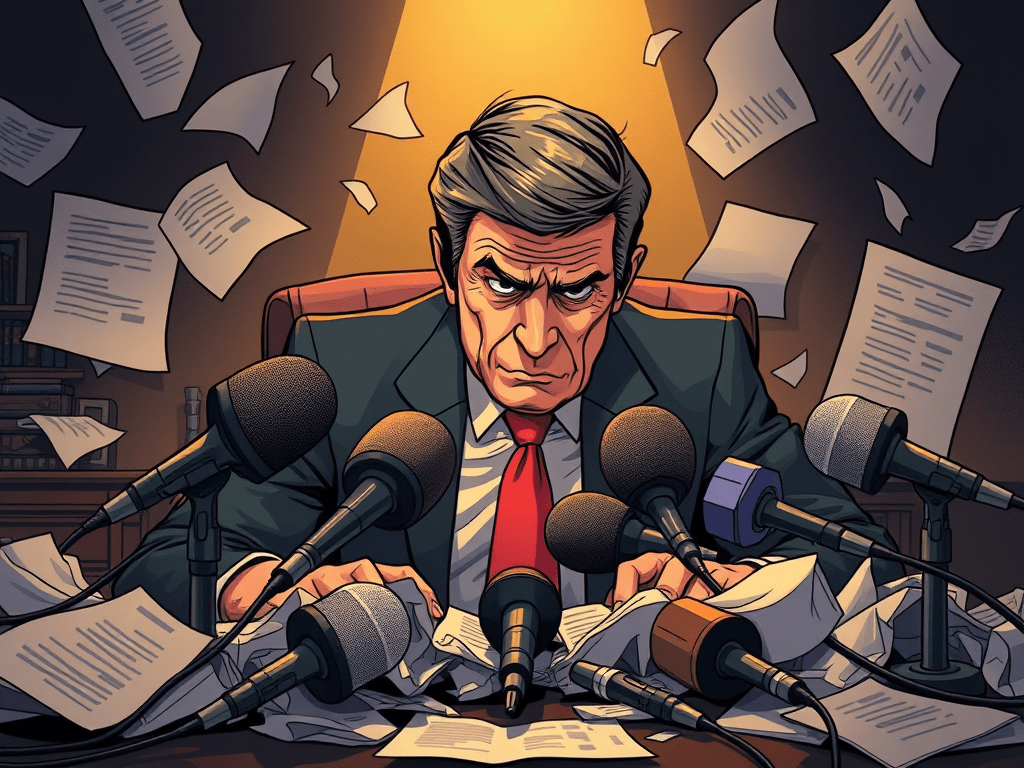
Listening to a Government minister bleat on the radio this morning, I do wonder how they ever became a person of influence. It’s as if the elevation to Westminster has wiped all their political sensibilities and replaced brain cells with wet putty.

The general theme is that this UK Labour Government has got to get its act together. It seems obvious to say. However, as they plod on talking of aims and ambitions the trend of public opinion is shifting against them with potentially dire consequences. The sad reality is that this Labour team has only been in power for a little over a year. Although they are really struggling, in our heart of hearts, most of us know that they are nowhere near as pathetically appalling as the past Conservative rabble of May, Johnson and Truss.

Here’s something that I don’t thinks works. It’s trying to scare supporters, and the public by saying repeatedly that if we don’t win you over the evil ones will grab power. In this case it’s the spectre of the Reform party extremists. It’s not a return of the Conservatives. They are going down their own freshly dug rabbit hole never to be seen again.

It’s almost to admit that – we (Labour) are pathetic but those who could come next are even more pathetic and dreadful with it. That approach doesn’t win an argument. Maybe it does scare a cohort of political activities to deliver one or two more leaflets. It doesn’t make, as was once said, the man or woman on the Clapham omnibus feel any better.

To me this morning’s Labour minister sounds like they are saying: sod it, this is harder than I thought it would be, but don’t you dare blame me. If you do blame me then monsters will devour the land and there will never be another chance to make the world a better place.

Let’s just say, for good measure there are no Elysian fields where every day the British tabloid newspapers sing the praise of a Labour government. Where cuddly commentators heap praise on Government’s achievements. Where opposition politicians have nothing to say because they are stunned into silence. Contentment sweeps across the land.

For me one of Labour’s most stupid lines is that there are certain subjects that can’t be mentioned or at least mentioned as if something was going to be done. That these subjects merely fuel the opposition and although we (Labour) may have strong feelings about these subjects we must be silent and non-committal.

Talking about Brexit for more than a minute, and the harm that it has done the country, is too dangerous. It’s like giving the Reform party dog a bone. As if right-wing extremists wouldn’t do what they do regardless of any bones, thrown or otherwise. They will do what they do.

The Labour party comes across as with the same caution that they had in the run-up to the last UK General Election. It has been described as carrying a valuable Ming vase. So scared of dropping this metaphoric vase that extreme caution dictates every move. Constantly looking over their shoulder anticipating an avalanche that might consume any possible success. A kind of neurotic sterility that’s as attractive as grey paint on a grey wall on a grey day.

There was a time when I joked about former UK Prime Minister (PM) John Major’s attempts at regain public support. His wooden soap box in the streets. His slogan – back to basics. He was living under a shadow. Maybe his timing was poor. Maybe for each political idea there’s a time and place.

That standing and talking honestly on a tatty soap box, that human touch is perhaps what the current PM needs. Can he do it?

A New Customs Union

Let’s not put up taxes. Let’s trade more. Seem obvious. Well not in late 2025 in Britain. This possibility must be forcefully put on the agenda for debate in parliament. Raise revenue, rather than raising new taxes, has got to be the better way to go. The bigger the pot the more chance that a government has got to balance the books. Taxes have their place but not to be the default opinion, in all cases.

The Labour Party has been talking the talk on growth in the economy but frequently marching in the opposite direction. It’s as if they embrace the comfort blanket of domestic tax increases too readily without thinking of the long-term impact. Habits are hard to change.

Before, what a majority agree was a mistake, Brexit, trade with our next-door neighbours was in a much healthier position than it is now. We’ve (UK) created barriers and obstacles that have diminished our trading position to no advantage whatsoever. Coming up for a decade of backward thinking.

In parliament, the Liberal Democrats are tabling a bill that calls for creating new Customs Union (CU) with the European Union (EU).

What is a CU? Simply put, it’s a trade agreement between countries to abolish tariffs on the goods they trade with each other. So, instead of barriers and obstacles to trade, the whole process becomes easier and cheaper.

Yes, such an agreement with the EU would have implications for relations with non-EU countries. What I’d say in that respect is that such negotiations with non-EU countries on tariffs haven’t been going so well in the last year. The UK has been buffeted by the policy of other nations, where their policy often spins on a dime. On / off fragile agreements don’t add enduring value.

Such a new CU with our next-door neighbours would boost the UK’s GDP by a significant amount. A boost of £25bn a year for the public finances is predicted. Thus, the growing demands that drive for domestic tax increases would be abated or at least be affordable.

Do you remember? So, many advocates of Brexit said we’d never leave the CU. It’s easily forgotten but some of the most ardent Brexit supports were saying this to the electorate. In essence being untruthful.

Back in January 2017, the Conservative Prime Minister (PM) of the time confirmed that the UK would not remain in the EU CU. What a massive mistake PM May made. The repercussions have been devastating for businesses and the public up and down the UK. It was an act of disfigurement that damaged our economy for nothing more than political dogma.

Sadly, we are where we are. I wouldn’t start from here. Wouldn’t it be great if negotiations started to take the UK into a new CU with our nearest, biggest trading neighbours and partners.

Sadly, the way the parliamentary vote will go is rather predicable. The Labour Party, in its current form, is not the internationalist Labour Party of its history and traditions. Currently, government support is not forthcoming. They prefer to talk the talk without walking the walk.

Post: Fix Britain’s Trade – Liberal Democrats

Global Ambitions to National Introspection

When did it start? At least in recent times. When did we start looking inward rather than outward? That introverted xenophobia that’s infected about a third of the country. If the polls are to be believed (and that’s a leap).

It’s strange, isn’t it? Britain, a country that spanned the globe with its trading accomplishments went from imagining a transformed world to sitting in front of an iPad complaining about either putting up Union flags on lampposts to taking them down. Painting roundabouts with red crosses or decrying the idiocy of it. Dressing up as crusader knights and thundering on about some lost imaginary England.

Pictures tell a story. Being in the aviation business, a global business, one picture that sticks in my mind involves a handkerchief and a British Prime Minister (PM). It seems a long time ago, now. Nearly 30-years ago. Back in 1997 British Airways (BA) took to celebrating their global coverage by getting international artists to produce new artworks for their aircraft fleet[1]. This was not to the liking of a former PM at the time.

For me this slippery slope was particularly evident. Living in the Surrey town of Reigate. An affluent former Conservative Party supporter, James Goldsmith set-up a new political party dedicated to one issue. The name gives it away. The Referendum Party took to the stage in 1994. Initially, seen as a joke and merely a plaything of a wealthy man, it captured the Member of Parliament for my town. For all the good it did (not), for a couple of weeks in 1997, George Gardiner, the MP for Reigate, joined the new party.

So, the British political mood in 1997 was evident, or so it may have been thought. Nothing of the sort. Of course that was the year of Tony Blair’s Labour landslide victory.

It’s possible to trace a lot of strangeness back to Margaret Thatcher. Although initially internationalist in outlook, she broke a domestic consensus and crushed a lot of hopes. Yes, the country needed radical change. It was the brutality of that change that people reacted against.

In 2001, BA succumbed and returned the Union flag to its tailplanes. Lots of poor excuses were made as to the reason for reverting. A Boeing 747 model and the handkerchief bit back.

Can I construct a thread of events from that moment to the European referendum in 2016? Certainly, there are connections as the country shook off the Blair and Brown years and plunged into a messy 14-years of incoherence. The financial crisis of 2008 didn’t help in the slide to introspection. A government that bailed out the bankers whilst making the population pay did nothing to earn a moral reputation. It further encouraged a growth of a blame culture.

So, if you supported the Referendum Party, the UKIP Party and the Brexit Party that followed, and now the Reform Party surely, it’s possible to see that you are barking up the wrong tree. It’s an empty cul-de-sac. It’s a fruitless orchard. It’s a road to decline.

These are not the heirs to Margaret Thatcher. They are bandwagon hopping con men. Money men who like their pockets lined. They will not help those who have missed out on their share of the country’s prosperity – past, present or future.


[1] https://www.flickr.com/photos/linda_chen/albums/72157625997434719/

Engaging the 70%

A little analysis goes a long way. When that analysis chimes with what I observe, then all the better. Not that just because I agree with something that it therefore makes it beyond question. No, what’s satisfying here is to see that overlap on the Venn diagram of thoughts.

In an entirely off the cuff remark I said that if the major, and not so major, UK political parties all go off hunting for the votes of about 30% of the population, then there’s a huge opportunity for someone to address the 70%.

The UK political conference season is in full swing. Four political parties have completed their annual get together. Spent time agonising over their next moves. Damming and praising in equal measure both of rising and falling stars. Trying to avoid the media instinct to go for the live on-air gotcha moment. Being seen when the spotlight is turned on.

Back to my 70 / 30 relationship. This one strikes a bell for me having been a fan of the Pareto principle. That’s often called the 80 /20 rule.

For example, a lot of work may need to be done but it’s often only about 20% of that work that makes a difference, in certain situations. I could campaign over a wide area, without focus, and find that most of my effort had been wasted. Identifying the most fruitful areas to campaign, namely the 20%, might just as likely result in a win but with a greatly reduced effort.

National opinion polls can be deceptive. However, in the absence of real elections they are what people turn to get an indication of what’s going on – now. Today’s opinion polls have politicians spooked[1]. What the meaning of the Reform Party hovering at 30% is an open question.

Is it just like the days of the Social Democratic Party (SDP) in 1980s? A strong move for change that resulted in a flash in the pan. Well, it did open the door for Tony Blair and Co, years later.

Back to my 70 / 30 relationship. Labour, Conservatives and Reform all see this 30% voting intention. It hardly matters if it’s real. They are attracted to it like a moth to a lamp. There’re both data and a perception of who the 30% might be. Suddenly their importance is magnified out of all proportion. Phrase like “hard working people” are banded around. Classifications are sought to move away from past stereotypes like “white van man.”

I read Ben Ansell’s article[2]. I think he’s right. An enormous number of political campaigners fit into what can be called the Professional Managerial Class (PMC). Lots of people aspire to be of the PMC or think they are when they are not. Why do the two biggest political parties, Labour and Conservatives appear to dislike their activists and members so much?

Back to my 70 / 30 relationship. There is an enormous opportunity here for the Liberal Democrats. Not so much the Greens or nationalists. Just by speaking to the 70%. Just by addressing the issue that concern the 70%. Just signing up the 70%.

Not so much the vital few, more the vital many. Parliament could be a very different place in four years’ time.


[1] https://www.politico.eu/europe-poll-of-polls/united-kingdom/

[2] https://substack.com/@benansell

Do MPs Need Multiple Jobs?

It’s a question that has been raised time and time again. Is a Member of Parliament’s job a full-time job? What I mean is should an elected parliamentarian have more than one job? Do they need it?

Say, a journalist, presenter, documentary maker, official of a political party or union, company director or even a doctor.

There’s a repetitious ding-dong argument that goes on along the lines of – look at this example of great achievement and they were both occupied doing numerous jobs at the same time. Equally there’s the argument – look at this talented person who crashed and burned as a result over commitment and lack of attention to detail. Case by case examples can be found.

Sadly, a case built on individual examples of achievement, or the reverse doesn’t move things forward much. It’s a sort of selective sampling to prove a point. Fame and notoriety play a part too. When a hero, genius, guru or an influencer complex exists rules get bent. Mythical qualities can be ascribed to the subject of attention.

It’s true that some individuals have a capacity for work that goes way beyond the norm. An intellect that shines bright. A refreshing originality or perspective that changes the game.

Now, I’m a down-to-earth straightforward liberal. It’s does matter if you are a King or a Queen, an Olympic athlete or a massive titan of industry or a brilliant orator we are basically all the same. We see the sun rise and we see it set (weather dependent). We walk the same Earth. We are as likely to experience mental or physical challenges in life as any other human.

Back to my question. Is a Member of Parliament’s job a full-time job?

I’d start with the ways and means MPs get elected. It’s rare, if ever, that an individual is so well known that they step into a parliamentary seat with no affiliation, preparation, finance or support. Those people who provide such essential back-up have expectations. Expectations that the candidate, if elected, will dedicate their full-time efforts to their new role when in office. Not too much to ask, methinks.

Given that you and I have finite time and energy, playing multiple roles inevitably dilutes the time and energy available for any one role. Super humans haven’t been invented – yet. Whatever the myths. If a British MPs job is genuinely full-time then where does the extra time and energy come from to do another job?

By saying that an MPs job is not full-time, hasn’t the local electorate been sold a pup. I’m sure that when votes are cast in each constituency an expectation is set-up that a candidate will do a decent job if elected. A moral commitment is made as good as any binding contract.

I agree, that polarising this argument to the extreme isn’t helpful. MPs must manage their time and energy between home and work as most people do. I guess, what’s important is the prioritising of parliamentary duties to the degree they deserve. In other words not taking on equally demanding jobs at the same time.

Some of the cynicism towards British politics, that exists today, stems from MPs abusing their duty by prioritising income and / or notoriety in some other public facing role. Making being a Westminster MP merely a way of achieving other personal goals.

It’s not easy to make hard and fast rules for the above situations. A moral imperative should prevail. Sadly, it doesn’t aways go that way.

Desperate Politics

I’ll be generous and say that I don’t think Jenrick knows what he is doing. I’m taking about the Conservative British politician Robert Jenrick[1] who is, or has been by the time this gets out, the Shadow Lord Chancellor. Desperately ambitious politicians do all sorts of foolish things to get a headline. With the Conservatives in the doldrums the word desperate is truly applicable.

When looking at his published CV it’s reasonable to think that he might know something, at least the basics. At least some history. Yes, he’s just another well to do lawyer with an Oxbridge education but that’s so typical of Conservative British politicians. At least, he had some kind of working life before taking on parliamentary politics. Today, in Westminster he’s still a Johnny-come-lately having been first elected as a Member of Parliament in 2014.

Jenrick embraced social media to the extent that the right-wing of politics see him as a sort of top-ranking pinstriped influencer. Even if his amateur video antics look like an humourless Benny Hill dressed in a business suit and tie.

Today, he’s crossed a line. Stirring up hate at a time when problems need solutions not mindless rhetoric, is despicable. To say that “British women and girls[2]” are unsafe because of small boats is offensive propaganda designed to drive political debate into ever more nasty territory.

Yes, we have been here before in Britain. Conservative politician, Enoch Powell’s fiery “rivers of blood[3]” speech did a lot of harm, but it got him in the text books. Some do believe that the heart of the Conservative Party is English Nationalism. Wrapped up in the red and white flag of St George as an exclusive club of aggressive narrow-minded men and their followers.

I’ll be generous and say that’s not the conventional Conservative Party. At times of its greatest success, and let’s face it, that political party has been highly successful in winning elections, it’s been a broad church. A diverse party that has encompassed a wide range from woolly liberals to traditional imperialists.

If Jenrick thinks that jumping on bandwagons and stirring up hatred is the way to go he’s foolish. We are not in the 1930s, or even the 1960s, this is a new age and a challenging one at that. Social media was supposed to be a great educator and liberator. In some ways it is but within its walls are pits of despair and stinking wells of polarisation and Xenophobia.

Addressing the public disillusionment that exists by pointing the finger at one group or other as being the root of all our problems is totally mindless. It only seeks to elevate the profile of minor demigods and snake oil salesman (conmen).

Inflammatory speeches get headlines; there’s no doubt about that sad fact. For a moment eyes turn to the speaker, but history turns away from them. In comparison with the 21st century challenges the country faces the so called “small boats” are a small one. Real solutions to real problems are needed not hideous grandstanding.

POST: Xenophobia is the fear or dislike of anything that is perceived as being foreign or strange


[1] https://www.gov.uk/government/people/robert-jenrick

[2][2] https://www.gbnews.com/news/robert-jenrick-britains-women-girls-endangered-migrant-crisis

[3] https://www.theguardian.com/world/2018/apr/14/enoch-powell-rivers-blood-legacy-wolverhampton

The Greasy Pole

I think we should be indebted to the writers of “Yes Minister.” And the brilliance of Paul Eddington, Nigel Hawthorne, and Derek Fowlds[1]. No mobile phones, lap-tops or tablets, wood panelled offices, a Minister with all the backbone of a jellyfish and the cunning and mountainous pomposity of Oxbridge’s best.

It’s the ultimate lesson for aspiring British politicians. Fresh faced, with ambition and desire to make a difference they are confronted with the custom and practice of centuries. A bureaucratic minefield that tops anything Brussels can produce.

At first, it’s easy to see Jim Hacker as naive to the point of merely being indulged by the civil service. He learns fast, as a good parliamentarian should always do. Fun being seeing him turn the tables on the Whitehall establishment. Often at the expense of hysterically awkward moments and sporadic cynical manoeuvrings.

Last night, I watched “The greasy pole”[2]. Without a doubt this episode remains 100% relevant. It first went out in 1981. The story’s themes are universal.

A proposed industrial development offers secure jobs and potential prosperity. It comes with a hitch. Activism and noisy protests aimed against the project. Industry and the civil service want the factory to get built. The Right Honourable James Hacker sits on the fence. Blows hot and cold but realises that his political career pivots around sinking the project. The Minister wins out in the end much to the discomfort of the department officials.

It would be easy to write the entire plot in terms of 2025’s political difficulties. This morning’s News ran a story that wasn’t so far off the plot of “The greasy pole.”

A new Labour government minister tells of publishing a report that favours a point of view he wishes to get across. He continually mentions the name of the author of the report. Mimicking Jim Hacker as he makes sure everyone knows the report’s author, just in case he’s made a mistake.

Although, with the complete ridiculousness of the past British Conservative governments it may have been said that satire is dead. No, it certainly isn’t. Here it was playing out on the BBC on my kitchen radio at breakfast time.

This is the stubborn reality. In Britain we have a new absurdly named political party called “Reform.” They are flying high in the opinion polls because some people think the word has a political meaning. However, if these would be politicians were to gain a position of power, would they conduct long-needed reforms? Well, given the competence of the people involved and given the historic clashes between elected officials and civil servants the answer is most certainly – no.

It seems to me that new Labour government ministers are slowly getting the hang of the job. One year in they are still a bit wet behind the ears. Gradually, they are climbing the greasy pole. At any moment, because of the nature of the job, down they can come, and they know it.


[1] https://www.bbc.co.uk/iplayer/episodes/b006xtc3/yes-minister

[2] https://www.imdb.com/title/tt0751819/

Revisiting Brexit: Lessons

In life partnership is key. Most of us have no desire to live as a hermit. The dull confines of a hermitage are best left to a small few. That extends to communities as well. It’s rare for societies to live in isolation and avoiding relationships with others. People come together when they share values. So, it has been in Europe in the post-war era.

Relative to the astronomical losses that the whole UK accumulated because of Brexit, the gains of the latest European Union (EU) – UK deal are modest. The positive take, from Monday, is the direction of travel. Cool heads have prevailed, and a new deal of mutual benefit to both parties has been agreed. There’s more detail to follow as might be expected.

Unsurprisingly, those who failed miserably over the last decade are now carping bitterly[1]. Remember Johnson, who as UK Prime Minister (PM) had a large parliamentary majority that he threw away. His incompetent administration sealed an extremely bad deal.

The years following the 2016 referendum have been wasted years. Tedious nonsense about Brexit benefits have echoed through those years without anything good arising. Brexit “freedoms” are a metaphor for acting foolishly and without any relation to prevailing facts.

Last July, the British electorate said “no” to the parade of Conservative Party catastrophes[2]. The UK decided to go in a different direction. It was the Labour Party that toped the poll. Lib Dems and Greens doing well too. Since the General Election, and since the beginning of the year, the ebb and flow of global events has been truly turbulent. In historic terms, when UK PM Harold Macmillan was asked what the biggest challenge for a statesperson was, he replied: “Events, dear boy, events”[3]. Seems he was right.

Starmer is a fascinating character. Not the characteristic statement of a lifelong liberal, like me. The tool makers son, who schooled in Reigate, to become a top lawyer, climbed the slippery pole of pollical life, to become PM. Along the way he’s done what’s most typical of successful British politicians. That is, he’s changed his mind and allegiances along the way. Going from Labour Party leader to PM in 4-years is quite an achievement.

I don’t have to agree with the PM. In fact, as far as his priorities in government, I don’t agree with the PM a lot. Although, I’ve personalised these words, I wish to take due care. I speak only of him as PM. I’ve never met him. So, let’s focus on his role.

An EU-UK Brexit “reset” was inevitable. If it didn’t happen now, it would have happened eventually. Why would both global trading partners persist with a lose-lose situation? Dealing with serious national issues is a PM’s job. It’s not to avoid or obfuscate. Here Starmer is praiseworthy. Instead of struggling on as if nothing could be done, he’s acted.

What I dislike is the mindless bile that emerges in the conservative Press and in dark corners of social media. Swilling around with ever more hostile adjectives, it’s as if all sense has been lost by part of society. By all means express unhappiness if the cherished beliefs of Brexit are being contested. Everyone has a right to criticise. Please do it in a civilised manner.

What’s foolish is the leader of the Conservative Party who has jumped on the pessimist’s bandwagon. Why do they persist in talking Britain down? Gloomy and unattractive it’s no wonder their poll ratings are plunging. Instead of speaking on Europe, with eloquent and knowledgeable thoughtfulness, we get a diatribe of prejudice and backward thinking. Sad indeed.


[1] Read the Daily Telegraph, The Mail or Express. Newspapers in name only.

[2] https://researchbriefings.files.parliament.uk/documents/CBP-10009/CBP-10009.pdf

[3] Harold Macmillan’s time as PM (1957-1963) was marked by major events, including the Suez Crisis.

Relationship with the EU

Monday, Monday[1]. It’s a wonderful 60s song. Harmonies and mood are perfect. I wonder if the harmonies and mood will be perfect for the Prime Minister (PM) on Monday. Already the Sunday Press are setting the stage for Monday’s performance.

Reset, recalibration, reheat, rekindle, re-whatever. It’s a moment when relations between the UK and the European Union (EU) can make realistic progress[2]. In world full of uncertainty (could be a song in that one), for once the direction of travel is a constructive and positive.

I think the word “deal” is getting overplayed. Indications are that there’s no fundamental shift from Brexit meaning Brexit, as one former PM liked to say. In fact, the current PM is being highly cautious in the light of his Party’s reading of the latest opinion polls. For no sane reason I can think of, the swivel-eyed loons of the far-right are making hay.

It’s astonishing me how dim-witted the Conservative Party is in objecting to something when they don’t even know, for sure, what it is. Mind-blowing. And the rum cult of Reform Party doing the same with extra bile. What a load of prehistoric fruit loops.

Brexit supporters are spreading misinformation, again. Saying that UK has no influence. It’s true, the UK doesn’t have votes in the European Council or Parliament, but significant influence can be exercised on standards, and regulatory guidance, nevertheless. A better “deal” can bring much greater influence. Absolutely vital in the digital world, and for the UK, a country with a services-based economy.

Brexit has cost the UK dearly. The UK Treasury would have billions more in its coffers if the 2016 referendum had never taken place. The standard of living of every person in the UK is lower because of Brexit bungling. Ideally, that great mistake is an event to be written up for the history books and then forgotten.

On top of the above, uncharacteristic moves in the US, with Trump tariffs there’s nasty hit at the UK’s future prosperity. There couldn’t be a better time to repair relationships with the UK’s nearest neighbours. The countries with which we share most of our long history.

Even for those on the political right, practically, the EU is never going away, so until the day the UK rejoins the block, it’s wise to have the best possible relationship in all matters. Goods, services and people need to connect as a case of mutual benefit.

It’s time for hope. An optimistic tone should be set. A smile. Let’s hope we are singing Monday, Monday so good to me, Monday morning was all I hoped it would be. Naturally, that there be no crying, come Monday evening.


[1] https://genius.com/The-mamas-and-the-papas-monday-monday-lyrics

[2] https://www.independent.co.uk/news/uk/politics/brexit-uk-eu-reset-trade-deal-starmer-b2752285.html

Myths vs. Reality

We live in a world of contradictions. What am I thanking about? The current febrile immigration debate has all the hallmarks of magical thinking. Here we are surrounded by water, living in an economically active favourable part of the world and yet public concern is directed at “others”.

I’ve no problem with the current British Government berating the past Government for not fixing a problem. It’s normal for a governing party in the first couple of years of their term of office to point the finger of blame. It’s easy. Painting a picture of past failure makes the road ahead clearer. It’s easier to start from a point of low expectations.

However, it seems it’s not the resurgence of the Conservative Party that the Labour Party are concerned about. Today, such a prospect would be like the reincarnation of a squirrel that had been run-over by a 42-ton truck driven by the electorate.

The announcement of the day is setting an ambition to squeeze immigration. Recent local elections have shown that this banner flies well with those who vote in local elections. Because the opinion polls give bizarre indications too, the questionable assumption is that if a General Election was called by an irrational Prime Minister there’d be a surge in far right-wing voting.

We have new kids on the block. They are not at all new even if the have a new name. It’s an Orwellian name. Because an ultra-conservative party isn’t in the business of newness as much as they are stirring up ancient antagonism.

Anyway, the Reform Party are the current snake oil salesman selling their easy solutions to difficult problems. They were once named; Referendum, UKIP and Brexit Party. All proponents of magical thinking and with a poor track record.

The story goes like this. Stop overseas immigration and make the hordes of economically inactive people of Britan take-up the vacancies that would result. When Reform voters hear this narrative, they don’t think it applies to them. They believe there’s a mythical group of lazy people who need to be forced back to work and off overly generous State benefits.

In this public debate it’s as well to look at the numbers[1]. Reform voters are predominantly of 50-years and older and the economically inactive are predominantly 50-years and over[2]. Thus, I say, we live in a world of contradictions.

COVID did see a large number of people take, or be forced into early retirement. Those who have experienced a lifetime of their terms and conditions of employment being degraded took the opportunity to do something else. Often that included voluntary work or caring roles. Reform have concocted plans to pressure people back into conventional employment. These plans are uncosted and not cheap. Lots of government funded incentives and training, for example. In the real world, funding must come from somewhere. That’s likely to be from the privatisation of health services and cancelled benefits. In this scenario don’t expect to get a state pension until well past 70 years


[1] https://researchbriefings.files.parliament.uk/documents/SN07119/SN07119.pdf

[2] https://www.gov.uk/government/statistics/economic-labour-market-status-of-individuals-aged-50-and-over-trends-over-time-september-2023/economic-labour-market-status-of-individuals-aged-50-and-over-trends-over-time-september-2023