Autumn’s Arrival

It’s the season of mellow fruitfulness. Hey, I didn’t even know I was quoting Keats with that apt short line. It’s so embedded in my thoughts.

Season of mists and mellow fruitfulness,

Close bosom-friend of the maturing Sun;

Conspiring with him how to load and bless

With fruit the vines that round the thatch-eves run;[1]

It’s so appropriate to the day. To the week. We are in that spot of the year that marks a transition. Summer is behind us. The ground is covered with acorns and conkers. Leaves are contemplating the end of the duties. A mist hangs over the grass in the early hours.

Just to be clear, I don’t live in a picture box thatched cottage in some hidden English valley. That said, from one long-standing vine, this year, I’ve collected a mass of grapes. This vine, being so deep rooted, it hasn’t suffered the desert like conditions that prevailed for weeks.

Autumn can be a wonderful season. For a few weeks the siren sound of the winter’s coming is held in suspension. There’s time to think about whether to turn on the heating or not as the temperature dips at night.

Transitions are political too. In Britain, it’s the season of conferences. A time for the faithful to gather and spend a few days running around like headless chickens. A harvest of policy papers and last-minute speeches. Condemnation of opponents. Accolades for friends and good company. Tee-shirts, hats and posters plying slogans old and new.

It’s difficult to explain. Might seem tiresome to those who have never spent 4-5 days at the seaside in September but mostly indoors or waving banners in the sea breeze. This week the Sun has blessed all concerned. Those of us who went to the south coast to share time with family and those who went to change the world.

For the party of government, they may be asking:

Where are the songs of spring? Ay, Where are they?

The optimism of last year has dramatically subsided. Now, they seem like the Mars company marketing gurus who rebranded the Marathon chocolate bar to Snickers[2]. A lesson in how to cause confusion for no material gain. Labour’s problem is clear. The chocolate bar is a good national trend indicator. Off the shelf, the bars are smaller, but you pay the same price or more for the pleasure. Arresting decline is proving to be difficult.

And gathering swallows twitter in the skies.

For those who may wonder at this line, Keats didn’t have social media.

[An Aside: AI, and its unsolicited interventions, can be right plonkers. It suggested that I change the grammar of Keats poem. It offered to rewrite the lines above. So, billionaires are spending billions trying to prompt us to rewrite romantic poetry. What a mad mad world.]


[1] https://www.poetryfoundation.org/poems/44484/to-autumn

[2] https://www.dailymail.co.uk/femail/article-13873067/real-reason-Snickers-changed-Marathon-chocolate.html

Exploring the Greatness of Great Britain

What’s great about Great Britain? GQ has asked this question[1]. Produced a nice article that looks at this subject with a cultural eye.

It’s a bit retro. When we (Brits) start talking about how great pubs are there’s a tendency to forget how many we have lost in the last decade. If we loved them so much, then more would have survived crushing economic pressures.

Brit pop was a wonderful surge in creativity that swept across the country in the 1990s. It was good – mostly. Riding that wave, because we are romantic souls about the past, are the band Oasis with their multimillion £ world tour. Accounts of which are tremendously positive.

I think I can take a position about what’s great about Great Britain. Having lived in Germany and travelled a bit, my perspective isn’t too insular or defensive.

Because we are no longer the world’s premier power and imperialism is a fading memory, we’ve shed the stiff upper lip and bowler hatted civil service bureaucrat image. It’s there in film and television to remind us of former times. It’s few who want to return to all that deep seriousness.

That seriousness is the burden that the US carries. If they send a gun boat somewhere it means business. For Brits it’s more a symbol of still being on the stage. Don’t get me wrong, as a country we box way beyond our size.

For all the right-wing jerks who parade around with false patriotism, our great strength is diversity. Having that legacy of the world map once having been painted in a great deal of red, we can now engage with multiple cultures and benefit from them all.

Number one of the lists of inherited advantages is being able to speak to the world. Not in their language but in ours. English doesn’t belong to the English any more, it belongs to the world. They amount to a lot; the times I’ve had fun reading Brussels English and being amazed at how it’s being used.

Pick a discipline. Science, technology, humanities, art, entertainment, there’s always a Brit that can be named as shaping the world. Influencing others and providing a spark that sets off a flame.

Now, being more parochial, I’ll look around me, in this town, and see a diversity of styles from punks who never stopped being punks to suited tie wearing customer service executives. Welly booted farmers in the town for a day to young gamers stuck to their small screens.

Sport is another anchor. If we (Brits) didn’t invent it, then it’s a derivative of something we did invent. Top that with the eccentricities from international tiddlywinks[2] to stone skimming. Despite the school of hard knocks we still value fair play.

Comedy is taking a downturn, but the British legacy is monumental. Irreverent, rebellious or intricate, often all three, even if we (Brits) do invite in the bland factory-made stuff from the US. In a unregarded small corner there’s a someone writing hysterical lines waiting to be discovered.

So far, as a nation, 2025 won’t go down in history as our best year. I’ve every faith that the best is still yet to come. Unlocking that dynamic zest, that quirky imagination, that complex amalgam happens several times every decade. Let’s hope the spark is just about to be set off.


[1] https://www.gq-magazine.co.uk/

[2] https://iftwa.org/history-of-iftwa/

Political Intervention by Billionaires

I’ve heard several people downplay the political intervention of the world’s richest man. This last weekend, he chose to address a large gathering of right-wing activists in London. Not there on the streets, but remotely by video. From another part of the globe.

It’s almost as if some media commentators are treating him as a naughty boy – nothing to see here, boys will be boys. What do you expect? Never mind, this is just what he does.

What comes to my mind is part of my student life in the late 70s / early 80s. Coventry is a great English city. Its football team has had more than a few ups and downs. What I remember is a Saturday afternoon with a large cordon of police lining the way between the railway station and Highfield Road. A palace of galvanised steel sheeting in a red brick terraced area of the city. Highfield Road’s football stadium no longer exists.

In those days, English football hooliganism was a set piece event that was as predicable as the seasons. It was a time to avoid parts of the city centre on a weekend. These events were regularly played out throughout the country. That era has passed – thank God. It’s not that football hooliganism is entirely dead. It’s that there are far fewer people who fit that description and they are generally socially ostracised.

In my mind, this weekend, Elon Musk acted like a hooligan-in-chief. Addressing a London crowd that was already steamed up and out to make their protest heard. Parts of that protest turned to violence.

Now, I’ve nothing against protest. I’ve been on a several. It’s that the ones I’ve been on have been peaceful and good natured. That was certainly the case during the many London protests marches against Brexit. Hundreds of thousands marched without incident.

Speakers address protest marches to amplify the message of the protestors. The reason for the gathering. Most often those notable speakers are people with what might be called – skin in the game. Campaigners who dedicate their time to a cause.

Outside agitators, without any discernible affiliation, can be a nuisance. At worst they are agent provocateurs out to ferment trouble. I think, Elon Musk’s acts were shameful and unwelcome.

London has a place called Speakers’ Corner. North-east corner of Hyde Park. I’d invite this gentleman to go there, take a stand, speak for a while and see if his way of thinking stands up to public scrutiny. He can be as irritating, contentious, or eccentric as he likes.

Cooling Heated Debates

How do we cool the temperature of debate? Recent events show that there are people who would rather heat it up. Without historic analogies or dire polemics, it’s clear that heating up conflicts inevitable harms people and prolongs, and often intensifies, those conflicts.

I’d like to think that enjoying vigorous debate can be achieved but with the general ethical idea of “do no harm” in mind. Sure, there are a lot of disagreements and disagreeable ideas. None of that is new to the human condition.

Most of us, bar a few professors, have forgotten what people in medieval England were arguing about in the crowded public houses of that period. I’ll bet those arguments were just as intense as anything we can muster. My guess is that the subject would be how the people in the next town were not to be trusted. They will ripe you off given half a chance.

Religion gets drawn into the debates of our times. That’s even if, like me, most people are agnostic and don’t follow a particular creed. Even from that personal point of view we live in a society that has been touched by the broader ethics of a religious heritage.

With my Sunday school hat on here’s ways that our leaders might try to cool the ferment.

One move is to resist the temptation to be dogmatic. It’s absolutism that is aimed at shutting down debate that causes so much rancour. It’s a bad way of winning over others. Doesn’t matter who is being dictatorial, right or left, crushing debate is boring and counterproductive in the long term. Have an ideology but don’t force it down the throat of others.

Have in mind, throw the first stone but only if you have never screwed up or never done something stupid. Most of us can’t live by this dictum. It’s there in my Sunday school wisdom as a prompt. Have in the back of your mind the thought that hypocrisy is not a good look.

Resist relativism. It’s childish. What I means is to say that slagging off Mr X is fine, it’s OK, because they slagged off my people. This ding-dong is a school playground habit that lasts a lifetime. It’s a route to escalation and one that leads to injury or suffering.

This one probably was in the medieval world. When in a hole, try to stop digging. Yes, it takes a certain amount of self-awareness to see the metaphorical hole. Not everyone can master that awareness. If an argument is going nowhere, to the extent that the heat in the room is rising, leave, or try a different approach.

There are ways to stay our bad spirits. To slay those demons. Not so easy to use them in the social media environment were all the above is encouraged. Is social media unethical? Innately evil? No, not really, in my opinion. Behind each ill-considered post is a person. Well, not in every case but even bots are created by someone.

Just as we needed to learn to live with the printing press, so we need to learn to live with digital technology. What we haven’t leaned yet is how to use it promote well-being and stop it being a place for fear mongering and endless expletives.

A Critical Look at Clowns

There’s a section of British politics which will aways be clownish. I mean this in both a childish sense and a terrifying sense. There are plenty examples of mighty frightening clowns. The Joker was transformed from a comic book TV series of Batman into a menacing movie villain[1]. These are people who embrace a life of deception and chaos. It’s a streak of putting two fingers up to the “establishment”. At the same time making a healthy living from the populous. Milking every moment to advantage.

Having a beguiling nature sustains their success. I’m tempted to think of Peter Cook as the Devil[2] in the 1960s film Bedazzled. Dated as it is, the core theme remains ever relevant. Please protect me from what I want.

Often, clowns are figures of the establishment who have flipped. Driven by a sense of injustice, that somehow society doesn’t appreciate their great talents. Sadly, for them, the seeds of their own destruction are often sitting there waiting to germinate.

It could be said that former Prime Minister (PM) Boris Johnson was a master example. Although I’d not go quite as far as to equate him with Beelzebub. There’s a man who should have stuck to his first profession – journalism.

[Why is it that journalists, lawyers and management consultants aspire to be in Parliament so much? Is it the number one aspiration for societal archetypes – to reach for this pinnacle?].

This week, the media has reveled over a predicable political circus. Now, after having seen the Brexit Party, and alike, fade into nothingness, the UK has a new set of party clowns called Reform. It’s a troupe of escapees from the awkward right-wing of the political spectrum. They are complemented by a small group who claim commercial expertise to bolster their image.

As the tired and elderly Tory Party (Conservative Party) slowly decays and melts away, so this new bunch springs up to try to replace them in full. They have been called populist. In my mind a silly word to use as a general description. Since just about every politician, to a degree, is populist. Whatever the principals involved, few politicians stand at complete odds with the public. If they do, then their time in office can be cut short.

Watching and listening to the new parade of clowns at conference, it makes me wish for a minor revival of the traditional Conservative Party. There was a time when old fashioned social liberals and concerned environmentalists could be found in that British political party. Not anymore.

If I had seven wishes, one of the would be that competence and substance got more attention than loud mouths and false promises. I don’t suppose that’s on offer. Even if it was, I’d need to be careful what I truly wished for because I might just get it. Good advice for anyone. Imperfection is OK.

POST 1: When a Party leader admits his infant Party has no idea how to function in Government. Saying that defecting and discredited former ministers will fill the gap, trouble is ahead whatever happens. Satire is dead because real life has jumped the shark.

POST 2: UK Reform activists sing “God Save the Queen” at the Reform conference. The UK hasn’t had a Queen for almost 3-years. These people are happy to show-off as phony patriots.

POST 3: UK media fascination with sensationalism has given Reform an undeserving boost. The BBC has been ticked off for sacrificing impartiality in chasing this circus. Especially pertinent considering that Parliament contains 72 Liberal Democrat MPs and only 4 Reform MPs.


[1] https://www.imdb.com/title/tt7286456/

[2] https://www.imdb.com/title/tt0061391/

Events, my dear boy

It’s strange that with all the bumps, bruises and grazes that I’ve had so far, that I’ve never broken a bone. I’ve fallen off motorcycles, had bales of hay dropped on my head, almost drowned in rivers, damaged cars and had a couple of workshop accidents. I guess I am extremely fortunate, let’s say lucky, when I think on a couple of past accidents.

Of all the events that I can recount only a couple have left their mark. That indelible mark that’s a sign of life’s travels and travails. One finger wouldn’t be graded ten out of ten in a finger competition. My forehead has a small mark, could call it a dent, hardly noticeable by anyone other than me. That’s the list. Thankfully a tiny list.

I’m not counting a botch job of a hospital scare that a boyhood appendicitis left me. Images of that time don’t stack up to a big pile but one of rolling in agony on a living room sofa, I’ll never forget. A colourful children’s ward and unendingly cheerful nurses stick too. And a clown.

There are those near misses that leave no physical signs. Rich selection of memories. An acute compression in time. The electrical shocks I’ve had have no legacy other than my great respect of high voltages. Vivid recollections too.

Yes, if it wasn’t for a wide-awake race marshal at a grass track meeting[1], I’d probably have been run over you a Laverda sidecar outfit. Thankfully someone grabbed me from behind and pulled me to safety behind the straw bales that made up the ring. This was the 1970s in a bowl-shaped field outside a small town called Mere. Perfect for that crazy kind of bike racing.

At the time a mate of mine was a keen amateur photographer. He’d get a pass to photograph the action. We’d go to grass track and road race Auto-Cycle Union (ACU) meetings around the West Country. It was always interesting to read the disclaimer on our marshalling race tickets. Anything bad happens – not our fault.

My finger damage is much more recent. It’s the dumb stuff that caught me out. Moving plant pots around doesn’t usually result in any great consequence. Most of them don’t weigh a lot. In this case a large square fiberglass pot needed moving. I had tried pushing it. That didn’t move it far as it scraped slowly along the patio. Next tactic was to pull it. Getting some momentum going it seemed to move more easily as I pulled it. What I didn’t count on was the fragility of the material of the pot. It had aged. I pulled hard and surprise, surprise, it broke. I went flying across the patio at speed. Naturally, I put my hand out to save me tumbling down a flight of stairs. Sadly, my finger took the first impact. That was painful.

Life without one or two bumps, bruises and grazes is unimaginable. Maybe, I’ve got a little bit more risk averse with age. However, like the back garden plant pot incident there’s always an opportunity to be foolish. Having a story to tell about my father falling off a ladder while fixing a gutter, I’m particularly careful around those potential death traps.

I’m happy to admit that I haven’t got nine lives. Or at last I’ve used up a few.


[1] Example: https://youtu.be/ZqC2Hc43a3w

Flag Displays

Traveling here, travelling there, it’s not usual to see a national flag displayed. Whether it be on public buildings, airports terminals or stadiums it’s up there to celebrate belonging. National flags come out most often when major sporting events are underway. They appear and then disappear like a tsunami. It’s a field day for retailers. From the finest natural materials to the cheapest plastics, every size and shape is available.

I’ve kept a flags few, rolled up waiting for a special occasion. One Union Jack, a cross of St George, the European stars, a German one and a flag of the city of Cologne. I did have a Somerset County flag but now can’t find it.

Twice I’ve been to the last night at the Proms[1]. One of the fun parts of that evening is spotting the more unusual flags and trying to work out where they represent. Don’t tell me you know what the Northumberland flag looks like. I certainly didn’t until it was explained to me. By the way it looks like alternating red and yellow Lego bricks stuck together.

For me, as it is for most people, waving a flag is for a special occasion. Carnaval, a parade or Royal occasion. The Eurovision song contest, World Cup or Olympics. These are events where we come together as a community.

Frankly, going around and painting roundabouts red and white with the cross of St George, with cars whizzing around, is plain foolish. It detracts from the importance of the national symbol. What a grown man, in the recent News reports, thinks he’s doing with his tin of paint, I can’t fathom.

Flying Union Jacks, often upside down, from Motorway bridges is juvenile. Today, I saw one or two and it made me think that there’s likely three reactions.

One: ambivalence. That is, either not to notice or to ignore the display as much as ignoring the writing on the side of a large truck. Conveying no message other than what a waste of time.

Two: annoyance: That is, to go back to my point about degrading the symbol. Seeing the fixer as a pompous twat or intimidating bully with time on their hands. Stirring up political divisions for the sake of it.

Three: acclamation. That is, being distracted enough to put a big thumbs up to whoever bought the flag and tied it into position. On-board with plastering every road bridge with flags as an imagined rebellious act.

Doesn’t take much to figure out which one of those I might be. On this subject it’s as well to be as generous as possible. These acts of putting up flags for no reason obviously makes some people happy. Given that they are ranked number one in the world, I’d like to think that the flag waving is in support of England women and rugby union. Somehow, that’s a stretch given the utterances of the flag painters and the bandwagon jumping political stirrers.

Where public property is concerned it’s the duty of public authorities to take them down. Not to tolerate the defacing of public property. However, I can imagine this is just the provocation that some people are inviting.

POST 1 : Talk about utterly desperate bandwagon jumpers. Kemi Badenoch: It is shameful of councils to remove St George’s Cross flags | The Independent

Post 2: Now, I do approve of that. On the main A34 road someone has put up a County flag Berkshire Flag | Free official image and info | UK Flag Registry


[1] https://www.royalalberthall.com/tickets/proms/bbc-proms-24/prom-73

Paper in a Digital Age

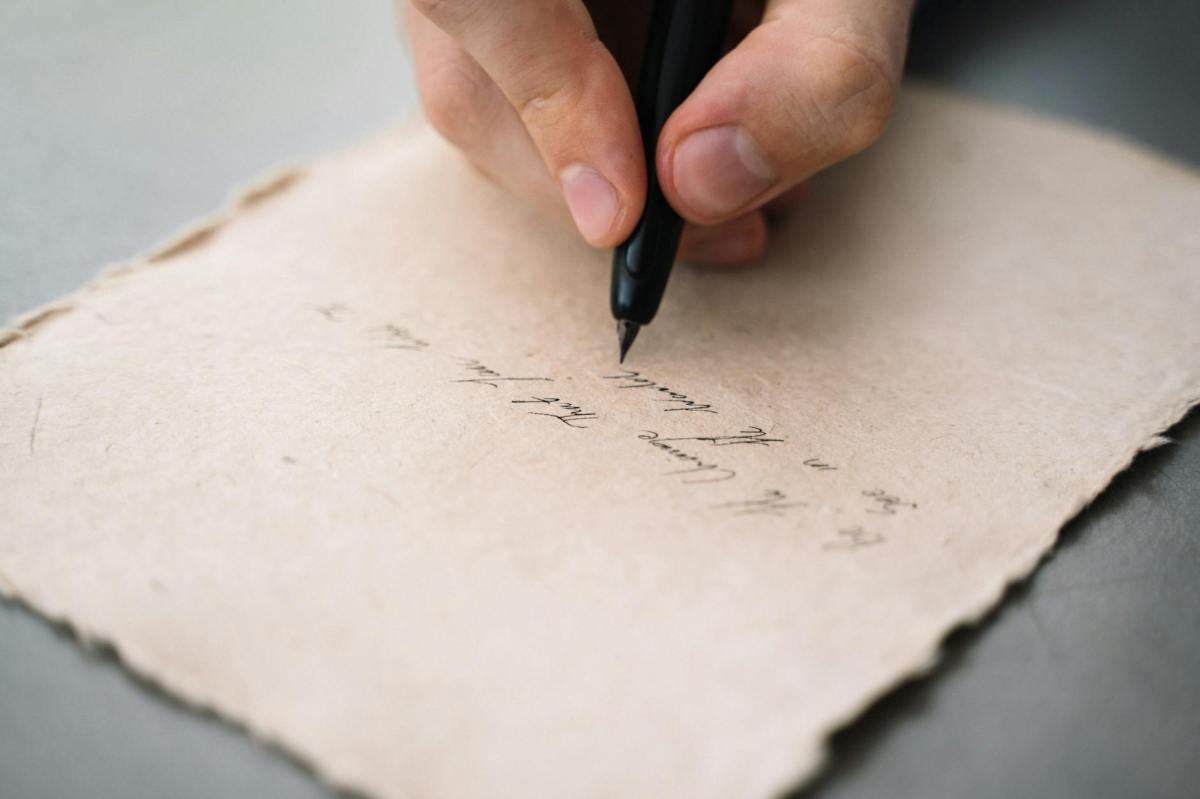
It’s oblong and made of paper. My phone is oblong and made of a long list of exotic elements. Paper on the other hand is relatively simple. I’m sure a paperologist will correct me and describe its subtleties and complexities. Regardless, paper has been around for a long time.

Both have an ephemeral quality. Paper decays. It burns and bugs eat it. Digital media gets lost, overwritten or deleted. Without wires and suitable equipment, it doesn’t exist.

I think that God forbid, that if Armageddon did come to place, we’d find more paper remaining useful than surviving digital help. Henry Bemis[1] loved to read. Strangely, that’s what saved him from ultimate destruction. Try writing an equivalent story with an iPhone in hand and we would be disappointed with the results. That would really see a sad Bemis doom scrolling empty nothingness.

Contuining the banking theme. What I’m refereeing to here is an envelope containing my latest bank statement. Yes, I haven’t ticked the go paperless box on-line. To me there’s something reassuring about having a tangible paper copy of what exists in the digital ether. Even though it’s only a printout, it somehow feels more real.

Holding a statement in my hand, whatever its errors or miscalculations it cannot be altered. Unlike an on-line digital reading that a capable cybercriminal can flip in a second. Both have an ephemeral quality. One exudes a greater feeling of permanence.

Above “ephemeral” is the right word to use. My banking App on my phone is a good service. However, it encourages a certain neurosis. Whereas a paper bank statement turns up, periodically as a personal balance sheet summing up the ins and outs of a month, my App is changeable hour by hour, a less meaningful snapshot.

The News is full of this phenomenon. Snap shots of the county’s GDP going up and down every month are newsworthy but don’t tell us much about where we are going. That doesn’t stop politicians treating them as if they were a sign from some mythical deity. A small number that changes within a range of error doesn’t mark a beginning or end of an era.

I like tangible things. A paper report or statement is a tangible thing. I can hold it in my hand. It doesn’t change from moment to moment. It’s a record of a direction set, not an hourly windvane. However unfashionable, as a crusty gentleman of a certain age, I will continue to ask for a printed record of where I am and where I’ve been.


[1] https://www.imdb.com/title/tt0734683/

Data Interpretation

More on that subject of number crunching. I’m not so much concerned about the numerous ways and means to produce reliable statistics as the ethical factors involved in their production.

Two things. One is the importance of saying truth to power and the other the importance of seeing things as they really are rather than how you or I would like them to be.

Starting with the first. If ever it was a hard day to say this but asserting truth is not one of several options, it’s the best option.

Whatever any short-term gains there are in distorting a description of a current situation, in the longer term the truth will out. Now, that may not have always been so. It’s often said that the victors write history. That famous view had some validity when literacy was not universal or when texts were chained in church libraries. Now, information speeds through the INTERNET (and whatever its successor will be). Controlling or supressing information has become like trying to build a castle out of sugar on a rainy day.

The second factor is more troublesome and, for that matter, more difficult. It could be the tug of war between subjectivity and objectivity. What we see is so much dependent upon the observer. What we hear is conditioned by what we’ve heard in the past.

I saw this often in the interpretation of a written narrative. Aviation accidents and incidents are reported. Databases full of multivarious reports of different origins siting there waiting to be read. This is a good thing.

It’s the choice of language that shapes our understanding of past events. That can be voluminous and contradictory. It can be minimalist and ambiguous. It can have peculiar expressions or fuzzy translations. Even if reporters are asked to codify their observations, with a tick box, there remains wide margins.

The writer of a story often knows what they want to say. It might be obvious to them what happened at the time of writing. Then it’s the reader who takes that up. A text could be read years later. Read by many others. Similar stories may exist, all written up differently. Hopefully, slight variations.

Seeing things as they really are, rather than how you would like them to be, without bias, requires more than a degree of care. A great deal of care.

It’s hard enough for an enlightened and skilled analysist to take a sentence and say “yes” I know exactly what happened. Not just what but all six of these – who, what, were, when, how and why. In future, the artificial intelligence tools that get used by authorities will have the same challenge.

For all our technological wonders, it’s the writers of reports that shapes our understanding. From a couple of sentences to a massive dissertation.

Try telling that to a maintenance engineer whose last job of the day, before going home, is to file an occurrence report after a terrible day at work. In a damp hanger with a job only half done. Tomorrow’s troubles looming.

POST: Rt Rev Nick Baines and his Thought for the Day on BBC Radio 4 is thinking the same this morning. Truth is truth. In his case it’s Christian truth that he has in mind. There lies another discussion.

The Wit of Tom Lehrer: Songs That Endure

I was first introduced to the pastime of Poisoning Pigeons as a student. No, not literally. The idea of a leisurely Sunday sitting in a park dispatching pests that poo on the public has appeal. In reality, I’d never do that. Tom Lehrer’s comic composition[1] was enough. I have a lot of sympathy with the theme of his delightful song. Pigeons are, after all, merely disease spreading flying rats.

Tom Lehrer has left us a legacy of humour, the like of which we may never hear again. It’s so wonderful that his whole catalogue of songs is in the public domain[2] for everyone to enjoy until the day we all go together, when we go. Even I could have a go at a rendition of one of his songs, don’t worry it’s not my highest priority for the day. Beside matching his musicality, speed and timing isn’t within my meagre capacities.

Despite the massive changes that the world has been through since Tom’s pen went to paper a great number of the lyrics remain pertinent. I can sing “Pollution” loudly and think of the water companies in England. Like lambs to the slaughter, they (we) are drinking the water.

I can’t think of rockets, present or past without thinking of Tom’s song about Wernher Von Braun. Expedience seems to be the order of the day in 2025. Once the rockets go up who cares where they come down[3]. I’m sure the song wasn’t written about the Caribbean, but it could have been.

“The Folk Song Army” song is a nice dig at the pompousness of a certain kind of popular liberal musician. Something of our age. Where performance is more important than real action.

Sending up both the classics and the movie industry, “Oedipus Rex[4]” is pure genius. All such ancient stories should have dedicated title song. A complex complex.

Yes, Tom Lehrer was preaching to the converted. His sharp humour doesn’t normally travel across right-wing boundaries where they take themselves hideously seriously. He digs at the ribs of conservatives, tickles liberals and ridicules the absurdities of authorities.

Goodbye Tom Lehrer. Thanks for all the smiles. Thanks for your brilliant comic imagination. A shining star in the firmament.


[1] https://genius.com/Tom-lehrer-poisoning-pigeons-in-the-park-lyrics

[2] https://tomlehrersongs.com/

[3] https://www.wsj.com/video/spacex-starship-explodes-sending-debris-across-caribbean-sky/B828779B-D067-4290-A06D-77F60A6B501D

[4] https://tomlehrersongs.com/oedipus-rex/