Finding Balance

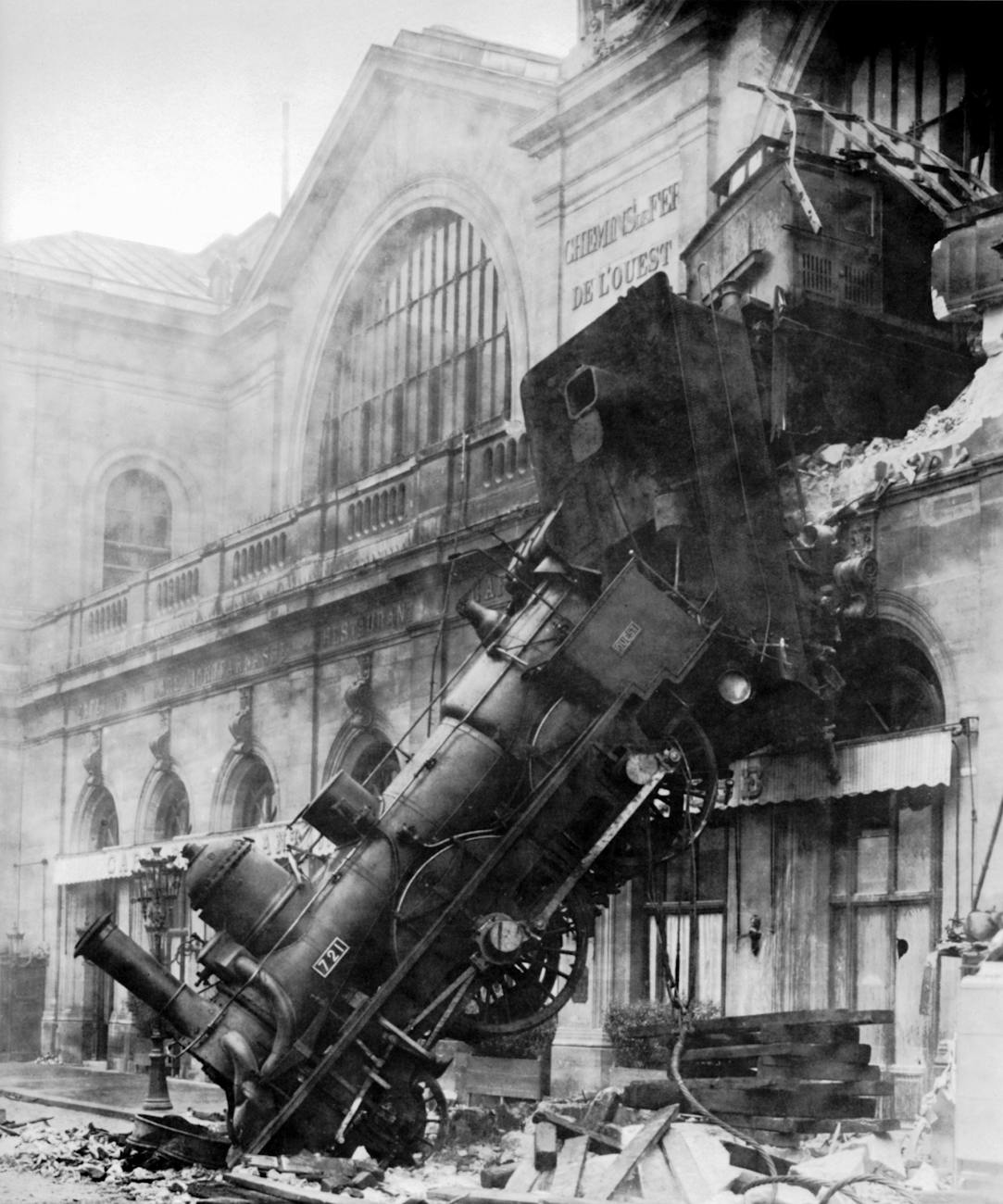
Regulation can be a contentious issue. That’s an understatement. A spectrum of views extends from the complete libertarian to the past soviet model. Citizens shouldn’t be encumbered by any restrictions to the State has the right to dictate every aspect of life. Clearly, there are immense downsides to either of these extremes. Luckily, although not everyone will agree, the set of political choices available in the UK covers the wide range from the far-right to the far-left. These labels are deficient when it comes to the detail. Often these two camps are similar in their authoritarian ways and means.

Rejecting the extremes, being a liberal, means finding a balance. That means a minimal number of rules and regulations to achieve the prosperity, safety and security goals that most people happily support.

A pendulum swings in the British political cycle. Never quite sure what the cycle time is on this one. What’s for sure is that our society’s tendency is to go from urges to tighten-up rules and regulations to impulses to eliminate or relax them with gusto. Often, the aim is to tweak or protect economic stability or tweak or promote economic growth. After the banking crisis of 2008 it was the first of these, now it’s the second.

Brexit is a strange oddity. Although, great claims were made for the loosening of the ties that bind us, the reality has been much onshoring of past rules and regulation. The forces of continuity have some good arguments.

It’s reported that Prime Minister Starmer is considering dynamically aligning UK regulations with EU regulations, as if that’s not happening pragmatically and piecemeal already. OK, this is not consistent across every sector of the economy. It’s a mixed bag. Politicians banging the drum but not doing much.

Let’s say the financial services market goes a different way from the technology sector. One has a history as long as your arm the other is being made-up as we speak. Clearly, there are risks in both deregulation and overregulation. Thus, I get back to that notion of finding a balance.

To hardened Brexiters EU and UK rules constrain. To their supporters they enable, facilitate and transform.

Now, what’s difficult to discern is where do Starmer and Reeves stand?

A direction of travel, to encourage investment in the UK, has been touted. That implies alignment rules. Investors rightly seek the largest market on offer. Like it or not, the UK is not the US, or even the EU when it comes to the size of its economy. Maybe, it’s taken Brexit to realise that we align as a matter of common interest. Mutual benefit.

Most of our safety and security goals are not subjects of intense competition. If you fly internationally, why would it make sense to compete on safety or security? The general expectation is that common high levels of safety and security are desirable.

As the weather improves so we are heading towards a year of the Labour Party in power. There’s disappointment and concern about the timidity of their actions. The word “reset” is banded about. A ridiculous word. Press the reset button to restore a past condition. No, choices need to be made. Closer alignment and partnership with the EU are the rational choices.

Humanity and Tolerance

Who doesn’t know this short sentence? “A rose by any other name would smell as sweet”. It has a particular meaning in play Romeo and Juliet. It’s Juliet saying she doesn’t care about her loves’ family name. The source of their great troubles. Being elegant and fragrant it’s no surprise that Shakespeare chose to speak of a rose.

More broadly this phrase makes the point that calling something different doesn’t change its core characteristic. Roses might not be the best example since naming these flowers plays a big part in distinguishing between one and another. So many modern hybrids. Instead, let’s go for trees. “An Oak by any other name would be a noble tree”. Which remains appropriate despite the number of different types of Oak trees.

Over the weekend, I was standing under a large ancient Holm Oak[1]. It had to be pointed out to me that that this type of Oak tree is evergreen. Most Oaks are not. An aged, stately and weathered one is definitely a noble tree.

I’m finding the News reporting of the moment mixed-up and confused. The word “diversity” gets thrown around like a political football. Let’s be clear. Diversity is everywhere. It is not unusual. Names are labels that we use like a scatter gun. Often to try to pick-out, to differentiate one group of humans from another. Not always with good intentions in mind.

Let’s remember our essence and intrinsic quality is that we are human. We live on planet called Earth and we need to find ways to get on with each other.

Today, there’s rather a lot of us. Globally, over 8 billion. However, that’s not the key factor. Let’s face it, in Shakespeare’s time there was a fraction of that number[2]. All the great strife and troubles he wrote into his plays are here now, as much as they were in his time. Proportionally, the diverse range of people and their ways of living haven’t changed that much.

It would be wise to heed the lessons of history. As we segment, categorise and slot groups of people into specific camps. The digital age, social media has added a dimension to this process. Now, likes and dislikes pigeonhole people into “similar” groups.

Here, I’m trying to keep the topic generic. Recent judgements from eminent judges, although necessary, hasn’t added a much to social harmony. To say “the law is an ass” is no understatement. I certainly wouldn’t want to fly on an aeroplane designed by lawyers. Although, it would be safe since it would never get off the ground.

I believe, we should treat each other in a way that respects that we are human, and thus diverse. That means tolerance and mutual understanding are essential. Not optional. Creating the need for bathroom police is the dumbest thing venerable British judges have done in a while.


[1] https://www.woodlandtrust.org.uk/trees-woods-and-wildlife/british-trees/a-z-of-british-trees/holm-oak/

[2] In 1600, around William Shakespeare’s time, the estimated world population was around half a billion. London’s population was about 245,000.

Cartoons capturing us

To me, it’s fascinating how a few lines of pen and ink can sum up so much. One of the great underestimated influences is the power of the cartoon. They speak of their times, they speak of social niceties, they speak of the ever-moving conveyer belt of humour.

Every day the cartoons of MATT[1] sum up, in a witty way, what the News has to say. A little composed abbreviation of an event, a thought, or an idea. Not the least bit easy to do unless that’s your talent. Believe me, I’ve had a go, and the results were not good.

A picture can tell a thousand stories. Substitute for page of words. Often this is said about photography and not so much drawing. Pictures have a language all their own. Their properties escape the communication difficulties that language can throw up.

Back to the few lines. A minimalist drawing in black and white with a sentence is the basic format. I wonder which comes first. The witty line or the image? I’ll bet that varies from person to person. An idea must spring from the mind first.

Let me say right away that not every cartoon hits the mark. I’ve got a daily tear-off New Yorker cartoon[2] calendar. It has a cartoon for the day. In the morning, I’ve torn off the last day and pondered at the worst of them, thinking what on earth were they on when they selected this one.

The reason I started writing these words is a reaction to the cartoons of H.M. Bateman[3]. He’s from another era. A world of English etiquette that has faded with time. Although, I expect if you go to the races at Royal Ascot[4] Bateman’s world lives on in its modern form.

What came to my mind is the link between social media and Bateman’s view of the world. A lot of his cartons depend on the notion that just below the surface the English are about to explode at any moment. Like the 1970’s sitcom character Basil Fawlty.

Under the social equilibrium that enables society to function there’s a seething mass of rage. A bubbling anger that can spill over at the least provocation. Then reason turns into unreason.

A sense that a minor faux pas reveals a sense of injustice that has simmered for years. One small social blunder and an avalanche descends on the poor victim. So, is social media behaviour merely an extension of a human characteristic that has aways been there? That we can easily take a violation of etiquette or social norms wholly out of proportion.

And my further thought. Have certain unscrupulous politicians learnt how to exploit this suppressed emotion. Have encouraged the volcano to explode on que. Prodded and poked it. Even having lifted the vail on the weaknesses of you and I, meant that they could get away with innumerable gaffes, and blunders. There’s an essay for a bored writer to take-up.


[1] https://www.chrisbeetles.com/

[2] https://www.newyorker.com/cartoons/daily-cartoon

[3] https://www.hmbateman.com/

[4] https://www.ascot.com/royal-ascot

Embracing Uncertainty

Daily writing prompt
Describe a risk you took that you do not regret.

Best time to get a job is when you already have one. One of life’s conundrums. If you need work, it’s not so easy to find. If you already have work opportunities spring up. This phenomenon is strangely true in my experience.

It’s those situations where I’m doing something I enjoy and getting reasonably well paid for it. Then there’s an urge to see scan around to see what potential next steps there are out there.

It’s not extreme risk taking. It’s a risk, nevertheless. Throwing aside a comfortable and rewarding position for a much greater degree of uncertainty. Especially when going from a job with no end date to one that offered a five-year contact with only a vague possibility of renewal. Not only that but going to a start-up organisation that was not entirely guaranteed to thrive. Facing the fact that some people would have been happy if it hadn’t succeeded.

I did it. No regrets. In fact, in retrospect it was the high point of my professional career.

Travel’s Societal Impact

Privilege is all around us. It’s, by definition, not equality. It’s a privilege to live in a country not torn by war or where the environment has not been decimated. It’s a privilege to be able to protest and strongly disagree with the powers that be. Indeed, in this country it’s a right too.

Debates about the moral or ethical grounds of inequality will never cease. That’s a hope of mine. For the minute we become timid and cowed by an authority that would rather supress such debates, then that’s the end of our democracy. We’d be free no more.

A large part of my career has been in the aviation industry, in one way or another. Putting aside the military uses of aviation, that’s another debate, civil aviation and the travel industry are two peas in a pod. Flying facilitates travel. Largely international travel. Apologies to the cargo industry, leisure flying and so many others.

One phenomenon that is not new, is that of raising the issue of responsibility. For example, the consequences of tourism to natural environments are often negative. Not always so. Huge effort is made by some countries and organisations to make tourism a positive. However, generally there are significant challenges to be grappled with in making travel affordable for all.

Wealthy young Europeans have been roving across boarders as part of a rite of passage since the 1600s. A “Grand Tour” was a form of discovery, education and cultural enrichment. Today, a student might call that a gap-year. Time taken out of formal studies to travel abroad. The aim, as well as having fun, is to return a more rounded person ready for whatever life might throw up.

Where do we sit as a society in terms of the balance between personal freedom and our collective responsibilities? Are activists right to attempt to slam or shame travellers for the negative impacts that they can trigger? These are uncomfortable questions. Ironically, these difficult questions are often raised by the people who have enjoyed the privilege of travel.

In my mind, a debate on this subject of balance reflects greater societal issues. When we look at a basic hierarchy of human needs then international leisure travel may not be top priority. However, life would be less rich and colourful without it. Embarking on an epic journey, that takes a traveller outside their comfort zone, can be a life changing event.

To defend the freedom to travel, I cannot avoid looking at the other side of the equation. There is an overwhelming responsibility to do something restorative. Ignoring the impact of travel, particularly civil aviation, is not an option anymore.

I know there are some politicians who scream for the abandonment of Net Zero policies and all they entail, but they are extremely foolish. Shifting the burden onto future generations is reckless. Appealing to those who want to escape the debate, or force a return to mythical age, is nothing more than doomed short-termism.

This is one reason I’m an advocate for electrification and the exportation of radical solutions, like hydrogen powered civil aviation. Technological solutions are part of the path to take. That, in of itself, may not be enough but at least engineering change is permanent.

Solutions by design are far more powerful than ephemeral political posturing. Legislation can be overturned in a weekend. A whole new way of operating aviation can be sustained for decades.

Communication Prevents Disasters

It’s often forgotten that there’s a need to repeat messages. We are not creatures that retain everything we see and hear. There are exceptional people, it’s true, those who cram away facts and have an amazing level of recall. Often that’s my reaction to watching students leading teams on University Challenge[1]. How on earth do they know those obscure facts?

Most of us do not respond well to those who say, “Well, I told them once. I’m not going to tell them again.” That line is probably one of the most misguided utterances a teacher can make. Like it or not, this approach is part of our heritage. Past ages, when deference was expected, listening was mandatory, and misremembering was entirely the listener’s fault.

We’ve had a cultural shift. Our complex technological society doesn’t work in a command-and-control way. Too many disasters can be traced to miscommunications and misunderstanding. Now, the obligation exists on those delivering a message to go some way to ensure that it’s received with a degree of comprehension. That’s when repetition has a role to play.

One of the pillars of Safety Management Systems (SMS) is Safety Promotion. It’s the Cinderella of the aviation safety world.

Why do I say that? Experience for one. It’s much easier to get policy made and funding for the “hard” sciences like data acquisition, analysis and decision-making systems. These are often perceived as providing tangible results. Actionable recommendations that satisfy the need to be recognised as doing something. Even if that something is questionable.

Communication is key to averting disasters. It’s no good having pertinent information and failing to do anything with it, other than file it. The need to know is not a narrow one. Confined to a specialist few.

Let’s go back to 2003 and the Space Shuttle Columbia accident[2]. This craft was destroyed in a disaster that claimed the lives of its crew. The resulting investigation report is extremely compressive, if slightly overwhelming, but it has some key points to make.

To quote, “That silence was not merely a failure of safety, but a failure of the entire organization.” [Page 192]. In other words, the hidden concerns and internal machinations of an organisation can smother safety messages and led to failure. Since 2003, it’s sad to say that there are multiple occasions when what has been learned has been ignored. The impact has been devastating.

So, to shape the future let’s remember the Cinderella of the aviation safety. Discovering problems is not enough. It’s vital that practical solutions and good practice gets promoted. That needs to be done forcefully and repetitiously.

NOTE: This is, in part, a reaction to watching this video presentation. https://acsf.aero/an-unforgettable-closing-to-the-2025-acsf-safety-symposium-with-tim-and-sheri-lilley/


[1] https://www.bbc.co.uk/programmes/b006t6l0

[2] https://ntrs.nasa.gov/api/citations/20030066167/downloads/20030066167.pdf

My First US Adventure

Let’s wind the clock back. My first trip to the US. It was a big adventure. One that I’d recommend to anyone in their 20s. The trip was a Pam Am fly-drive affair. A travel package that took me and three friends from London Heathrow to Seattle and back. In 1981, I had no idea that I’d be returning to Seattle numerous times in the following decade.

I keep a personal flight logbook. It’s a simple way of keeping track of the dates, times and places. Memory can be unreliable. When 40 years or more has past recollections of individual trips get jumbled up. Although this one is difficult for me to mistake.

We took off in the afternoon and flew across the Atlantic on flight PA 123. Slightly being in awe of the mighty Boeing 747-100. It was the largest aircraft doing that route on a regular basis.

Sadly, the Lockerbie bombing occurred 7-years later to a similar transatlantic Pan Am flight. The airline that brought the Boeing 747 to life didn’t survive after that tragic event.

One of the advantages of being a sandwich student was the ability to earn. To put some money away. To have the funds to plan an exploration like this trip without depending on the bank of mum and dad. To keep the costs down the four of us shared a car, the driving and the motel rooms along the way. In fact, we had a detailed itinerary that didn’t leave much slack time at all. Our travel planning was meticulous. I’d even arranged to visit an offshoot of the Plessey company in the Los Angeles suburbs. It was a real eyeopener. A maker of precision metals for the aerospace industry.

We arrived in Washington State only a year after the deadliest volcanic eruption[1] in US history. Naturally, being the students we were, we drove as close to the devastated area as the open roads would let us. I took pictures of that too. Views of forests felled like matchsticks.

We packed an enormous amount into August 1981. Returning to our final year as soon as we got back. This trip always reminds me that if you plan well and are determined enough you can do a hell of a lot in a short time. We drove over 6000 miles and took in a lot of the West Coast.


[1] The Mount St. Helens major eruption of May 18, 1980.

Light in Dr Who

I’ve started so I will finish. There’s a good line. Don’t worry I’m not going to write about quiz shows but it’s time for another short review. I have seen the light. Well, switched on the TV.

Flashy clothes, 50s vibe and excruciating way of getting there. The second in this new series of Dr Who twisted and turned around an attempt to get home. There’s a theme. Adventures on the way home. Wonder where that idea came from? An odyssey of a flight in time, one might say.

In a digital age a flip back to an age of film was a nice touch. It’s kind of funny how animation is now so much easier done. Film is becoming a museum artefact. I don’t think it will get the popular revival that vinyl is getting.

Explaining a job like “projectionist” to newer viewers isn’t necessary. Wasn’t done. Takes me back to the small flee pit of my youth and the story of a living Volkswagen Beetle[1]. That’s quite freaky. Jumps in the film, munching crisps in the theatre and sitting in the dark when it was daylight outside.

The sinister and creepy monster turned out to be a being of light. Like a Twilight Zone moment, a menacing cartoon character came to life. Given the various realms through which the doctor travels, this is not unexpected. Good job there was only one of them to defeat.

Beings of light[2] are a popular science fiction theme. They crop up now and then on both good and bad sides. I like the ambiguity. That one entity can flip between good and bad. It wasn’t so much a tale of an evil moonbeam as one of light finding a path to becoming substantial and physical. The dark of night or, in this case, the cinema world turned the mischievous moonlight to the bad side. Only a release back into the bright light of day let it rejoin the sunlight and starlight of the universe.

Plonk in the middle of the show was a breaking of the fourth wall. That boundary between the fictional characters, the Doctor and companion, and the imagined audience at home. Suddenly one was real, and the other was fiction (even though they were both fiction).

After a good haunting the colourful cartoon menace was expelled. Given how easily it got into the cinema in the first place it’s a wonder this story isn’t repeated a million times.

Confusing at times, the suspenseful moments were jarringly technicolour. Sometimes less is more. This was a case of packing too much content into a rapid-fire story.

Having wrapped up a 1950s mystery, the Doctor is back to his time travelling.


[1] https://en.wikipedia.org/wiki/Herbie

[2] https://babylon5.fandom.com/wiki/Vorlon

Plug and sigh

Daily writing prompt
Jot down the first thing that comes to your mind.

Weird, I know. My first thought as I looked across my tatty desk. Cables are irritating. Even the alternative is irritating. Tapping away at this keyboard I’m tied by a slim black wire that runs off into a darkened place. If I had a wireless keyboard, I’d be doubly irritated. Sure, as eggs are eggs the battery would not be charged when I needed it to be charged. And I would have put the battery charger away in a box and forgotten where I’d put it.

They’re everywhere. Cables and connectors. This could be the century of the cable, much a the last one. Dam things are cash cows too. Companies like to extract the maximum consideration out of us. Our fantastically capable new tech is useless unless we dip into our pockets and buy cables with just the right connector[1].

Fine, there have been attempts to overcome this bond we have with wires. Wireless charging and wireless connections don’t always deliver what they say on the box. They can be as much faff as plugging in cables. Physics dictates those energetic electrons like conductors. When power is needed, travelling faster and further through wires. Whizzing along with the potential to do work wherever they end up.

If I take the bigger picture, the situation is not so simple. Wires dedicated to communication are going out of fashion. Once upon a time copper wires brough the telephone into the house. Now, that communication is optical. Light flashes to the tune of the ones and noughts we seek.

Getting power from A to B, storing it and using it as needed, there lies unending challenges. From the mega to the micro level. Controversies about huge electricity pylons straddling the countryside. To powering the lean electronics hidden in the plastic case of my keyboard.

Oh! I have slipped the surly bonds of wires. And danced the earth on laughter-powered things.

To borrow a poetic line on flying[2]. If only we could loose this bond forever. Unlikely as it seems. In my profession we contend with the fact that civil aircraft, where lightness equals profit, there’s between 100 and 200 miles of wires.

Let’s think. Will this be perpetual? Put aside all the steps that machines may advance, at some level they come down to wires and multiple connections. In a way, lucky for us. That means there will always be an off switch.


[1] https://newsthump.com/2018/05/21/man-decides-to-keep-box-of-cables-hes-has-since-2002-for-another-year/

[2] https://www.poetryfoundation.org/poems/157986/high-flight-627d3cfb1e9b7

Revolution: Hype vs Reality

Talk is of a revolution[1]. That sounds sensational. It sounds like marketing talk aimed at creating an insatiable desire for something new. So, that kind of talk immediately switches on the cynical side of my brain. Is this hype or is it real?

We’ve had plenty of both in my lifetime. Colourful boys adventure books with novelties like nuclear powered aircraft and moonbase vacations. It’s not that “flying a kite” is entirely bad. Those imaginings of the future had pictures of prototype flying cars. Now, we maybe on the verge of that prediction becoming real.

AI is not new. It’s been a research subject for decades. What we have most recently is the coming together of concepts and the practical machines on which to run those concepts. Amazing has been the speed of progress. That’s a modest word considering the sudden adoption of new tools that go way beyond simple INTERNET search engines.

Bill Hunter’s line: “You can’t stop progress”. At least that’s the line I remember of the 1994 film Muriel’s Wedding[2]. It was said on a rocky path to “progress” induced disaster.

My curiosity centres around avoiding the hype and finding out what’s real. That’s in the vain hope that I might not be left behind in this rapid surge of “progress”. So, to keep up with the latest technical developments I clicked on a TED App. The boss of TED, Chris Anderson has recently interviewed Sam Altman, the CEO of OpenAI[3]. He’s the guy behind ChatGPT. AI has elevated new people into the spotlight. It’s given established technology companies a headache. Their desire to be in the pack, or leading the pack is mighty strong.

My takeaways form this interview are that AI will outpace human intelligence, in time. No one knows how much time, but the path is set. The direction of travel isn’t in the control of traditional institutions or government departments. Society must get its head around a time when we live with machines that out pace us.

Second, it would be nice to have an enlightened global regulator to ensure that the massive amount of development going on produces outcomes that are for the public good. Chances of that happening are about zero, although not zero. There’s even a possibility that the industry at work on this technology realises the need for a set of enforceable rules.

Questions of safety are paramount. Even though society debated the impact that the INTERNET would have on us, steps to provide protections and boundaries only came about after the event. Lost in a storage box, I once had a book called “The Sleeping Sentinels”. Basically, the thought was that political parties and the legal profession are always more than ten steps behind the technologists. We are highly reactive.

One interesting aspect of the interview was the pauses. What was evident is that it’s hard to find the right language to describe what’s happening. Walking a tight rope between sounding like Chicken Little[4] and a wise respected elderly professor. Revolution is the right word.

POST: It’s not just IT Why AI Demands a New Breed of Leaders


[1] https://youtu.be/Xv8FBjo1Y8I

[2] https://www.youtube.com/watch?v=PLDcevp5w5o

[3] https://www.ted.com/talks/sam_altman_openai_s_sam_altman_talks_chatgpt_ai_agents_and_superintelligence_live_at_ted2025

[4] https://www.rottentomatoes.com/m/chicken_little