Travel Educator

Travel is the great educator. Fundamentally – yes. My ordinary every day is extraordinary to someone. Just as their ordinary every day is extraordinary to me. There’s so much we take for granted, and we must, that we forget how strange our customs and practice can be.

Even if it’s so simple as bumping into people when they walk on the right and I walk on the left. Or I sneeze and the obligatory and automatic “bless you” takes me by surprise. Greetings can come as a shock too. Whereas if someone says, “are you going the same way?” might be taken as the introductory line of a serial killer in London, in a small country town it’s just a polite inquiry by a genuinely interested fellow traveller.

Does travel teach social skills? I’m not so on-side with that view. There’s no doubt that it can be a way to meet like minded people. That can often, on the downside, be a local bubble. Ending up chatting to likable people who are going through similar experiences. Identifying not with the people around but those who are similarly placed.

What’s a more regular encounter is the tall guy with the sharp elbows who doesn’t acknowledge that the person in the middle seat, namely me, is annoyed by how little care he’s taking with his lanky arms and legs. I suppose, if such occasions teach me anything it’s to not do what is being done to me. Especially when a homeward bound aircraft is on hold, going round and round, in bad weather trying to get into Heathrow. Time stands still.

One of the best realisations that flows from travel is that there’s a common humanity lurking everywhere on the planet. On the other hand, it’s not always obvious or the first encounter. I think, most people sit in the camp of being indifferent or helpful. Yes, a small percentage are out to do no good. Thankfully, they are a small percentage and best avoided at all costs.

Another realisation is that uncomfortable situations, like being lost after having misread the map App on my phone, are all part of life’s colourful pageant. There maybe moments of concern. I don’t like to use the word – fear. There’s generally a pathway back to the more familiar.

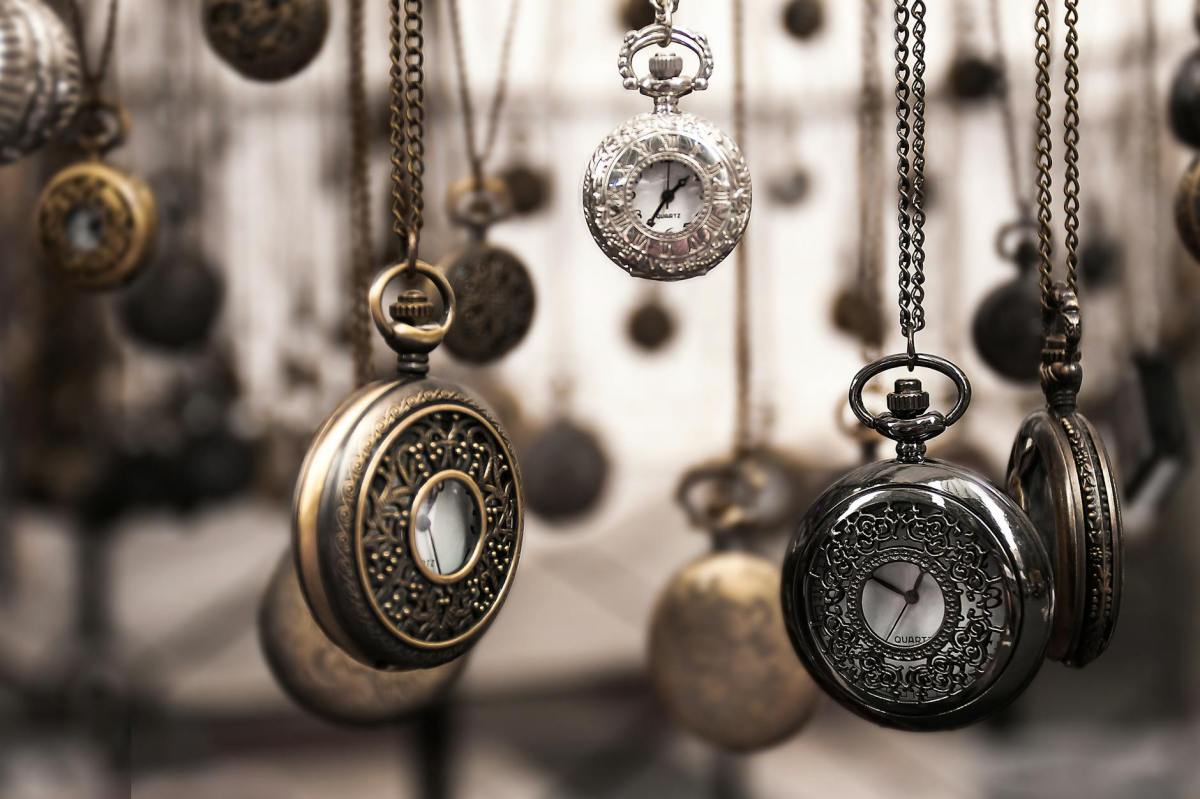
I’m not for one moment advocating taking unnecessary risks. Before wandering around any major city, it’s as well to do some research. To get a rough appreciation of the geography and what goes where. Like a layout of the metro map. It’s nice to have tall landmarks that sit of the skyline. The sun and a wristwatch always offer the most rudimentary navigation aides. Knowing that a river crosses the city or tourist congregate in a certain place works at nighttime.

If I probe my decades of memories of travel, a lot of vivid recollections come from unexpected discoveries. Afterall, part of travel is returning home and having stories to tell.

Reinventing Breakfast

Public service broadcasting is fine with me. It ought to be funded. We are all better for it being funded. In the UK, the BBC does a tremendous number of good works in a wide spectrum of spaces. I’m a supporter of public funded TV but now and then it drops the ball.

Switching the TV on in the morning is not something I do at home. There’s something bedsit kitchenette about having a TV blazing while the toaster is popping up. It’s what’s better placed in a gritty drama of the mid-1970’s. Gawdy wallpaper and service hatches.

I get to view breakfast morning TV when I’m in a hotel room. It’s so much easier to switch on a wall mounted TV than mess with an iPad App or flick around the long list of channels trying to find a radio station. Press the button number 1 on the remote and up comes BBC1.

So, what’s with the morning News? Is it a magazine show with snippets of life outside the studio or is it hard hitting political journalism? To me, it’s a mishmash that’s trying to be everything to everyone. A male presenter who looks half asleep and would be totally lost without an autocue. A female presenter who’s doom laden petulant style reminds me of Chicken Licken[1].

An artificial backdrop, that has become commonplace on such shows, doesn’t help. Look the morning sun is shining. One look outside the window and it’s not. I’d been tempted to suggest going back to a few of those shelving units that once adorned the set of Blue Peter.

The BBC props department must have ordered a job lot of curvy sofas about ten years ago. They turn-up on the BBC’s One Show too. Now that evening programme is a mystery to me. Although, that said, it isn’t trying to be anything other than a magazine.

Thank the heavens that I don’t have to watch breakfast TV every day. I would be ready for the men in white coats if I did. Banality mixed with artificial seriousness would do my brain in. Surely, there’s a format that can be engaging and inform in a way that wasn’t so mighty odd.

If the BBC needs a transition to something new. A format that works for the second decade in the 21st C, then I suggest they bring back a certain popular rat. Roland[2] was a professional. Now, I’m sure he could both talk about endangered water voles or interview tricky politicians with great style and panache. 


[1] https://usborne.com/media/usborne/files/quicklinks-library/englishlearnerseditions/chicken-licken-teachers-notes.pdf

[2] https://fb.watch/uHOGZqLQ_J/

Fuel for Online Conflict

Professional defensiveness is just as damaging as arrogant assertion. I wonder if I can justify saying that sentence. I’m saying this as an observation of comments made on social media. Maybe that’s an unwise place to start. However, we might try to pretend that social media is full of outliers. In reality, it often puts up a wobbly mirror to society. Not every time. Just often enough. Our good and bad behaviours are magnified through the lens of a small mobile touch screen or the keyboard of a desktop.

Who would have thought that at the time of early INTERNET optimism in the 1990s. The information superhighway was going to be an awesome educator. A great liberator. Egalitarian and a universal force for good. Technology was going to free us from ignorance.

What’s going on? Often, I see a spasmodic reaction to an article or a comment that comes from the school of knee jerk reactions. Highly respected commentators are not immune.

If you see a man in an orange tee shirt, and you don’t like orange the last thing most people would do is scream across the road a sharp rebuke. On-line, it can be the case, when a perfectly rational and reasonable but challenging and unfamiliar view is put forward, instant defensiveness takes the stage.

Those invested in the status-quo go into overdrive. And I’m not talking about Status Quo the British rock band. I must admit, I have been guilty of this myself. In a moderate way. I’ve even seen them live on-stage. Oh no, I mean the first thing I am talking about.

Professional defensiveness has a fair root. If someone is highly invested in a point of view or has had experiences that embedded an opinion, it’s not so easy to stand aside and be objective.

Sir Humphrey Appleby[1] would, week after week, defend the indefensible. He’s a fictional character that pinches our consciousness and reminds us how smart people can get stuck on tramlines. I’ve still got a small cartoon from the 1970s. It is of a draftsman, pen in hand, with blinkers on. The caption says: “but we’ve always done it this way”.

All I can do here is to take note. It’s a note for me. Anytime an uncommon or intriguing view comes forward, do a double take. Count to ten. Don’t go by the first instinctive reaction that come into my head. It’s a question of not seeing a view that overthrows past thinking as instinctually wrong.

I posed a dichotomy at the start. Let me say that professional defensiveness combined with arrogant assertion, now that is dangerous.

POST: What about the AI generated picture? Spot the problem? Is the number six ringing any bells? This is a nice example why AI will not be taking over the world anytime soon. It’s great to have as a helper and that’s all.


[1] https://www.imdb.com/title/tt0080306/characters/nm0001329

Last Night

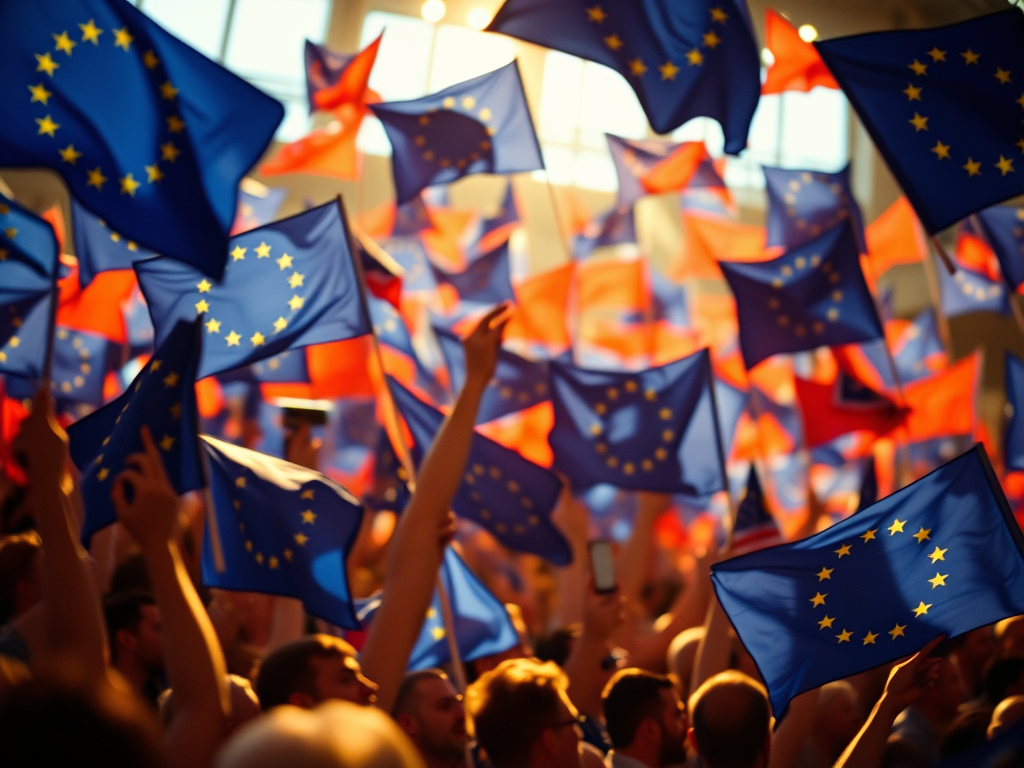
Nice to see a flood of blue at the BBC PROMS last night. I’m not just talking about the wonderful Angel Blue[1]. I was not there. Watched the whole performance at home on the TV this year.

It’s great to hear that GB News went apoplectic. To quote: “The Last Night of the Proms has been swamped in controversy yet again after a sea of EU flags were spotted being flown by event-goers – despite imposing a ban on “protest flags” ahead of time.”

For one, there’s no controversy. For two, there was no protest flags. For three, there’s always all sorts of flags. Making up stuff is the sad habit of bored journalists with space to fill. If I can call them journalist. Click bait writers – now that’s just off-the-shelf hype makers.

Look. In a free country and let’s face it, that’s what the singing in the Royal Albert Hall is about. Land of hope and glory. If the this year’s BBC Prom goers want to hold up EU flags, it’s entirely up to them. No one is forcing them to do so. It wasn’t a mandate from on high.

I was disappointed not to see more flags. My experience of having been at the Last Night twice is that one fun thing to do is to figure out what some of the more obscure flags mean or where they represent. A Caribbean country, Devon, Cornwall, Isle of Man, or a remote Scottish Island. And lots of friendly countries, like the US. Well, dependent on the current presidential race.

Right-wing commentators often push a line that is prescriptive with respect to their opponents but take the view that they should be able to do whatever they like in the name of freedom. I believe that there’s no part of the right of politics that doesn’t hold this self-serving view.

It’s like the often-quoted view of the Conservative Party elite. They take the line that their people are born to rule. It’s not a joke. This week, it’s mighty interesting to read the reflections on recent events coming from Lord Brady[2].

The country is so incredibly fortunate now it has shaken off the fading embers of 14 years of Conservative Party misrule. Who knows what dreadful havoc would have ensued if they had retained power. It’s a much better autumn that might have been.

This is the time to re-think Britain’s relationship with our near neighbours. For a start, all aspects of unnecessary negativity and the dogma of Brexit need to be put asunder. No more ridiculous caveats on every policy and speech just to appease a right-wing media. No more neurotic ducking and diving to keep the outer extremes on-side.

Brexit was a rubbish idea. It was heavily sold by charlatans. It has failed. Corrective action is long overdue. I do not know what shape that corrective action will take but it needs to be immediate and sincere. And with a long-term perspective in mind.

POST: The next generation have the right idea Gen Z leads drive to reverse Brexit in new poll on EU referendum | The Independent


[1] https://angeljoyblue.com/

[2] https://www.independent.co.uk/news/uk/politics/sunak-election-brady-confidence-letters-tory-b2612966.html

Fatal Aircraft Accident Investigation – Update

Given the tragic nature of VoePass Linhas Aéreas flight PTB2283, it is a fatal aircraft accident investigation of global importance. The Brazilian Aeronautical Accidents Investigation and Prevention Center (CENIPA) is investigating. CENIPA investigations are based on the international standard, namely ICAO Annex 13.

Both the Cockpit Voice Recorder (CVR) and the Flight Data Recorder (FDR) of the civil aircraft, registered PS-VPB, have been successfully replayed[1]. This is a task that required great care and diligence. The replay data now available to the investigators for detailed analysis, is of the utmost significance.

From the pictures available the external impact damage to the flight recorders is evident. What is important is that the crash protected memory module works as intended. This is solid-state digital memory that is packaged in a way that protects it from extreme conditions.

Finding from this accident investigation could have implications for the whole ATR aircraft fleet worldwide. It’s certain the authorities in Brazil will notify the aviation community if findings indicate corrective action that needs to be immediately taken.

Reports in the public domain indicate that the ATR aircraft had an ice detection system and that alerts could be heard in the cockpit during the flight[2]. Additionally, there is the indication that the crew acted in relation to those cockpit alerts.

[My apologies for a post where I suggested that there may not have been an ice detection sensor and alert on this class of turboprop aircraft. I was in error.].

This chain of events may suggest a simple set of explanations for the loss of control of the aircraft as it approached its destination. However, these matters are never simple, as most catastrophic aviation accidents are a combination of factors.

Even though the crew noted that there was icing, there is, as yet, no indication that the atmospheric conditions experienced by the aircraft in-flight were of a truly exceptional nature. The ATR aircraft is certified for specific icing conditions. There is training and procedures for the encounter of icing conditions.

It is pure speculation on my part, but I am reminded of an aviation accident of more than 40-years ago[3]. The conditions of the accident are different, but a factor may link the two. The last line of the NTSB report abstract says: “and the limited experience of the flight crew in jet transport winter conditions.” A small amount of ice contamination in the wrong place at the wrong time can have much more impact that might be immediately assumed.


[1] https://www2.fab.mil.br/cenipa/index.php/ultimas-noticias/1766-cenipa-extrai-com-exito-dados-dos-gravadores-de-voo-da-aeronave-ps-vpb

[2] https://www.flightglobal.com/safety/voepass-atr-crash-probe-analyses-crews-response-to-ice-alerts-before-fatal-flat-spin/159888.article

[3] https://www.ntsb.gov/news/press-releases/Pages/mr20220112b.aspx

New Government. New Political Landscape

Just imagine rating water companies or rail companies with four just simple categories. I think the term “Requires improvement” would star very often.

Imagine rating politicians with single epithets, or maybe we do. Good (oh dear, I’ve used one word) to see the indefensible is being deleted by the new UK Government. Measuring performance requires a subtly that was entirely lacking. Schools and teachers deserved better.

It doesn’t take much to find an Ofsted rating[1] of “Good” for a school. Then, reading on, it becomes evident that the school in question was last inspected four years ago. So, one word becomes either a loud advertising slogan or the sword of Damocles hanging over a school. The inspection measurement system was as subtle as some rants on social media. It’s wise that the Government has taken swift action to remove these simplistic flags.

What this tells me is that opposition Conservatives have learned nothing from their defeat in this year’s UK General Election. The fact that they’re standing-up to defend their earlier position on this subject is dumb.

Here we are in September. Time has moved quickly, or it has given that appearance. It’s a reminder that earlier in the year there was a high expectation that the General Election would be called about now. Just goes to show that predicting the future is a mighty difficult business.

Today, Parliament gets back to work. The summer recess comes to an end. The House of Commons will settle down in its new composition. Half of its members are new to the job. Lots of new names will pop-up in the media as spokespersons for this and that. New stories will be written.

We can have hope that a more rational and deliberative politics emerges. Ever the optimist, I think that we may, at least, have six months of positive hustle and bustle as new agendas develop. The new Government will be keen to get as much done as possible before any opposition forms into something effective.

It’s that season of seaside speeches and conference halls packed with activist either celebrating or commiserating. It’s likely to be an exceptional year for the traditional British party conference. Not that the occasions will change the political landscape. More that these gatherings of the faithful will reinforce the echoes and ripples coming from July’s election.

I don’t pity the Conservative Party. Their situation is entirely of their own making. To see a national political party lose 251 seats in one go is unusual, even with a FPTP electoral system. Stepping from holding the leavers of power in Government to relative oblivion is tough.

I wish the newly assembled 650 Members of Parliament well. I’m sure we all do. Let’s hope that the foolishness and turmoil of the past decade can be rapidly consigned to the history books.


[1] https://www.gov.uk/education/inspections-and-performance-of-education-providers

Next Generation with Practical Experience

Backwards and forwards the discussion goes on platforms like LinkedIn. Everyone recognises the expected demand for engineers. This century will be as much an engineering century as any century that has gone before. Science advances rapidly. New materials are available. Computation power is shooting off the charts. It’s now possible to design, build and test more systems to do more tasks than ever before.

The question is where’s the next generation of engineers going to come from?

Here’s one aspect of the debate that I find mildly irritating. Despite that discomfort, I’m prepared to be a hypocrite on this point. It’s to discuss future education and training with an almost blinkered reference to one’s own experience. For me, that’s to look back 45-years and then project forward. This is a natural tendency that should be handled with extreme care. However much it’s good to cherish past successes they do not guarantee future ones.

My first paid job involved Rotring[1] ink pens and pencils. Drawing film and large dyeline printers. Ammonia vapour filled the print room. It’s the sort of place the term “blueprint[2]” emerged. Drawing a myriad of small mechanical components used to make-up cabinets of electronics. I’d follow them through to the workshop where they would be turned into hardware.

That world has gone almost entirely. At that time, an infant was growing. A chunky electronic pen that could be used to move straight lines around on a bulky computer screen. That infant was computer aided design. Methodically and slowly computer digitisation was taking over. Soon the whole job description; engineering draftsman, disappeared into the history books.

Today’s infant is Artificial Intelligence (AI) or at least, if we discard the hype, massive infinitely flexible computing power. As a result, we have no idea how many jobs will next disappear into the history books. So, if I have a point to make it’s along the lines of being mighty cautious about what could inspire the next generation of engineers.

Moving to the next step in my early career path. Given that I made solid progress and having an exceptionally progressive employer[3], I moved through departments each time having a go at something new. My pathway to electronic design (analogue) was step by step.

I’ve pictured an oscilloscope because that’s one of those key steps. What it provides is a way of seeing what can’t normally be seen. Sitting in a classroom learning about frequency modulation, or such like, is necessary. Doing the sums to pass exams is essential. But nothing beats hooking-up a few bits of equipment on a workbench and seeing it for yourself.

So, that’s my recipe for inspiring the next generation of engineers. Create opportunities for them to see it for themselves. Even in the massively complex digital soup that we all swim in.

Theory is fine. Being able to visualise is the best tool. Or is that just me?


[1] https://www.rotring.com/

[2] https://youtu.be/7vnGY9vXgsQ

[3] https://en.wikipedia.org/wiki/Plessey

1930s Aerodrome Architecture

We talk of optimism and pessimism as if one presides while the other sleeps. It’s not quite like that in consideration of the legacy around us. There’s no doubt that the 1920s and 1930s were years of austerity and depression. The Great War had an overwhelming impact on all sections of society. The buildings that remain from that era, including the house that I once lived in, do record a simpler style. Material chosen for their functional value rather than decorative.

Victorian’s built with flair and every mechanical contrivance that their technology could provide. Value in longevity was integral in their thinking. Who could imagine the sun setting on British empire?

The brief inter-war period was one of concrete and steel. A bit of classicism retained an influence. Form, fit and function played a bigger part. Modernism meant reflecting the advances in technology that were making great pace. Construction was fast.

Aviation was one of the most notable advances. Post-war flying moved from the military to sport, the recreation of the rich and the wonder of the onlooking public. It went together with the race for speed on land. Everything had to be faster and go further.

Maybe it was the Bauhaus in Germany, that set down some much-copied rules. Symmetry and square lines were on the drawing boards of a lot of public architects. It’s the case that some ornamentation was thrown in where the patrons were wealthy. Even that was relatively muted.

What lasted is no abomination of a poverty of ambition. It’s not utopian. It’s not brutalist. There’s instead a simplicity that was authoritative enough but not too ostentatious.

Pictured above is the 1932 Aero Clubhouse at Brooklands[1] in Surrey. It was designed by Graham Dawbarn[2] in what was a typical 1930s style. It set a trend for aerodrome buildings. Buildings like this one added grandeur to aerodromes where sheet metal hangers and small wooden huts were more often to be seen.

I like these enduring, straightforward, practical buildings. Yes, they are a form of British colonial architecture. One that could be easily reproduced anywhere on the globe. In today’s terms not the least bit environmentally friendly or efficient. Nevertheless, there’s an appeal that marks them out particularly when compared to the sheets of glass and skeleton frames of steel of modern aviation facilities.


[1] https://www.brooklandsmuseum.com/

[2] https://www.ribapix.com/graham-dawbarn_riba47117

Dr Who?

I’m having to get to know Paddington. For such a long time my route into London was via Victoria station. Every nook and cranny of that enormous railway station was etched into my brain. I could go from A to B with the speed of a swift. Southern trains trundle backwards and forwards, in and out of London. For the last 8 years, I’ve been able to navigate from my doorstep to the Royal Albert Hall (RAH) in about an hour. Only occasionally being marooned in Croydon.

Once I’d discovered the BBC proms it became a regular part of my annual schedule. That knocked off August and part of September. Promming[1] is a wonderful tradition that opens access to great music of all kinds for a token sum. Standing for me is no big deal.

Last night, I travelled through space and time. A different space and time from my normal one. Now, I’m having to get to know the ins and outs of a different railway company. To some extent they have “proper” trains that go somewhere. I mean, cities in Wales and the West of England.

This was only my second BBC prom of the year. This one was going to be different. For a start it was Bank Holiday Monday. It was the main day of the Notting Hill Carnival[2]. For those who don’t know that sat on my route into Paddington and round the Central Line to the RAH.

Busy, busy, busy. I don’t know if the National Orchestra of Wales to the same route as me. They were on stage for prom 48[3]. Thankfully, GWR speedily and safely got us into London.

The buzz was infectious. Whovian community folk like to dress-up. Standing in-line outside before 6pm, conversations were about favourite monsters and the authenticity of other prommers costumes. Fantastic handmade scarfs. Elaborate purchases from e-bay. Eccentric illusions to long lost baddies. I felt grossly underdressed. That said, I shouldn’t have been surprised but the audience was about as intergenerational as is imaginable. Maybe, I should have said intergalactic. I was standing next to a would-be William Hartnell in his 20s. Further along the que there were 2 Sylvester McCoys in their late 50s, at least.

What can I say about the evening? Hat’s off to all concerned. It was a dam good show. I don’t count myself as a Whovian even if this small screen fiction has populated most of my life. I was struck, not just by the obvious theatrics but how important the music had become to the whole drama. It really does pull on the emotional strings. Story telling needs that magical music.

Standing in a crowded arena, I wasn’t for one moment frightened. Which I would have been as a young boy with a cyberman walking straight toward me. An authoritarian Dalek called for the interval. Ordering the orchestra off the stage. The revered Russell T Davies was in the audience. They played out with the Doctor Who theme.

For an evening learning a new route in and out of London, all my effort was more than rewarded. Time and space well spent. I shall now turn my hand to inventing a working TARDIS. Then I could go back and do it all again. Well, that is except for the cool breezy late-night hanging about at Reading station platform 3.


[1] https://www.bbc.co.uk/programmes/articles/3598F306c3KnN6t3x6ThKpN/what-is-promming

[2] https://nhcarnival.org/

[3] https://www.bbc.co.uk/programmes/m00224zh

Magic Mornings

Daily writing prompt
What’s your favorite time of day?

Meat Loaf sang: “And wherever you are and wherever you go. There’s always gonna be some light.” That moment of light, when the sun returns from its overnight meanderings. It’s not so much the first moments of sunrise but the first moment that its catches my eyes.

I might be hiding behind the pillows trying to pretend it’s still dark. As the clock ticks there’s a moment when the pretence must end. Yes, I like a bright summer sunrise morning. Not a cloud covered sky but those sharp rays of sunshine. Laser like shining through the bedroom curtains.

The possibility of a new day is an unwritten book. It’s a time of day that shifts like sand. It could be half five, it could be six. It might be seven. Time flexes as the days go by.

Each day, as if a light bulb switches on, I’m awake. Senses alive. Greeting the new day. Emerging as if all time past existed only as a dream (fine – that is an exaggeration).

Morning persons, like me, are the nemesis of the late-night hawks. They prefer the dying embers of the day as if to wish the day never to pass. Me, I’m happy to meet the dark. Prospect of tomorrow is the best promise.