Chat

Yesterday afternoon, at the till in a major supermarket and the man in front of me was getting stressed. I was standing in line waiting without a care in the world. In front of the man, in front of me, the till assistant, or checkout operator, dependent on how you see it, and a customer were locked in day-to-day conversation. Just being sociable. From what I could hear that customer may have once worked in that supermarket at some time.

The man in front of me was getting grumpy. He turned back and muttered his disdain for the shop’s staff because they were holding him up. Their everyday conversation was an afront to him. They were wasting his valuable time. Not overly aggressive but he had an agitation that often comes from a degree of unwelcome stress. He was in a hurry or at least heavily felt the pressure of time.

When I got to the till the assistant asked: What did he say? I quickly paraphrased what was said. Conscious that I had no desire to inflame the situation that had now passed by. Reactions can be unpredictable. We live in an era of polarisation.

The gentleman working at the till was into small talk. He clearly loved to chat to customers. Then for me he put that in context. He said that when it gets to about ten, in the evening, people are more than happy to talk as they pack their shopping. With some people it’s the only conversation they have in a day. He was proud that staff were encouraged to be warm and friendly.

Now, there’s a contrast. The life of Mr busy, busy, busy verses the life of the forgotten. That division is at the heart of one of society’s biggest troubles. A tribe that is over-employed, anxious, and living on the edge and a tribe that is lost, lonely and forgotten.

One prone to exasperation and being impatient. The other desperate for social contact and empathy. How on earth did we construct a society that tries to work on that level? Not only that but supermarket managers are desperately trying to automate everything[1]. Already there’s three types of automation in that you can do your own till check in a couple of different ways.

The milk of human kindness shouldn’t be sneered at. Wow. You see how quickly I reverted to Shakespeare without even knowing it. That simple phrase has its origins in the play Macbeth. The play that I was forced to read at school. The play that did nothing much to lift my appallingly bad grades at English. To Lady Macbeth, the “milk of human kindness” was objectionable. To her real men had no need of it. We all know where that led. Don’t go there.

So, next time you are standing in a short que, stomping your feet, imagining the clock spinning around, give it a rest. If you find yourself thinking this is too much, I can’t deal with it anymore, do a double take. Relax. Breath slowly. Dig deep and discover some small talk. It might be more meaningful than you first think.

On another subject. I agree with Graham Nash[2]. A day in the life[3] is a truly great song. It’s life as a musical tapestry. The song wanders around the mind using hardly any words but painting a picture all the way up to the sky. I’ll not heaping yet more praise on The Beatles, they’ve enough for several centuries. That said, May 1967 was a magical moment. Even if I did only know it with toy cars and in short trousers. It’s not the daily news but I’ll bet there’s probably now more holes in Britain’s roads than ever.


[1] https://www.bbc.com/worklife/article/20170619-how-long-will-it-take-for-your-job-to-be-automated

[2] https://en.wikipedia.org/wiki/Graham_Nash

[3] https://genius.com/The-beatles-a-day-in-the-life-lyrics

Beware

There is some corrupt b****** out there in INTERNET land. They would dip their hand in your pockets and take whatever they can in a second. It’s downright evil. The wild-west element of the INTERNET has never gone away. It’s a global problem.

I’ve never had a Netflix account. Maybe that’s unusual. It would be nice to have one but, personally I’m not convinced that the costs are warranted. Not today. I’m slow to step on the streaming bandwagon. I still have a pile of DVDs and CDs. Yes, I’m a primitive. In some things an early adopter but when it comes to services that require regular payments, I’m cautious.

As regular as clockwork junk e-mails turn-up saying that I need to update my payment details, or my Netflix account will be suspended. Followed by an exclamation mark. On closer inspection they are amateurish cons. In fact, it’s good that the junk mail filter can see through them as they come in.

This kind of fishing is criminal. Somewhere there’s a group on con artists thinking up ever more devious ways of taking money from people. The amateurish ones may not be a threat to me, but I wonder how many people they do catch. Even one in a hundred thousand would net a nice return for virtually zero outlay.

It may be the case that lots of people think that they are not so stupid as to fall for these blatant entrapments. What’s concerning is that cybercrime is becoming ever more inventive. We’ve yet to see what developments in intelligent algorithms will do to this landscape.

The best advice around is to never ever, I mean never ever, give personal payment details in response to an unwanted request. Most honest organisations make a point of saying that they will never request bank details in unsolicited e-mails. Unjustified urgency and a threatening tone are another sign that something is wrong.

Electronic means, namely the digital economy is not as robust as the traditional over the counter transaction. Organisations are aware of this fact. Warnings saying that they will not take responsibility if money is transferred to an incorrect bank account are commonplace.

The digital economy has been a boom for the major banks. High Streets up and down the country now have grand imposing buildings that are coffee shops, restaurants and, in the case of my town a kitchen showroom. Banks have retreated from face-to-face relationships. The responsibility for being aware of the potential for cybercrime has been firmly placed on the shoulders of the individual.

Talking to people remains important. Certainly, if a request for payment seems strange or unexpected there’s no substitute for picking up the phone, however tedious that process can be. Notes, and paper records still matter or, at least, they still matter to me.

NOTE: Useful information can be found here http://www.actionfraud.police.uk/

Call to account

Accountability. There’s a nice word. It’s kind of biblical. It’s one of those so-called golden rules. An account is about balance and fairness. “Do unto others as you would have them do unto you”. A simple and straightforward notion.

I’d say that means that we expect ourselves to account for errors and misdeeds, and we are often our own greatest critics. In balance then we expect others to account for their errors and misdeeds.

Our society doesn’t have a police officer standing on every doorstep. That would be intolerable. What we call civilised behaviour requires each of us to be accountable for our action, to ourselves as much as to everyone else.

Listening to the story of the Post Office (PO), and its persecution of postmasters, it’s apparent that the innocent individuals first questioned themselves before they questioned the failing computer system that they had been forced to use.  

Go back 20-years and Computer Weekly[1] was pointing out that the large-scale transition from a paper-based system to a computer system was going badly wrong. An accountable institution would have urgently investigated and fixed any problems, which are not unexpected in the introduction of a new system. In this case, cover-up and denial seems to have been the strategy. Then blaming the innocent and going to extreme measure to punish postmasters.

The PO did not do unto others as it would have them do unto it. The corporate blindness to injustice and its self-protection mechanisms were the worst of what an institution can be. Now, the appalling injustice is evident to everyone and it’s difficult to understand where accountability was in the past. By cruel imposition, accountability was distorted by the powerful.

I hate to say it but there’s a general lesson in what has happened at the PO. In the last 10-years there are numerous significant national failures where the strategy of blame and going to extreme avoidance measure has prevailed. The billions (£) wasted on personal protective equipment (PPE)[2] during the pandemic is only one case. The billions (£) wasted by Truss in a few days. Don’t start me on the billions (£) wasted on Brexit.

In our democracy the notion is that accountability comes through free and open elections. The argument goes: if you don’t like what they have done you can kick them out. If there is such a thing as natural justice, we might expect that to happen. I remain an idealist in a year of elections.

I sat down in Morrisons[3] yesterday morning. There was a copy of a national tabloid newspaper lying around. I picked it up to read it with my tea. The line it took, on the one hand, is to highlight the injustice of the PO scandal. On the other hand, it did its best to exonerate the current government and cast shadows over the opposition. Not much honest accountability. Conservatives, who have been in power for more that a decade, are swiftly trying to rebrand.

Golden rules are great but political expediency is much in play as we run up to a General Election. I hope that the public will see through rebrand underway. Let’s hope.


[1] https://www.computerweekly.com/feature/Post-Office-Horizon-scandal-explained-everything-you-need-to-know

[2] https://www.transparency.org.uk/track-and-trace-uk-PPE-procurement-corruption-risk-VIP-lane

[3] https://groceries.morrisons.com/

Snow

In Hertford, Hereford, and Hampshire, hurricanes hardly ever happen. Good job too, I’d say. The phrase is from a song called: “The Rain in Spain,” in the musical My Fair Lady. That was a Christmas treat. It’s antiquated but still a wonderful classic film[1]. Yes, some of the miming is rather questionable but the story is told in a leisurely and wonderfully warm way. It’s just enjoyable entertainment.

It’s not pitching. What’s not pitching? The snow. The snow is not pitching, I said. This morning when we had flurries of half-hearted snow. Snow not sleet. The sort of light snow that I could be confident in saying was going nowhere. It danced around in the air more for performance than doing anything that was going to mess-up my day. Fluffy and gentle and certainly no hurricanes.

Sue looked at me. She’s done this before. You see London folk are hardly acquainted with the term I used to describe what the wispy snow was doing. Strangely, I thought Chat GPT would draw the same blank on the use of this verb of mine, namely to pitch. It didn’t. Whereas Microsoft’s AI hadn’t a clue when I asked did about “Hertford, Hereford, and Hampshire”, for my simple West Country verb it got it right away. Although, the AI’s explanation was to say that the word was from the city of Bristol. How could it have known any better?

It’s an alternative word for settle. The snow fell but it didn’t settle. I’d say the snow fell but it didn’t pitch. I’d say that instinctively. So, ingrained I’d wonder why anyone would use a different word. It means that the snow that was falling disappears as soon as it hit the ground. In other words, it’s too warm or the snow not plentiful enough for any accumulation or hazard for that matter.

Fictional professor Henry Higgins would no doubt have looked at me with disdain. Londoners have this way of thinking that theirs is the only valid English language spoken. What will the proliferation of digital bots do to innocent regional quirks? Will Chat GPT become a snobbish tyrant like Higgins? Or will it become like a journalist writing for The Sun newspaper? Writing as if my reading age was about 10 years old? I have no answer to that one.

It would be a shame if inevitable electronification stuffed us all into the same box. Ironed out the ripples and variations in langauage. Gave the pedants a leg-up and arrogantly kicked the rest of us. Will we need a Campaign for Real Speaking?

On another point. Conversations can go off at abstract tangents. One thing I’ve noticed about AI is that when it’s fumbling for an answer it will throw-up anything with a vague link to the subject of interest. It’s saying – I’m still not sure what you’re asking so I’ll take a blunderbuss approach.

Today, I learnt something I already knew. I knew it because last year I did a lecture at the University of Hertfordshire. However, the information had disappeared into the far corners of my brain. The University of Hertfordshire has an American Football Club called the Hertfordshire Hurricanes. I wonder if some cocky smart alec[2] named the team because of the musical. I’ll bet – not.

POST: An answer could be that the site of the University is the site of a former British aircraft factory. The de Havilland Aircraft Company Limited. However, the Hawker Hurricane was not produced on that site. de Havilland did produce propellers for the Hurricane.


[1] https://www.imdb.com/title/tt0058385/

[2] https://grammarist.com/usage/smart-alec-and-smart-aleck/

Time

My watch is playing up. It tends to freeze its screen. Any amount of pressing of buttons doesn’t have the desired effect. This is the third Garmin watch that has graced my arm. This one is full of smart features. Not, that I need a fraction of what it can do. Up until now it’s been faithful. So, I’m annoyed that it’s behaving badly.

These trails and tribulations led me to going back to a conventional watch. Dial and hands. A slightly more up-market Swiss watch that has been worn more on special occasions than the everyday Garmin. I like it. Only it’s metal, chunky and weighty. More of a real proper watch than the plastics of the Garmin. More residual value too.

This moment of reflection is about the demise of the traditional wristwatch. They haven’t gone out of fashion entirely. In fact, there’s more fashion watches displayed in shop windows than ever. But I wonder who buys them? I’m reliably led to believe that young people use their phone to tell the time. That simple but essential act. Since the mobile phone is almost inseparable from the human hand it’s pushed other devices into the wilderness. It does it all.

Maybe a couple of decades ago, I’d feel awkward if I’d forgotten to put my watch on in the morning. It would sit there expectantly. Its role was essential. Although timepieces were ubiquitous, around the house, car, and work, the only one that was personal was my own watch.

There wasn’t the necessity for a device to be “smart” either. A watch was a watch. A camera was a camera. A phone was a phone. A Walkman was a Walkman. The list goes on. Making this point makes me feel like a primitive relic from a long-forgotten past.

In the land that time forgot. No, not me. Time has always been important. If it’s not planning or scheduling, I’ve a fair amount of project management activity in my past. Deadlines, milestones, and critical paths coloured up on Gantt Charts[1]. Yes, time and tide wait for no man. A nice little idiom.

Time can be personal. At one time my mother had the kitchen wall clock set about 5-minutre in advance. The underlying idea being that if you were a moment or two late in starting or finishing a job then you were not late in reality. Even better when the deception instilled a bit of urgency into a task when in-fact there was time enough.

Going back further, I remember a childhood conversation with an ancient distant relative who lived in the shadow of a towering railway viaduct. Time then, in the small hamlet where he lived, was linked to the time of the steam trains on the Somerset and Dorset line. No need for clocks. Farm routines, like bringing the cows in for milking were arranged according to passing trains.

I expect I’ll get my Garmin watch, with its accurate navigation functions, up and running again. It may need a new battery. I do wonder if I need the precision or the range of its capabilities. Like the technology packed in my phone, its use is more habit than necessity, in a lot of cases. We are beguiled by “can do” technology.


[1] The first Gantt chart was devised in mid 1890s by Karol Adamiecki, an engineer who ran a steelworks in southern Poland.

Enough

I’m not a supporter of the Labour party leader but his call for change is surely one that is echoing through every street of the land. By the way, good choice for a location to make a national New Year speech[1]. And all the Conservatives could do in response is make populists claim that he’s a populist whilst doing nothing other than being populist. Populism eating itself. Populists accusing others of being populists. Admitting the flaws in what they do whilst trying to paint those flaws on others.

No, Prime Minister Sunak procrastination is not the way forward. He’s without core principles, hanging on to exploit whatever comes along. There’s zero authenticity only maximum opportunism.

Liberal Democrat party calls for a General Election are spot on. The reality is that we are destined to have a year’s worth of election campaigning ahead if the election date if not called for the spring.

Liberal Democrats “Tory Removal Service” may signal a love for publicity gimmicks but getting national attention when the media landscape is polarised is not a simple business.

Leader Ed Davey is showing that there is an alternative to the worn-out outdated political parties[2]. It’s a challenge to the British electorate. Do you want the stale ding-dong of national political debate to go on disappointing forever? We can do better. We can mend a political system that has been fundamentally broken for an age.

Rather than feathering the beds of supporters we need a government commitment to equality. Rather than short-termism we need a government that takes the long view. Rather than shunning our neighbours we need a government that embraces internationalism.

Yesterday’s resignation of Conservative MP Chris Skidmore[3] appears much like a rat leaving a sinking ship but it’s more important than that classic media interpretation of events.

Skidmore addressed the issue of short-termism head on. He’s resigning citing the on-going legislation to boost North Sea oil and gas drilling. Next week, the UK Parliament returns to consider an Offshore Petroleum Licensing Bill. This Conservative Government’s move is a kick in the teeth to the country’s green credentials. He states, I can no longer stand by. The climate crisis that we face is too important to politicise or to ignore.

Promoting the production of new oil and gas sources is a backward move. Yes, we need energy security but that should be a driver to invest in electrification and reducing energy waste. There’s a list of policy moves that could return the UK to a position of leadership on climate change.

2024 is likely to see the current Conservative administration flaking like peeling paint as it slowly decays. We do not need opportunistic papering over the cracks. It would be so much better for the whole country if they stood aside – soon.


[1] https://www.bbc.co.uk/news/uk-politics-67880324

[2] https://www.libdems.org.uk/news/article/new-year-2024

[3] https://news.sky.com/story/tory-mp-chris-skidmore-to-stand-down-over-bill-that-promotes-production-of-new-oil-and-gas-13042746

Comment

Custom and practice are as important as the rules and regulations that are part of our lives. Now and then, someone is criticized for applying the letter of the law without care for the spirit of the law. The same is true for custom and practice. Whereby, acting outside past norms can trigger a backlash.

Because, in free countries we believe in a free press, the rules and regulations that imping on what should and should not be said about events are always hard fought over. The banner of the “public interest” is touted as overriding. It may or may not be, but there’s an argument to be had.

In the aviation safety profession, I’ve grown up with an instinctively “need to know” disposition. I’ve shaken it off, mostly but there are signs that the attitude persists. This instinct can run counter to the transparency and openness that most people expect to see.

Why talk about the way major events are talked about?

A case in point is the recent runway collision in Tokyo. There’s much already written about the newsworthy aspects of the event, so I’ll desist from adding much more. There’s a lot of speculation too.

Graphs can be drawn of the media attention given to such tragic events against time. It’s typical that from moments after a major aviation accident until a few days after most initial facts are known there’s a huge surge in activity. This used to be described as newspaper column inches.

Today, wide ranging speculation is inevitable. It can be highly literate, and, on the other side of the coin, it can be badly informed, and now and then damaging.

In over three decades, I’ve been dealing with aviation accidents and incidents there has been notable changes in media and communications. For one, the universality of the INTERNET is now unquestionable. For another, the deference offered to authorities has diminished markedly. For yet another, the speed of with which images can travel around the globe is astonishing.

Most aviation professionals are tempered by caution. Aware of the techical complexities that can arise in aviation accident scenarios. What can seem in the heat of the moment to be an obvious cause and effect, after detailed analysis turns out to be wrong, or only a partial picture.

So, should aviation professionals be scathing about the enormous growth in commentary and public speculation? Especially when some of it is wild and or even outrageous on social media. No. I don’t think so. Like it or not this is our digital world. The freedom it affords to throw-up any opinion or theory can only be tempered a bit. The hope is always that the pure dross fades away when a reputable authority challenges it.

That then puts a responsibility on someone, with professional knowledge to challenge ill-founded speculation. Or, at least, to ensure that the major media outlets have reliable sources of trustworthy information. I don’t think aviation professionals should remain silent concerning speculation. That may have been the strategy decades ago. It no longer works. The greatest degree of transparency and openness, based on verifiable facts, should be the aim.

Comment?

The Will

We’ve entered the first days of a New Year. Traditionally, it’s a time for reflection and speculation.

Looking back at the path behind.  Looking forward at the unmade path ahead. Four and twenty years into the new millennium perhaps it’s not so enjoyable to look back. To be reminded of the travails of the last decade, in particular, isn’t that helpful. We can go back to feel good moments, like 2012 and the London Olympics[1]. Sadly, there hasn’t been enough of these moments of unity and common purpose. Unscrupulous politicians have become fixated on dividing people.

This year, the opportunities to change all that are staring us in the face. It’s an Olympic year[2]. Choices abound. Elections mark an opportunity to carve a new path ahead. Doomsayers are totalling up the conflicts in the world. Listing the threats. Calling our attention to our weaknesses. This is one side of the coin. I’d rather highlight the other side of the coin.

As much as humanity is well capable of breaking things it’s getting ever better at fixing things. We may be slow in recognising climate change, but it’s spurring innovation on a massive level.

Despite the aging demographic in this country, the world is more youthful. That worldwide youth is gaining better education, in numbers unimaginable in past millennia.

The Human vs. Machine narrative is a false one. The choice is ours as to what to do with technology. We need to take that responsibility. The means to do so are available to us if we choose to us them.

Health outcomes, at a global level are improving. Our understanding of the afflictions of humanity is advancing to meet the challenge. Our responsiveness to new threats is improving.

So, don’t look down at your feet. Look up, look forward and prepare for a better future.

There’s also a stubborn noise in our political debate. Every request is for more money. The thesis is that the problem, whatever it is, will be solved by more money. Sometimes that’s the way to go. Investing in science and research has been shown to work. It clearly helps to have a well-trained and well-motivated workforce. However, this sum isn’t digital. In other words: More Money = solution. Less Money = failure. In a lot of cases, it’s not money that is the missing component.

Much of what I’ve observed fits a different equation. Namely, sustained political will equals progress. Lack of political will equals stagnation. And political will deployed like a blunderbuss equals disappointment and waste. I’m talking of a version of “A House Divided Cannot Stand.” The issue is how to differentiate and not how to divide. They are different.

The British high-speed rail debate is a sad example. Sustained political will can deliver. Poor management, shilly-shallying and constantly shuffling the pack, which is what has happened, lays the tracks to failure and waste in the long term.

2024 can be a year when we take back control of our destiny. Commitment to building a better country. A generous and inclusive society that brings people together. We have the will.


[1] https://www.londonolympics2012.com/

[2] https://www.paris2024.org/en/

Eurostar

More than a few times the thought that climate change will impact transport has been raised. Not so much as transport impacting climate change but the two go hand in hand. Whereas the assumptions built into roads, rails and airports were of their time, time doesn’t stand still.

More frequent heavy rain and raised tides, and the flooding associated with them, are to be expected. To hear that the rail tracks between London and the Channel Tunnel have been underwater shouldn’t be too much of a shock. Flooding is a worldwide threat to public transport systems. In London, over the last couple of days, flooded tunnels brought travel chaos. Millions of gallons of water were not where they were supposed to be.

We can get used to disruption caused by strong winds and torrential rain sweeping across the country. The question to ask is – should we? I always wonder as soon as I see the word: “unprecedented” in a public statement. Huge volumes of water may not have been predicted to overwhelm the pumping systems designed to keep them under control, but now we know. It makes me think we are going to hear the word “unprecedented” a lot more in future.

This city centre to coastline railway is relatively new[1]. It cost £6.84 billion and opened in November 2007. Most travel commentators would say that it has been a great success. I was looking forward to the day that the German train company, Deutsche Bahn was to implement plans for a London to Frankfurt train service. Sadly, that project was shelved in 2018. I wonder why[2]? That “B” word again.

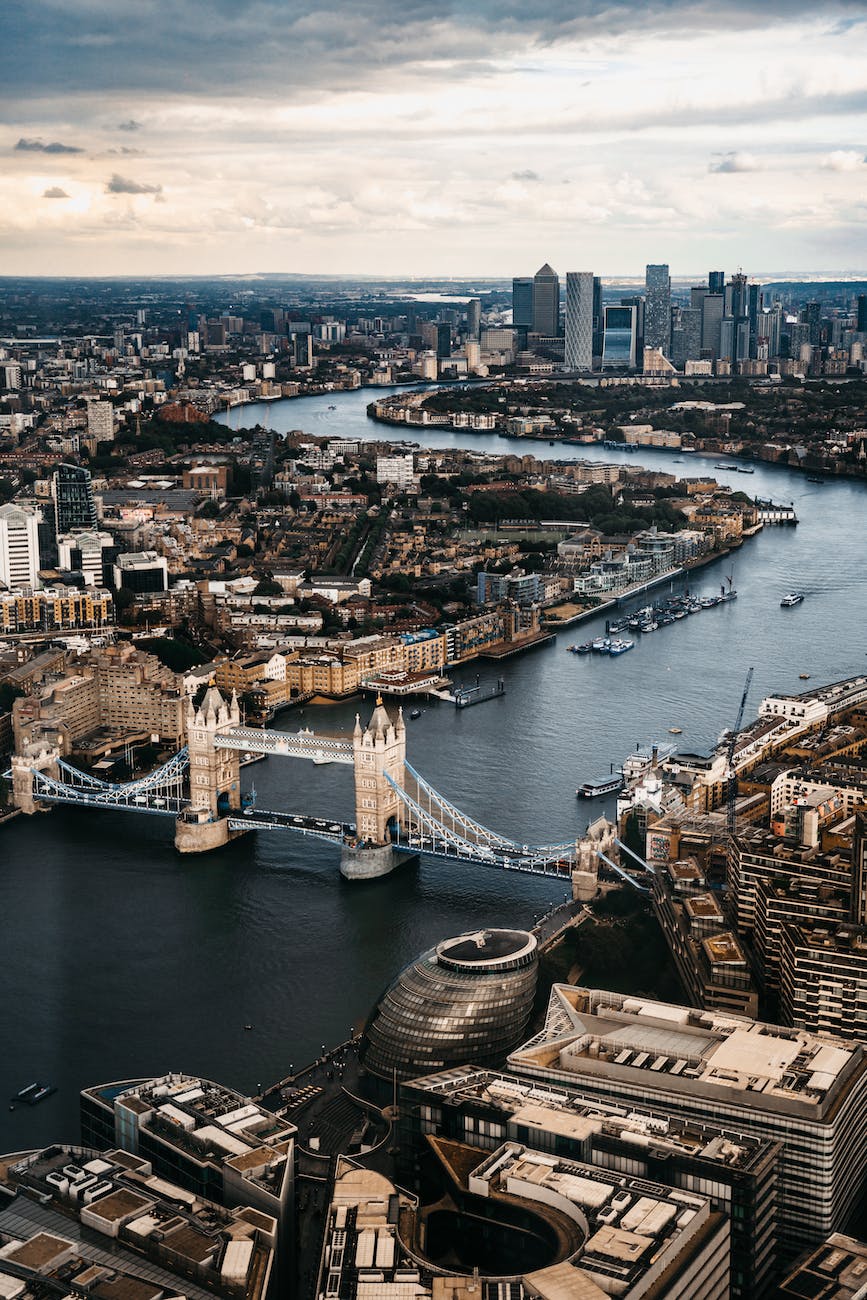
The subject of these comment, the Thames Tunnel is over 3km long. The rail lines dive beneath the river from the counties of Essex to Kent. This High-Speed rail tunnel goes under the river near Fiddler’s Reach. This part of the River Thames, much like most of the tidal river, was once busy with commercial shipping. It’s been the site of unfortunate events before[3].

Further upstream is the Thames Barrier. A truly magnificent structure. The barrier protects central London against a storm surge. It works well. However, it will eventually need to be replaced. The inexorable tide, no pun intended, is moving just one way.

Risk is a multifaceted factor: operational, economic, social, political, safety, security. Did current risk assessments foresee a likelihood of flooding? I don’t know. The safe running of High-Speed trains through underwater tunnels should be subject to risk assessment. I’m sure it is.

Eurostar has experienced a set back as 2023 comes to an end. Eurostar services are again running as normal. But this weather-related event highlights the fact that climate change will impact transport systems. If the thought has not found its way onto the desk of a civil servant, it might be as well to do a high-level audit of the nations transport infrastructure.

Either that or get used to using the word “unprecedented” a lot more.


[1] High Speed 1 (HS1) is a 109.9-kilometre high-speed railway linking London with the Channel Tunnel.

[2] https://www.independent.co.uk/news/uk/politics/london-frankfurt-cologne-train-deutsche-bahn-db-eurostar-cancelled-shelved-a8394806.html

[3] https://www.britainfromabove.org.uk/en/image/EAW143996

Cold

Colds. What’s the point in them? There is no vaccine for the common cold. Why not? Fine. I’m not expecting an answer. The best way of escaping the common cold[1] is to stay away from sick people. Trouble is, you and I will not know who the sick people are unless they make a fuss about it.

Then there’s the tendency to look upon the person suffering the cold and thinking, they are more susceptible than me, so I’ll be all right. That works until that nonsense turns out to be pure fiction. A day or two goes by. Everything seems fine. Then wham, bang, wallop. The virus gets its teeth stuck into every part of the body. Eyes and ears stream, limbs ache and drowsiness takes hold.

How can I say anything new about this common affliction? It’s a universal human experience. Well, I assume it’s universal. Could there be people who never suffer the common cold? That live such healthy lives in splendid isolation and contentment. Probably few.

The common cold is a dam nuisance. It stopped me going to the local pantomime last night. There was no way that I was going to sit in an auditorium and share my ill got gain or suffer the indignity of sniffling all the way through a performance.

Containment was the only strategy. Sleep as much as possible. Let my immune system do its best to destroy the invader. Sink into the discomfort and know that it never lasts for more than a couple of days. The pharmaceutical companies must love this time of year. Supermarket shelves stuffed with remedies. Not so much remedies as sources of momentary relief.

When will we get the cold winter weather that’s normal at this time of year? If there’s truth in the old wife’s tale that the cold kills off the bugs, I’d welcome a week below freezing. It’s a lyrical little pun but this one is difficult to get out of my head:

It’s not the cough that’ll carry you off.

It’s the coffin they’ll carry you off in.

Naturally, I hope present coughs and sneezes are a passing inconvenience. “Coughs and sneezes spread diseases” so the slogan goes. For people with a long-term illness or weakened immune system these inconveniences can be risky.

Debilitating it maybe one of the irritations of the common cold, at least for me, is the wasted time. So, many jobs to do but no way of doing them without making the situation worse. I look forward to the reward of feeling better.

Christmas festivities behind us the New Year beckons. This year to step into the first day of January may be a muted one. Certainly, I have no desire for any alcoholic beverages.

Sue said to me: you must not go to bed before midnight. I said: I which part of the world?


[1] https://www.nhs.uk/conditions/common-cold/