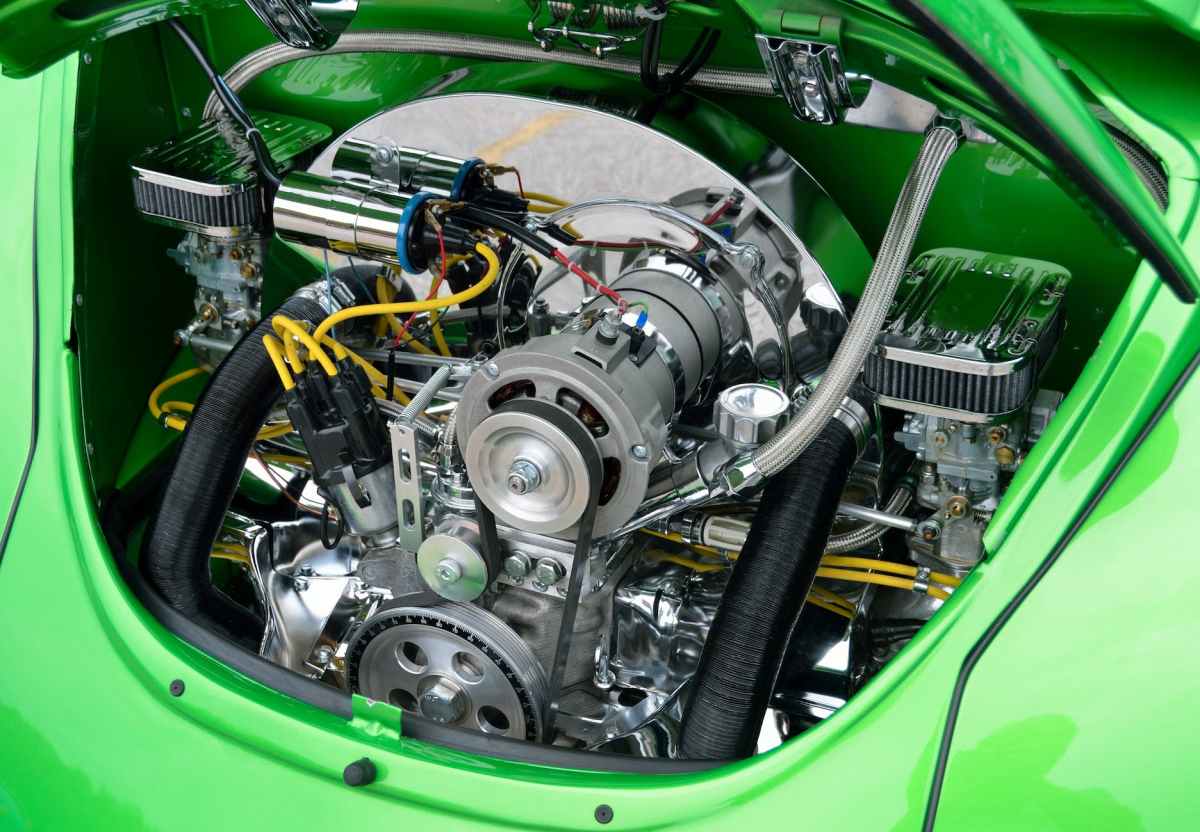
ULEZ 2

It’s not the first time I’ve experienced poor air quality. It’s a wonderful city but, on certain days of the year, the air in the German city Cologne is unpleasant. It can be stagnated, stale and dirty when the weather’s hot and there’s no wind blowing.

It was compulsory. You get a fine if you don’t have one. I remember getting a green environmental badge for my car[1]. This is a scheme by which the most polluting vehicles are banned from the central city. Introduced in 2008, initially vehicles were not banned but everyone had to have a coloured badge. These were red, yellow, or green depending upon the type of vehicle. Now, only green environmental badged vehicles are permitted to enter a prescribed city zone.

Yesterday, I drove from Reigate in Surrey to Croydon. Purley Way in fact. That’s a part of the main A23 road in the London Borough of Croydon. I now wonder at my sanity in doing so. The traffic was abominable. Purley Way is a mass of shopping warehouses, tarmac, and suburban sprawl.

What’s visible is the provisions for the introduction of the Ultra Low Emission Zone (ULEZ)[2] at the end of the month. Cameras and signs. This doesn’t ban dirty vehicles from London, but it does charge them a £12.50 daily to drive into or within the ULEZ zone. 

So, here are two different approaches to addressing poor air quality. The German one doesn’t require extensive infrastructure, but it does mean additional policing. The London one is more permissive but at a price. Collecting money from polluting vehicle owners to pay for cameras, enforcement, and publicity. Both require signage to warn drivers of the zone boundaries. Both have their detractors who object to any kind of restrictions.

To me, the problem of poor air quality can not be put on the back burner. You don’t need sensors and precision measurement to know that the problem is huge, real, and persistent. Even in my small Surrey town, the marked difference between days of traffic jams and empty roads is so evident. In the middle of COVID, I walked the High Street of Reigate, and the air was as clear and fresh as a Cornish village in winter. This week, with road works underway the town has been one big traffic jam and breathing the steamy air walking the pavement is not nice. Health suffers and it’s not just the environmental damage.

The utility of the internal combustion engine has seduced our communities. Now, the balance between the benefits of driving and the freedom it once symbolised has tipped. The sheer mass of vehicles in urban environments and their daily impact is so damaging that restrictions must be mandatory. There’s no turning back.

In Cologne, these changes are particularly pertinent. It could be said that the whole ball started rolling in that city. In the district of Deutz there’s a monument to Nicolaus August Otto[3]. He was a German engineer who successfully developed the internal combustion engine.


[1] https://www.stadt-koeln.de/leben-in-koeln/klima-umwelt-tiere/luft-umweltzone/die-koelner-umweltzone

[2] https://tfl.gov.uk/modes/driving/ultra-low-emission-zone

[3] https://www.deutz.com/en/media/press-releases/125th-anniversary-of-the-death-of-nicolaus-august-otto
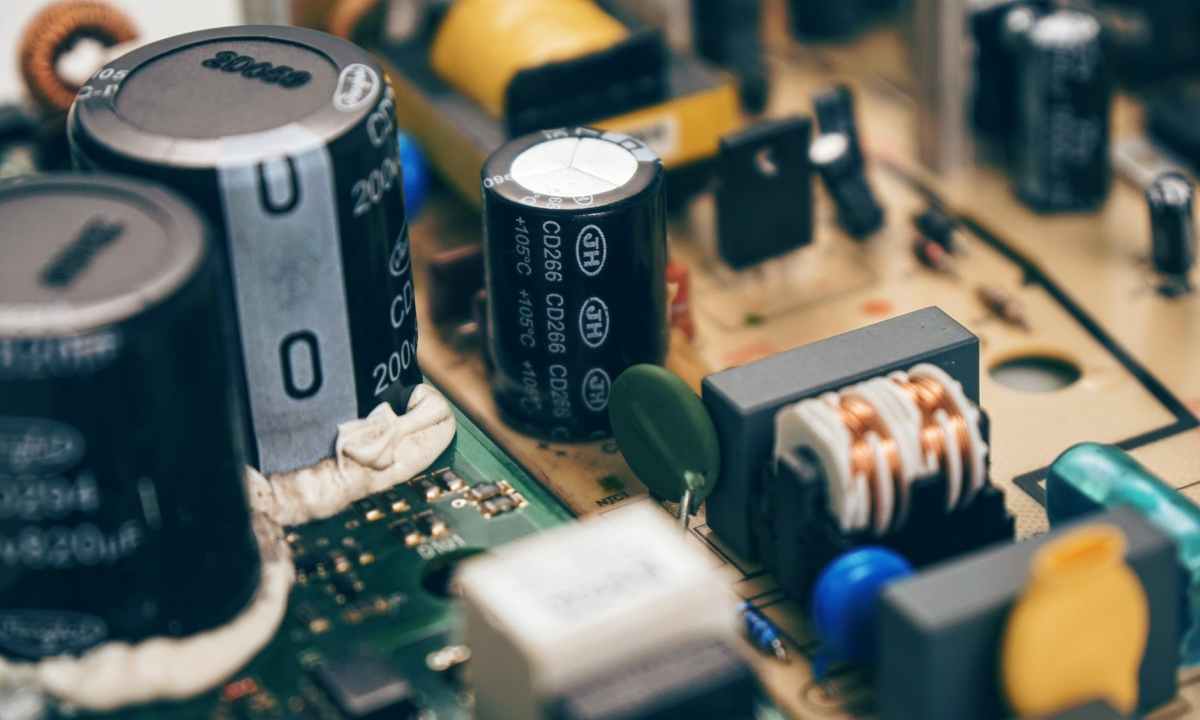
Electric Flight

Hype has its place. Being positive while buffeted by the inevitable ups and downs of life is purposeful and necessary. What’s not true, and might be the impression, is that electric aviation is easy. When forging ahead to build a future, that is not yet realised, there’s a need to maintain confidence. However, being blinded by the light doesn’t help when it comes to tackling difficult problems. Proof-of-concept is just that.

The big positives of electric aviation are the environmental benefits. Electric aviation is spawning many new types of aircraft and the possibilities of new types of operation. So, there’s no doubt that this is an exciting time to be an aviation enthusiast. What a great time to be in aerospace design and manufacturing. Here we are at the start of a new era[1].

My point is that high power electrics, and their control are not “simple” or intrinsically safe in ways other types of aircraft are not. I know that’s a double negative. Better I say that high power electrics, operated in a harsh airborne environment have their own complexities, especially in control and failure management. Fostering an illusion that the time between having an idea and getting it into service can be done in the blink of an eye is dangerous.

The design, development and production of advanced aircraft power distribution, control and avionics systems is not for the faint hearted. Handling large amounts of electrical power doesn’t have the outward evidence of large spinning mechanical systems but never underestimate the real power involved. Power is power.

The eVTOL aircraft in development deploy innovative design strategies. There’s a lot that’s new. Especially all together in one flying vehicle. Everyone wants fully electric and hybrid-electric aircraft with usable range and payload capacity. So, the race is one. Companies are productising the designs for electric motors of powers of greater than 10kW/kg[2] with high efficiency and impressive reliable. These systems will demand suitable care and attention when they get out into the operating world.

A 500kW motor will go up with one hell of a bang and fire when it fails. The avionics may shut it down, but everything will have to work smoothy as designed every day, not just in-flight but on the ground too. Suppressing an electrical fire isn’t the same as a conventional fuel fire either. To fix these machines the care needed will be great. 1000 Volt connections capable of supplying high power can kill.

Not wishing to be focussed on the problems but here I go. Another major problem is the number of qualified engineers, with knowledge and experience who can work in this area. The companies who know how to do this demanding work are desperately searching for new people to join their ranks.

Educators are starting to consider these demands as they plan for the future. Sadly, there’s not so many of them across the globe who are so foward looking.

The global aviation industry needs to step-up and train people like crazy. The demand for Subject Matter Experts (SMEs) is self-evident. That’s true in design, production, and maintenance. Post COVID budgets maybe stretched but without the big-time investments in people as well as machinery success will be nothing but an illusion.

POST1 : Or 150 kW motors when you have many of them going at once. Rolls-Royce Electrical Testing eVTOL Lift Motor | Aviation Week Network

POST 2: Getting ready Preparing Your Airport for Electric Aircraft and Hydrogen Technologies | The National Academies Press


[1] https://smg-consulting.com/advanced-air-mobility

[2] https://www.electricmotorengineering.com/h3x-new-investments-for-the-sustainable-aviation/

Pathway

Conversation drifts across a table. “What do you do?” It’s a classic conversation starter. Maybe “Where are you from?” comes up just as often. It’s those basics about identity that either bond us together or throw us apart. Or at least tigger certain ingrained responses.

In a society, like ours that has a long tail of class-based judgement, these questions have greater implications than elsewhere. In of itself that is a questionable remark. Leave the UK and similar markers create stereotypes that are easily recognisable. US comedy is full of them. For fans of the classic series like MASH[1] or Frasier[2] they are there is spades. Situation comedy often depends on misunderstandings and social tensions.

Anyway, I’m writing this when it comes to mind what a big gulf there is between those of us who had “desk jobs” and people who worked far more with their hands and wits. The labels of administrator or artisan can be stamped out so easily in British society.

A conversation went like this – I was a coach builder. I built lorries. I could never have done a desk job. My response was – I was lucky. Sometimes, I sat at a desk under piles of paper. Or in front of a keyboard. Sometimes, I travelled to, just about anywhere, where they built or flew aircraft and got to deal with real hardware. But however much there was an overlap between us two seniors at a bar, there was still a gulf that was probably born of a dividing line that was drawn when we were teenagers. Streaming people away from academic study was a grading system, certainly in the 1970s.

You might say that these traditional social barriers are a thing of the past. They are not, are they? In fact, in powerful places the line between people with real lived experience in craft or public service type roles is growing. Take a cross section of Members of Parliament. How many can count an experience of working a skilled trade or hands-on time doing something useful?

The Oxbridge mafia is as in control as it ever has been. Although recent examples from that background should be enough to put people off. The leisurely stroll from Philosophy, Politics and Economics (PPE) to the green benches is so much simpler than any other pathway.

I love the revitalisation of apprenticeships[3]. However, that word now means something different from what it once did. There weren’t such notions as intermediate or advanced apprenticeships in my time, although they were implicit. Just a few found a sponsor and a pathway to a degree course on the same level as those who stayed on at school.

As much as providing new pathways the social context still matters. Elevating the status of apprenticeships matters. This is a first-class stream. From it can come future leaders.


[1] https://www.imdb.com/title/tt0068098/

[2] https://www.imdb.com/title/tt0106004/

[3] https://www.bbc.co.uk/bitesize/articles/z4n7kmn

H2 is difficult

I mentioned Hydrogen as an option for aviation. The use of Hydrogen to either power jet engines or to power fuel cells to provide electricity is a real technical option. Although the person I was talking to was engaged in environmental work, they shrugged their shoulders when I mentioned Hydrogen. They were certainly not impressed by these possibilities despite our agreement on the urgent need for de-carbonisation.

I can understand why there’s a level of cynicisms. On my part, it’s like the X-Files[1]. Fox Mulder was the believer and Dana Scully the sceptic. Broadly, I want to believe.

Today’s, liquid fuels can be explosive in certain conditions. However, it takes a considerable effort to create the conditions whereby a devastating explosion can occur. The Boeing 747-100 that was Trans World Airlines Flight 800 (TWA 800)[2] exploded, broke up in the air and fell into the Atlantic Ocean in 1996. This was an example of a worst-case scenario. 230 people were lost in that fatal accident. Now, the ignition of a flammable fuel/air mixture in aircraft tanks is better prevented by design and operational procedures.

If Hydrogen is to be viable in civil aviation such hazardous conditions will be harder to prevent. A flammable hydrogen/air mixture can be ignited much more easily than conventional liquid fuels. Such dangerous situations can be prevented but the measure to do so will require robust design and stringent operational procedures.

Several development programmes are underway, making practical Hydrogen powered aircraft viable. A range of aircraft configurations are possible. From hybrid generator and electric motor set-ups to combustion-based propulsion. This work is moving from academic research into commercial possibilities.

There little read across between the behaviour of conventional hydrocarbon liquid fuels and liquid Hydrogen. This would be evident in any serious incident or accident scenario. Let us imagine the case of British Airways Flight 38, in 2006, a Boeing 777-236 that came down at the end of a runway at London Heathrow[3]. A significant amount of fuel leaked from the aircraft after it came to rest, but there was no fire. There were no fatalities.

The breakup of liquid Hydrogen tanks or plumbing in such a scenario would almost certainly result in a significant fire. The mitigating impact of that fire is the lightness of the gas. Instead of liquid fuel pooling on the ground, Hydrogen would burn upward. However, any explosion could be devastating.

So, for large aircraft design the provisions to protect liquid Hydrogen tanks and plumbing must be extensive and extremely robust. This would have to be maintained, as such throughout the whole operational life of the aircraft. These requirements would be onerous.

Keeping crew and passengers well away from Hydrogen infrastructure will be a must.

POST 1: Crashworthiness doesn’t get much of a look-in. Without it there’s going to be a problem over the horizon. https://www.ati.org.uk/flyzero-reports/

POST 2: At least for eVTOL aircraft some work is being done. https://ieeexplore.ieee.org/document/10011735


[1] https://www.imdb.com/title/tt0106179/

[2] https://www.history.com/news/twa-flight-800-crash-investigation

[3] https://assets.publishing.service.gov.uk/media/5422ec32e5274a13170000ed/S1-2008_G-YMMM.pdf

No shock

It’s very easy to have the false belief that – I’d never do that. Such phases top the bill. Of course, the one that really tops the bill is – well, I haven’t had an accident yet.

Most accidents and incidents happen in the home. When I say that, I include the garden and places that are extremely familiar. I suppose it’s the habit of taking the status-quo for granted that lulls us into a false sense of security. I’ve known several tragedies where seemingly benign situations have turned out disastrous.

Cutting through a hedge trimmer cable can be dangerous. I didn’t do that. Besides, the makers of hedge trimmers have made it difficult to get electrical shocks from their products. The extensive use of plastics, double insulation, two-wire connections and Residual Current Device, or RCD have made us a lot safer, however foolish we might try to be. An RDC is one of the most important electrical safety devices in everyday [1]use. A mains electrical current of a few milliamps (mA), for a second can be enough to kill a healthy person. My own experience of electrical shocks puts me in the lucky bracket.

So, what did I do? It’s like this. I have a large wooden shed in the garden. It’s supplied with power by a bright orange electrical cable that is hung high in the air from my garage to the shed. I even created a wire catenary to ensure that there is no stress on the electrical cable. It’s not new. It’s been there for a couple of years.

My bright red budget hedge trimmer is battery powered. It’s light weight and easy to use. That’s good – isn’t it? No problems with cables that may become damaged or frayed. It needs two handles to be squeezed to make it work.

Trouble is the ease of use means that the trimmer can be picked-up quickly to do a 5-minute job. That’s what I did. I thought, I’ll quickly trim back the overgrown honeysuckle that’s covering a fence. Slap the battery in and bish, bash, the job is done. Very straightforward job.

From here the story tells itself. Yes, such haste is never wise. The sweeping movements of the trimmer did the job they were supposed to do. They did something more too. There’s lots of stories about cutting through an electrical cable with a hedge trimmer. Sadly, that’s what I did.

The emotions after the event must be common place. How could I do something so stupid? For heaven’s sake the cable is bight orange. It’s high up. Why was I so careless?

Then there’s the feeling that comes later, however stupid the act might be there’s no injury to anyone. The RDC tripped, as it should. Immediately, I turn the power off in the garage. Now, I have two dangling parts of what was once a complete overhead cable. My damaged cable is going to need a waterproof repair. That’s the next job.

If there’s a lesson, it may be that none of us are immune from error. Common problems are common problems for a reason. The human factor is real.


2053, not so far off

Language is marvellous. We have all sorts of ways of expressing ups and downs, goods and bads, dreams and realities. This week this slogan caught my eye: “Our third decade of climate action”. I didn’t know whether to be impressed or to think that’s a long time given how little we have achieved. I suppose both responses are off the mark. Neither should I be impressed or dismissive of what has been done in the last 30-years.

Now, “sustainability” is a word[1] that gets banded around like confetti. That certainly wasn’t the case in 1990. That’s not to say there wasn’t a green movement. Public awareness of the need to change was triggered in the 1970s. It’s only that what was a minority interest is now a mass interest.

If the multiple crises of the 1970s had motivated sustained change, then there’s no doubt we would be in a hugely better place than we are now. A great number of projects would have matured and alleviated the globes environmental burdens. New markets would have developed.

The observation I have is that rather than adopting the tough route of positive change, instead we took the easier path of going for the low-cost option. Oil and gas were as alluring as chocolate and sunny summer beaches. Does this tell us anything useful about human nature? Loads of memes scattered around social media would like us to think so. They are hardly profound. Mostly bland.

Language is marvellous. There’s a catalogue of famous speeches that mark moments in history when change happened. Or at least, times when many people pivoted from one position to another. Powerful words can transform.

Our problem in 2023 is that we are saturated with noise. Endless reassurances that big organisations pump out tell us how well we are doing. Brave politicians implore us to move in a different direction. Campaign groups thrust “in-your-face” activist at us. Sadly, the collective effort is culminating in many people switching off. There’s the real danger that the next 30-years will experience a sluggish movement and even a dumb reversion to past practices[2]. It’s a prospect that hovering in plain sight.

Language is marvellous. What we need, at this moment in history, is not more words but some truly meaningful words that motivate real change. Future generations, and it’s unlikely that I’ll be here after the next three decades, but not impossible, must not be left with an enormous mess brought on by our reluctance to change. Oil and gas are not the future. We must not put off the day we wean ourselves off these two.


[1] https://www.un.org/en/academic-impact/sustainability

[2] https://www.gov.uk/government/news/hundreds-of-new-north-sea-oil-and-gas-licences-to-boost-british-energy-independence-and-grow-the-economy-31-july-2023

Failure

It’s frequently said that we shouldn’t fear failure. On my desk is a mat with the words: Ever tried. Ever failed. No matter: Try again. Fail again. Fail better. These are Samuel Beckett’s words[1],and they are often used out of context. He was a bit of a gloomy soul. Curiously, given that Beckett wasn’t in the business of inspiring, these words have become a calling to be positive whatever the barriers.

Maybe what I want to talk about is better captured by a stoic Greek. “We don’t abandon our pursuits because we despair of ever perfecting them[2]”.

Well, some people do. I’ve met numerous skilled and talented people who bulk at trying something new because they have a deep-seated fear of not doing it well. No one is immune from that basic apprehension that can run through our veins when we are faced with challenges or significant obstacles.

That said, some of this reluctance, or cognitive distortion comes from what we experienced in education. The constant rewarding of those at the top of the tree can undermine the confidence of others. Particularly those whose in-built self-confidence is low. Even if they have an abundance of natural talent. There’s a destructive impact of the all or nothing approach.

There’s also the sad factor that this can serve the interests of flawed individuals. To stay on the top of the tree they can find it advantageous to big-up their own achievements and diminish others. Not nice. Trouble is that this is real. Politics has more than its fair share of such individuals.

What I like about the – have a go – approach is that it’s rooted in pragmatism. It means putting aside hang-ups and worries, not to ignore them but to keep them in check. None of us are ever going to be perfect. None of us are robots (yet). None of us are immune from failure.

The best of us will try to make thing better. However little progress that is made it’s better that progress be made. Even if that little progress fails into obscurity. Of course, this pragmatism comes with oceans of potential disappointment along the way. But what is disappointment? It’s only another emotion amongst the massive range of emotions that are human.

In design, development and testing failures will occur. If you hear that something new has been a complete success, it’s probably more public relations than reality. Most failures are a long way from total failure. That’s the same as saying something wasn’t a complete success. That’s human. That’s normal.


[1] https://booksonthewall.com/blog/samuel-beckett-quote-fail-better/

[2] Epictetus.

Oppenheimer

Nuclear physicists did change the world forever

It’s a movie that’s immerses. On the walk to Reigate’s small cinema, the thought of sitting in the front row for over 3-hours was making me wonder if I should follow the recommendations coming my way. Locally, having a “must see” film showing hasn’t happened for a while. Views of friends were almost universal about the film[1]. All positive.

It’s intense. Even in the 3-hour run there’s no wasted time. No spinning the wheels. The story is two or three films in one. Given that this movie is about a life, what we see is a compressed drama against a backdrop of world events.

It’s serious. Not much room for everyday humour. Just a sprinkling of irony. Nuclear physicists did change the world forever. Would the change have happened anyway? Yes, most probably, but the world would now be a different place if the bomb had been realised in the Europe of the 1940s rather than the US.

When big science meets national and global politics the results are disturbing. Robert Oppenheimer acted as a nexus. Events pulled him like a powerful magnet from one impossible situation to another. At the same time, he made choices based on strong convictions and a single-minded assurance.

His faith in a “liberal” America was tested to the limit as the devils of political intrigue and ambition kicked against him. The human choices of the head and the heart were stirred into conflict. The sharp tension between right-wing politicos and left-wing intellectuals killed any middle way to bring the globe together to manage the new threat of nuclear confrontation.

Sub-stories ranged over challenges I recognised. The whole art and practice of managing experts, in his case on a large scale, of the Manhattan project, were on display. How do you create urgency and unity around a controversial project? The military couldn’t do it by compulsion alone. The ethical and moral case had to be made for pursuing an aim that would transform the world, or even destroy the world. Once made, the atomic bomb could not be un-invented.

The war to end all wars became nothing of the sort. One bomb led to another and the dangerous stalemate of the Cold War. The later shaped my life as much as anyone who’s over 60-years.

On the technical front, what is fascinating to an engineer, like me, is the vexed question of – what if? What if the massive technical risks of the Manhattan project had not paid off[2]? Or it had taken years more to make a viable bomb? We will never know.

This film, part biography, written and directed by Christopher Nolan was so much in his style. However, on the screen there was no doubt who was dominant. The Irish actor Cillian Murphy is stunning. His Robert Oppenheimer burns into the eyes. What an incredible role.

The temptation is to use a wide range of adjectives that reach a crescendo. There’s a pile of reviews that do. So, I’ll turn to the parts that were not so coherent. Strangely Kenneth Branagh as Niels Bohr worked. However, the portrayal of Einstein was less convincing. The use of black and white pictures to demark different times worked well but was annoying. And sometime the thunderous noises and dramatic flashes were a bit OTT.

Overall, it’s a “must see” film for 2023 and best on the big screen. But don’t sit in the front row.


[1] https://www.imdb.com/title/tt15398776/

[2] Early morning of 16 July 1945, in New Mexico, work at Los Alamos led to a test of the first nuclear weapon.

Blind alley

It only takes a few seconds of listening to the UK Government’s spokesperson Sarah Dines MP this morning to realise that the Conservative approach to a serious subject is peppered with one thing. It’s desperation and fear of losing the coming General Election. At every chance an interviewer will stand, such Conservative MPs take the opportunity to dam their opposition rather than answer questions addressing their responsibilities.

I get my news and current affairs top-up every morning via BBC Radio 4. I guess that’s becoming a rarer and rare phenomenon. Yes, as a radio dinosaur, I still have faith in the power of a well-constructed and probing radio interview. Sadly, an interviewer’s best efforts to get to the core of a subject are often thwarted by repetitious political soundbites.

“With respect” is a pernicious way of diverting a conversation away from questions that are embarrassing and hard to answer. That horrid amalgam of lawyerly pomposity and public relations training puts me off my breakfast. 

It’s clear the Rwanda saga is purely political. Parliamentary Under Secretary of State Sarah Dines struggled to make a coherent argument. Let’s be quite honest. Threatening to ship immigrants off to Africa is not going to stop immigration.

Stopping the “pull factor” is not going to work by such measures. Those prepared to accept high risks to their lives, in precarious situations will not be put-off by administrative and bureaucratic shuffling in the UK Home Office. For those who have been at the mercy of murderous criminals, as they have made their way into Europe, they are not going to be put off by a lawyerly Minister preaching on morning radio.

This makes headlines in tabloid newspapers and maybe that’s its sole aim. The flaccid excuses given by Conservatives using bad law to make bad decisions for bad political reasons is wasting resources and lives.

Whatever the image makers would like us to see, those who vigorously supported Boris Johnson and Liz Truss as Conservative leaders are still running the country. The 2019 intake of Conservative MPs is jittering and prepared to spout any nonsense to cling on to their seats.

The British people deserve so much better.

Local air

There are cases of synergy. That’s where aviation and local authorities have a mutual interest. This often centres around the economic prosperity of an area. Relationships can be complex, difficult, and fraught with volatility. There are plenty of housing and industrial estates that cover the ground of former airfields. Like the railways that closed under Beeching’s axe[1].

Public interest was dominant 50-years ago, but privatisation dramatically changed relationships. Sustaining profitability through good times and bad have proven to be more than some locations could support. There’s so many combinations and permutations but fewer and fewer active commercial airfields in the UK.

London Manston Airport is an airport that only just clings on to existence. In 2013, the Welsh Government acquired Cardiff Airport. So, some aviation facilities have returned to public ownership and run as an arm’s length business. A few airports are given support to ensure connections exists between remote parts of the UK. Highlands and Islands Airports is an example.

Advanced Air Mobility (AAM) is coming. This is the extensive use of electric vertical take-off and landing aircraft (eVTOLs). AAM is an innovative concept that will require Vertiports and integration into busy airspace. To make the economics work a lot of routes will be in, and over urban areas.

My view is that AAM will only succeed in the UK if aviation and local authorities come together and embrace it. That is going to be a massive challenge whatever national government does.

In the case of local authorities with a mission of protecting the interests of residents this has often meant objecting to aviation developments. I go back to proposals of 30-years ago to make Redhill Aerodrome a feeder to London Gatwick Airport[2]. This was well and truly shot down by local interests. In fact, rightly so given the complex twists and turns it would have made in the airspace.

AAM needs the harmonisation of standards to ensure interoperability anywhere in the country. There are one or two UK local authorities that are already embracing the potential opportunities of this new form of flying. Coventry City Council is taking on the challenge[3]. It’s welcoming the development of the ground infrastructure for “air taxis” and delivery drones.

By the way, my view is that introducing the subject as “flying cars” or “air taxis” is not a good idea. This creates images from science fiction that may not resemble the reality of these new air services.


[1] https://www.networkrail.co.uk/who-we-are/our-history/making-the-connection/dr-beechings-axe/

[2]https://john-w-vincent.com/wp-content/uploads/2023/08/bf3ec-clear_for_take_off.pdf

[3] https://www.coventry.gov.uk/news/article/4232/world-first-hub-for-flying-taxis-air-one-opens-in-coventry-uk-heralding-a-new-age-of-zero-emission-transport