Navigating AI

In my travels, I’ve seen derelict towns. The reason they were built has passed into history. A frantic fever swept through an area like an unstoppable storm. It might have been precious metals that excited the original residents. Gold rushes feed the desire to get rich quick. It doesn’t take the greatest minds in the world to figure out why gold fever will always have an appeal. The onrush of people joining the throng keeps going until opportunities have collapsed.

Breakthrough technologies, or their potential, can be just like a gold rush. There’s no doubt that 2025 will be a year of such phenomena. Top of the list is Artificial Intelligence AI[1]. If you want to be a dedicated follower of fashion[2], then AI is the way to go. Thank you, The Kinks. Your lyrics are as apt now as they were in the 1960s.

Predications range from the best thing since sliced bread to the end of humanity. Somewhere along that line is realism. Trouble is that no one really likes realism. It can be somewhat dull.

I’ve always viewed advancing technologies as a two-edged sword. On the one hand there are incredible benefits to be reaped. On the other, costs can be relatively unpredictable and devastating. I say “relatively unpredictable” as there’s always the advantage of knowledge with hindsight. Lots of commentators love to practice that one.

In desperation to gain the economic benefits of AI the current utterances of the UK Government may seem a little unwise[3]. Certainly, there’s nothing wrong with wishing to build a significant domestic capacity in this area of technology. What’s concerning is to always talk of legislation and regulation as a burden. Particularly when such language comes from lawmakers.

The compulsion to free-up opportunity for a western style gold rush like scenario has a downside. That is all too evident in the historic records. Ministers in this new Labour Government remind me of Mr. Gove’s past mantra – we’ve had enough of experts. Rational dialogue gets sidelined.

Even now we have seen generative search engines produce summaries of complex information sources that are riddled with holes. This experience reminds me of past work cleaning up aviation accident databases. Removing all those 2-engined Boeing 747s and airport IDs with one letter transposed. Data by its nature isn’t always correct. The old saying, to err is human, is always applicable.

The concerning aspect of AI output is its believability. If error rates are very low, then we stop questioning results. It gets taken for granted that an answer to a question will be good and true. There we have a potential problem. What next. AI to check AI? Machines to check machines? There lies a deep rabbit hole.


[1] https://www.technologyreview.com/2025/01/08/1109188/whats-next-for-ai-in-2025/

[2] https://youtu.be/stMf0S3xth0

[3] https://www.theguardian.com/technology/2025/jan/11/uk-can-be-ai-sweet-spot-starmers-tech-minister-on-regulation-musk-and-free-speech

Political Challenges: A 2025 Outlook

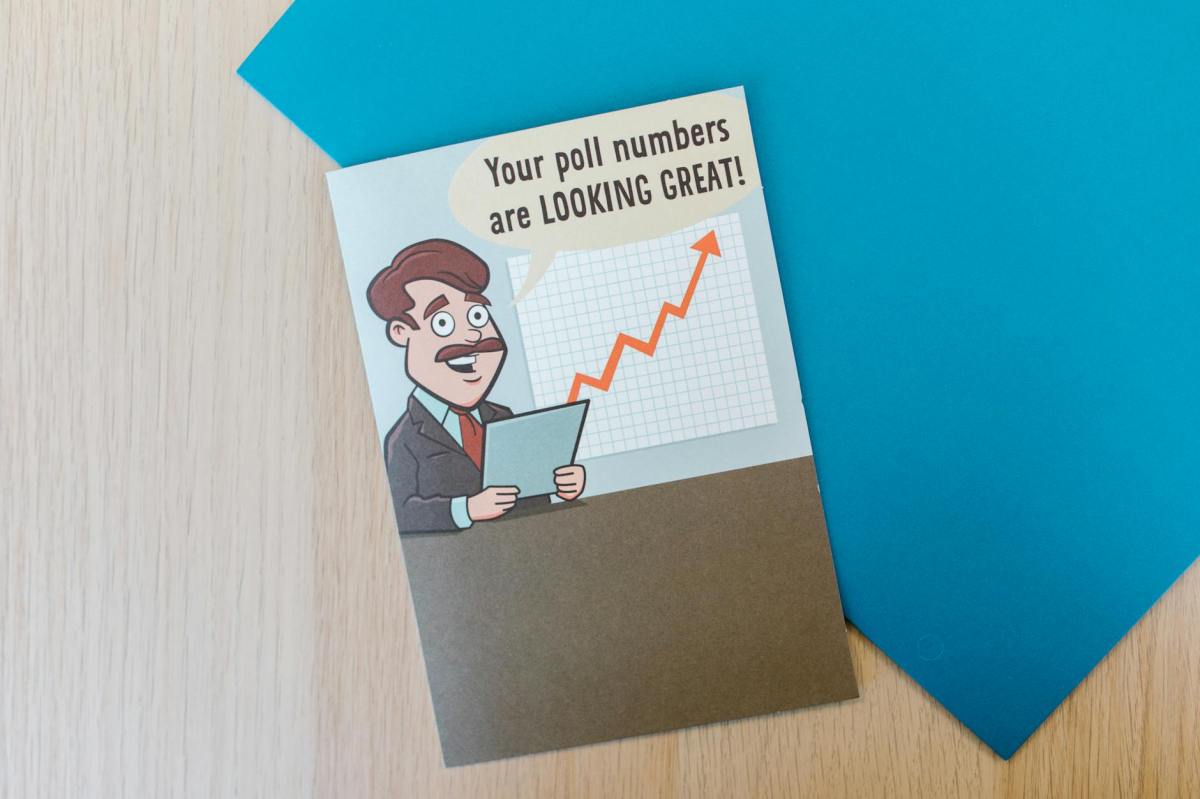
British Prime Minister Keir Starmer’s dive to an incredibly low level of popularity is notable. In fact, it’s a bit more than that. It’s record breaking.

A commonly held view seems to be that we elected the Labour Party government in July as the least bad choice. The Tory years had got so utterly terrible that even their devoted supporters bulked at giving them yet another term in office. Combine that with an inexplicable inability to frame a simple story about what Labour stands for and the problem is less surprising.

Keir Starmer is no fool. He’s an intelligent and experienced politician. He’s taken the hard knocks. He’s climbed the slippery pole. But, and there’s a but, something doesn’t jell.

I my humble opinion, the ingredients missing or in excess are categorised like so.

Charisma. It’s so much easier if leader has that indefinable quality. I remember this of Paddy Ashdown. One: you know when they are in the room. No question. People look. Two: they never lack inspiring ideas. Even if they could be off-the-wall. Three: what they say makes an impact.

Eloquence: That ability to coin words and phrases that resonate with lots of everyday people (not just supporters). To speak persuasively, in a way that says we are going on a great journey together. Scripted or not, fluency that appears natural and unforced. Lightness of touch.

Managerialism: Everyone expects confident, capable, competent governance (although we rarely get it). However, we don’t want to see it live on the mainstage, all the time. That phrase about political policy and making sausages is a good one. Lots of people like sausages but few like to know how they are made.

Now, the question I have is: are the “local difficulties” of present fixable?

2025 is going to be a roller coaster of a year. We have washed away any residual millennial mysticism that hit the world in 2000. A whole generation has slipped by. Babies born as London’s Millennium dome was both viewed both with amazement and distain, have jobs that didn’t exist as the fireworks went off.

The so called “smart” phone, and tablets have carved a way into our lives that’s deep and unmovable. Even if the next leap in technology will surely leave them as obsolete.

So, what’s the narrative for 2025 – 2050? Will we sink into the quicksand of nostalgia or herald a new era full of promise? I don’t know. I’ll just keep topping up my glass to ensure it’s half full.

Level Playing Field

The back-office work of campaigning does take advantage of a lot of volunteering. That’s my experience. Giving time and energy for free and seeking to advance a worthwhile cause.

It would be nice if all political parties in this country where wholly supported by a membership that is both engaged in activities and willing to put their hands in their pockets, now and then. The reality is that, of all the eligible voters in this country, only a small fraction of them is committed enough to be a member of a recognised political party.

Even with a strong membership and a well-motivated bunch of volunteers, life is hard going unless there is a reasonable sized war chest to support campaigning work.

Come election time the range and breadth of communications that is necessary to be a competitive candidate is considerable. Thus, it is no surprise that history can turn on who has the most resources. That doesn’t always work but without a spending capacity rivals have most of the advantages.

Politicians seek the patronage of the wealthy as a pathway to power. We can remain pure and get engaged in arguments both ethical and moral as to the impact of patronage. Or we can accept that it is inevitable and ensure that strict rules exist to create a reasonably level playing field for all candidates. Since we can no more stop influence from flowing from one person to another than we can freeze gravity then a democratic society cannot must not have woolly rules on these matters.

Talk now is about financial donations that originate from abroad. That is when a wealthy person wishes to funnel money into a political party in a country other than the one of their citizenship. No prizes for guessing who or what this is about.

Now, I could say only UK citizens should be allowed to donate to UK political parties or organisations. Foreigners should be banned from involvement in national democratic processes. Trouble is that this subject is not so cut and dry as it might first seem.

Those with dual citizenships may wish to contribute and participate. That sounds reasonable. Those with notable family ties may wish to contribute and participate. Certainly, there are reasonable cases to consider. What’s interesting here is the legitimacy of the interest and that it is of a “friendly” nature.

I’d like to go back to the mater of the level playing field. If a candidate meets the criteria set down for a given election, then the battle should be over achievements, ideas and policies and not over the size of bank balances. Financial donors should not be able to exert undue influence by throwing money at a campaign. That’s where there is a strong need for strict financial limits on donations or any form of beneficial contribution that comes from abroad.

POST: One subject that Australian’s are looking at:

Revitalising Manufacturing

Yes, it’s good to have good trading relations with other countries. With a degree of pragmatism – as many as possible. Naturally, there are lines drawn in cases where countries share little of the UK’s values or are dictator run aggressors. Counting the hundreds of sovereign countries there are around the globe, a majority are friendly and mostly interested in mutual wellbeing.

However, post-2016[1] we are still living in strange times in the UK. In the same breath as some people talk of sovereignty and surrender, they say an extremely wealthy man in the US can solve all the UK’s problems. This nonsense defies any kind of logic.

There’s a peculiar celebration of the UK joining the Asia-Pacific Comprehensive and Progressive Agreement for Trans-Pacific Partnership (CPTPP) bloc. As if we didn’t have a huge trading block on our immediate doorstep. Joining one that offers a tiny gain overtime whilst leaving the other has cost a massive economic hit. The one thousands of miles away is significantly culturally different but the one next door is one where we share a common history.

I learn that there’s no point even thinking that logic has any influence on a Brexit supporter. Non whatsoever. Their view of the world comes from some lost imperial age.

Sadly, Brexit talk is only mumbled in darkened corners. That whopping great elephant in the room continues to get ignored. Even the UK’s new Labour Government is carrying on as if there were the former Conservative bunglers. There’s some woolly talk of reconciliation. There’s a lot of right-wing scaremongering. Practically, not a lot is changing.

In real terms, both UK exports and imports of goods are lower than in 2016, having shrunk by 1% and 2%, respectively[2]. Which is crazy given the new economic horizons. Especially in the switch to the need for more environmentally responsible goods. We should be modernising and strengthening UK design and manufacturing. Not just a bit but putting a rocket under both. Half hearted nice words by minor Ministers don’t cut it.

International trade fantasies will not build a stronger domestic economy and that illusive positive growth that’s often talked about in political speeches. With the coming of highly advanced computing, like artificial intelligence, countries with predominantly service based economies are gong to struggle. Basic service orientated jobs are going to get more automated. Like the traditional factories Henry Ford would have recognised, office complexes are hollowing out.

At least the new Labour Government isn’t pushing wholesale reopening coal mines or returning to a dependency on North Sea oil rigs. That said, I’m unsure what their attitude and policy is to rock fracking and imported gas supplies.

To make real economic progress we (UK) must make Brexit history. With our colleagues in Europe, we can be an innovation powerhouse. Making home grown products for the world markets of the future. Not languishing in a tepid imperial past or tugging at the shirt tails of some mega weird pugilist.


[1] UK referendum result: Of those who voted, 51.89% voted to leave the EU (Leave), and 48.11% voted to remain a member of the EU (Remain).

[2] https://personal.lse.ac.uk/sampsont/BrexitUKTrade.pdf

John Gray’s Critique

If a dose of despondency is your Sunday morning tipple, I recommend BBC Radio 4’s “A Point of View[1]”. I often catch it as an alternative to listening to the driving rain bashing against the window as I wake-up on a Sunday morning.

What I dislike the most about John Gray’s analysis is that it dismisses all the hard-working people who daily strive to make the world a better place. I know, you are asking who John Gray is and what does he know? Well, he’s a British philosopher and author of a pile of serious books. He dabbles in political thinking and doom mongering.

On Sundays in the past, I relied heavily on Will Self creating an air of depressed inevitability that all the bad things about humans will eventually overcome us. A dower British journalist and political commentator who always seems to see the dark cloud instead of the silver lining.

Despite the grim tales of these speakers, they often have, lost in their rhetoric, a smidgen of wisdom. This morning John Gray argues that we need a new response to the growth of the right-wing charlatans who are rapidly climbing the greasy pole of national political life.

Naturally, a lot of us thought that’s what the UK General Election last July was all about. A reoccupation of the centre ground of British politics by the Labour Party. A renewed liberal democratic political consensus would emerge and save us all. Strangely, it doesn’t seem to be working out that way. Although, it might be a bit harsh to judge after only a few months.

Last night, I watched the second episode of the BBC’s period drama Wolf Hall[2]. My God, it’s good entertainment. A little heavy in places. Sharp and brilliantly executed. That last word being the key one. Tudor history is a reminder of how vicious political manoeuvring can be. Having a master, a King, who is determined to make the world turn around him and no one else.

So, should I agree with the likes of John Gray? That a darkness slithers around in human hearts. That we’d better be prepared, shake-off the status-quo and look for new ways to head-off the marketing men’s populist politics. Voiced by bombastic demigods and radical twerps.

He’s right in the sense that today’s politics is behind the curve. British political parties were forged in a different age. Largely, baring the virtues they espouse, they are outdated. Sure, fairness, liberty, and equality have not fallen out of fashion. But maybe the language surrounding them belongs in the 19th and 20th centuries.

One thing is for sure, Willo the Wisps, like Kemi Badenoch offer nothing new. Reform is just a cover for the populist worst of human nature. Yes, we do need someone to break new ground in British politics.

Oh, for a more cheerful Sunday morning.


[1] https://www.bbc.co.uk/sounds/play/m00254hz

[2] https://www.bbc.co.uk/iplayer/episodes/m002473m/wolf-hall

Labour’s IHT Policy: A Threat to Family Farms?

Labour is driving down a road it’s driven before. It’s a shame when the two biggest political parties in Britain are so captured by their past that they can no more look forward than a duck can master arithmetic.

Post Second World War the country was broke. Rising taxes were inevitable to pay down debt. The British State was far more directly involved in everyday economic decisions than it is now.

Inheritance Tax (IHT) got its status as a loathed tax partially because of the necessary actions of the post-1945 Government. At that time, “estate duty” was increased to 80%. This generated increase tax revenue but led to the breakup of large country estates up and down Britain. Ironically, the breakup of country estates created an opportunity for some tenant farmers. As the estates were sold off in lots so tenants could become owners, if they could raise the finance.

So, you might say farmers paying IHT at 20% isn’t so bad by comparison. The amount of generated increase tax revenue isn’t much. With one hand the Government is subsidising farmers and with the other hand it’s taking a cut of their lifetime acquired assets.

Another side of the coin is the cost-of-living crisis. Certainly, winter heating costs have been a matter of great concern for a lot of people. Food too is an absolutely essential expense. Hence, the growth of food banks in every part of the country. This shouldn’t be accepted as the norm.

All of this is happening at a time when the nation’s supermarkets are making healthy profits. Keeping cheap food on the shelves with, in some cases, the philosophy of sell it cheap and pile it high. Industrialised and highly processed food coming in at the lowest prices to the customer. At the other end of the supply chain, forcing down farm gate prices.

You would think that getting national food production, the job done by farmers, right would be an imperative for Government. You would think that a regular dialogue with farmers might be quite important. Wouldn’t you?

The problem with Labour’s 20% IHT and the threshold of 1 million is that it’s not going to have much impact of those who own large country estates to avoid other taxes, like CGT. It’s not going to have much impact on large corporate agricultural enterprises. It may not even have much overall impact on land prices. Afterall, they don’t make it anymore.

But it’s going to clobber small and medium sized enterprises, very often family farms. It will clobber far more than the Treasury’s last-minute calculations say[1]. The reason is clear. The profitability of family farming has been dire over recent years. Add a new tax bill and selling-up will be the most attractive option for many potential next generation farmers.

Then the question must be asked what’s it all about? What are the values underpinning this policy? There I go back to the start. Does Labour perceive these working people as “rich”. Their logic may go, why shouldn’t the rich pay more after the Conservative Government that they supported has made such a mess of the country? One way of seeing where we are.

Trouble is that they have aimed at the wrong target.


[1] https://www.channel4.com/news/how-many-farmers-will-have-to-pay-inheritance-tax

UK Farmers’ Unrest: Budget Shock and Political Implications

Yesterday, central London was full of British farmers. Far more than was anticipated. It’s a countryside revolt. Or at least the seed corn of unrest. It needs to be addressed quickly.

The UK Government Budget sprung an unexpected shock on farmers. Newly elected, everyone expected them to try to correct the spending mess left by their predecessors. However, few expected them to make-up last minute figures to do something they said they wouldn’t do.

Lots of family farmers could be singing the classic Beatles song “Yesterday”. Troubles seemed so far away before the general election. Now, they seem here to stay.

Like androids, and the Tories before them, Labour Members of Parliament (MPs) are trotting out lines prepared for them by their masters. The political excuse trotted out robotically is that the theoretical threshold for taxation is £3 million and not £1 million as everyone is saying. Therefore, they say, fewer farm businesses will be impacted by their new death tax.

When something goes wrong in Government one of the best strategies is to address the facts immediately, apologies for any error, take the temporary hit and move on quickly. Stonewalling and wibbling is an extremely poor approach.

For a start, many farmers will not be able to take-up the tax reliefs Labour MPs are talking about. Farming is a hazardous profession. Sadly, unexpected deaths are not unusual. If such an event occurs this could then result in compounded tragedy, that is the death of a family business too.

Farmers are pointing out that significantly wealthy people will still use land purchase to avoid tax. They will have complex and detailed tax planning services at their fingertips.

Agricultural land values have increased dramatically in recent decades. Yes, there is an issue to be addressed with respect to land value. Housing development land is an astronomical price. It’s one of the drivers that is making house prices unaffordable for many people.

Labour needs to recognise that it’s not food producers who are driving these negative phenomena. It’s not small and medium sized family farms who are the problem makers.

Not only is this new inheritance tax very poor politics by Labour, but it’s also not going to crack the problem that they might wisely wish to crack. I’d say, think again. At least consult.

New Form of Monarchy in 2024?

An observation. There’s something strange going on across the Atlantic. You see, I have found inspiration in the story of America’s revolutionary struggle. The writings of Thomas Paine stirring up a radical movement. The strong desire to be independent of the rule of Kings and Queens. There’s a lot to be said for freeing a nation from imperial tyranny.

The Declaration of Independence in 1776 is a bold statement. Rejecting the royal authority of George III to set a new nation on an independent path. It proved to be a dynamic and prosperous democratic path. One that people across the world looked on with admiration.

It’s true that the United States has had its own dynasties. Powerful families and influential individuals that have shaped its history. However, since its independence, none of them have ruled as a monarch. None have wheeled massive power without checks and balances.

Yet here we are in 2024, and a form of pseudo monarch stands ready to take the reigns of power. Sure, democracy has played its part in putting one man in control. That, in of itself, is not unknown in the history books. The question to ask is when does a Republic tip over and become something quite different from what it has been?

I hope my observations are an exaggeration. It’s all to easy to see the News that commentators want us to see. I’ve often found that it’s most difficult to see things as they actual are as opposed to how they are shaped by personal beliefs and fleeting desires. Objectivity isn’t so easy.

This much can be said, the next four years are going to be turbulent ones. There’s a certainty in that conclusion. Even with the Atlantic in the way, just as the Jetstream brings us changeable weather, so unsettling waves of transformation will hit our shores.

The latest commentary coming from supporters of the new Trump regium in the US is one of polarisation. It’s the traditional stick-up. Choose between us and them. Our populous island off the shore of continental Europe must be squeezed into a choice between the US and the EU.

This monosyllabic way of framing a debate gets swallowed by the media. Overall, it’s nonsense. There’s no way that both will not be important for as far over the horizon as anyone can see. Both are going through periods of disruption. For once, domestically, the UK seems relatively stable. That’s putting aside the past damage done by Brexit and a Conservative government that fell into total disrepair. Yes, the UK can plot its path knowing that some internal consistency can be expected.

Everything I’ve written here is overshadowed by issues of global concern. Overshadowed being the sad reality. Climate change will not wait for the dust to settle from ardent disruptors. The planet’s atmosphere knows nothing of the exploits of prominent personalities. We desperately need to rediscover common interests and act on common concerns.

Exploring the Kennet & Avon Canal

It’s the road to the west. The A4 out of London heads towards the west. It’s younger but bigger brother the M4 motorway goes the same way. Going the same way too is the Great Western railway and before that a major waterway, a canal. I guess the ancient roads predate the lot of them given that east-west traffic is an important part of English history. Certainly, the Romans went that way.

I now live at what is roughly the halfway point between London and the west. It’s where what is largely a level route from London starts to rise at a slow pace. That climb made linking rivers, most particularly the London Thames and the river Avon in the west, a challenge. The incentives were evident. So, much potential for trade. Moving heavy commodities around. Canals are truly visionary engineering infrastructure and now an inheritance that’s much treasured.

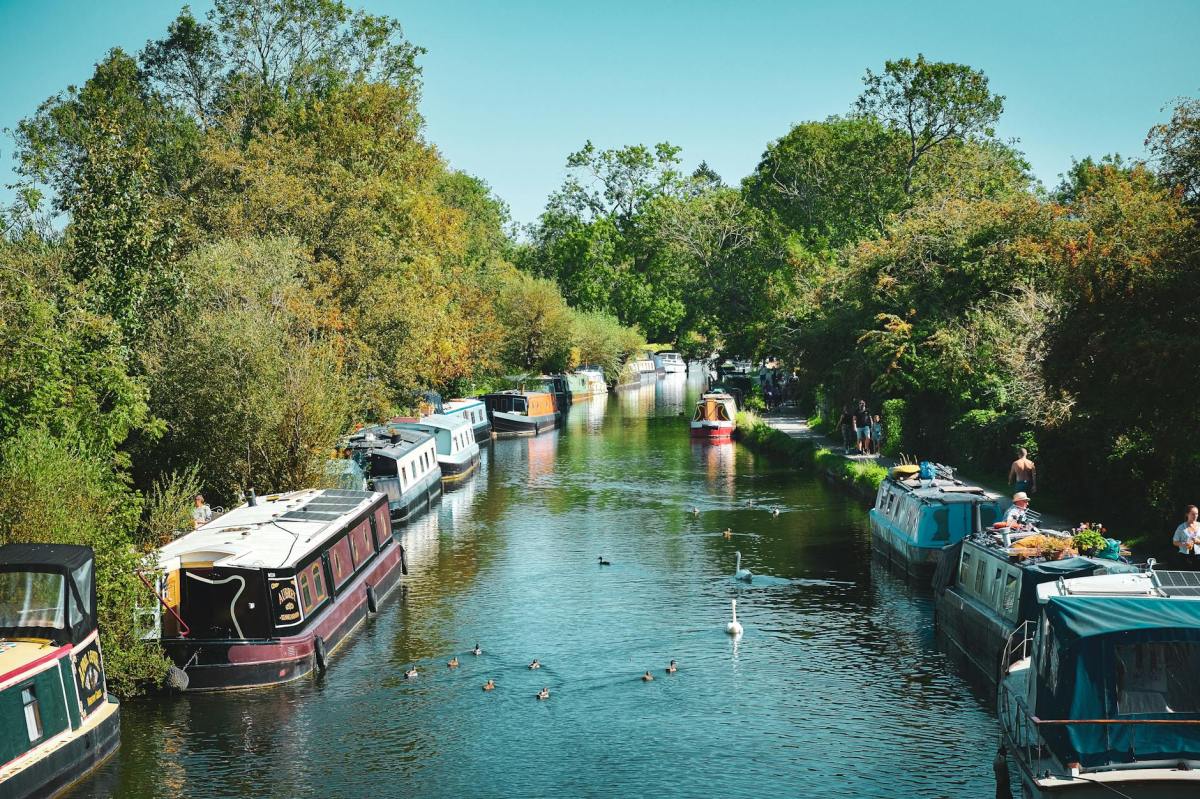
For people who like to walk, like me, canal towpaths[1] provide flat route between towns. A direct waterside route that wanders through lush countryside. Yesterday, I did the 15km between Newbury and Hungerford. Along that stretch, the Kennet & Avon Canal raises about 150 feet but it’s almost unnoticeable. The main signs are the difference between the fast-flowing waters of the river Kennet and the sober slow canal. A littering of canal locks and small brick-built bridges are a feature too.

The Kennet & Avon Canal was constructed between 1795 and 1810. It was eventually killed-off as a commercial enterprise by the construction of the Great Western railway. Being cheaper and faster along the iron road, transport of goods by water couldn’t compete. It’s in this modern time that the canal was restored. It’s been working again for the last 30 years. Now, it’s a centre of leisure pursuits, small businesses and alternative lifestyles.

The canal’s path follows the River Kennet and its narrowing flood plain. I found looking at how the waterflow is controlled by sluice gates and weirs a fascinating part of the walk. Ambling along the canal’s towpath is a great way to venture into the Berkshire countryside. There are a couple of points where the path changes sides and it’s a bit soggy in one or two places but overall, it’s relatively easy walking.

I did see an Otter on the opposite bank. It was a fleeting glimpse. He, or she, slinked away almost before I realised what I was looking at. Quite different from noisy ducks this Otter made virtually no sound or ripples on the water. 

Dotted along the canal near bridges, decaying concrete World War II-era pillboxes are a reminder that this would have been a defensive line if Britain had ever been invaded.

The walk took me under 4 hours. I was exceedingly fortunate with the weather on the day. A cool breeze and intermittent sunshine. Not bad for November.


[1] https://canalrivertrust.org.uk/things-to-do/walking

Halloween Timeless Spooky

He’s a legend but I don’t agree with DJ Tony Blackburn on this one. The headline reads: “BBC radio legend Tony Blackburn says, ‘modern music won’t last’ 60 years[1]”. Maybe it’s newspaper click bait but there’s a sentiment in those words that will resonate widely.

To me, every new generation does something different. To even think that you or I can predict what’s going to be listened to in 2084 is way off the scale. One hundred years from the infamous 1984.

Stepping back 60-years there’s a nicely curated version of 1964 to entertain us. I’ll bet there are those long gone, whose tapes and vinyl records have been trashed, who thought they would echo down the generations and haven’t. To match that there’s those who’ve had a few unexpected days of fame but that we still listen to their music with great affection.

Tony, in his Radio One role inspired me. I remember trying to put on a school disco and even proposing a school radio station. I found that our “modern” 60s built secondary school had been wired for an audio system but that it was never used. Probably for the best, the headmaster at the time was not so enthusiastic. As a 14–15-year-old who’s hobby included dismantling electrical bits and pieces, wiring up an audio system wasn’t a big deal.

It’s almost Halloween. That’s a time for the spooky singles of the past start to surface from the crypt. The first one to rise from the dead is the one that I played in my teenage school days. The Monster Mash[2] got a re-release. It came out in 1962. I’m sure it was charting around 75 too. Boris Pickett and The Crypt Kickers have stood the test of time, as all good monsters should.

Next on my horror list is the Werewolves of London by Warren Zevon[3]. Ah-hoo. Better not let him in. Comic and scary at the same time.

Having started a list, I suppose I’d better keep going. Don’t Fear the Reaper by Blue Oyster Cult has to be up there, on the top[4]. Although strangely this song has an upbeat feeling about it.

The video is as B movie lookalike as possible. Made by a man who did transform throughout his life. Michael Jackson left us with a seminal music video, half of which no one needs to watch[5]. “Thriller” has to be part of a Halloween list. Zombies have never been so popular. They ought to have their own prime time Stickly Come Dancing show.

For number five, for all its devilish despair I call up: “Paranoid[6]“. Black Sabbath, just the name of the band is enough to qualify. So, the line goes: Happiness, I can’t feel. The sound is enough to explode any gramophone. The louder the better. It will wake the dead.

POST: Here the AI generated image is bizarrely spooky. In the gloom, the tone arm of the record player hovers over the disk playing. Is that because the AI was being clever or is it because the AI hasn’t got a clue how a recorder player works? I think maybe the later.


[1] https://metro.co.uk/2024/10/26/bbc-radio-legend-tony-blackburn-says-modern-music-wont-last-60-years-21843219/

[2] https://youtu.be/-tHyRQOdqf0

[3] https://youtu.be/c6M89iDabwM

[4] https://www.youtube.com/watch?v=m-4G18t5se8

[5] https://youtu.be/sOnqjkJTMaA

[6] https://youtu.be/0qanF-91aJo