The UK’s Path Back to the EU

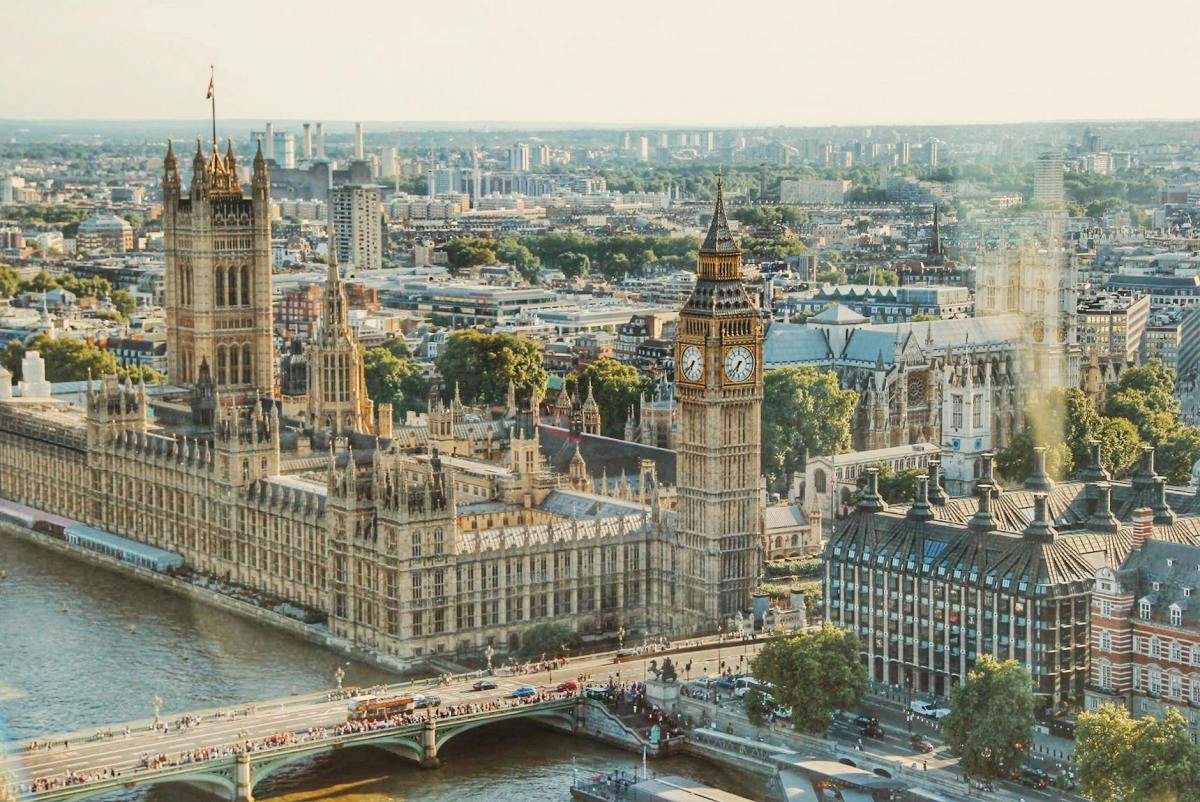
It’s great to see a debate in the UK Parliament[1]. Monday, 24 March saw a debate on the UK joining the European Union (EU). A public electronic petition[2] called for this debate. UK MPs get the opportunity to speak openly of their experiences of the outcomes of Brexit. There’s little that is positive and an ocean of negative.

Lucky for them, at the end of the debate, MPs are not called to vote on the issues raised in this petition. Nevertheless, there’s enormous merit in putting the facts in the public domain.

The 2016 Brexit vote was an unpatriotic act of self-harm, but it is history. Gradually, bit by bit, every part of British society is coming to the realisation that we need to do differently in the future. One day, I have no doubt that the UK will join the EU. The “will of the people” is not static. It is incredibly arrogant of Brexit supporters to say that it is static.

Besides, the inevitability of change means that new ways of cooperating will be found because it is in the best interest of all the parties. The UK is a liberal free-trading country that believes in the rule of law.

In the debate, Government Ministers can take what is being said and rethink. It is no threat to democracy to consider a rethink. In fact, for democracy to be stuck in a deep rut – now, that would be dangerous.

Today, Brexit has been a wonderful generator of piles of meaningless paperwork. It’s destroyed businesses and ruined lives. The enormous damage that has been caused is clear. Sadly, the people who cause that damage are not inclined to take any accountability for the mess.

In the debate, a shadow minister digs-up the grumpy past. It is shameful that the Conservative Party has nothing useful to say on this important issue. It is like listening to a bad recording of an old set of lies and proven nonsense. In speaking, this politician displayed no interest what-so-ever in improving the position of the country.

With all the talk of “growth” being so important to our future, it is difficult to understand a reluctance to address the festering wound that has been caused by Brexit. We can only be more secure and prosperous if we work more closely with our nearest neighbours.

The Labour Party leans on its election manifesto of last July. It’s an awkward act of sitting on the fence and sticking their head in the sand. Now, that paints a picture.

So called, “ruthless pragmatism” is a peculiar Government policy position. It can mean 101 things to 101 different people in 101 different places. Citing “global headwinds” to excuse obvious failings is no excuse for sustaining a burnt-out Brexit winding on like a runaway train. It would be wiser to question everything as the wholly new circumstances dictate.

2025 is dramatically different from 2015. When I first returned to the UK from Germany. The tectonic plates of global affairs have shifted. The Atlantic is wider. The Channel is narrower.

Oceanus Britannicus should be no barrier to trade and cooperation.


[1] https://youtu.be/yJdFBSAvAhU

[2]  https://petition.parliament.uk/

Laughing Through Politics

Maybe it’s not a new seam to mine. That rock of British popular culture that puts up a mirror to entertain us or even shock us. There’s always a space for the public to be tickled by the absurd or hamming up of clichéd characters. It’s struck me, particularly on rewatching British TV comedy, how what we find humorous is an indicator of how we might think more generally. Or there’s a peculiar connection.

Obviously, it would be good to look at this subject in an objective way. To see what the evidence says. However, it’s almost impossible to separate personal experiences from any general observations. Afterall, I went to school where we endlessly repeated lines from Monty Python’s Flying Circus. This had our poor teachers totally bemused. Long forgotten is the “woody and tinny words” sketch. It only took a teacher to say a woody word and we’d have hysterics.

Not that Python didn’t offer one or two educational opportunities. In imagination, if nothing else. Try “The Man Who Speaks in Anagrams[1]” as an example.

When Mrs Brown’s Boys[2] became popular, I knew we were in serious trouble. I may be a real snob, but this kind of British “comedy” is a throwback to the worst of the 1970s (almost). To me the show has no merit whatsoever. It’s a sop to a grim set of stereotypes.

Jamilla Smith-Joseph’s short article[3] does point out that British culture is one of seeing the funny side of both us Brits and those strange foreigners. Problem is that in a simmering Brexity climate, we find it so much easier to lampoon our nearest neighbours, European foreigners.

I matured from Python to then enthusiastically embrace “The Young Ones” in my anarchic student days[4]. Now, I rewatch the series and the impacts are curious. In so many ways 21st Century Brits have become tame and unadventurous. The sheer destructive energy that let rip on TV screens delighted in upsetting established norms. Now, lots of people are embarrassed by what was called “alternative” comedy at the time.

Then we grew-up and got jobs. Tony Blair came onto the scene. Born out of that period of change was such masterpieces as “The Think of It”. Hope and optimism descended into spin and panic.

Popular culture and politics do connect. Is it a mirror like refection or is it a subconscious trend indicator? Or even a driving force that sustains a current way of thinking?

British popular culture is not going through a creative period. In 2025, there’s not a lot to recommend. Oddly it’s a series that started with a low budget movie from New Zealand that I find is the best comedy of the moment. “What We Do in the Shadow[5]” is variable in places but has horrendously funny moments.

So, come on British writers it’s time to better lampoon the toolmakers son who sits on the fence. One leg here, and one leg there. Labour’s latest adoption of conservative attire is surly worth funny lines. Something original. Maybe even out of this world.


[1] https://youtu.be/Q1sXeUHBHgk

[2] https://www.imdb.com/title/tt1819022/?ref_=ttep_ov

[3] https://ukandeu.ac.uk/a-very-british-euroscepticism-the-popular-culture-politics-nexus/

[4] Yes, I really did live in a rundown brick terrace, with a hole in the wall as space for a payphone, and a dodgy builder come landlord. Carpets with slug trails and an icebox as a shower.

[5] https://www.imdb.com/title/tt7908628/

A Key Political Agenda?

Whatever you might think, I think Keir Starmer is turning out to be a better conservative Prime Minister (PM) than most have been in the last couple of decades. On his list of things to do is reforming this, and reforming that, and making bullish statements on the world stage. Agreed that there’s the usual amount of crafted BS. Compromise and dealing with reality, not the world as one might wish it to be, are as they ever are in politics.

He’s in the business of stealing the clothes of the official opposition. Across the chamber they panic. Yes, further along the benches, the howling menace continues to howl. Fighting amongst themselves this week. Questioning their leader is not allowed. However, it’s surprising how high they stand in opinion polls, even if this is meaningless at this point in the electoral cycle.

The normal opposition now comes from the Liberal Democrats and a small number of unhappy Labour Members of Parliament.

This week I was amused to read of the concerns about Quangos[1]. That takes me back. I remember writing a motion for a conference on that subject back in the early 1990s. At that time there was questioning of why there was so many Quangos.

As a country we seem to go through waves. They go like this.

For a while national politicians take the view that day-to-day operational decisions of a sector should be made by dedicated professionals and at arm’s length. This has the advantage of getting politicians out of the complex detail, avoiding blame when things go wrong, a degree of continuity and setting their minds to the higher calling of top-level budgets and policy.

Then, if sector hasn’t performed as well as desired, the Quango at the heart of the storm is set ripe for taking apart. Thus, day-to-day operational decisions go back to “accountable” politicians, surely to do better. This has the advantage of reigniting the pace of change, a chance to be radical, securitising lower-level budgets and the satisfaction of blaming the past system.

I think you can tell which part of the wave that has hit now.

A point of reference here is, as so often is the case, Yes Minister. There’s a story line where the civil service pack the Minister’s red box with so much information and decisions to be made that he’s completely overwhelmed. Initially, he’s keen to have information on everything. Then the realisation that path leads to madness slowly dawns.

Now, it’s not clear what type of civil service, and associated Quangos, the PM thinks work best. It’s not strange to say I don’t like what I’ve got. It’s better to have an idea what it is that you want. A reform agenda in name is a headline grabber. It’s not a substitute to having a plan.


[1] https://www.bbc.co.uk/news/uk-politics-11405840

Review: The Autobiography of a Cad at Watermill Theatre

I’ve not done it. I’m always tempted. When I see Boris Johnson’s latest book on the shelf, to turn it around. Anything to discourage the good people of this parish from reading it. The picture of his smiling mug on the front of the book is a horrible reminder of the Brexit years. We’re still in them, and I dearly wish we weren’t.

A wasted decade. What for, I ask? It hits me that this is England. A society that is liberal to the core is obsessed with class. We don’t so much have a class system of the Edwardian era but what we have divides people almost as much. Every day the media trades on stereotypes borne of this embedded class perspective. Having lived in another country for over a decade, I can see it perhaps more than most.

We do joke about it. The pages of the satirical magazine Private Eye would have nothing to write about if “class” was truly a thing of the past. Today’s Parliament remains way overrepresented by a certain class of individual. Usually male.

Last night, I went to see “The Autobiography of a Cad.[1]” This is a story of an Edwardian. You might first think that there’s no relation to any politician of our time. It’s a about a man who has one true love – himself. It’s about how, even events as calamitous as WWI, offer him an opportunity to advantage himself usually at the cost of others.

The toff in question is fictitious. The play is a satirical comedy. It’s a highly entertaining evenings romp through the life of a rampaging chancer. Trust, truth and rules are as nothing in the face of his need to get what he wants. A faithful product of English public schools.

The cad is hazardous to anyone in his orbit. He has no idea of the havoc left in his wake. Ensuring others get the blame for his misdemeanours occupies much of his time. You are left wondering if this is instinctive or learnt this at Eton and Oxford.

Edward Percival Fox-Ingleby claims the title of political titan in his own made-up world. Comedy comes from his efforts to create a story of a colossus.

The play starts as it finishes. Fox-Ingleby standing at a lectern in the rain. Now where have we seen that before?

Watching this, with the intimacy of the Watermill theatre, I was in admiration for the three actors on stage. Galloping at the speed they were, throwing props around and transitioning from year to year was astonishing. I’d recommend this play. Best take a cushion. It’s a long romp.


[1] https://www.watermill.org.uk/events/the-autobiography-of-a-cad

The Impact of the English Civil War

Yesterday afternoon, I met King Charles. No, not the one who lives in Buckingham Place. No, not the one who hide up a tree. No, it was Charles I. Or at least a man dressed as Charles I.

Reasonably you might say, didn’t that King have his head cut off a long time ago? A lot depends on any recollection of English history you may have. It’s not a part of history that is taught in the national curriculum. Which is odd when considering how important it is.

Shaw House[1] is a beautiful Elizabethan building that has seen a great deal of history. In the 17th Century an English Civil War battle was fought there, and in the surrounding area.

In Newbury, 1644 was a turbulent time. As I understand it, the civil war that was raging all around could have been brought to a swift halt. King Charles and his forces, the Royalists, facing defeat, fled in the dark of night and made their way to Oxford. Thus, the Parliamentarian forces were left with a pyrrhic victory.

Eventually, the Parliamentarian forces succeeded. Charles I was tried, convicted, and executed for high treason in January 1649. The bloody execution of the war left a scar on English society. Brother fought brother. Families were torn apart. Nowhere was left untouched by the conflict.

The events in Newbury led to the formation of the New Model Army in 1645. Parliamentarian success may be traced to that decisive reorganisation.

The Earl Rivers Regiment Muster (Members of The Sealed Knot[2]) is a group of reenactors who bring the 17th Century back to life in the 21st Century. So, my day out at Shaw House was an immersion in times long past. People dressed up, showing off swords, muskets and pikes is entertaining and, without doubt, an important reminder of why today’s society is the way it is.

This was the time in English history when Parliament gained its supremacy. No more would the divine rights of Kings rule the English people. It’s true that the English republic didn’t last long but the supremacy of Parliament stuck.

Along with the re-enactments of battles there’s an exploration of how life once was. Exhibits of tradesmen and women the civilians who accompanied the armies. Reliving history by staging events beings alive the country’s past struggles. It’s a good reminder that conflict is ever with us.

By the way, if I had to choose a side, I surely would have been a Roundhead. The Royalist may have been said to be romantic, but they were on the wrong side of inevitable change.

POST: For more of the story BBC Four – Charles I: Downfall of a King


[1] https://www.westberkshireheritage.org/shaw-house

[2] https://www.thesealedknot.org.uk/

Arrival of Spring

It’s the time of the year that I like the most. OK, so I have a birthday in March. A good reason to take stock and look ahead. This year my age moves from one tick box to the next. So many surveys and questionnaires divide ages categories at 64 – 65.

My father-in-law, now long past, was an accountant. He’d often quote a dated joke. It’s more of a pun. “Old accountants never die; they just get broken down by age and sex.”

What’s even more special than that is the point on the astronomical calendar. No, not the astrological calendar. Although for note, I was born under the star sign Pisces. Which I am more than happy about. Smart, creative, and intuitive. Those characteristics might be plucked out of an astrologist’s scribblings, but I’ll take that.

Spring is sprung. The vernal equinox is on 20 March. And that’s official enough for me.

Usually, I have another marker for spring and it’s because of an English town, where I once lived. It’s the time of the Cheltenham Gold Cup[1]. This is a popular horse racing event held in Gloucestershire, UK. It has a huge impact on the town. I write this because back in the late 1980s I remember watching the racing in a snowstorm. Looking out on that huge bowl-shaped racecourse as snowflakes sprinkled the ground. Quite a picture, windswept and cold. It certainly was memorable.

On my calendar proper Spring can’t happen until the Gold Cup is done and dusted. This year that’s on the 14 March. Just before Spring officially begins.

By the way, I can squeeze aviation into this celebration of the onset of Springtime. The central area of racecourse in Cheltenham becomes a helicopter park. This experiences about 300 helicopter movements per day for the four-day duration of the racing. As the weather improves in the UK so general aviation wakes-up.

The seasons have a rhythm about them which is powerfully reassuring. Just at the moment, nothing in the News can be said to be reassuring. I’m sure, the signs of the zodiac didn’t predict these last few weeks. Rhythm has broken into arbitrary disruptions.

As the conflict in Ukraine continues the positions taken by western allies becomes ever more confused. To the extent that the word “allies” may need a second look.

I’d always say the Spring is a time for hope and optimism. I think we all are looking for that hope and optimism.


[1] https://www.thejockeyclub.co.uk/cheltenham-festival/

Legacy, A Cautionary Tale

English is full of pithy phrases that echo through the pages of history. One of the greatest contributors to this phenomenon was Shakespeare. Lots of quips and quotes and snippets of wisdom come from his numerous plays (and other literary imitations).

The phrase or maximum that I have in mind is: “Beware of an old man in a hurry.” It’s not the only one on the same basic theme. My dad used to say that there’s “No fool like an old fool”. Honestly, as a child I had no idea what he was getting at. I guess it was to sum-up an observation of someone’s behaviour. It’s not a complementary saying.

There’re several ways of interpreting the “old man in a hurry” saying.

For one, and I’m just about to clock 65 years, the way the world seems is conditioned by the fact that one’s final moments are a lot closer than they were as an ambitious young man.

Another interpretation is that we might expect an older person, with more experience, will be guided to make better life decisions. However, in reality, the reverse is so often true.

I could go as far as to say that the “beware” part is to beware of imbedded prejudices and reduced peripheral vison that can come with age.

Doing a quick bit of research the source of this short English saying is not ancient wisdom from a Greek scholar or scribbling Roman sage. Not even a contemplative Medieval monk.

No, it’s a young British Conservative politician talking about an old Liberal. In fact, probably the most successful old Liberal that has ever graced Parliament. The one who left this county with the world’s biggest Empire. When he passed at 88 years, Britain was the most developed, most prosperous nation and biggest manufacturer the world had ever known. If we were ever to call to Make Britain Great Again, we’d call for an old Liberal. MBGA doesn’t exactly flow of the tongue. Anyway, GB (Great Britain) endures as a name.

The young British Conservative politician was Churchill’s father, Randolph, and the old Liberal was an energetic, fired-up Gladstone.

Can I now use “Beware of an old man in a hurry” as I reflect on the week’s News? Does President Trump see the world as a racing clock? Knowing that mortality looms. Knowing that any marks that are to be made need to be made – now. The “long-game” is for others to play.

When time is almost up the tendency to rashness can be understood. A lot depends on whether the subject of legacy looms large in the thinking of a leader. Through the millennia legacy has mattered a great deal to leaders.

Gladstone’s success was marred by the eventual destruction of the Party he led. He did transform government from a boys-club of privilege, at least in part, but the future of Ireland became his achillea heel. As a Liberal, he found building a powerful country didn’t mean granting privilege for politician’s and friends’ private businesses but ensuring that the working class were represented.

Trump’s haste, and lack of longer-sighted goals, appears real. Constitutions, democracy and the public good will endure. Mean-time hang on to your hats.

Pragmatism in British Politics

Pragmatism has long been a part of British life. Idealism too but to a lesser extent. That said, the shelves of literary works probably tip in the balance of idealism. There’s always an “insightful” quote to pull of the shelf and plonk into a speech or scribblings like this.

There’s a comfort in putting important decisions down to known facts and up-to-date realities. This way of working tends to favour short-term action based on weighing-up the here and now. What’s best for us where we stand at this moment? How much money have we got?

If you are an ardent socialist or committed liberal or dyed-in-the-wool right-winger, then pragmatism can make your flesh crawl. It leads to the question – what do you really believe in? Intellectual prowess is challenged by a call to make it up as we go along.

Pragmatism encourages hypocrisy. Now, that might be phrased as an uncomfortable negative. The truth is that no successful organisation has ever escaped a great deal of honest hypocrisy. Positions on even the most hard-fought issues do change. That’s not a negative. Just a couple of minutes surveying the history of the last half century, more than proves the case.

So, when I hear the UK Prime Minister (PM) talk of “ruthless pragmatism” I do wince a bit. It’s not that pragmatism per-se is an evil. No way. Mere survival in any political landscape and someone must react to the here and now in a way that doesn’t sink the ship.

PM Keir Starmer talking on Europe[1] is like listening to a rich Victorian woman having on extremely tight underwear. There’s no way she can loosen it in public. Her peers would disown her. When no one is looking an immense sense of relief can be gained in shedding the constraining garments. Behind closed doors the ridiculous restraints are shed.

Frankly, UK opposition to joining youth mobility schemes[2] in Europe is a stupid as stupid can get. I mean stupid times a billion. Now, some madcap idealists might be scared that British youth might, if taught early, be influenced in ways that would last throughout their lives. Such would be their indoctrination that eventual the push on the UK to join to European Union (EU) would be overwhelming.

There’s another word beginning with “p”. Take pragmatism and replace it with paranoia. The later seems to be fashionable just now. Forget the idealist approach where at least views tend to be based on a plausible creed. Paranoia is such that no previous experience is necessary. It’s all-over social media and more and more conventional media. Pragmatism is met with disbelief. So, is it wise for Keir Starmer to make that word a number one headliner?

A philosophical political pragmatism has been long practiced in the UK. I don’t see that stopping anytime soon. But what’s to be gained by headlining it? Not a lot I’d say. In fact, it gives ammunition to the light blue swivel-eyed loons[3].


[1] https://www.independent.co.uk/voices/editorials/keir-starmer-brexit-reset-europe-b2692118.html

[2] https://lordslibrary.parliament.uk/youth-mobility-schemes/

[3] https://www.independent.co.uk/news/uk/politics/swivelgate-david-cameron-goes-to-war-with-the-press-over-swiveleyed-loons-slur-8622277.html

Discontent with Conservatives

Those who stuck with the Conservatives at the last UK General Election must be regretting it. After their appalling record in government there are still 121 Conservative Party members of Parliament (MPs). This is the lowest number in the history of the Conservative Party. Parliamentary consistencies, like Reigate[1] and Staines[2], places where I have lived, have little, or no effective representation as the new year gets into its stride.

For what worth they are at this time in the electoral cycle, the Conservative Party and Reform Party (or company) are scrambling around trying to salvage any influence they can get. Both parties are no longer supported by their signed-up membership preferring major donors to pay the bills instead.

Frankly, we have no idea of their real membership numbers[3]. Political party membership hasn’t exactly been booming across the board. What’s clear is that the residual Conservative Party and Reform people are fishing in the same pond.

Last night, I happened to catch part of a Conservative political broadcast on the BBC. The general theme was politicians have let you down. This was said by Conservative leader Kemi Badenoch in a non-specific way to avoid saying Conservative politicians have let you down.

I did begin to wonder if she wouldn’t have done better by hosting a daytime cooking show from her immaculate kitchen. Now, I want to know if her mug had coffee or tea in it or was it just and empty prop? It seems to me every time Conservative rebrand, we see a different shade of blue being presented in the media. They are lucky that so many shades of blue are possible.

In the News too is Nigel Farage’s cold shouldering in the US. He may no longer be the far-right’s political great hope for the future. Reform may have to look elsewhere for its champion.

The 650 MPs that were elected by you and me to the House of Commons, at the 4 July 2024 UK General Election are likely to get a full-term. I’d guess that the new government can live with being relatively unpopular for at least a couple of years. After that they had better start showing that life has got better, public services work otherwise they will be a one hit wonder.

For political watchers its going to be fascinating to see how the pseudo-war on the right of politics will pan out in the UK. Will they combine? Having lived through the SDP–Liberal Alliance back in the 1980s, I know how hard it can be to restructure and reorientate in the British context.

There’s a lot of spinning of the wheels. Interim pain and uncomfortable partnering. The certainty being that not everyone will be happy or contented. Some notable people will go off in a huff. Eggs will get broken.

Or are we in a new era media where all that’s needed is tons of fakery and magical thinking. Plush marketing and dramatic assertions backed up by absolutely nothing.


[1] https://www.bbc.co.uk/news/election/2024/uk/constituencies/E14001442

[2] https://www.bbc.co.uk/news/election/2024/uk/constituencies/E14001505

[3] https://www.bbc.co.uk/news/articles/cq62qv3486qo

Financial Pressures and Local Government Restructuring

It was a long time ago, but I remember the travails of local government reorganisation. A massive amount of councillor and officer time was consumed. Endless discussions going backwards and forwards. Loads of heat but little light.

I had my one term as a Surrey County Councillor between 1993 and 1997. Now, that is 30-years back. A lot of water has passed under the bridge since. That said, the issues are still hanging in the air. The outcome of that Conservative attempt at local government reorganisation was no change for the one million people in Surrey. That meant one large County Council and eleven smaller Boroughs and Districts. Not forgetting several Town and Parish Councils.

Having moved, my concern is now local government reorganisation in Berkshire. The situation here is that the two-tier structure of local government has already been swept away. We pay our council tax to one unitary local authority.

Here we are in a different time and place. Labour’s first six months in government behind us. A new era. All smiles to begin. Sadly, the write-ups of the last six-months are less than flattering[1]. It would be reasonable to think that during a period of opposition in Parliament. Those 14-years. The prospective future government would have put in place policies and plans that would have been “oven ready,” to use a term an unsuccessful past Prime Minister would use.

Just as it was 30-years ago, English local government is facing huge financial pressures. Residents are struggling to access good services. Local issues, like potholes, planning, special educational needs and social care are as intractable as they always have been.

So, is this the time to bring out local government reorganisation again? Regardless of what I think, it’s clear that Jim McMahon MP, Minister of State (Minister for Local Government and English Devolution) has local government reorganisation on his agenda[2].

From what I hear, existing county Boroughs and Districts are going to become history. Small unitary authorities had better watch out too. Council leaders are being asked to find ways of building scale. That means no English local authority smaller than a population of half a million.

Will this turn around performance? Economies of scale may have some benefits. The problem that strikes me is the notion that “local”, meaning a natural community, is generally much less than 500,000 people. Especially in rural areas.

The Government White Paper that sets out these plans is called “English Devolution”. An interesting use of that nice word. In the circumstances that the new Minister imagines it could be that local government becomes more and more an implementing arm of central government. No more or less. To some extent this is already the cases, but localism and community are not completely extinguished. The tension continues to be one between governance being top-down or bottom-up driven.

The Labour government might imagine this “silver bullet” will harmonise, sanitise and make local services run like clockwork. I wonder if it will.


[1] https://inews.co.uk/news/messy-muddled-starmer-struggles-worse-rebellion-3444812

[2] https://www.instituteforgovernment.org.uk/event/government-2025-conference